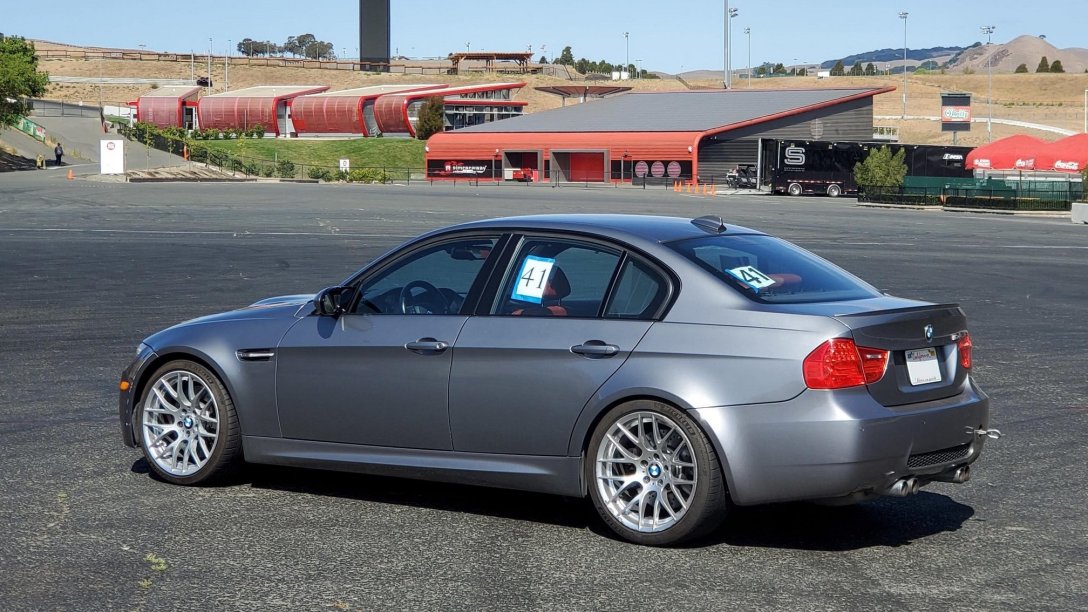
This November, I had a frustrating track day in my 2011 BMW M3 at Sonoma Raceway. While it was a beautiful day with a dry track, a quick run-group, and a purring M3, the best lap I could manage was over 2 seconds slower than my personal record at Sonoma Raceway. I left the track kicking myself: How had I set that 1:57.2 lap in my old Evo IX, and, more importantly, why couldn’t I match it in my newer, more powerful M3? Considering the factors—engine, chassis, tires and driver—I surmised that I was likely the weakest link in the equation. Determined to fix the problem, I enrolled in the Performance Driving 3 class at the Sears Point Racing Experience, Sonoma Raceway’s driver training school.
To give away the punchline, enrolling in PD3 turned out to be a very good idea. I’ve received instruction at many club HPDE events and professional racing schools, but my day at Sears Point Racing Experience’s PD3 was one of the most satisfying. Even though PD3 is one of the school’s standard offerings, the class felt custom-tailored to my goals. I got the professional instruction I needed to make me a better driver at Sonoma Raceway in my M3. Perfect!
Before signing up for PD3, I considered the school’s PD1 and PD2 offerings. PD1 is an entry-level class with a focus on car-control skills. I have 15 years of track, autocross, and ice racing experience under my belt, so I’ve already acquired these skills, and I decided to skip PD1. PD2 teaches drivers the nuances of Sonoma Raceway’s racing line. This class could have been a good fit for me, but I shied away from it due to its instruction style: PD2 uses lead-follow exercises where small groups of students chase an instructor around the track. While lead-follow is great for demonstrating the line, at other racing schools, I’ve been frustrated by lead-follow exercises when the other students in my group were much slower or much faster than me. It’s not fun to be driving off my personal pace or rhythm or to be falling far behind the other students and instructor.
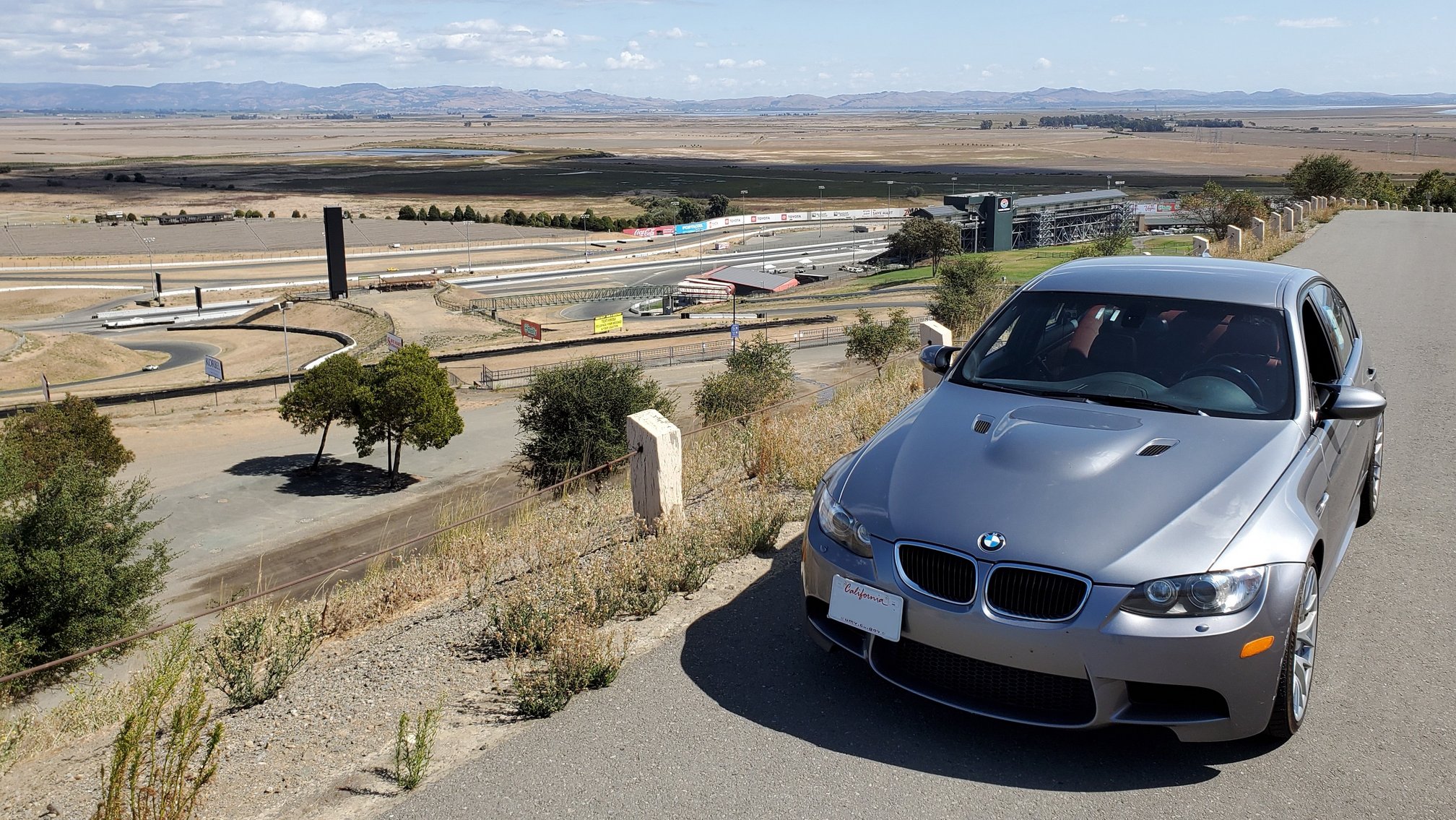
Thus I elected to take PD3, the third and final class in the PD series. PD3 caters to students who are already comfortable at Sonoma Raceway and who want plenty of open-track time to hone their track knowledge and driving skills. Five 25-minute lapping sessions would give me the seat time I needed to find my groove at Sonoma Raceway. Professional instructors observing me from key vantage points around the track would take that groove to a new level. This was the class for me.
It was 8 o’clock on a chilly and foggy January morning when I arrived at Sonoma Raceway for my PD3 class. After the prerequisite waiver signing, I was introduced to my peers and instructors for the day. Class attendance was light, with only five students for the two instructors to coach, so introductions were quick. The lead instructor, Tor, informed us of the schedule and procedures for the day. We’d have three morning sessions at 8:45, 9:45 and 11:15, with classroom talks in between. Then we’d break for lunch, and in the afternoon, we’d have two more sessions at 12:45 and 1:30 and classroom work in between. Compared to a normal HPDE day, this would be a much quicker track day.
Tor encouraged us to run with our windows up, something forbidden at club HPDEs, so that we could hear our instructors over the radios they’d put into our cars. As a result of the windows-up policy, we’d be giving point-bys to faster drivers using our blinkers instead of our hands. Passing was restricted to the three longest straights of the course; with the cars present being as fast as a McLaren 600LT and as slow as a BMW 335i, I worried that the limited passing zones would make for impeded laps for the faster cars.
Before we knew it, radios were being tucked into our cars’ door pockets, and we were being waved onto the track. It was great to be back on the beautiful and undulating Sonoma Raceway and especially nice to have so little traffic on track. My fears about the passing zones soon subsided, as I was never held up for more than a few corners. With the instructors carefully watching from the sidelines, I set to laying down the best laps I could.
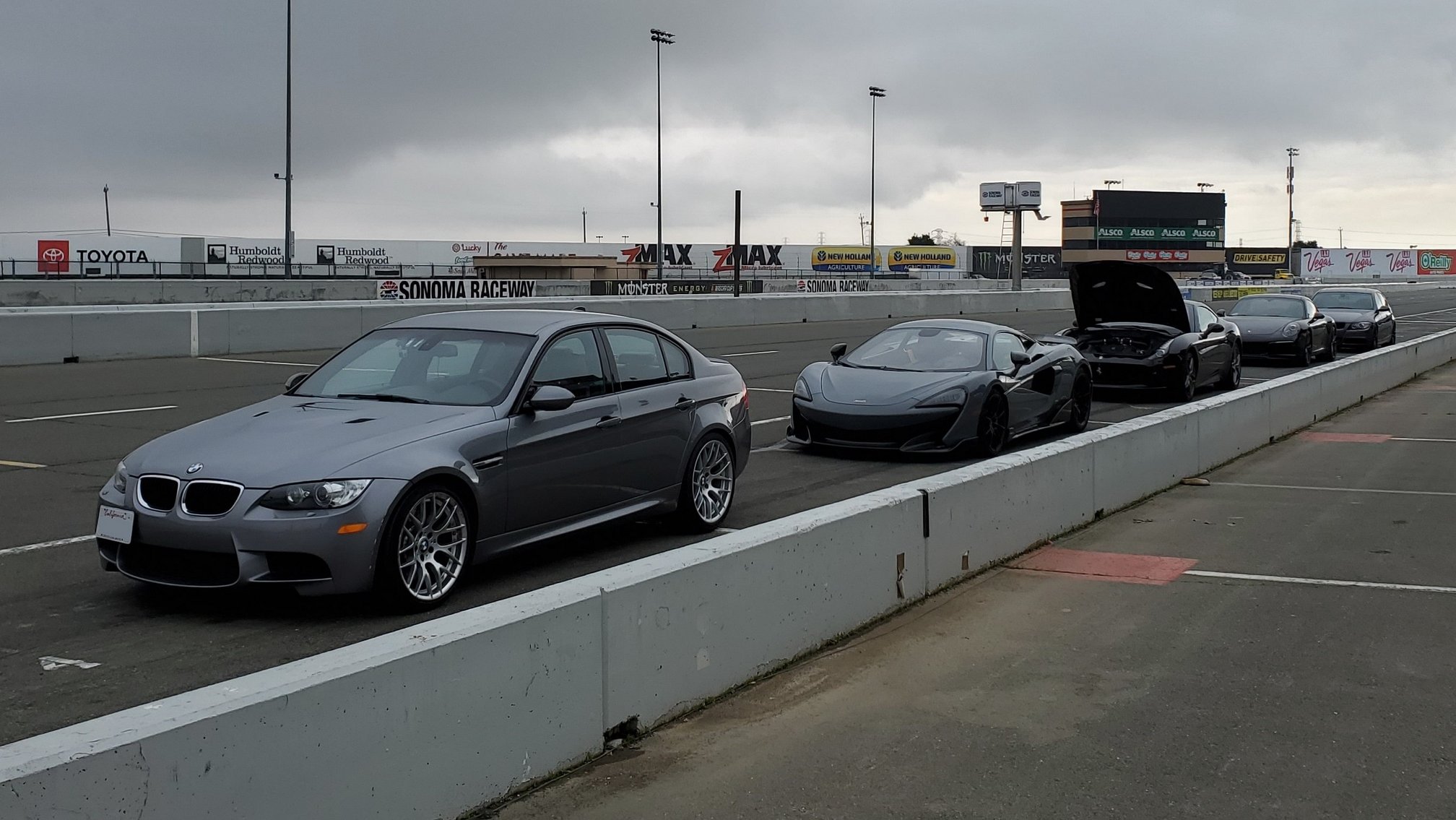
In our first classroom debriefing, Tor set to correcting my racing line. He had observed me unnaturally straightening the Esses, causing me to early-apex T8 and T8a and lose speed through T9. I was given new turn-in and clipping points to try in the next session.
As the morning progressed and the instructors rotated through the vantage points, it became clear that I was early apexing most of the corners at Sonoma Raceway! Over the radio and in the classroom, I was given tips, and sometimes lectures, to get me on the racing line. By lunchtime, the instructors had sliced 2 seconds off of my fastest lap from my bad November track day. I now was just 0.1 seconds shy of my best lap ever at Sonoma Raceway!
Throughout the afternoon, I worked on T10, a scary, high-speed right-hander lined with fender-munching walls. Tor observed that my banzai late-braking was unsettling the car, making T10 scarier and slower than it needed to be. He gave me reference points to help with my braking and turn-in, and advised me to enter T10 slowly and incrementally build up my speed. Following his instruction, I was able to find another 8 mph through T10! This, plus other little improvements, whittled another 0.4 seconds off my lap time. I had set a new personal best lap of 1:56.8 at Sonoma Raceway!
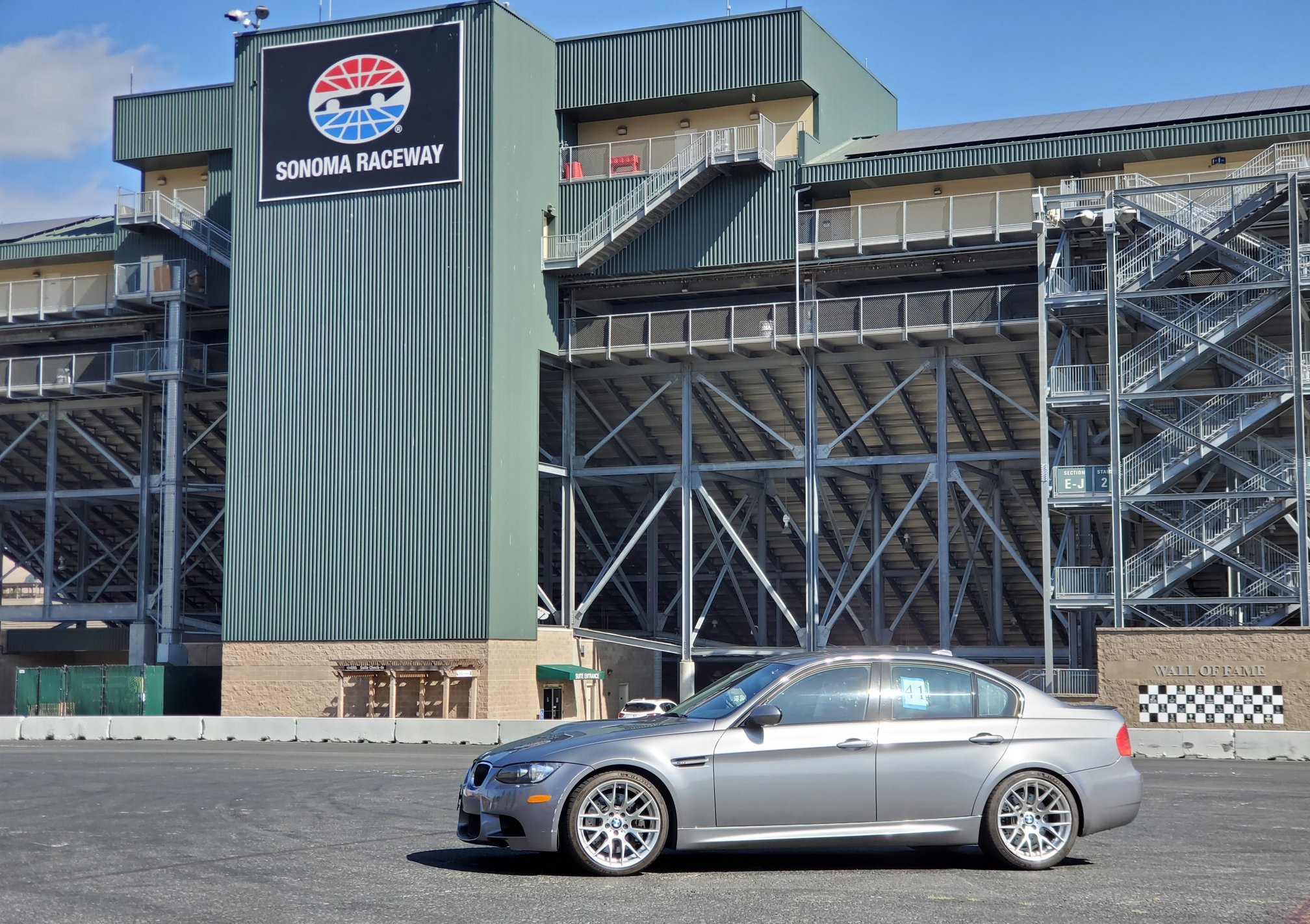
At the start of the day, I wondered how well instruction from the side of the track could work. Obviously, it worked great, though I did observe some drawbacks. At hilly Sonoma Raceway, the instructors can only see a portion of the track from any vantage point, so it may be a session or two until they are watching the turn on which you need the most help. Additionally, since the instructors are outside your car, they can’t observe your vision, steering or footwork, and drivers may continue using bad habits that in-car instruction would break.
The other inherent drawback of the PD series is that your experience will only be as good as your car. Two of the five students retired early due to mechanical issues with their engines or tires. Make sure your car is in tip-top shape before hitting the track at the Sears Point Racing Experience.
Regardless, PD3 was exactly what I needed. Over the day, I got the feedback I needed to correct my line and improve braking points at nearly every corner of the course. Better yet, I left the school knowing where I have more work to do and where I can gain even more time in the future.
I also immensely enjoyed the luxury of low-traffic lapping at Sonoma Raceway. HPDE clubs clog their run groups with 20 to 30 cars; the Sears Point Racing Experience never has more than 12 cars in its PD classes. And with only five cars in my PD3 class, I felt like I had the track to myself.

The free-running let me build up a satisfying rhythm from which I could make incremental changes to my driving. Lap by lap, session by session, I inched up on the limits of my car’s capabilities. By the end of the day, I had my car tight roping along the edges of adhesion, balanced on that thin line between understeer and oversteer. For the first time ever, I felt my M3 threatening to powerslide over the crest of T3 and lift-off oversteer through the T6 carousel. Driving my car at its limits is exhilarating, rewarding, and, well, nerve-wracking, but that is exactly why I love track days. Doing it safely at Sonoma Raceway was pure bliss.
And therein is the genius of the Sears Point Racing Experience’s Performance Driving series. By driving my own car under the watchful eyes of the school’s excellent instructors, I was able to apply my learning to the right car on the right track, right away. The result was one of the most satisfying driving schools I’ve ever attended.
 Mike's Steering Column