
My $55,000 purchase of a performance station wagon was made on 9/10ths emotion and 1/10th logic. The emotional draw is obvious: A supercharged, Corvette-derived V8 spins—and I do mean spins!—the rear wheels of the most distinctive and attractive vehicle to ever come out of Cadillac. The logic is tenuous: “Honey, there’s seating for the whole family and trunk space for our Christmas luggage too.”
Really though, my purchase of the CTS-V wagon is catalyzed by my disappointments with the Ford Focus RS and my realization that my opportunities for driving fun have changed. Today, I do more preschool runs than track days, so I want a car that tickles my inner enthusiast in city traffic. My city’s roads are deteriorating, so I want a suspension that smooths the bumps. The CTS-V’s stout and soulful 6-speed manual and meaty V8 will engage me block after block. Its magnetic-ride suspension will keep me from hating the world as I zip here and there.
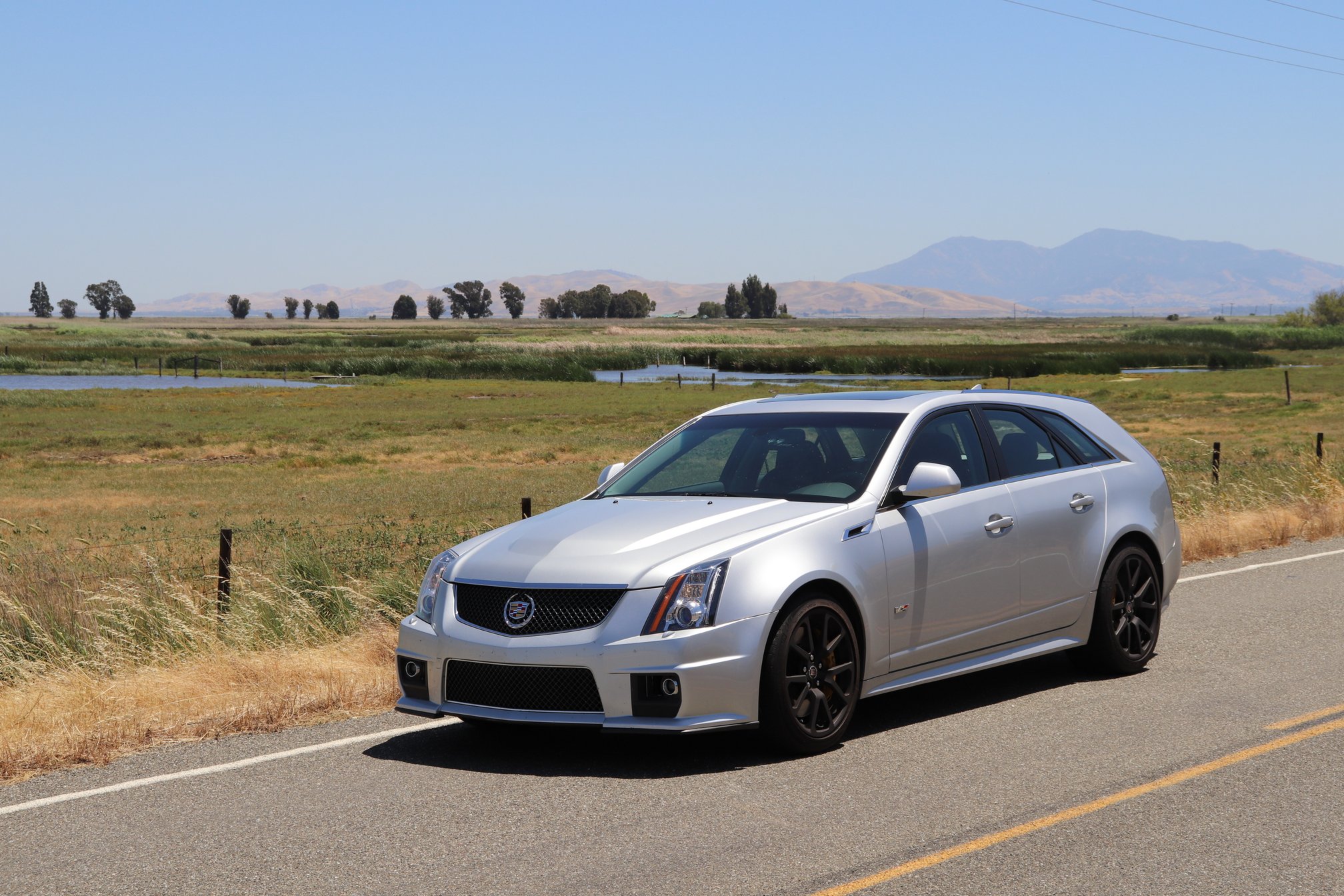
I searched nationwide for my CTS-V wagon. It’s practically a requirement if you want a stick with your long-roof, as manual transmission CTS-V wagons are as rare as bees’ knees. GM produced just 1,757 wagons over the four-year production run, and only 508 were ordered with the manual. Like most buyers of these beasts, I ended up purchasing a car that I’d never seen and never driven.
Still, I am confident in my purchase. The seller, Randy, is a man of utmost integrity, and all the car’s defects are disclosed upfront. Randy thoroughly photographed every inch of the car for my visual inspection, helping me understand its cosmetic condition and search for signs of bodywork. I hired a Lemon Squad mechanic to perform a third-party inspection and test drive, furthering my confidence that the CTS-V is healthy and clean. Price negotiations are done by email, and when we reach an agreement, I hold my breath and wire the largest lump of money ever to leave my bank account to Randy.
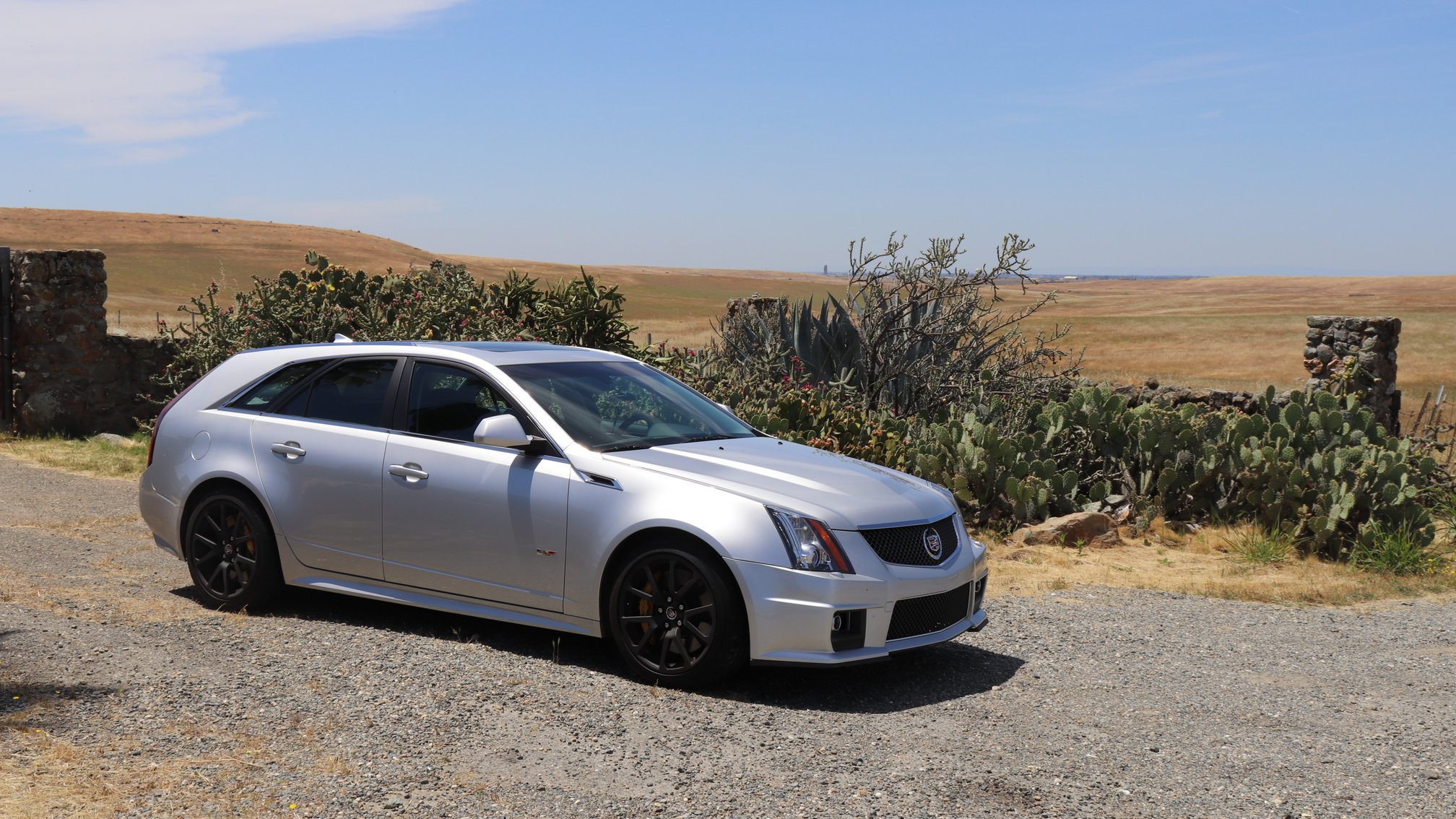
Virtual reality meets physical reality a few weeks later when I arrive to collect the car. My expectations are met with a few exceptions. The seat bolster wear and mismatched wheel refinishing are less glaring in person than in pixels, but the defects in the repainted hood are more obvious than I’d hoped. Ignoring the minutia, the car is a beautiful example of a CTS-V wagon with 49k miles.
With directions to Randy’s favorite country road in hand, I put my CTS-V into gear and ease it gently away from its prior home. The clutch engages with a little shudder at the top of the pedal throw, and the V8 speaks at library-appropriate volumes. A younger me was disappointed by the hushed tone of the CTS-V wagon, but a middle-aged yours truly appreciates the calm voice. There is clearly a LS engine motivating my wagon, and since I am more interested in tone rather than volume, the CTS-V is fine as it is today.

The interior design is classically appealing, with flowing dash lines, clear gauges, stitched seams and Alcantara trimmings. But the materials and cabin smell are GM “kwality.” The door grab-handles flex and groan when tugged, the buttons, knobs and control stalks wiggle and creak when used, and small rattles emanate from the HVAC system and the interior at large. My 2011 BMW M3 is three years older than the CTS-V, yet it’s held up better in fit, finish, and design than the CTS-V.
That’s alright; I didn’t buy the CTS-V for its button feel but rather for its dashing good looks and driving feel. I find my satisfaction in the steering, engine, brakes, and especially in the shifter. The Tremec TR-6060 is the antidote to numb shifters everywhere. It clicks cleanly from gear to gear and gently thrums with vibrations from the engine and gearbox. The suede-wrapped stick moves with a weight that belies the stoutness of the transmission, yet its throws are short and precise. If ever a gearbox suggested impunity to speed-shifting and rough handling, it is the TR-6060.

Similar good vibes and tight action are found in the suede steering wheel. While the wheel’s diameter is a tad too large, its precision, weighting and resistance are chicken soup for this enthusiast’s soul. Good riddance to electric power-assisted steering! If I am nitpicking, I could do with a little more communication of road texture and wheel impact, but a future upgrade to Michelin Pilot Sport 4S tires may deliver that.
Randy’s favorite road is a roller coaster. I sling the CTS-V through the corners, fly over the whoops, and launch it down the straights. The CTS-V leans under lateral load and doesn’t hide its considerable weight, but its balance is good, and its limits are high. The supercharged V8 has torque available from all RPM, but the engine’s biggest punch starts in the mid-range and carries to redline. Light the wick from a low RPM and, like a Saturn 5 rocket blasting off the launch pad, the 556 hp LSA engine takes a moment to overcome inertia and build RPM before it hurdles the CTS-V through the atmosphere with unrelenting thrust. The CTS-V’s nose tips slightly skyward, too, like it’s ready to depart from terra firma. When traction control is off, twin trails of rubber smear are painted to the pavement between 3k and 5k RPM.
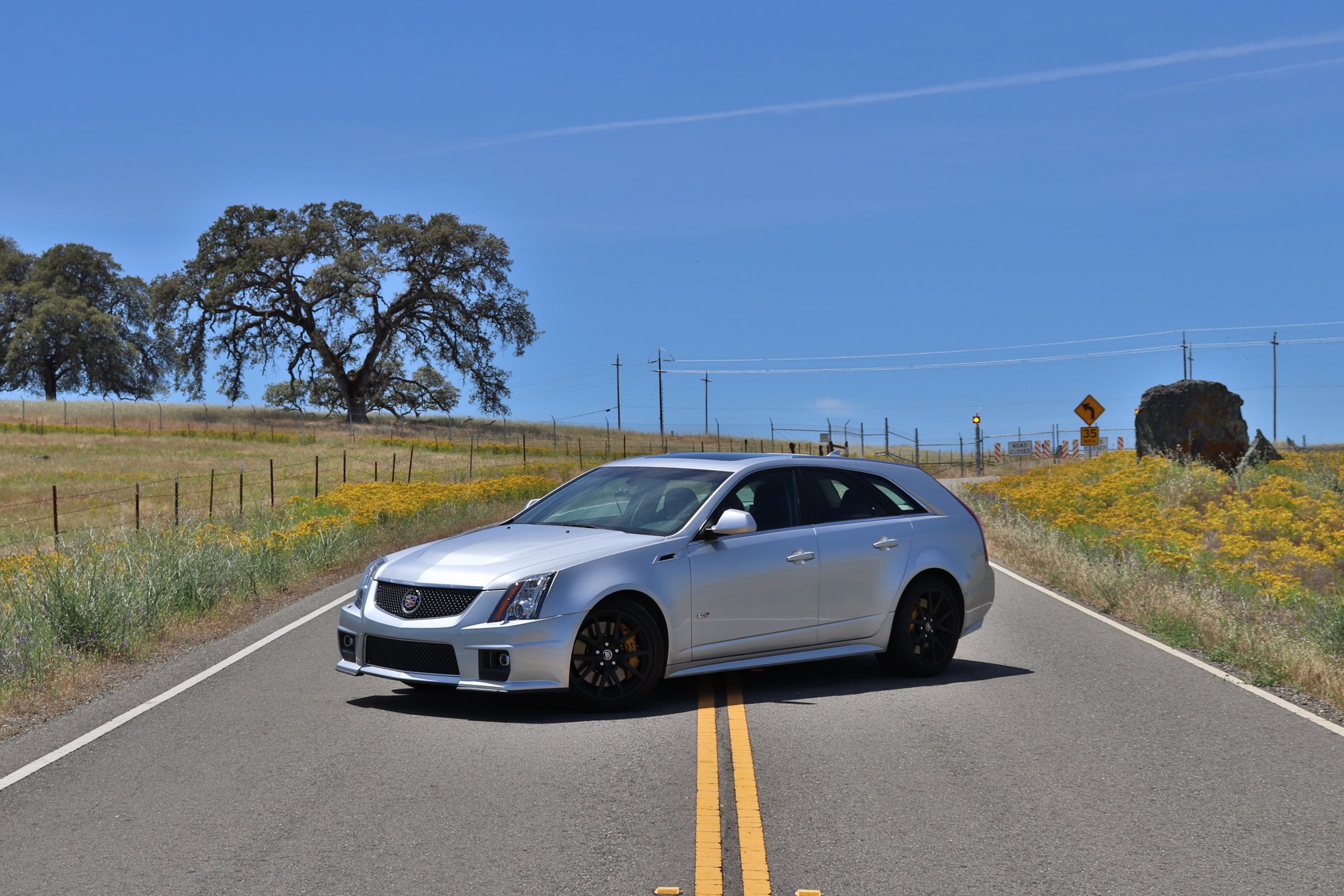
Thankfully, the brakes are up to the task of arresting the CTS-V’s flight. Put muscle into the firm middle pedal, and enormous calipers squeeze down on rotors bigger than Pizza Hut’s largest pie. The pads could offer more initial bite, but there is no arguing with the stopping power: When I really step on the brakes, blood rushes to my face, and the world grinds to a halt. I won’t experience any fade out of this setup.
The car’s considerable grip is accentuated by the way the power eases in when I step on the throttle. (Do superchargers need a moment to build boost in the way that turbochargers do?) Unlike with current LT1 powered Corvettes and Camaros, the CTS-V’s tires are never shocked free from the pavement. The CTS-V may “only” be rear-wheel drive, but it doesn’t devolve into oversteer when I summon its 556 horses to pull me out of a corner.

The roller-coaster road dead-ends in the middle of beautiful hill country. I can’t resist hogging the scenery and photographing the wagon from every angle. The CTS-V wagon is one of Cadillac’s best designs, and it bears the angular aggression of an F-117 stealth fighter or Lamborghini supercar. As I’ve seen, the CTS-V has the firepower to back up this impression too! The tall brake lights of the wagon recall Cadillac’s tailfin heritage without being ugly or overtly retro. While Cadillac’s new ATS-V and CTS-V are great-looking cars, they don’t have the panache of the second generation CTS-V wagon!
I tackle another foothill special, this one tighter and twistier than the last. It is quickly apparent that the CTS-V is more ready for the racetrack than rearing to rally. The large wagon fills the narrow lane, the engine is hemmed-in by the short straights, and the steering is a tad slow for the quick flick-flaking. While the CTS-V can keep up with the quick succession of tight corners, it does not relish the tight character of the road.

The bumps in the road reveal the trade-off of a body that is shaped like a rigatoni pasta. The wagon’s chassis doesn’t resist shaking and twisting as well as a performance sedan. If just one wheel encounters a bump or pothole, minor quivers can be felt through the car. The softer Tour suspension mode lets the suspension relax to accommodate the road’s ripples, but Tour also allows the car to heave and roll when driving hard. Sports suspension mode quells the heave and reduces the roll, but the quivering and shaking are accentuated as the firmed shocks transfer the responsibility of absorbing road impacts to the chassis. It is a trade-off, but I prefer Sports mode when carving canyons.
The next morning I start the long transit back to the Bay Area. The highway haul lets me explore the softer side of the CTS-V. I find the cabin reasonably hushed and the ride sufficiently plush; I am not bounced-around or beat-up like I was in my old Focus RS. I like how the seat cooling keeps my back from getting sweaty, but even with 14 ways to adjust the seat, I struggle to get comfortable in the Recaros. The aggressive headrest wants to push my skull forward, and I have to tilt the seat back gangster-style to avoid a cricked neck. My compromised seating position ends up leaving my upper back unsupported.
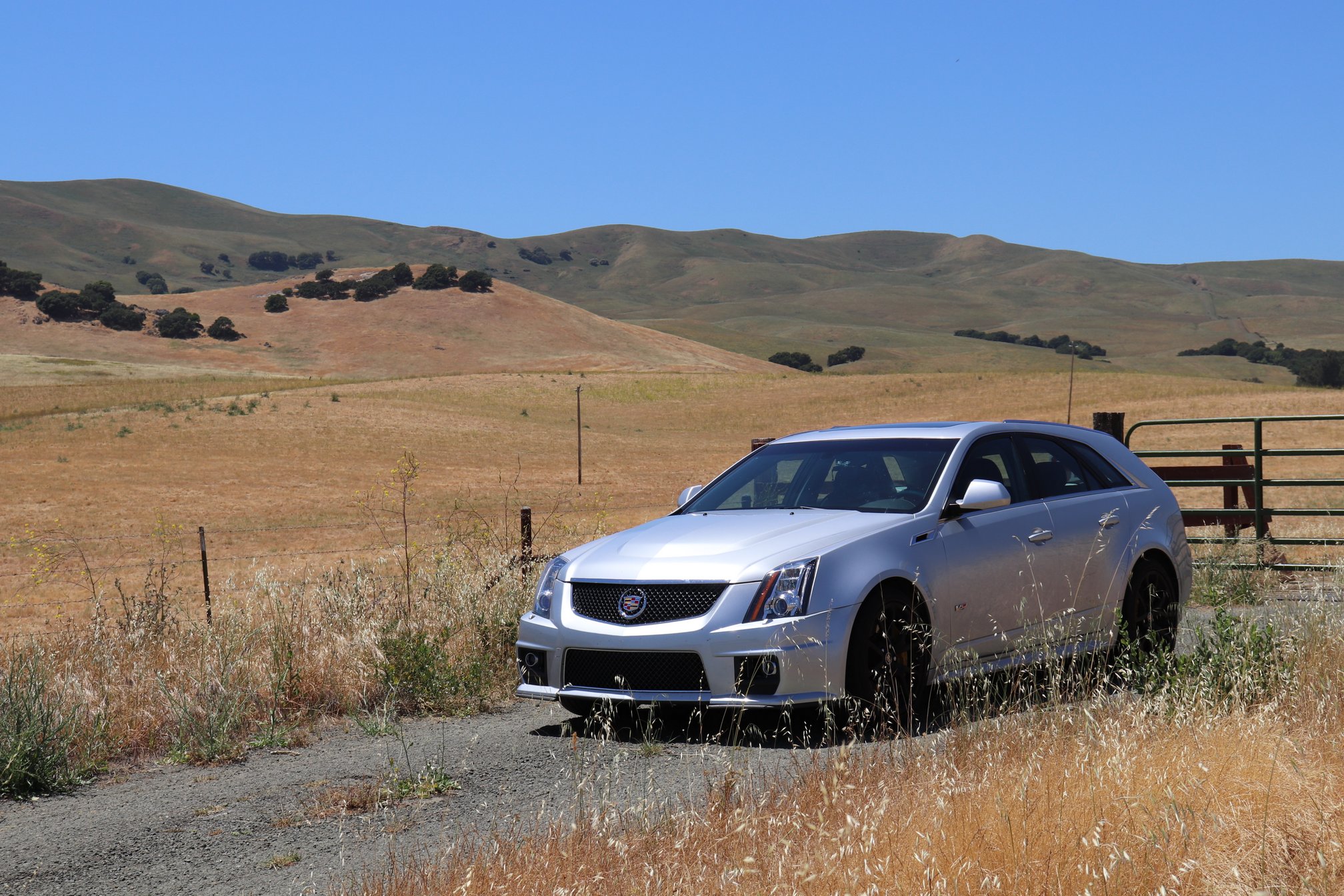
In highway traffic, outward visibility is workable if somewhat compromised. The wagon’s long roof tapers down at the tailgate, preventing me from seeing more than a few cars back; I have to use the wing mirrors to spot Highway Patrol cruisers approaching from behind. Forward visibility is slightly impeded, too; the raked windscreen makes for long and thick A-pillars, and I have to duck left and right to see past them.
The Cadillac’s infotainment and navigation systems are woefully dated, but the satellite radio is working. For no particular reason, I listen to French hip hop as I cruise Highway 80 at a computer-controlled 70 mph. The trip computer reports an average fuel economy of 20 mpg in this relaxed cruising. When I stop to fill up, I am impressed to see that the CTS-V’s reported mpg closely matches my own calculations. According to a GPS speedometer on my phone, the Cadillac speedo is truthful too.
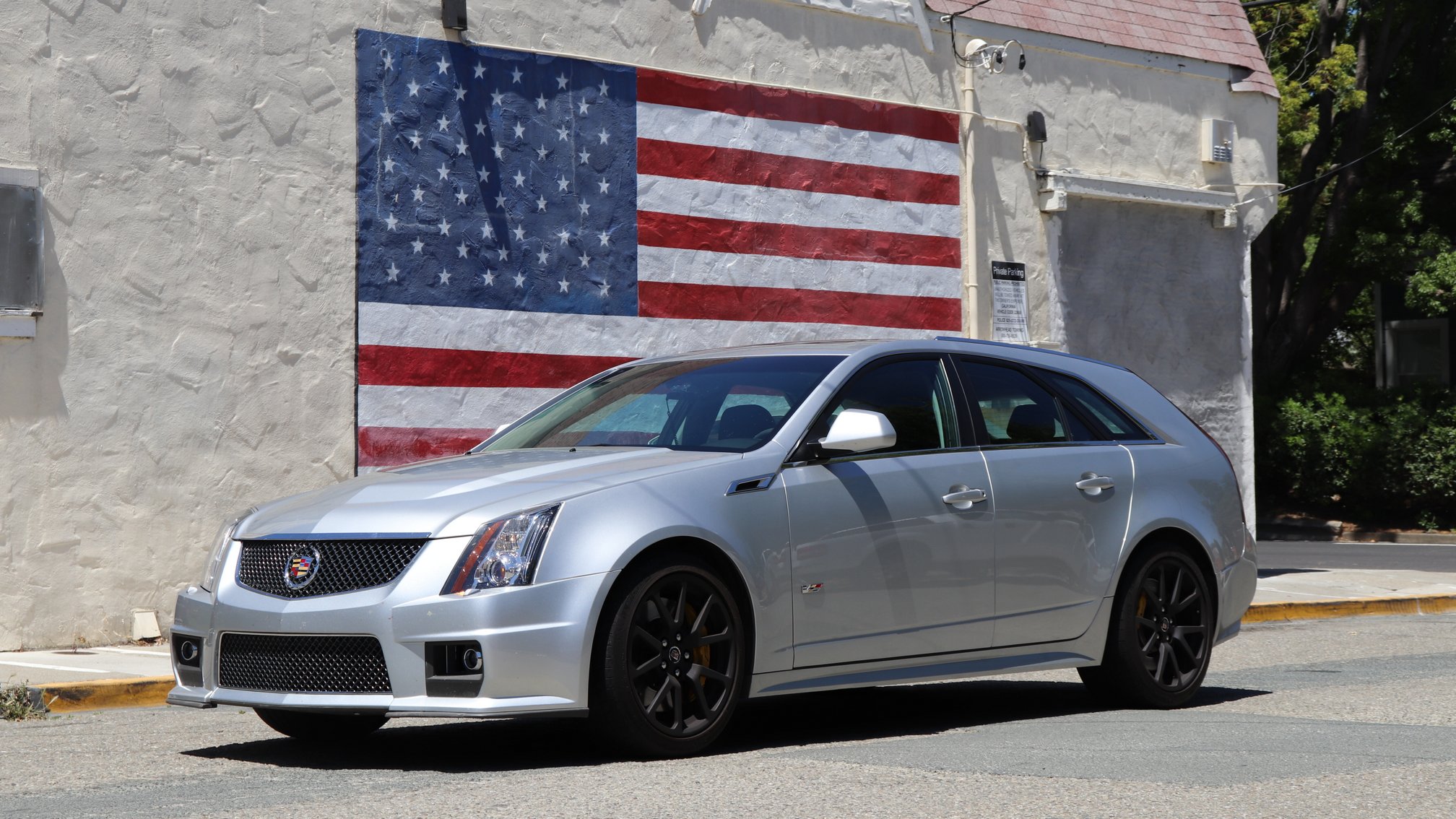
Bored of the highway, I detour to blast past Briones Park, then arrive in the urban environment that is the CTS-V’s new home. Through Berkeley’s warren of hillside neighborhoods, the CTS-V feels special and rewarding. The engine burbles, the transmission snicks, the suspension smooths, and the steering communicates. The only shortcoming is the lack of a manual e-brake or intelligent hill-hold program to keep me from rolling backward on hill starts. There is an electronic e-brake that I use as an assistant, but it is slow to engage.
Back at home, I test the sliver of logic that reinforced this emotionally-driven purchase. I install my daughter’s child seat, and my wife and I are happy to find that enough shoulder room remains on the rear bench to accommodate two adults. My little family and a pair of in-laws can travel together. The trunk surprises too, but negatively: It takes just one large box to consume the room under the privacy cover. I guess we’ll be leaving the privacy cover at home on big family trips.
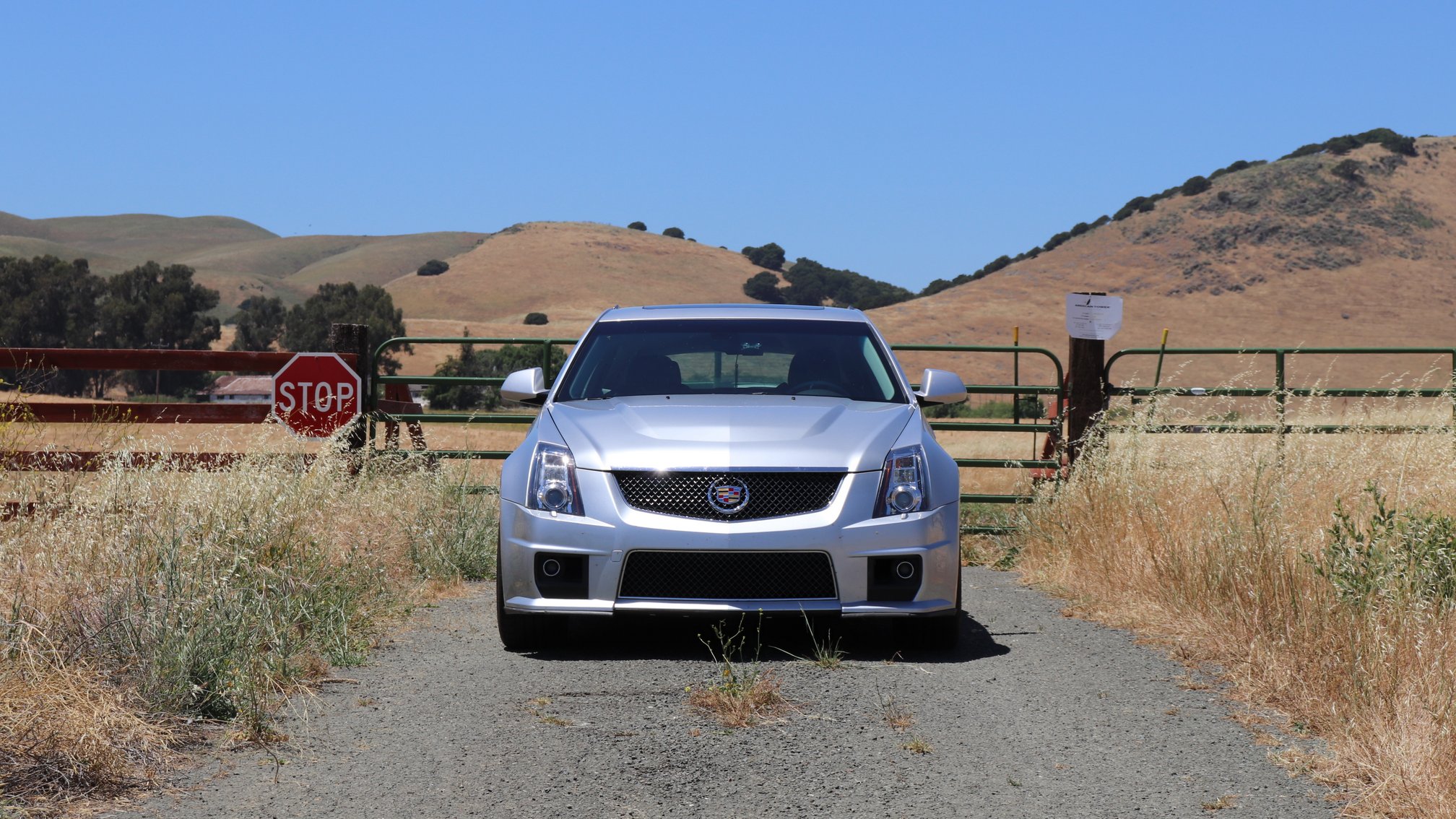
Has the CTS-V wagon met my goals? Yes, it has. The CTS-V wagon is fun to drive fast and—more importantly—slow. It is practical yet full of feel. It is pulse raising. I am satisfied and ready to explore this car over the long haul.
Is the CTS-V wagon worth its $55k purchase price? If you are a wagon nut like me, yes. There is no other manual-transmission wagon with this level of engagement. Everyone else will find similar driving pleasure, but much better value, in the sedans and coupes with which the CTS-V wagon competes.
 Mike's Steering Column