There’s a big gap in my automotive knowledge. I’ve owned and driven cars from the 1990s and on, and sampled classic driving in my dad’s 1963 Porsche 356, but the years in between are a complete no man’s land for me. Thus, I owe a debt to Rob, who cheerfully said, “You can drive!” when I asked for a ride in his 1983 Porsche 911 SC. That is an offer I can’t refuse!
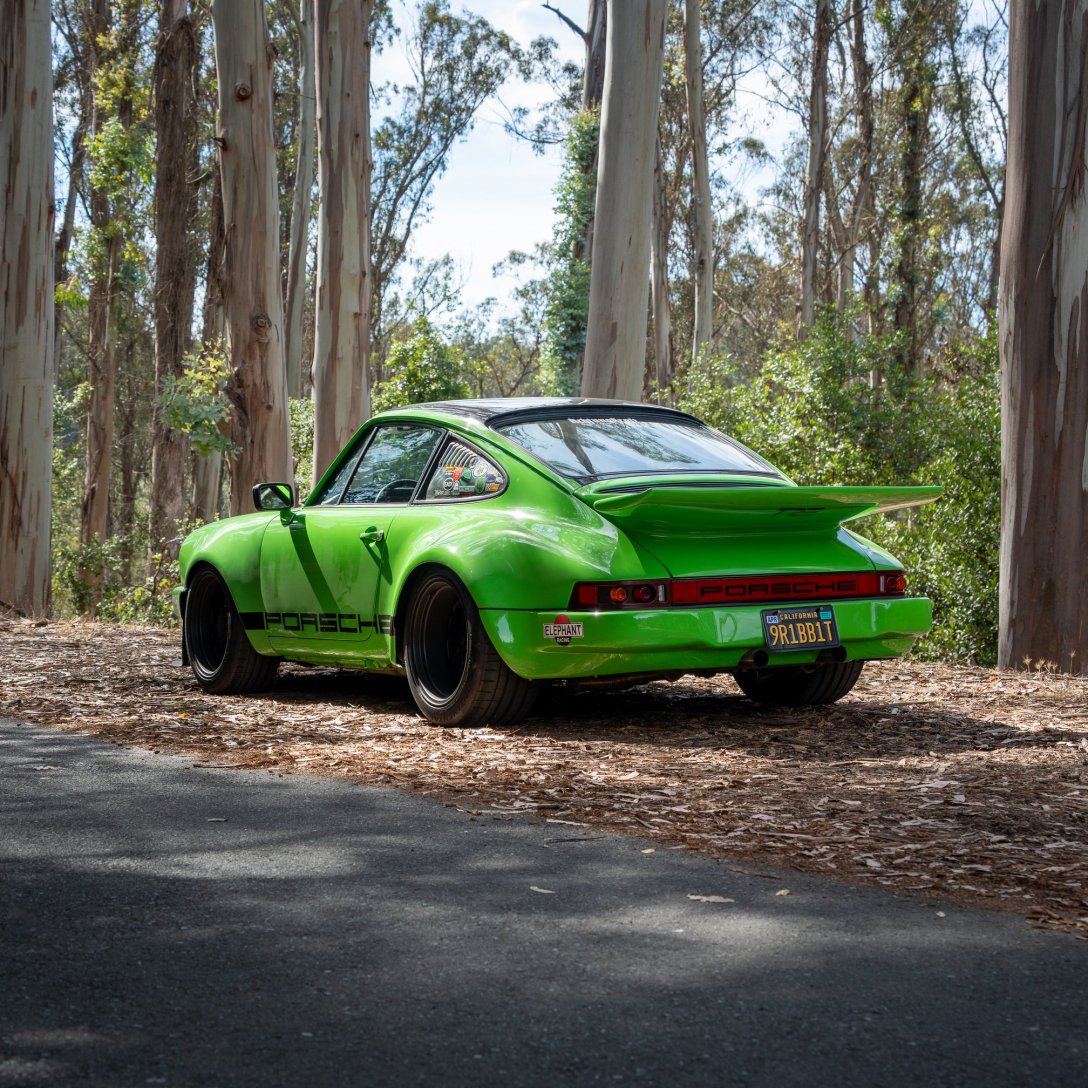
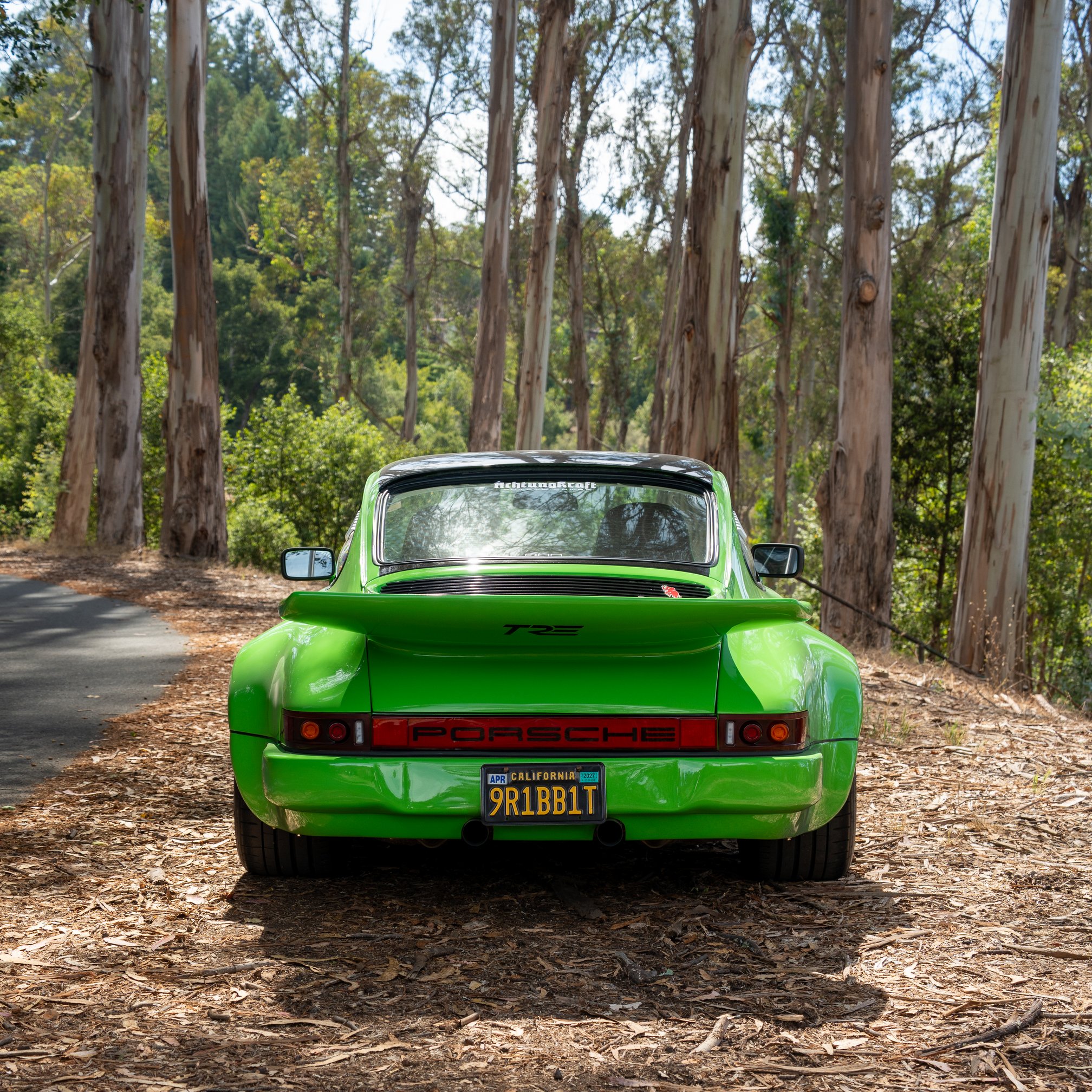
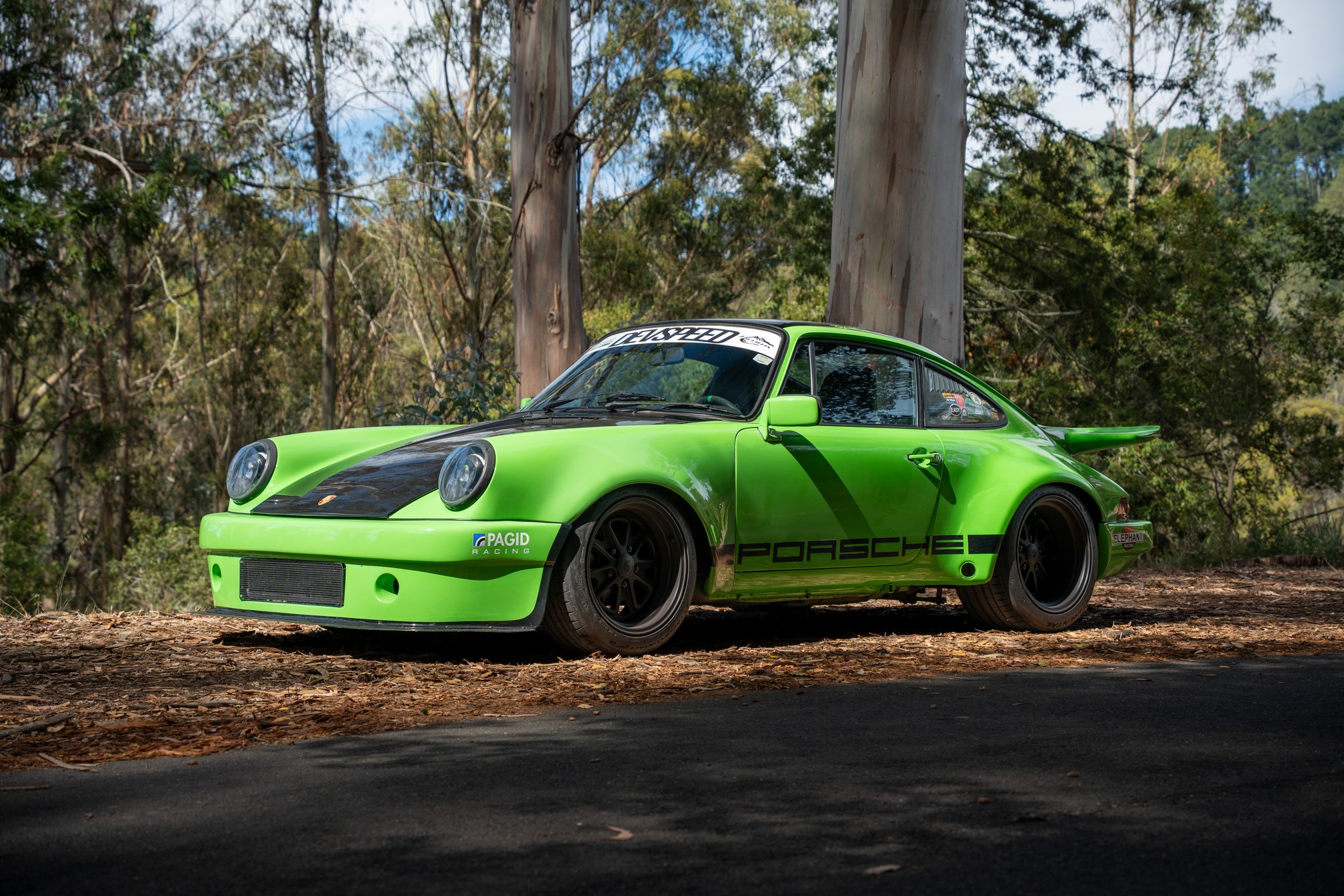
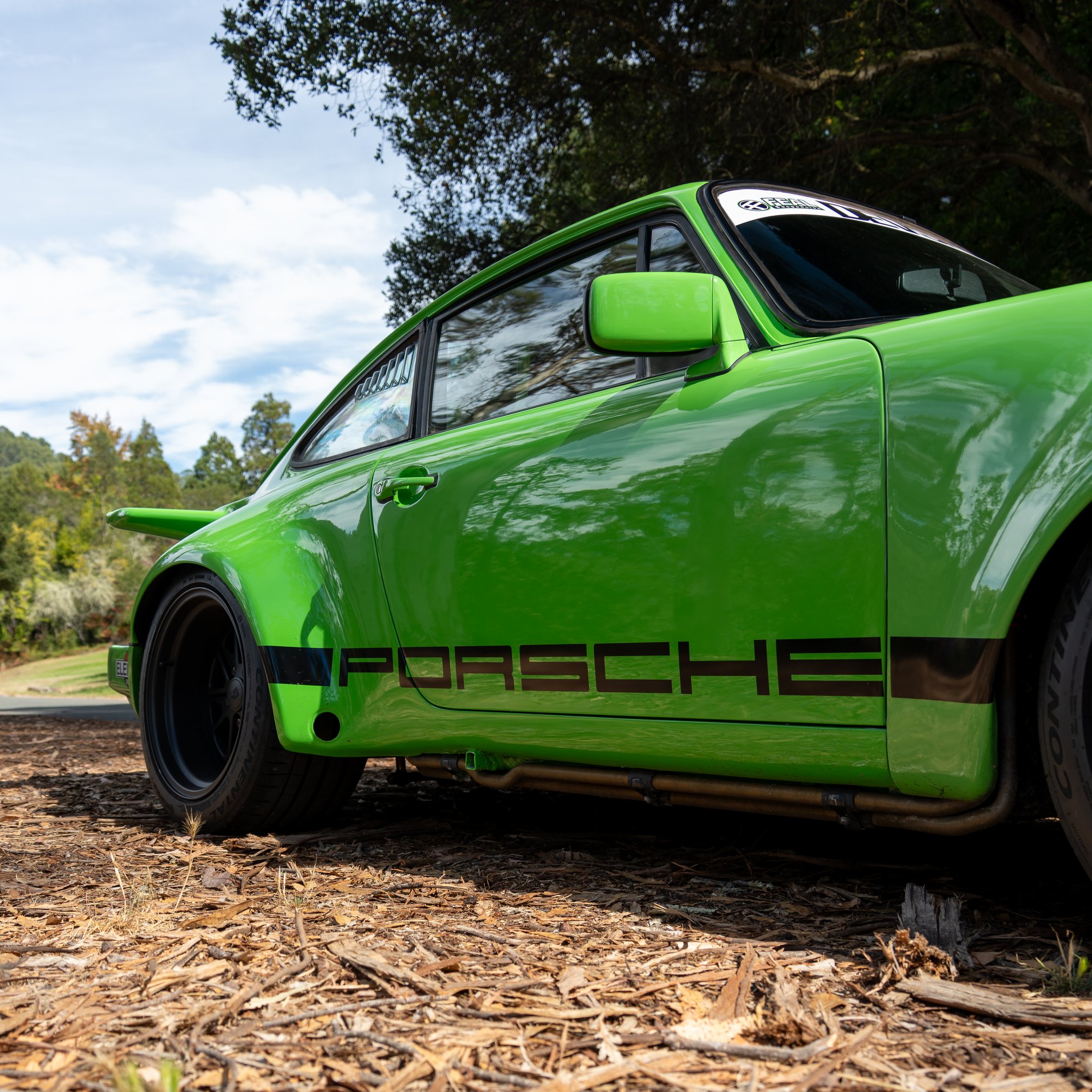
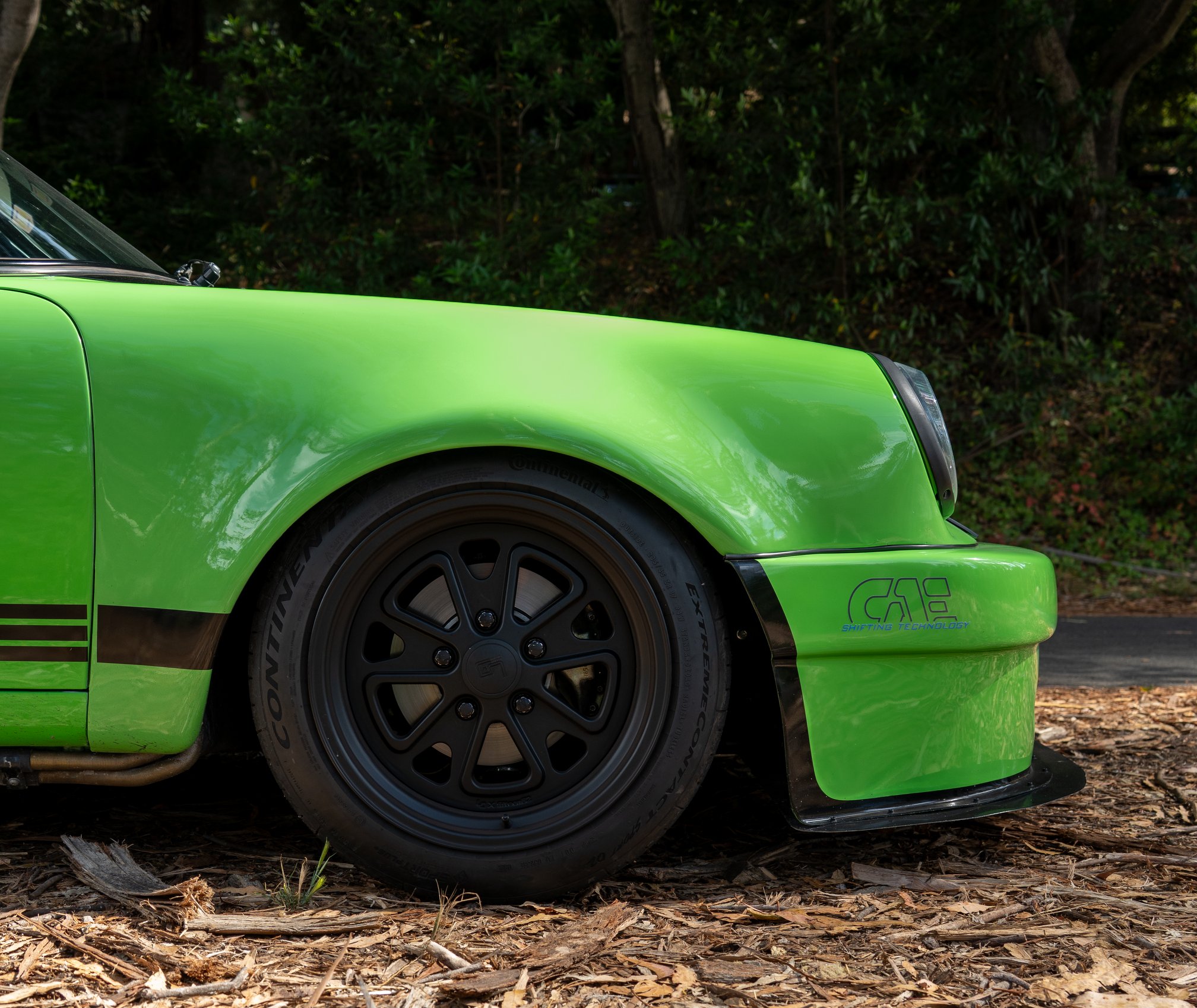
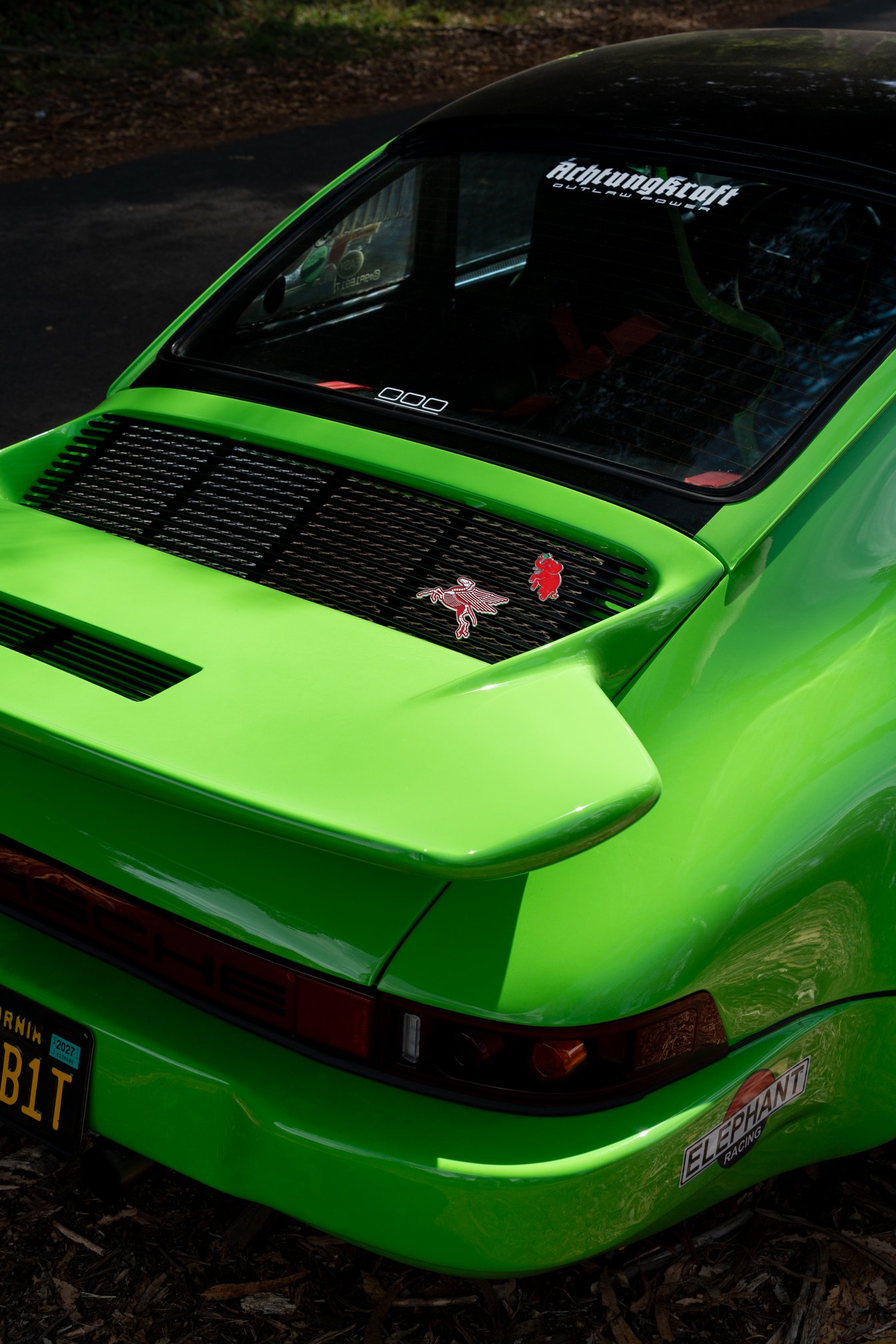
Now, Rob’s green demon “Kermit”—like the frog—is anything but stock. The 1983 Porsche 911 SC has been remade as an International Race of Champions (IROC) tribute car. Its hips have been widened, its lip extended with an aggressive front splitter, and a whale tail (so large it must come from a blue whale) has been affixed to its ass. And that’s just what I can see! Under that green skin are a sports suspension, racing brakes, and an extreme interior detox. Kermit is a track car!
(The transformation is so wicked that Kermit might be better named Constantine.)
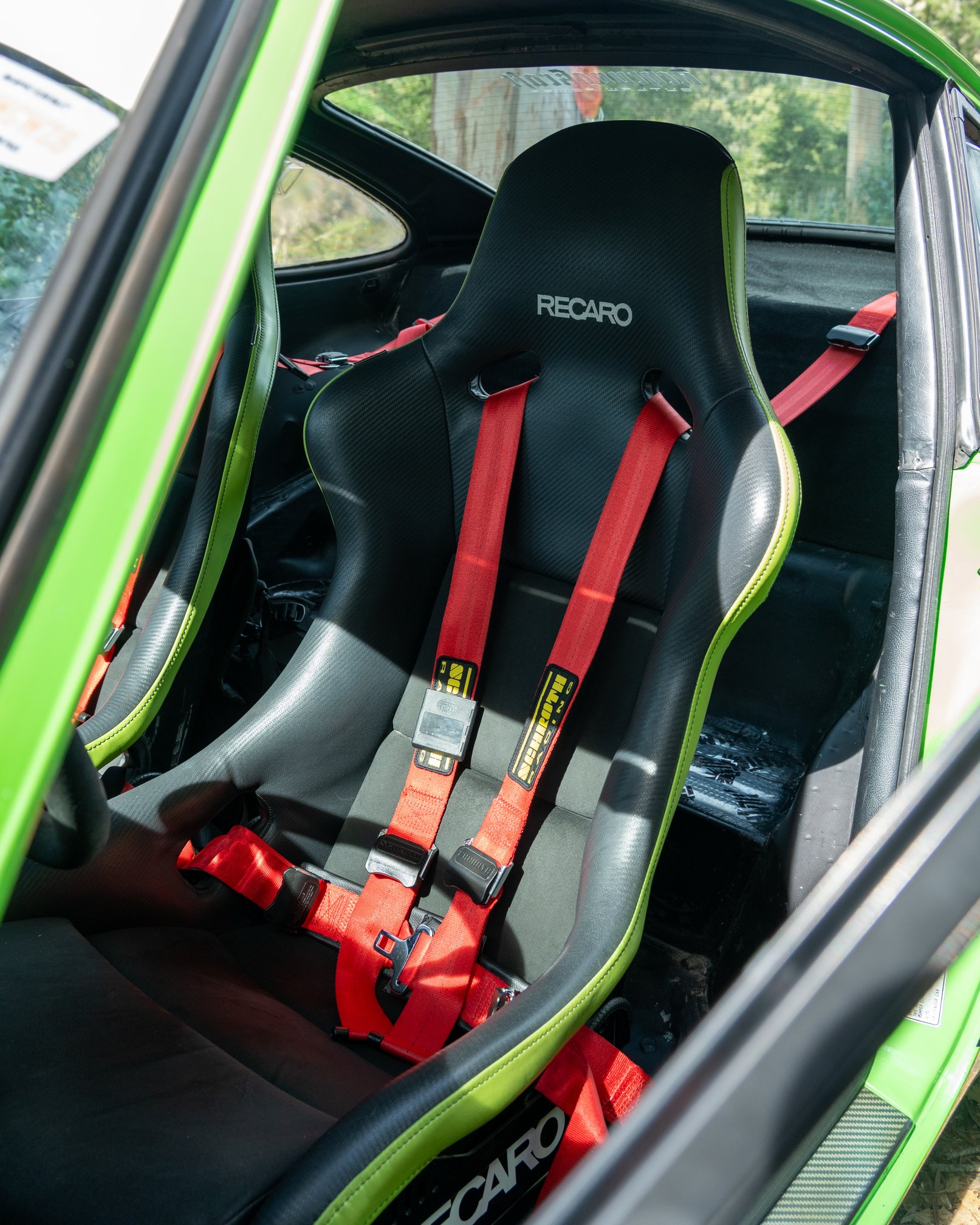
But I can’t just jump in Kermit and go. Threaded through the Recaro racing buckets are Schroth four-point harnesses, and since I just moved the seat aft, I have to readjust the belt lengths to the attachment point way in the rear of the car. With that done, I feel like a four-year-old as I slide my arms through the shoulder straps, clasp the lap belt at my waist, and pull it all tight.
I practice the clutch pedal, brake, and gearshift while the car is parked. The clutch has a long throw, and the shift pattern is long, too. Third and fourth gears are a little tricky to find, fifth is way up to the right, and thankfully, reverse has a mechanical lockout.
Somewhat familiarized with the controls, I reach for the key and fire up the engine. Kermit starts not with a frog’s croak but with a lion’s roar. (Anyone got earplugs?) I’m on the road and drinking from the firehose.
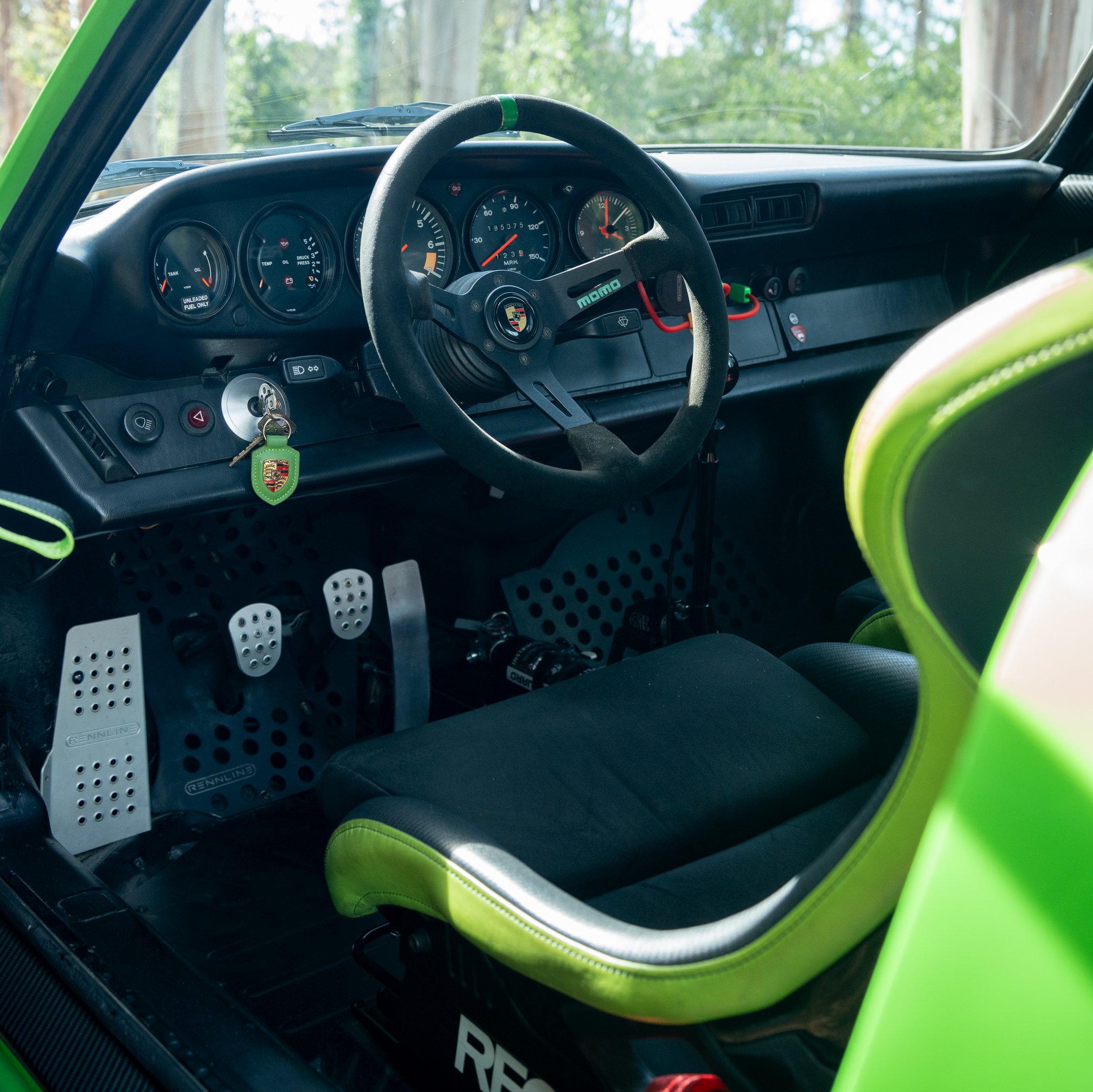
It takes me less than three minutes to go googoo over the 911 SC’s unassisted steering, which is constantly aflutter with bump action and camber tug. I can’t feel much of the pavement texture, but I love how the wheel’s wiggles communicate the tires’ work.
Due to the stiff sports suspension, Kermit rides over the bumps rather than absorbing them, and my Recaro racing seat is a jitter with chassis motions. If Kermit were a rollercoaster, he’d be the Big Dipper, the century-old wood ‘coaster that shakes its own rails as it rips up and down the Santa Cruz Boardwalk. The ceaseless motion is equal parts exciting and exhausting, but it does make my 25 mph dawdle feel like twice the speed.
Filling my ears is the roar of the 3.0L flat-six engine. This little-engine-that-could has 180k miles on its original internals, but the hardware around it has been refreshed. Although the motor is tucked deep in the 911’s tail, its voice reverberates so noisily through the bare metal cabin that I swear the car has side pipes. But in fact, the twin pea-shooter exhausts pop out from the center of the rear bumper.
I spend my first fifteen minutes with Kermit in a getting-to-know-you dance:
It is easy to come to terms with Kermit’s heavy clutch. Although the car has a racing clutch and lightweight flywheel, the clutch engagement is forgivingly progressive, and the revs rise and drop at a modern cadence. In no time at all, I’m comfortably slipping the car into motion on hill starts.
The floor-hinged gas pedal is precariously close to the brake pedal, which is dicey for my size 13 shoes. I tread carefully to avoid stepping on both pedals simultaneously. I also find dissonance between the brake and gas: While the brake pedal is tight, hardly moving, the accelerator has oodles of travel.
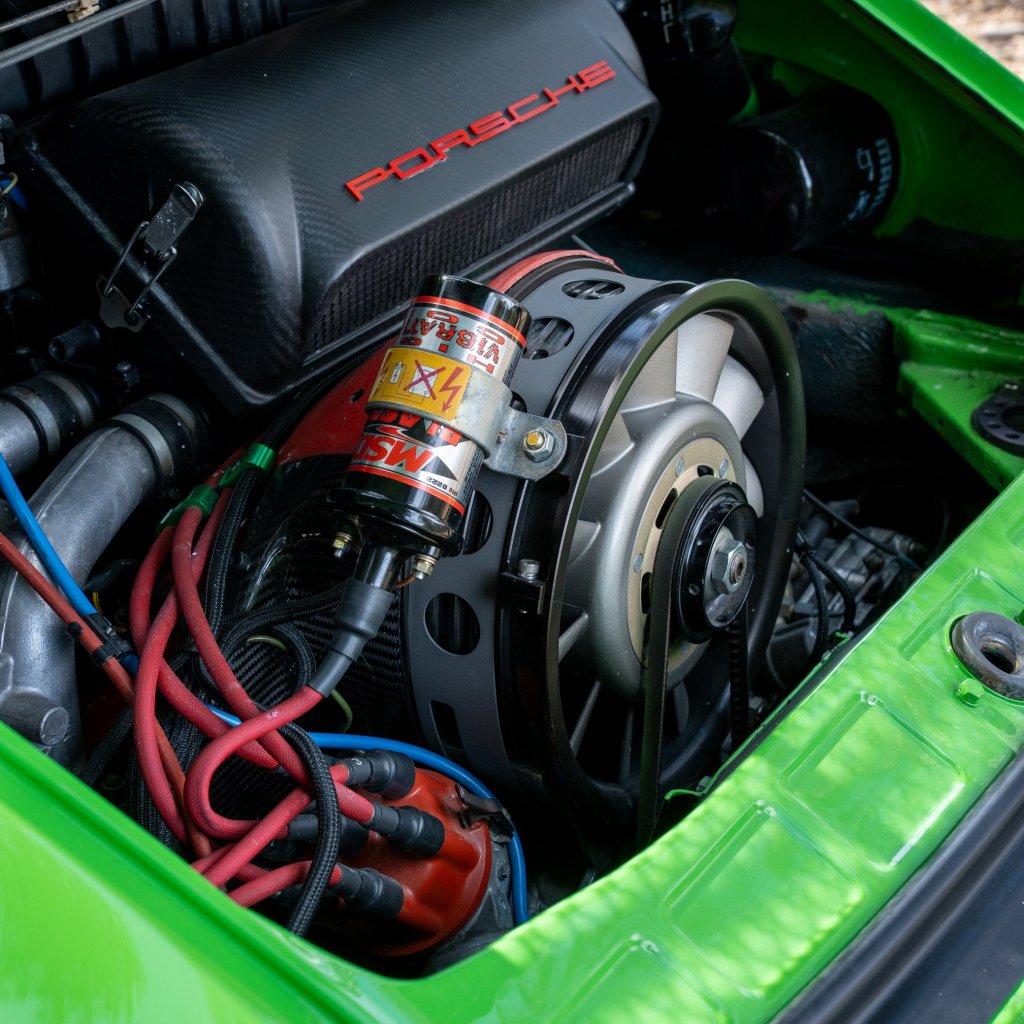
My dad’s carbureted Porsche 356 stumbles unless its gas is carefully feathered, so I’m delighted that the 911 SC’s engine spins reliably without careful throttle management. The motor engine purrs steadily at idle, alleviating fears of stalling.
And the big challenge? The gearbox. Oh, that gearbox.
Kermit’s five-speed manual is a 915 transmission, the poo-pooed predecessor to the golden G50. The reason for the shit-slinging is the 915’s “classic” mannerisms. The gearbox design dates back to 1972, and Kermit’s tranny feels every bit that old.
With long throws, vague gates, and recalcitrant synchros, I’m shifting like it’s my first time driving stick. First and second gears are easy enough to find—go hard left and row up or down—but third gear…oh boy!
Third is somewhere up and right of center, but searching for the gate is like groping in the dark. Attempting to find it, I go too far right, recover by drawing back to the left, wiggle, and there: I’ve found the opening. Then I drive the stick home, but not all the way, as there is resistance, so I wait while applying light pressure. After a moment, the resistance melts, and—yessss!—full engagement, immense satisfaction, third gear!
Did I say learning the 915 is like learning to drive stick for the first time? I meant like being in the sheets for the first time.
Yes, after 180k miles of wear, it is a fight to engage this 911 SC’s gears. If I am patient, waiting for the slow-acting synchros to act, then success is announced with a tactile click as the stick drives home the last centimeter and the gear engages. But if I rush the process, I get a scolding grind.
Before long, I’m sweating in the race bucket seat. I look for relief, but Kermit has been unburdened of his A/C compressor and HVAC fans. Cabin cooling means rolling down the windows. Cabin heating? Roll the windows back up. Thank goodness it is 72°F today and fog is on the horizon.
Eventually, I break free of the city and enter rural parkland. Kermit roars through the hills in second gear (I still haven’t found third!), catching the attention of hikers and bikers long before he is seen. Heads swivel to locate the source of noise, and once gazes alight on Kermit’s bright green coat and swollen fenders, eyes stick like glue. I think mouths are turning up in smiles as I scream past, but I’m too far away to tell.
With pace, I can feel Kermit’s dance steps.
The brakes are marvels. The pedal hardly moves as I apply pressure, but the harder I push, the harder Kermit stops. The Pagid track pads and steel discs are racecar-correct, with no signs of squish or fade. I’ve got modern braking performance in a classic car.
The small-diameter Momo wheel is light to spin for small adjustments. I’m used to old cars having sloppy reactions, but not Kermit. His front axle is keenly coupled to the steering wheel, so he jumps immediately into the corners.
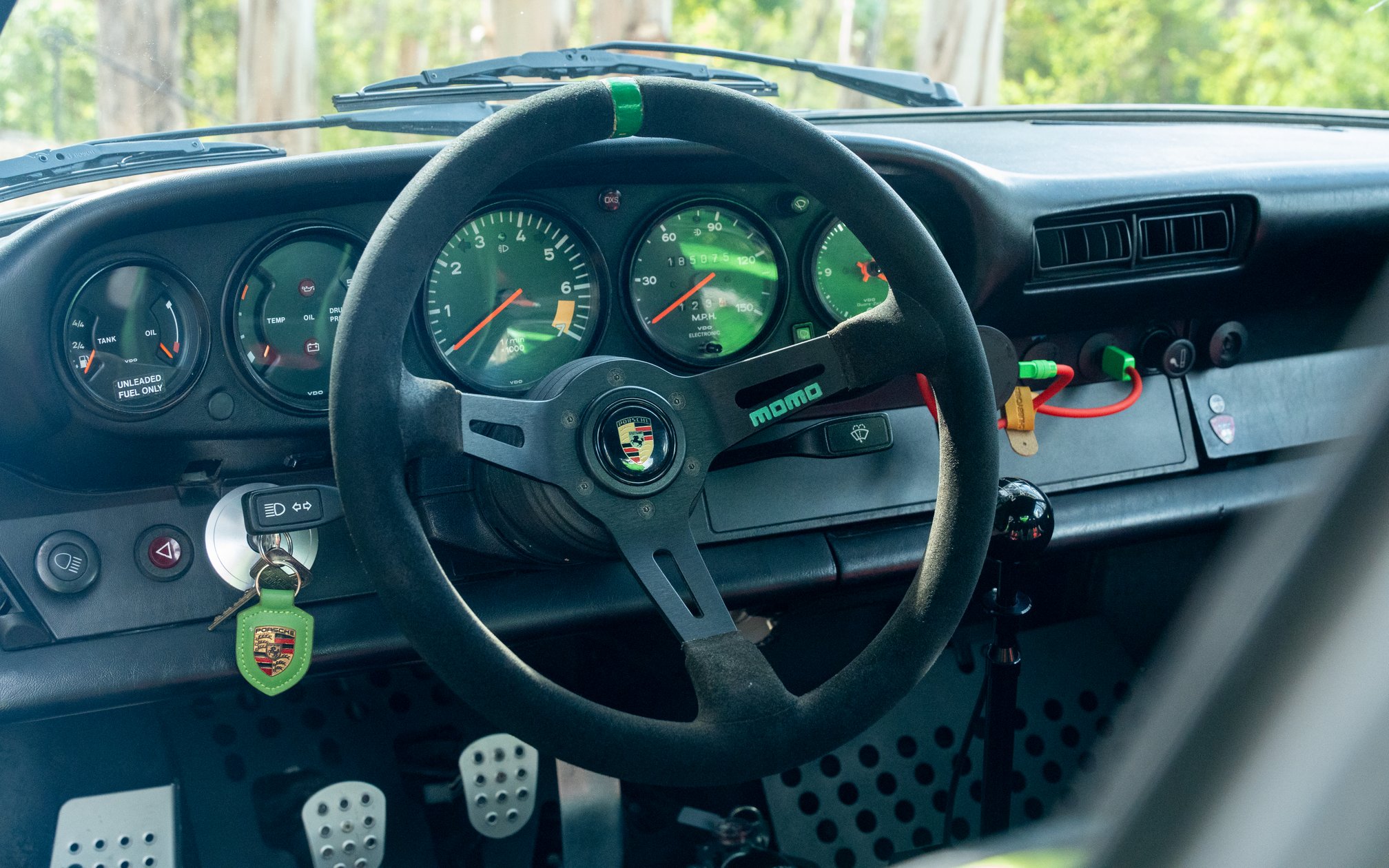
In tighter turns, where I need to twist 45° or more, the wheel’s resistance builds significantly, making me work for my reward. This is part of the famed 911 steering feel, where laterally loading the tires results in steering weight.
911s are also famed for power-on understeer, but curiously I’m just not finding any in Kermit. The sports suspension adeptly fights body roll and keeps the Continental ExtremeContact Sport O2 tires plastered to the pavement. With my confidence running high, I tuck the green bean into the corners with a head of steam, then marvel at the front end’s accuracy and how the car cuts clean lines out of the corners. The power-on understeer was present in the 996 GT3, 997 GT3 RS, and 992 C2S, but is absent in Kermit!
Of course, Kermit’s nose has much less push from behind to fight, because the smooth-spinning 3.0L is more roar than bite. Power is thin at low rpm, and although more oomph is found past 3.8k rpm, Kermit is far from fast.
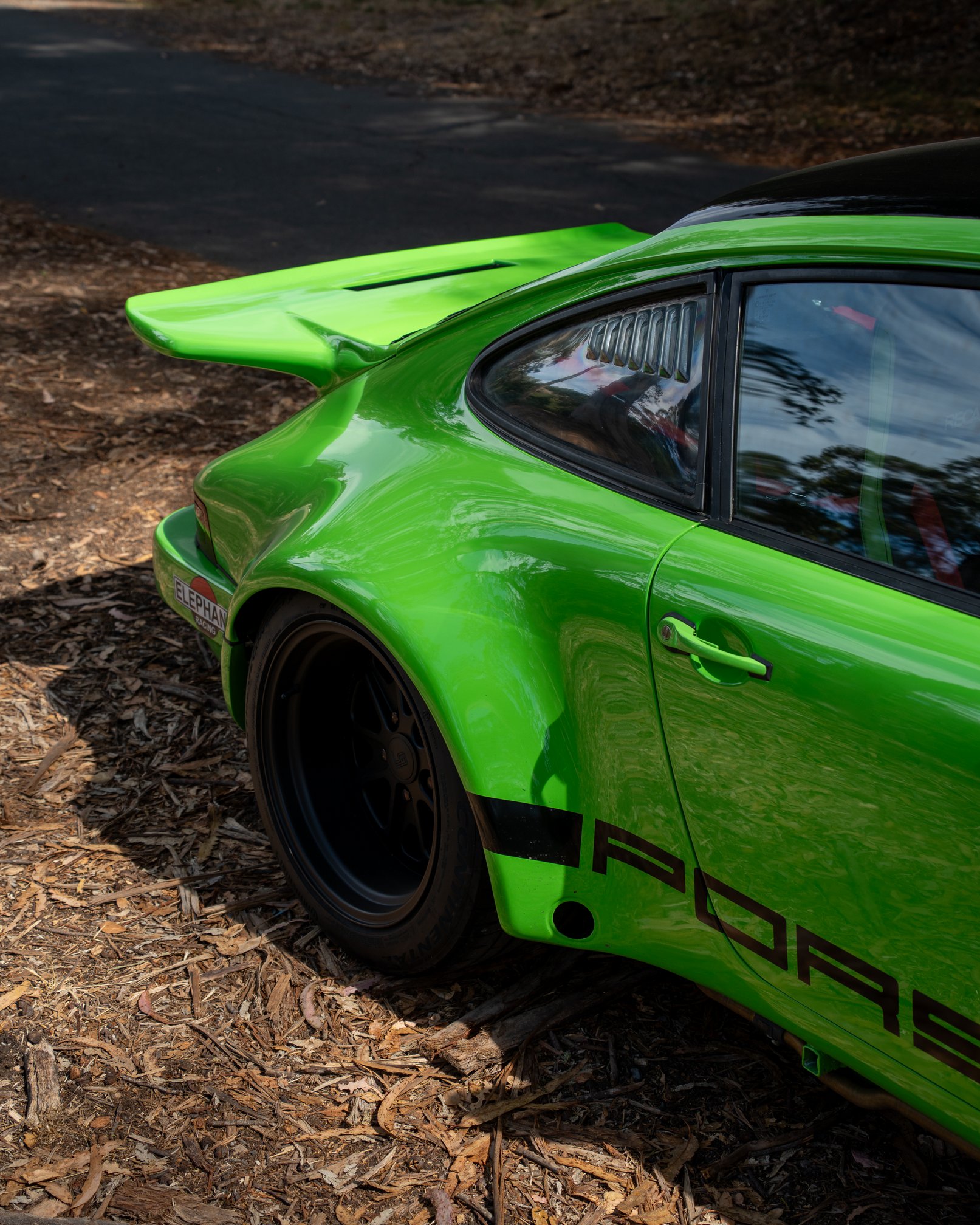
With classic power and modern suspension and tires, Kermit feels like the ultimate momentum car, one in which I can do no wrong. But Rob tells me to watch out: he’s accidentally seen Sonoma Raceway and Thunderhill backwards in a spin.
Do I wish Kermit had a modern transmission in place of the aloof 915? Maybe not. Fighting for a great shift is half of the pleasure of piloting Kermit.
The other half is in the chatty steering, firm brakes, flat suspension, and THIS IS MY QUITE VOICE engine. Driving Kermit, I’m swimming in mechanical soup. I like driving, so I love this car.
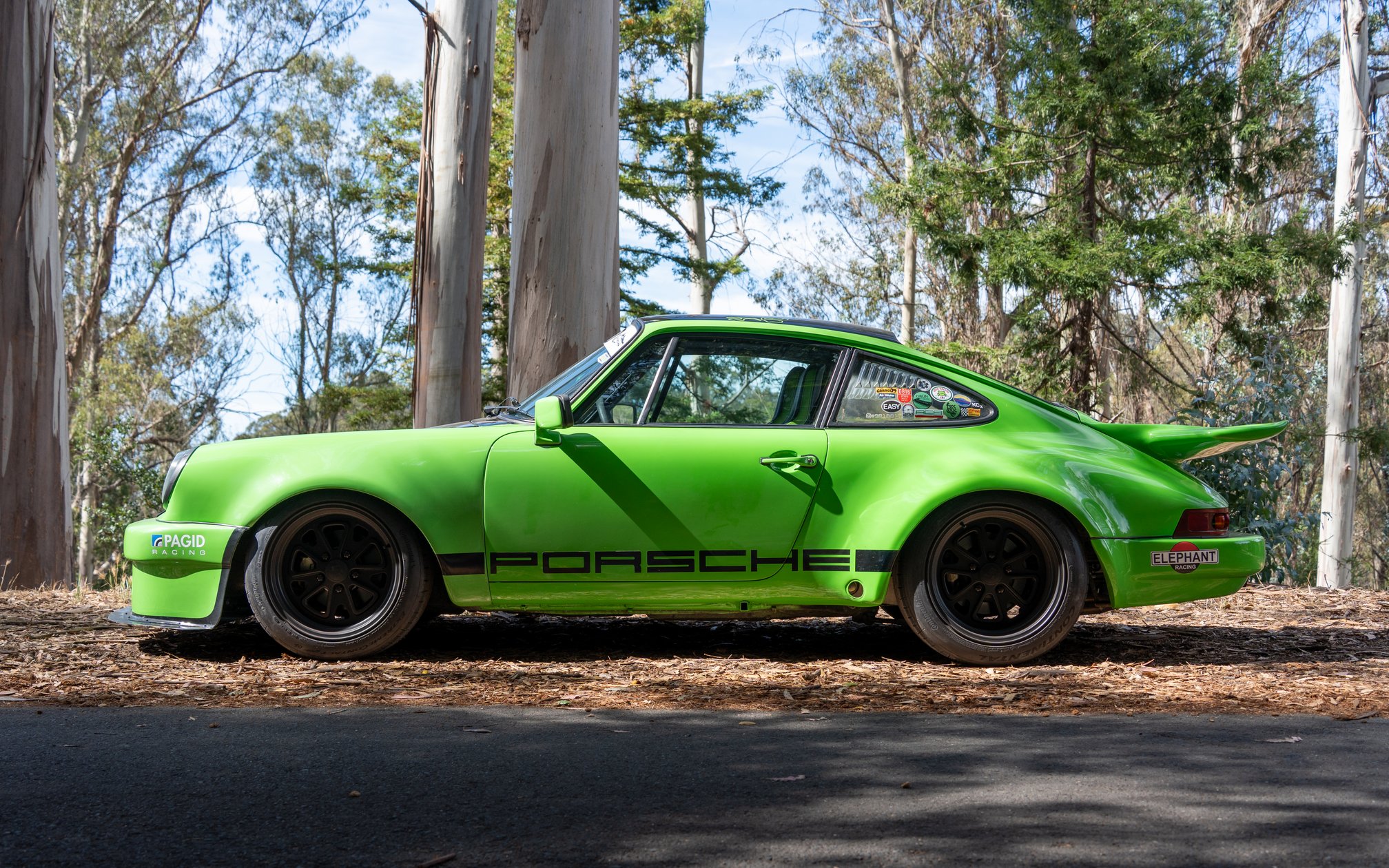
When I drive the 1963 Porsche 356, I relish its smells and sounds and the challenge of keeping the stumbling engine running, but my confidence is sapped by the wooden brakes and antique acceleration. I’m just as happy but a lot more confident in the 1983 911 SC. It has the footwork to outdance danger, enough pace to run in the modern rat race, and the feedback and sound that keep me engaged.
Is Kermit fast? By modern standards, no. Like a Miata, he rips around the corners and crawls down the straights.
Is Kermit fun? By modern standards, yes, he is off the charts.
Kermit’s Modifications
Suspension:
- Feal Suspension 442 shocks with 2-way Swift springs and custom valving
- Elephant Racing Suspension
- Quick change strut braces
- 930 Turbo tie rods
- Camber plate monoball cartridges
- Spherical control arm bushings
- Decambered ball joints
- Bumpsteer kit
- Quick change camber plate
- Strut top hardware kit
- Rear quick-change spring plate kit
- Welded shock bodies onto existing knuckle
Engine:
- Elephant Racing dual oil coolers (STD172 CSF oil cooler kit in series)
- MSD ignition
- 1 5/8” Patrick Motorsports heat exchanger delete headers
- Dansk 1-in-2-out racing muffler
- Achtung Kraft carbon fiber intake
- Rennline carbon block-offs and covers
- Sonderworks engine firewall pad
Transmission:
- Patrick Motorsports RSR 225mm flywheel
- Centerforce high-performance clutch
Brakes:
- Stock brakes rebuilt by PMB Performance
- Pagid Orange pads
Wheels/Tires:
- 52fifteen Urban Outlaw 01 wheels, 17×9 front and 17×11 rear
- Continental ExtremeContact Sport 02 SL tires, 235/45 front and 285/40ZR-17 rear
Body:
- TRE Motorsport IROC whale tail
- GT Racing fiberglass IROC bumpers
- Lexan RSR rear quarter windows
- Recaro Pole Position Limited seats
- Schroth rally harnesses
- Momo steering wheel
- CAE 911F shifter
- Rennline RSR carbon door cards

