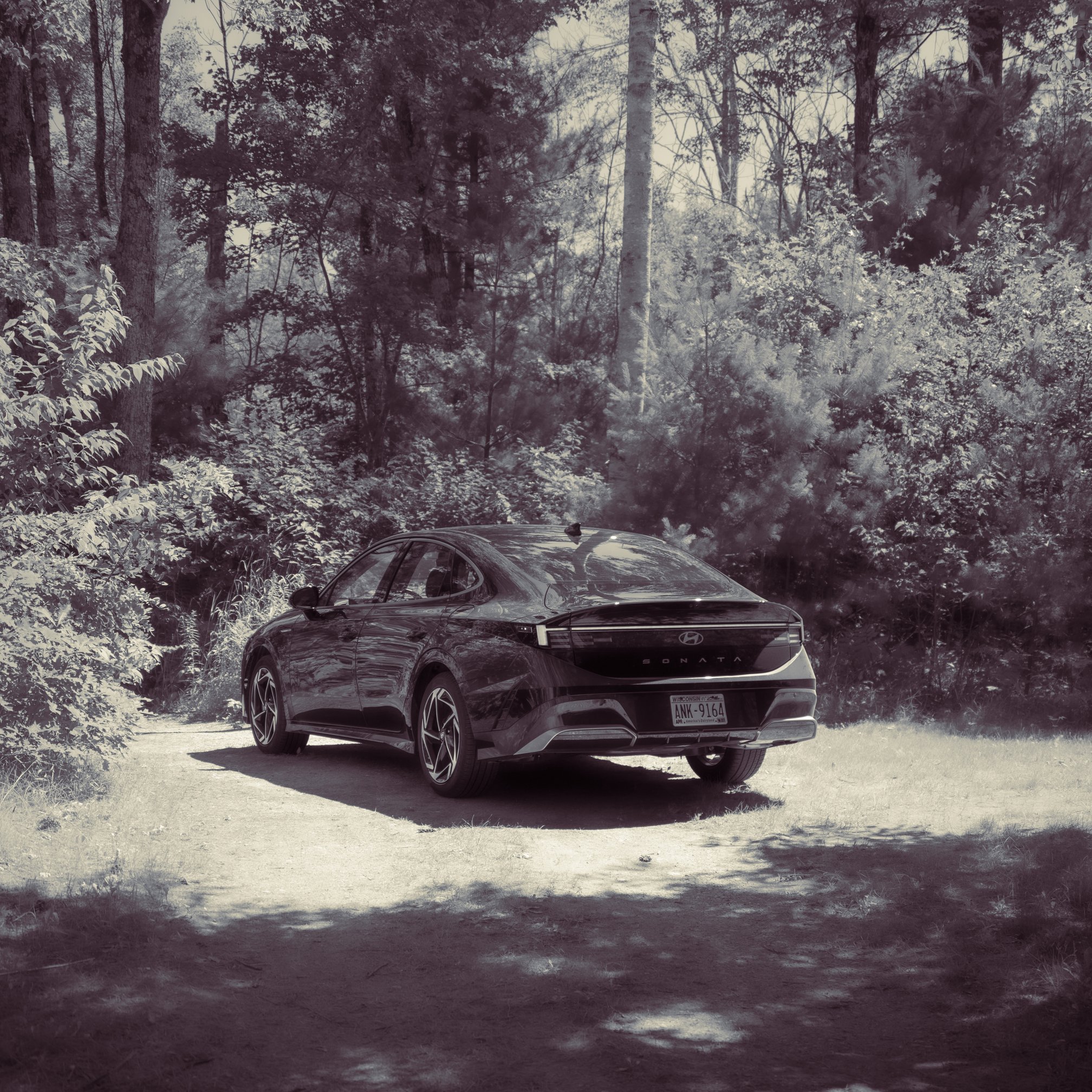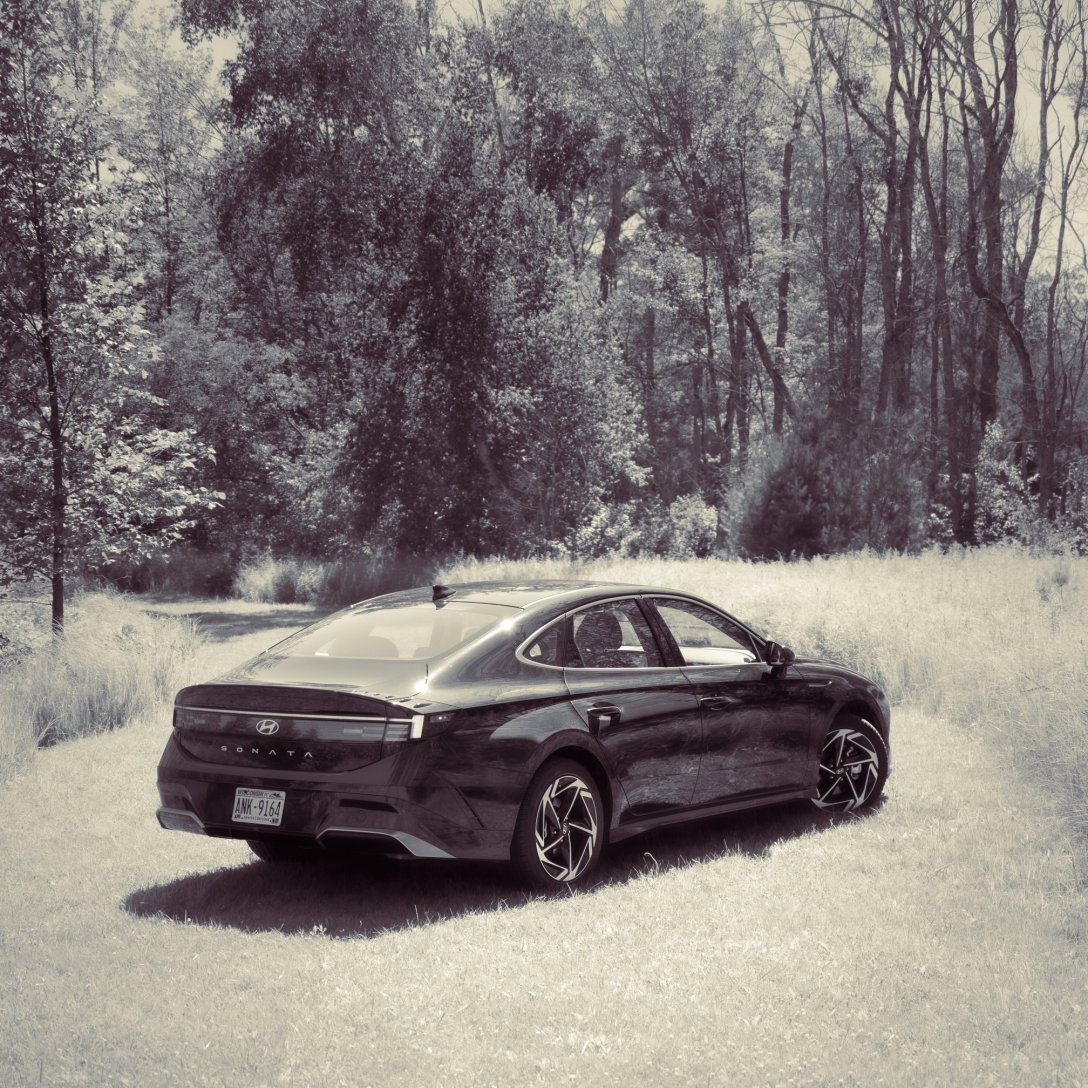
We live in an age of TikTok clips and AI summaries, so I’ll spare you the prose and get to the point. The $29k 2026 Hyundai Sonata SEL Sport is a good commuter and a fine family car with enticing tech, but the SEL Sport trim name is just marketing—this sedan won’t ravish a road. I’d recommend the Sonata, with some reservations. Read on to learn more.
I have the Sonata SEL Sport for a summer vacation with the family. My wife, our two littles, and I are heading to the lakeside cabin for some R&R.
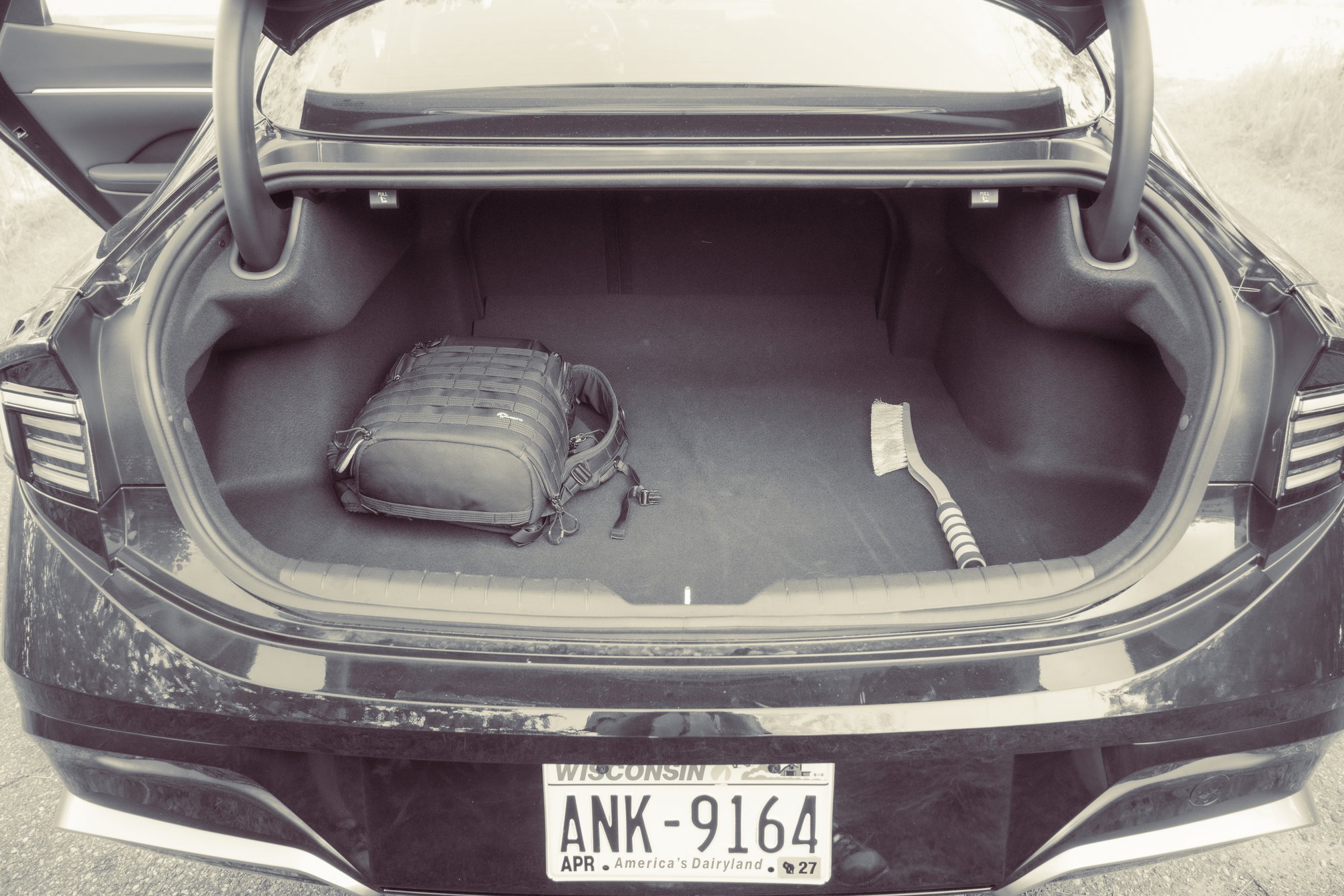
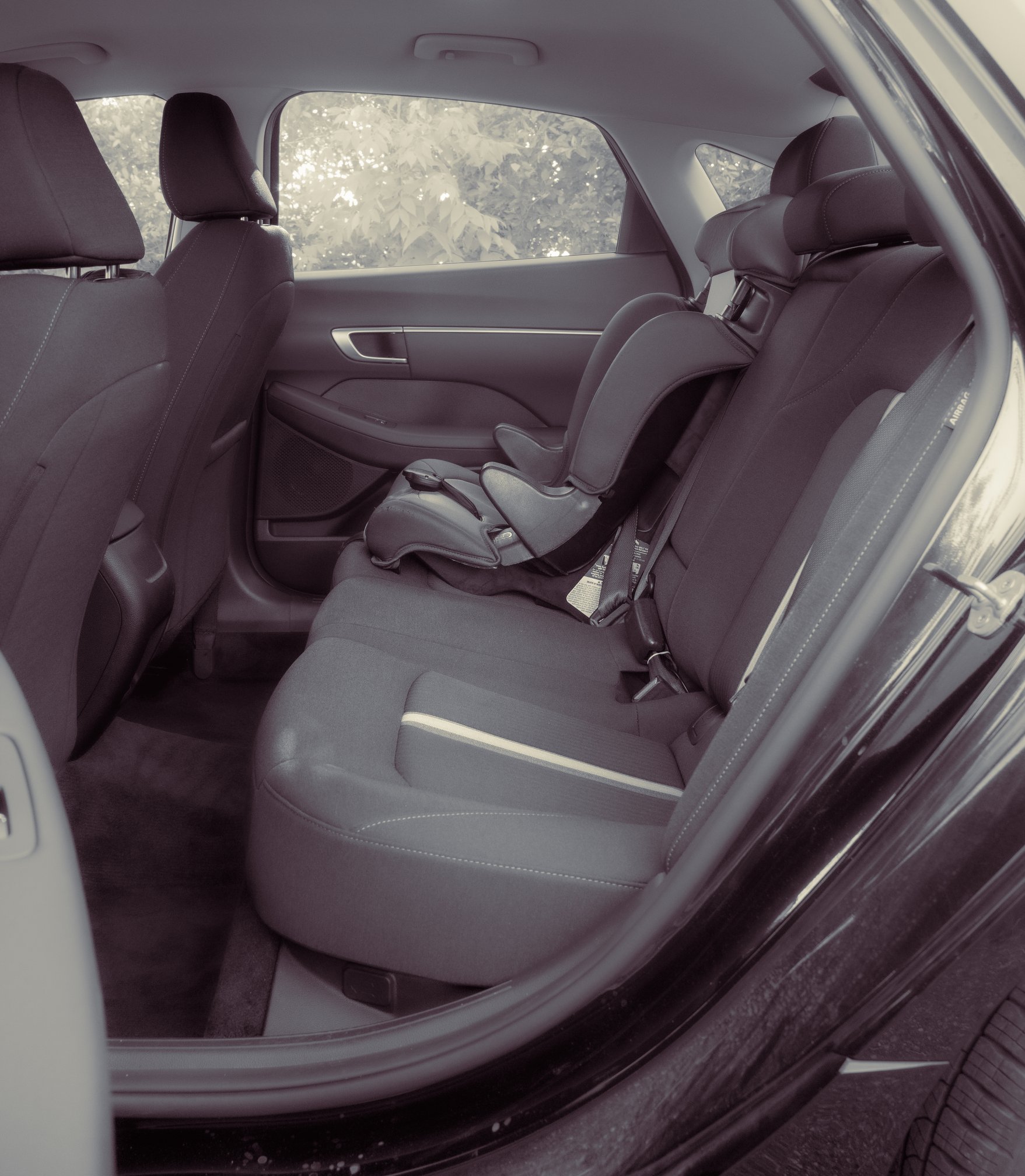
By rental-car standards and EPA classifications, the Sonata SEL Sport is a full-size sedan, never mind that Hyundai calls it mid-size. As we load our three 21” carry-on suitcases into the generous trunk and buckle the kids into the back seats, I can see the argument for the full-size bucketing. There’s ample room for four adults—and their luggage—in the Sonata.
The 2026 Hyundai Sonata is sold in six trim levels. The cheapest are the SE and the SEL Sport, both of which are powered by Hyundai’s 2.5L inline four-cylinder engine. The Sonata is also sold in three hybrid trim levels and an N Line that fits a hot turbocharged four-banger.
Even the base $27,450 SE is loaded with modern tech and safety features. A digital gauge cluster and a big 12.3” touch-sensitive infotainment screen come as standard, as does wireless Apple CarPlay and Android Auto. To keep phones brimmed, there are two fast-charging USB-C ports for the front seats and two more for the rear. All Sonatas get forward collision avoidance, lane-keeping assistance, lane-following assistance, smart cruise control with stop-and-go ability, blind-spot warning, safe-exit warning, and rear cross-traffic warnings. Whew!
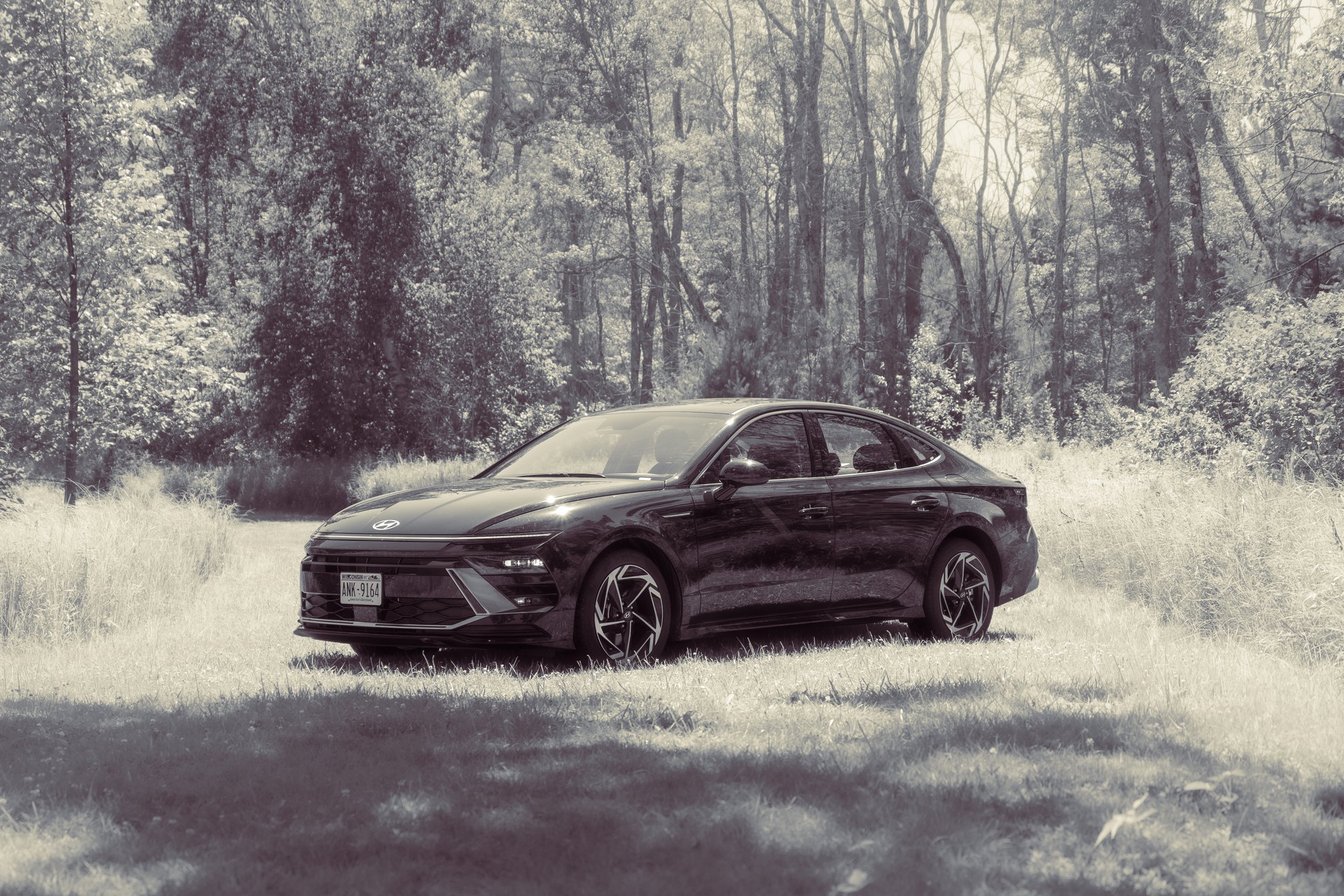
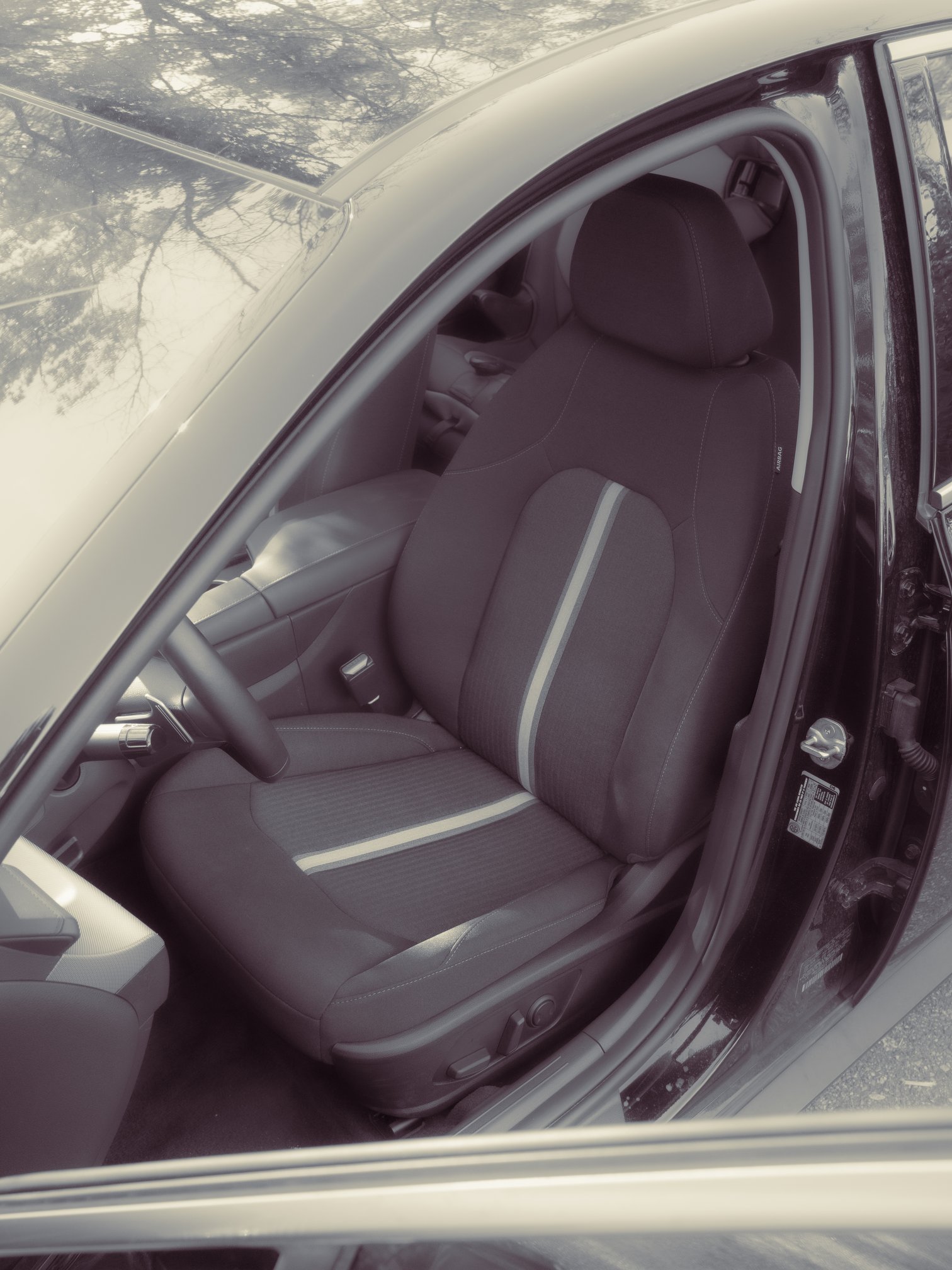
So why pay $29,150 for the front-wheel-drive Sonata SEL Sport I have today? Well, it adds dual-zone climate control—which is nice when married to an always-cold wife—spicy 18” wheels, a leather-wrapped steering wheel, metal paddle shifters, wireless phone charging, front-seat heating, and driver’s seat power adjustments including inflatable lumbar support.
That last item, the adjustable lumbar support, will be crucial to my comfort on the two-hour trip to the cabin.
Everything I need for my getting-to-know-you ritual as I settle into the Sonata is easy to find. The switches for the seat and mirrors are in their traditional locations (rather than tucked in a software menu), the big phone-catcher tray and its USB-C ports are impossible to miss, and the infotainment software is intuitive and prompt. It takes but two or three minutes to connect my phone, adjust the driving position, and point Google Maps at our destination.
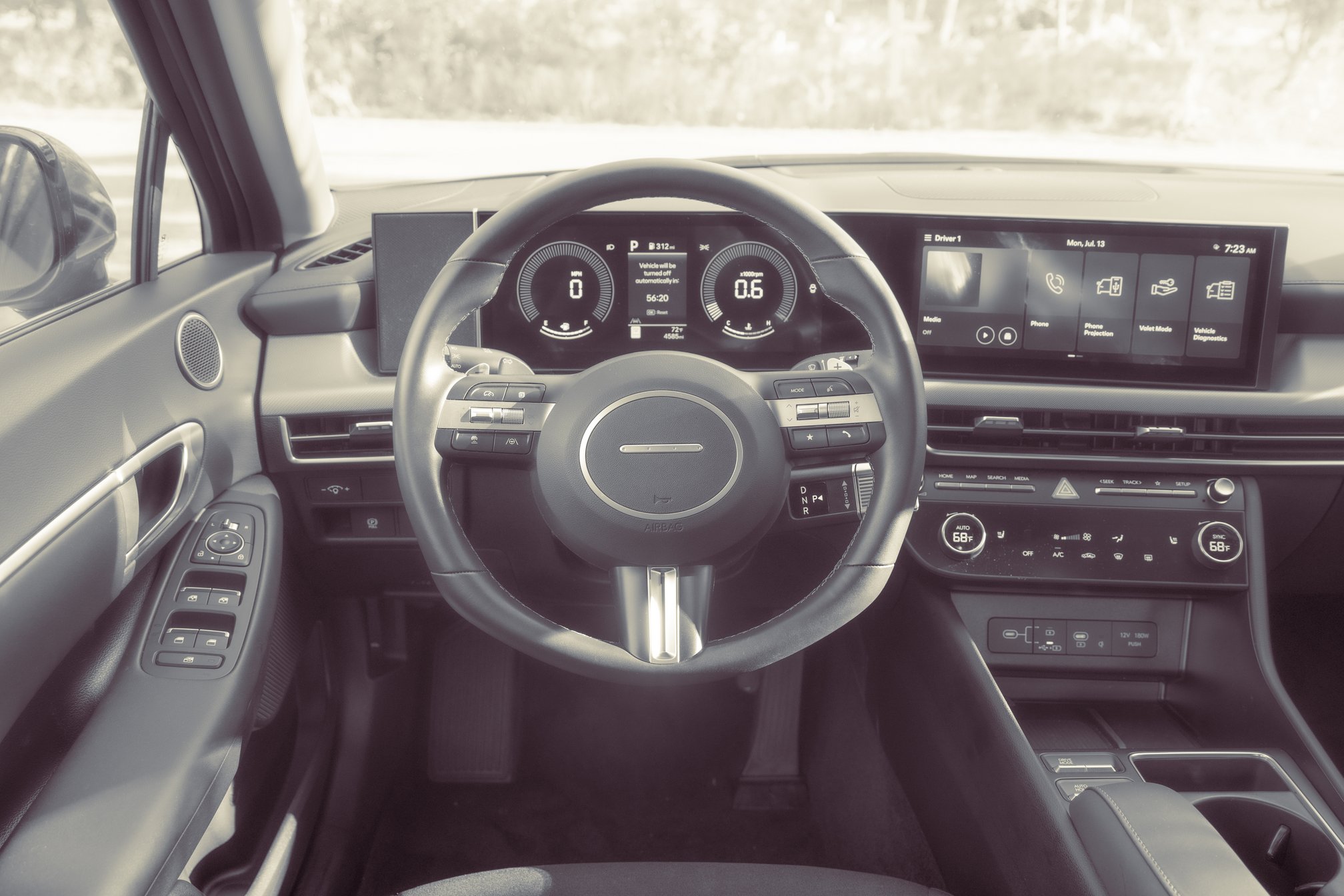
The route is 80 miles of interstates and country byways, which I drive nonstop. The Sonata SEL Sport’s 8-speed automatic transmission is slickly smooth up and down the gears and takes pains to run the engine at low rpm, minimizing noise and vibrations. At speed, the cabin is reasonably hushed; modest amounts of wind and tire noise compete with our conversations.
The suspension feels pleasantly supple on the highway, though the low-profile 235/40R18 Pirelli Zero all-season tires clomp over frost heaves and pavement cracks. Perhaps the Sonata SE’s 16” wheels would smooth the jolts better?
The 18” wheels also cost the Sonata 2 mpg in EPA testing, bringing its scores down to 25 city/36 highway. In practice, I see much better numbers: cruising at 72 mph with the A/C pumping, the trip computer reports a remarkable 42 mpg.
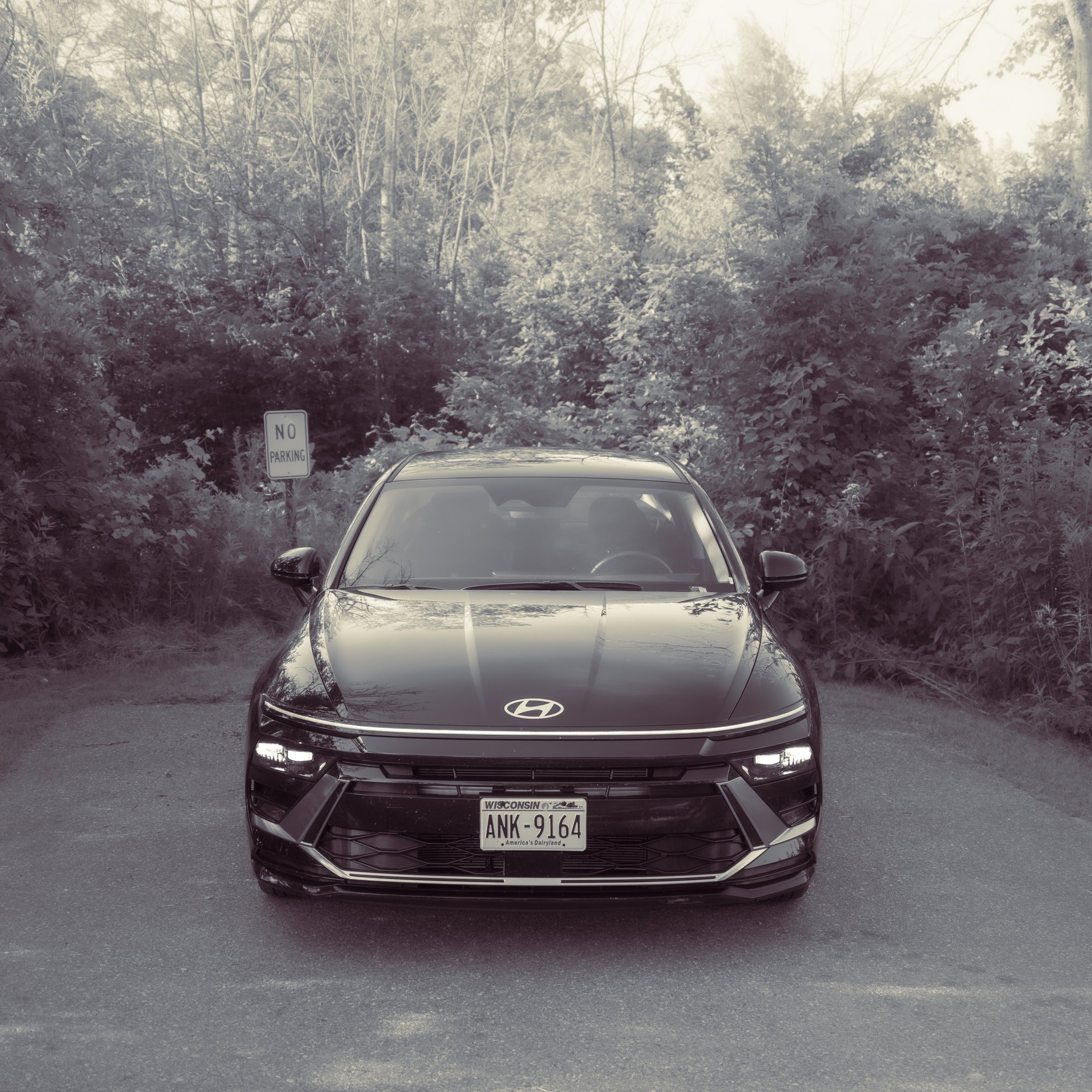
Kudos, then, to the Sonata SEL Sport’s 2.5L four-cylinder engine. The mill is naturally aspirated (no turbos) and sips regular unleaded fuel. Its 191 hp and 181 lb-ft of torque are modest numbers in 2026, but the 3,305-lb Sonata feels adequately motivated. While the sedan doesn’t storm up on ramps, it does glide effortlessly at speed.
The other effortless aspect of piloting the Sonata is the Smart Cruise Control (Hyundai’s naming, not mine) and Lane Following Assistance. SCC will match the speed of the traffic ahead, while LFA steers to follow the road’s curves. While LFA isn’t as sophisticated as the newest tech from Mercedes or Tesla, it lessens my shoulder tension by taking over steering duties, so I use it extensively on the drive. (I’m still required to keep my hands on the wheel.)
Where does LFA fall behind the best tech? Well, it applies constant, tiny adjustments to hold the center of the lane, making the steering feel busy in my hands. It is also fooled by the scrubbed lane markings in a construction zone, following the old lane lines rather than the new! That scary surprise teaches me to turn off LFA in cone zones.
My kids are happy to listen to the radio and count water towers as the Midwest scenery rolls by. The hills keep shadowing the FM stations, so it is a boon that the Sonata has dash and steering-wheel buttons for radio seeking, tuning, and volume. Do you remember when real buttons were the norm? Hyundai does!
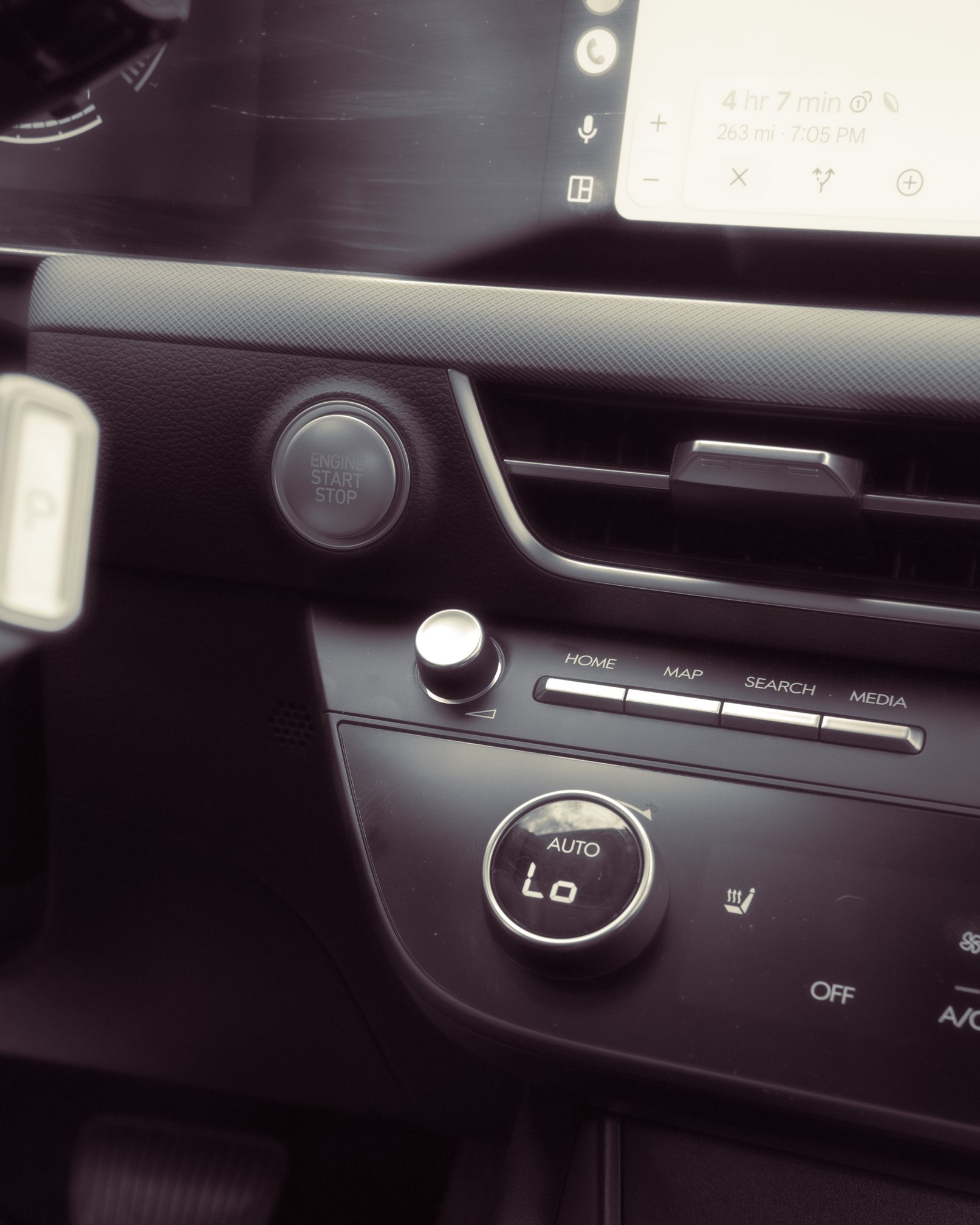
Additionally, the Sonata uses knobs for the climate control and shortcut buttons for the infotainment system. Jumping from our Google Map directions to the vehicle settings and back again is a cinch.
On the long drive, my back stays happy, but my bum gets antsy after an hour. The Sonata SEL Sport’s seat bottom could be more comfortable.
My kids do find a reason to complain: the rear seats don’t get dedicated air vents. Considering the day’s sweltering heat, it’s a major demerit.
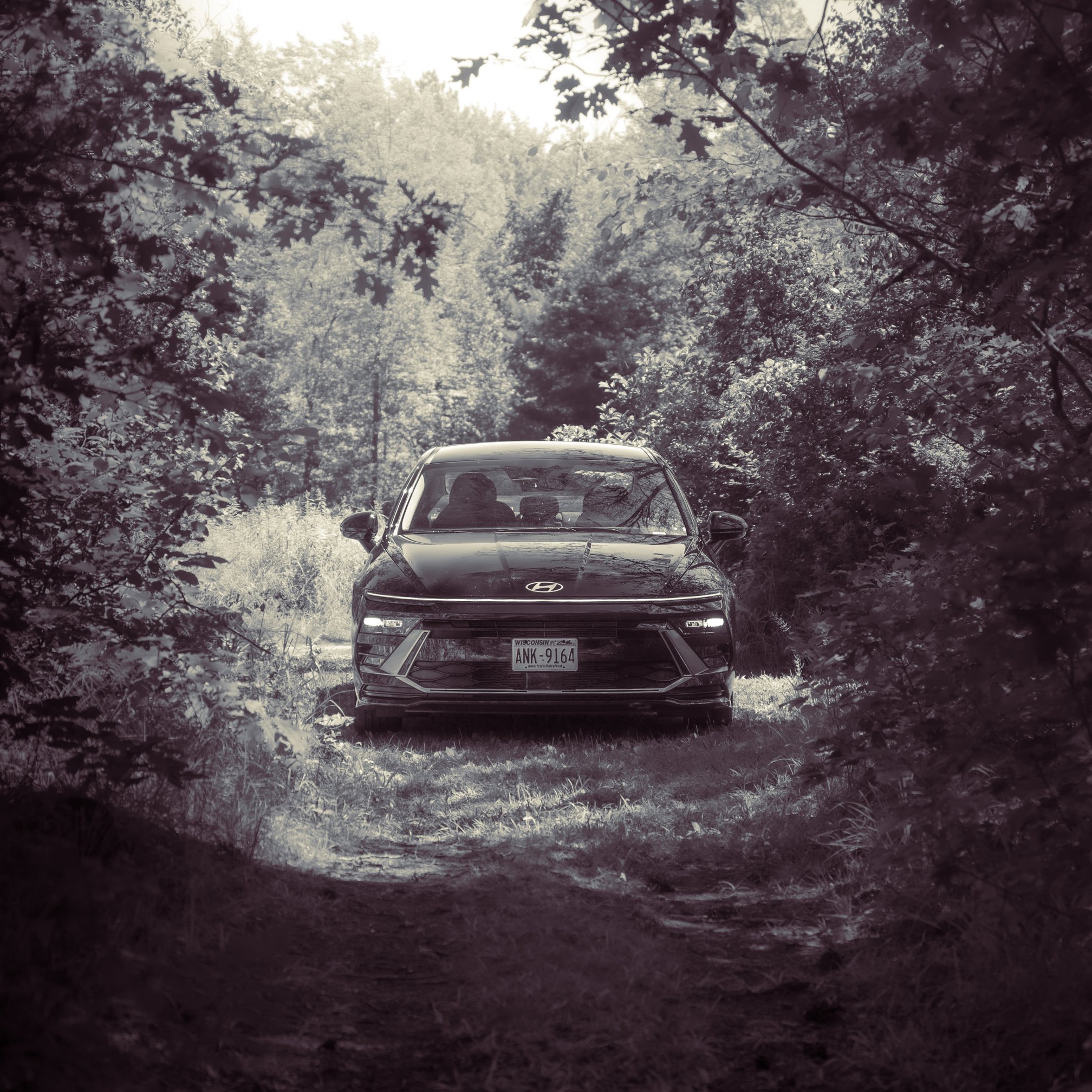
As we arrive at our destination, I’m scratching my head about the “sport” in the Sonata SEL Sport’s name. The sedan is calming and quiet, but has done nothing so far to indicate a wild side. Is this trim level nothing more than flashy wheels, a leather steering wheel, and marketing hyperbole? Midway through my vacation, I steal away from the lake to find out.
I point the Sonata SEL Sport at the nearest twisting tarmac and give it the beans. The road writhes, rises, and falls as it follows a creek through forest-filled hills. The pavement is good, and my stomach is laughing, as I go up and down, round and round.
When I thrust the Sonata into the corners, it clings respectably from entry to apex to exit, but steers without involvement or joy. There is modest weight when the wheel is cranked, but the leather rim relays little information about the tire loads.
The steering is typical EPAS, precise and rubbery. There is just a hint of road texture and impact feel in the wheel; those events are communicated more clearly through the floor and pedals.
It is impossible to tell at the six-tenths speeds I’m driving, but the chassis hints that it’s tuned safely for mild understeer. While the chassis is reasonably well-balanced, the front tires will run out of grip first.
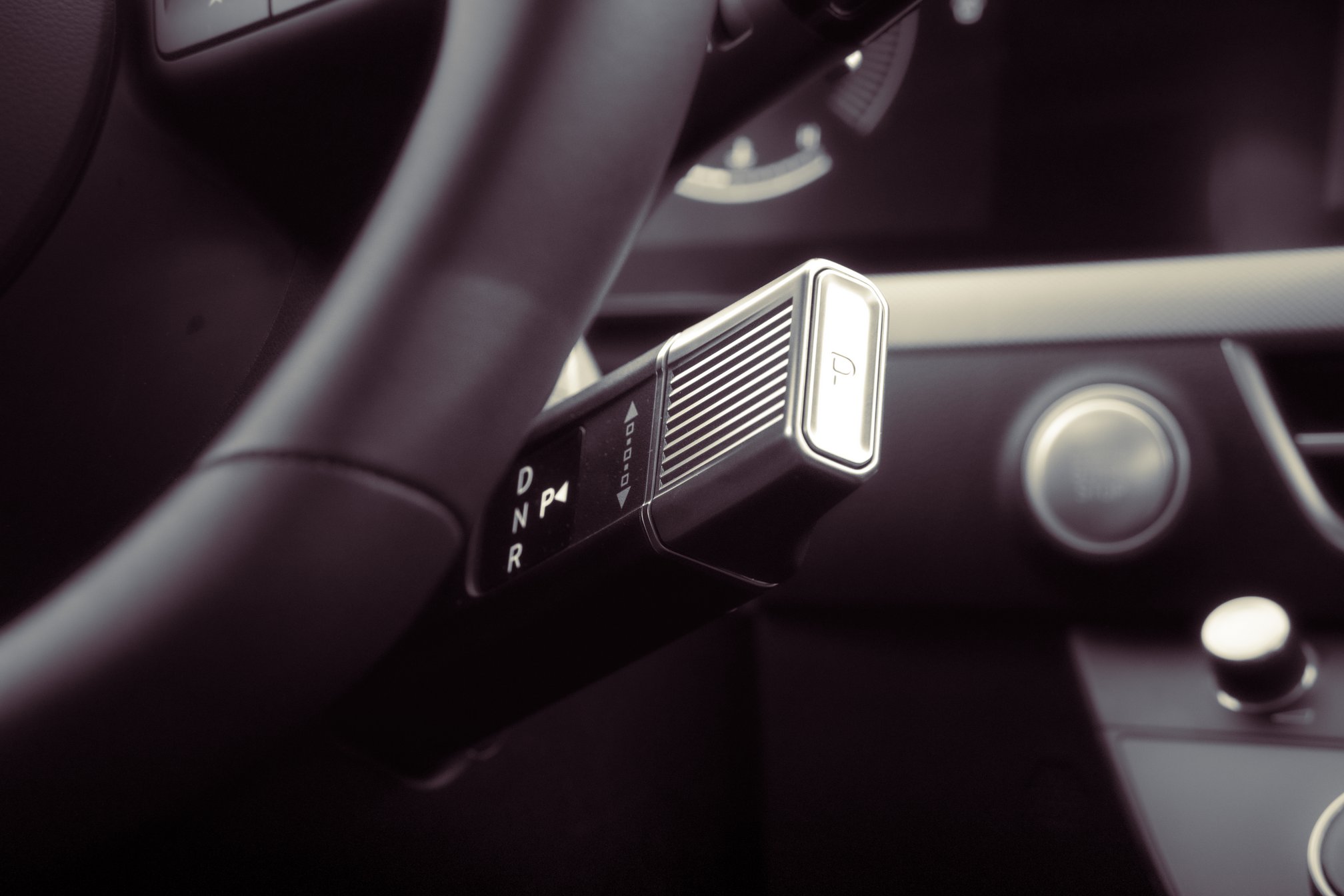
The metal paddle shifters produce consistent, quick-ish gear changes. I keep the revs high as I attempt to balance the car by the throttle, adding gas to shift weight rearwards or lifting the long pedal to load the turning wheels. However, the four-cylinder’s engine braking is meager, so adjusting the cornering balance using the gas pedal is unsuccessful. Instead, the car follows my hands and mostly ignores my feet.
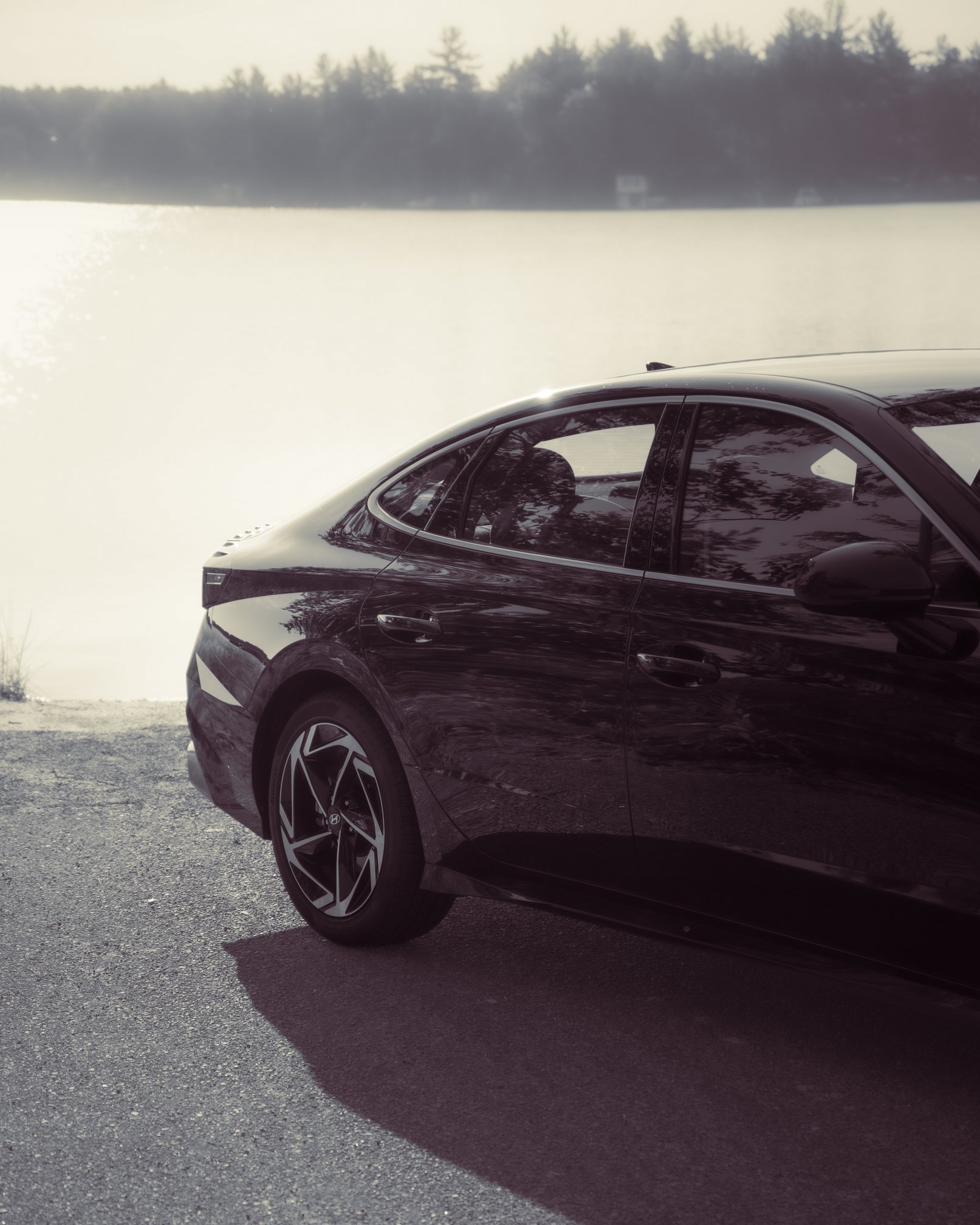
The suspension keeps the tire and body motions in check, but I feel hints of float over whoop-dee-woo undulations. The tires hit sharply on pavement cracks, but never skip off the surface.
The dynamic highlight is the brakes. They respond immediately, yet avoid touchiness, and forceful applications produce righteous retardation.
Full-throttle launches happen without tire squeal or torque steer—the car just picks up its skirts and, well, trots. The engine doesn’t have the oomph to spin the tires on hot dry tarmac.
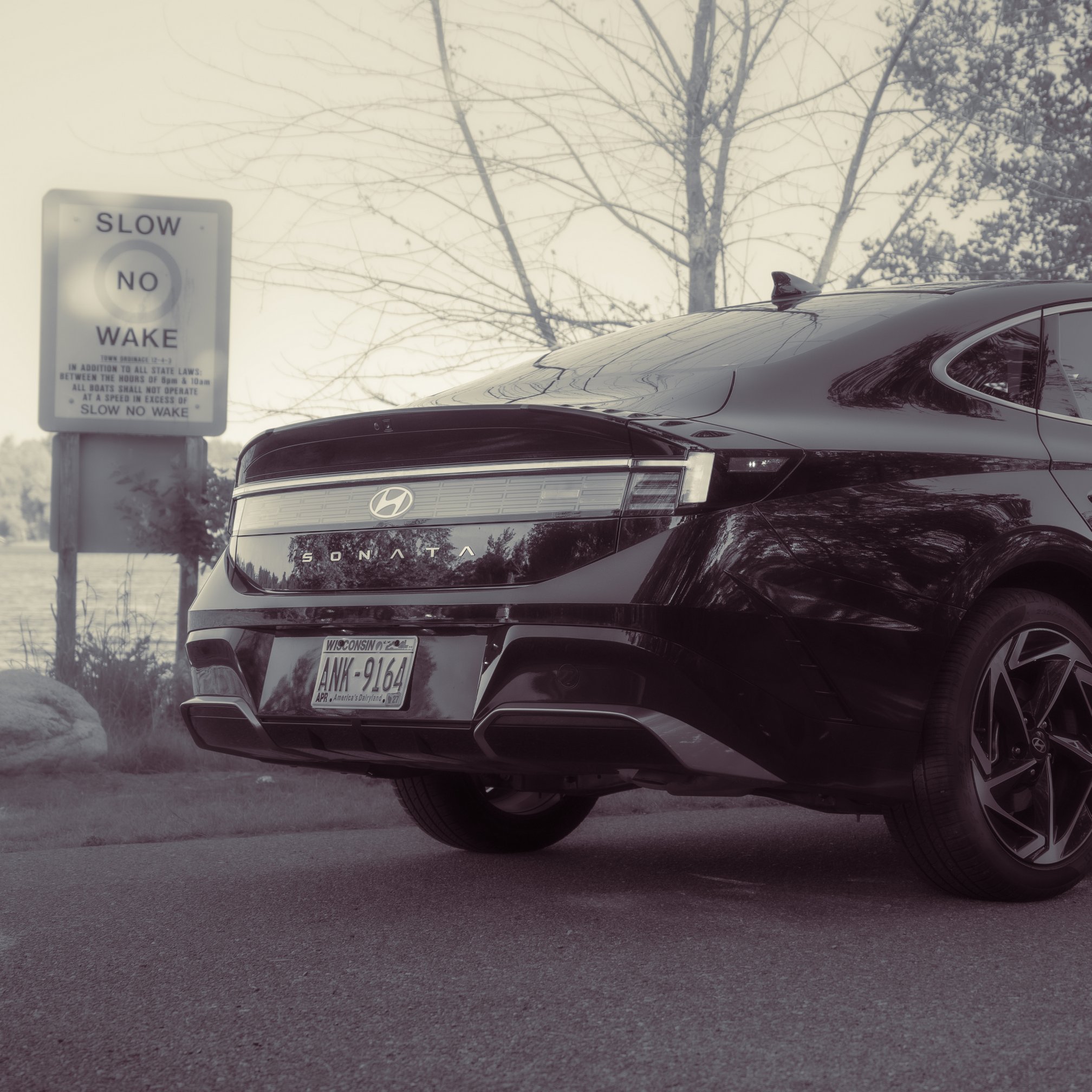
Above 5k rpm, coarse engine vibrations start to seep in. Manual mode or not, the Sonata upshifts around 6k rpm; the actual shift point differs from gear to gear, with 6200 rpm being the highest I see.
My creekside cavorting is fun, yet I think the rollercoaster road, not the car, deserves the credit for the giggles. The Sonata SEL Sport humored my frivolity rather than truly enabling it.
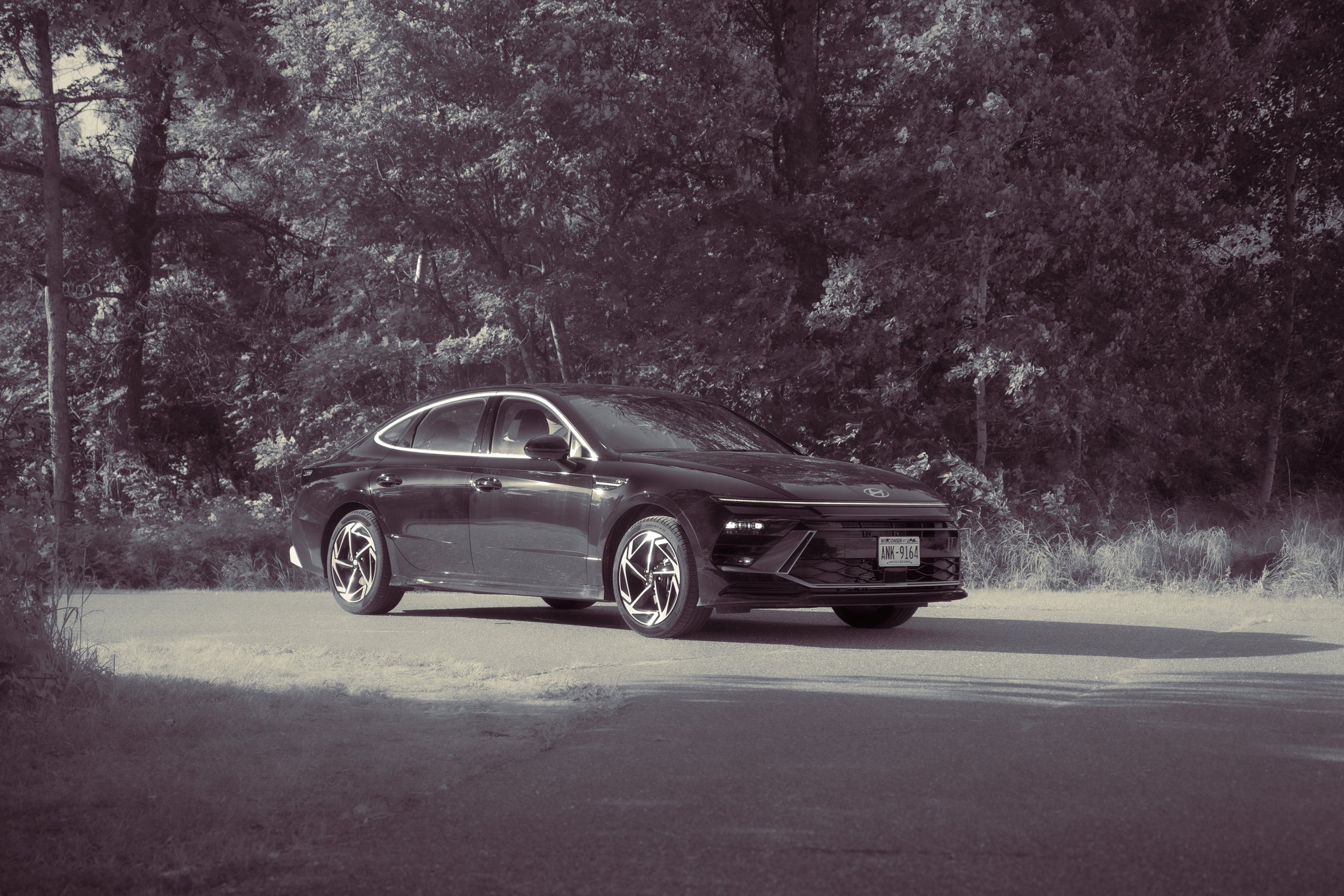
Marketing hyperbole? Yes. SEL Sport means paddle shifters, 18” Pirellis, and a score of creature comforts. Regardless, I’d pay the premium for the powered driver’s seat—adjustable lumbar support matters that much to me!
So where does that leave the 2026 Hyundai Sonata SEL Sport? Ultimately, the car’s best life is lived cruising highways and puttering around town. In these duties, the engine runs smoothly, the transmission shuffles seamlessly through gears, and the sweet tech features make life easy and safe. The Sonata SEL Sport is a good full-size, err, mid-size car, so long as you don’t have sporting intentions.