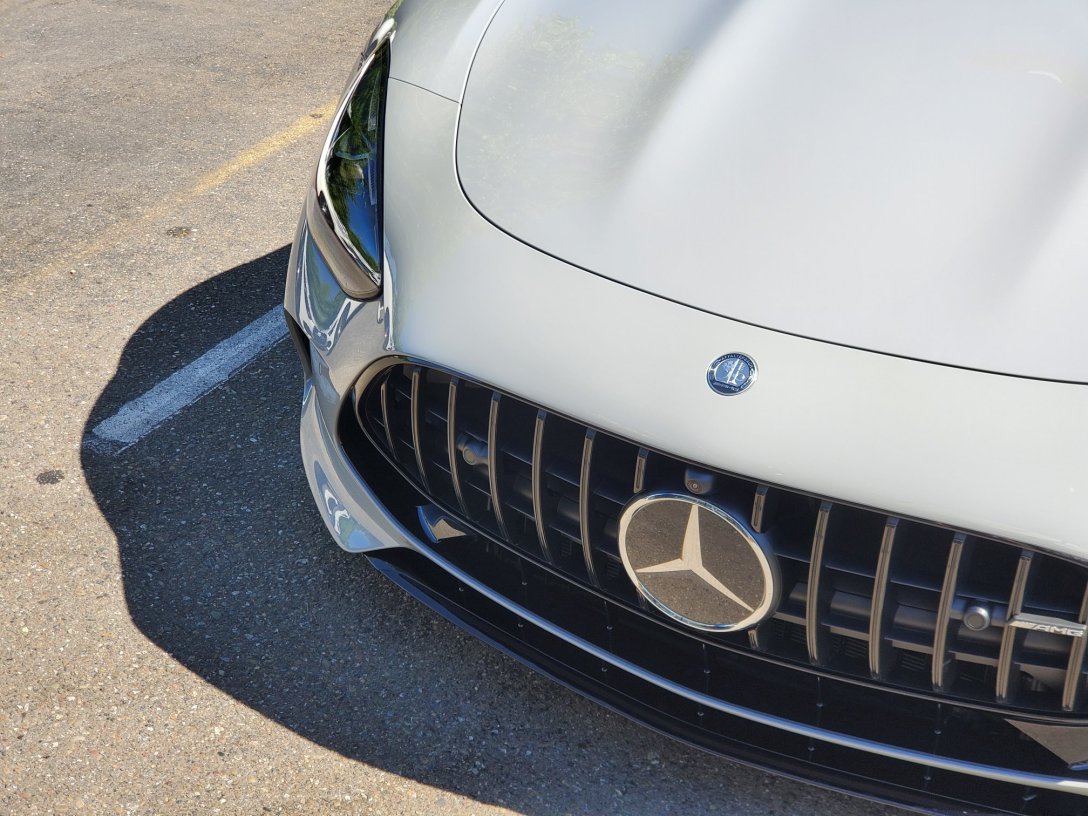
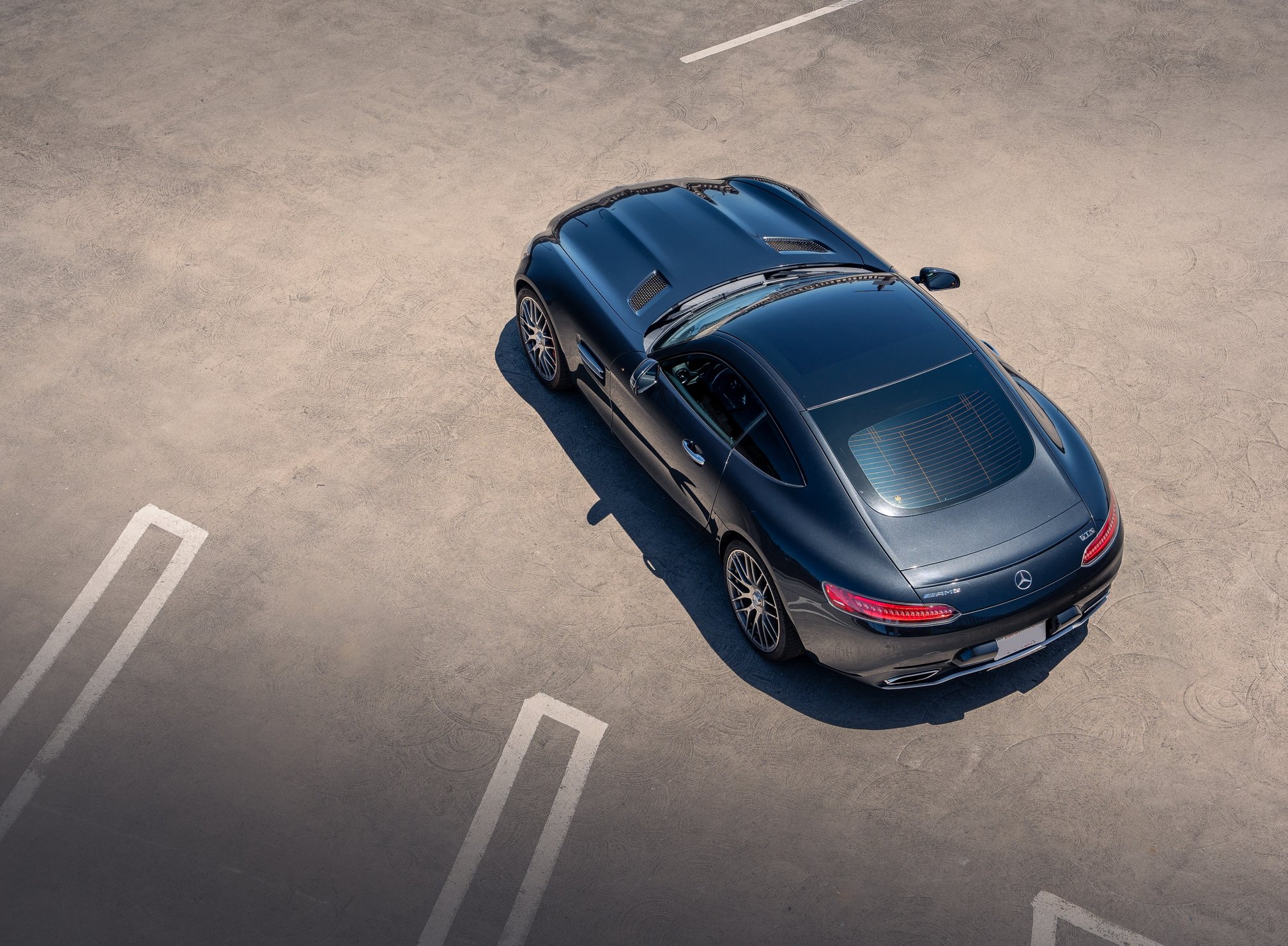
There’s a lot I love about my 2016 AMG GT S. It buzzes with feedback and excitement, it’s an absolute joy to hoon through the corners, and it has exotic curb appeal. But it’s not flawless, and I’m curious to see how AMG has remade the AMG GT coupe for 2024.
What are the faults of the outgoing car? Well, the suspension is brittle, the AMG performance seats are uncomfortably firm, and the car has developed many squeaks, creaks and rattles. Oh, and the wing mirrors are so high they create blind spots.
The good news is that the re-engineered 2024 AMG GT coupe is arriving at dealerships, and I’m going to see if my quibbles have been quashed.
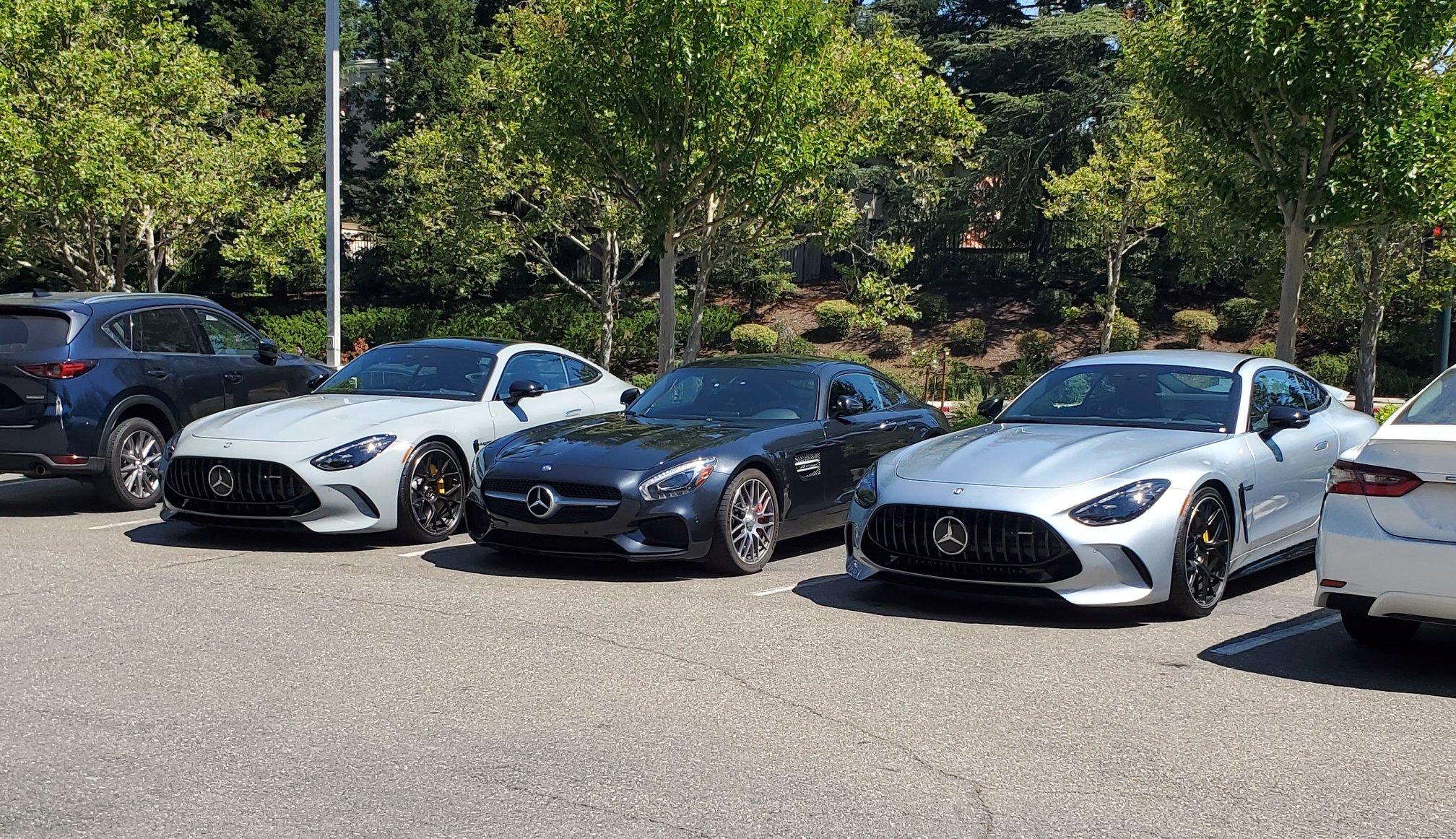
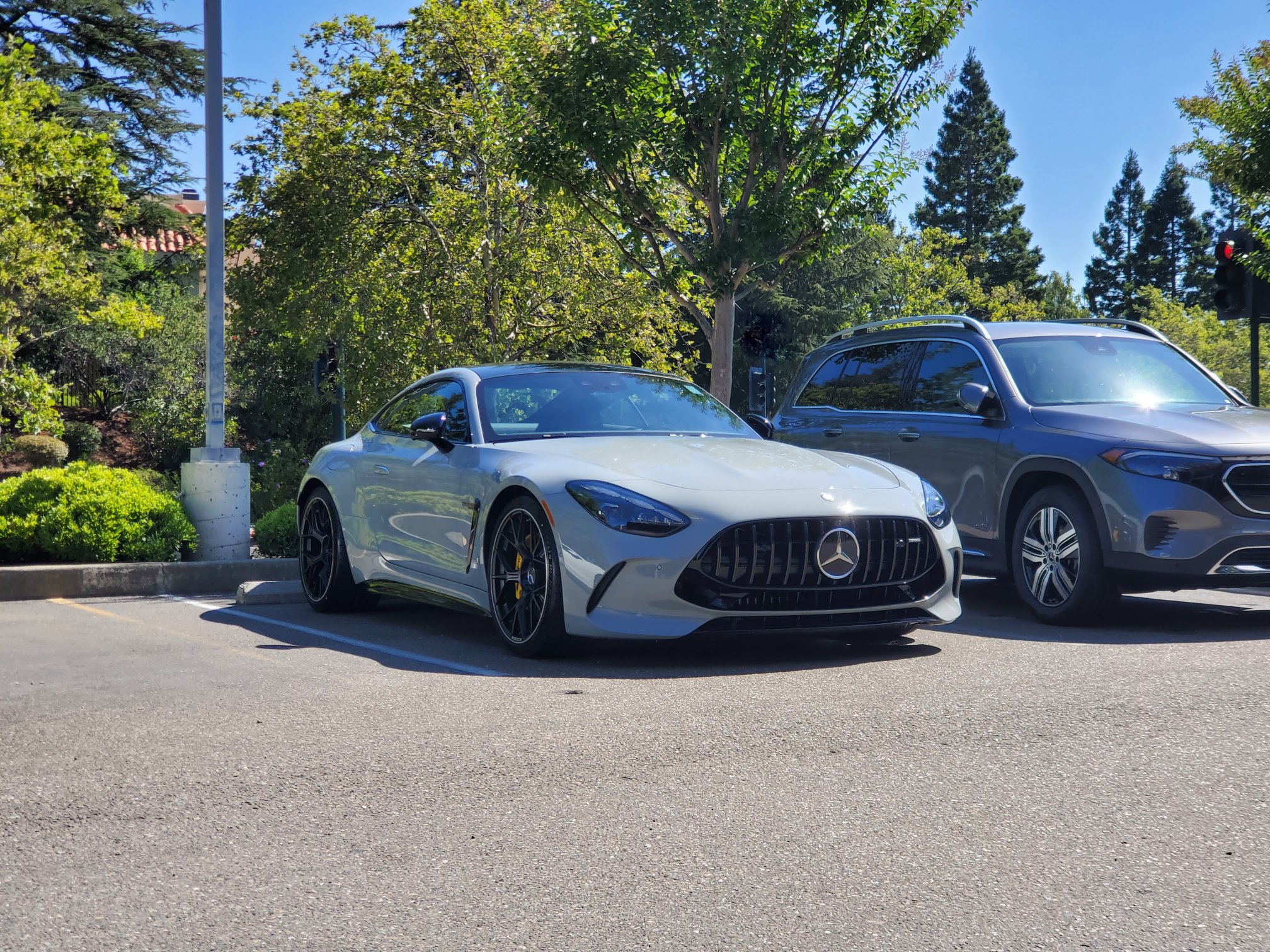
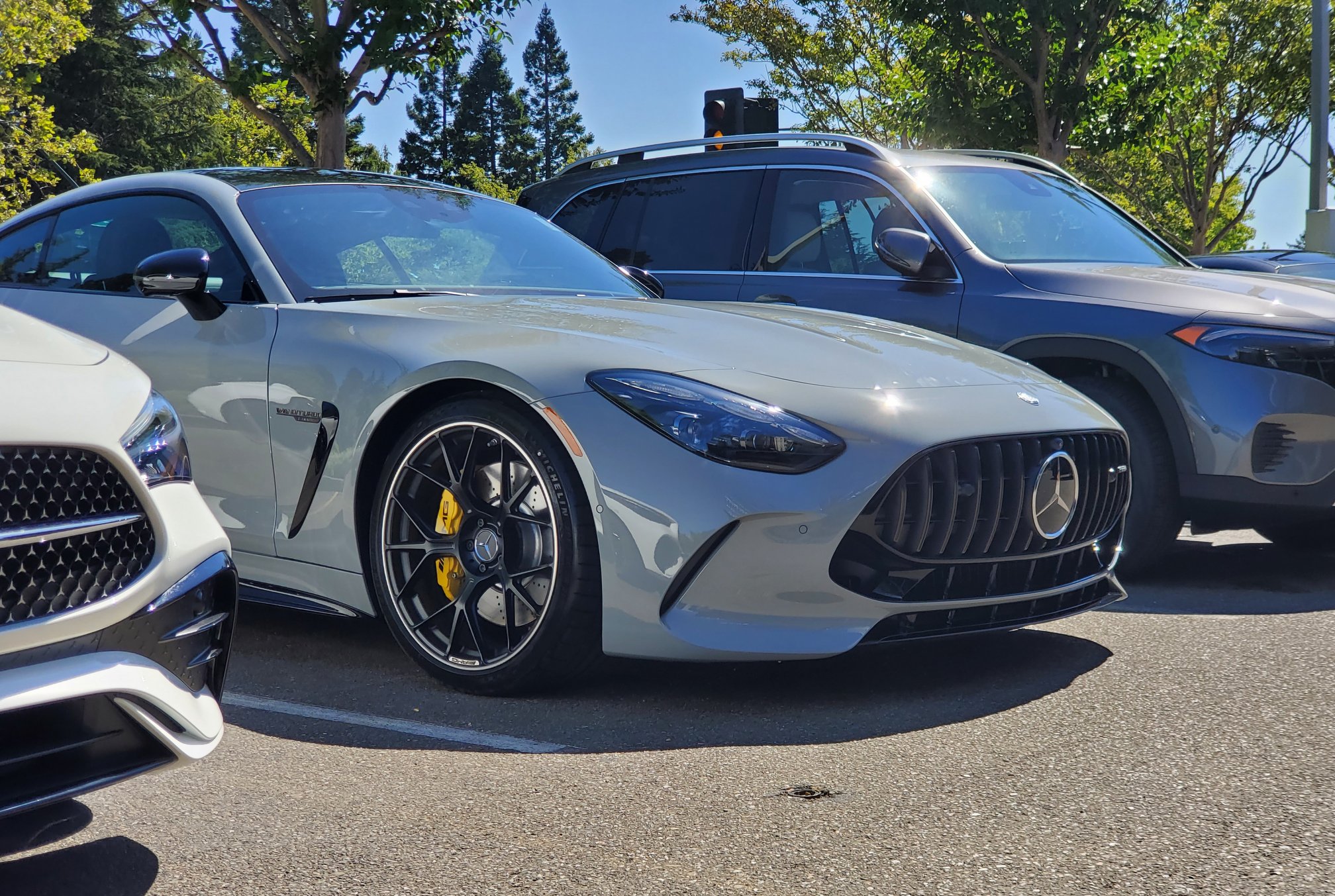
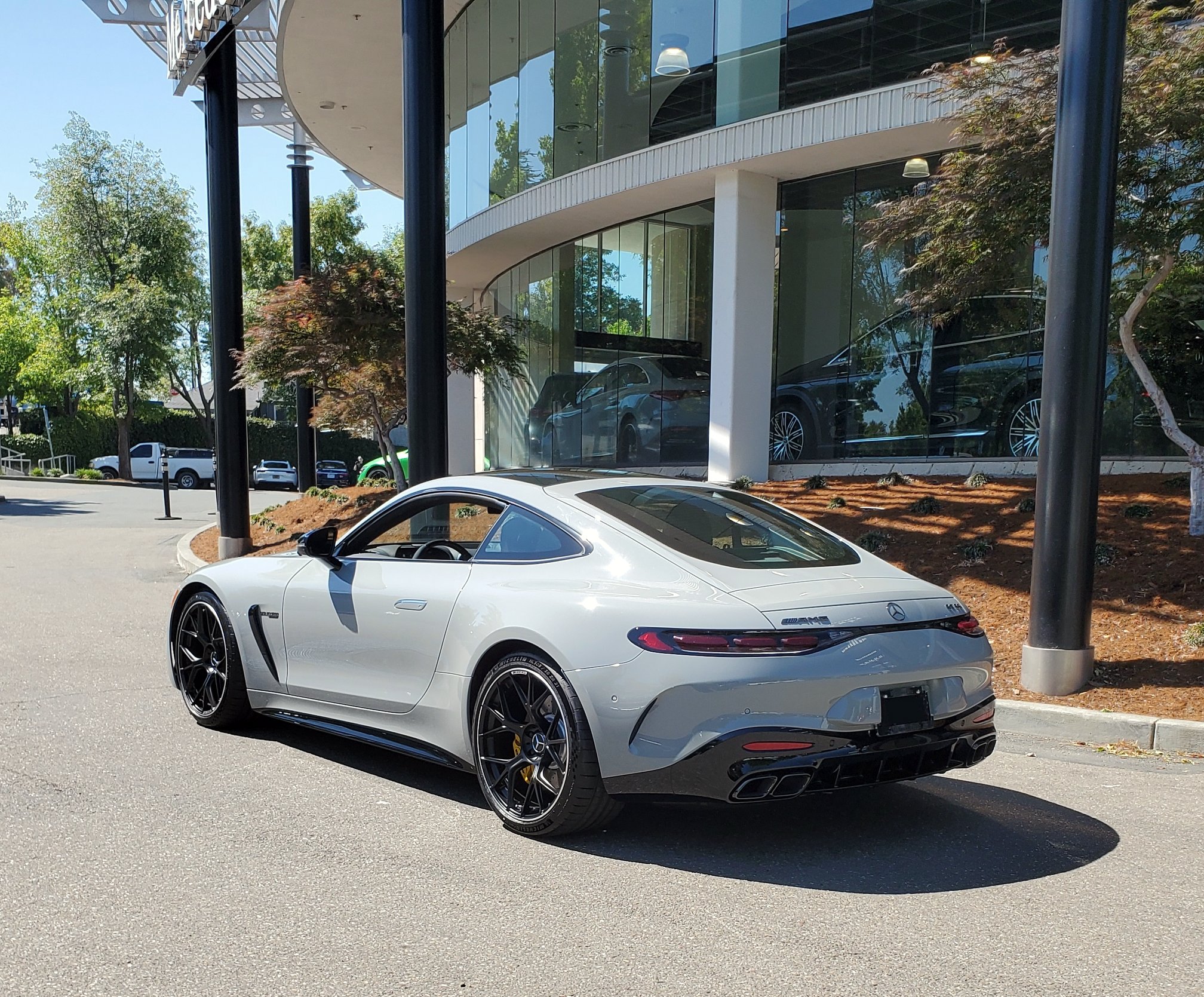
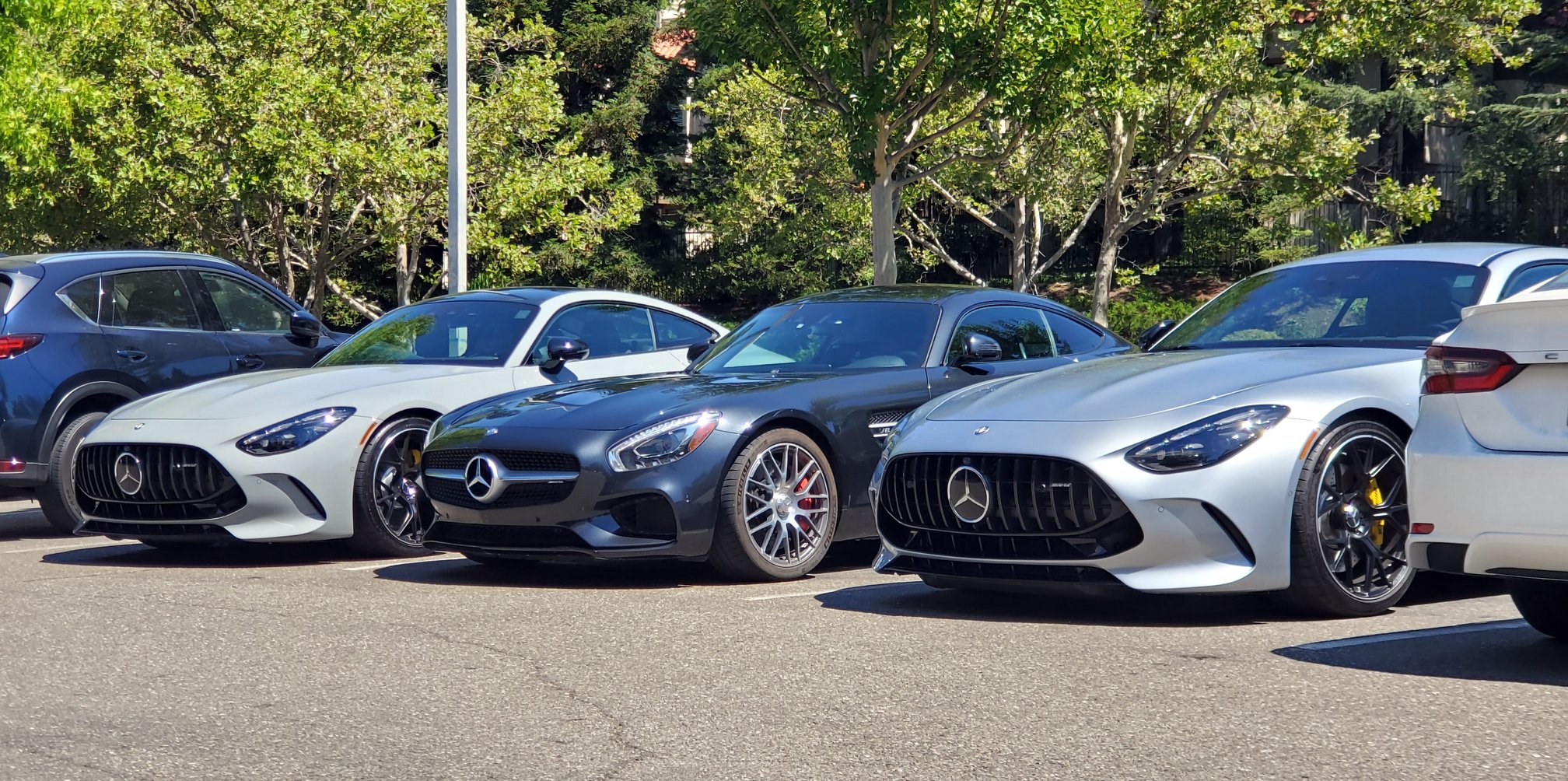
To my delight I find a parking spot right between a pair of 2024 AMG GT 55s. Once I’ve slithered out of the driver’s seat of my 2016 AMG GT S (it’s hard to make a graceful exit), I compare my car to the brand new GT 55s. The family resemblance is unmistakable, even though the 2024 AMG GT 55s have grown 7 inches in length, 2 inches in width and 2.5 inches in height. If daddy GT S was wiry with lean muscle, then sonny GT 55 has bulked up and perhaps sipped too many sodas at Bob’s Big Boy. The new GT 55 is exceedingly handsome, but it’s no longer a small sports car.
After my driver’s license and insurance are checked, I’m handed the keys to a $156k primer gray GT 55 and granted permission to take a test drive.
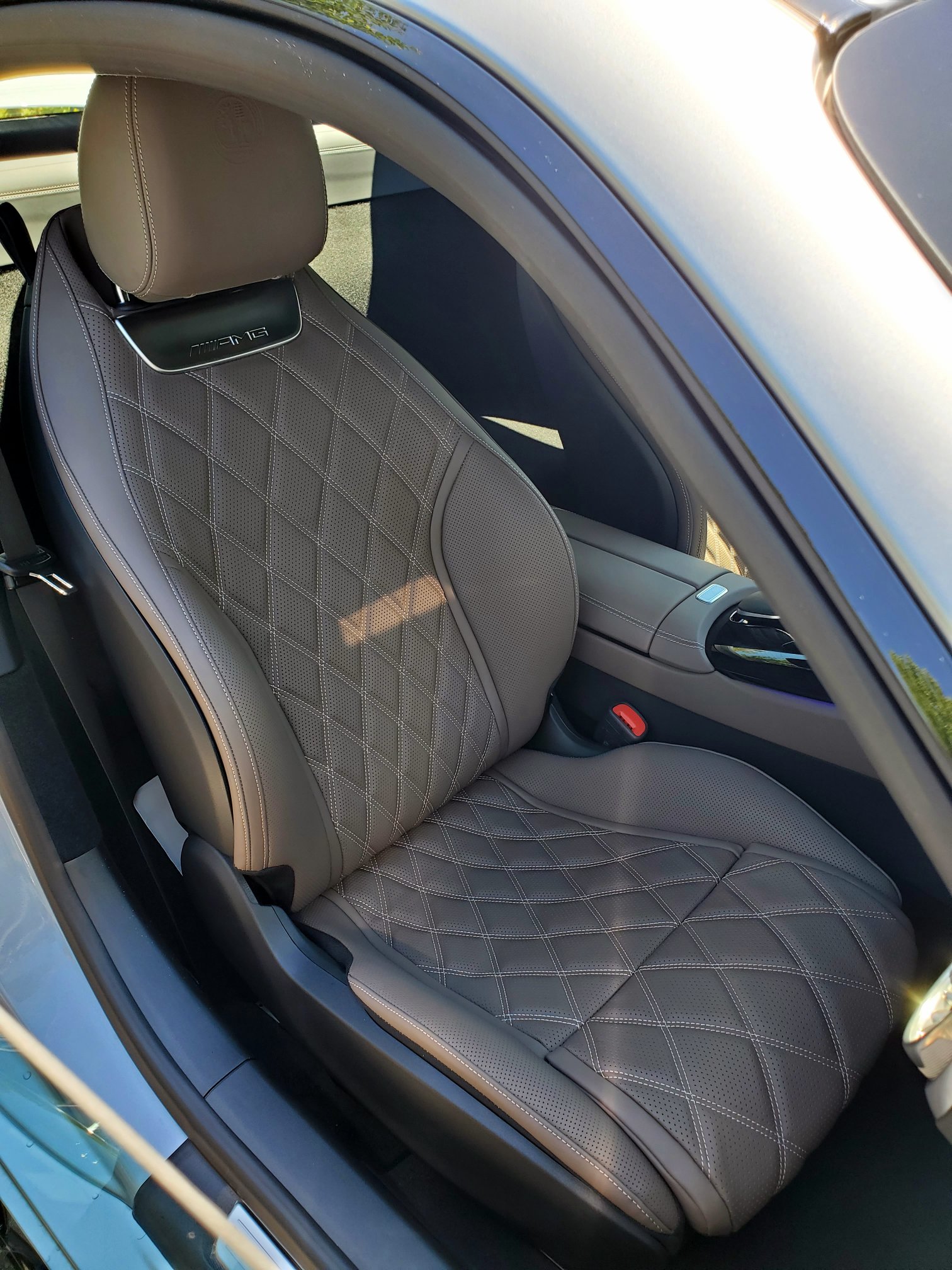
I’m immediately impressed by the GT 55’s interior. The cockpit is contemporary, luxurious, and polished. Some of the interior elements are familiar from my recent week with the EQE SUV: the tilted tablet MBUX infotainment screen, turbine air vents, and omnipresent ambient lighting are shared with many Mercedes. My demo GT 55 also has handsome diamond-stitched seats that feel far more comfortable than my performance seats from my GT S. The 2024 AMG GT coupe offers a choice of comfort or performance seats; in this GT 55, the comfort seats with optional massage and active ventilation have been fitted.
There are a shocking number of controls on the GT 55’s steering wheel, but the questionable design choice has an ergonomic benefit. By moving the drive mode controls to the steering wheel, Mercedes could shrink the center console and make the cabin feel more spacious. (I’ve always felt confined in the 2016 AMG GT S.)

2024 AMG GT coupes can be optioned as 2+2s with miniature rear seats for kids or contortionists. But to my surprise, over my shoulder is a low parcel shelf with ample space for grocery bags or luggage.
Intrigued, I walk to the rear of the GT 55 and activate the powered cargo hatch. My jaw drops when the trunk finally opens: Mercedes has doubled or tripled AMG GT’s cargo capacity. The 2024 GT 55 looks ready for airport runs, while my 2016 GT S can barely hold one large suitcase.
A wall separates the trunk from the interior parcel shelf. To my relief, LATCH anchor points are visible on its backside. A child seat can be installed in the GT 55, just like in the 2016 GT S. If this coupe had the rear seat option, then two kids could be accommodated, or the seats could be folded flat for even more cargo capacity.

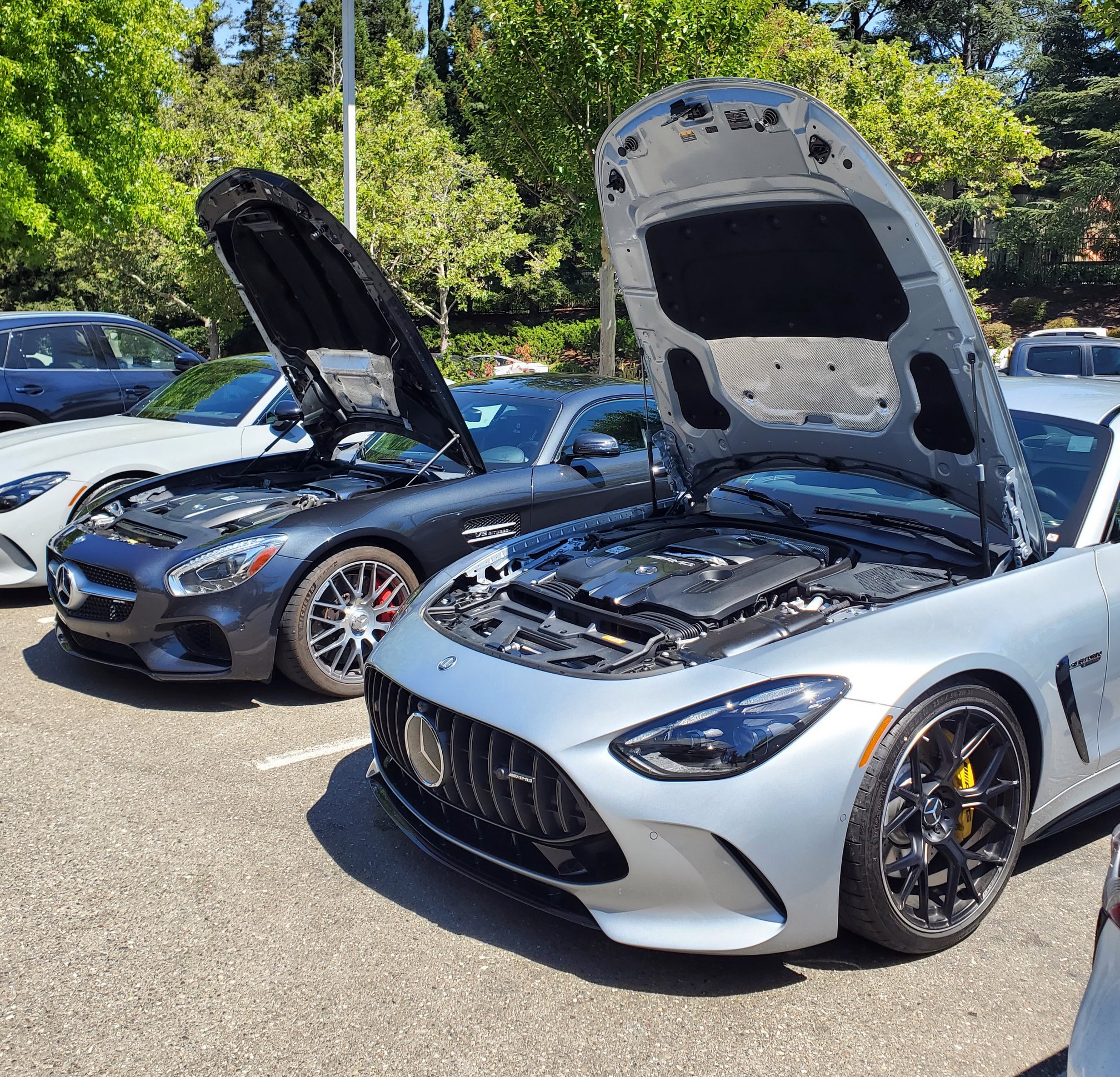
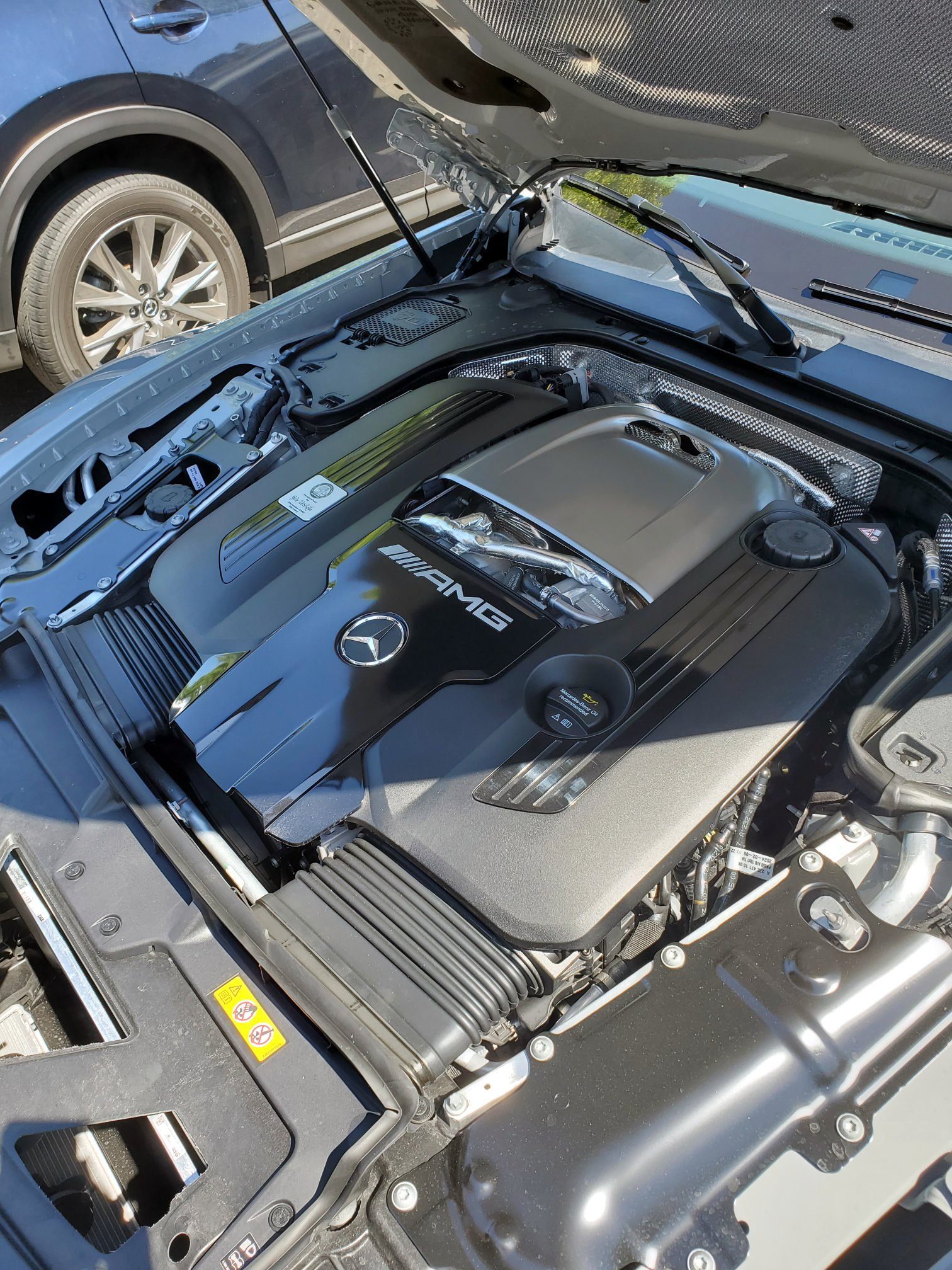
I pop the hood to look at the GT 55’s engine bay. The hood opens upright like the 2016 GT S’s, but I’m quick to spot that AMG has moved the 4.0L twin-turbo V8 off the firewall and towards the headlights. This V8 rides a little higher, too, because Mercedes ditched the dry-sump engine (code M178) for its wet-sump sibling (code M177) in the 2024 AMG GT coupes.
The shifted V8 is one of many mechanical changes. New for this year is 4MATIC+ AWD with sophisticated torque vectoring, AMG Active Roll Control that uses hydraulics instead of anti-roll bars for body control, a multi-link suspension in place of the 2016 GT S’s double-wishbones, and standard rear steer. (Previously, rear steer was only available on select AMG GT C and GT R coupes.)
The changes have added about 600 lbs to the GT 55, 54% of which is carried on the front axle (compared to 47% for the 2016 GT S). I can’t wait to see how the mechanical tinkering and body enlargement have affected the driving dynamics.
I slip back into the cabin and get ready to drive. I adjust the seat to its lowest position, but I wish it could go lower: I’m about an inch higher off the floor than I’d be in the 2016 GT S. (Perhaps the difference is less with the optional AMG performance seats?)
Looking forward, I find the view of the road is more restricted in the GT 55 than in my 2016 GT S. This is a result of the GT 55’s higher dashboard and hood—more of the road is hidden behind leather and sheet metal.
Looking out the side windows, the A-pillar blind spots have been reduced as GT 55’s wing mirrors no longer block my line of sight, and the over-the-shoulder visibility continues to be excellent because there is no B-pillar.
I start up the engine, and I’m greeted by a familiar V8 roar. The monster in the GT 55’s engine bay is a close descendant of the 4.0L V8 from my 2016 GT S. However, the GT 55 makes 469 horsepower and 516 lb-ft of torque, while the 2016 GT S produces 503 hp and 479 lb-ft. I’ll soon learn if torque or horsepower is more important.
Carefully, I extract the GT 55 from the parking lot. As I accelerate onto the city streets, I’m surprised to hear staccato notes punctuating the engine’s baritone song. The percussive notes add aggression to the soundtrack but are unlike anything I’ve heard from this Mercedes 4.0L V8. Are they synthetic embellishments played over the speakers? Possibly. As European regulators are cranking down on vehicle sound regulations, manufacturers use stereo to boost driver engagement.
I’m pleased to feel road texture—the buzz of the tires turning on the pavement—in the GT 55’s steering wheel. The ever-present feedback, quick rack ratio, and heavy weighting are appropriate for a this sports car. However, I don’t love the steering’s rubbery recentering force. Mercedes moved to EPAS with the 2024 GT 55, and the system isn’t as fluid and polished as the old hydraulic assistance from the 2016 GT S.
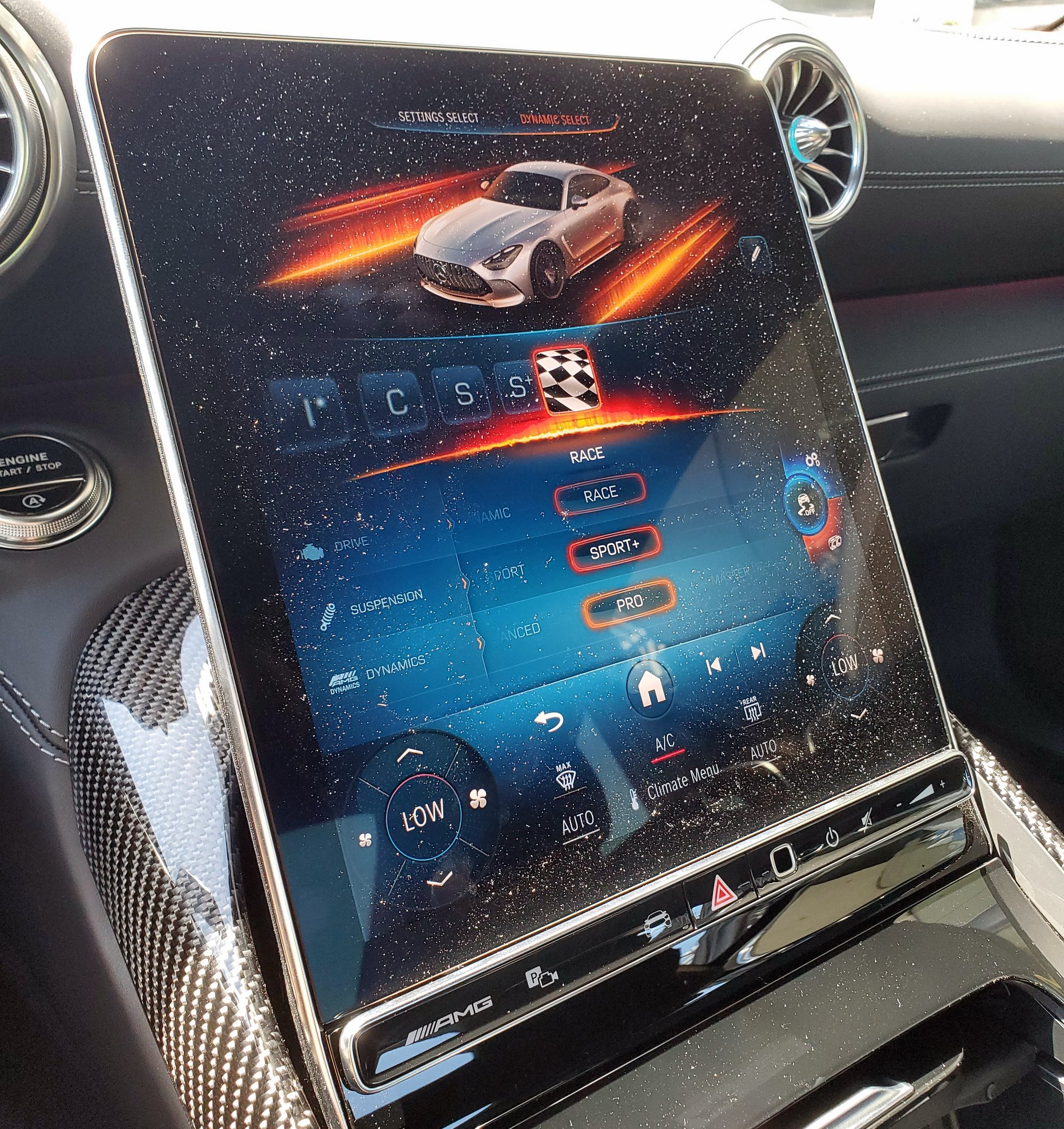
I fuss with the drive modes as the highway approaches. There are so many! Winter, Comfort, Sport, Sport+, Race and Individual. Mercedes moved the drive selector knob onto the steering wheel, and while the steering wheel is now cluttered with controls, it’s easier to find the knob and see its setting when the control is directly in front of your chest. I set up Individual mode with a mix of aggressive engine and stability control settings and medium firm shocks.
But for now, I’ll drive in comfort mode to see if the updated suspension improves the ride comfort. Indeed, the city streets feel smoother in the AMG GT 55 than they did in the 2016 GT S.
A few minutes later, the GT 55’s long hood is pointed down the highway onramp. I paddle shift to engage third gear and squeeze the throttle. The GT 55 bellows and rushes down the onramp, feeling roughly as quick as my 2016 GT S. I upshift as I merge onto the highway and note how the paddles are tucked further from the wheel’s rim. It was easier to find the cold metal flappers in the 2016 GT S. Perhaps the GT 55’s steering wheel design was driven by other Mercedes models, where the paddles are not as frequently used?
The highway surface is crack-free but undulating. The GT 55 doesn’t completely fill the dips and level the rises, but it moderates the oscillations while carrying itself with the hunkered-down poise of a sports car. When the highway turns west and flies over a concrete overpass, I feel the change in road texture through the wheel. However, the feedback is mild and distant, while this same bridge fills the 2016 GT S with noise and intense high-frequency vibrations.
The bridge ends, and I trot towards San Francisco at 70 mph. This GT 55 has DISTRONIC, Mercedes’ intelligent lane-following cruise control, but I drive myself.
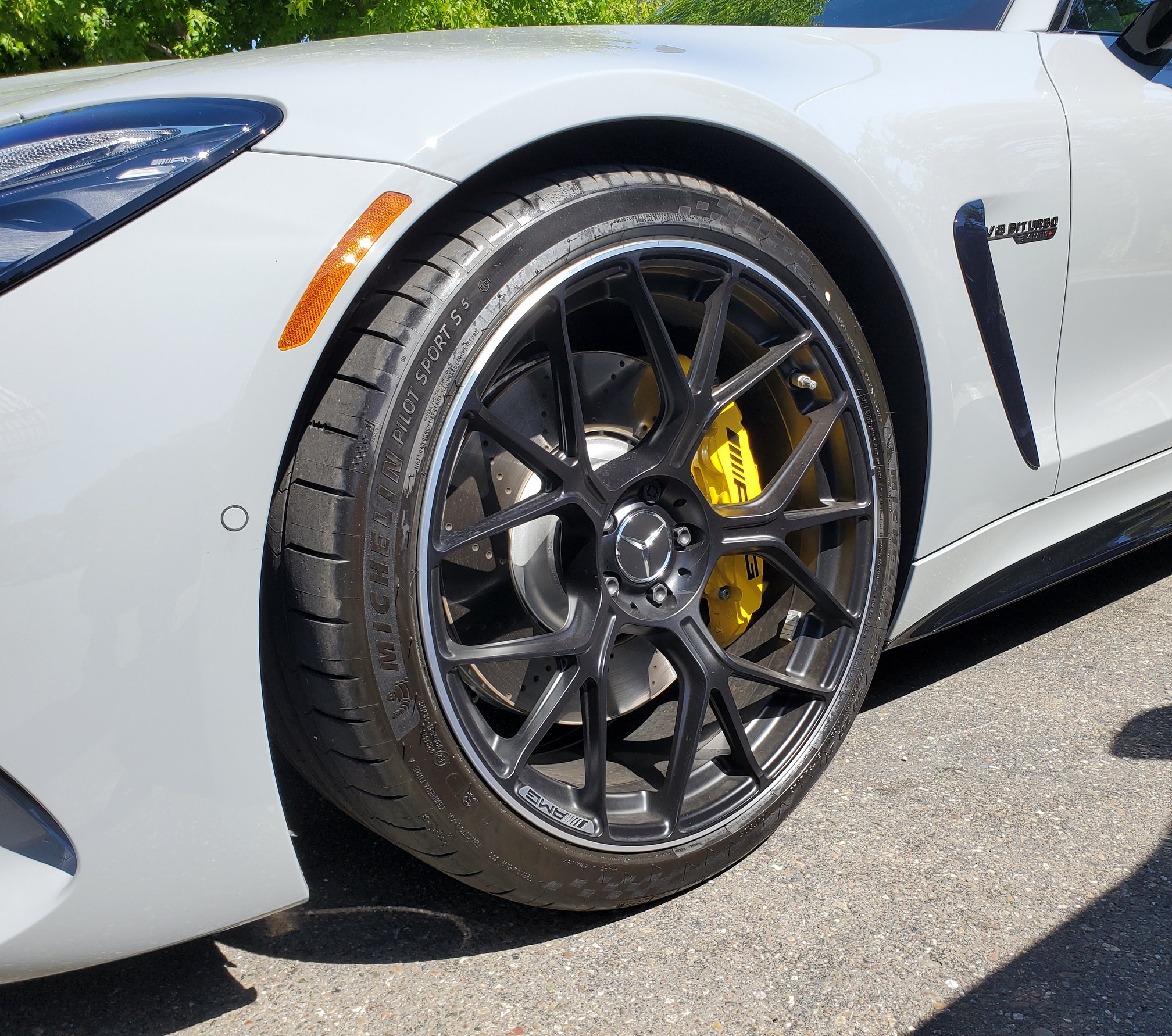
I listen to the engine’s hum and the wind’s soft whistle. The GT 55’s cabin is free of squeaks and—amazingly—largely free of tire noise, too. The quiet cruising is quite a feat considering the massive Michelin Pilot Sport S 5 (295/30ZR21 front and 305/30ZR21 rear) tires underfoot. (Porsche 911 owners with tinnitus should test drive the new AMG GT.)
With its greatly improved noise, vibration and harshness, the new GT 55 is now a veritable grand touring machine. Conversely, I always pack Excedrin for back pain and headaches on extended drives in the 2016 GT S.
But I don’t own an AMG GT for road trips. I have one for sporting drives. That’s why the crown jewel of my test drive is a cloverleaf interchange, where I’ll test the GT 55’s cornering chops. The interchange approaches rapidly, I call up my preconfigured Individual mode, and into the cloverleaf, I go!
The first 270-degree curve dives down from the highway to the city streets below. Its entry starts with a challenging heave that the GT 55 completely smothers. The off-ramp is heavily cracked, but the GT 55 is equally unconcerned with the broken pavement. The car grips confidently as it carves the corner, and the impact of the cracks never bubbles up my fingertips. The front tires sustain heavy lateral loads, yet the steering doesn’t change weight. The GT 55 is exhibiting a new approach to handling, one that is more “let me get that for you, sir” than “let’s do it together!” (Either that or the limits of the GT 55 are much higher than that of the 2016 GT S, and I’m not pushing the GT 55 hard enough to make it come alive.)
I transit under the highway with my right blinker still flashing, then hit the second petal of the cloverleaf. This onramp climbs back up to the highway overpass. I build speed through the climbing banking and find that the GT 55 carries its weight well. There is hardly any body roll, as the new trick hydraulic anti-roll bars, rear-axle steering and sticky Pilot Sport S 5 tires work wonders together. The GT 55 may weigh 600 lbs more than the 2016 GT S, but that weight is not noticeable in its cornering comportment through long sweepers.
I’m spit out of the second loop. The highway overpass offers an opportunity to punch the gas before the third corner, but the bridge ends with a significant dip. Nevertheless, I peg the throttle, and the GT 55 powers over the jump, lands softly and is immediately ready to dive into the third corner. There is no sweat or muss, just impressive competence.
I keep linking cloverleaf petals, keen to understand this big brute’s dance moves. At turn-in, the GT 55’s heavy steering makes it feel less eager to enter the corner than the 2016 GT S. (The multi-link suspension and front-biased weight distribution may also dull the GT 55’s nose.) When screaming through a corner, the GT 55 can be tucked in by lifting off the gas or pushed wide with added throttle. There is undoubtedly some AWD torque vectoring and rear-steer wizardry assisting me, but I can’t detect either as I whip around the interchange. The GT 55 is doing all the sports car things, giving me great confidence and control.
(Motor Trend’s Jonny Lieberman likens the updated 2024 GT 63 to the Nissan GT-R. Both plus-size cars have all-wheel-drive stability, turbo torque, and improbable sports car dance steps. However, I remember the GT-R feeling rear-driven to the point where it would overwhelm the rear tires. It might be my choice of stability control mode—I’m in Advanced, not Race—or AWD mode, but I’m not feeling the rear tires squirm at all. I miss that excitement! Do I need the GT 63’s extra power to make the drivetrain challenge the chassis?)
The new nine-speed automatic gearbox is obedient and responsive when shifted with the paddles. It changes gears smoothly without shocking the drivetrain. However, I catch it sleeping at once, and it unceremoniously slurs an upshift. The dual-clutch transmission in the 2016 GT S never botches shifts when I’m driving in anger, though it is rougher in stop-and-go traffic.
I power out of my sixth and final corner under full acceleration, blitz across the overpass, over the jump, and back onto the highway. The GT 55’s acceleration is aggressive and roughly equal to the 2016 GT S’s. (Mercedes claims 0-60 mph in 3.8s for the GT 55 and 3.7s for the 2016 GT S.) Yes, the GT 55 has all the speed I need, but I’m still curious if the 577 hp GT 63 would be friskier.
I rotate the dial drive mode to comfort and travel in hushed comfort back to the dealership. The GT 55’s move to comfort is a massive improvement that solves all my 2016 GT S quibbles.
After thanking the dealership for the test drive opportunity, I repeat the loop in my 2016 GT S. Even in comfort mode, the 2016 GT S reveals textures, bumps and undulations in town that were unfelt in the GT 55. Frankly, the ride borders on abusive. While being pummeled in my seat, I realize that the 2016 GT S relays road information as clearly through the seat as it does through the steering, and it feels like I’m sitting closer to the rear axle, too.

I take the highway onramp with haste, appreciating the small thumps of the full-throttle upshifts. The dual-clutch transmission’s sharp responses match the 2016 GT S’s sports car mission. However, the engine note sounds plain without the GT 55’s staccato ornamentation.
It’s night and day how much steering and seat feedback I get on the concrete overpass. The 2016 GT S buzzes with high-frequency vibrations that were stifled by the GT 55. Considering the 2016 GT S’s phallic shape and good vibrations, it could be sold in sex shops.
Diving into the clover leaves, the first corner’s entry heave becomes a real event in the 2016 GT S: the car bounces over the blemish and threatens to skitter off course. Its suspension doesn’t have the travel to absorb the large bump, so I must carefully plan my entry.
Through the same turn, the cracked pavement reverberates through the steering and chassis, warning me I have less grip on the crumbling tarmac. The involvement and communication are much higher in the 2016 GT S.
Turning into the second cloverleaf, I appreciate the 2016 GT S’s keen nose and fluid footwork. The dual-wishbone suspension makes the car eager to enter corners, and the car rotates like it is mid-engined. (With the engine shoved against the firewall, it is front mid-engined.) The 2016 GT S has more body roll as I hustle it through the corner, but I have greater throttle adjustability as I can either tighten my course by lifting the throttle or pivot the tail with a jab of gas.
The 2016 GT S feels light-footed, agile, and brimming with feedback through the remaining clover leaves. If attacking this interchange is like riding a roller coaster, then the GT 55 is a modern metal roller coaster, and the 2016 GT S is classic wood.
Anticipating my exit from orbit and flight onto the freeway, I overdo my throttle application exiting at the final corner. The 2016 GT S squirms sideways, but the stability control reins in the slide before it becomes scary. Once corrected, the car bolts onto the freeway. Balancing a powerful rear-wheel-drive sports car is much more exciting—and challenging—than finding flawless speed in the GT 55.
There’s plenty of time to process my thoughts on the way home, even if it’s harder to hear them over the 2016 GT S’s cacophony of tire and wind noise.
The 2024 GT 55 resolves my comfort complaints without sacrificing any speed or much agility. It keeps its bombastic V8 and improves its gorgeous looks. And it’s more kid-friendly than ever, with LATCH anchors and room for a stroller in the boot.
Perversely, the GT 55 is a massive improvement and a big letdown because these gains come at the cost of the connection to the machine and the road. Like many other great driver’s cars—Porsche Cayman, BMW M3 and M5, Cadillac CTS-V—the AMG GT coupe has left its analog era and entered its digital epoch. The classic steering feel and chassis feedback I adore have been sacrificed for comfort, practicality and outright performance.
If you thought the old AMG GT was too rough for thousand-mile road trips or Hwy 405 commutes, rejoice! The 2024 GT 55 is the car for you.
But if you are looking for raw pleasures and a machine for mugging race tracks, pick up an original AMG GT. The money you save will more than cover your subsequent chiropractor bills.
 Mike's Steering Column
[…] first. I’m strongly attracted to a bright red AMG GT 63 coupe, but I recently drove the sister GT 55 coupe and would prefer a completely new experience. “My mother says to pick the very best one, and […]
LikeLike
[…] do like the look of the SL63. Its long shape is as polished and powerful as the AMG GT coupes but somehow friendlier without the roof. And the bright blue paint on this test car is […]
LikeLike
[…] I don’t mind much because my time behind the static wheel of the 911 Targa gives me time to look around the cabin. It is a familiar interior due to my 2020 911 Carrera S review. In front of me is an analog rev counter flanked by twin LCD screens, a wide infotainment screen is integrated into the dash, and a ridiculously small shifter pops out of the center console. The cabin is elegant, well-dressed, and logically laid out but lacks the exciting shapes and colors of BMWs and Mercedes. […]
LikeLike
Entertaining and excellent review. As a former TV / media / stock analyst guy; I appreciate your prose as well as the information. Also I just bought an AMG GT 55; my 10th’ ‘benz. Love it.
LikeLike