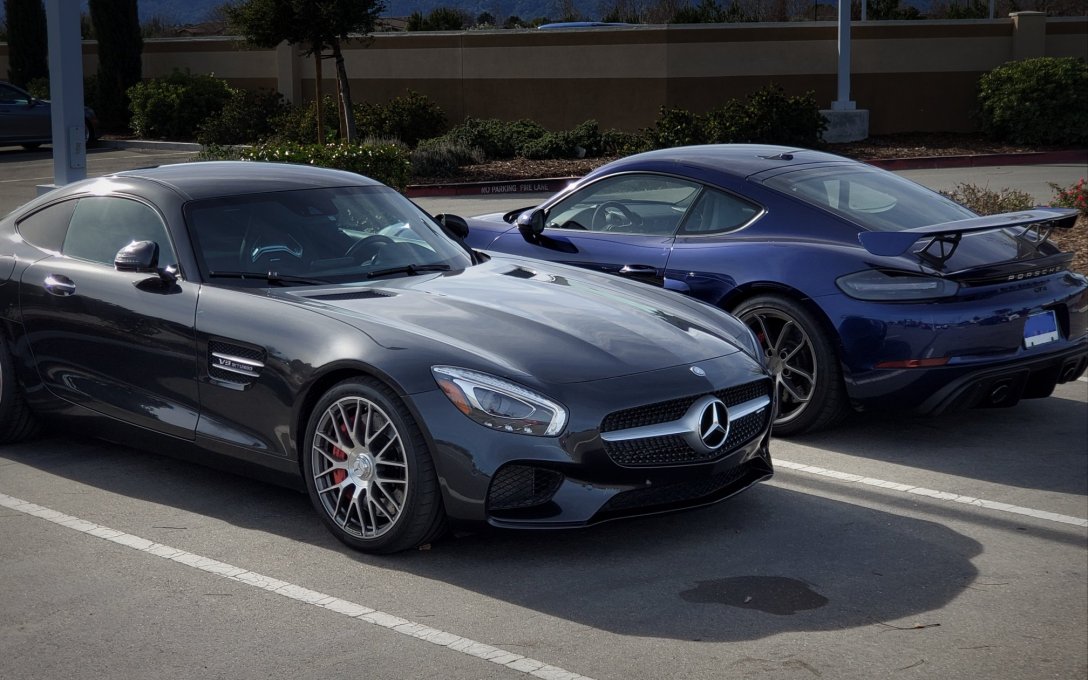
I haven’t been this excited to test a new car in a long time. Why? Because the new metal is a Porsche 718 Cayman GT4. When it was released, the GT4 brought lustful tears of gratitude to the eyes of journalists. Now it’s my turn to drive the legend. So please hide my checkbook and pass the tissues!
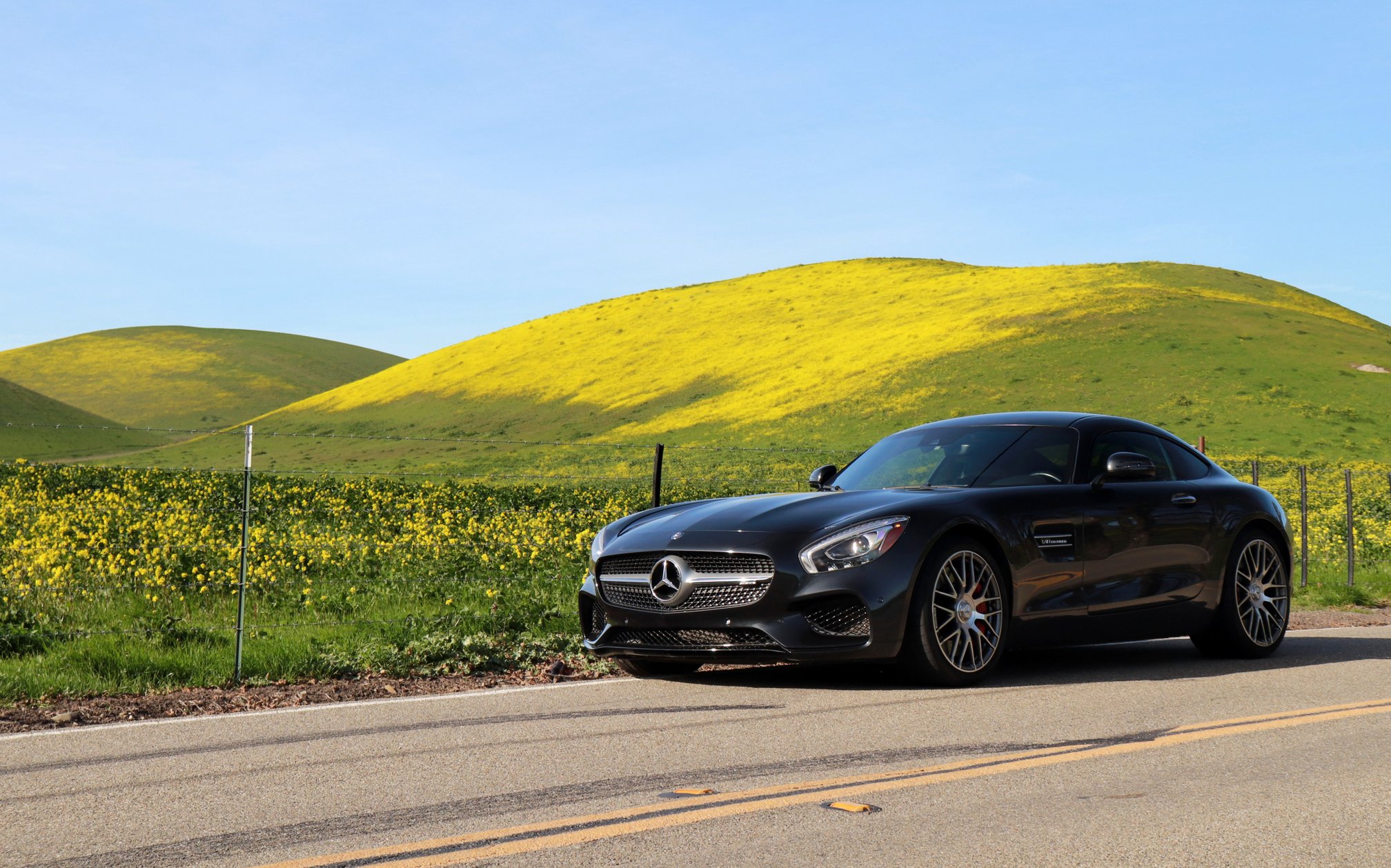
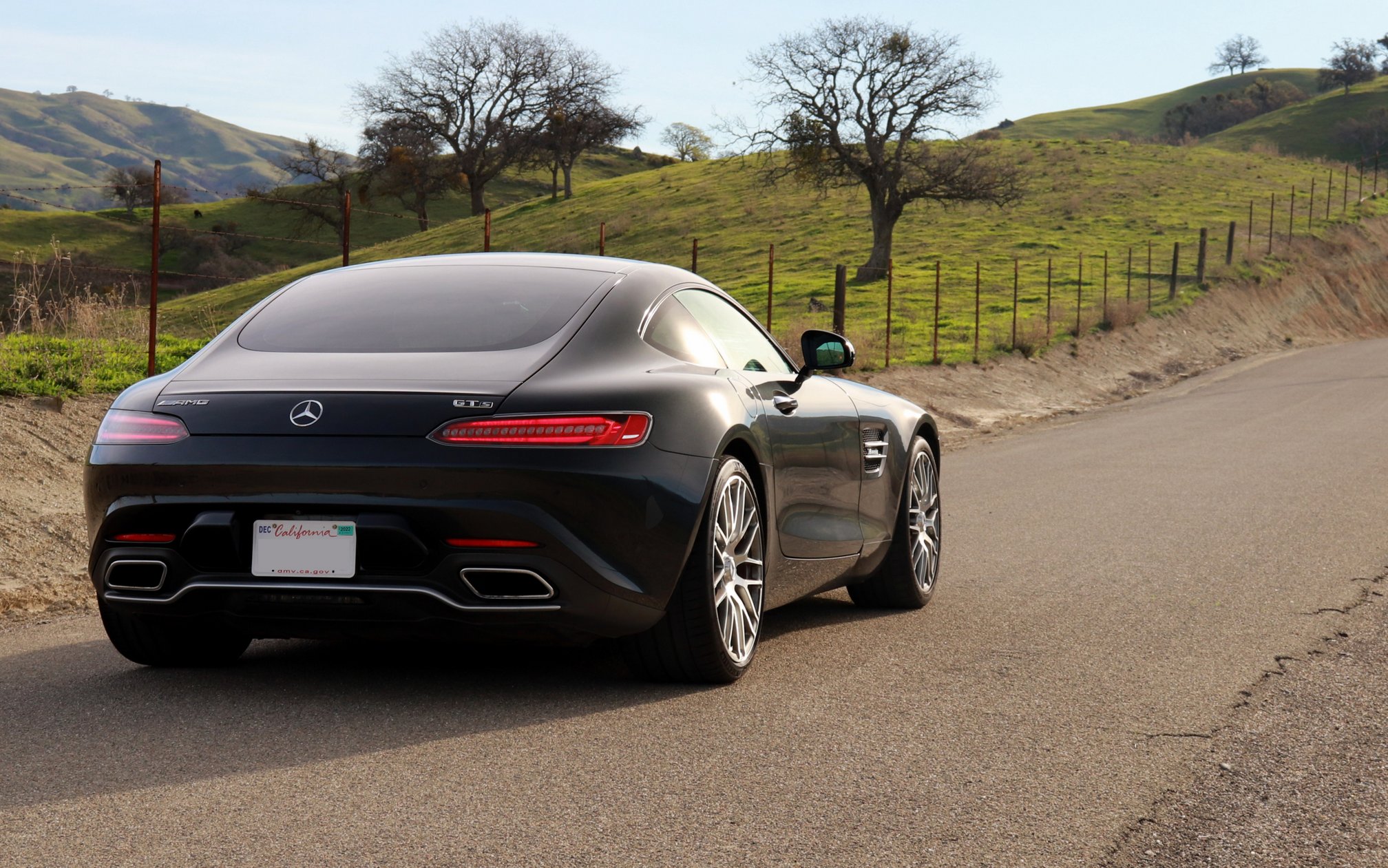
Of course, I won’t be driving the 2020 GT4 in a vacuum. My basis for comparison will be my own 2016 Mercedes-AMG GT S. I’ve owned the GT S sports car (supercar?) for a year, and I love its attitude, agility and feedback. However, considering the GT S’s gutsy engine and transcendent steering, I’m pessimistic that the GT4 will emerge as my favorite.
I’m due to collect the GT4 at 10am, and it’s not yet 9am. My plan is to pre-run the route in the GT S, so I’ll have a fresh memory of the road and the car when I’m whipping the GT4.
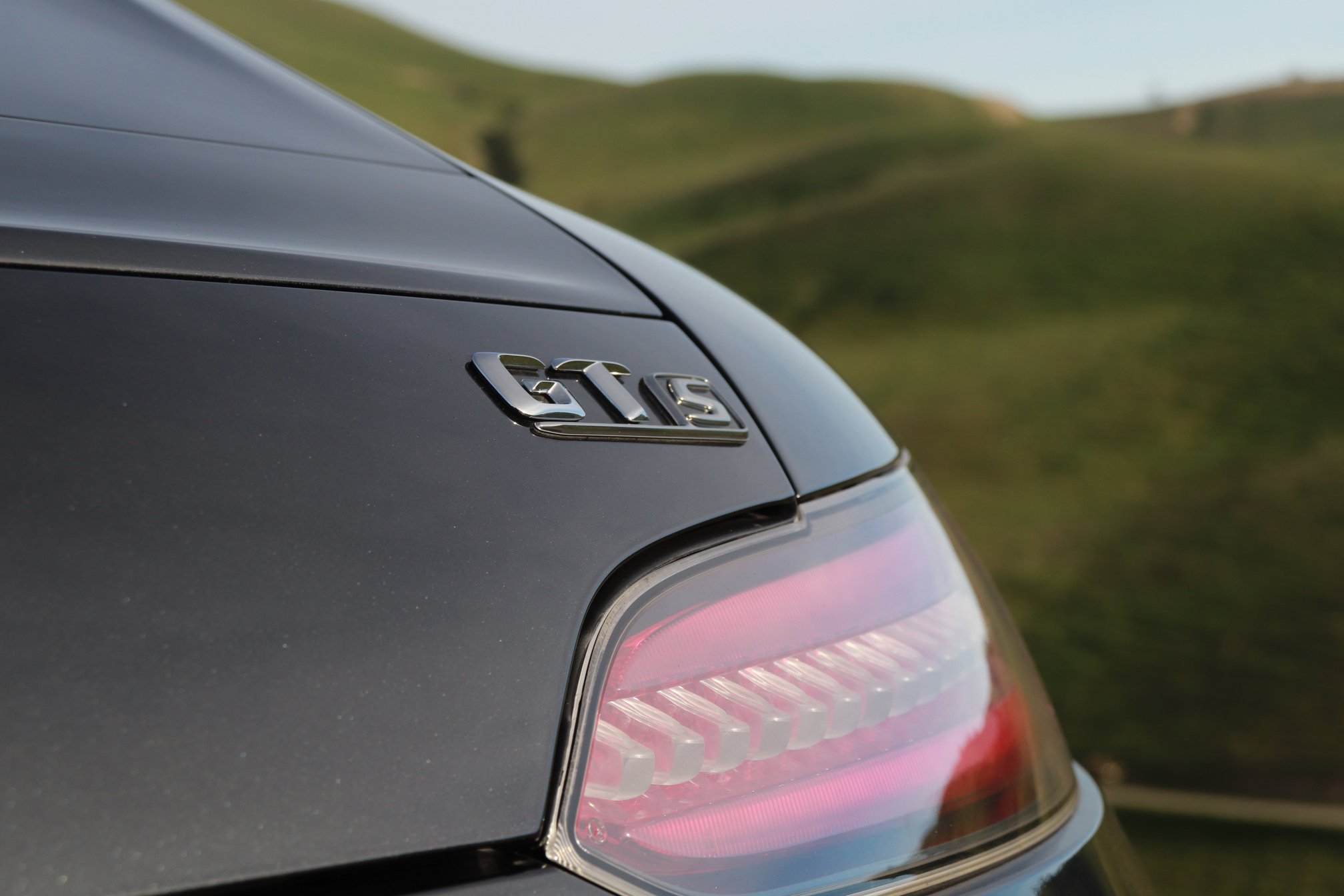
Thus, I slip my black sledgehammer into gear and merge onto the highway. Usually, the GT S prowls in the fast lane, but it’s just a few miles to my exit, so I linger on the right.
Running in Comfort mode, the DCT gearbox quickly upshifts to seventh gear, lowering the revs to 1800 rpm and shushing the brawny V8’s blare. The car is trying to calm down, but there’s too much residual tire whir and wind rush to call it serene. So be it; the GT S has a chip on its shoulder.
The torquey engine and automatic transmission make the highway trot a breeze. I mindlessly proceed, mulling the day to come and getting distracted by the roadside dealerships. Oops, I’m wandering around in my lane! The GT S’s lightning-quick steering doesn’t suffer daydreamers!
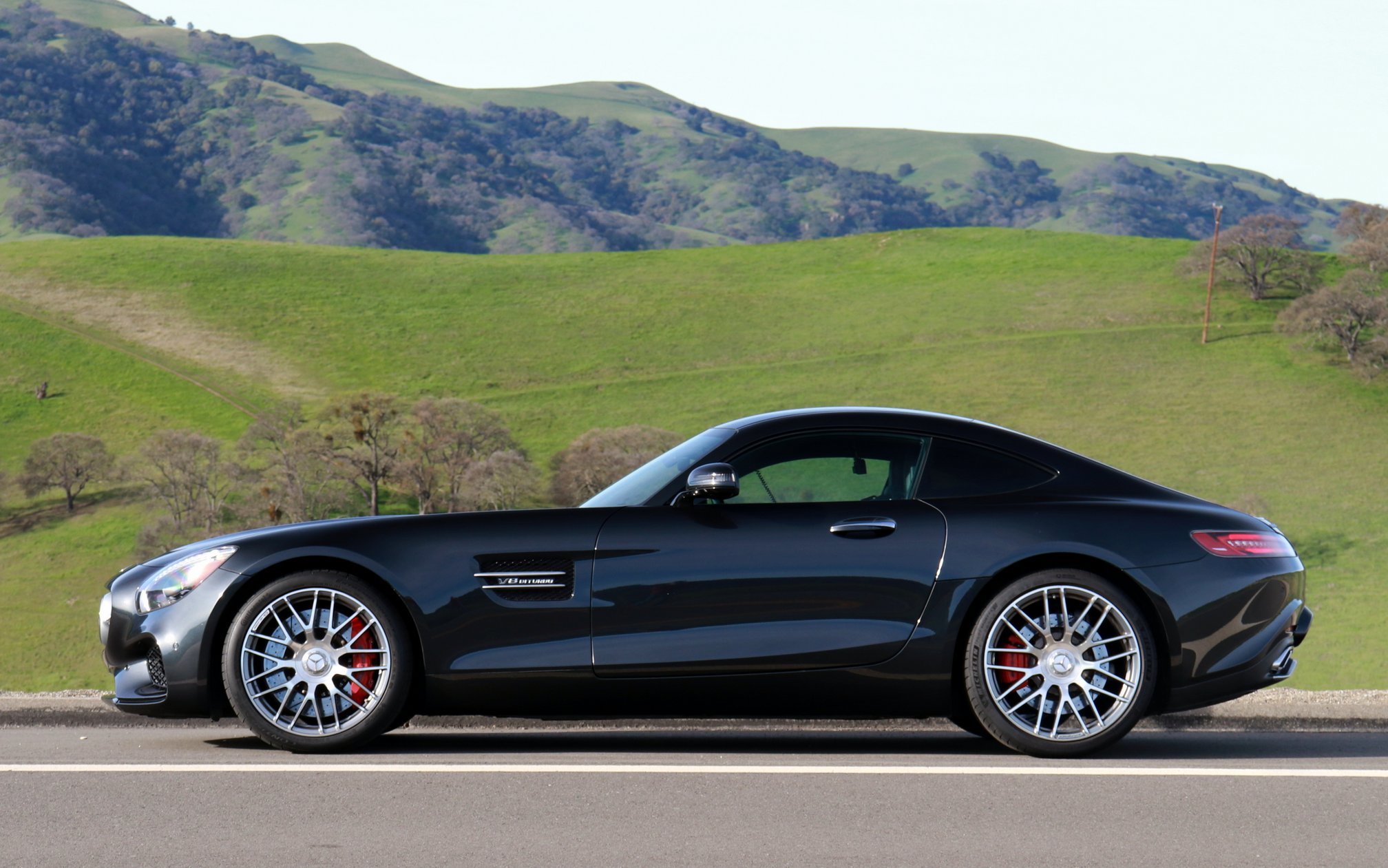
Once off the highway, I skirt the center of town on surface roads. The broad boulevards are well maintained; I love how I can feel the pavement texture and utility-cover thumps through the steering wheel and seat. The ceaseless road feel is why I love the GT S in town. That, and the kingpin view over the long hood. If the GT S existed in the 1920s, you could bet that Al Capone would drive one.
The hardest pill to swallow with the GT S is the ride comfort…or lack thereof. The aggressive torso bolstering hugs me like a hungry boa constrictor, and the suspension transmits all the bumps to my butt and up my spine. After five minutes in the GT S, my lurking back tension surfaces as pain.
So, the GT S is a seat swap away from being a great daily. (In Europe, they sold special comfort seats for the model.) As it is, I love it for short trips and just like it on long ones.
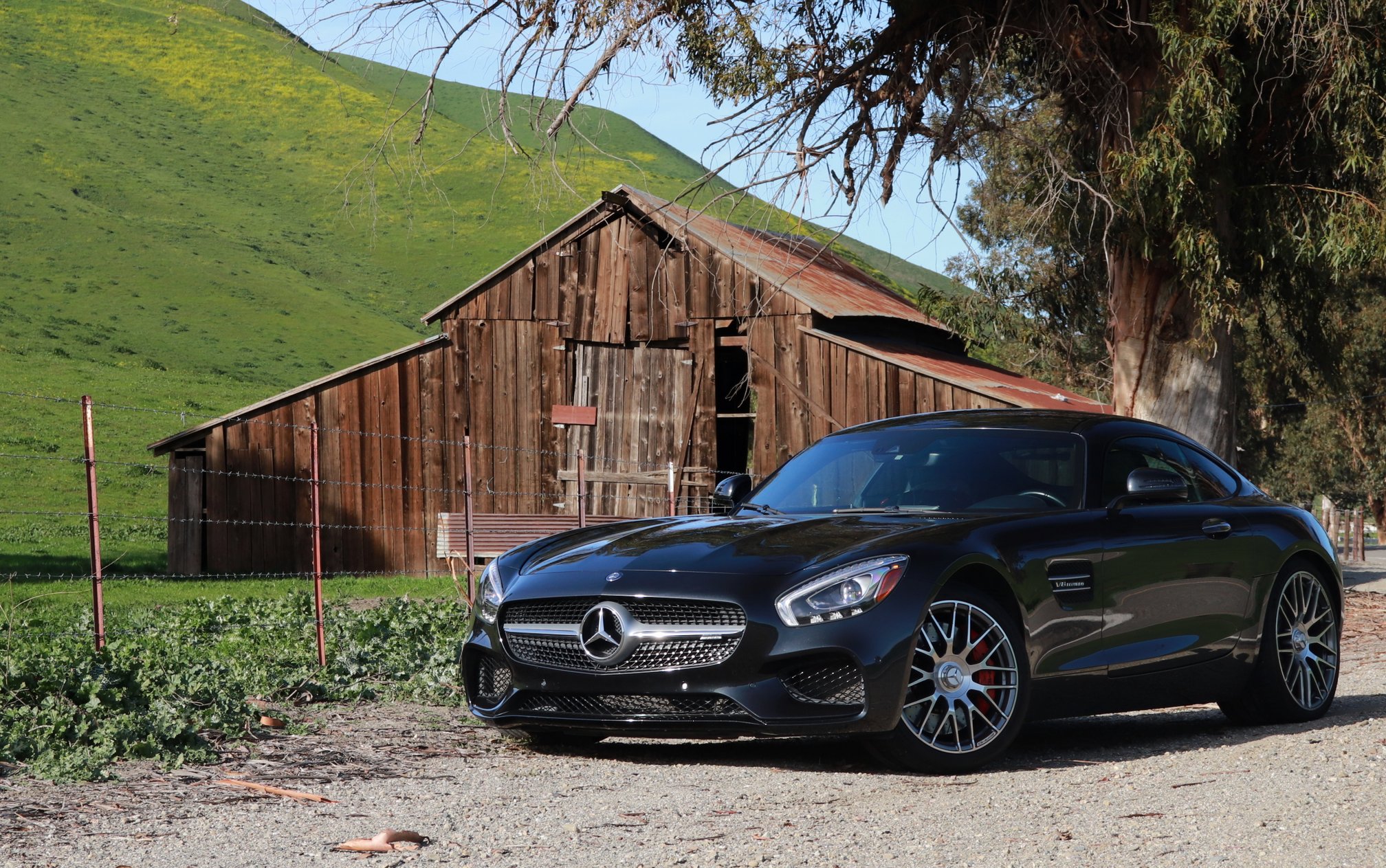
With town behind me, I whisk past vineyards and ranches. The route climbs into the hills as the valley ends, following the grassy slopes’ gentle curves. With long sightlines and immaculate pavement, this road is as close as I’ll get to a race track. Time to pick up the pace!
I tip the GT S into the climbing sweepers. The front axle may be a zip code away from the steering wheel, but the tires react immediately to my inputs. Mercedes-AMG is onto something with this front mid-engine layout: The GT S turns without hesitation or resistance, free of understeer. You wouldn’t think there is a massive twin-turbo V8 in its nose.
Entering turns, there’s the smallest amount of body roll as the weight settles on the outside tires. The steering firms without losing its oiled slickness, and the rubber’s work is ceaselessly communicated through the helm. This car makes my hands so happy! I know exactly what is happening at the front wheels.
At my fingertips are the cool aluminum paddles. I click through the second, third and fourth gears. The upshifts are immediate, and the downshifts are punctuated by a crack or gurgle from the exhaust. I run in the exhaust’s quiet mode for stealth; loud mode increases the roar and pyrotechnics.
The twin-turbo V8 has such vicious mid-range that it hardly matters if I short shift or run to the 7k rpm fuel cut. Some turbo engines run out of steam with revs, but not the GT S’s; its oomph is sustained all the way to the redline.
The hill climb is quickly over. After a short break at the summit to take in the vista, I retrace the route into the valley.
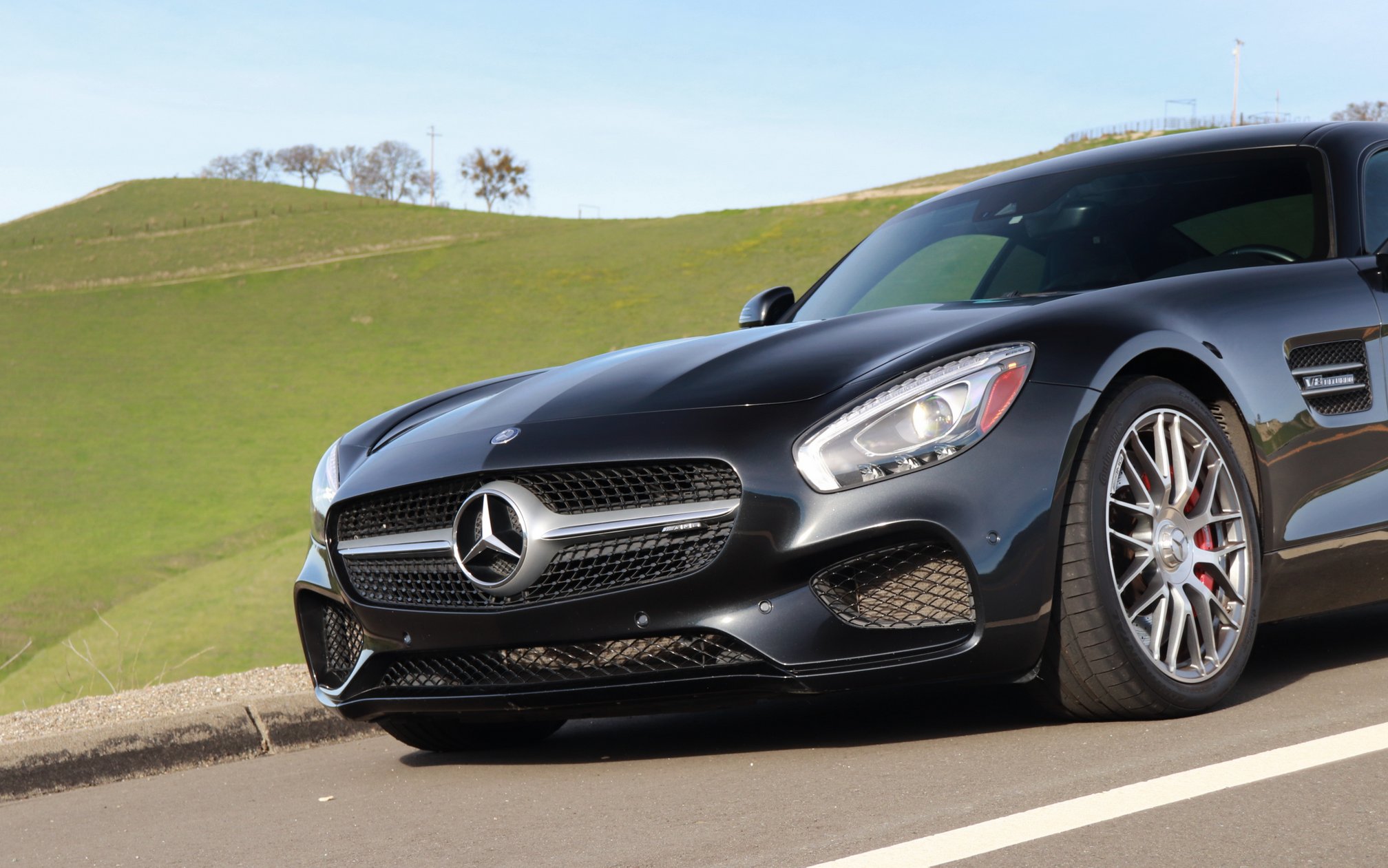
Even with gravity’s push aiding the monster engine, the brakes work flawlessly. They bite immediately when I brush the middle pedal, and the amount of scrubbed speed is proportional to my leg effort. I have zero complaints about the way the GT S stops.
The next road clings to the walls of a steep canyon and is much rougher than the first. Its surface undulates and jolts, sending wiggles and waves through the wheel and to my hands. The lanes are narrower, so the broad GT S feels cramped between the white and yellow lines. The tight corners require a slower pace, so I stick to second and third gears.
Turn after turn, the Michelin Pilot Sport 4S’s put in astonishing performances. What great summer tires! When my right foot drops post apex, the motor and Michelins sling me out of the corner like a man launched from a catapult.
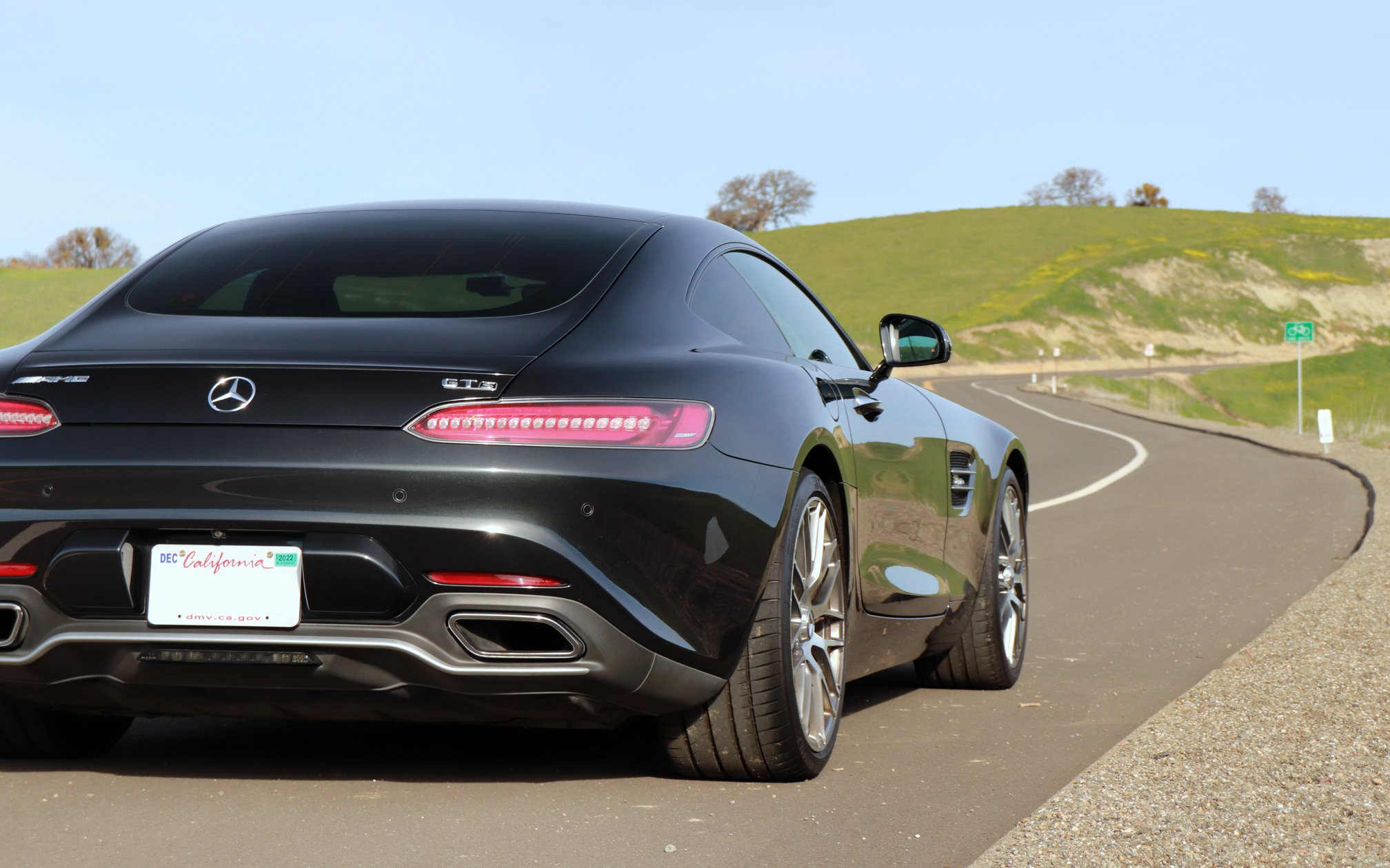
Not that the grip is indefatigable. If I get too testy with the gas, the V8 will smear them across the pavement like grease across a footballer’s face. It’s thrilling to drive a car with more motor than stick! It requires finesse to drive fast.
The GT S has three suspension stiffnesses, but I’m exclusively using Comfort today. (It’s the only one that’s remotely tolerable.) Even so, the GT S is jolting and rattling over the broken pavement; I almost feel as sorry for the car as I do for my poor pummeled spine. Frankly, this rough back road is too challenging for the GT S.
The point is punctuated by a particularly nasty mid-corner undulation. The GT S’s suspension absorbs the hit without clobbering the bump stops but threatens to float on the rebound. The car holds its line, but clearly, I’m at the limits of what the short-travel suspension can handle.
Fine.
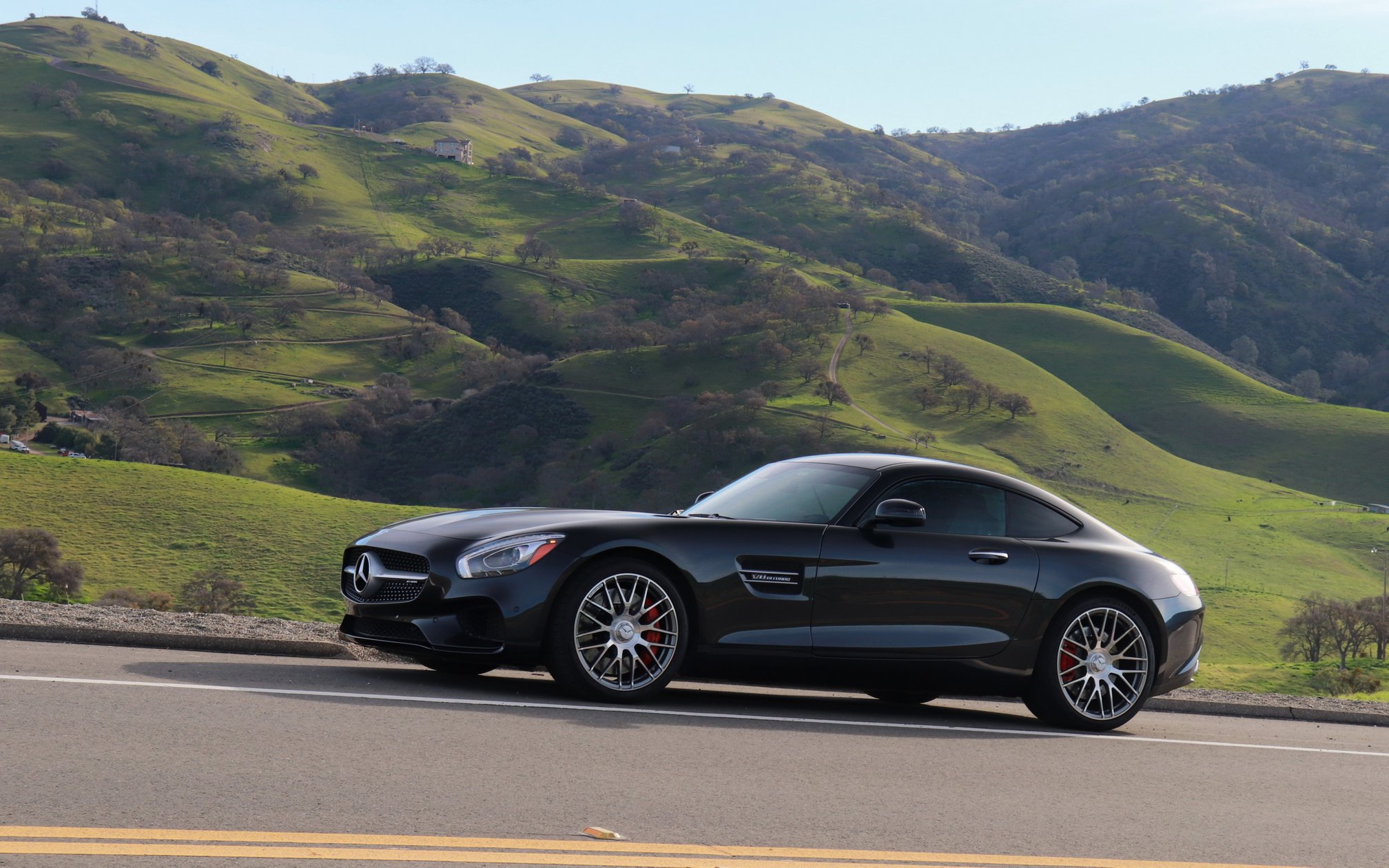
To paraphrase John F. Kennedy, “I choose this road and the other one, not because they are easy, but because they are hard, because they serve to organize and measure the best of the sports cars.”
Consider the GT S organized and measured. It is an agile and feelsome sports car with a heavy-hitting engine. But it relishes racing circuits over rally stages. I love it for its style and character and forgive it for my discomfort. Amen!
The GT S’s pulse taken, I turn its long bonnet back towards the waiting GT4 and punch the gas.
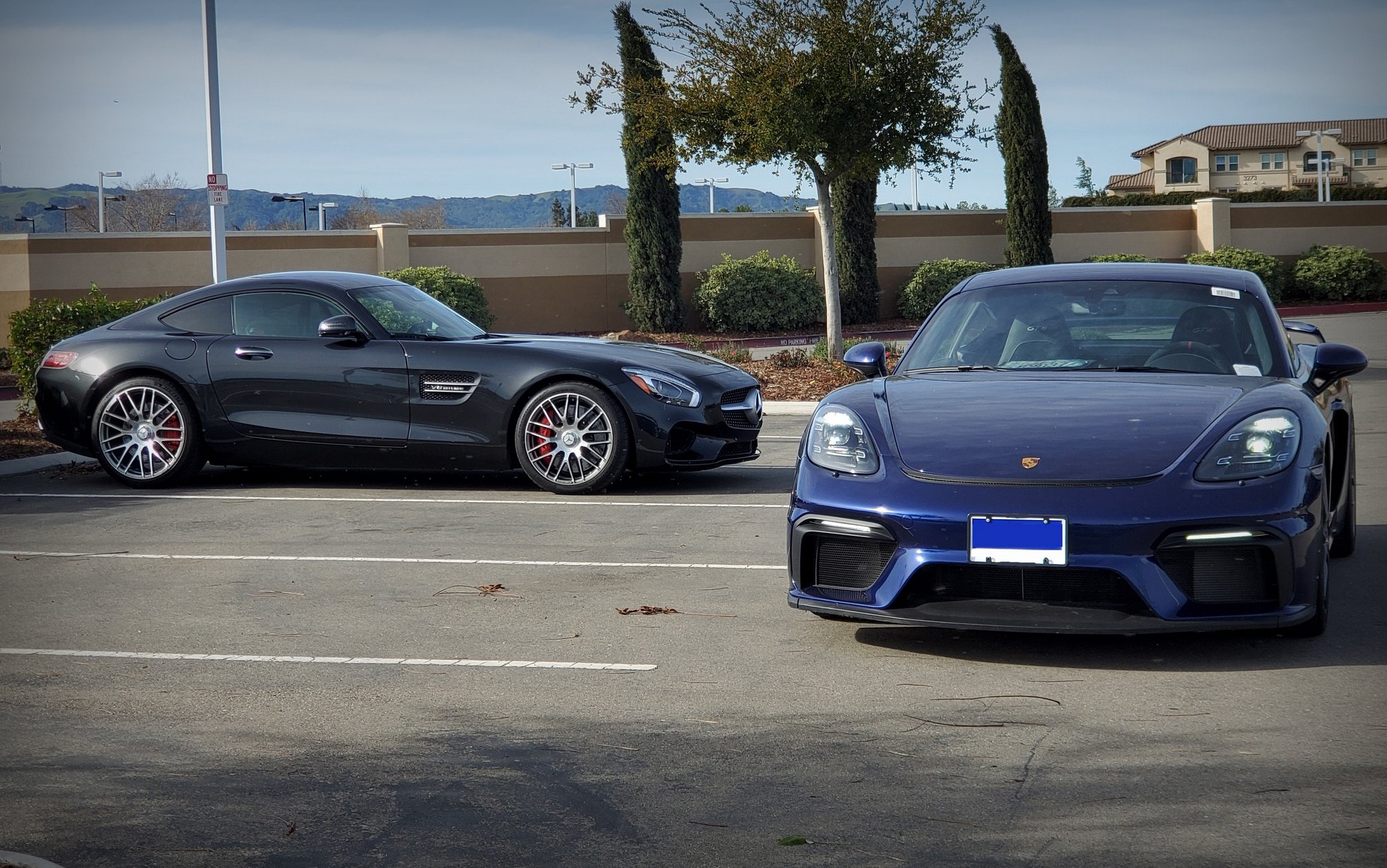
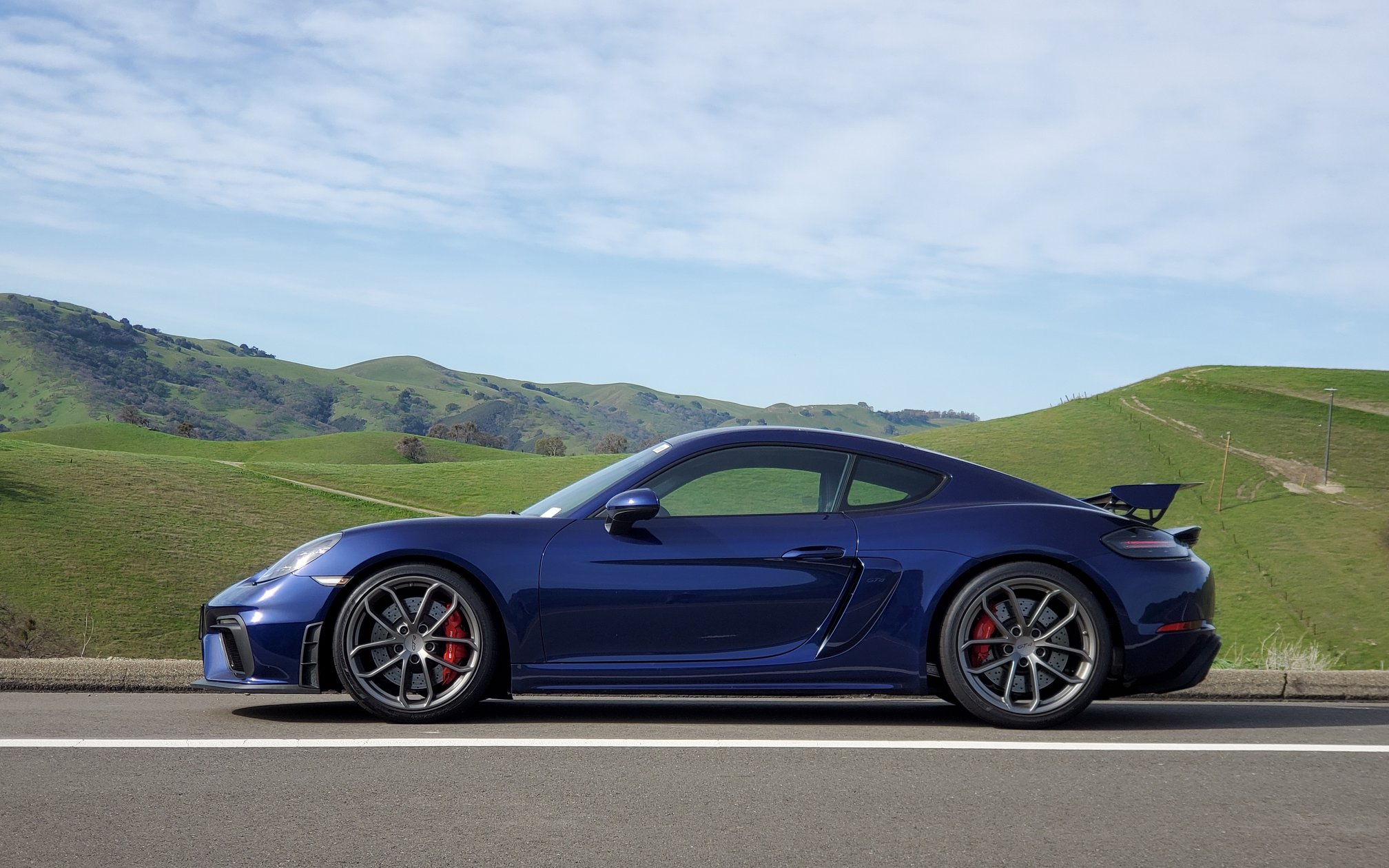
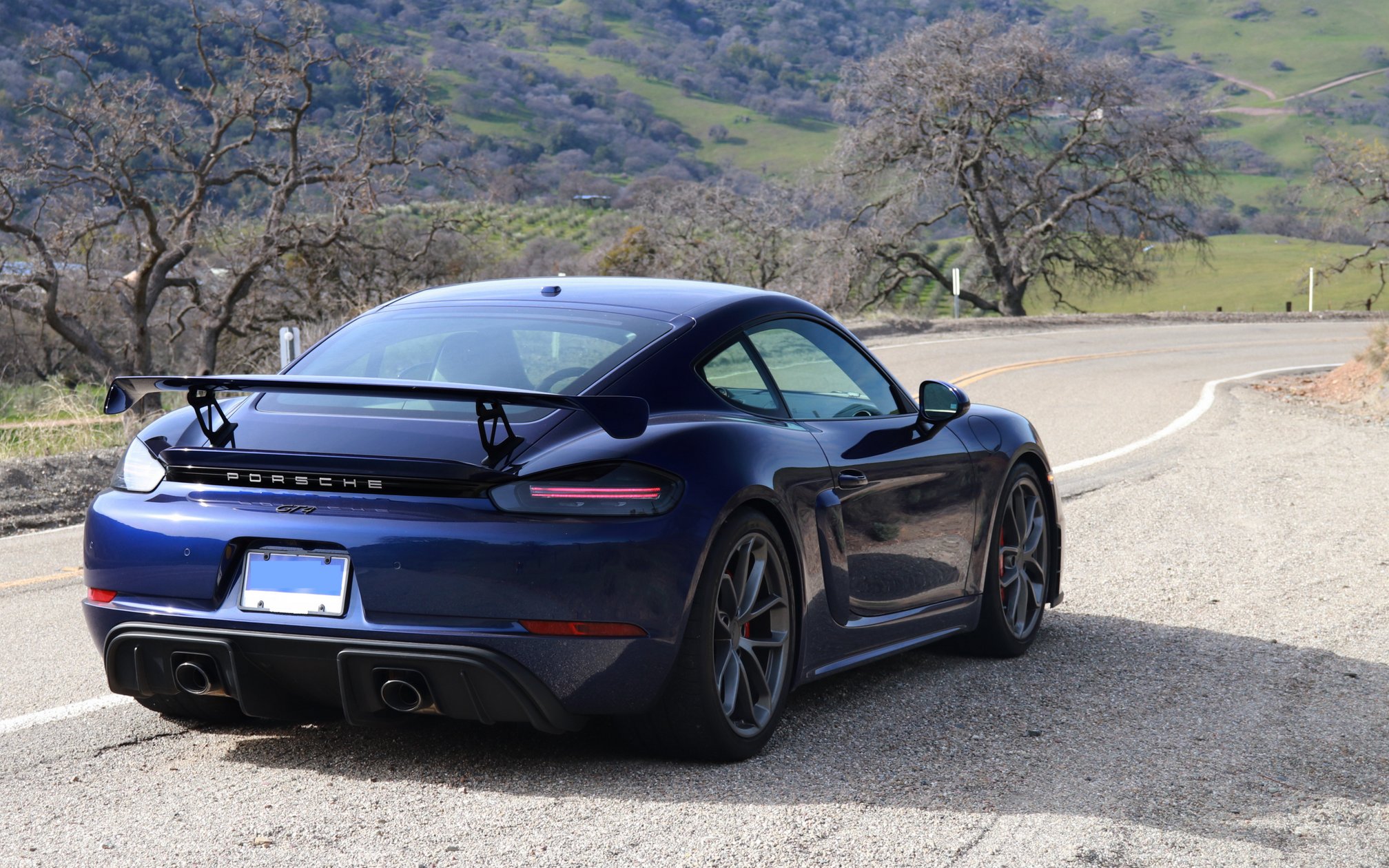
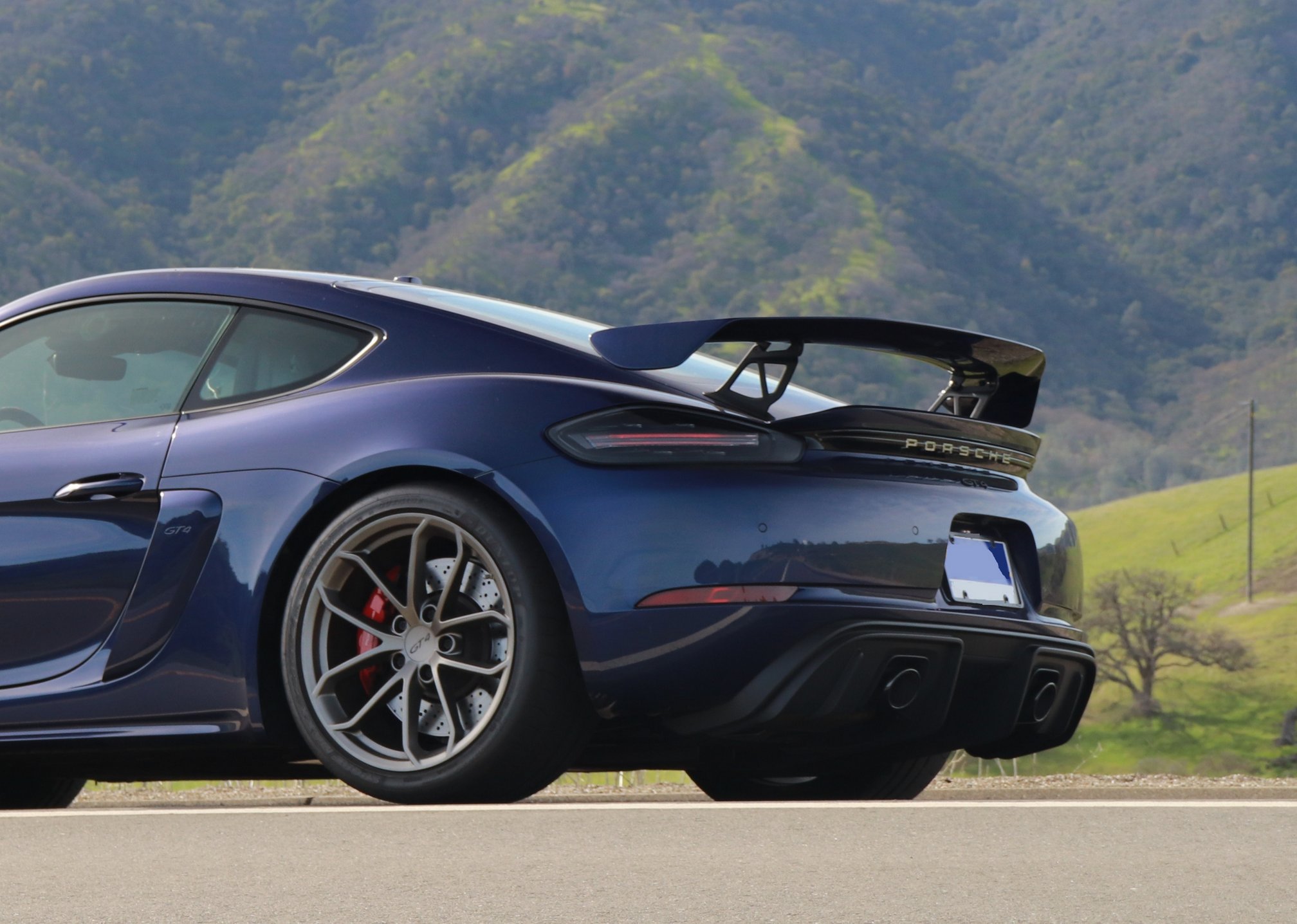
The 718 Cayman GT4 is hidden in a packed parking lot. With its tall GT wing protruding from its back, it seems like a shark among minnows. A quick look around the GT4 suggests it’s gone hunting before; the whole body is wrapped in paint protection film, and its tires show evidence of intense heat and wear.
With a $112k Monroney price, this GT4 has $12k in options. The iron brakes and sports seats come “for free,” but the Gentian blue paint, LED headlights, seat heaters, and navigation are extra.
While $112k was a pretty penny for a sports car, the GT S cost more. Its MSRP was $144k, $13k of which went to luxury trimmings. As a result, the GT S feels more upmarket than the GT4. (Never mind that as used cars, the GT S is 50% cheaper than the GT4.)
Inside, the GT S is bathed in leather and styled with swooping aluminum and glitzy carbon fiber. The GT4 is more austere: Its blocky black dashboard gets contrasting gray stitching and Frigidaire-esque brushed aluminum for accents. The GT4 has rows and rows of buttons for the radio, HVAC and drive settings. It’s dated, but I love it: I’m never more than a press away from what I want.
The most significant change is the cabin’s width: In the slim GT4, I can reach across and touch the passenger’s door. In the GT S, I’d have a foot of air between my fingertips and the far wall.
I adjust the GT4’s seat to my body. Porsche calls this throne the Sports Seat Plus, but it’s the $0 option. Stingily, only its seatback angle is electronically adjustable; I have to manually slide the seat front-to-back and pump it up and down. All in all, it’s comfortable and shapely, but I’d love more lumbar support. (For that, I’d have to pay $2600 for the 18-way adjustable seats!)
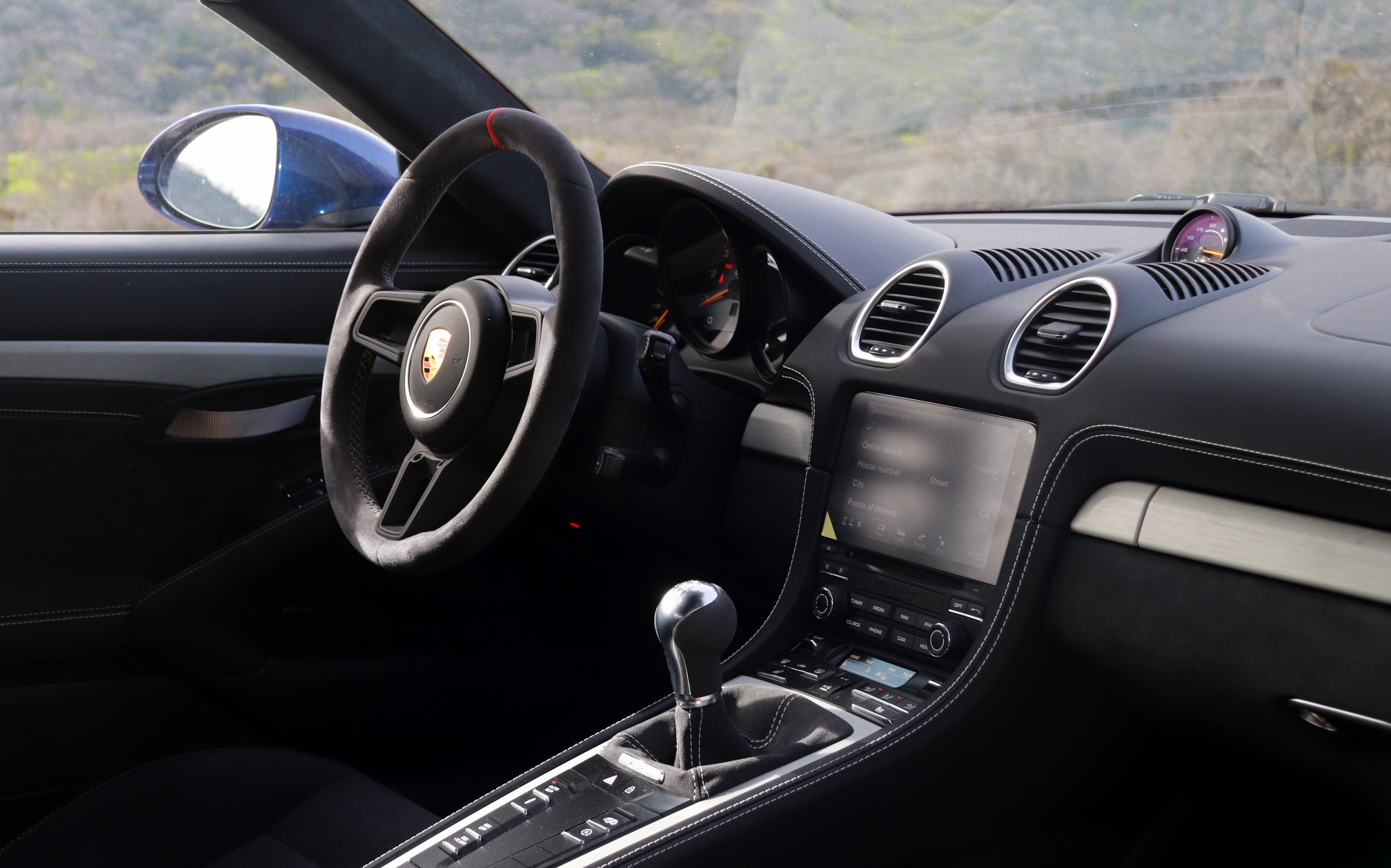
The GT4’s steering wheel is thin-rimmed and Alcantara-trimmed. I admire its focused design: it’s a simple hoop and button-free. This is a car for driving, not satellite-radio channel surfing!
So drive I do! I dip the long-travel clutch with moderate effort and then twist the key. The 4.0L flat-6 starts with a roar, and once the engine settles into a steady burble behind my shoulders, I engage first gear and ease the car into motion. The clutch engages near the top of its throw, and off we go!
My initial impression is that Porsche has mismatched the brake and clutch travel. Imagine hiking with just one boot on; that’s the level of inconsistency I’m feeling. The brake compresses an inch, but the clutch is good for three or four. Never mind, I’m sure I’ll adjust.
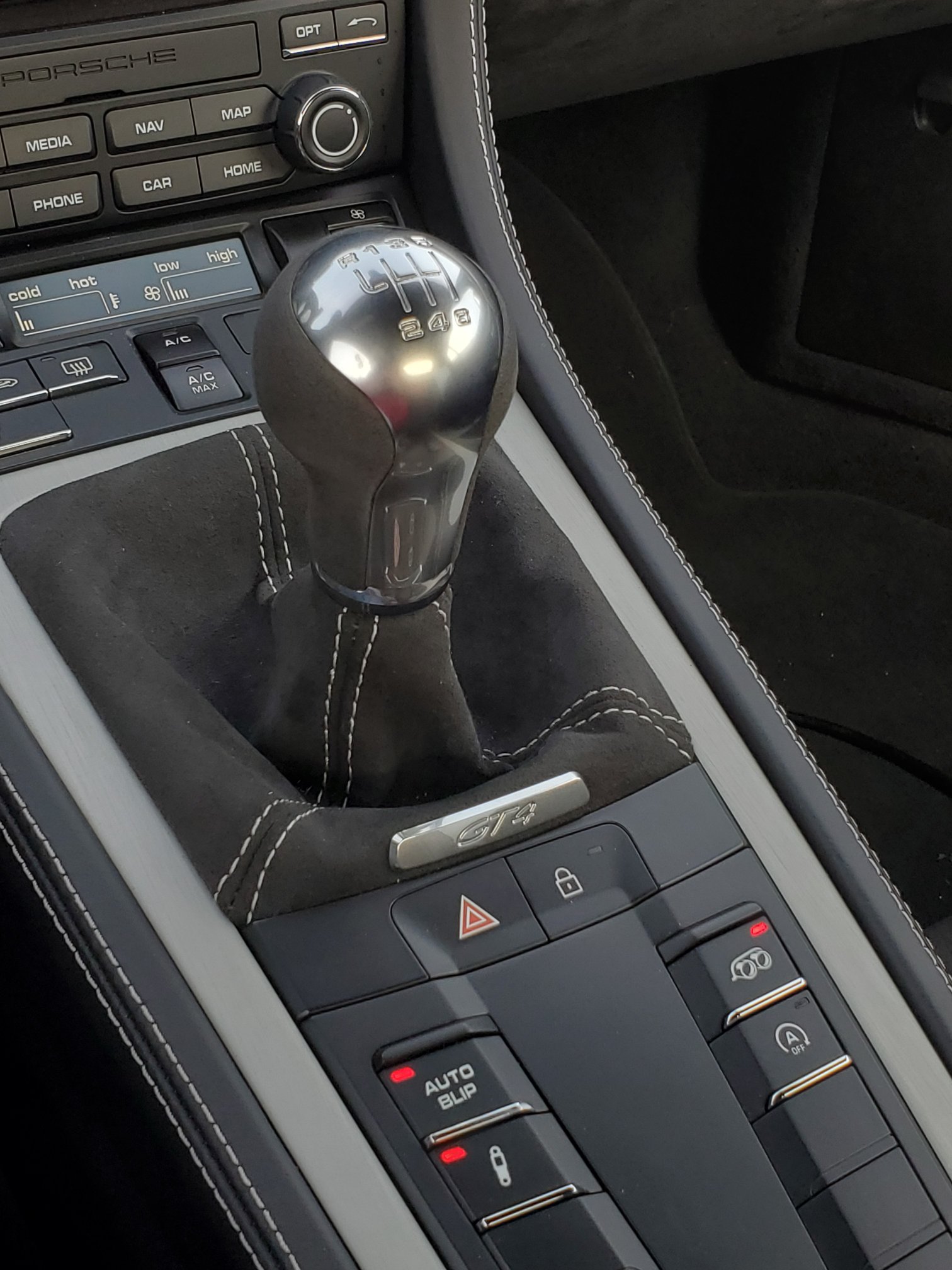
At first, the 6-speed manual hitches between the gates, but the clunky transitions don’t last long. Once the gear oil warms, the grabby gates smooth into informative detents. It’s absolutely clear when I leave one gear and enter the next.
I’m in love with the shifter; it’s one of the sweetest I’ve ever stirred! The throws are so short that I make them with wrist flicks rather than arm thrusts. It’s equal parts precise, mechanical and slick, a perfect cocktail of shift-it-myself bliss.
Everyone moans about Porsche’s manual gearing being too long, but on the highway, I’m wondering if the sixth gear is actually too short! The engine spins at 3k rpm when I’m cruising at 70 mph. Its din—and the tire roar—make for a noisy ride. Partial blame goes to the drivetrain layout: I’m essentially sharing the cabin with the mid-mounted mill.
The other sound snafu is one that I hope is particular to this GT4. There’s a mild exhaust drone at 2800 rpm. It’s not loud enough to drive me batty, but it’s surprising given Porsche’s usual polish. I get around it by adding a little speed.
Sound aside, I quickly decide I prefer the GT4 for long highway drives. Credit goes to the Porsche’s steering, seats and suspension. The steering is calmer on center; it helps me avoid the lane wandering I suffered in the GT S. The seats are more padded and less cramped; they also absorb more bumps. And the suspension is more compliant, offering a softer ride. (No doubt it helps to sit between the axles rather than on them, as I do in the GT S.)
On the highway, the only positive marks for the GT S are its motor and gearbox. I don’t have to clutch or shift, and the twin-turbo V8 has copious torque for passing at all rpm! (Contrast this with the GT4: even at 3k rpm, most of its 414 horses are out to pasture!)
Put it all together, and the GT4 is the calmer and more comfortable highway cruiser than the GT S. My proof is that my backache from the GT S is not reappearing in the GT4.
I exit the highway and enter the town. Wonderfully, all the road textures and impacts I remember from the GT S’s steering are present in the GT4’s. The 718 Cayman GT4—and 718 Cayman GTS, too—has my favorite EPAS of any car. It’s the rare EPAS that has the full spectrum of feedback.
But shifting through the gears is the GT4’s greatest slow-speed pleasure. I dip the clutch and flick from first to second, then second to third. The motions are tight, and the gates are clear: I’ll never miss a shift! The trip back to first gear is equally rewarding. When my right foot blips for a downshift, the engine responds with weightless immediacy. This is one of the freest revving engines I’ve ever sampled. The GT4 has automatic rev-matching, but I see no reason to turn it on when it’s so fun and easy to play the pedals!
(Only the Shelby GT350’s Tremec can match the GT4 6-speed for pure shifting pleasure.)
Soon I break free of stoplights and school zones; wilderness lies ahead. So let’s find the wild thing in this Cayman!
The road crosses a stream and snakes into the hills. Attacking the pimple-free pavement, I can sense the GT4’s track breeding. The car pivots and twirls as it carves the climbing corners, hinting that its limits are still far in reserve. Is the GT4 faster than the GT S?
I think so, and it may come down to tires: The GT4’s circuit-ready Dunlop Sport Maxx Race 2s are much more aggressive than the GT S’s Michelin Pilot Sport 4S’s. I rarely have race rubber under me, and it is quickly clear that the Dunlops have more stick than I’m used to…and more than I’d dare to use on the street!
But just because the GT4 is grippier doesn’t mean it’s more fun!
You see, the GT4’s flat-6 may produce 414 hp, but it can’t outmuscle the race rubber with me at the helm. When I’m driving within my comfort zone—and leaving some reserve for unexpected hazards—the GT4 has so much extra grip that it’s a high-dollar momentum car! Thus, I’ll never get the car onto its tiptoes or enjoy a wag of oversteer. What a shame!
(My old V8 M3 was the same, boringly planted at 8/10ths, but an absolute tiger when driven on the ragged edge. Conversely, the GT S has enough brute strength to hoon even when its milder tires are well below their lateral limits.)
I get caught up in the tactile differences between the two cars. When the GT4 settles into a long sweeper, its steering gets heavy and fights to recenter. The steering weight masks the chassis’ agility and makes the GT4 feel reluctant to turn. The rubbery recentering is a telltale of EPAS steering. I don’t like either! (The 987 Cayman and 718 Cayman GTS both felt freer to turn.)
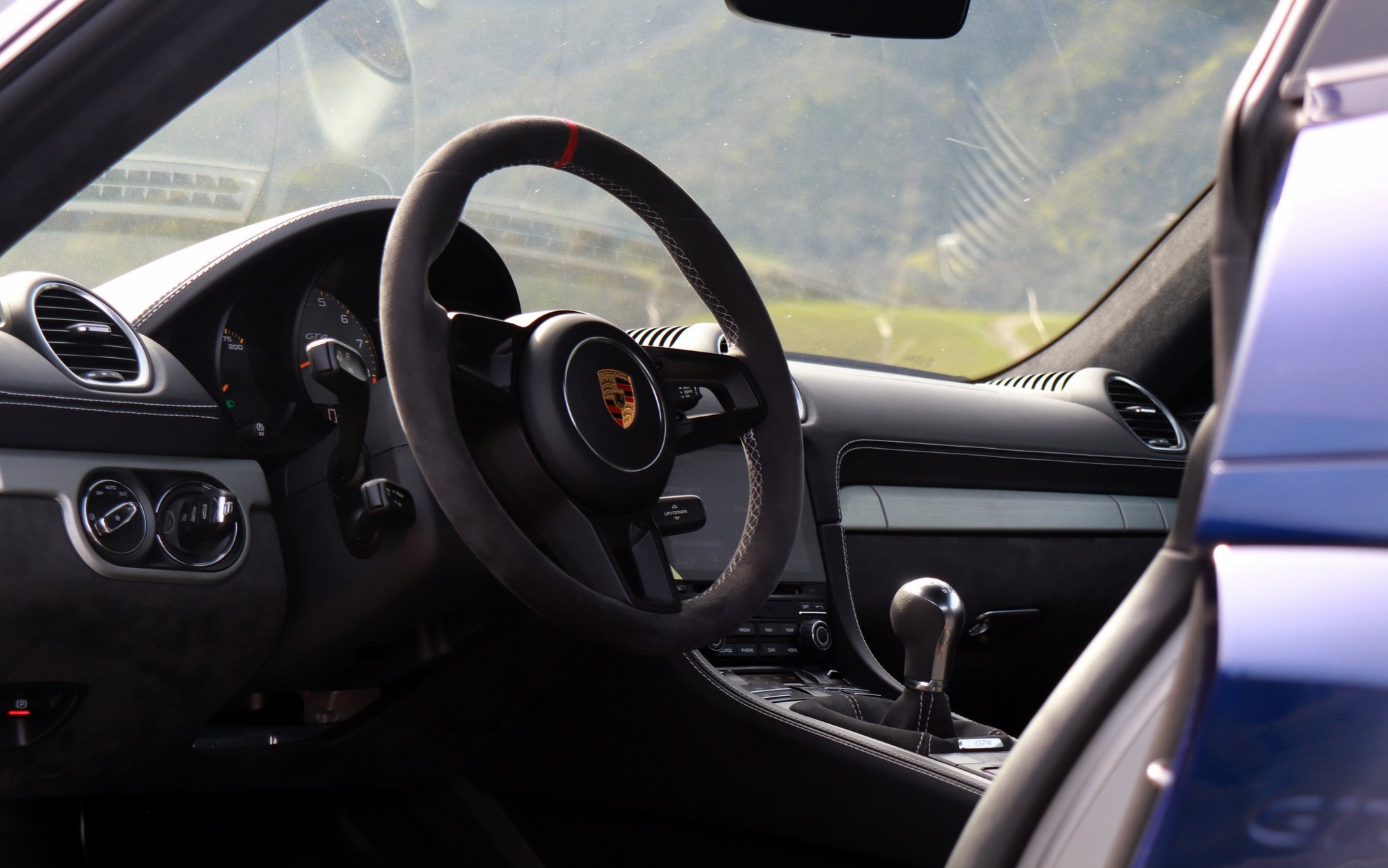
Thanks to more assistance on center and under load, the GT S had a lighter touch. It eagerly vectored into the corners and was more supportive of mid-corner adjustments. The GT4 may have the best EPAS I’ve ever sampled, but I still prefer the GT S’s finely-tuned hydraulic steering.
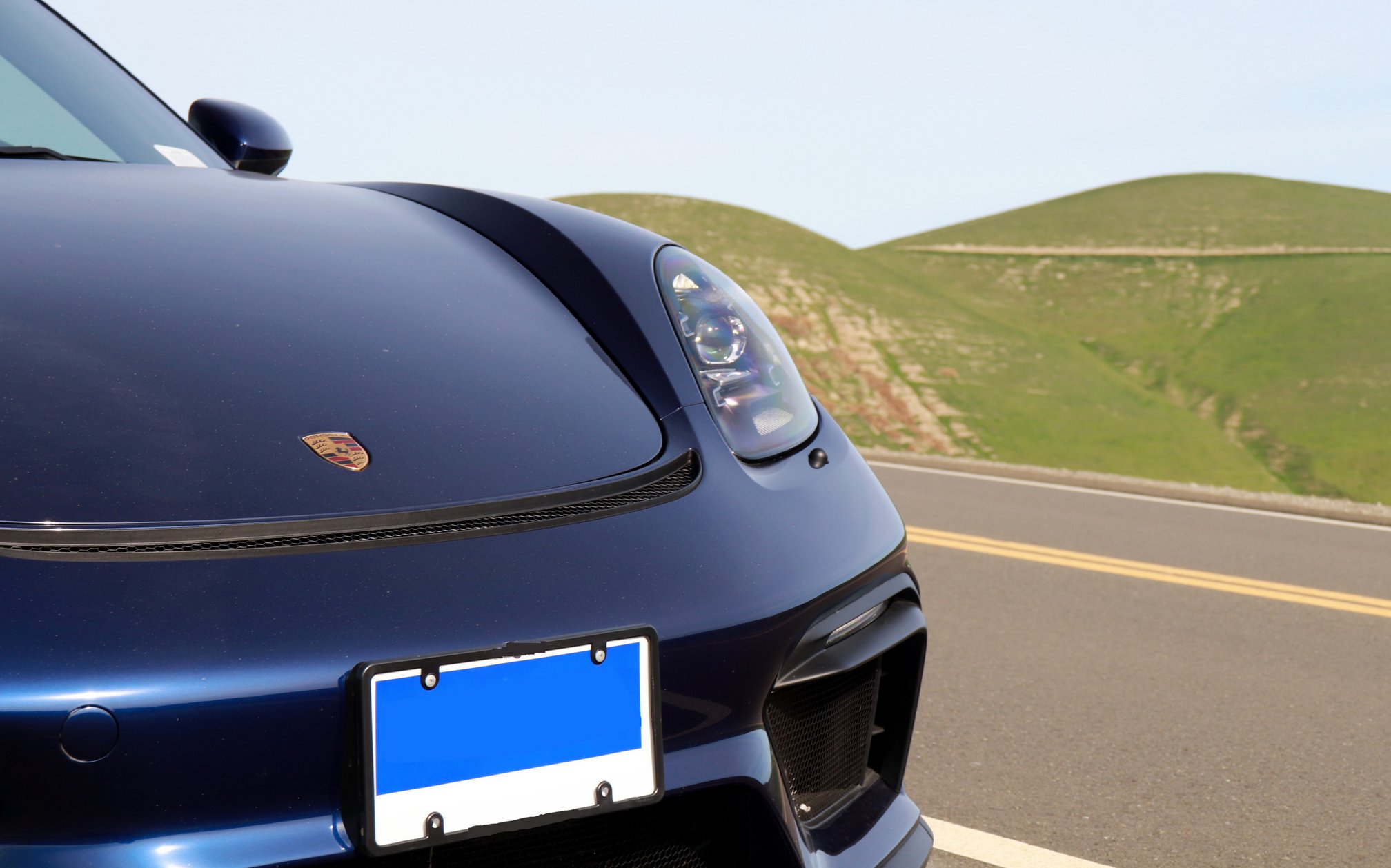
I park at the top of the hill and walk my eyes over the GT4’s bodywork. I’m most taken with the subtle S-curve that runs from the Cayman’s rear haunches to its headlights. This gentle line is as organic and sensual as the rolling winter hills around me. Equally fetching is the indigo paintwork: it’s deep blue in some lights and purple in others, but stunning in all.
But I can’t linger long; the clock is ticking.
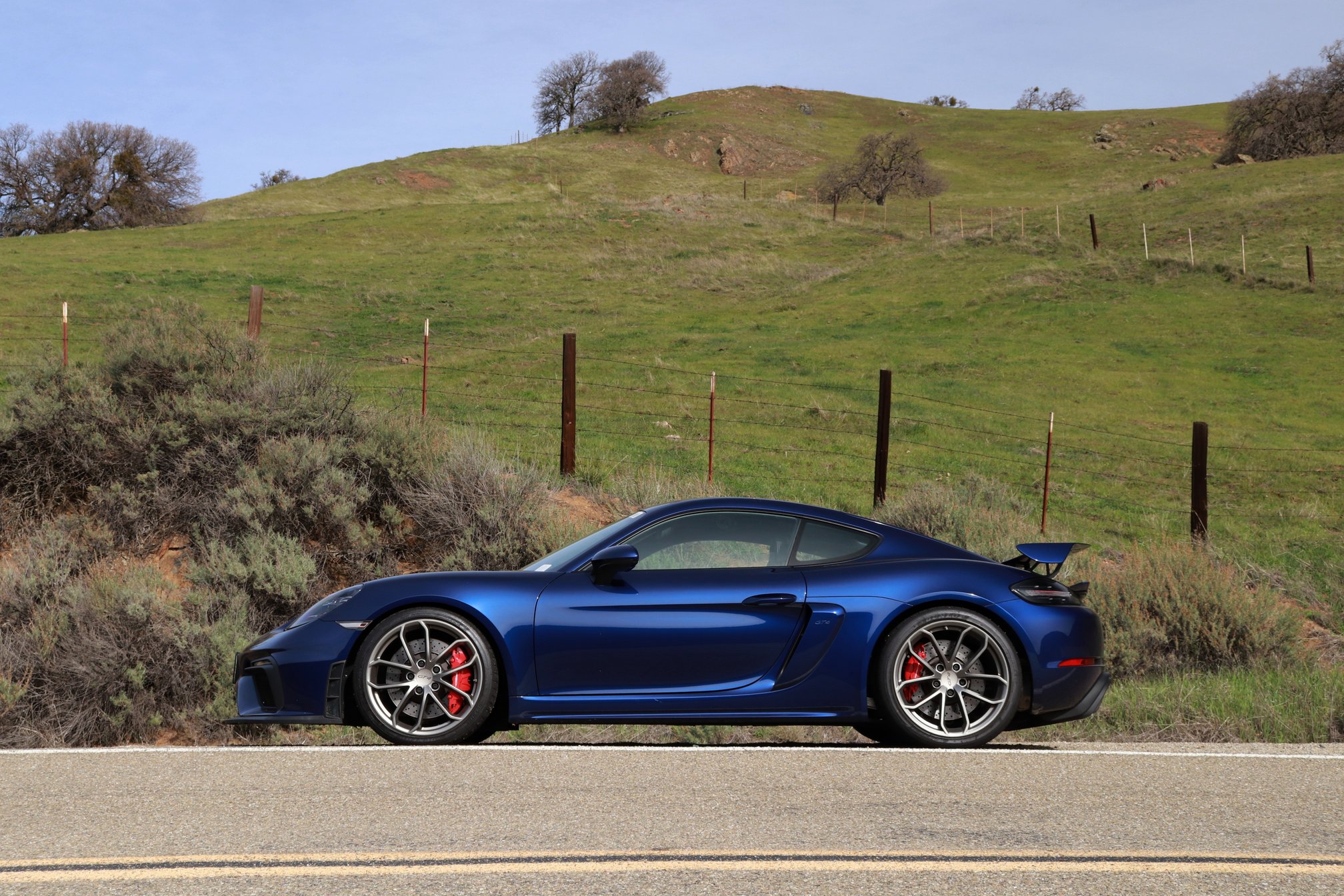
Sweeping back down the hill, I notice how the center of rotation has moved from the base of the windscreen in the GT S to a point just behind my shoulders in the GT4. The GT S has a 47% front/53% rear weight balance, and the GT4 weighs in at 44%/56%. The numbers don’t suggest a significant difference between the cars, but the driving feel is quite distinct.
Corner after corner, the brakes stay reassuringly firm. This GT4 may use the standard iron rotors, but they are completely unfazed by the 3,199 lb Cayman. I give them a hard stab as I enter the valley and then turn onto the bumpy canyon road.
Here the pavement is rutted, sagging and worn. The GT4’s wide front tires are tempted to tramline—I feel the steering wheel wiggling and tugging as they follow the troughs—but steady hands keep the GT4 on course. (The tramlining is modest and doesn’t spoil the fun.)
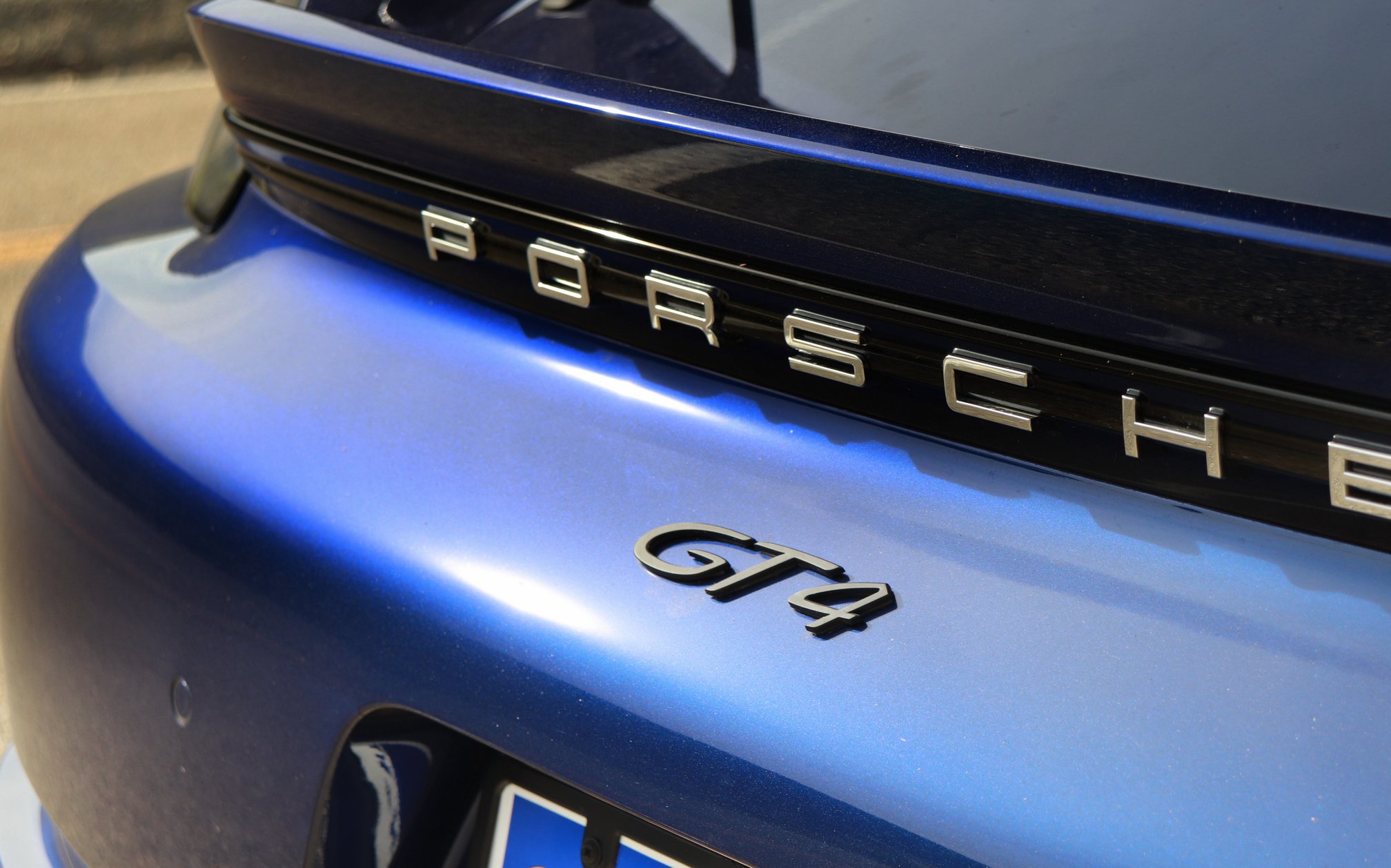
A long straightaway appears ahead of me. I slow down, dipping to 2k rpm in second gear, and floor the accelerator. Like a pitcher winding up for a blistering fastball, the GT4 starts deliberately and builds energy as the revs accrue. By 5k rpm, the car is in full stride: Pace builds with an orgasmic urgency and crescendos near the redline. The “oh!” moment happens from 7k to 8k rpm, when the scenery slurs out the side windows and my eyes go wide. Wow, the GT4 is a zinger! But only for those last 1k rpm…
GT4’s naturally-aspirated rush is familiar from drives in the 997 and 991 GT3s, but the experience in the little Cayman is thinner. (The GT3 is almost twice the price; what did I expect?) If a run to the redline in a GT3 is pure sex, then the same in the GT4 is a hand job. Both are carnal pleasures, but they aren’t the same. The GT4 is missing the GT3’s meaty torque and broad top-end surge.
(The GT S, on the other hand, produces power with the relentless violence of a jackhammer.)
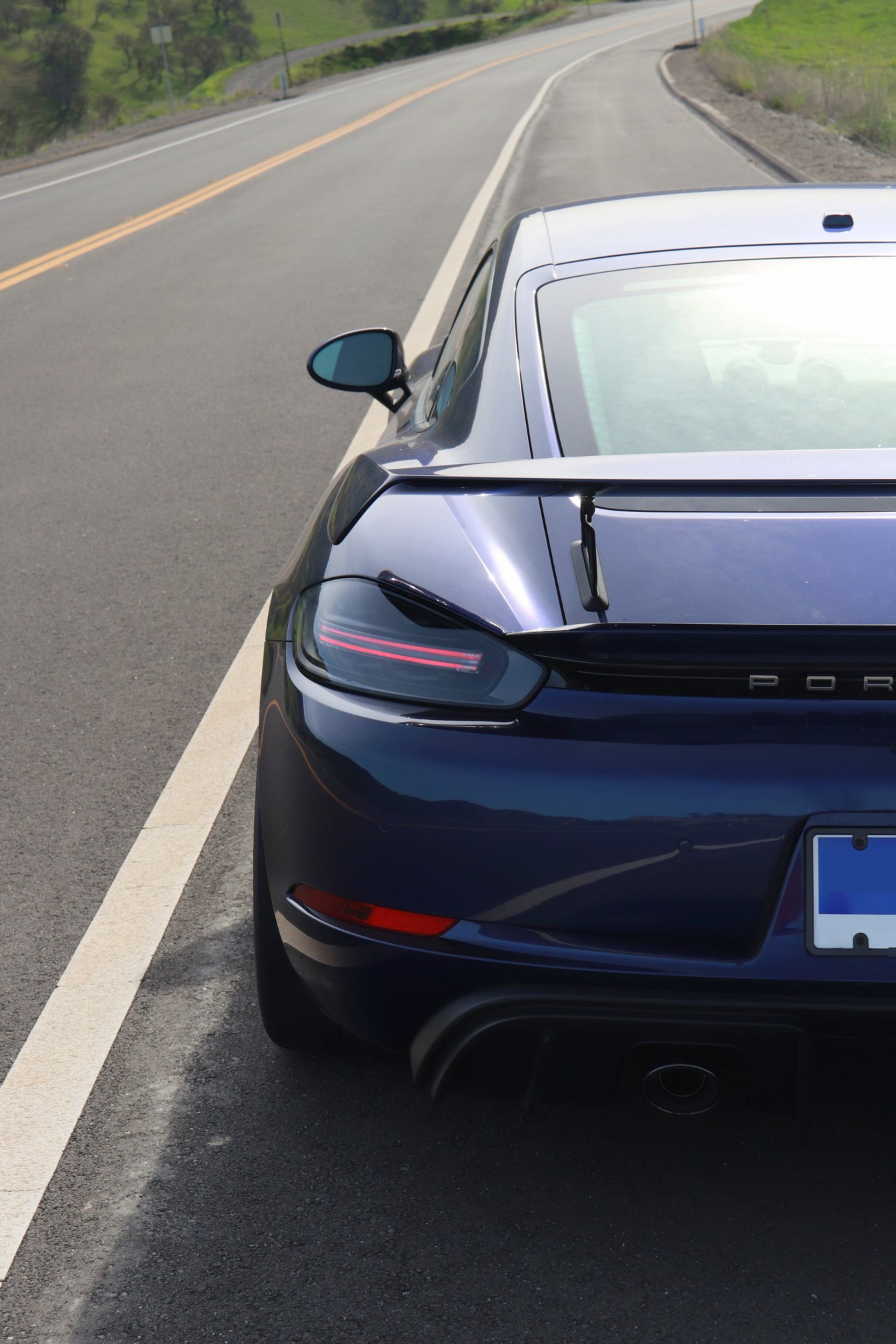
As the turns stack tighter, the GT4’s long gearing and top-heavy powerband rob me of shifting opportunities. Second gear lasts to 82 mph, and an early upshift would put me in the horsepower doldrums. Frustratingly, on this road, my best option is to hold second and leave the transcendent transmission unstirred! (At least in the GT S I could lean on the turbo torque and click between second and third gears.) So I attack without shifting, winding out the motor on the short straightaways and trimming back the revs for the corners.
I’m impressed by how capable the GT4 is on the erratically heaving pavement. Minor bumps are paid no need, and large mid-corner undulations—like the one that nearly broke the GT S’s grip on the ground—are compliantly absorbed and then firmly controlled. The GT4 has the right suspension for blistered pavement! Who knew?!!
Furthermore, the GT4’s narrow width and comfortable seats make it a better car than the GT S for this country road. I’m not feeling boxed in by the lane lines or pummeled by the pavement. I just want to keep driving and driving until this crooked route comes to an end.
But sadly, I can’t. My time with the GT4 has run out. I need to return the car.
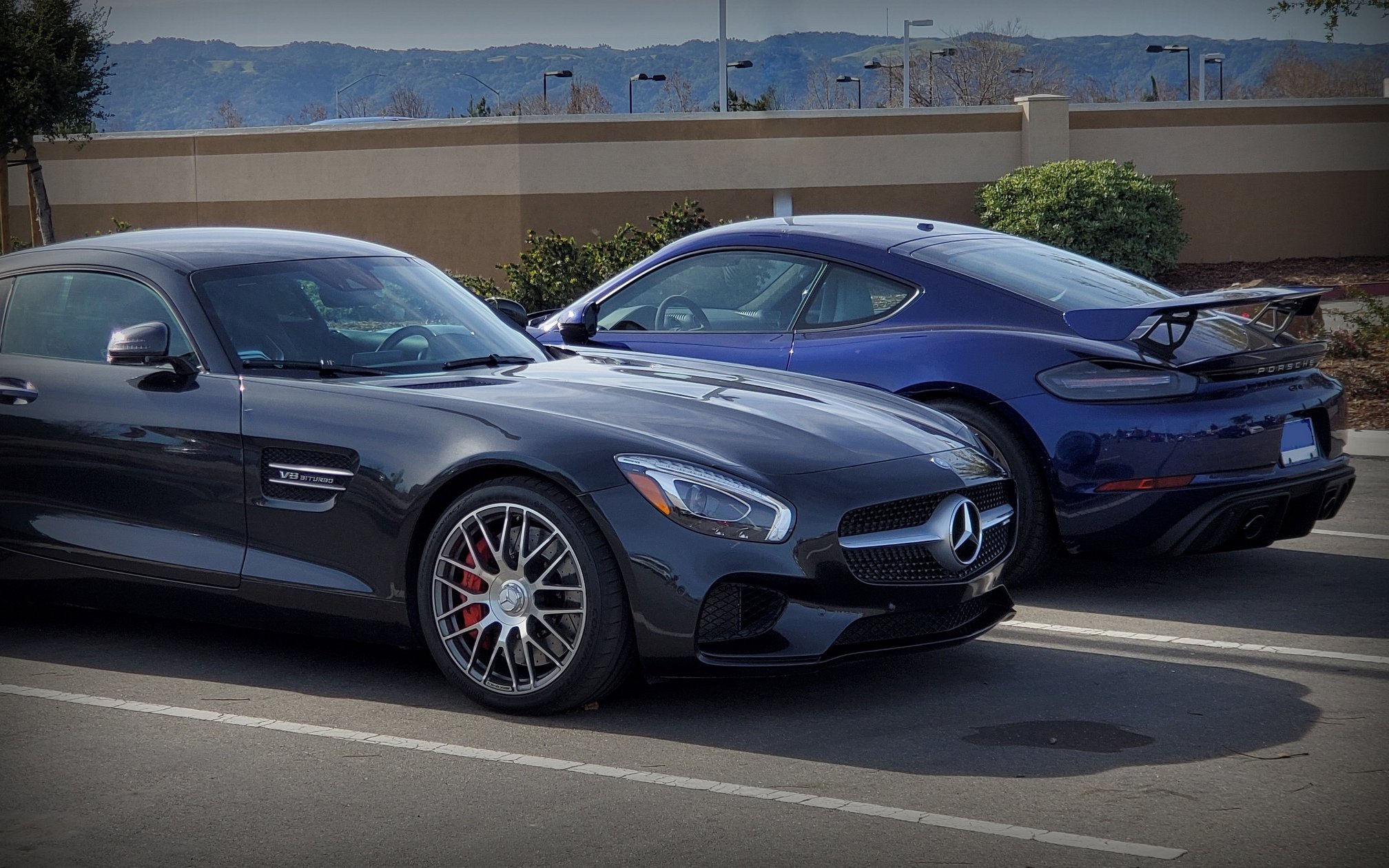
What was that JFK said? Oh, right, measure and organize.
I’ve experienced the GT4 on highways, city streets and canyon roads. As I drive home, I collect my thoughts. The GT4 is a fantastic car, and it’s fascinating how pitting it against the bombastic and flinty GT S flavors my feelings.
First off, if this blog was called Mike’s Downshift, then the GT4 would be the winner of this test. The GT4 has the sweetest gearbox I’ve ever driven, with the slickest, most feedback-infused shifts. If you love shifting, the GT4 is for you! (Of course, you’ll need a track to enjoy third and fourth gears.)
But this is Mike’s Steering Column, and the GT S has my favorite steering. Both cars are exceptional at communicating the road’s texture and tug, but the GT S steers with an eager lightness and grace that the GT4 lacks. As a result, the heavy GT S feels more nimble than the featherweight GT4 when the opposite is true.
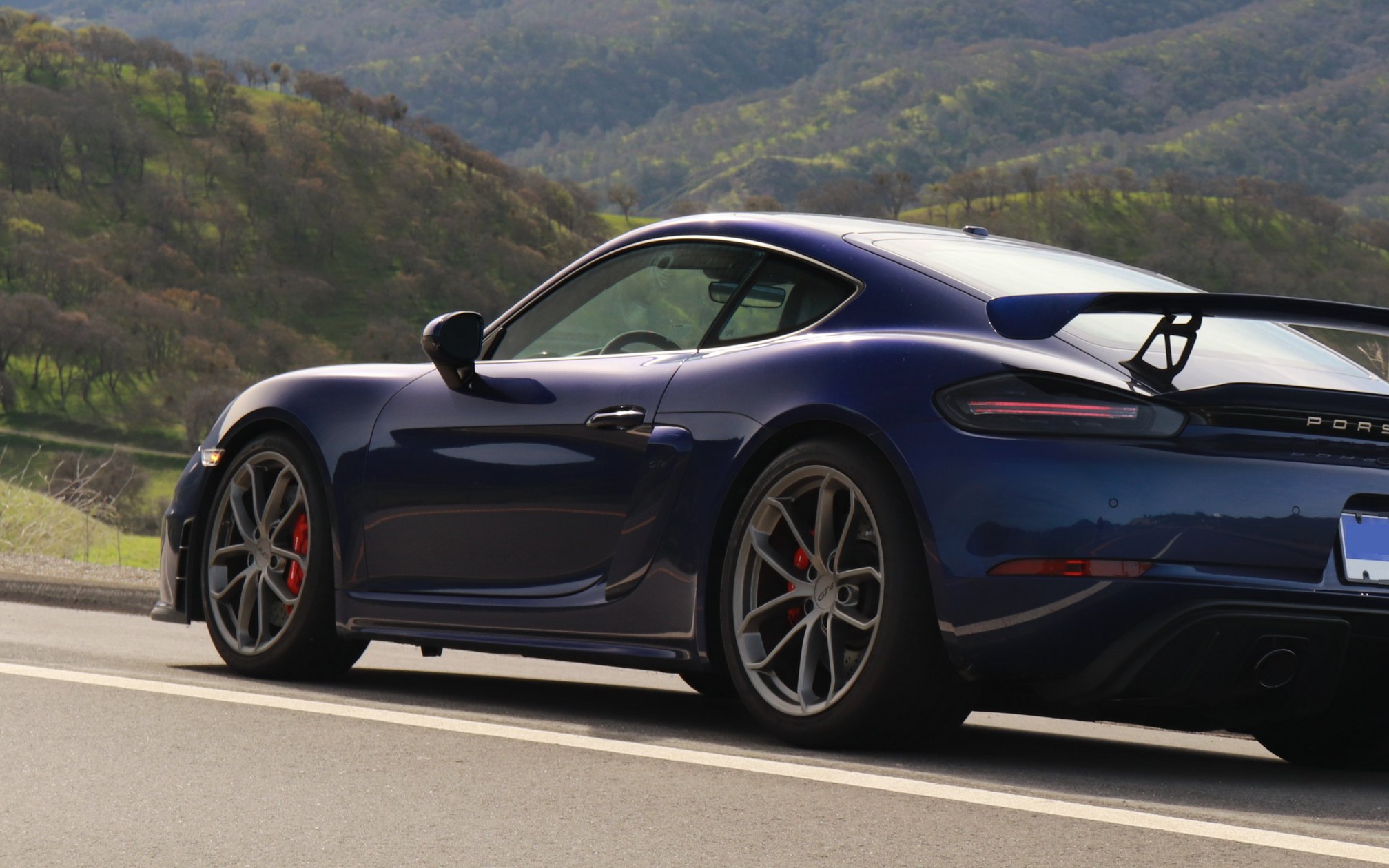
I can’t separate the GT4 and GT S on the brakes; on today’s roads, both cars were faultless. (Though I suspect the GT4’s brakes will last longer at a racetrack.)
The two engines may displace 4.0L, but in all other regards, they are diametrically opposed. The AMG twin-turbo V8 is as stout as a redwood tree, incredibly effective at launching the GT S at the horizon, yet equally adept at highway loafing. Next to it, the GT4’s thin low- and mid-rpm power leaves me wanting, but its flat-6 sings sweeter and has a more climactic redline rush. Regardless, in street and canyon driving, I more readily enjoy the GT S’s strengths.
And the chassis? Next to the too stiff GT S, the GT4 is comfortable and composed. It’s objectively the better choice for bumpy canyon cavorting and highway hauling. But the GT4 is also so grippy and track-focused that it puts most tomfoolery out of reach. So, if I want to misbehave, giggle and grin, the GT S is my enabler: its harder tires and torquier engine put on-the-limit thrills within reach.
(I suspect the GT4 has a wider spread between its mild and wild sides. I’d love to wring it out on a track and see how that broadened my understanding of the car.)
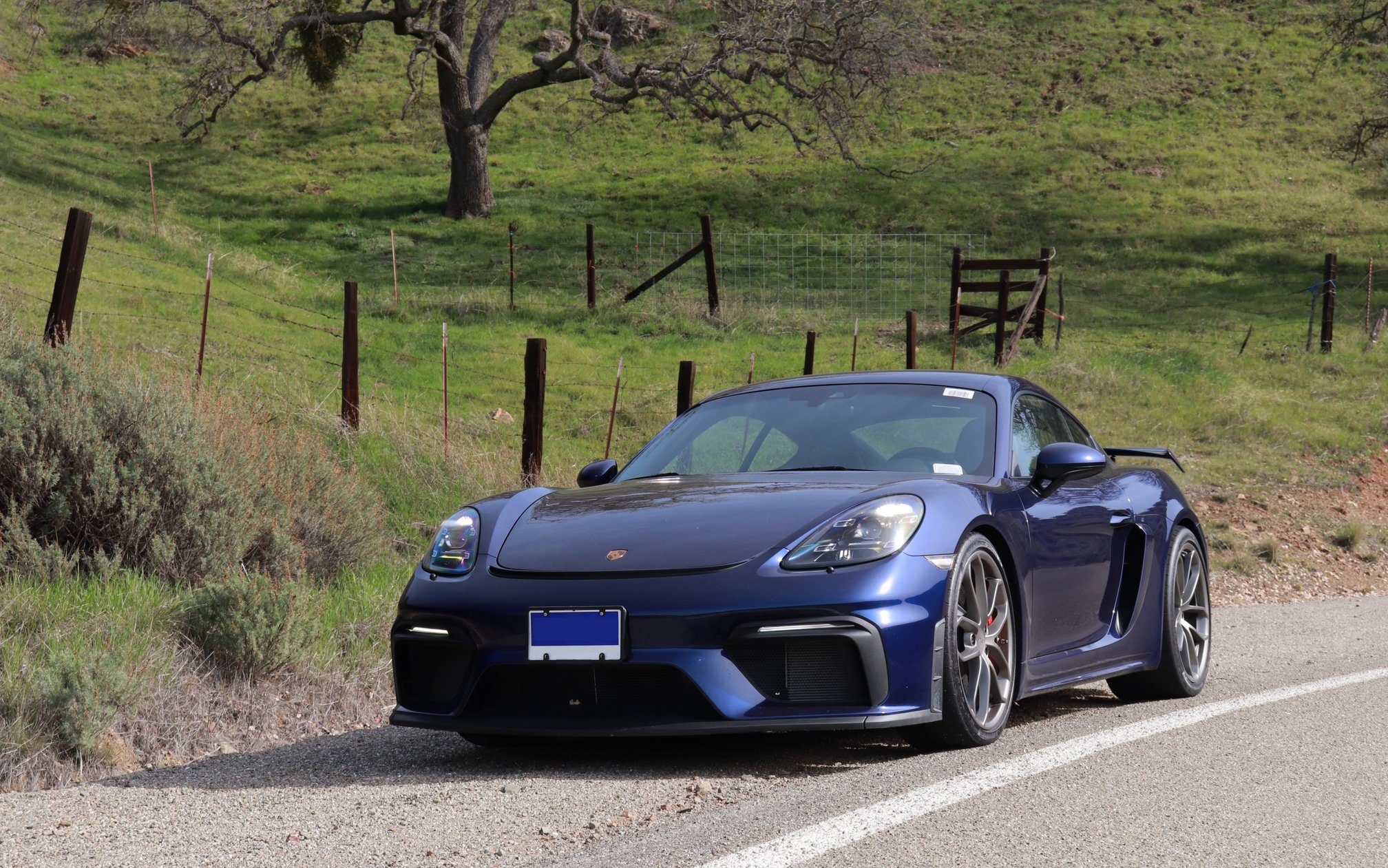
Remember how I predicted that the GT4 would lose this comparison? Here’s the point where that comes true.
The GT S’s symphony-quality hydraulic steering and leash-straining aggression make it my winner. But the GT4 is a sports car of equal—and often superior—measure! For drivers with different priorities, it’s a list-worthy gem. I’d love to own one, too!

