
Curiosity, disappointment, acceptance. These are the emotional stages I went through when receiving a 2019 BMW X3 xDrive30i as a dealership loaner. You see, I’d hoped to draw the X3 M40i, a giggle-inducing SUV I briefly sampled last year and an SUV which seems honestly ready to romp on a mountain road. The xDrive30i? It’s the couch-potato sibling of the M40i. It’s inclined to loaf and avoid breaking a sweat. But just like a mother loves all her children, I can find something to admire about the X3 xDrive30i, too.
Curiosity
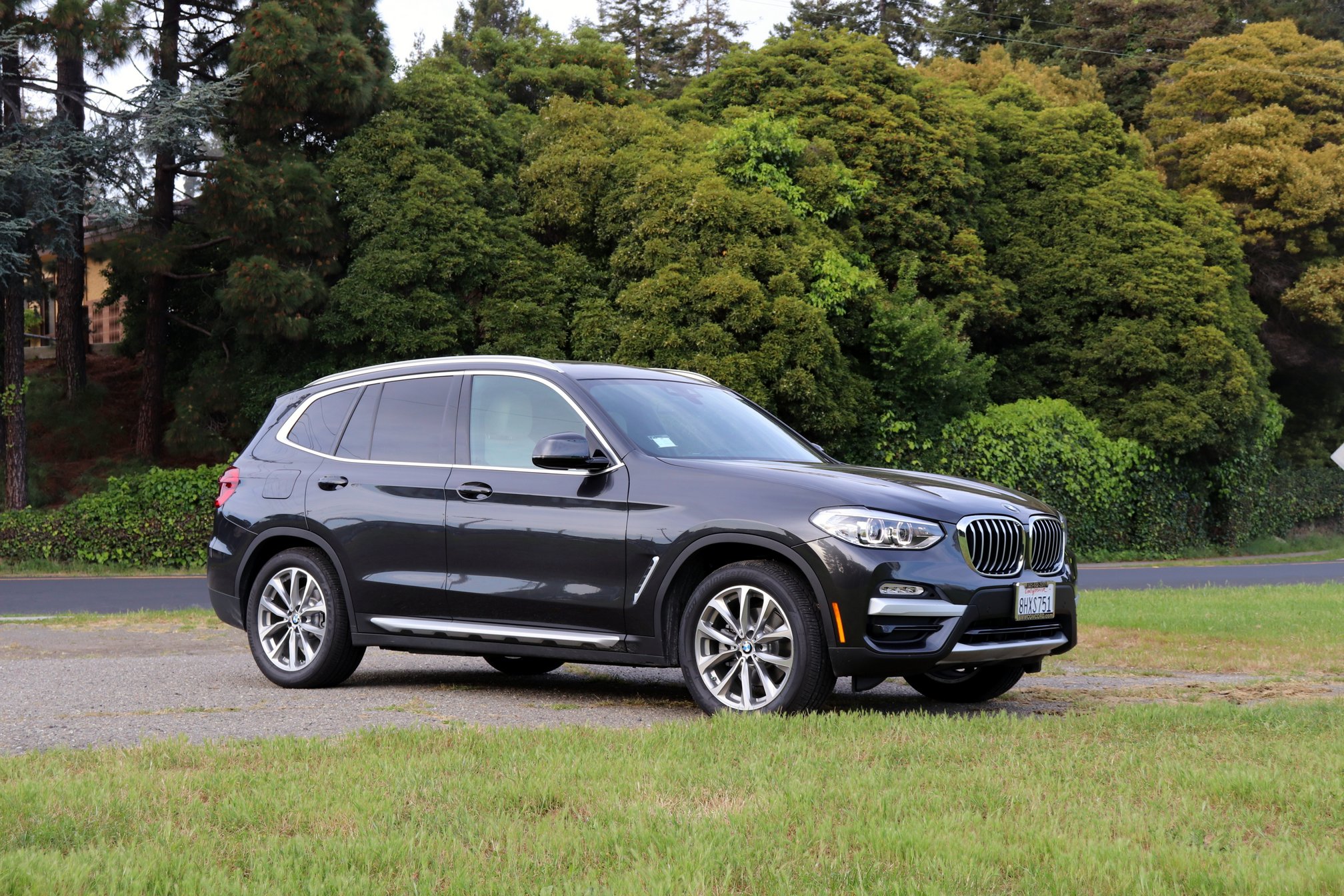
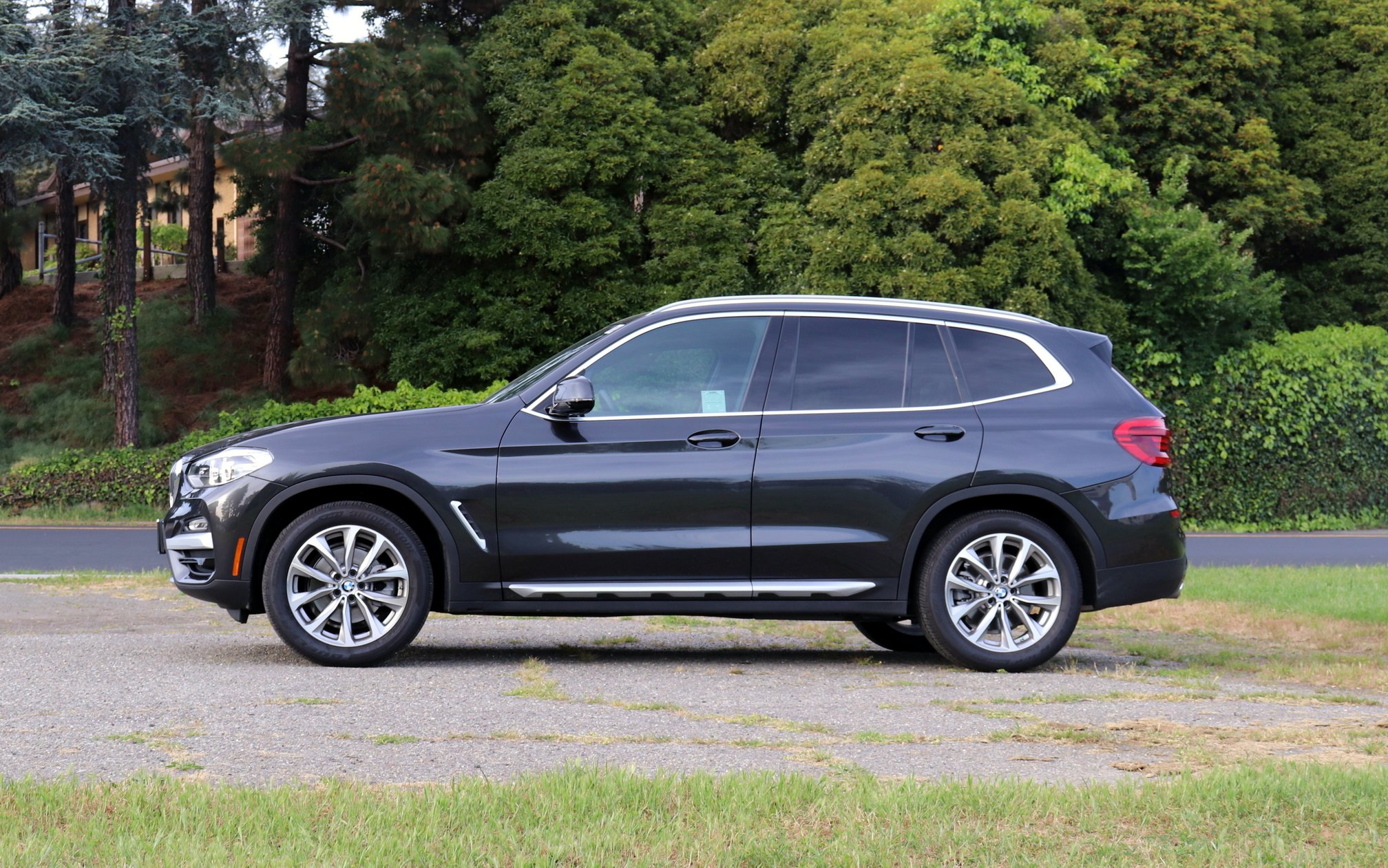
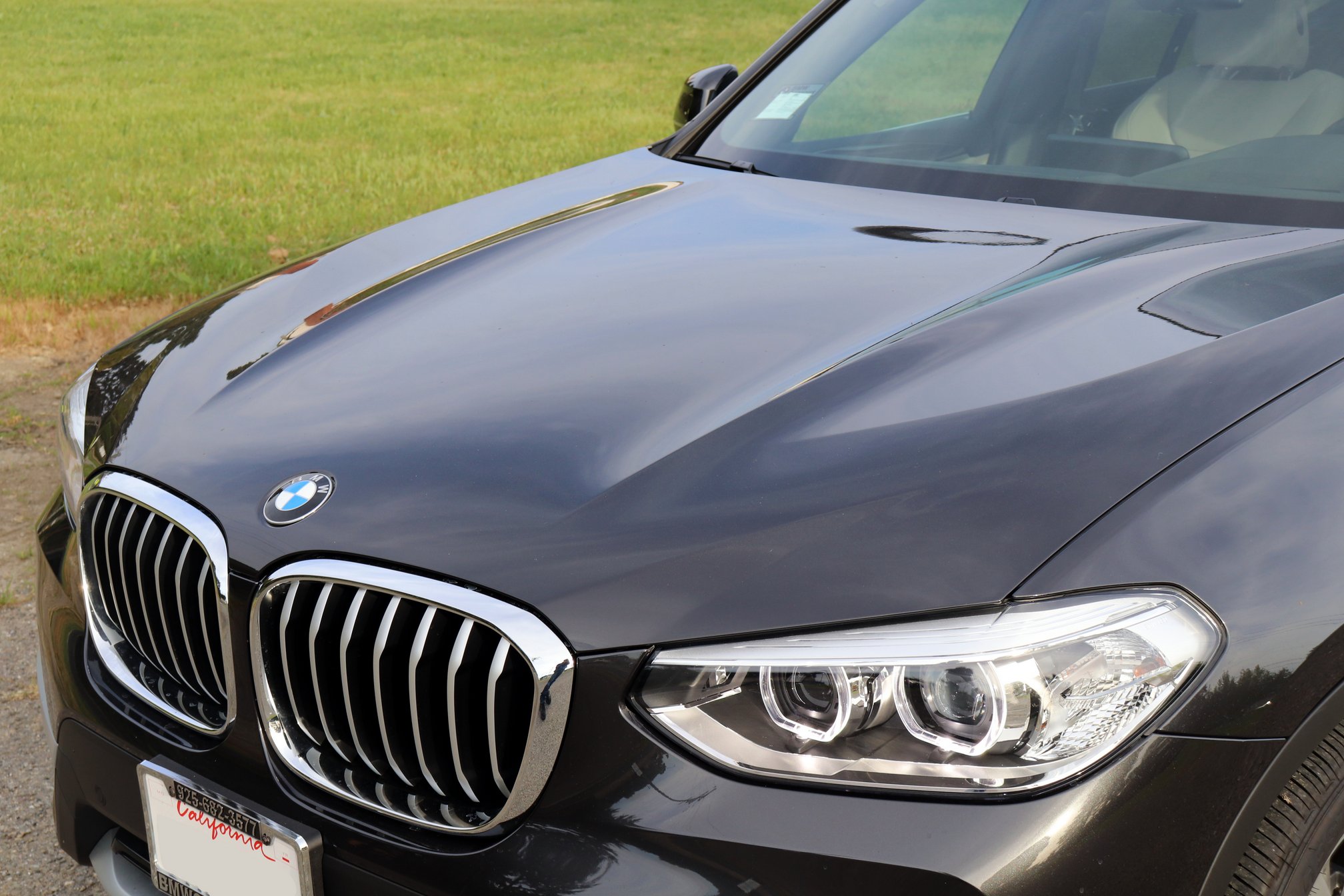
The 2019 X3 xDrive30i is a recently refreshed model. The G01 chassis X3 was introduced late in 2017 with smartened exterior styling and modernized interior design. On the outside, the X3 prominently displays BMW’s new Tonka Truck super-sized dual-kidney grill. The grill’s flared nostrils add menace to the X3’s face, and I think that the X3 does a better job of sporting the big grill than does BMW’s new large SUV, the X7. The flowing and tapering character lines on the hood add direction and motion to the X3, even when it is standing still. Judicious use of exterior brightwork makes the SUV look premium without crossing the line into ostentatious. While the G01 is a conservative refresh of the X3, it is a handsome rendition of one of BMW’s most important vehicles.
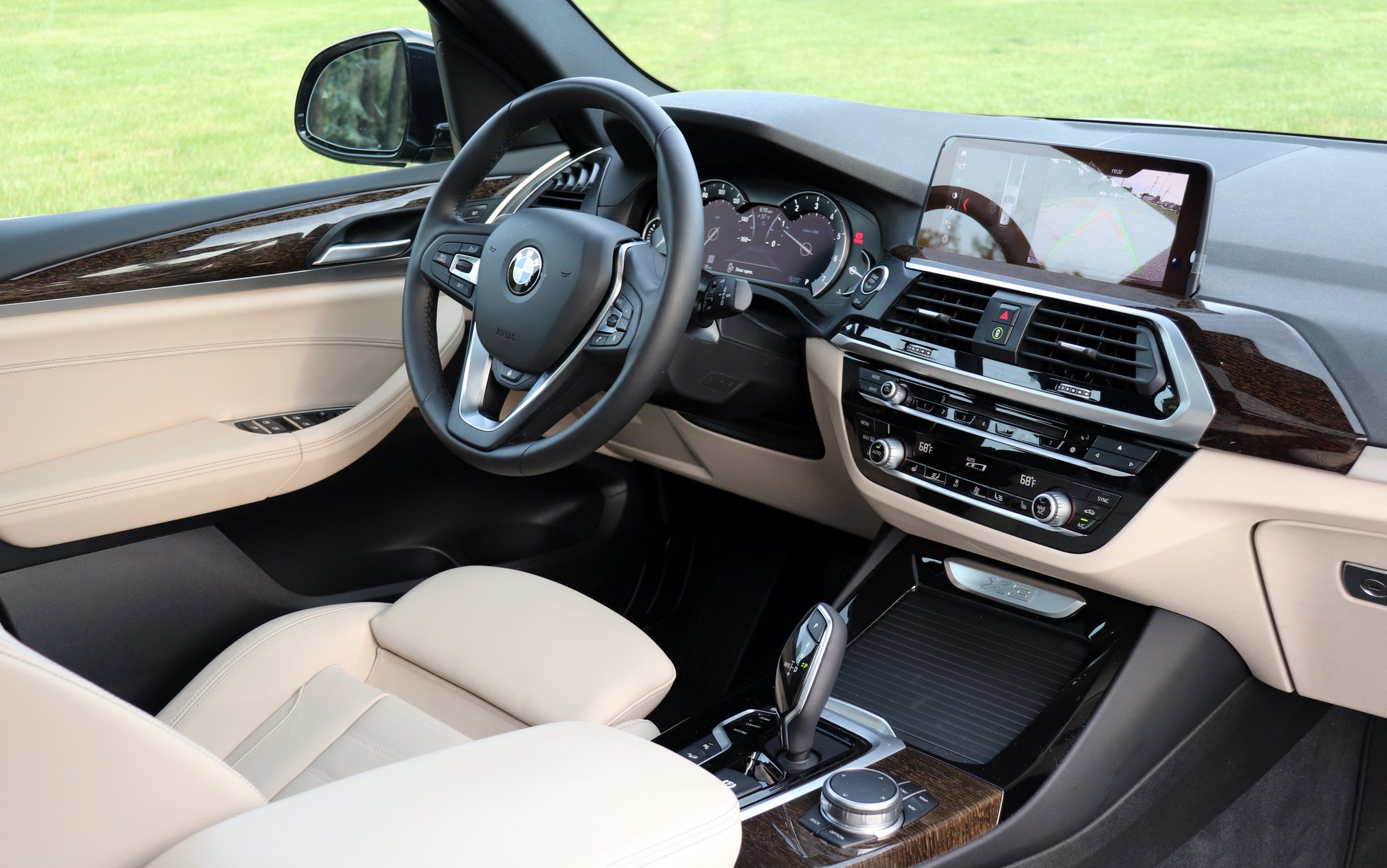
The interior of the X3 looks premium, too, especially in the Oyster Vernasca leather ($1,700). The sculpted front seats are stitched in an attractive and sporting pattern. The seats are moderately firm but are free of pressure points and are perfectly supportive. BMW really does make good seats! The steering wheel is a pleasure to hold, and individuals with chilly fingers will appreciate its heated rim (part of the $3,400 Premium Package).
In terms of the cabin controls, I am happy with the quantity and clarity of the buttons. Frequently used commands have dedicated buttons. What a relief! Other commands can be easily pulled up via BMW’s snappy natural-language voice control. Voice control really eases the burden of entering addresses; my spoken addresses are understood in a split second and loaded into the navigation system.
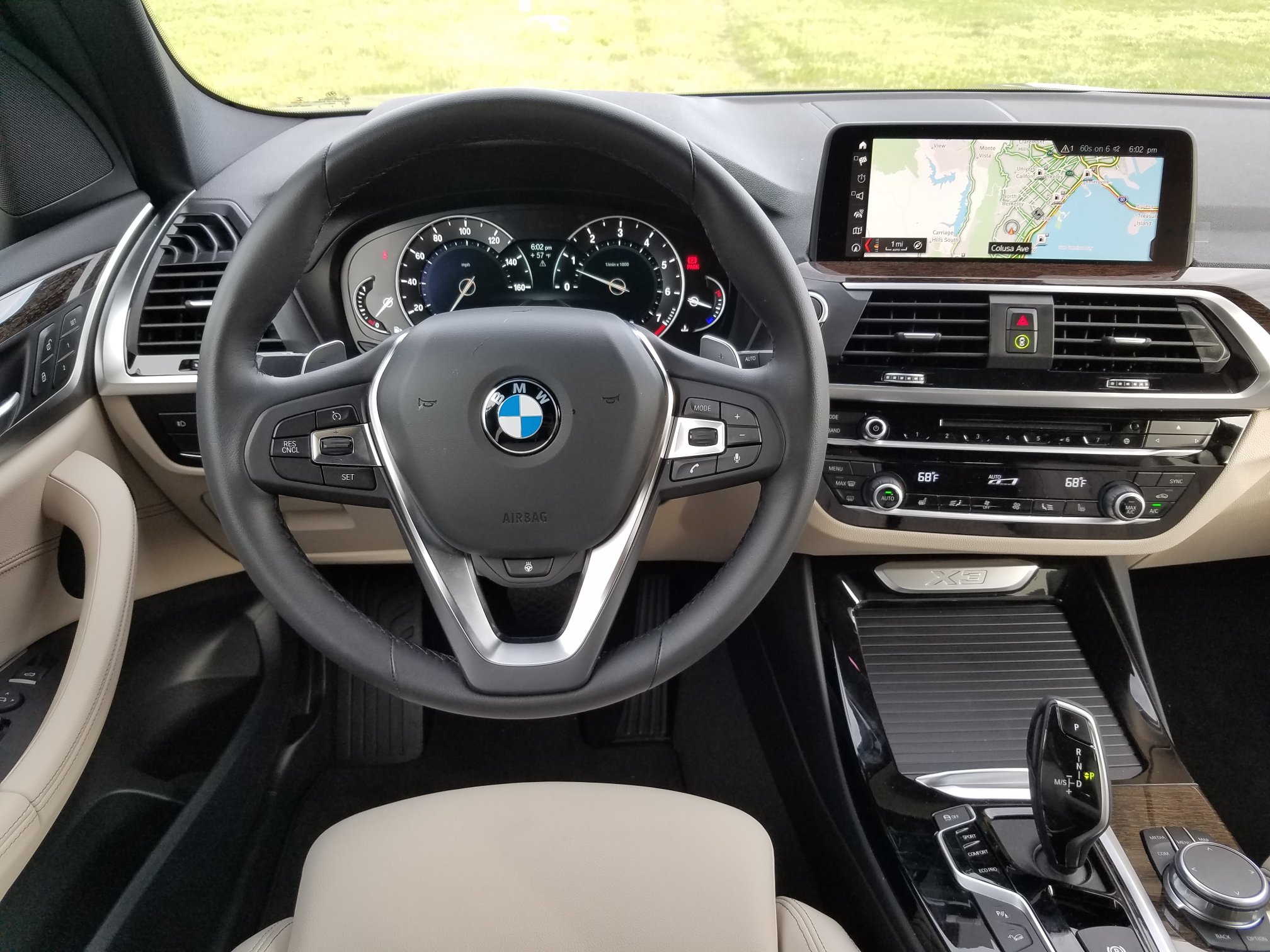
I can quibble about the quality of the buttons and knobs. The buttons for the door locks are made from inferior hard plastics, and the knobs for the stereo and HVAC have more wobble and slop than would be acceptable in an Audi. I know BMW has better quality controls in its parts bins, but buyers should be aware that the best parts are reserved for higher trim levels.
Terrible hard plastic is also found on the interior on the lower portions of the doors and door frames. One particularly infuriating knocking noise is tracked down to an unused seat-buckle bouncing against the hard, hollow plastic of the B pillar. I am also disappointed with the piano-black plastic around the shifter; that will wear terribly with time.
In terms of tech, iDrive is as good as ever. I love the voice control system and the freedom to use the rotary controller or touchscreen as I see fit. The infotainment screen is bright and crisp, making the maps and backup camera easy to read.
BMW’s navigation is good in its own right, but it becomes exceptional when paired with the full-color head-up display. (The HUD is part of the $3,400 Premium Package.) I love this HUD; simply put, it is one of the best I’ve seen. When navigation is active, my course through tricky city intersections will be crystal clear because the system projects a three-block slice of the map onto the windscreen and highlights my route in green. Forking highway ramps are also clearly displayed, and the line I should use is indicated. The only problem with the HUD is that it’s invisible through my polarized sunglasses! There seems to be some conflict between American eyewear and German projected displays.
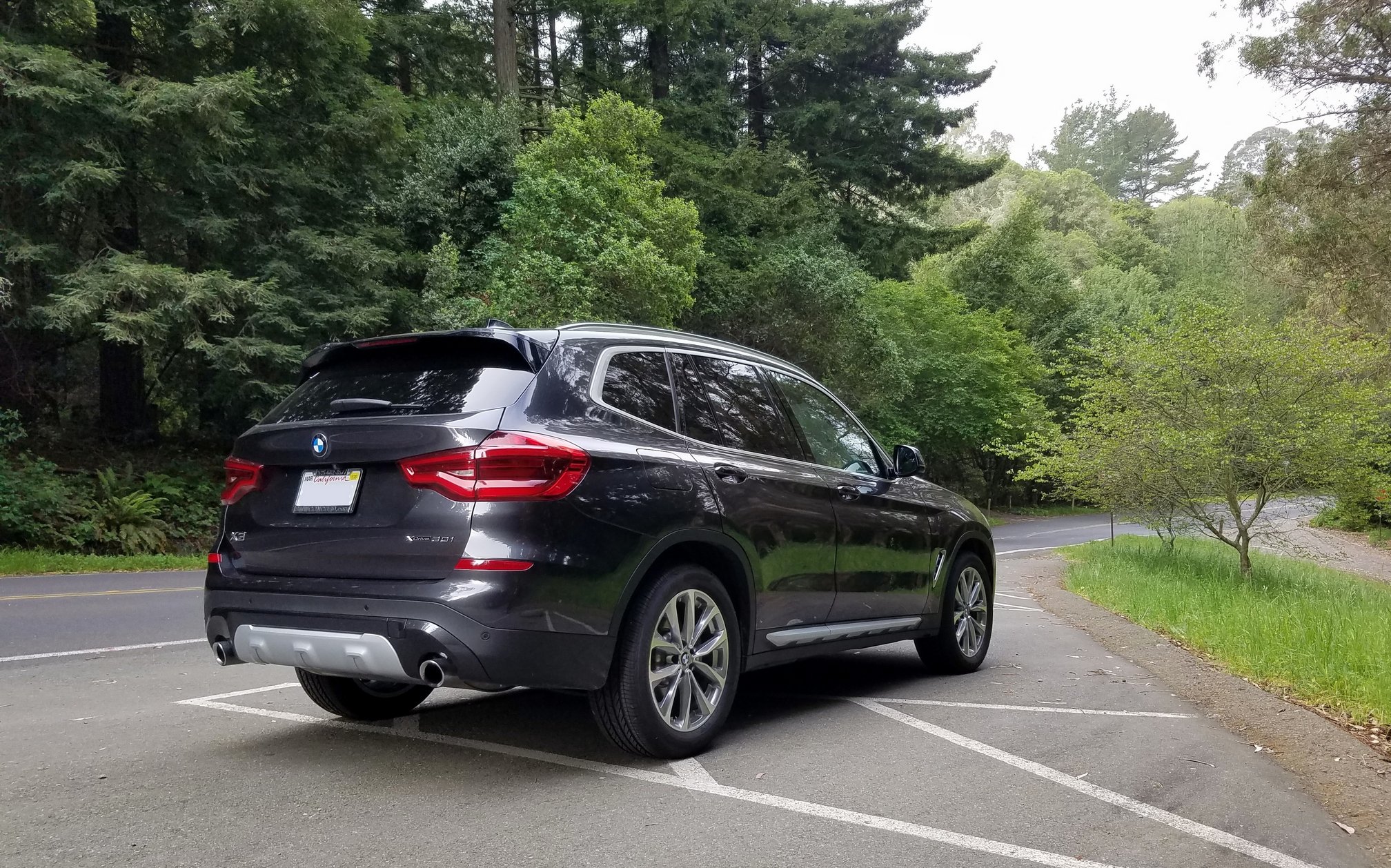
My X3 has the base, partially-digital instrument cluster. It looks okay and works fine, though it is not very configurable. (I think that many of the functions which might be seen through the digital instruments have been instead shown on the HUD.) BMW has physical dials with digital needles, but somehow that makes it harder to read the fuel level and engine temperature. I’d be happier if analog needles were used for these auxiliary gauges.
The X3’s back seats are nearly as nice as its fronts. There is copious headroom and shoulder room under the expansive panoramic roof (included in the $2,850 Convenience Package). When I slipped into the back, I found the seatbacks comfortably upright; they don’t slide, but they can be reclined slightly if you desire. Kneeroom is generous for a compact crossover—I don’t think I’d find as much space in an Audi Q5 or Mercedes GLC. The X3 xDrive30i is high-tech in giving the rear passengers their own HVAC zone with digital controls, but there is only a single 5V outlet for charging electronics.
Last but certainly not least is the trunk on the X3 xDrive30i. When the power liftgate opens, an oversized hold is revealed. Families should be quite happy with the cargo capacity of the X3. Cargo capacity was a strong suit of the previous generation X3 too; the current GLC and prior Q5 require stingier packing.
Disappointment
While static impressions of the X3 xDrive30i are largely favorable, the SUV is not a hoot to hoon. In Comfort mode, the normal mode for the X3, BMW’s quiet 2.0L four-cylinder engine lazily motivates the SUV. You’ll feel a little trepidation when crossing busy intersections, as the little engine is slow to react to throttle. Comfort mode is mapped for frugal and quiet running. I used this mode most of the time with the X3 and got ~22 mpg in mixed highway and city use (as reported on the potentially optimistic trip computer).
The X3 xDrive30i never feels fast, but there’s the M40i and X3 M for that. The X3 can be made a little hotter by engaging Sport mode. In Sport, the acceleration raises from lackadaisical to acceptably prompt, and the transmission holds gears longer and delivers upshifts with a little shove. Regardless of the drive mode, the excellent 8-speed automatic transmission is always on-point and appropriately tuned for Sport, Comfort or Eco running.
As standard, the X3 xDrive30i uses a fixed-rate suspension. BMW has found a reasonable balance between firmly composed and waftingly compliant, but it is always clear that a compromise has been made.
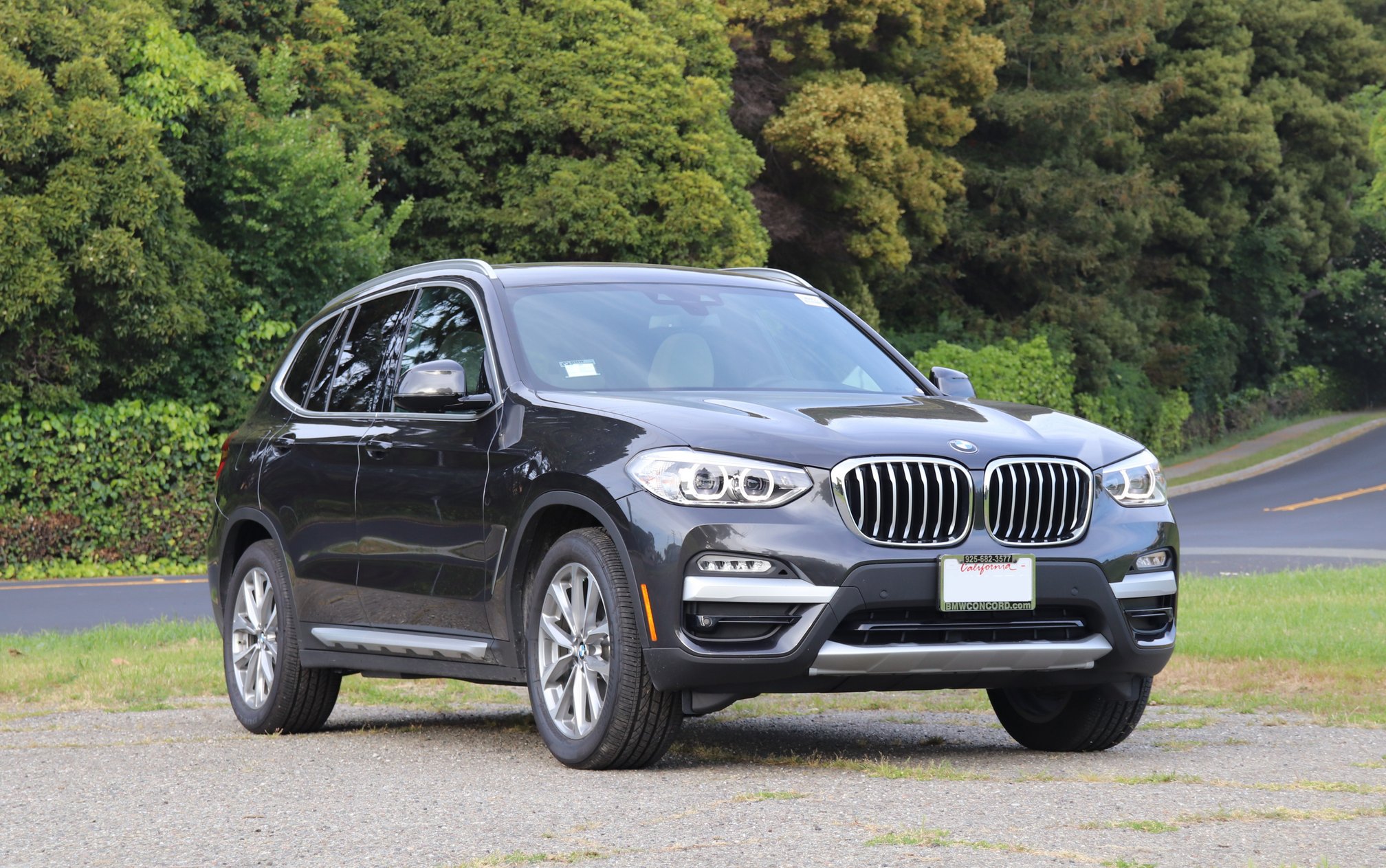
On the highway, the X3 xDrive30i absorbs bumps plushly but sometimes lightly bounces with undulations in the road. The compliance in the suspension accentuates the top-heaviness of the X3: If I turn the wheel quickly, the X3 tosses its head—and its passengers—as its tire sidewalls flex and its body rolls from side-to-side. I think the steering ratio should be a tad slower to better match the suspension softness. (While we are tinkering, I’d like a little more recentering force in the steering too!)
In the city, the suspension tuning is just right. I wasn’t deterred from driving over my city’s worst pavement, and I appreciated the car-like driving sensations I got from the X3’s steering and seats.
On back roads, the X3 is firm enough to keep its composure and avoid floating over bumps, but the SUV sloshes its passengers around like water slopping to-and-fro in a bucket. The slosh is the penalty for equipping a high-riding SUV with a firmish suspension; the X3 rides on top of the bumps rather than soaking them up, and the height of the X3 amplifies the undulations in the cabin. I’d avoid writhing roads when I have passengers that are disposed to motion sickness. Staying out of the twisties isn’t much of a sacrifice since the X3 xDrive30i only tolerates canyon runs rather than relishing them.
My dynamic complaints about the xDrive30i may be rectified with the bigger engine and adaptive suspension of the X3 M40i.
Acceptance
Now that I’ve mourned what the X3 xDrive30i isn’t—the pants-on-fire X3 M40i that yearns to burn through canyon corners—it’s time for me to appreciate it for what it is. The X3 xDrive30i is the Goldilocks suburban runabout for the average American family of 3.24 people. (Assuming said family has an above-average income.) The X3 delivers a hearty serving of SUV promise with a pinch of Bavarian luxury zest.
As all SUVs should be, the X3 is a high-riding, high-clearance vehicle with plenty of space for passengers and cargo. BMW has figured out how to maximize interior space, and the X3 offers more interior volume than the competition. (Neither the Audi Q5 nor Mercedes GLC can swallow as much baggage or offer as much rear-seat room.) The X3’s cabin is light and airy, attributes which were accentuated by my loaner’s white leather and panoramic sunroof. The high ride height helps extend that feeling of expansive airiness to the Earth’s horizon since you can see over the roofs of the cars around you and aren’t claustrophobically walled-in by traffic. Three or four people families will find the trips agreeable in the X3. My family of three certainly doesn’t need the bigger X5.
As all BMWs should be, the X3 has tasteful styling, high technology, and indifference to speed limits and forges a connection between driver and road. My X3 just has a thin slice of BMW’s fanciest tech (HUD, navigation, and Apple CarPlay), yet everything that is optioned is superbly implemented. Last year I strongly considered purchasing a used, prior-generation Audi Q5 because I loved its quiet, fleet and plush driving experience; the Q5 motored past other highway traffic as effortlessly as if it was pushed by its own personal jetstream. The X3 xDrive30i feels similarly relaxed and unstressed at super-legal highway speeds, but BMW does a much better job at offering a tactile driving experience. BMW keeps improving its EPAS steering, and I am happy to report that the 2019 X3 xDrive30i communicates road textures and bumps through its steering and chassis.
Reconciliation
My X3 xDrive30i tester had a $52,000 sticker (before destination) on account of the $9,000 in paint, leather and packages—Convenience, Driving Assistance and Premium—selected by the dealership. I liked most of these options except for the $500 Driving Assistance package, which needlessly annoyed me by vibrating the steering wheel as I apexed corners from inside my highway lane. The $1,000 Dynamic Damper Control is a tempting addition for better ride quality, as are the $1,200 Active Cruise Control and the $700 Parking Assistance. BMW’s 3D surround-view parking cameras are technological wonders!
Pick out the options that meet your fancy and apply the right expectations to the X3 xDrive30i, and you’ll find a very nice compact SUV. I did! For highway and city cruising, and for trunk-brimming vacations to Grandma’s house or the beach, I couldn’t want for more. It’s comfortable, commodious and connected to the act of driving. It’s a well-rendered compact luxury SUV.
 Mike's Steering Column