
If you keep up with the big dog car rags, then you know that the current third-generation Cadillac CTS has won some serious accolades, the top of which are Motor Trend’s 2014 Car of the Year and Car and Driver’s 10 Best in 2014, 2015 and 2016. Having just spent two days with a CTS, I can confidently say that these accolades were not awarded based on the merits of the $53,000 2019 Cadillac CTS 2.0T RWD in Luxury trim. Frankly, dear driving enthusiast, this is not the CTS you are looking for. But after two days with the Cadillac CTS 2.0T Luxury, I do have a good sense of who should buy a CTS and what options make the CTS accolades worthy.
Do you like good news before bad or bad before good? I like to start low and end high, so here’s the low: The CTS 2.0T’s 4-cylinder engine and base suspension completely let down a dynamically excellent chassis.
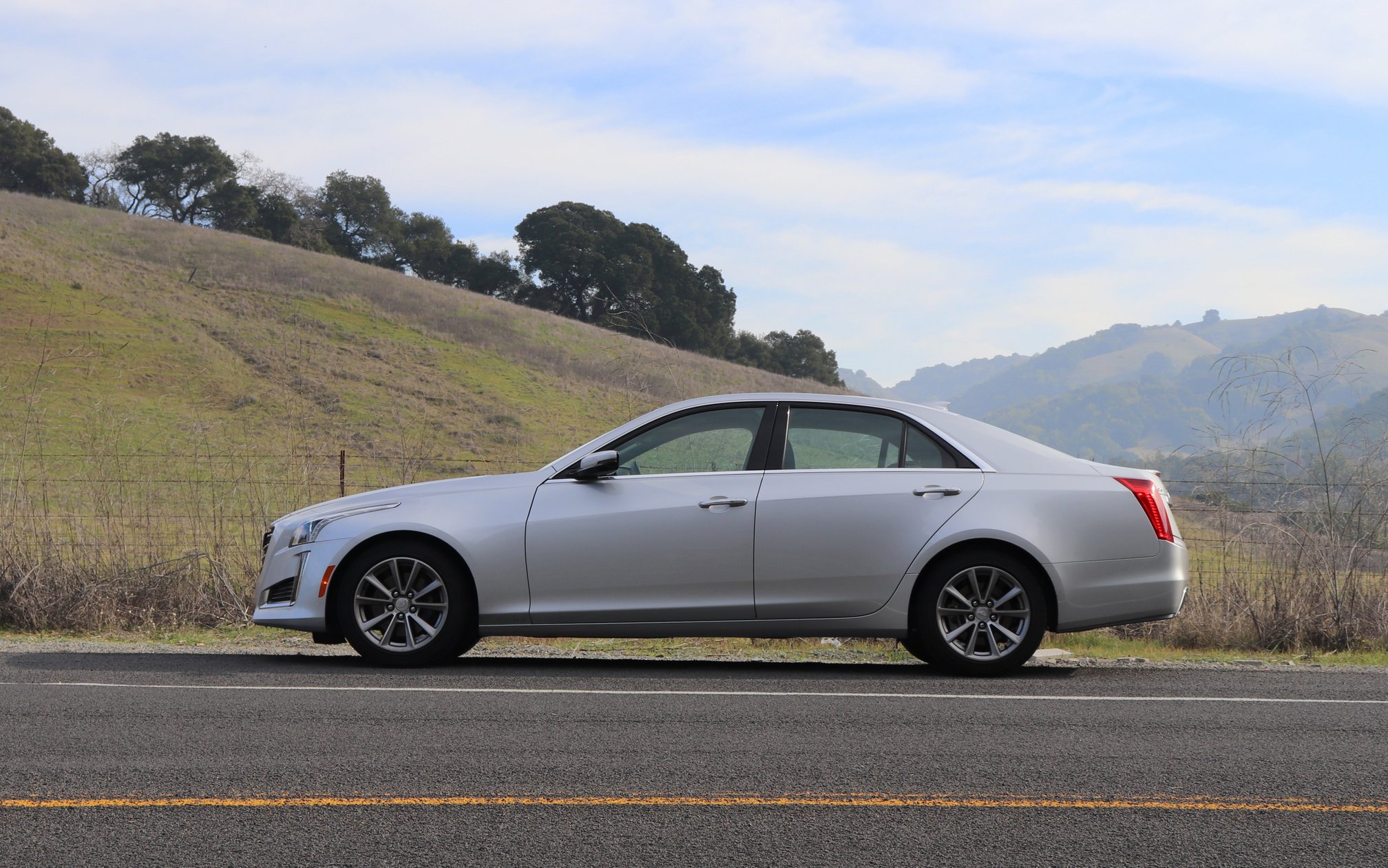
It is not the engine’s power that is the problem, though I would not refuse more. The 2.0L turbocharged 4-cylinder produces a healthy 268 hp and 295 lb-ft torque, which is enough immediate low-end torque to make the CTS feel spritely, especially in city driving. But the turbo has been sized, and the ECU software has been tuned, for around-town driving and highway cruising, so the little engine fails to punch at high rpm. The 2.0T’s inability to land an uppercut besmirches the CTS’s sporting credentials; a well-conceived sports car shouldn’t be winded at the top of the tach, but that is exactly what happens when the CTS’s needle crests 5k rpm. Yes, Cadillac is right in assuming that the 2.0T will be purchased by the tamest drivers, but its power delivery is still a letdown when the canyons beacon.
A few kudos for the 2.0L engine: It can boil the tires in first gear, though the open differential means that just one tire is boiled. Its torque delivery is well matched to the braking power and steering resistance; there is a unified sense of heft to the driving controls. And the little engine’s turbo lag, while present, is largely unobtrusive.
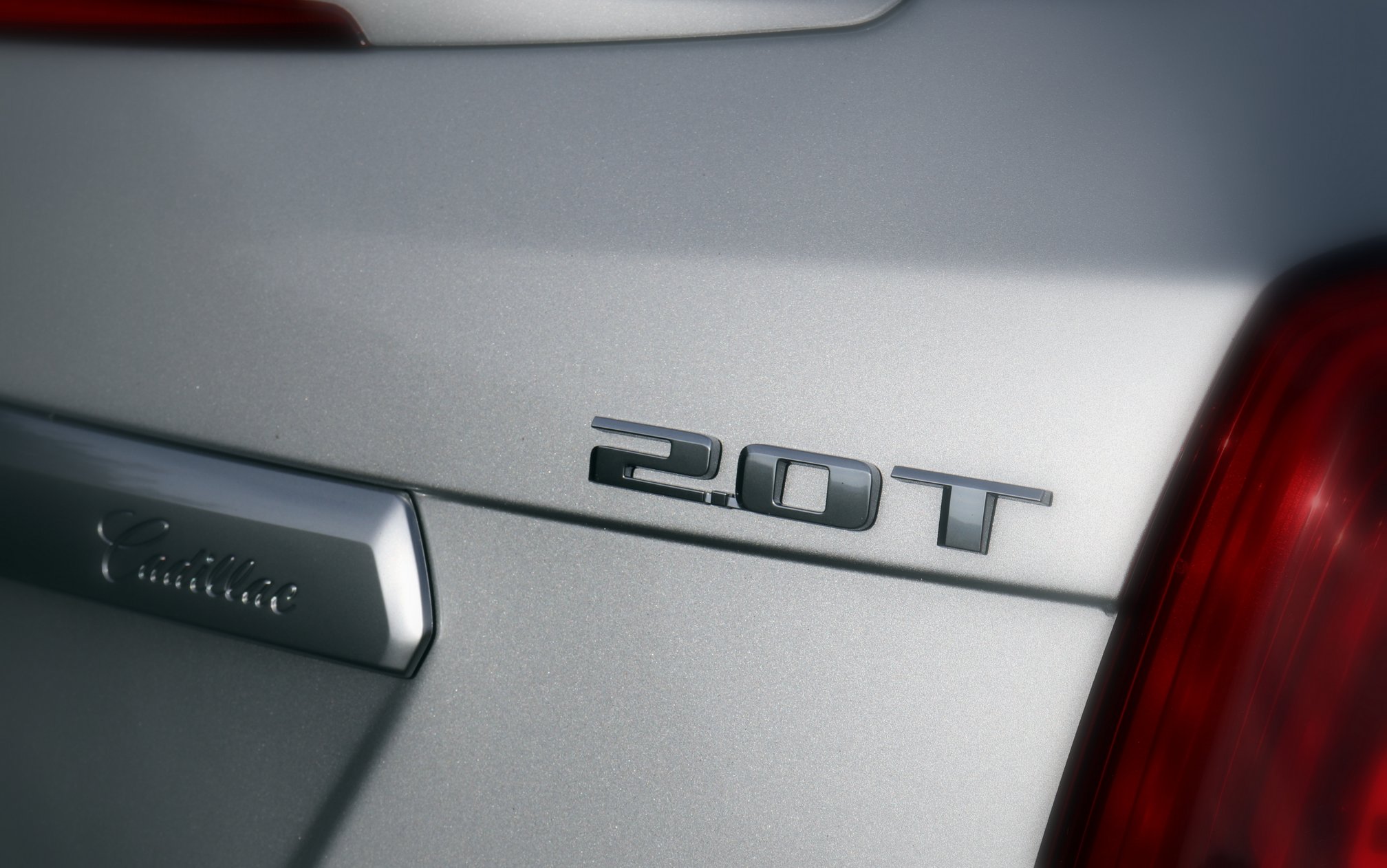
Less laudatory is the engine’s grinding song, a song which is sung clearly in the cabin. Expect flashbacks to every god-awful Toyota Corolla, Chevy Malibu and Kia Forte you’ve ever rented. The CTS engineering team wanted to emphasize the “sport” in “sports sedan,” and they let the engine note into the cabin to build the driver’s connection to the engine and its efforts. Such emotional hooks work well with the CTS’s bigger V6 and V8 engines, but not the I4. As my mother always said, “if you don’t have anything nice to say, don’t say anything at all.” Little 4-cylinder, for the love of all things musical, please hush up!
I took the CTS into the canyons, and the soft suspension turned my knuckles white. In a straight line, the CTS sops up broken roads well, but if you mix spirited cornering with lumps, dips and bumps, then the CTS 2.0T gets easily flustered, loses its cornering stance, and unnervingly floats over the imperfections. My confidence in the CTS’s high-speed stability was spooked to the point that I dared not push the car beyond eight-tenths, lest one end, or the other, suddenly released its tentative grip on terra firma. On the tighter, slower and choppier Wildcat Canyon Road, big impacts elicited more float from the CTS’s rear axle than its the front. (Similar float is felt on the highway during abrupt transitions onto bridges and the like.) Since both of these canyons could be driven with impunity in the magnetic-ride Cadillac CT6, the optional magnetic-ride suspension for the CTS is the suspension you’d want for spirited driving.
Actually, the magnetic-ride suspension is likely superior for normal driving too. The base suspension is plush enough for around-town cruising, but the magnetic ride’s greater adjustability could further soften the ride without any loss of body control. As it is, the base suspension is a little rolly-polly, and it lets the car’s weight slosh back and forth during quickly executed lane changes.
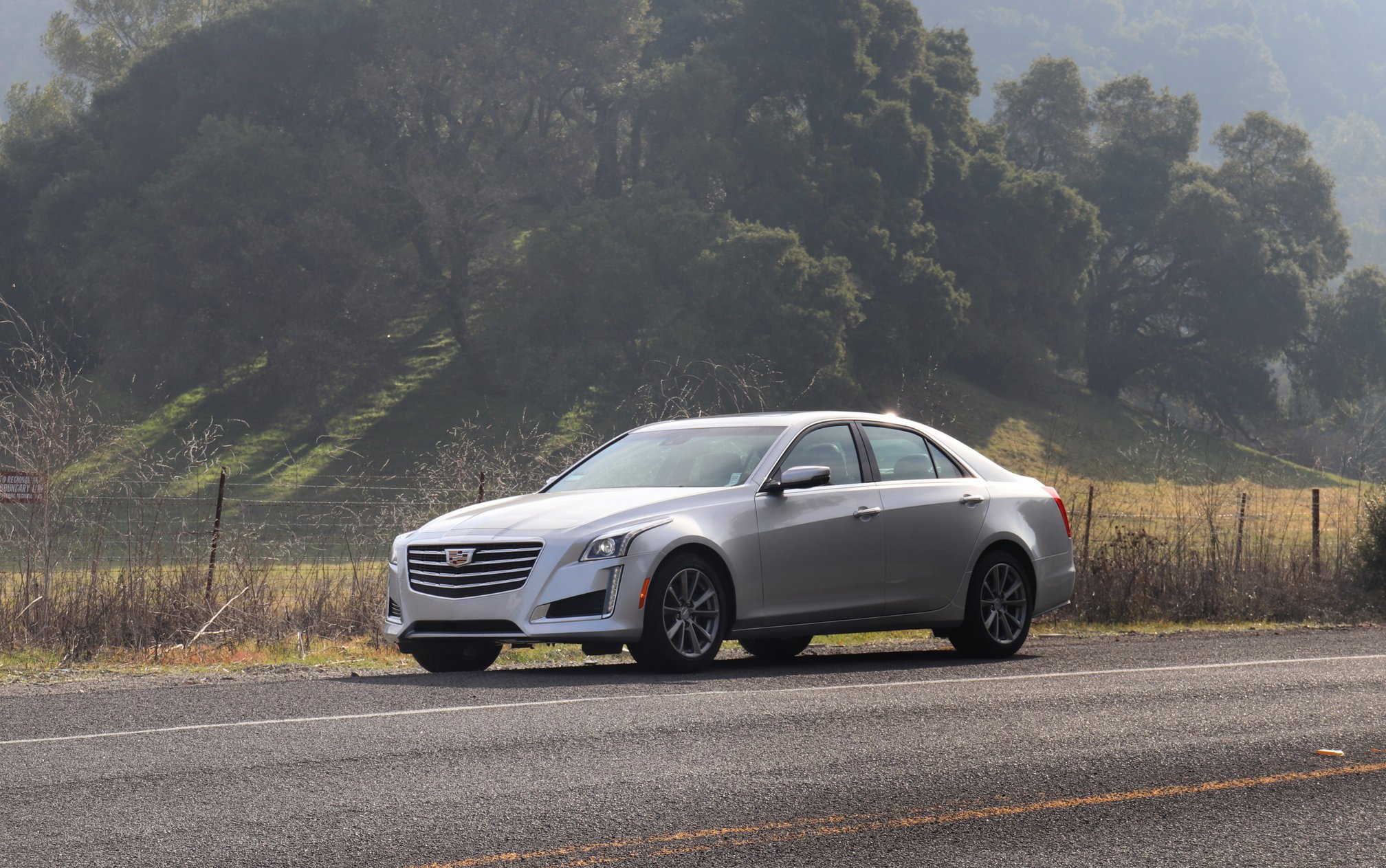
But enough of the bad, let’s go onto the good!
For all the flaws of the base suspension, the Alpha platform on which the CTS is based is tight and rigid, a solid foundation from which an excellent driver’s car can be built. (Actually, the platform is used by three excellent driver’s cars: ATS, CTS and Camaro.) No matter how rough the road, there is nary a quiver or shake in the CTS’s body. I also admire how clearly the chassis communicates the road beneath the tires; BMW should reverse-engineer the CTS and learn this trick.
The CTS’s steering has taken speech lessons too. Road textures, impacts from cracks, potholes, and reflective lane markers are all felt through the steering wheel’s fine leather rim. Cadillac has delivered the chattiest EPAS steering I’ve felt, so in the 2019 CTS, I am a happy wheelman.
(I admit the signals from my second-gen CTS-V’s hydraulically-assisted steering are superior. It hums with never-ceasing information from the road and engine and gives me a better sense of the suspension loading and unloading through its ebbing and flowing resistance.)
The steering ratio (its speed) and resistance (its weight) are spot-on for the 2019 CTS. Its moderately fast ratio makes it easy to be deliberate with steering inputs. The steering resistance in Tour mode is solid and substantial, and it weights up a smidge more in Sport mode. Either mode is fine by me since the same level of road feel is present in both.
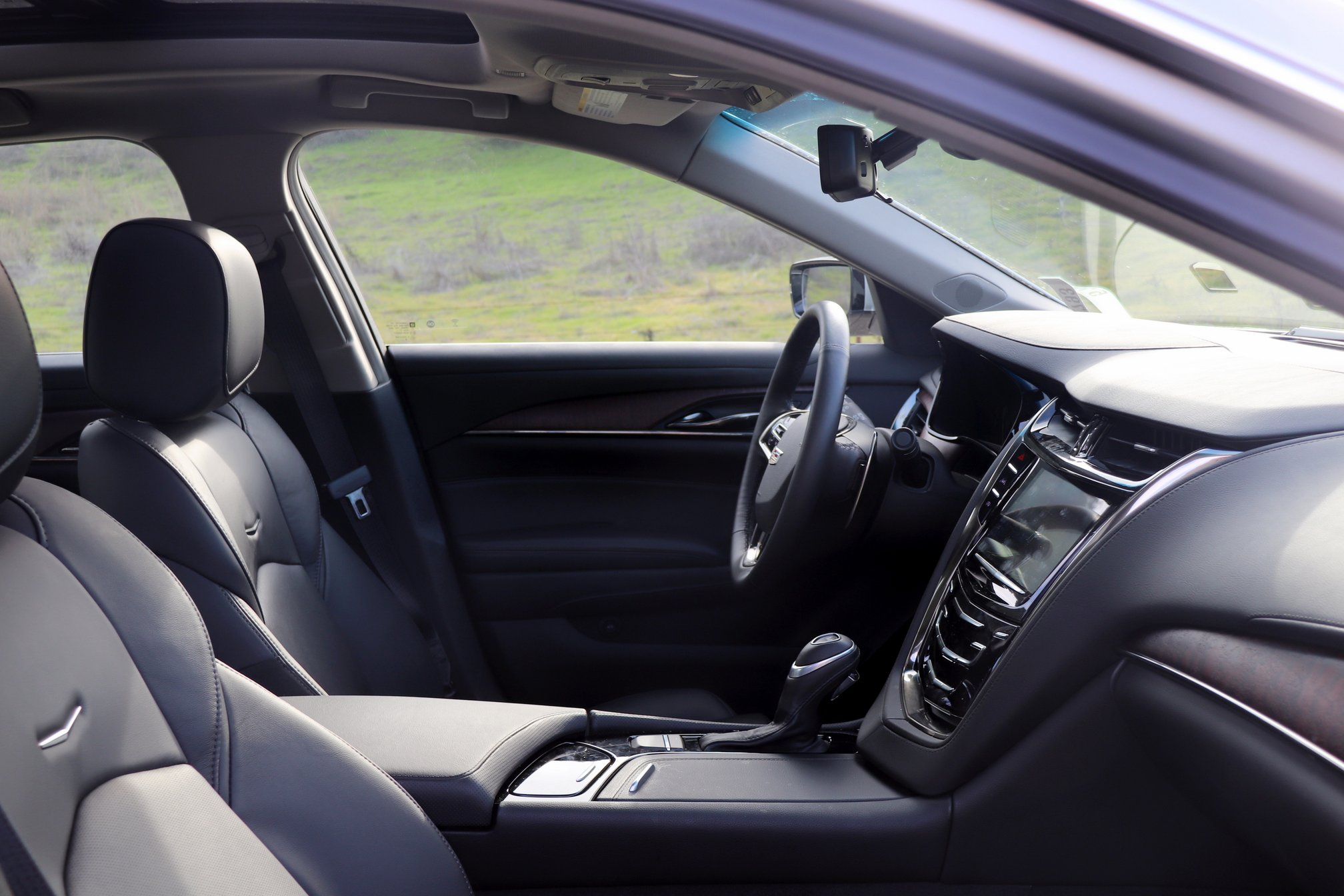
The magnesium shift paddles on the back of the steering wheel are the only way for the driver to pick his own gears. I found them to be reliable partners in stirring the eight-speed automatic transmission. The CTS’s transmission isn’t quick or snappy, but it is predictable and obedient. Paddle-pulled shifts are delivered with a consistent half-second delay, and that consistency makes the gearbox easy to learn and easy to use in fast driving. I was surprised by the transmission’s shift lever; it is the heftiest and notchiest automatic transmission shift lever that I’ve encountered for ages. All the world is using joystick-style shift-by-wire controllers, but the CTS’s lever feels mechanically linked to the transmission.
A feeling of substance is present in the brake pedal, which matches the heft of the steering, throttle and shift lever. Brembo brake calipers deliver a reassuringly firm pedal and immediate, but not grabby, stopping power. I have excellent modulation and perfect confidence in the Brembo’s street and canyon prowess.
Thus Cadillac has served up an excellent chassis with exemplary steering and braking. Pick the optional magnetic-ride suspension and a larger V6 or V8 engine, and you get the best driving sports sedan in the class. The CTS’s trophies from Motor Trend’s Car of the Year and Car and Driver’s 10 Best are now perfectly explained.
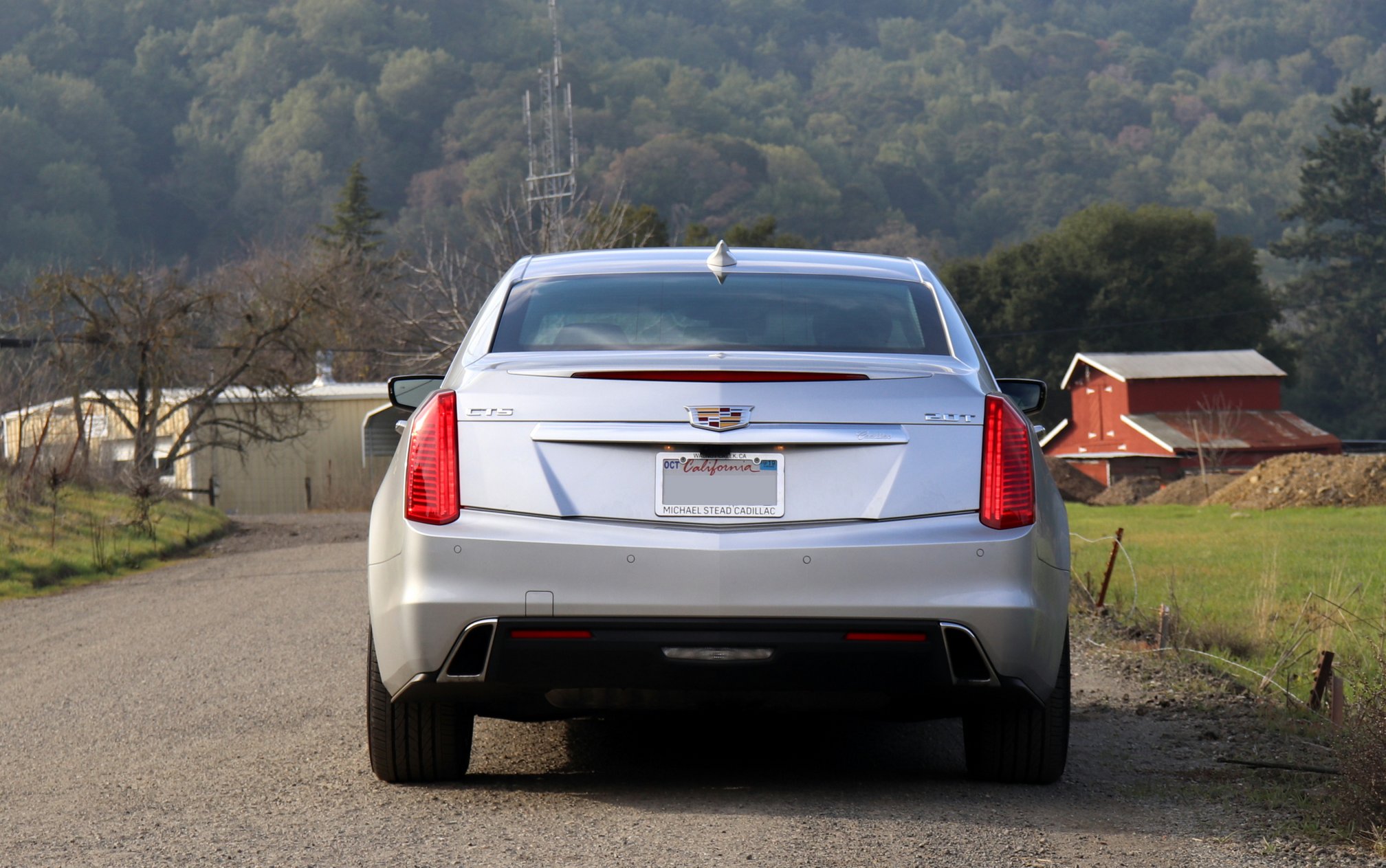
But, keen readers will have noted the caveat in my praise: The “best driving sports sedan” is not the “best sports sedan,” period. This is where we must explore the CTS’s technology and luxury.
From the technology standpoint, the Luxury trim with which my CTS is equipped comes with many nice features. Four-door keyless entry, rain-sensing wipers, auto-dimming mirrors, cooled and heated seats, navigation, wireless charging, Apple Carplay and Android Auto, and active safety features like blind-spot monitoring, front, rear and cross-traffic collision alerts and lane-keeping assistance are all part of the trim level. Upgrade to the Premium Luxury trim level, and features like surround vision parking cameras, self-parking, color head-up display, and adaptive cruise control are available. This comprehensive array of technologies matches the features available in other large luxury sedans.
The thoughtfulness which I loved in the 2018 Cadillac CT6 is present in the CTS too. Start up the car on a cold morning, and the CTS automatically turns on the seat heaters and steering wheel heater to match the briskness of the morning. Trigger the forward-collision warning system in the CTS, and the driver’s attention is captured by a vibration in the seat and a red warning light projected on the windscreen. Together these cues draw the driver’s attention to the windscreen, where it is needed, without disturbing the passengers. I appreciate the rear cross-traffic alerts that keep me from getting T-boned as I back out of my driveway. The backup camera has reasonable clarity and useful guidelines but occasionally lags and stutters; I’m nervous that obstacles could be closer than they appear in the video feed.
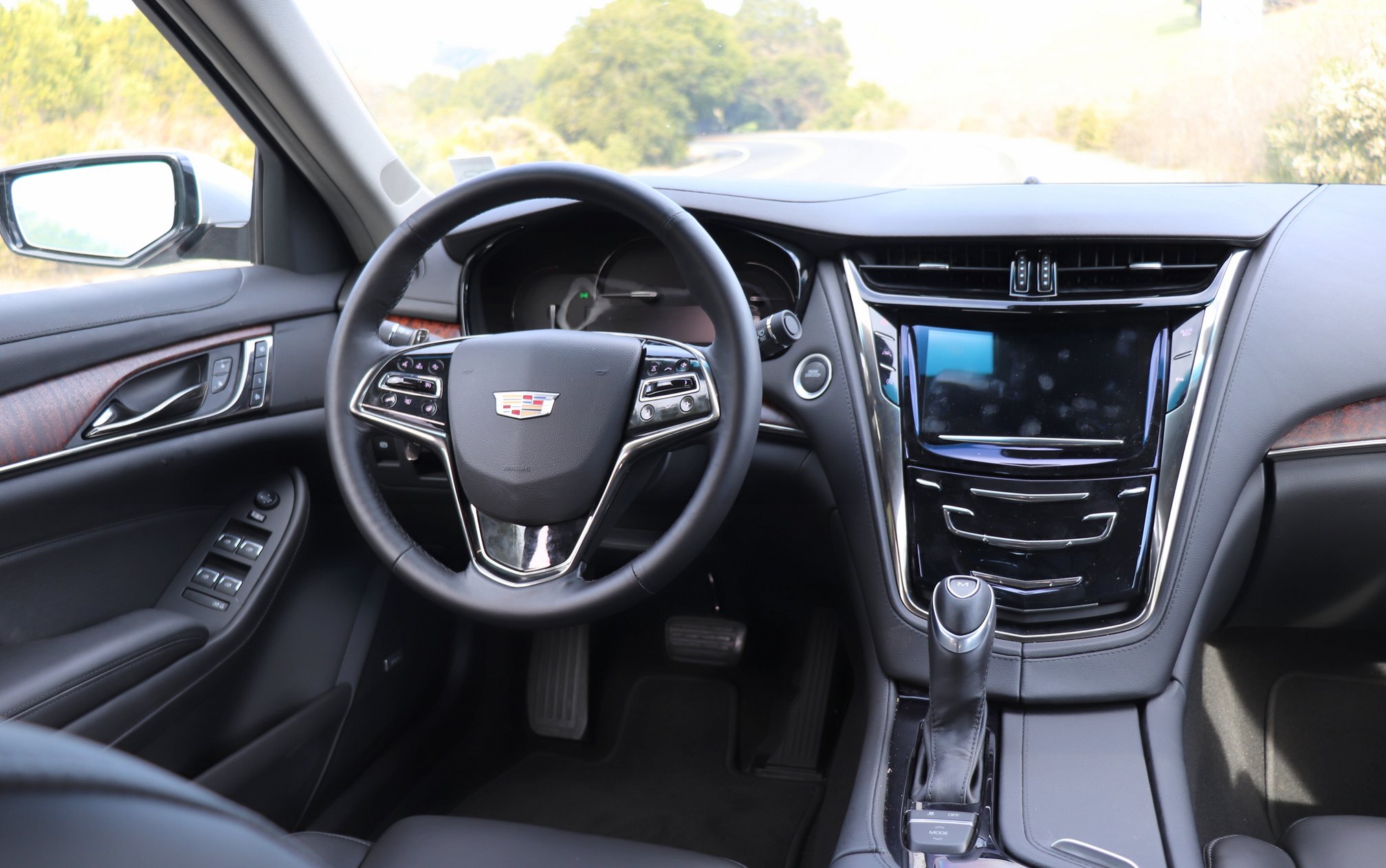
The whipping boy of Cadillac’s technology suite has long been CUE, the Cadillac User Experience infotainment system that is responsible for navigation, radio, HVAC and vehicle settings. I’m pleasantly surprised to find CUE to be snappy, responsive and intuitive. The 2017 overhaul to CUE has rectified the sluggish performance and poor usability for which CUE was infamous.
CUE is a touchscreen-based system and thus a natural host for Apple CarPlay and Android Auto. CUE’s 8-inch screen renders Android Auto well and promptly relays my touch inputs. (When Android Auto is available in a vehicle, I use it for navigation, telephony and audio entertainment, and the manufacturer’s in-car software becomes less important to me.) I did not find a great place to plug in and store my phone, and ended up jamming it sideways into the center armrest bin. I did, however, overlook the hidden compartment behind the HVAC control panel; this is where Cadillac expects drivers to stow and wirelessly charge their devices.
Cadillac’s use of capacitive-touch controls instead of physical buttons for the HVAC and stereo controls are another press grievance about the CTS. The virtual buttons did require more time with eyes off the road to find on the smooth, piano-black touch panel, although the V-shaped metalwork on the panel is a vertical touchstone to where your finger should go. I found large adjustments to fan speed or cabin temperature frustrating, as it is hard to know how many finger taps the system has counted. While the volume control is a little better at large adjustments because it lets you slide your finger along the panel to scale the volume up or down, true knobs would be more precise and easier to use. By and large, the CTS’s virtual buttons are usable with a little patience and are worth enduring if you want the excellent driving experience of the Cadillac CTS.
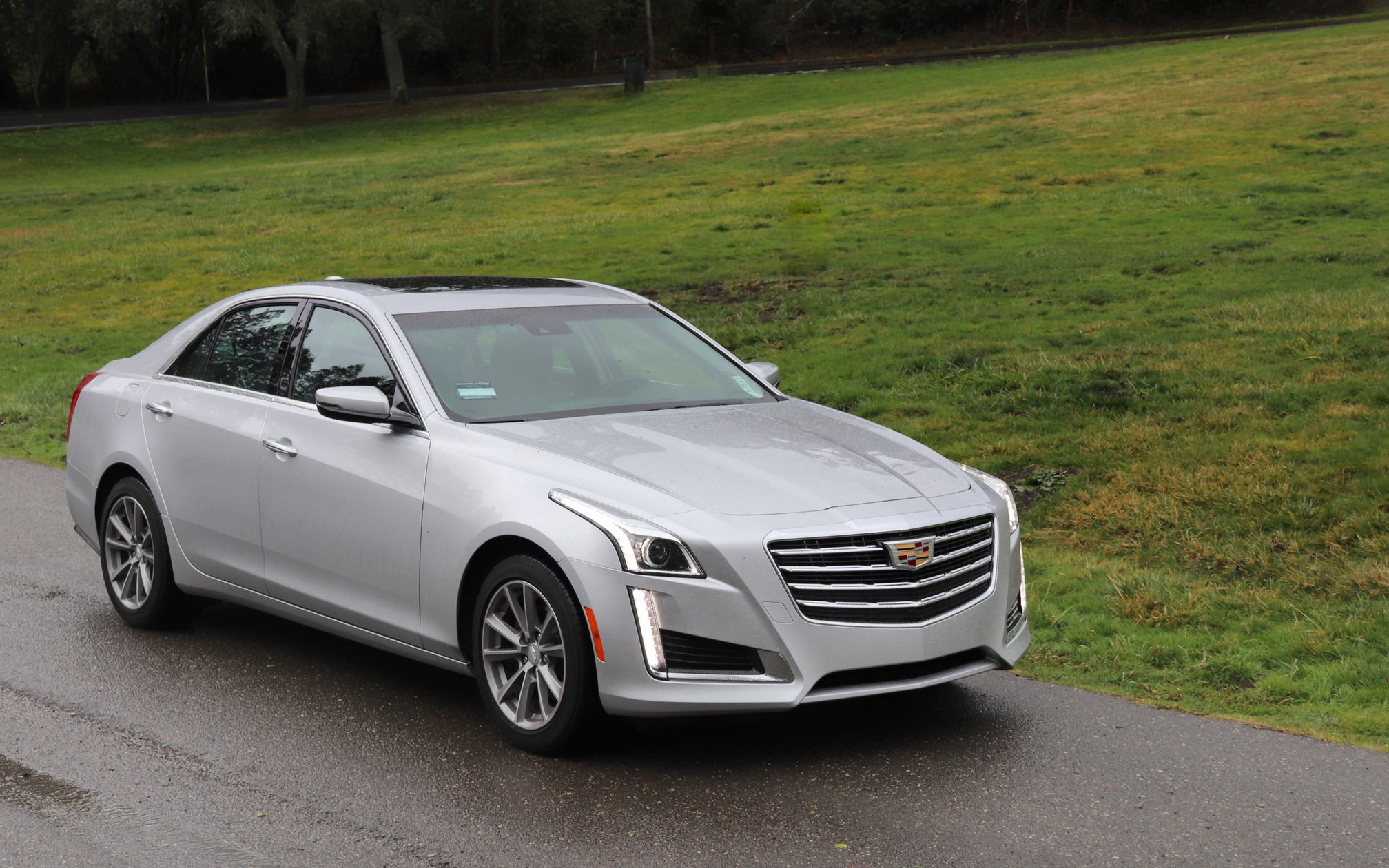
Cadillac is a luxury brand, and so is measured against the likes of BMW, Audi and Mercedes. The CTS’s exterior design is angular, distinctive and original. I especially like it in the CTS-V treatment, where the hints of the F-117 stealth fighter jet are more pronounced. The CTS’s cabin design has good symmetry and flow, but the overall design and material choices are not as showy or upmarket as the European competition.
Regardless of the interior’s conservative appearance, you’ll appreciate the build quality of the CTS, inside and out. The CTS’s doors close with a weighty, dignified thunk. The dash, doors, seats and steering wheel are all covered in soft, stitched materials, be that material leather or foamy plastic. The poltergeist creaks and groans from my second-gen CTS-V have been exorcised from the third-gen CTS: All of the interior components are firmly fitted and squeak-free. The one exception is the sliding cover for the cup holders; it is flimsily attached and needlessly motorized.
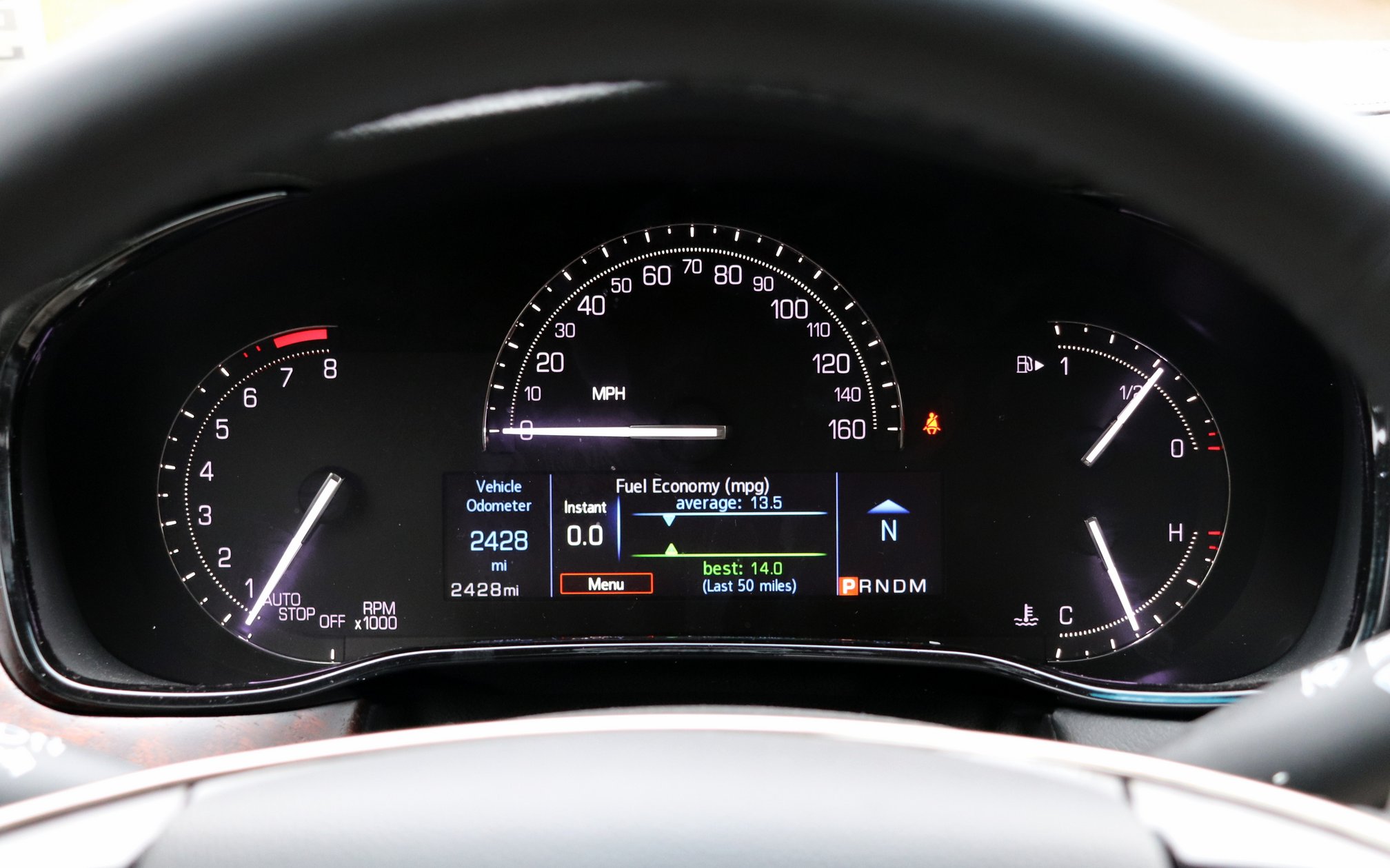
The main affront to luxury in the CTS is its insipid gauge cluster. The tachometer, speedometer, fuel and temperature gauges are all exceedingly bland and float at a great distance from each other in a sea of black plastic. A blocky and ugly Driver Information Center screen crowds center stage. Cadillac made no effort to visually integrate the DIC screen with the analog dials.
The gauge cluster faux pas continue as the steering wheel partially blocks the speedometer from view. I have to hunch to read speeds above 40 mph. Thankfully, there is an optional digital gauge cluster for the CTS that resolves my complaints. Did Cadillac spend all its design budget on the optional digital cluster and outsource the analog cluster to the lowest bidder?
The piano-black touch panel also seems subpar for a luxury sedan. Not only is it harder to use than physical buttons, but the panel shows off fingerprints, dust, dirt and (inevitably) scratches. Sadly, Porsche and BMW are starting to use black touch panels in their cars too.
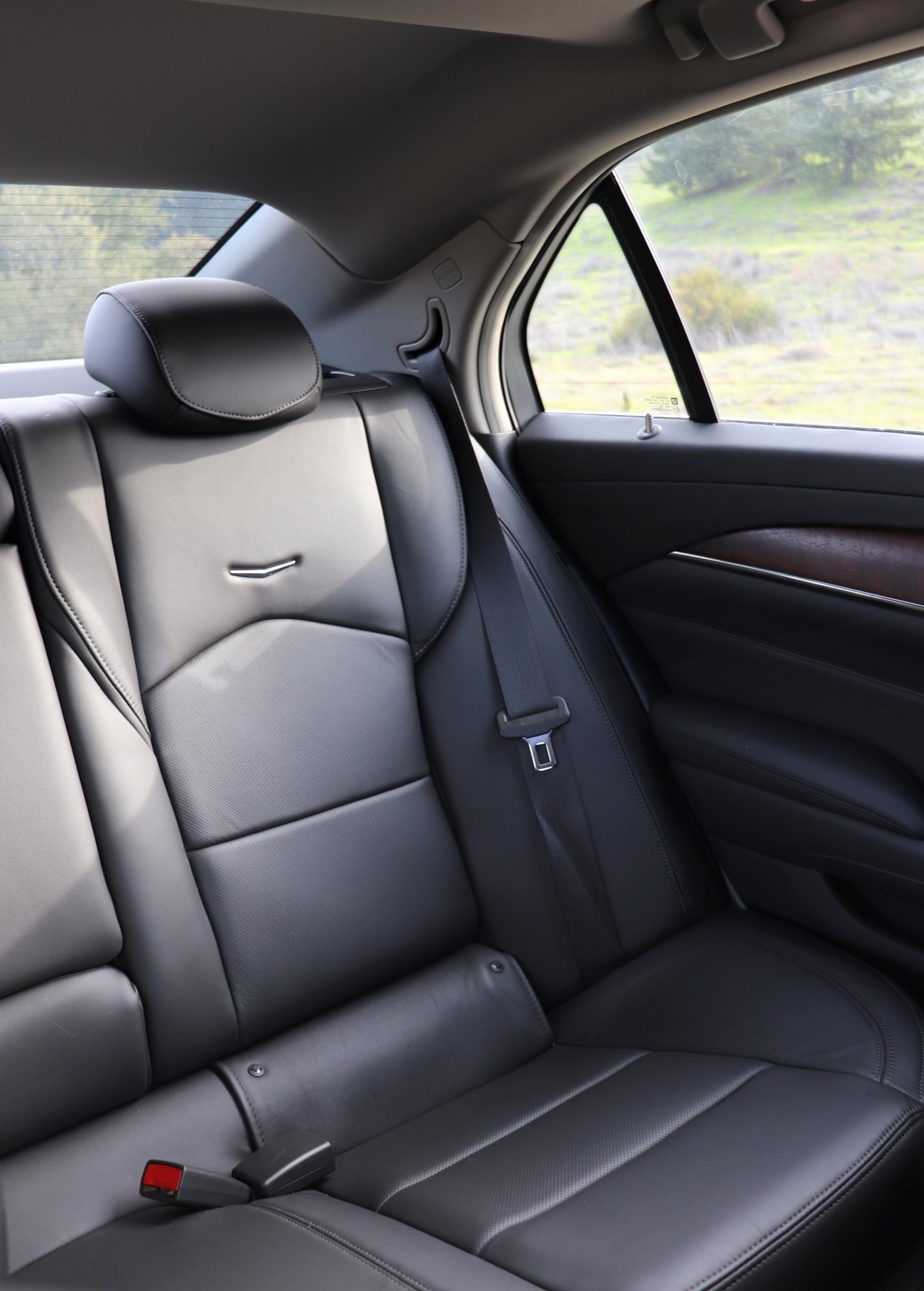
The 8-way adjustable front seats are comfortable, but corner-carvers like me will prefer the optional 20-way adjustable sports seats with their larger side bolsters. Rear passengers have their own comfort concerns. While the shape and feel of the outboard rear seats is good, the ceiling is low, and 6’ 2” me has my hair in the headliner. I have good knee room behind my driving position, but my feet feel trapped in the tiny footwell. The low driver’s seat prevents more than the tips of my shoes from sliding under the front seat, the bulky transmission tunnel boxes me in from the right, and the rear seat’s base protrudes well beyond the end of its thigh cushion, jamming my feet forward. (Is there a gas tank under the rear seat that creates this strange protrusion?) Shorter—and smaller shoed—adults will accept the low ceiling and constrained footwell, but I wish for more room to stretch out on longer trips.
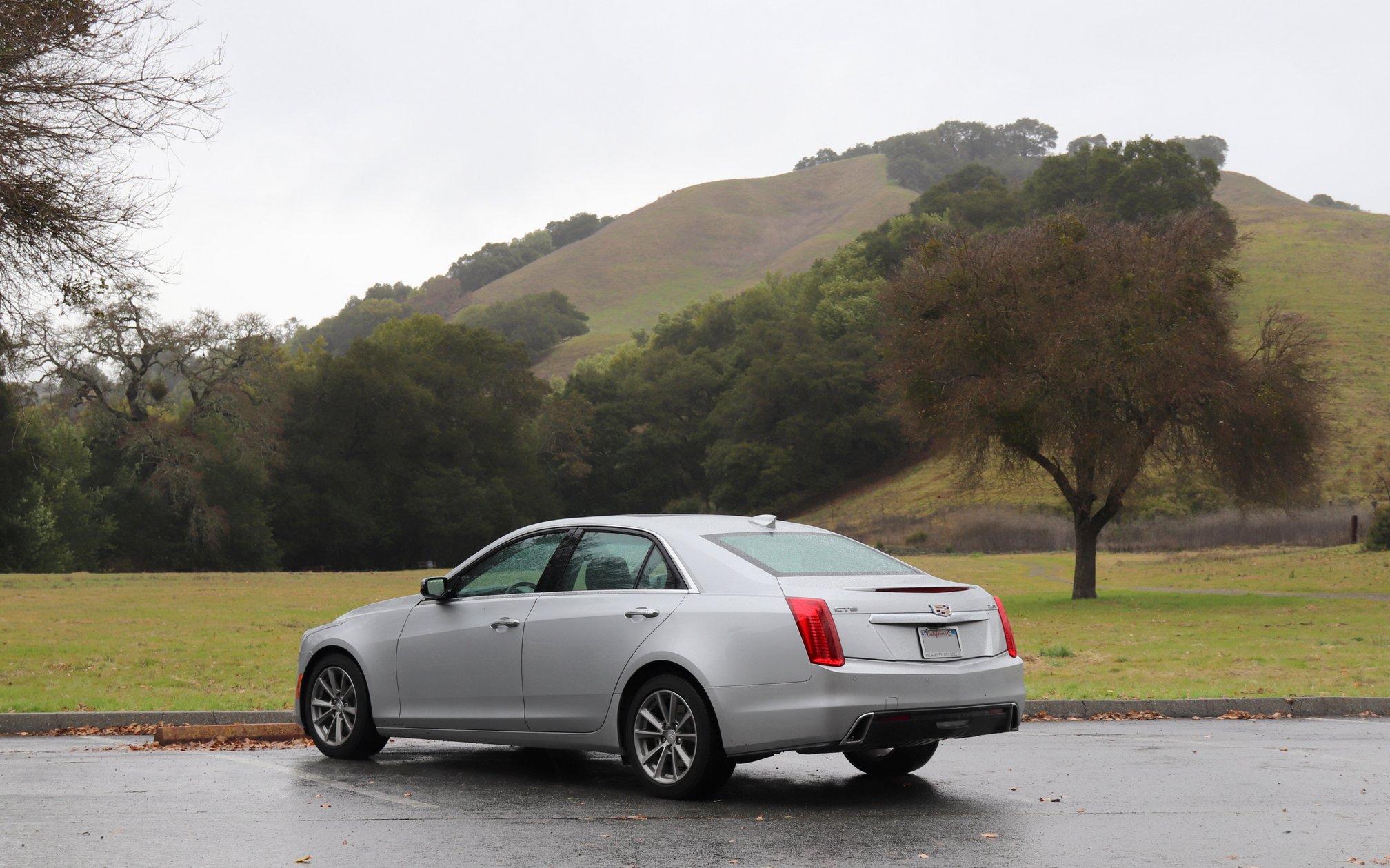
To answer whether the CTS is a purchase-worthy luxury sedan, you must first consider your priorities as a buyer. If you are looking to waft through town, insulated from the annoyances of the world, then buy a BMW 5-series instead. If you want to be wowed with jaw-dropping design and the latest tech whizbangs, then it is the Mercedes E-class for which you should shop. But if your priority is two parts driving involvement to one part luxury, then try a CTS that has been optioned with a bigger engine and mag-ride suspension. (No one should buy the CTS 2.0T, as it is neither dynamically excellent nor luxuriously hushed.)
You see, a properly configured Cadillac CTS drives like the first sports sedan you fell in love with (the BMW E90 3-series for me) and offers the modern luxury and technology must-haves you want. The competition doesn’t offer this prototypical sports sedan feel anymore. For drivers like me—drivers who want a conversation, a partnership, with the car they are driving—the CTS delivers.
 Mike's Steering Column