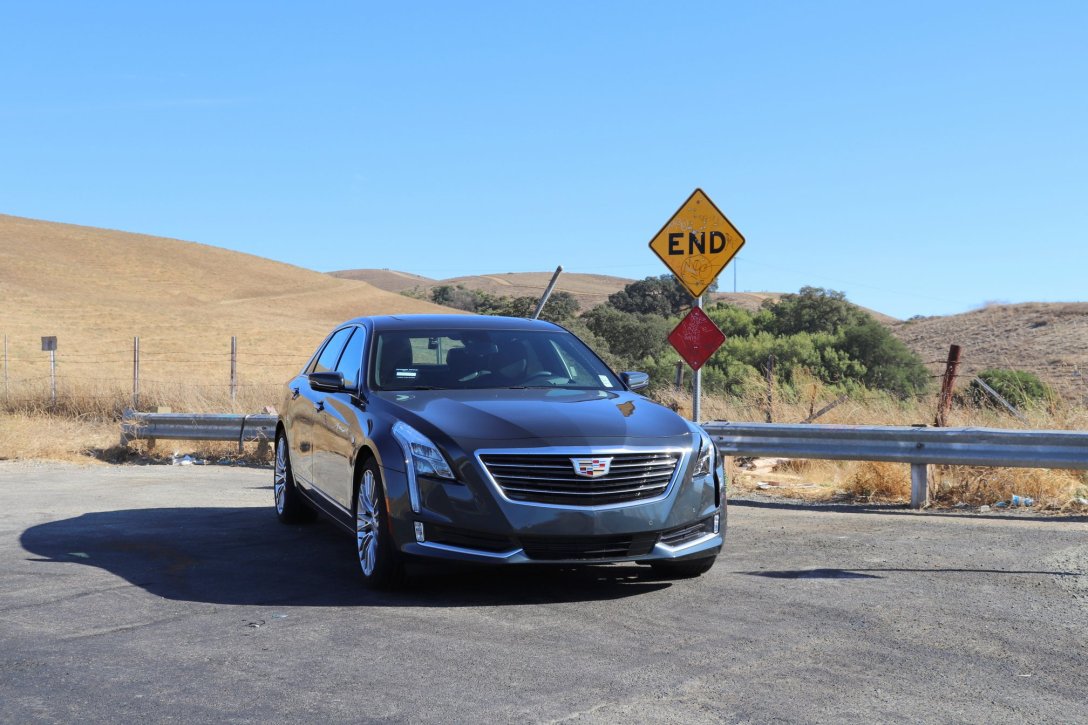
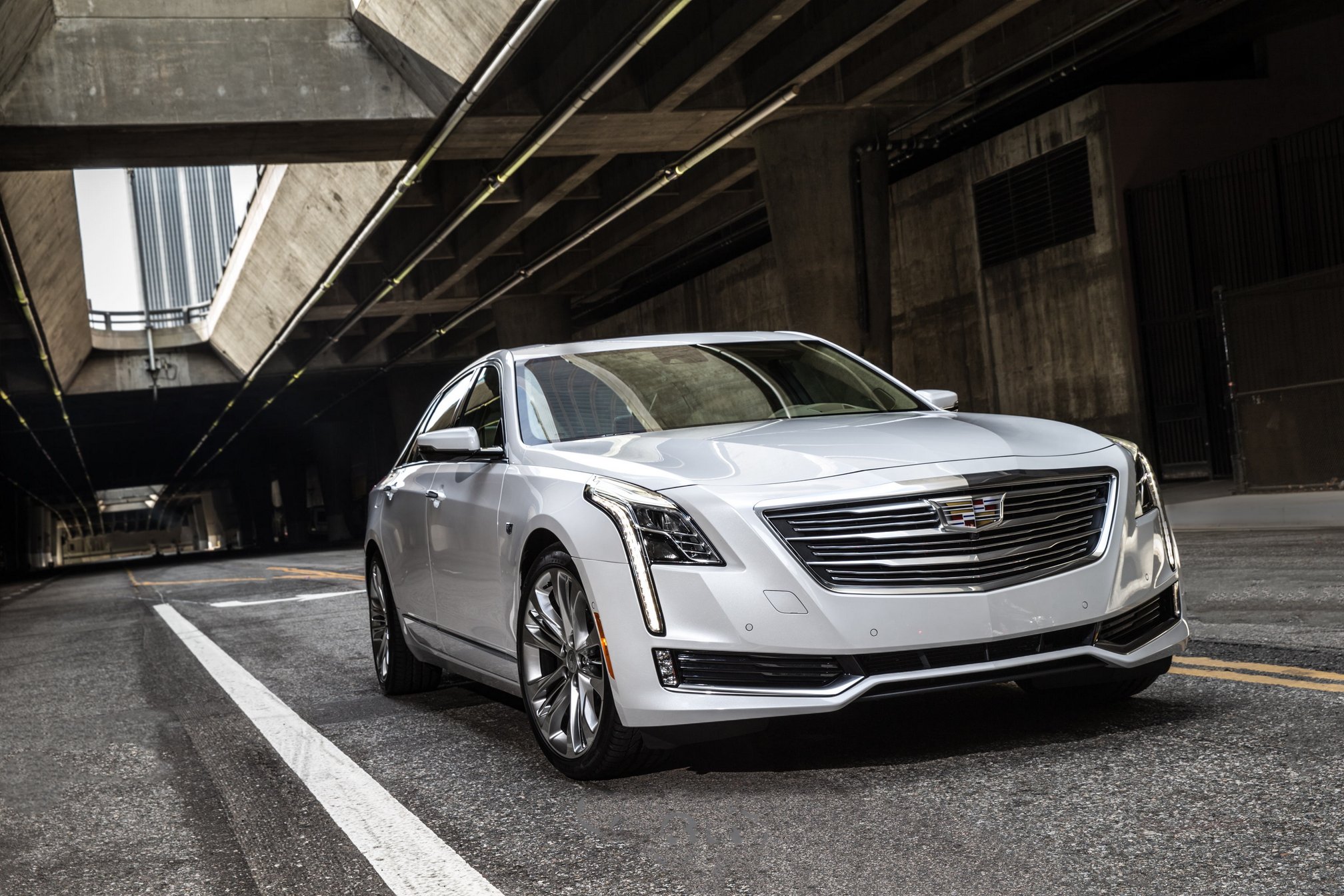
Nearly two decades ago, Cadillac reinvented its image and purpose when it introduced the CTS and proved it could build a sports sedan to rival BMW’s 3-series. Today, Cadillac is re-reinventing itself with the CT6. Cadillac is showing that it can play at the cutting edge of luxury technologies with Tesla and Mercedes. As Cadillac’s flagship car, the CT6 showcases Super Cruise and all of its other silicon-powered innovations.
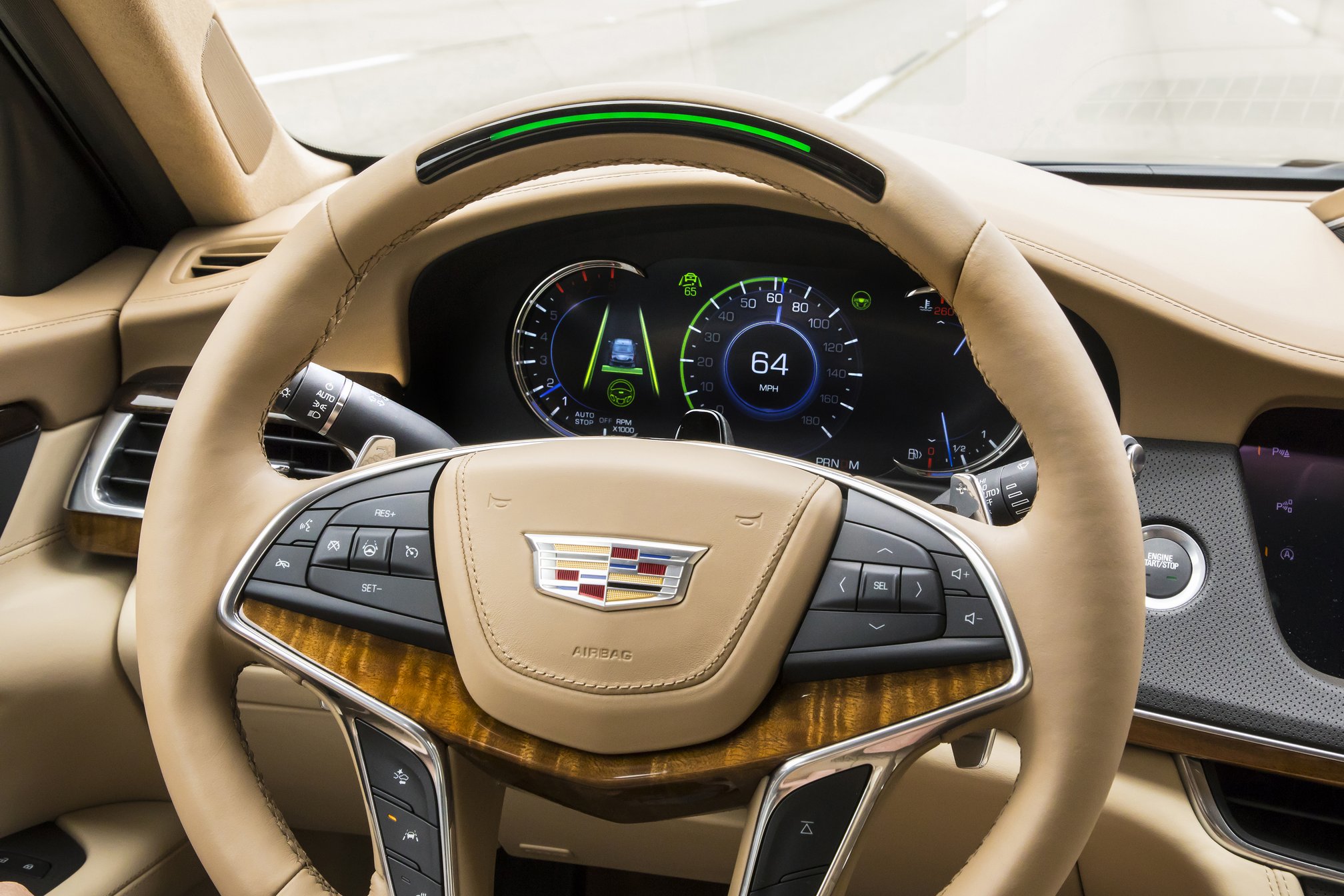
It is with this in mind that I open the door of my loaner 2018 Cadillac CT6, plop down in the driver’s seat, and feel an immediate pang of excitement. The light bar embedded in the steering wheel means that Super Cruise is fitted to this car. Super Cruise is purportedly the best hands-free semi-autonomous driving system available. I can’t wait to try it out! Thankfully, I won’t have to wait long. My route home has ten miles of Super-Cruise-approved highway. (Super Cruise is geo-fenced to those limited-access highways that Cadillac has mapped at high-resolution.)
Once traveling on the highway at the speed of traffic, I use the steering wheel buttons to turn on the system. The light bar in the steering wheel turns green. I tentatively remove my hands from the wheel and hold my breath, waiting to see if the CT6 will follow the lane and pace the car in front of me. It does! The Cadillac drives forward smoothly, pacing traffic and gently using the steering, gas and (occasionally) brakes to follow the highway and climb the mountain pass. The CT6 won’t change lanes for me, but I can take the wheel and make the change myself, then return control to the CT6 by removing my hands from the wheel when the car is centered in the new lane. It is all seamless and impressive.
I am simultaneously impressed with the way Super Cruise goes about its business and nervous about the technology. I fear that the system will lose the lane or be confounded by an aggressive driver. My normal highway habit of frequently my mirrors is put on pause, as my vision is glued to the road ahead. In my ten highway miles, nothing untoward happens, and Super Cruise’s only sin is a slight oscillation when recentering the CT6 in our lane after abrupt changes to the lane marking.
My short taste of Super Cruise ends as I turn off at the mountain summit onto Fish Ranch Rd. The CT6 handles sinewy Fish Ranch’s lumps, bumps and curves so well that I abort my trip home and head for Wildcat Canyon, my favorite local flog. This CT6 has a magnetic ride control suspension like the one in my 2014 Cadillac CTS-V, but the CT6’s suspension is 4 years and 50k miles newer, and thus is tighter and better performing.
The pavement on Wildcat Canyon is no smoother than an electrocardiogram—which is to say it’s not smooth at all—yet the CT6 shrugs off the dips and heaves and keeps the chassis in perfect control as it corners with surprising flatness. The brake pedal is firm and responsive, without being overly bitey, and the Brembos hiding behind the big 20” wheels lodge nary a complaint. The steering has the heft I want so long as I put it in Sport mode; Tour mode is too light for canyon brawling. The chassis is more talkative than the steering, but both systems give me a clear picture of the car’s adhesion to the road and the quality of the tarmac under the tires.
The biggest engine available to a 2018 CT6 is Cadillac’s 3.0L twin-turbo V6 which is good for 404 hp. The 3.0L twin-turbo motivates my car, yet there is no sensation of savage acceleration when I floor the throttle. The CT6 is spritely as it sprints forward, but the acceleration is more luxurious than sporting. What does that mean? In a 414 hp BMW M3, the howling engine and ever-quickening acceleration are emotional clues that sport is underway. The CT6, in contrast, keeps the sounds and sensations of speed at bay. Rather than crooning under load, the CT6’s V6 softly moans as the rpm climb, and the engine runs out of steam, and its torque falls away. (This engine is tuned for effortless low-rpm acceleration.) The car just doesn’t feel as fast as it is, and when I check the speedometer at the end of a straightaway, I am frequently surprised by the indicated speed.
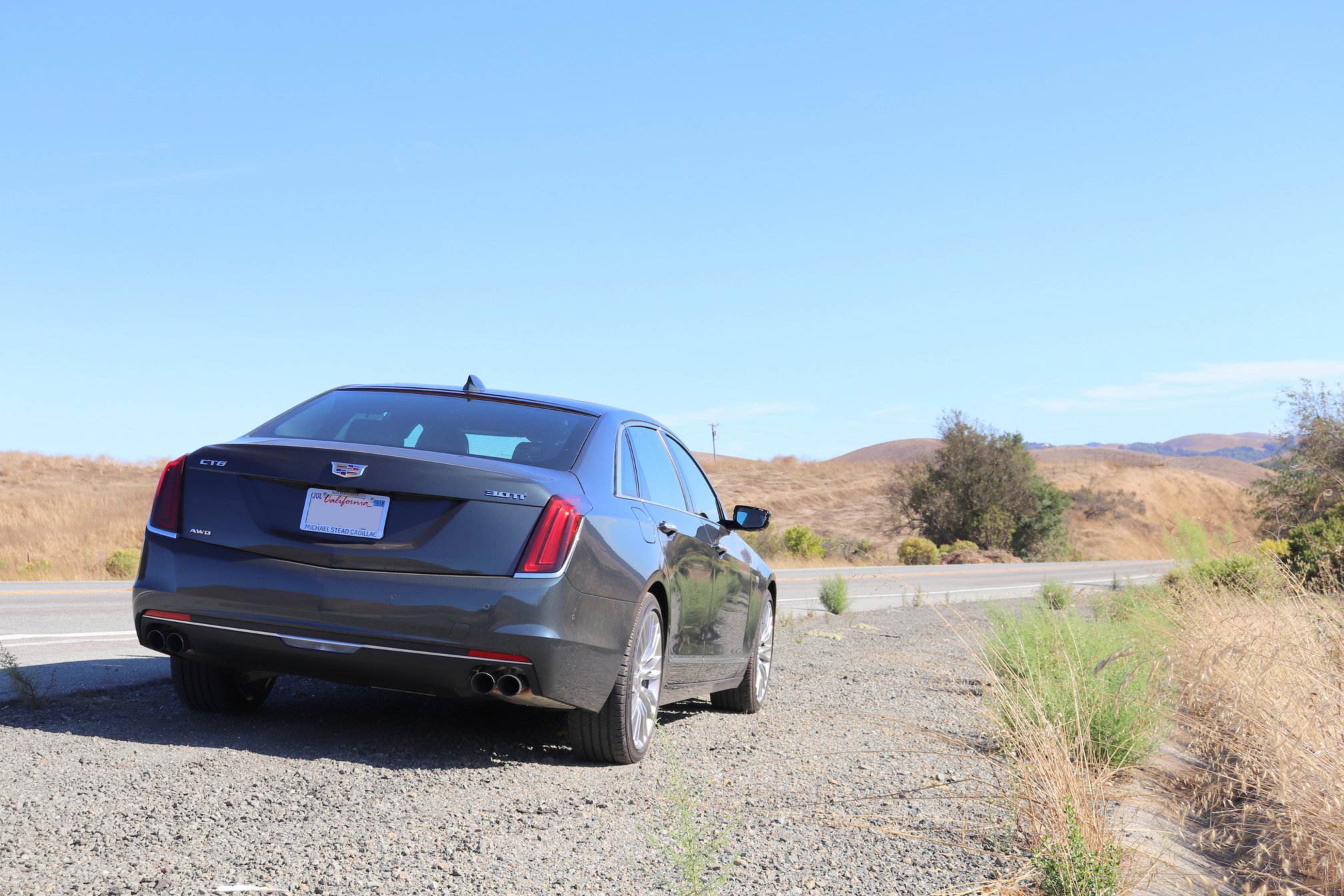
During fast driving, the transmission is acceptable. I am shifting via the steering wheel paddles, and the transmission is obediently and predictably responding, but the shifts are done without joy. Smooth and slightly slurred upshifts arrive one second after the paddle is pulled. Downshifts are a half-tick prompter and ever-so-slightly crisper. Cadillac clearly did not have canyon hooning as one of its primary goals for the CT6. Even the design of the polished-metal shift paddles makes that clear; they are tucked deeply behind from the steering wheel’s rim so that you won’t accidentally snag one while you are navigating the Whole Foods parking lot.
Regardless of the car’s design intent, I am thoroughly impressed with the pace at which I can drive the large CT6 on tight mountain roads. Its suspension never disappoints, and its four-wheel steering delivers both agility and stability. Equipped with AWD and all-season tires, my CT6 exhibits benign and well-communicated understeer when its high limits are exceeded. The car is neutral as I exit corners but sadly lacks any rear-drive excitement. While I can easily keep up with hotter metal in the canyons, the CT6 never delivers on the joy of the drive.
(If you see someone driving canyon roads quickly in a CT6, he’s probably late for an appointment rather than being out for a weekend fling.)
Happily, I can report that the CT6 is an utter joy in other duty cycles. A week of daily-duty use has completely impressed me with the CT6 and how Cadillac uses technology to deliver convenience, comfort and luxury. It is the many subtle and thoughtful touches that I appreciate the most.
Just consider how well thought out the first 20 seconds of driving is in the Cadillac CT6. Power up the car, and the CT6 restores my prior Tour/Sport/Winter driving mode. (I’d love it if the car would remember my engine start-stop settings too.) On cold mornings, the CT6 automatically turns on my seat and steering wheel heaters. On hot days, seat cooling is automatically activated. As I back out of my driveway, the car retracts the rear sunshade and turns on the surround-view cameras to help me avoid clipping my mailbox. Should cross-traffic be approaching, the seat vibrates a warning, and the backup camera display shows the direction of the traffic. The rear-wheel steering shortens the car’s wheelbase, easing my 90-degree turn onto the road. With the car’s nose pointed in the desired direction, I slide into drive, and the CT6 re-deploys the rear sunshade. My seatbelt is gently tightened, pulling an unsafe slack out of the belts and softly reminding me of the benefits of a stately posture. (Either that or the CT6 just wants to give me a little good morning hug!) I absolutely feel like someone from Cadillac is trying to make my day easier.
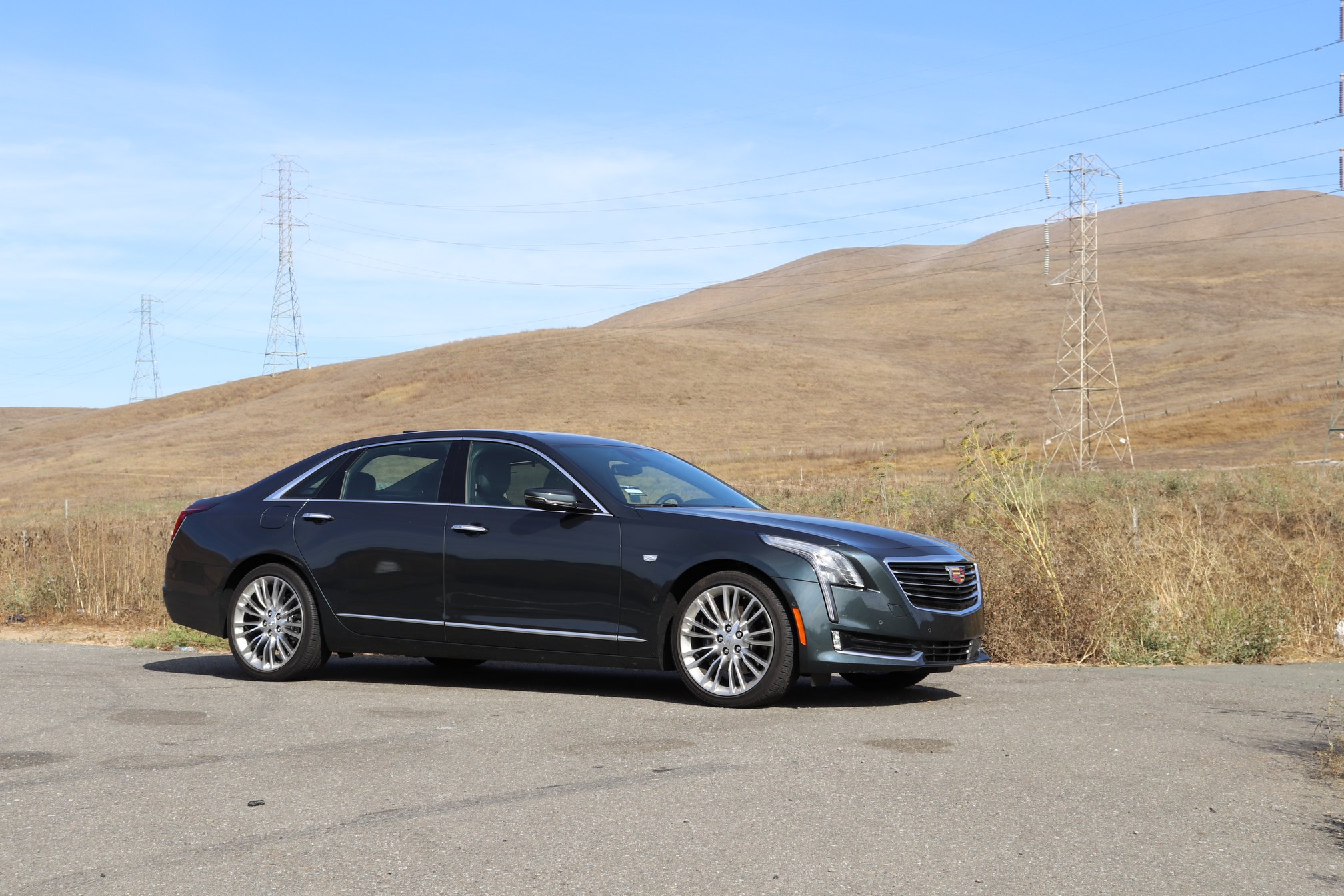
(There is a thoughtful touch at the end of my drive too. If something substantial is resting on the back seats, a chime and warning in the instrument cluster remind me to check the rear for belongings. Not only could this reminder help me avoid the smash and grab theft of my backpack, but this reminder could spare the life of my pet or child.)
Driving the CT6 in town is a true pleasure. Its well-sealed doors and sound-insulated windows keep out the thrum of the city. The twin-turbo V6 is whisper quiet while cruising and mildly vocal when pressed for brisk acceleration. The engine and gearbox work wonderfully together in the city, giving the CT6 the immediate torque it needs to sprint through busy intersections. Tour mode’s light steering and the rear-wheel steering make easy work of the city grid, traffic and parking. Road texture is felt in the chassis and steering wheel at slow speeds—just as it was at high speeds in the mountains. Over the worst roads, the CT6 rides levelly as the magnetic ride suspension sops up potholes and disintegrating pavement. The suspension’s only demerit is that it gets noisy over broken surfaces. The plush driver’s seat hides the impacts from the bumometer. It is amazing how compliant this suspension can be on rough roads and yet how composed and roll resistant the CT6 is when driving spiritedly.
(Given the CT6s luxury focus, I am surprised that Cadillac let this much road texture into the cabin. They could have gone full-Lexus and used a suspension with no road feel at all. As a driving enthusiast, I appreciate Cadillac’s choice, but I wonder if the mass market will too.)
There is a simple quality and polish to the CT6’s cabin. Nothing wiggles, jiggles or creaks when prodded or pulled. (I wish I could say the same about my 2014 Cadillac CTS-V.) The buttons and controls have firm resistance and tight action. The materials are first-rate with good quality leather and real metal brightwork.
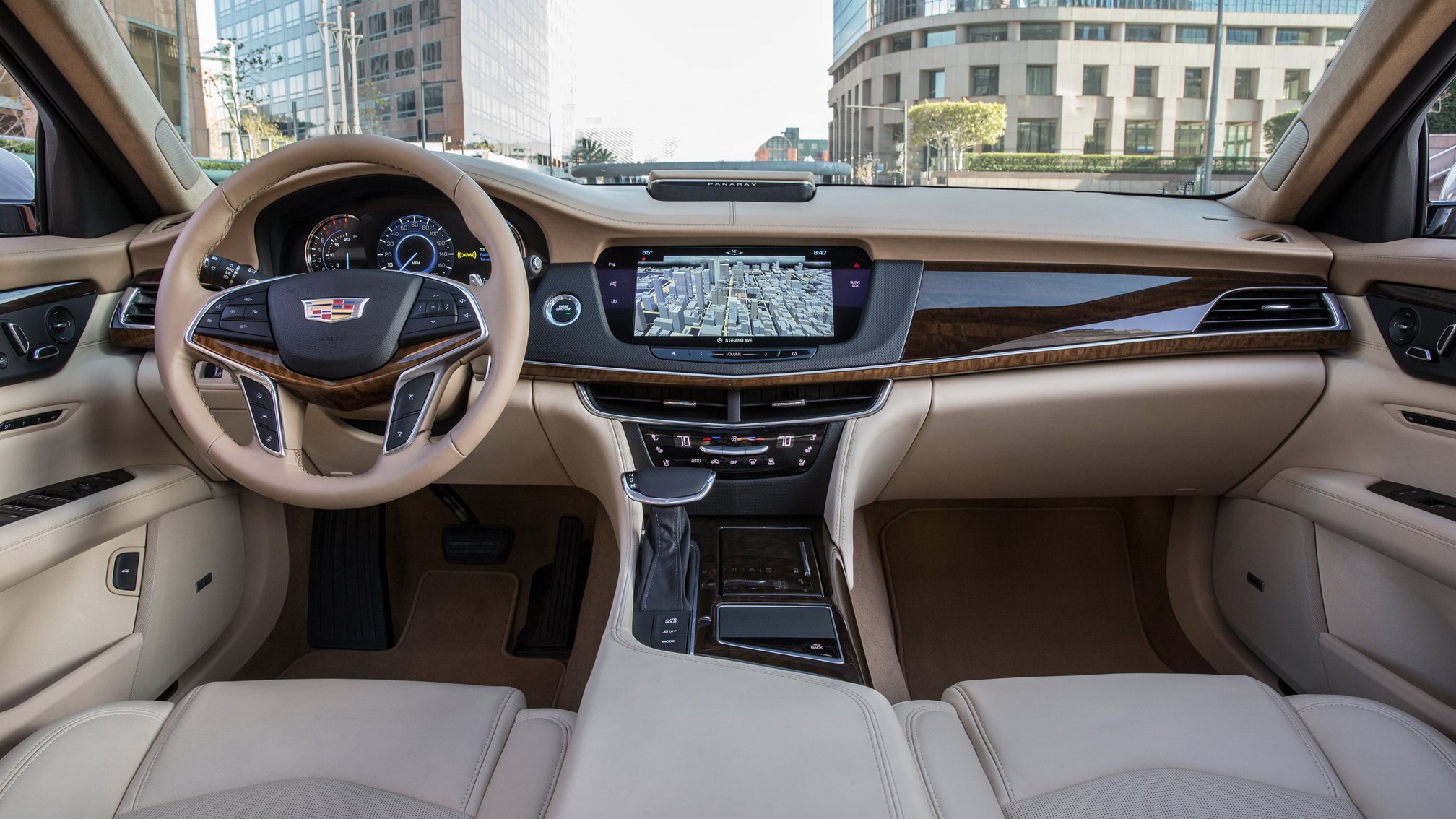
While Mercedes has added Berlin-nightclub bling to its interiors with full-cabin accent lighting that glitzily glows off satin metal inlays, Cadillac has taken a conservative approach to luxury. The CT6 is less pretentious but just as comfortable. Its interior steers clear of the neon and metal and instead tastefully employs reserved materials and strong horizontal lines. Subtle V shapes can be found on the dash, HVAC controls, steering wheel and seats, a reference to the bottom edge of the Cadillac crest.
Cadillac isn’t ignoring the new benchmarks that the Germans are setting for luxury cars; it is just picking and choosing which parts to take and which parts to leave behind. Cadillac is fully in the fight when it comes to technology as luxury. The CT6’s sale sticker lists over a dozen cutting-edge gizmos and whizbangs: a configurable digital gauge cluster and head-up display, CUE 2.0 infotainment with Apple Carplay and Android Auto integration, wireless cellphone charging, 34 speaker HiFi Bose Panaray sound system, 360-degree surround-view cameras for parking assistance and security recording, night vision, intelligent headlight high-beams, automated assistance for parallel and perpendicular parking, forward and reverse autobraking, pedestrian detection with autobraking, rear cross-traffic alerts, lane-keeping assistance. The list goes on and on.
From this cornucopia of technology come three standout features. First is Cadillac’s attention to smartphones and how they interface with the CT6. I love how Cadillac has built the CT6’s cabin with a clear and intentional design for the driver’s smartphone and its use. A clever pocket is recessed into the center console between the shifter and armrest. For phones that are so equipped, the pocket provides wireless charge. All other phones can run their USB cables through a hidden pass-through to the armrest bin and the USB ports within. This clever solution alleviates unsightly cables snaking through the CT6’s cabin. The phone pocket leaves your screen partially visible should you want to glance down at its screen to check a notification. (Don’t drive distracted!) The phone pocket is also wide enough to accommodate 90% of the phones sold today, phablets included.
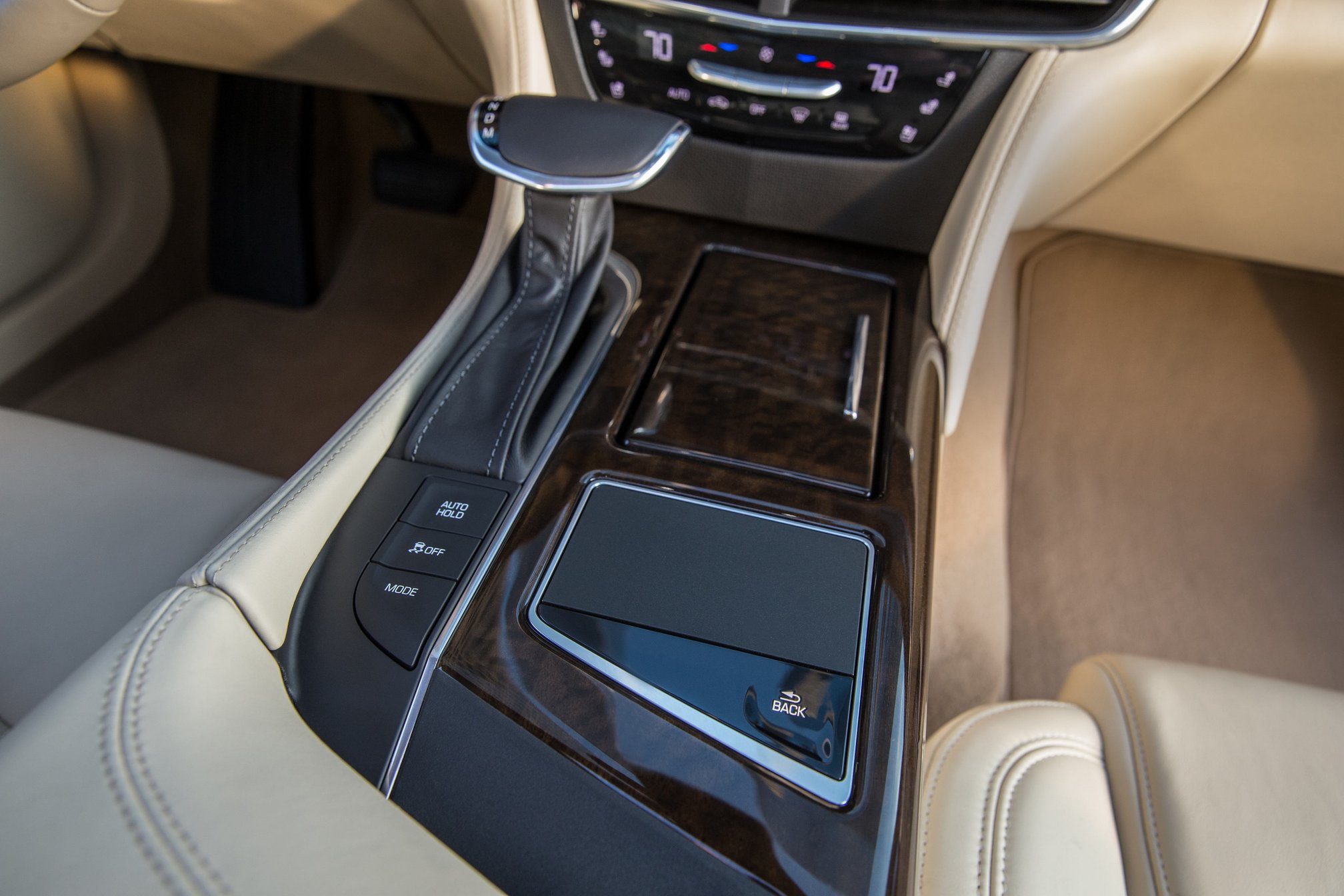
With so many people are using Apple Carplay and Android Auto in their vehicles, it is wonderful to see how fluidly CUE 2.0 supports smartphones. CUE 2.0 is a touchscreen-based system, which is the natural interface choice for Carplay and Auto. (There is a trackpad for CUE interaction, but I ignored it in my use.) The CT6 is prompt in finding my Samsung over Bluetooth for hands-free telephone use and audio streaming. When I plug in the USB hardwire, Android Auto is quickly available and perfectly responsive via the Cadillac touchscreen. Android Auto never crashed or rebooted when connected to CUE, something that sadly isn’t a given with smartphone connectivity these days. My slight niggle with the Android Auto experience is that the CUE infotainment screen is so crisp and high resolution that the lower resolution output from my aging Samsung S7 appears pixelated.
When used by itself—sans smartphone—CUE 2.0 is stable, quick and intuitive. Bravo Cadillac for banishing the infuriating glitches and delays of CUE 1.0. Thank you again, Cadillac, for finding the right balance between virtual controls on the touchscreen and physical buttons on the dash. The cruise control, driving modes, HVAC and radio controls have their core functions replicated in physical buttons. I never had to wade through digital menus to find the setting I needed.
The second standout area is how Cadillac handles active safety measures and alerts in the CT6. Too often, safety systems’ incessant din of chimes and bongs becomes an annoyance to the driver, causing him to disable or ignore the systems. In the CT6, there is no aural accosting. Instead, the CT6 captures the driver’s attention by vibrating his seat and then draws his eyes to the source of danger by flashing a warning on the HUD (for dangers out front) or rearview display (for dangers out back). This is a clever and effective way of focusing the driver’s attention where it is needed.
The third standout area is Super Cruise. Cadillac uses high-resolution maps, cameras, radar and GPS to semi-autonomously drive the CT6 on approved freeways. A camera on the steering column observes the driver’s eyes during Super Cruise operation, and semi-autonomous driving will disengage if the driver’s eyes leave the road for more than five seconds. By restricting Super Cruise to well-mapped highways and requiring the driver’s eyes to be on the road, Cadillac can confidently allow hands-free operation of the CT6 for extended periods.
Towards the end of my week with the CT6, I took the Cadillac on a 50-mile highway drive to experience the system in depth. Starting from Highway 80 in Richmond, CA, I gave Super Cruise the task of driving me out of the San Francisco Bay Area during rush hour traffic. Turning on Super Cruise is as simple as giving the car a chance to detect the lane markings, centering the car in the lane and pressing a steering wheel button. Then, the system turns on, and hands-free driving commences.
Super Cruise faithfully paces the car ahead of me down straightaways and around bends in the initial stop-and-go traffic. The CT6’s driving inspires confidence, and the car seems well prepared to handle the ebbs and flows of rush hour traffic.
I debate the following distance to use in stop-and-go traffic. Super Cruise’s medium following distance makes for a less herky-jerky ride because it gives the car a bigger space cushion to work with and lets the car use coasting to slow down. Unfortunately, the bigger space cushion is also a tempting slot for other rush-hour drivers to fill. When a car takes the bait and merges in front of the CT6, Super Cruise immediately brakes to restore its spacing. (A human driver would probably accept the tighter spacing for a few seconds and coast to restore the gap.) The close following distance keeps all but the most aggressive mergers from slicing in front of the CT6 but results in frequent hard braking when traffic comes to a stop and figuratively puts me on the edge of my seat: I feel like I am the passenger of an aggressive driver.
I’m only a few miles into my trip when Super Cruise jiggles my seat, flashes red lights on the steering wheel, and returns driving control to me. I assume the system has disengaged because this section of the highway was recently repaved, and the system turns off in construction zones. I immediately try to restart Super Cruise, but it won’t reactivate, and the car gives me a generic error: “Super Cruise is unavailable.” I wish the CT6 would tell me why Super Cruise is unavailable! (I’ve seen more specific and more helpful messages at other times, including ones about being on an unmapped highway, not being able to find lane markings, and needing to be centered in the lane.) A mile down the road, I am able to re-engage the system, though it will mysteriously disengage again as I approach Pinole. The third and final time Super Cruise disengages is when we approach a bridge toll plaza; at least, the cause is completely clear to me in this case!
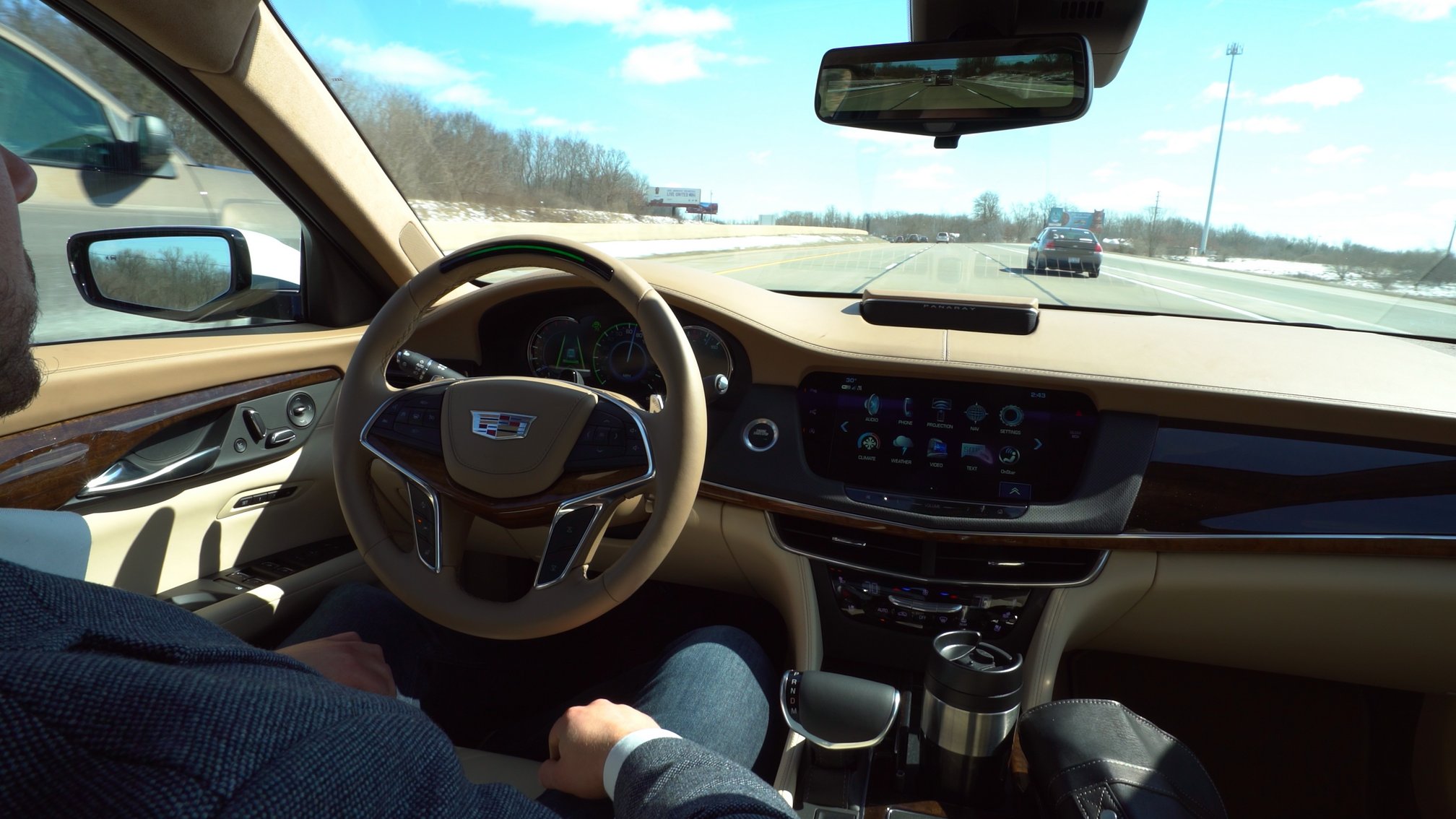
I’ve made it to the far fringe of the SF Bay Area. Traffic has eased, and now Super Cruise can truly cruise. I set the speed to 75 mph and watch how the CT6 handles Highway 80’s hills and flowing corners as we approach the Central Valley. The CT6 drives well, using soft applications of steering, gas and brakes to deal with the changing grades and sweeping corners. On my first Super Cruise drive, my vision was frozen to the front windscreen as I feared rear-ending the car ahead or veering from the lane. Today, I am confident in Super Cruise’s lane-keeping abilities, and I return to my normal driving habits of checking mirrors and groping for items in my backpack. (Given a month with the CT6, would I get overconfident in Super Cruise’s capabilities?)
When I scrutinize Super Cruise in detail, I find some nits to pick. First, Super Cruise slightly crowds the right edge of its lane, making me nervous when passing big rigs. You’d think the car would have its centering spot-on; do I just edge left when I’m driving beside a truck?
Second, the CT6 isn’t as smooth as a good chauffeur when it comes to cornering. If the lane is temporarily pinched, Super Cruise will steer to follow the shifting centerline instead of continuing straight until the normal lane spacing has returned. Similarly, if a corner changes radius midway, Super Cruise will use different steering angles for each portion of the corner, rather than exploiting the width of the lane to smooth the turn into one continuous arc. Overall, this makes Super Cruise more sensitive to erratic lane markings and corner geometry than you or I would be and results in more corrections and oscillations than is necessary. Driving instructors tell students to lift up their eyes and look far down the road, so they take in the big picture and avoid overdriving the details. Super Cruise drives as if it is looking just a second or two down the road.
The same micromanaging and overcorrection occurs in Super Cruise’s traffic spacing in stop-and-go traffic, where Super Cruise will overslow after being cut off. From a defensive driving standpoint, I can understand Super Cruise’s posture: It is trying to maintain a safe distance at all times so that it—and you!—have a fighting chance if something goes wrong.
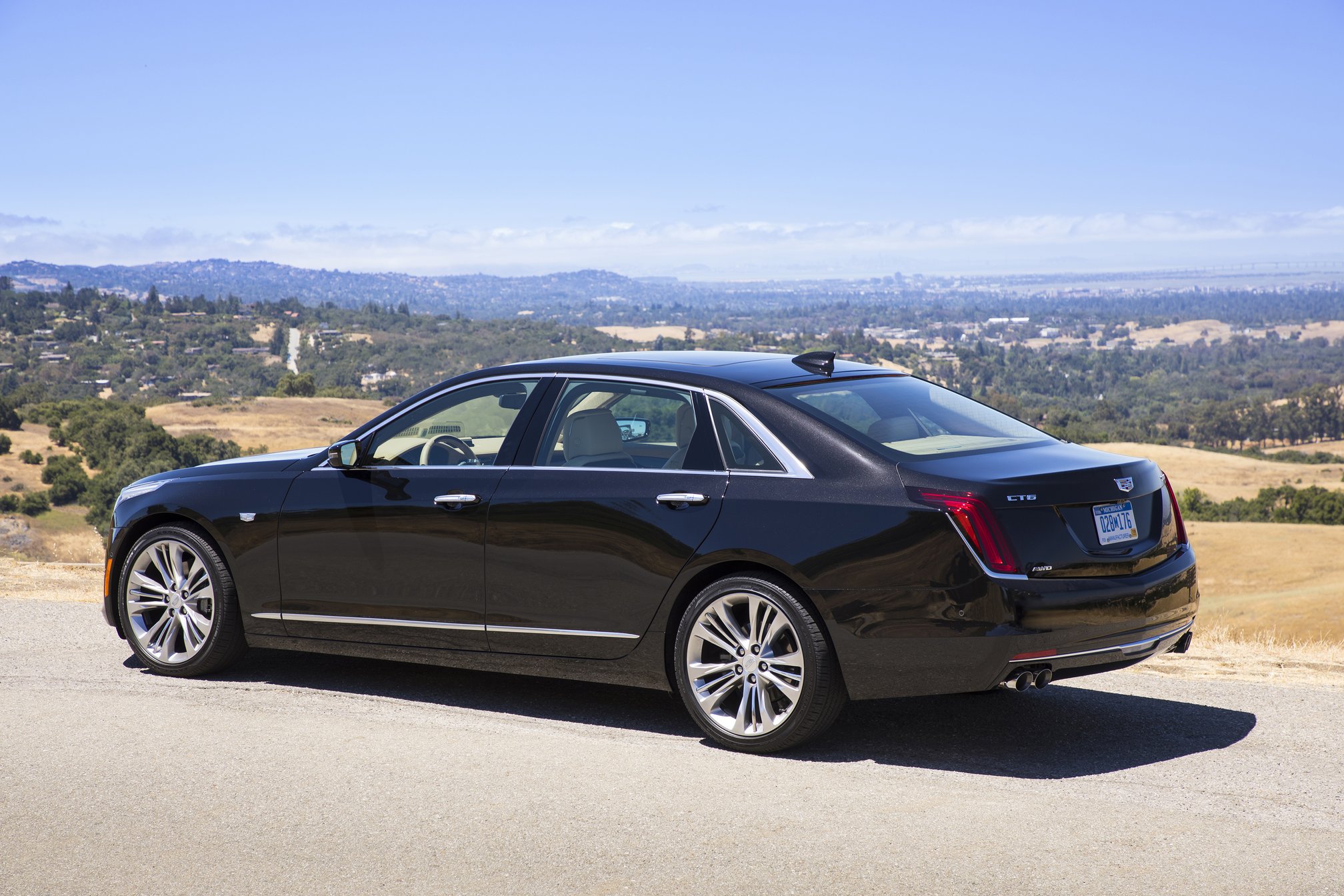
While there are discrepancies between how Super Cruise drives and how I drive, I am hopelessly enamored with the system. During “my” drive to the Central Valley, I repeatedly exclaim that I’d love Super Cruise in a CTS-V. Too bad the system is likely incompatible with manual transmission cars like my CTS-V.
(There is so much more I want to tell you about the CT6, from its useful, if grainy, surround-view cameras to its night vision pedestrian detection technology and auto-parking features. But I’ve written so much already that I’ll spare you the additional words!)
Having reached the Central Valley, I turn around and have Super Cruise drive me home. Sadly, I’ll return the CT6 to the dealership tomorrow. The Cadillac CT6 is the best of old and new luxury. At slow speeds, the CT6 drives like the comfortable, smooth and torquey Town Cars loved by my grandfather. In the mountains, the CT6 handles like a sport-package BMW. On the highway, the CT6 is straight out of the future. The Cadillac CT6 is Detroit luxury mixed with Tesla tech, and I love it to bits.
 Mike's Steering Column