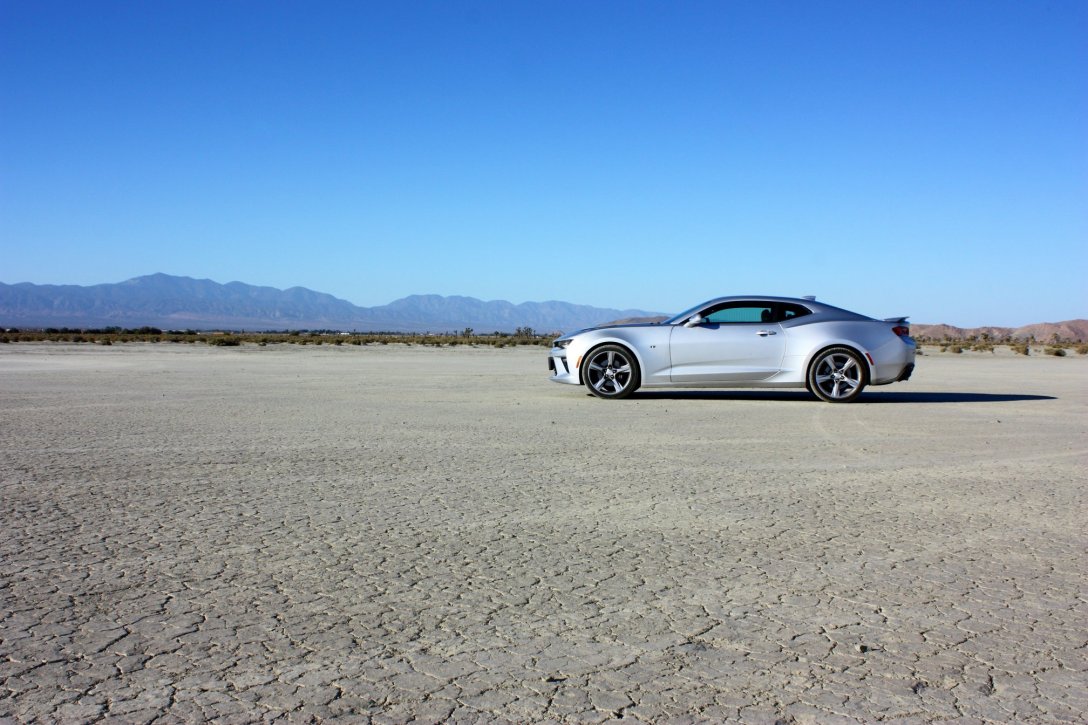
America may or may not have invented the practice of speed trials on dry lakebeds, but we certainly popularized it and made it part of our identity. In the early 20th century, Southern California’s dry lakebeds were the epicenter of America’s land-speed record attempts until speeds increased so high that more real estate was needed. What few people realize is that Southern California’s dry lakebeds are still open to the public and condone speed-limit-free driving.
With the keys to the 50th Anniversary Chevrolet Camaro SS in hand—and no desire to get a burger and fries—it only makes sense to take this muscle car to a dry lakebed and experience it in one of the most American environments possible. The original 1967 Camaro had a top speed of ~120 mph. Could a dry lake virgin match that speed on the dirt?
This 2017 Camaro isn’t the first 6th generation Camaro I’ve driven, but today is a chance to experience the Camaro in a new environment. (You can read my previous review here.)
The Camaro is in base spec, with an all-black all-plastic interior and cloth seats built for the wider gentleman. Still, Chevy included all the parts that matter—a stonking V8 engine, big Brembo brakes, a capable chassis and sticky tires—“for free.” Some additional niceties—Apple Carplay and Android Auto—are present, too, giving me access to modern toys like Waze and Amazon Music on my two-hour trip out to the desert.
LA’s choppy interstates come first. If this Camaro SS was a mattress you could buy at Sleepy’s, it would be a firmly-sprung pillow top. The base suspension (magnetic-ride is an optional upgrade) has a thin layer of comfort/compliance on top of an otherwise firm ride. Over concrete-slab interstates, the ride does get a little choppy. For someone used to BMW M cars and the way they balance sport vs. performance, the ride compromise is perfectly acceptable and feels Autobahn tuned.
The best sports sedans from Germany have a dual personality, relaxed when driven slowly yet high-strung when pushed hard. This dual personality is found in the Camaro SS too. At highway speeds, the big V8 engine loafs along at low RPM, quieting the cabin. The main noises are tires and wind. The engine tries to sip like an economy car, too; when the road is flat, it shuts down cylinders to become a V4. While the gauge cluster reports instantaneous fuel economy in the high 20s mpg, my long climb into the high desert ultimately nets me ~24 mpg. Not too bad!
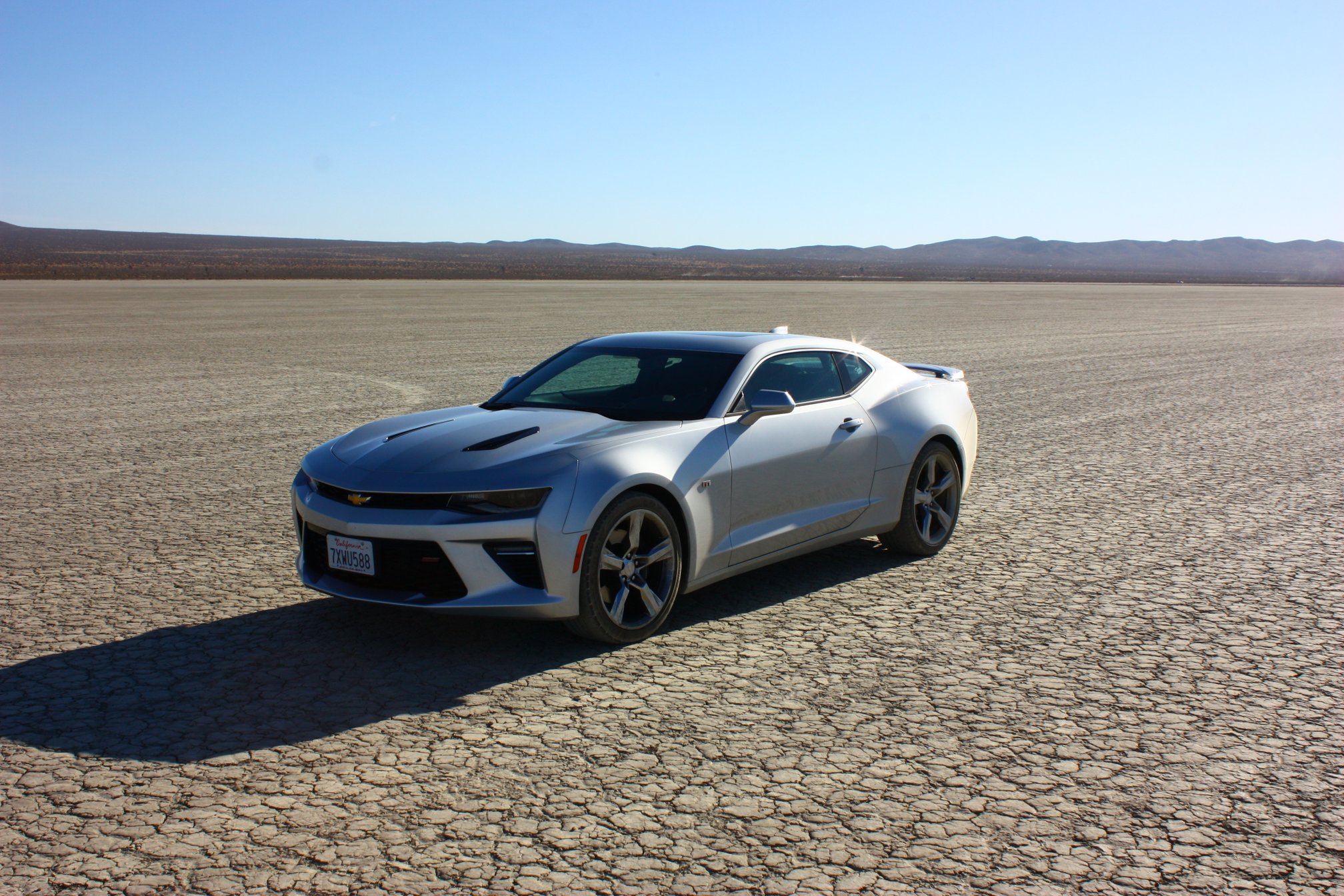
I’ve always derided the Camaro for its style-over-practicality design, but on the highway, the visibility isn’t as bad as I feared. The view forward is clear, and the A-pillars don’t block too much of the road. The rearview mirror is perfectly shaped to the Camaro’s rear glass, so it doesn’t show me any of the bodywork that blocks the visibility. It’s a neat trick that reduces my claustrophobia. Of course, if I do a head check, I see that the visibility behind the driver is hugely compromised. Changing lanes is best done by signaling, checking mirrors, and then creeping into the next lane. Hopefully, if someone was hiding in the Camaro’s blind spot, they’ll honk before I side sweep them! The good news is that the wing mirrors cover most of the blind spots.
Leaving the interstates, I turn onto arrow-straight two-lane highways through the Mojave Desert. Curiosity and boredom have me cycling through the various screens of the instrument cluster. There’s a whole menu dedicated to performance and an exciting option labeled 0-60. Now that sounds like something worth trying on a deserted highway! I activate the mode, and when I come to a complete stop, the word “Ready” flashes on the instrument panel. I wood the throttle and the rear tires slither on the cold pavement. The redline nears, and I pull the paddle for a quick upshift to second. 60 mph is cleared in 5.0 seconds. It’s too fun not to repeat! A few more tries net me 4.5 seconds to 60 mph.
The main challenge in these sprints is modulating the throttle and shifting at the right time. (If I let the automatic gearbox shift for itself, it leaves 1,000 rpm on the table.) The engine has too much torque to use full throttle off the line, so I have to feather it first and floor it later.
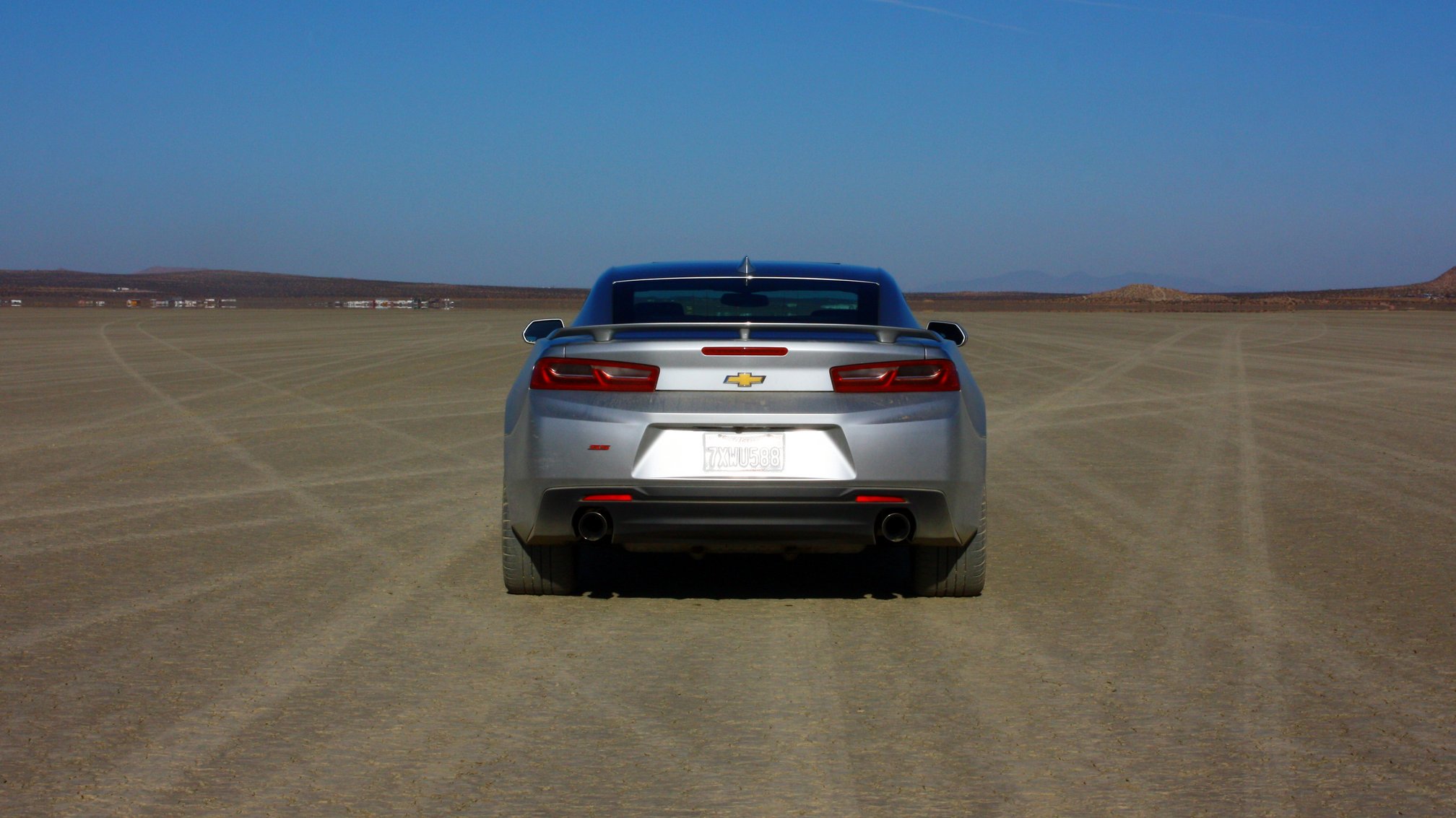
The thrust and the roar of the V8 are so intoxicating that I decide to do a pull through higher gears. Outside the mail-slot side windows, I see the Joshua trees rip by with increasing ferocity. When I relax my right foot and glance down at the speedometer, the needle indicates 120 mph. I’ve already matched the top speed of the 1967 Camaro: I need a new goal for the lake. How about 150 mph to celebrate the Camaro’s 50th anniversary?
The lake is a park managed by BLM, and there’s a fee to pay before I can play. I’ve never been here before, and I’m a bit hesitant about being forward about my intentions. Do I really tell the ranger I intend to drive triple digits? I say, “I’m here to take some pictures of my car on the lake and, um, drive around a bit.” I feel like a shy 21-year-old going to a strip club for the first time. “I’m here for a drink and a bite to eat, and, um, there are topless ladies here, right?” The ranger knows why I am here. “People like taking photographs on the south bank. There’s no speed limit on the lake. Have fun!” Thanks, I will.
It’s a surreal experience driving onto the cracked lakebed. I explore slowly as if treading on eggshells, concerned about puncturing a tire on a rock or erring into a big ditch that would part the Camaro from its bumper. Neither thing occurs, and as I venture deeper into the lake, the surface gets smoother and smoother. I find the recommended place to take photographs, snap a few of my own, and watch as a pair of guys on ATVs roar up and down the lake.
Off in the distance, I recognize hills I’ve seen in YouTube videos of top-speed runs. Driving in their direction, I find what appears to be a runway in the dirt, a stretch of lakebed streaked with parallel lines. Each line could mark a speed racer’s attempt to reach VMAX.
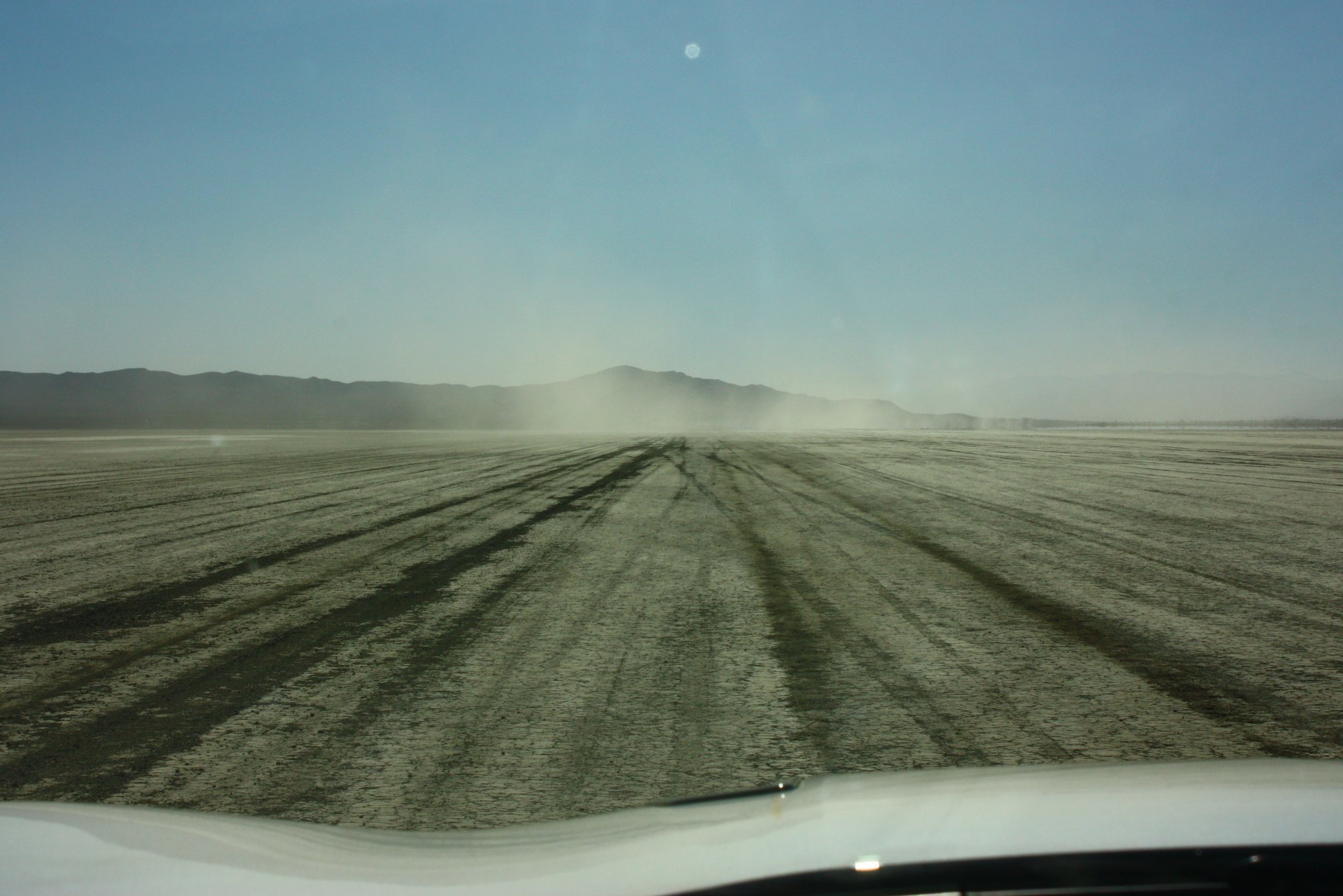
I drive the etch-a-sketch raceway, again and again, proving to myself that the ground is level and the surface is safe. Content with the condition of the dirt, my speeds start increasing: 60 mph, 70 mph, 100 mph. I follow well-worn lines and use reference points on the horizon to make sure I stay on the known, smooth dirt. The grip is less than what I’d have on tarmac, but the Camaro tracks straight, only occasionally inching to one side or the other when looser patches of lakebed are encountered.
The car is certainly up to the task. I mark 120 mph, then strike 140 mph multiple times. The engine isn’t showing any signs of fatigue after repeated runs, and the brakes are as strong and firm as they have been all morning long. I just need a little more guts and a little more space if I’m going to hit my 150-mph goal. I drive past the end of my track, turn around, and get a running start: 80 mph, 100 mph, 120 mph, 140 mph—the speedometer is climbing more slowly as I spear across the lakebed with an immense rooster-tail of dirt in tow—145 mph, 148 mph…150 mph at last! And onto the brakes…
I haven’t won any races. The only records I’ve set are personal ones. Still, I feel like I’ve just won the Grand Prix at Spa. I celebrate in the form fit for a Formula 1 victory—big, drifty donuts done with giddy laughter and fist-pumping.
It turns out that the Camaro is actually more fun to drift than it is to drag race. It pivots sweetly around its nose, and the big V8 makes it easy to dole out just the right amount of power to keep the slide going. To celebrate this discovery, I do more donuts.
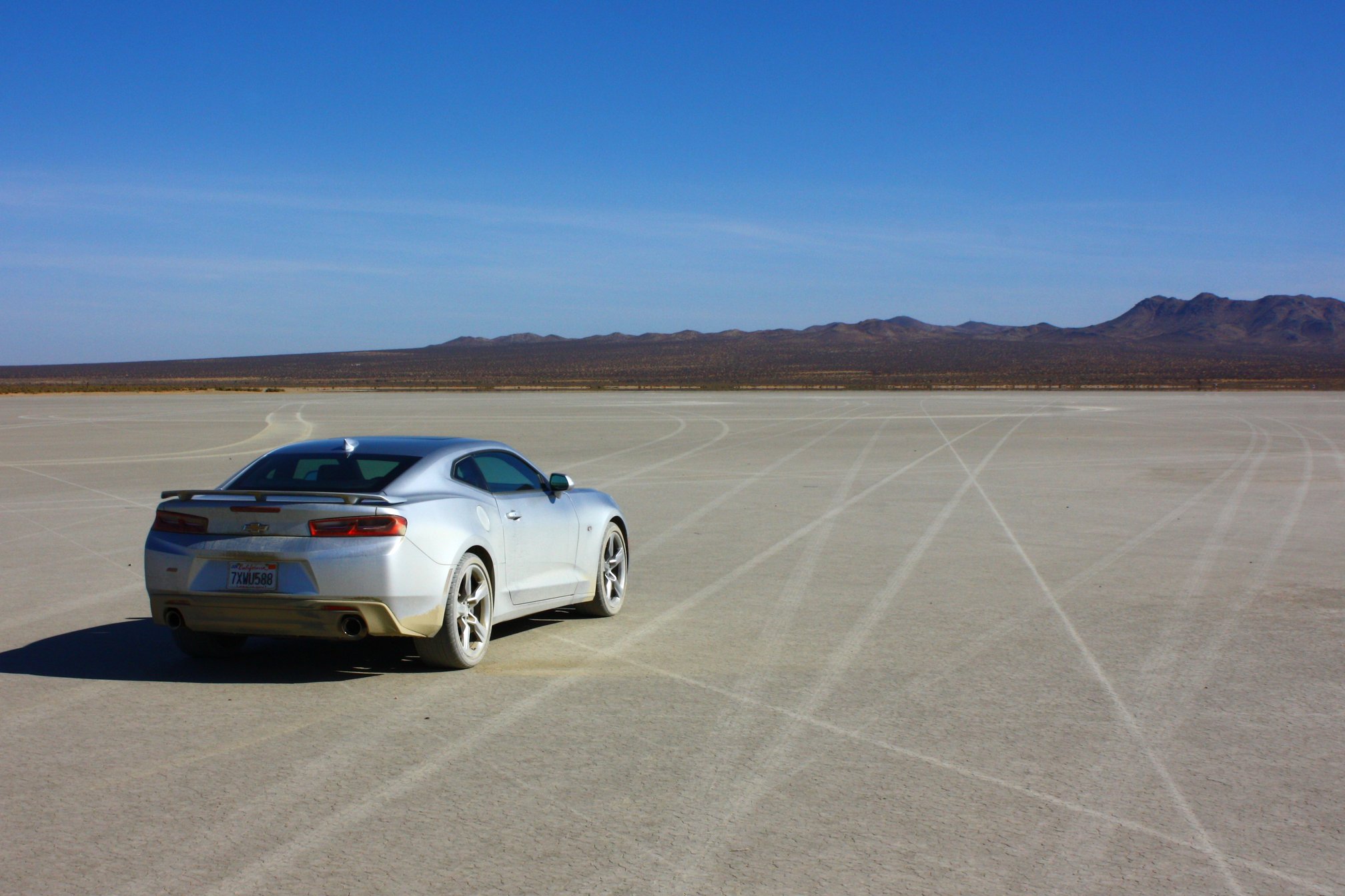
My juvenile exploits have filled the wheels with sand, making them too unbalanced for further high-speed runs. I don’t mind; I’ve achieved my goal, and the Camaro has earned a victory bath.
This trip with the Camaro has reinforced what I already knew to be true: The Camaro SS is an incredibly capable and performant sports car, with enough comfort to be used day-in and day-out. It’s a hero in my eyes. Happy 50th Birthday, Camaro! (You’ve never looked better!)
This trip to the lake has introduced me to a new facet of cardom. I now can empathize with those steely speed racers who stare with laser focus into the dusty distance, grasp the wheel tightly, and then blast off for the horizon. They regularly do 300 mph on this same lake. Talk about guts!
Epilogue
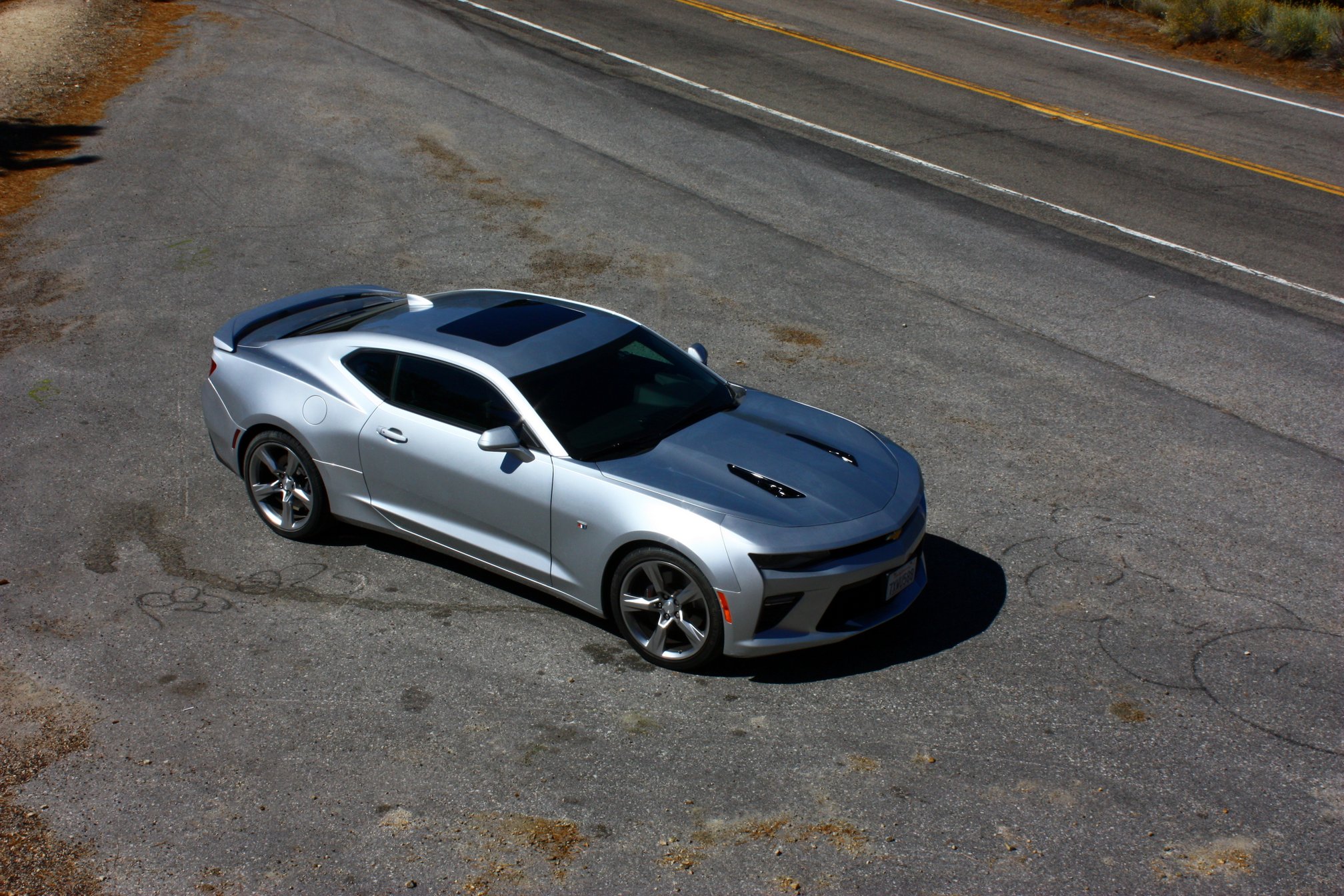
Five dollars at the local Pay-N-Spray car wash removes most of the dirt. It’s time to head home, but there is a mountain range in the way, and I’m not going to waste it.
Angeles Crest is one of LA’s best roads, but traffic slows me to a six- or seven-tenths pace. At this speed, the Camaro SS is not that rewarding. The car feels heavy and wide, the exhaust note does not fully bloom, and the transmission gets in the way of my fun. This is not a Porsche 911 to sip and savor at a relaxed pace.
Oh, that pesky transmission! GM’s 8-speed automatic shifts inconsistently and rarely swaps gears with the sharpness of a ZF 8-speed. It performs best on full-throttle upshifts at ~6,000 rpm, where the autobox bangs home changes with a rewarding pop. (This is the only time the exhaust pops and crackles.) In all other scenarios, the shifts are slurred, like those from slushboxes transmissions of yore. Unpredictably some changes are accompanied by a cut in engine power. Equally frustrating is that the GM 8-speed will deny downshifts even when there are sufficient revs to complete the change. If the downshift would cause the engine to rev to 5,500 rpm or higher, the shift will be denied. It makes no sense in a car with a 6,500 rpm redline.
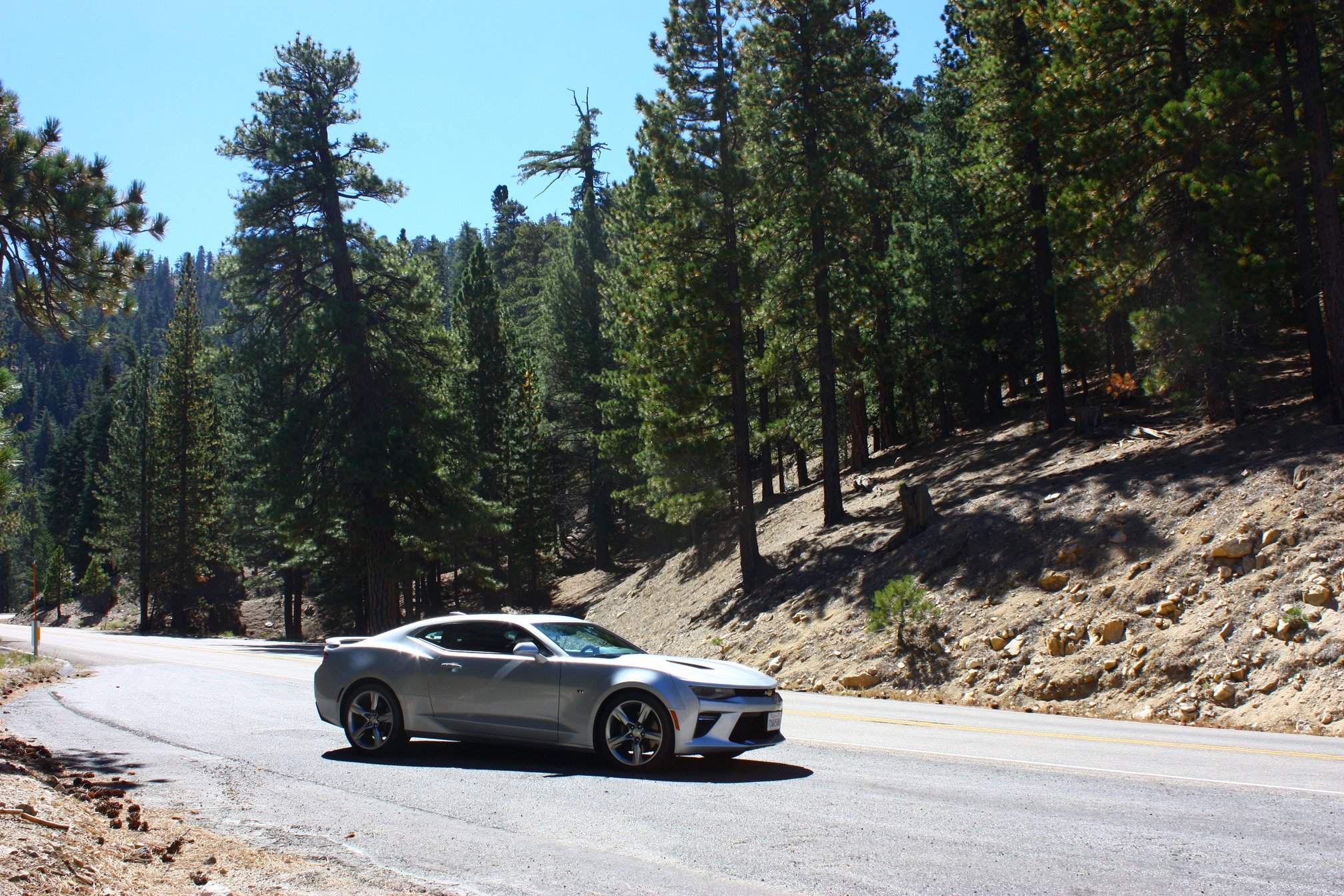
Driven at eight- or nine-tenths, my feelings for the car improve. The Camaro slices and dices through the corners with the precision befitting of a Top Chef challenger, if not a John Hopkins surgeon. The vehicle’s weight is felt in the corners, but the grip is impressive, and understeer never rears its ugly head. Magically, the rear differential always has a little more rotation to pull out of its sleeve when I pass the apex and roll into the throttle.
The chassis’s poise and control are well matched to the engine’s grunt and growl. The two make a lovely couple. This is the Camaro SS’s base suspension, yet GM has nailed the performance/comfort balance. Bravo! The only thing I’d change is I’d tune out some chop from the ride. (Would swapping out the run-flats quell the chop?)
I don’t have a single bad thing to say about the brakes. The stability control is equally flawless, leaving me plenty of leash to play yet still providing a safety net. The steering is one of the better electronically-assisted systems I’ve used. Yes, it’s low on road texture, but the pace, weighting, and precision are spot on. I come out of the mountains glowing with admiration for the Camaro SS. My E90 M3 would not have matched the Camaro for fun or pace over the Crest.
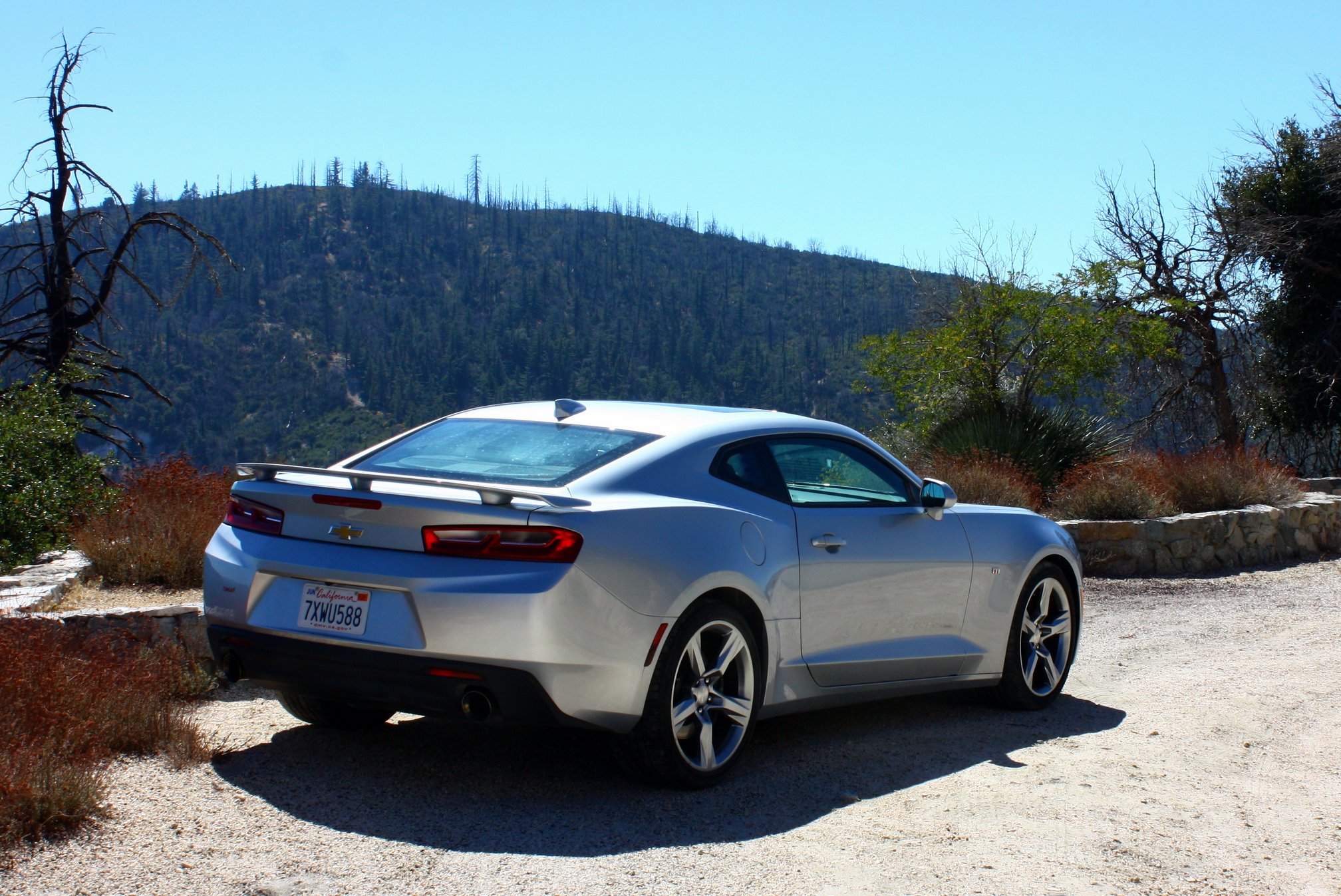
Back at home, I try to do the impossible: take my family of three out for dinner in the Camaro. My daughter’s car seat fits snugly on the claustrophobic rear bench. She has a stadium seating view out the front windshield, but the CD-sized side window leaves her hardly side view. Still, she reports being comfortable in the silver car.
My wife is less comfortable. Her seat is almost entirely forward and very upright to make space for the little feet behind her. Her legs aren’t too cramped—there is plenty of room under the dash—but the forward-tilting headrest cranes her neck uncomfortably. (I over-reclined my seat to compensate for the aggressive headrest.) She scores the Camaro 4-out-of-10 for comfort, but we manage the thirty-minute trip to the restaurant without tears.
The bigger challenge is getting my daughter in and out of her child seat. The Camaro’s doors are too long to fully open in tight parking lots. We do a dance of squeezing into the slim door opening, folding the front seat forward, helping the kiddo climb into the rear footwell, contorting to lift her into her car seat, and finally buckling her harnesses. For the committed car enthusiast, the process is workable; everyone else would go insane repeating the ritual six times a day.
Driving solo in town, the Camaro SS’s punchy engine and lenient traction control make me want to misbehave. It’s so tempting to get squiggly at every intersection. Unfortunately, if I stop driving like a miscreant, the fun mostly disappears. The SS has the downside of a rough ride, without the upsides of great road feel and mechanical feedback. The restricted visibility makes parking and merging harder. And the engine noise is good, but not spine-tinglingly so. I suspect I’d enjoy the SS more in town if it had the optional dual-mode exhaust and a crisp manual transmission.
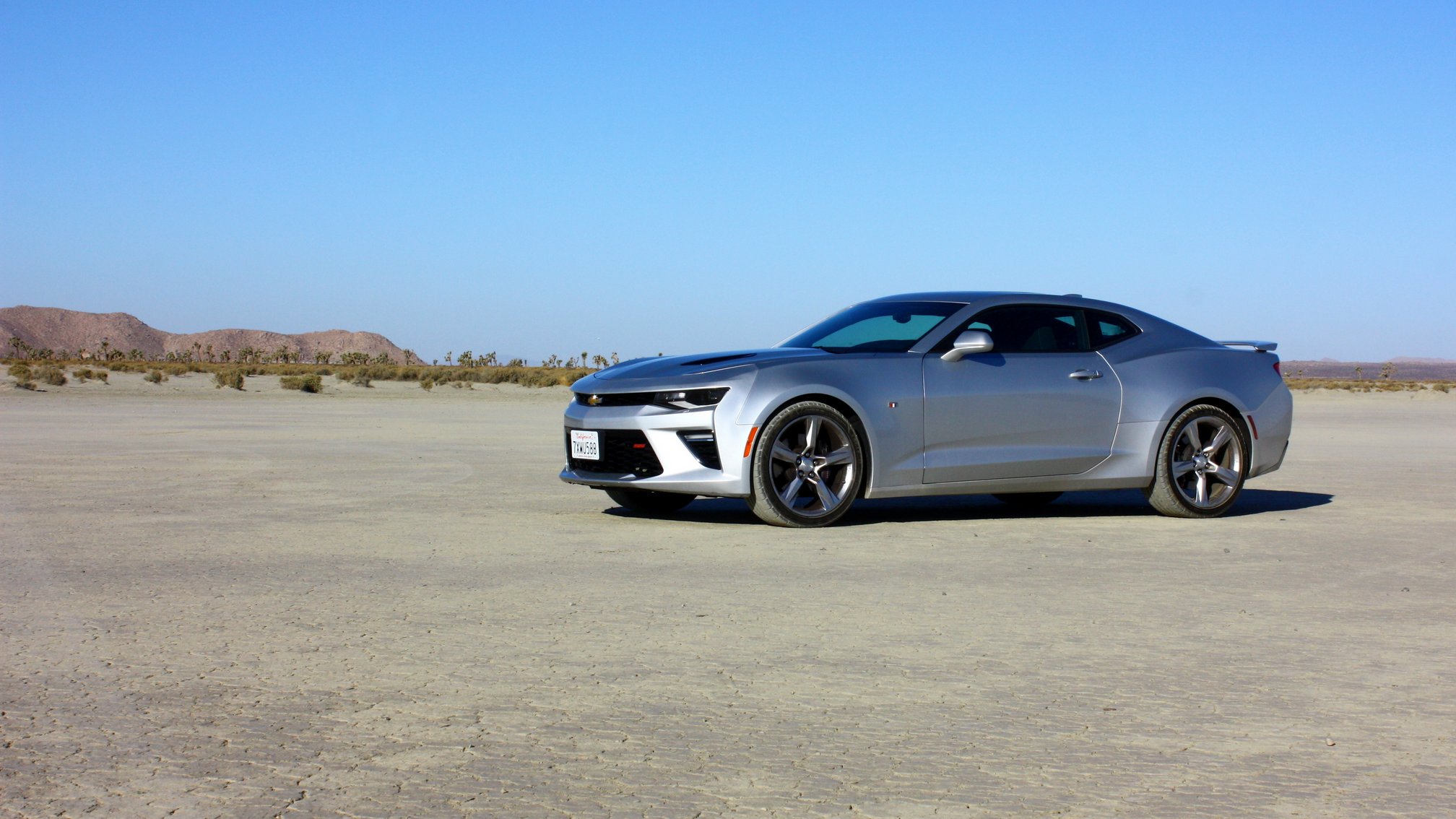
Still, give in to your inner bad-boy, and the Camaro delivers. I’ve logged 300 miles in the SS, and I want more. More 0-60 mph sprints, more VMAX runs, more drifting, more hard cornering, more speed, and more noise. When can I get this car on a track or autocross? For $38,000, I can’t think of a better way to misbehave.
More—Still a Charm
Three months later, I have another day with General Motors’ finest car. Fetch the keys and beeline for El Mirage.
El Mirage is a little different this time around. It has rained and dried since I was here last. The seams in the cracked earth have been filled, and the mid-lake undulations that shortened my original high-speed runs are now smooth. There is also a strong wind blowing across the surface, making eastbound runs significantly faster than westbound ones.
Aided by the tailwinds and the elongated speedway, I easily smash my 150 mph top-speed record. I mark +170 mph repeatedly before ultimately notching 181 mph. (Clearly, the car magazines were mistaken when they published the Camaro SS’s top speed as governed to 165 mph.) On dirt, the Camaro takes 25 seconds to accelerate to 150 mph, then another long 25 seconds—and 1.5 miles—to crawl through sixth gear to 180 mph. The main challenge in hitting 180 mph is making sure I am aligned with the wind; it’s not much fun to fight crosswinds while doing triple digits on the lake. (My runs into the wind struggle to breach 150 mph.)
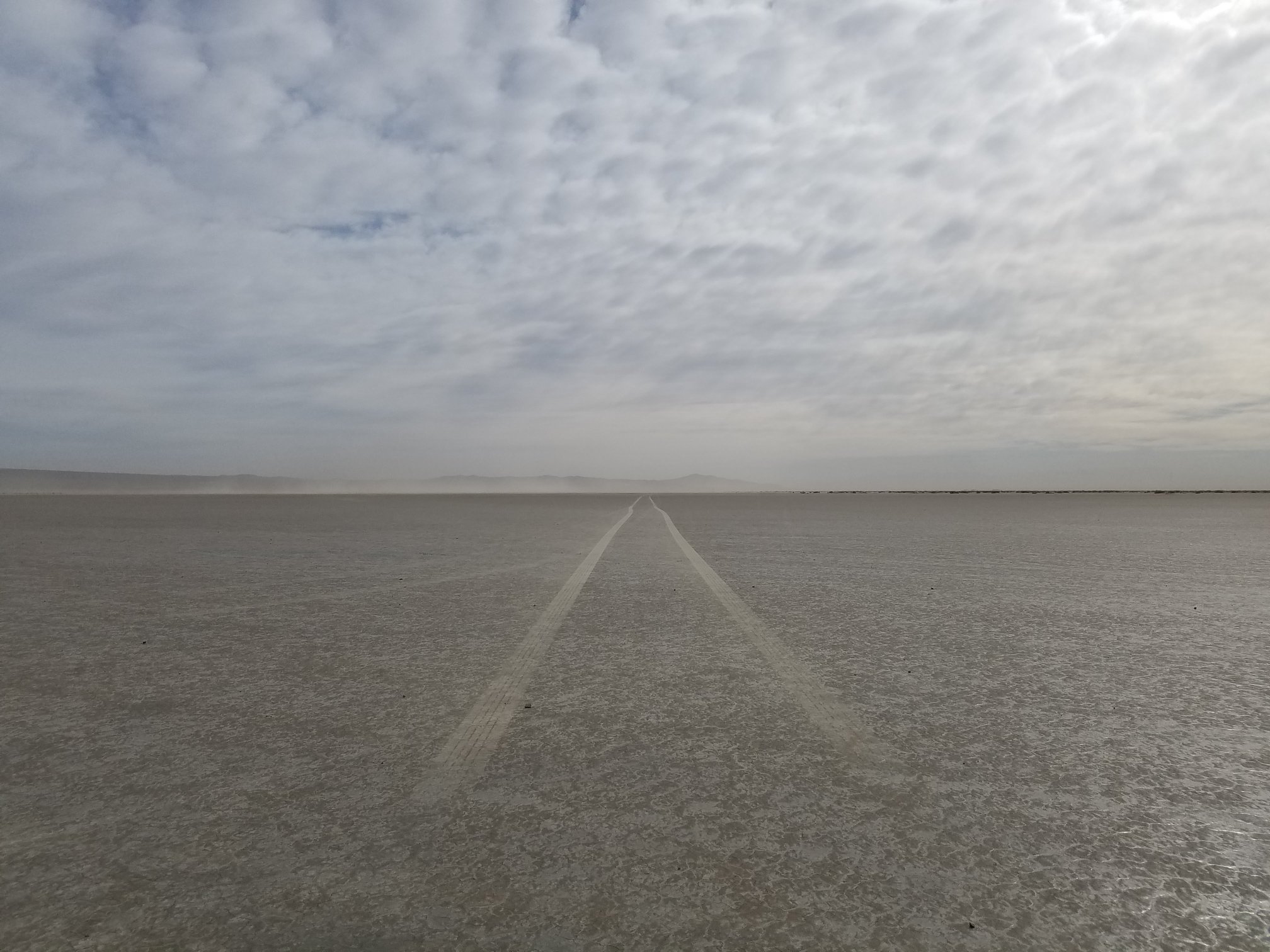
More than satisfied with my VMAX, I find a secluded area (away from the lakebed speedway) for drift practice. Large drifty donuts come easily, but I’m unimpressive at linking drifts together around my makeshift course. The car is not at fault; all the blame lies on my lack of skill. With effort and practice, I manage to repeatedly transition from the initial drift left to the pivot right around the second marker but inevitably spin when attempting to link a third drift. My drifting also lacks precision. I can’t get within 10 feet of a target on the ground!
Even on a blustery day like today, El Mirage is a magical place. Its surreal landscape is enhanced by the speckled cloud cover, and the freedom of limitless speed and cheap drifting (no tire wear!) make it unlike anywhere else in America.
Having deposited five dollars and copious heaps of dirt at the local car wash, I whip the—now shiny—Camaro SS through the canyons. The SS scorches Big Pines Road’s twisting tarmac with the speed and agility of a sidewinder missile chasing a juking MiG. The SS’s grip, grunt and composure are incredibly impressive; the car blitzes the straights, turns on a dime, and never hints at understeer. The supreme brakes bolster my confidence, as does the unflappable chassis, which is unperturbed by bumps and undulations. The only fly in the ointment is the lazy transmission: It knows a good upshift but never aces a downshift.
(I’d also like the steering to be a smidge little lighter, to help the Camaro feel a bit more fleet-footed.)
When I try the Camaro on the tighter tarmac of Little Tujunga Canyon, the magic falls apart. The Camaro feels too wide to keep in the tight lanes, and the road’s tightest flick-flacks challenge the Camaro’s eagerness to change direction. Little Tujunga also requires frequent gear changes, highlighting the Camaro’s weak transmission.
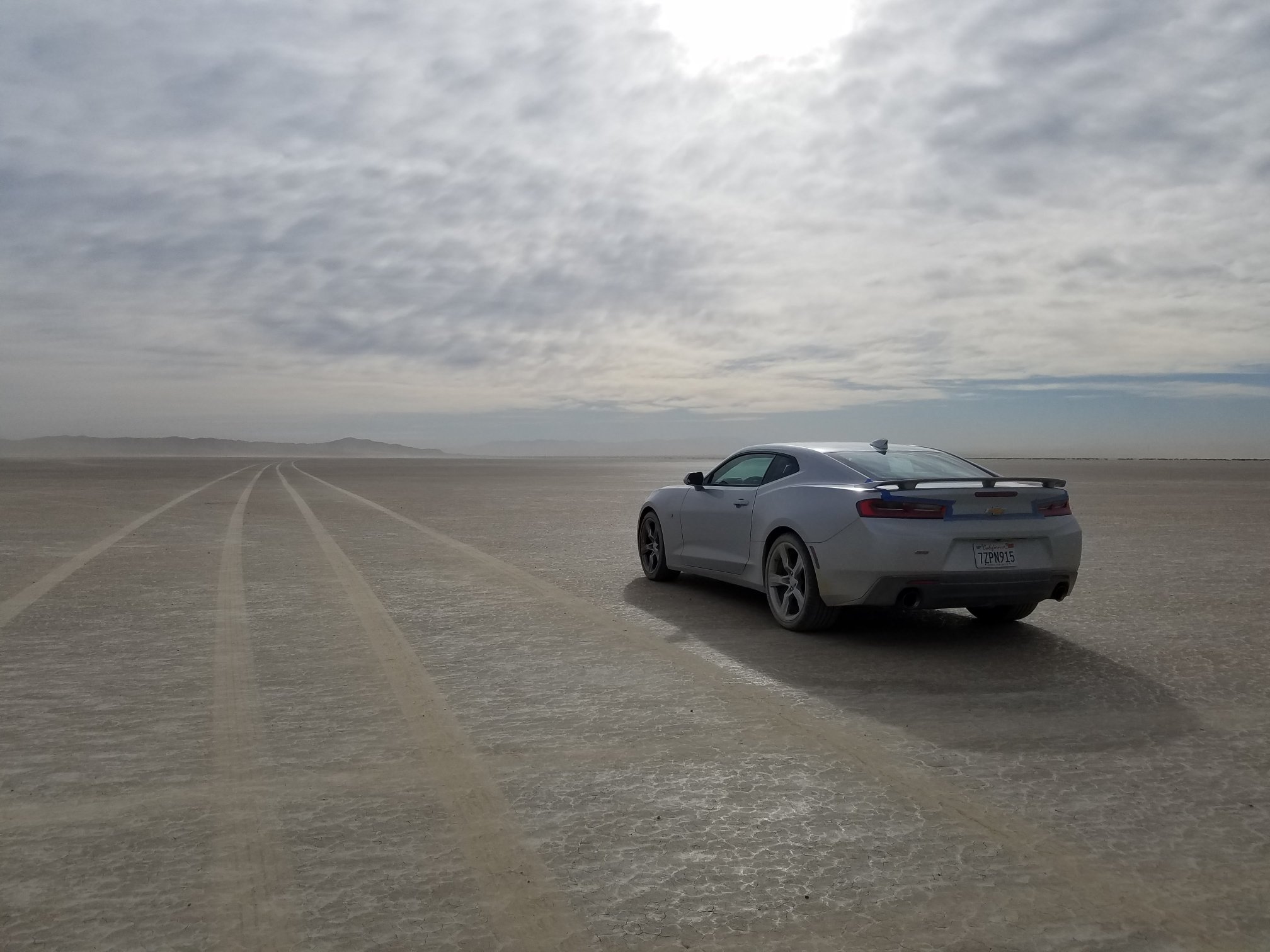
The Camaro SS is still the car I fell in love with a year ago. The marriage GM’s vicious LT1 engine to its exceedingly-competent Alpha platform produced a fun and tractable sports car. I wouldn’t dissuade anyone from purchasing a Camaro SS, and in fact, I might just attempt to talk you into one!

