
I’m driving BMW’s latest. “The latest what?” you wonder. The latest marketing-driven snafu is what most hardcore Bimmerphiles would say. You see, the BMW X1 (chassis code F48) is BMW’s first front-wheel-drive platform ever. This breaks the rule that BMWs are RWD driver’s cars at the core and threatens to condemn the X1 as the most pedestrian BMW ever.
(My X1 is a dealer loaner: Another warranty claim on the E90 M3 is underway. Apparently, these claims adhere to a quarterly schedule.)
Yet, I find all of this car guy angst a little perplexing because this same cohort loves, loves, loves BMW’s Mini brand, and regularly calls out that purely FWD/AWD lineup as some of the best small driver’s cars on the market. So, why don’t we trust BMW to grace FWD cars with roundels? I have to admit I don’t see the problem with FWD in its more appliance-like vehicles, and the X1 falls squarely in that bucket.
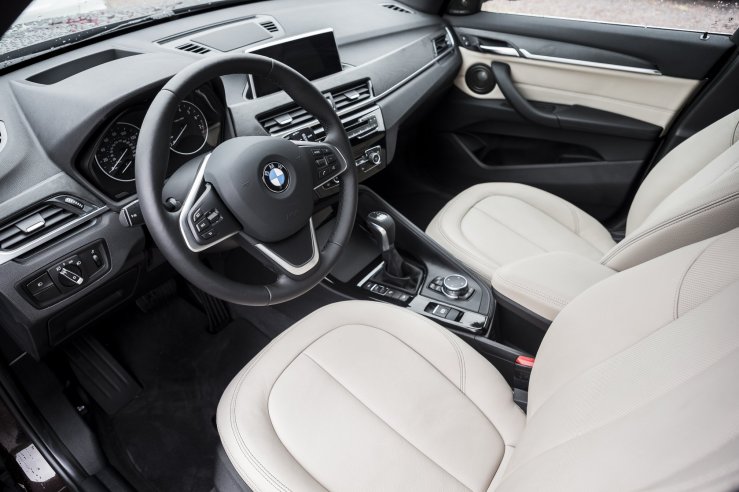
So, what goes into the X1 xDrive28i? The big things are the 2.0L 4-cylinder turbocharged engine that BMW puts in nearly every model (it’s making 228hp here), the equally ubiquitous 8-speed automatic transmission, and xDrive AWD. I’ve had this engine and gearbox combination in several 328i‘s, and the drivetrain is very familiar to me. It strikes me now—as it did before—as refined, responsive, smooth and torquey. It even sounds a little interesting. However, the X1 feels a little less peppy than the 328i. (The SUV moves more pounds with 13hp less.)
I’ve also driven xDrive in the past and found it to be…fine. In the company’s sedans, xDrive tends to tone down the vehicles’ sportiness, making them less eager to rotate under power and more likely to plow. I’ve never driven the FWD X1, so I cannot really say if xDrive is an asset or detriment in the littlest SAV (Sports Activity Vehicle—BMW’s dumb marketing term for its SUVs), but I can at least report that the AWD system banishes torque steer.
The two most useless options I can imagine for Los Angeles cars are heated seats and AWD. And these are exactly the options that are specced on this X1. What was the dealer thinking? Base BMWs tend to be bland, cheap feeling, and floppy, not the paragons of sporting luxury most imagine. The X1’s base interior doesn’t break this mold. Black-on-black everywhere, rough and waxy synthetic seat coverings, and an embarrassingly small iDrive screen (no navigation upgrade on this vehicle) are the worst of it. On the bright side, there are smart-looking red accent lights running along the doors, and the steering wheel is nice to hold. Then there are the choices that leave me scratching my head. The car comes equipped with keyless start and an automatic liftgate but no keyless entry. I end up cursing every time I fumble through my pockets for the unlock button on the key fob.
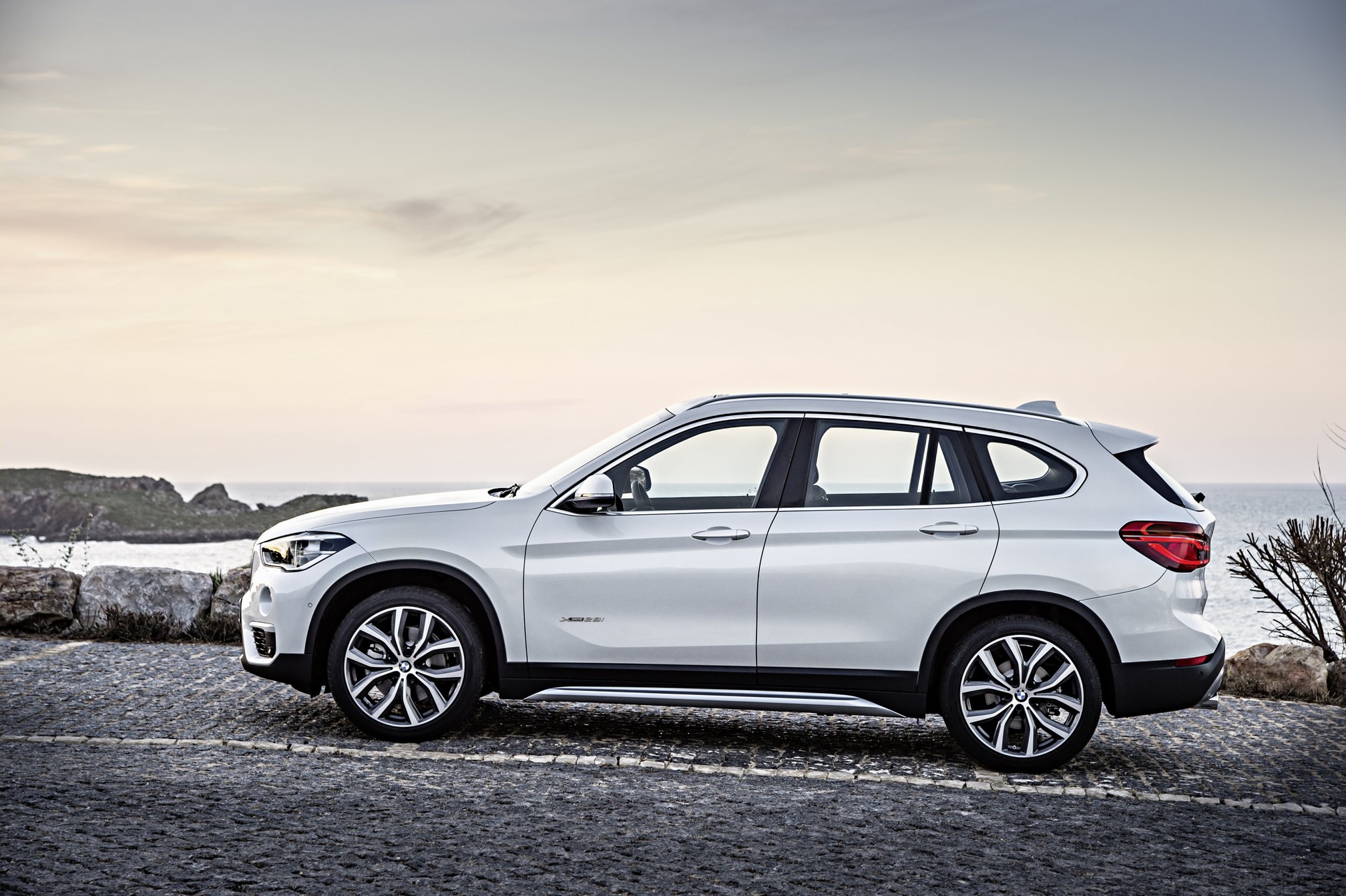
Every time I rent some bargain-basement Renault or Seat in Europe, I am happily impressed by how well they hold the road and can be hustled along a spectacular alpine road. The xDrive28i actually follows in this great tradition of European tuned automobiles; it’s nicely buttoned-down without the wallow I expected from a no-options BMW. (The secret may be the M Sport suspension comes for free on the xDrive model.) This SUV drives with a competent groundedness and swallows impacts with composure and pose. Cornering is precise too, and roll is restrained. I’d put the chassis dynamics on par with the base Ford Focus; you might think that’s a slight, but the Focus is my rental car of choice. I did not bother taking the X1 into the canyons, and I expect the vehicle loses its composure as the limits are reached.
On the road, the front seat passengers will enjoy the ride. The main intrusion into the cabin is a fair amount of tire noise; at least wind and engine noise are subdued. Rear passengers will be a little less comfortable as impacts are felt more strongly from the backb ench. At least the legroom and headroom are good in second class. (At the same time, strangely, my daughter’s rear-facing infant seat does significantly compromise the legroom of the front passenger’s seat.)
Looking out of the X1’s windscreen, I feel (confusingly) elevated above the road and yet buried in the car. With the seat put in its lowest position, the window sill is actually level with my shoulders, giving me the impression of being a kid at the adults’ table. But when I look around at the other drivers, I find my eyes level with people in Subaru Foresters and midsize SUVs. The high shoulder lines in the X1 come from the strong-and-sporting exterior design of the SUV and from a need to put more safety gear between the passengers and the world.
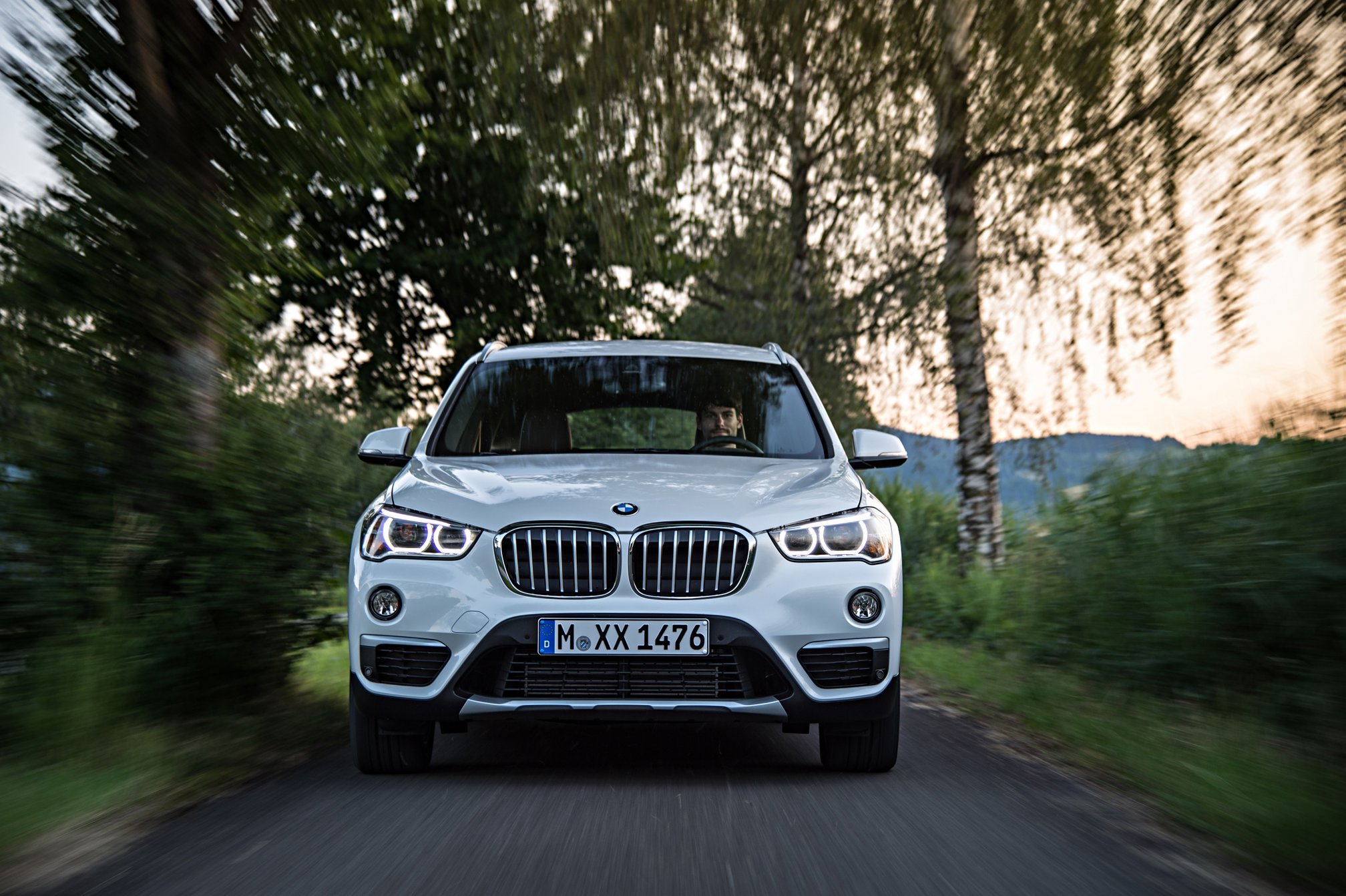
Speaking of the Forester, it seems the X1 is BMW’s interpretation of that best-selling model. Whereas the Forester is filled with light and feels artificially overboosted, the BMW has more growl and grimace to its—dare I say handsome—visage, has a darker cabin and some honest athleticism. But in dimensions and purpose they seem similar; practical vehicles for small families with a penchant for outdoor activities.
I drove the original X1 through Tuscany two years ago. I found it interesting enough to steal away from my trip mates early one morning and whip through the glorious rolling countryside. I admit that some of my enthusiasm came from flogging a RWD diesel manual BMW X1 in a foreign—and fetching—land. Compared to the steed from that romantic sojourn, the F48 X1 has lost some of its vivacity. I’m not compelled to take the new xDrive28i up any of Malibu’s finest.
For me, the X1 lands directly on that fine line between appliance vehicle and enthusiast ride, neither offending with flaccid blandness nor impressing with abundant spunk, vim and vigor. If forced to buy an SUV of this class (only she-who-must-be-obeyed could force that situation), I’d cross-shop it against the Mazda CX-5 and Porsche Macan, and then probably buy the Porsche if the budget allowed. But the X1 is still competent enough to be considered.
 Mike's Steering Column