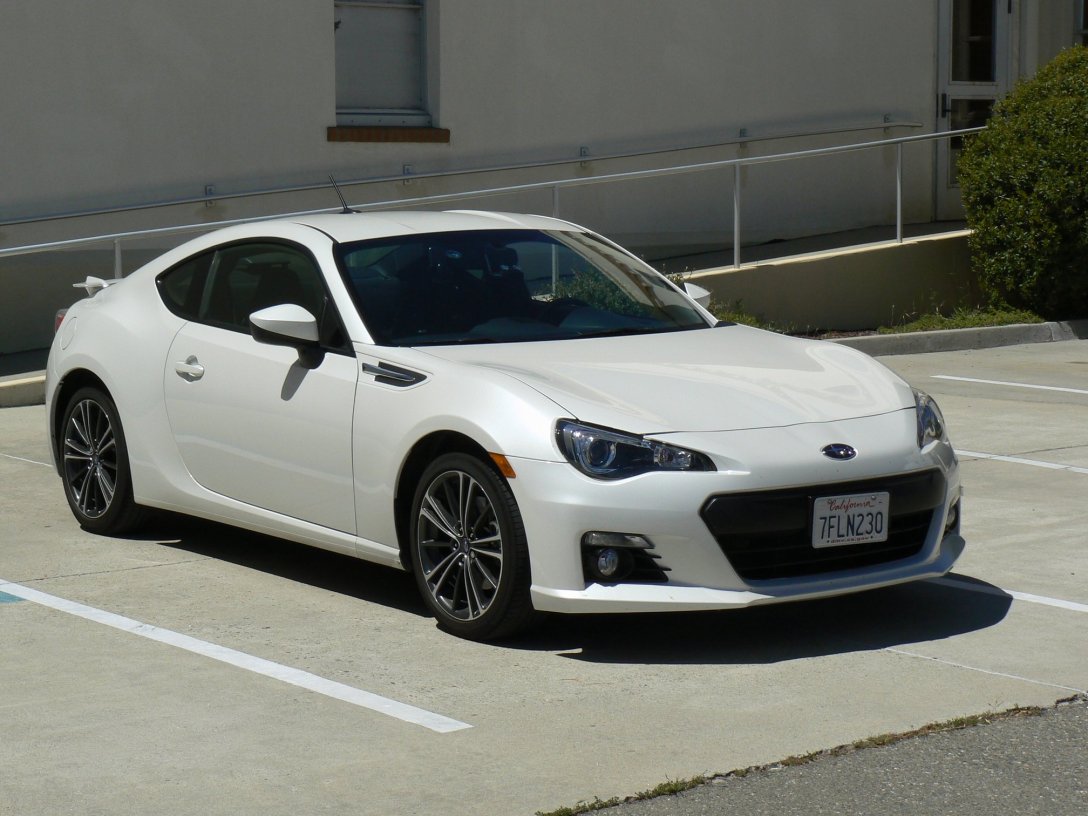
The Subaru BRZ and Scion FR-S have been a hot discussion topic for enthusiasts ever since their launch. Priced around $25k new, these Japanese twins are the most compelling entry-level RWD sports cars today. Lauded for providing a pure driving experience, I’d been searching for my chance to drive an FR-S or BRZ for quite some time. Now the keys are in my pocket, and I am about to experience the Subaru BRZ for myself.
My white 2014 BRZ is equipped with a six-speed manual transmission; my only requirement for my first BRZ/FR-S drive. The car is well kept with only 18,000 miles on the odometer and seems to be holding up alright even as a rental. Yes, there are some scuffs on the interior plastics, and some prior renter curbed a wheel, but otherwise, the car looks shiny and fresh. I adjust the seat, mirrors and steering wheel to my needs, start the engine and then head out onto city streets.
I have 20 minutes of driving city surface streets and highways to get to the twisty mountain roads where I plan to stretch the BRZ’s legs. I take this time to acclimatize to the cabin and driving controls. The BRZ’s seats are nicely and deeply bolstered, though I think they could do with a bit more lumbar support. (The lack of lumbar never became an issue in my three hours of driving.) The seats are covered in grippy Alcantara faux-suede that feels well suited to holding my butt in place during aggressive cornering. The cushioning under said butt is a bit firm but not uncomfortable.
Gripping the BRZ’s steering wheel in my hands, I find it quite different from the squishy, fat-rimmed wheel I am accustomed to in my 2011 E90 BMW M3. The BRZ’s wheel is thin and firm but of good diameter and shape. The wheel’s leather is perforated at the 9 and 3 grips where I keep my hands while driving; I assume this provides more grip for sweaty-hands during white knuckle driving.
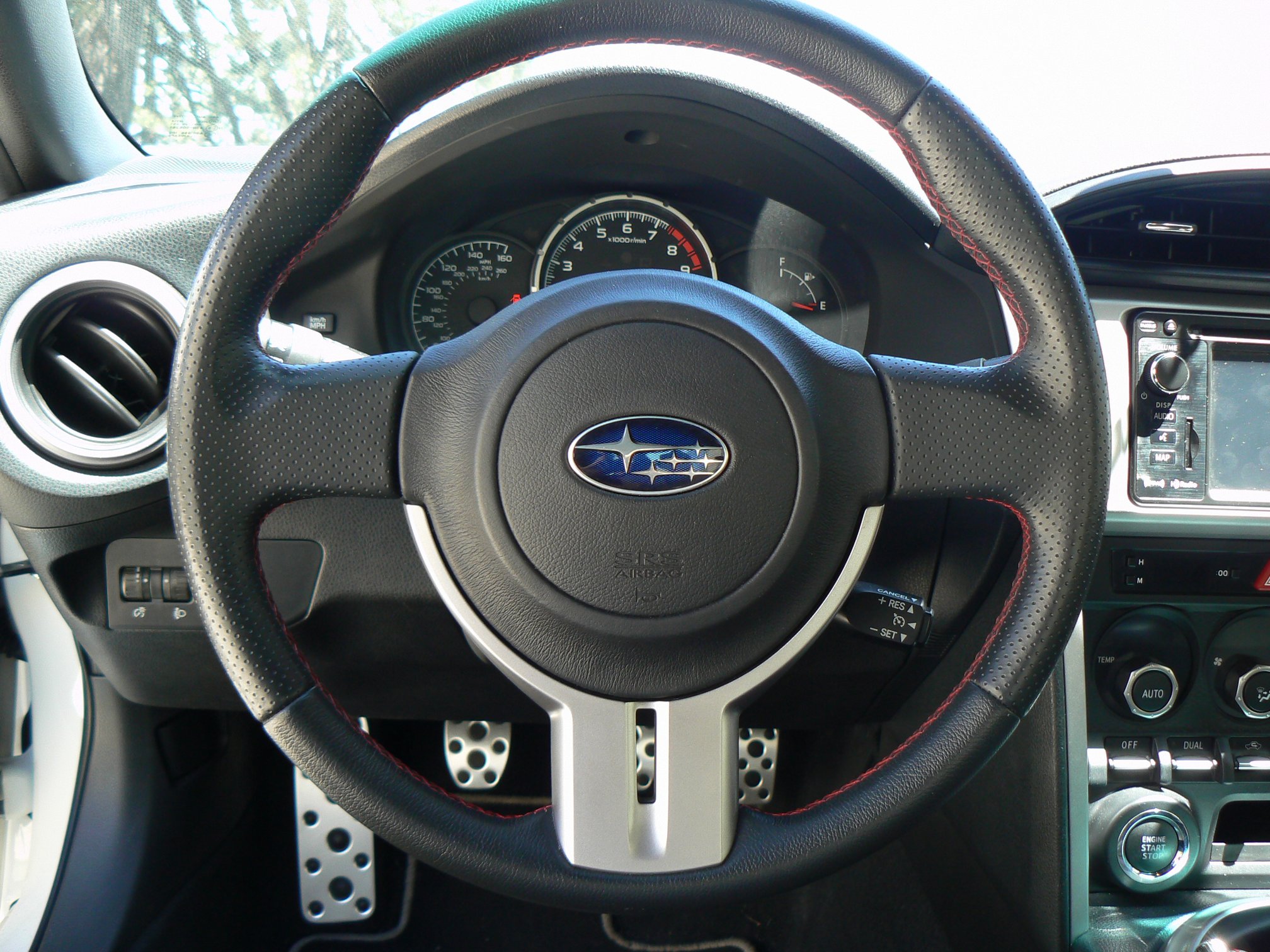
The six-speed manual shifter also feels good in my hand. Its throws are on the shortish side, the spacing of the gates is good, and the feel is positive and mechanical. It is a very nice unit to row, and my shifts land in the right gear without any surprises.
As I head towards the mountain, the main driving interface I am struggling with is the clutch. The pedal throw is short, and engagement happens quickly; I have a difficult time smoothly engaging first. As a coping mechanism, I fall into using too many revs when accelerating away from a standstill.
Even once I am rolling, my shift timing is slightly off, and I am lightly jostling the car as I move up through the gears. I keep practicing. The key is to rush the upshifts so the engine revs will match the next gear ratio. Either the BRZ has a very close ratio gear set, or the engine is dropping revs faster than I expect while the transmission is disengaged. Regardless, rushing the gear changes keeps the ride smooth.
On San Jose’s rumpled surface streets and highways, the BRZ does a lot of pitching and rolling. Cars with more compliant suspension would have smothered these same bumps, but the BRZ is a budget sports car, and one should expect a stiffer ride. I am a prior Evo IX MR owner, and so I pride myself on being a little hardcore, but the BRZ’s judders and jitters would get tiring for daily driving. Is the BRZ’s suspension is actually stiffer than the Evo’s, or have I just gone soft? The Evo certainly has much more body roll than the flat-corning BRZ, so the rally-focused MR probably did have a more compliant ride.
While the media’s main complaint against the BRZ is that it is underpowered, I find plenty of off-the-line torque for city use. I am really only using the first half of the throttle as I dart between stoplights. Only when I approach the highway and floor the gas for the onramp do I want more power. The last half of the throttle has little in reserve.
I had arrived at the BRZ in another rental, a 2015 Ford Fiesta, which provided a much-exaggerated example of how throttle-mapping can affect the feel of a car. The Fiesta has an over-amplified response to throttle tip-in, and little inputs make the car race forward. (I think this is an attempt by Ford to make the 120 hp car feel peppier than it really is.) In contrast, the BRZ’s throttle map is linear, and I have great control over the power. The throttle behavior reminds me of my M3’s throttle (in comfort mode, not the M3’s amped-up sports mode) as both cars have long pedals attached to rev-loving NA engines.
I finally make it to my target tarmac for the day: Quimby Rd to Highway 130 and the summit of Mt Hamilton. My route starts near sea-level and climbs 4,000 feet in 15 miles to reach Lick Observatory at the mountain’s peak. Quimby Rd is poorly maintained with patches of rumpled pavement polluting the otherwise tasty 1st and 2nd gear hairpins. On the bright side, the BRZ’s chassis is rigid and acts as a solid unit, without flex, over the blemished road. Traction is maintained, and sharp mid-corner impacts fail to throw me off my intended course.
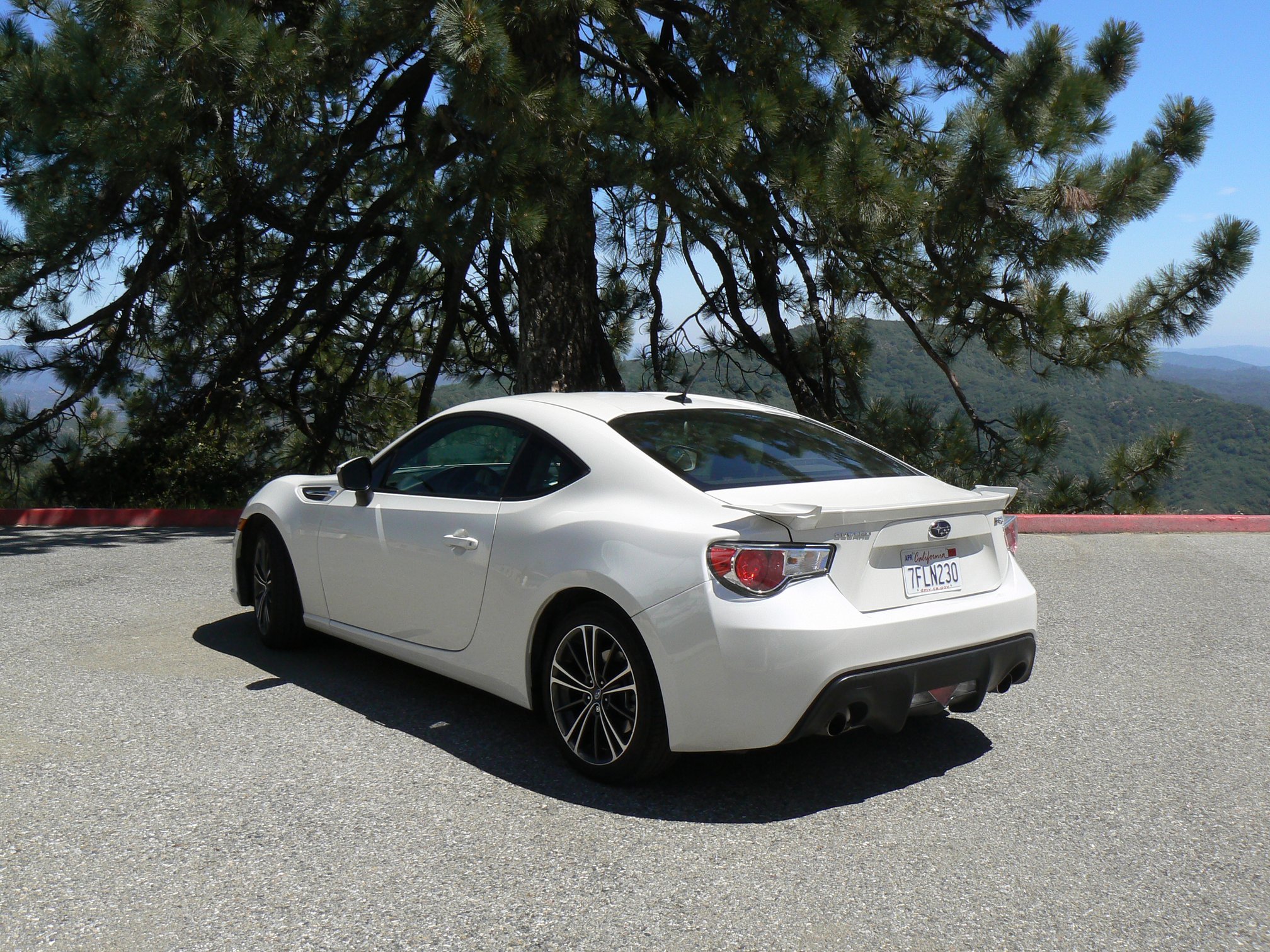
I am up and over Quimby Rd in a flash, and subdivisions and strip malls that previously filled my mirrors have been replaced by golden pastures and green-leaved oaks. I turn onto Mt Hamilton Rd (Highway 130) and head east for Lick Observatory.
Lick Observatory was constructed in an era when horsepower was fueled by hay and carrots rather than gasoline. Mt Hamilton Rd was built to supply the observatory’s construction. Its grade was carefully kept below 6.5% so that the horse-drawn wagons could pull materials to the peak. Being designed for horses, Highway 130’s course is much tighter and twistier than its modern equivalents, and the road becomes comically narrow when it traverses the steepest slopes. Although Caltrans paints a double yellow up the road, nothing wider than a Caterham Seven could fit in the petite lanes in the narrowest sections.
(I last drove Mt Hamilton in my E90 M3 and found that I could not attack the tightest sections of the route as there was no margin for error, and it was too easy to stray into the oncoming lane. The BRZ, by contrast, is the right width for the road and does not feel constrained by the historical engineering.)
I buzz past the entrance to Grant County Park and pick up my pace. Bright spring wildflowers, craggy oak trees, and blowing grasses start to blur out of my side windows. The vistas and landscapes are beautiful, though I wish that I’d been here a few weeks earlier so I could have seen the hills in their late-winter greens rather than their summer browns. (It’s California gold, not brown!) It matters not as I know I have many miles of spaghetti-road joy ahead of me. Some say there are 365 turns en route to the summit; I won’t be counting, but I intend to enjoy them all.
My elevated pace is teasing out the BRZ’s dynamic flavor. The suspension is very good, and I am fully confident in the car’s handling, but I am finding minor demerits at its limits. When I hit a heave or bump on a straightaway, there is the slightest hint of float or bounce from the suspension. It is almost like there is some gummy stretch in the tires’ sidewalls, and rises in the road lift the car up off its feet more than I’d expect. Maybe the car is under-dampened, or perhaps after the suspension reaches its limit, the tire does flex and spring and get taller too? The behavior is not confidence-sapping, just curious. Really, the suspension is doing an admirable job, never taking more than one cycle to contain a bump. It is just that the amplitude of that one stroke is greater than I’d expect and the car is not quite as solidly glued to the ground as I’d like.
Now that I am really getting to explore the limits of the BRZ’s grip and power, I discover my biggest disappointment with the car. It has already been reported ad nauseam, but the BRZ’s weakest link is its engine. What surprises me is that the 2.0L boxer engine’s worst offense is not a lack of power but rather its loud and grating note. I sprint from corner to corner, winding my way up the mountain, repeatedly swinging the tachometer needle at the redline. This is the only way to get the power out of the BRZ’s mill, but as the RPMs increase, the engine sound gets harsher, coarser, more gravelly, and the cabin starts to vibrate with sympathetic rattles. 5k RPM is particularly grimace and wince inducing. I even start to avoid that rev range to save my ears from the assault. There are other companies that can make good sounding four-cylinder engines; how did Subaru fall down on this job? The best compliment I can bestow on the BRZ’s engine note is that it is honest and not in the least bit synthesized; why doesn’t it sound like a WRX or STI, though?
In terms of actual motivation, I am finding the stock 200 hp to be adequate for this tight road. There is enough power and response to shift weight with the gas pedal. The long and linear throttle response makes it easy for me to use the gas to balance the car through the corners. I’ll admit that 200 hp is not enough to provoke oversteer with every jab of the throttle, but it is enough to have my eyes widening as the straightaway ends and the next corner approaches. (The large drop-offs on the right side of the road help here.)
Several hundred turns into my trip, and the BRZ’s steering has me reconsidering my preferences for power-assisted steering systems. The steering systems which I like best have super-quick ratios, lightning-fast turn-in, low effort and high levels of feedback. This tuning philosophy can create a darty car, but when done right, it makes a car feel eager and quick on its feet. For me, the benchmark system is the Mitsubishi Evo IX’s, but current small Fords like the Focus ST manage many of these same characteristics (with less road-feel).
The engineers of the Subaru BRZ’s seem to have a different philosophy than I do on steering effort and response, and they have dialed-in slightly heavier effort. BRZ’s steering is what I’ll call normal lightness on center, but after 5 or 10 degrees, it weights up considerably and becomes heavy. Many enthusiasts think that weighty or heavy steering is sporty steering, and some confuse weight with road-feel and feedback. For me, however, this increased resistance off-center elicits the emotional response that the BRZ is fighting my inputs and resisting yaw. I guess Subaru cannot please everyone! I like the steering’s accuracy and the way I’m able to place the car on the road. The ratio is good and fast, though not so quick that I can get around hairpins without going hand-over-hand. There is a small amount of road texture felt through the wheel, but the steering is not hugely chatty. Gosh, I am picky when it comes to a car’s steering!
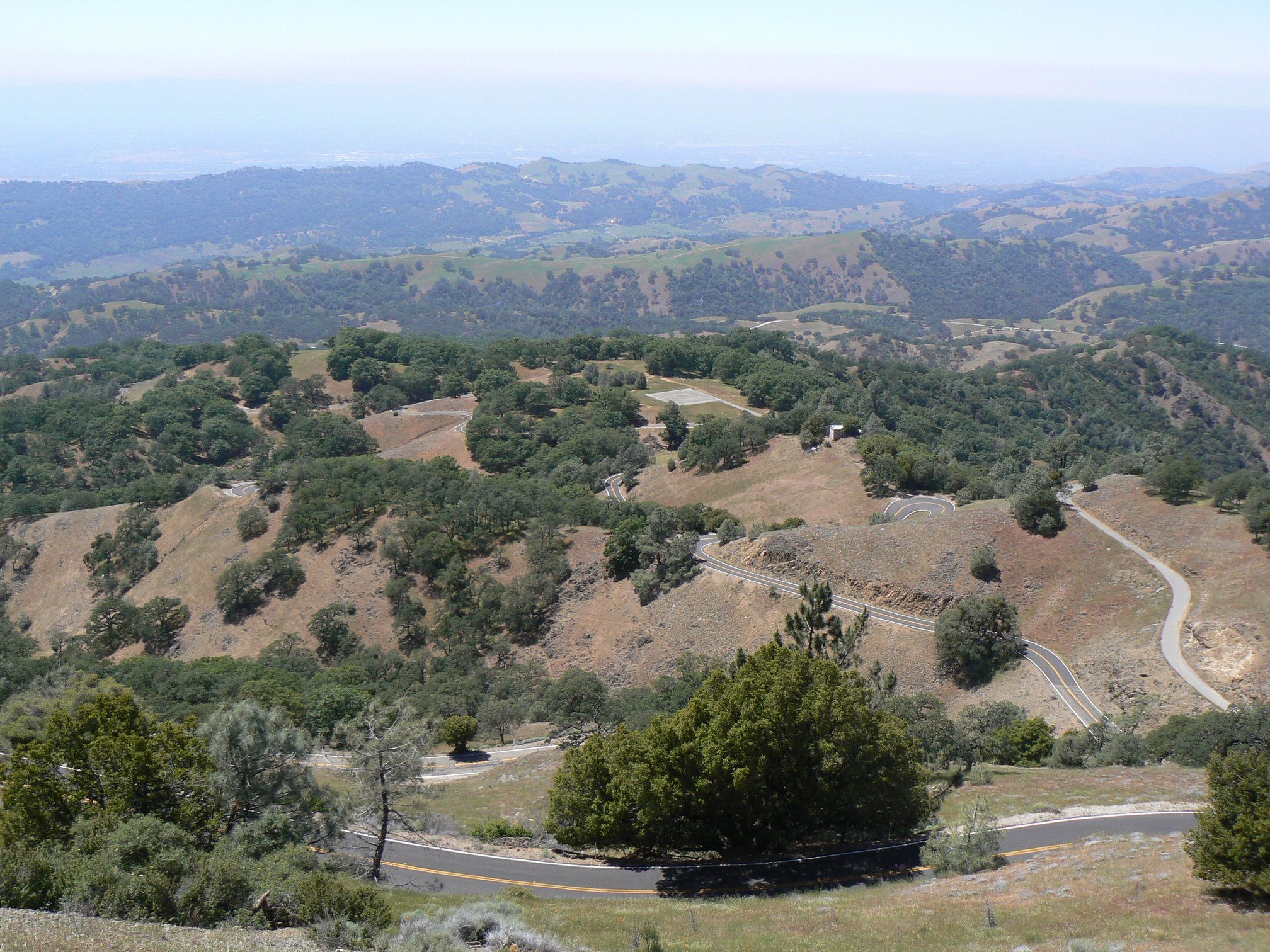
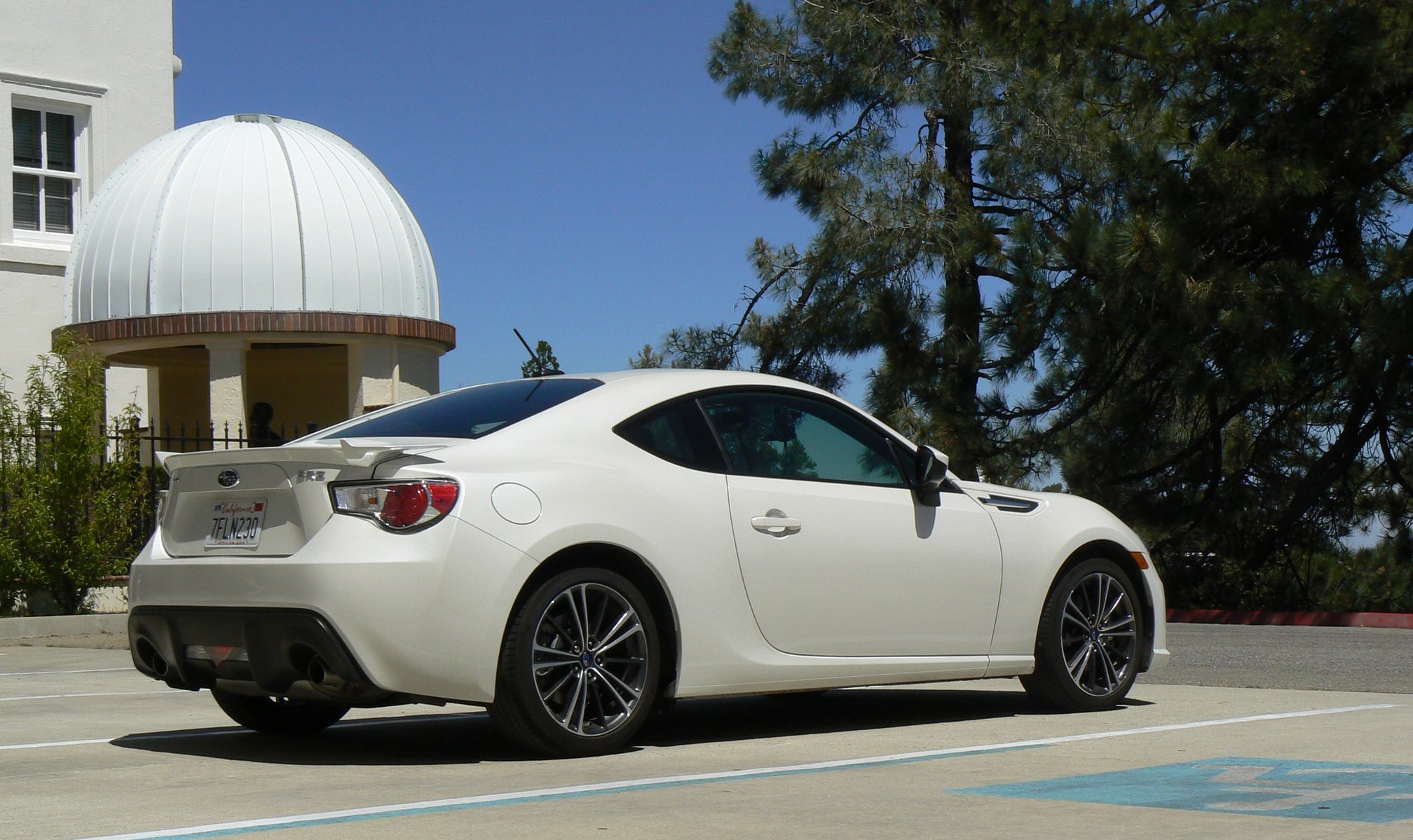
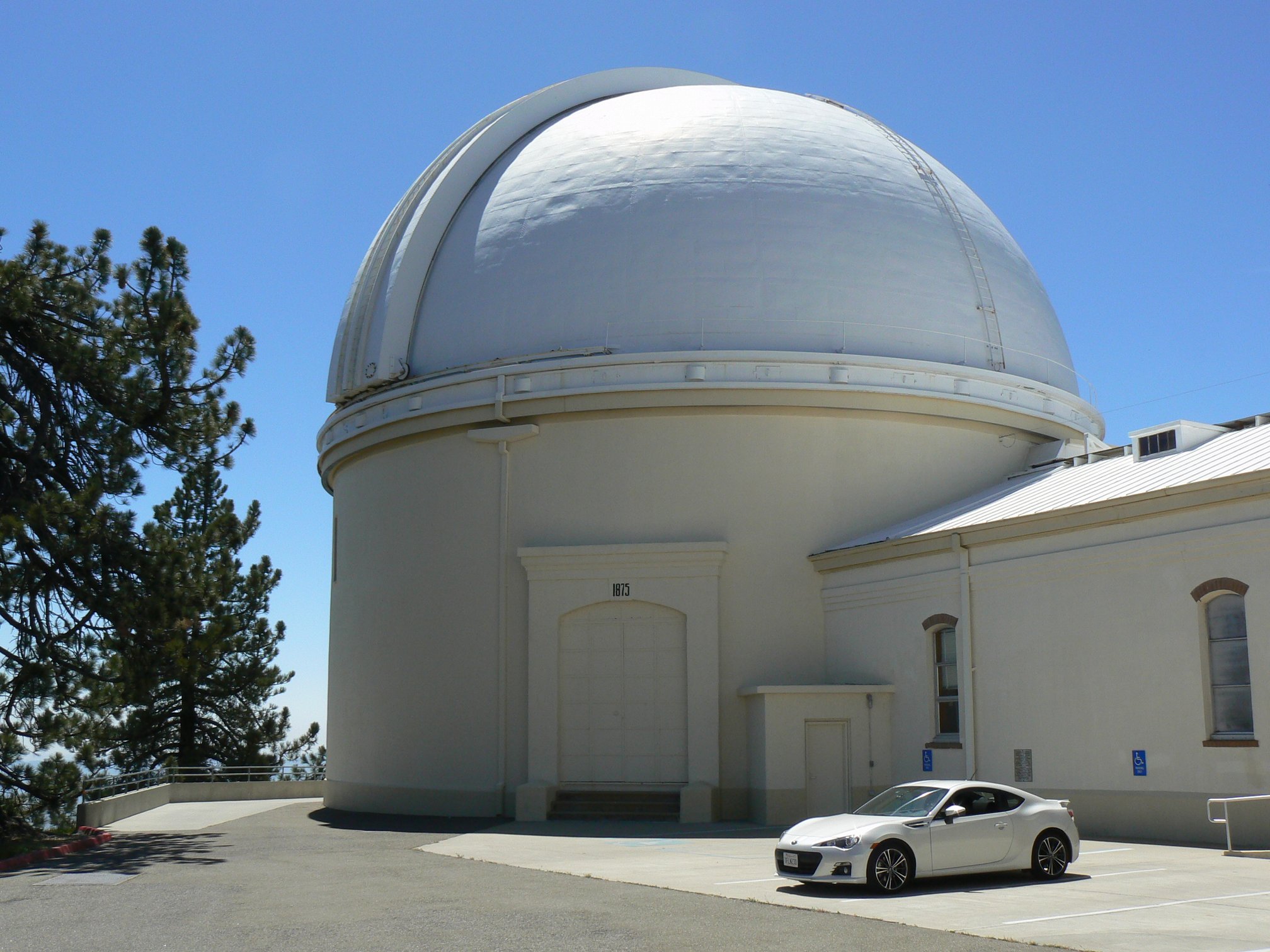
I summit the peak, park at the base of Lick’s largest telescope and climb out of the car. Looking back towards San Jose, I see Highway 130 curving sensuously up Mt Hamilton’s flanks. Small as ants below, I spot other sports cars and motorcycles enjoying this playground. Well, they enjoy the curves until they get stuck behind a Camry or minivan carrying a Silicon Valley family up the peak for the view.
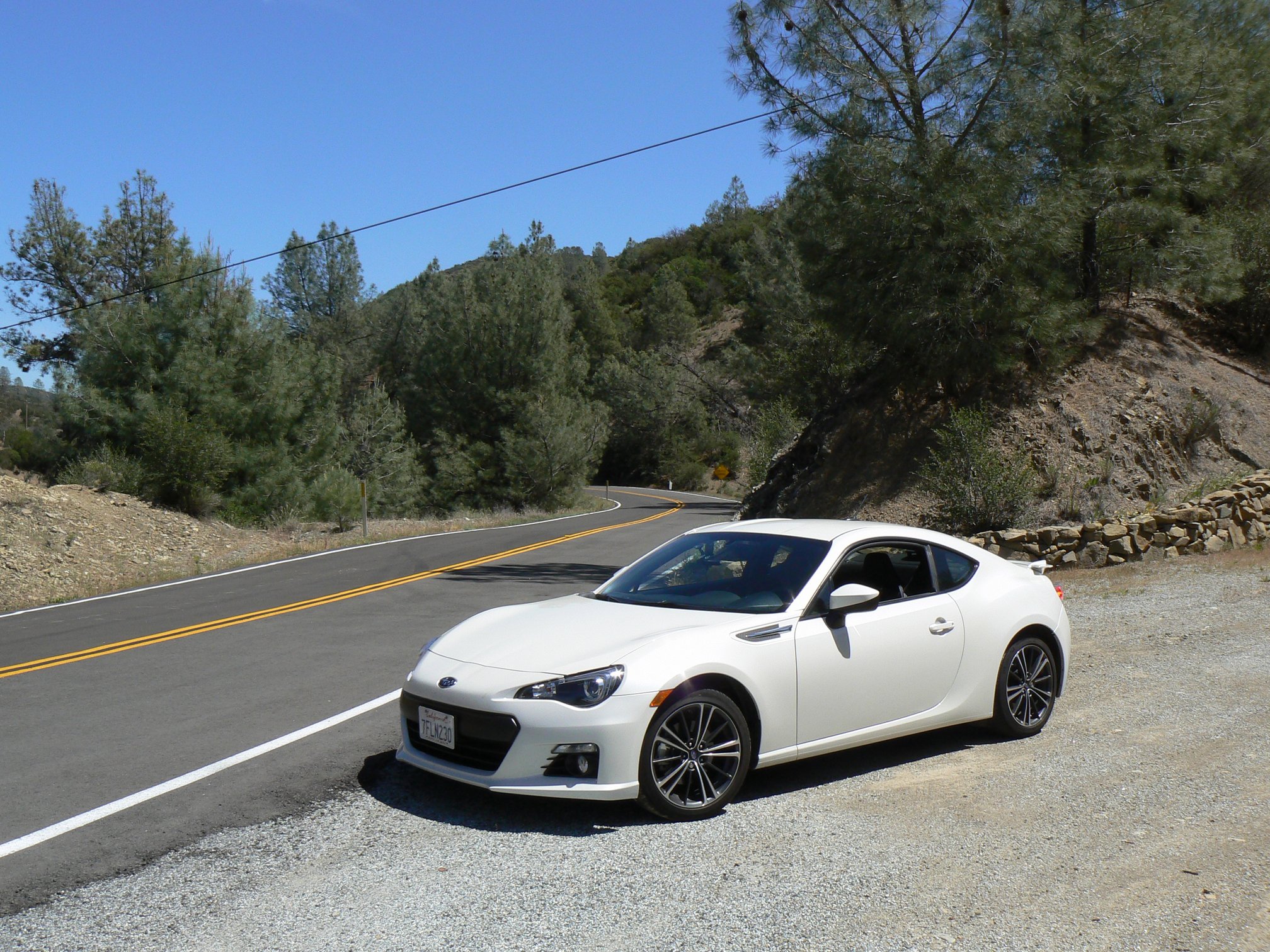
I take a few pictures of the Subaru and admire its design. It is compact and purposeful. From some angles, I see the stance and proportions of an Aston Martin; but the spindly wheels and tall tires ruin this illusion. I like the looks of the BRZ, but I remember being much more impressed when I saw the concept car at the Tokyo Auto Show 6 years ago.
I am excited to be getting back in the car and heading down the east side of Mt Hamilton, where Highway 130 is known as San Antonio Valley Rd. San Antonio Valley Rd is a modern road with full-sized lanes and a steep grade. The backside of Mt Hamilton is less trafficked, so I’ll be able to explore the car more safely. I am particularly looking forward to the half-dozen hairpins that I will soon encounter.
Straight-line braking into one of the first downhill corners, I am surprised to hear the tires squealing underfoot. Today’s focused sports cars are typically shod in summer tires that are so grippy that they never protest during aggressive braking. The 215/45R17 Michelin Primacy HPs on the BRZ are not high-performance summer grade but rather an eco-friendly rubber inherited from the Prius. Charging downhill on low rolling-resistance tires adds a new dimension to my driving experience: fear. The engine (and gravity) brings me into the braking zone at a rate of speed I’m not sure the tires can handle. Thankfully the tires are just crying wolf, and I make the turn—and all subsequent turns—without trouble. I’ve felt fear in braking zones before, but in those cases, it was brake fade that caused my eyes to widen. Today the BRZ’s brakes are not to blame; it is the Primacy tires that leave me unconfident about the BRZ’s ability to arrest its own inertia. The brakes are actually a highlight of the car, very firm and positive, with no dead travel or fade.
It is curious how sometimes the most giggle-inducing aspect of a car can be one of its flaws. In the Focus ST, it was the wide-open throttle torque steer that had me chuckling. The BRZ evokes surprised laughs by how easily its hard tires sing loud and long. The BRZ is the most under-tired sports car I have ever driven! The tires start their howling 8/10ths into their limits and then just get louder and louder as the limit is approached. Around town and up the mountain, I’d been getting lots of chirps and squeaks from the rear tires. Now, driving downhill, it’s the front tires that protest and even push in tight corners. I take this shift from uphill rear-shriek to downhill front-howl to indicate a neutrally balanced chassis; tipping weight onto the car’s nose or tail changes its dynamics.
I begin playing the game of making the tires squeal for as long as possible through a turn. My strategy is to charge into a corner at a fair clip and using braking and turn-in to get the front singing. I’ll then load the car’s side through the length of the corner, hopefully bringing all four tires into harmony. If I have properly put the car at its cornering limits, the rear tires will give the final aria on corner exit when I mash on the throttle and provoke a little tailslide. It requires driver commitment to get that exit slide, as the engine is not powerful enough to step out the tail unless the tires are already loaded.
This is the BRZ’s point of brilliance: On the street, I feel like a hero (though others see me as a menace) by making the tires squeal in nearly every corner. I don’t even have to be going that fast to play this game! Plus, when I get through a corner with sufficient commitment, the oversteer on exit is benign, easily caught. I can drive with the nannies off and still keep the car out of the ditch. Subaru and Toyota have proved the less-is-more axiom by resisting the urge to outdo its budget sports car competition and over-engineer the fun out of the car. (The Mazda Miata might be the only other example of wise restraint when it comes to driving pleasure.)
I pull a U-turn near Isabel Creek and head back up the mountain. Each hairpin becomes a playground: When the BRZ squeals with happiness, I guffaw in delight. I have driven Mt Hamilton in my Evo and M3, but the BRZ is more fun. The Evo is too stuck to the road to be playful; the M3 is too big for the narrow tarmac. The Subaru has neither flaw and eats up the curves.
On the way back to San Jose, I re-savor 450 of Highway 130’s 365 turns. (The extra 85 turns come from me doubling back and repeating my favorite segment.) Has the BRZ lived up to the media hype? Yes, it has. Yet I don’t think it is a car for me.
The BRZ is a wonderful and willing partner and a perfect match for exploring Mt Hamilton on a sunny day, but the car and I don’t always see eye-to-eye on how things should be done. Reasonable people could disagree about the feel of the BRZ’s steering—I think there is room for improvement—but I am really disappointed with the BRZ’s song, its busy ride, and its noisy cabin. For a Sunday afternoon blast, I can overlook these faults, but for a fun play-toy that will be used daily, I’ll continue my search for my next ride.
 Mike's Steering Column