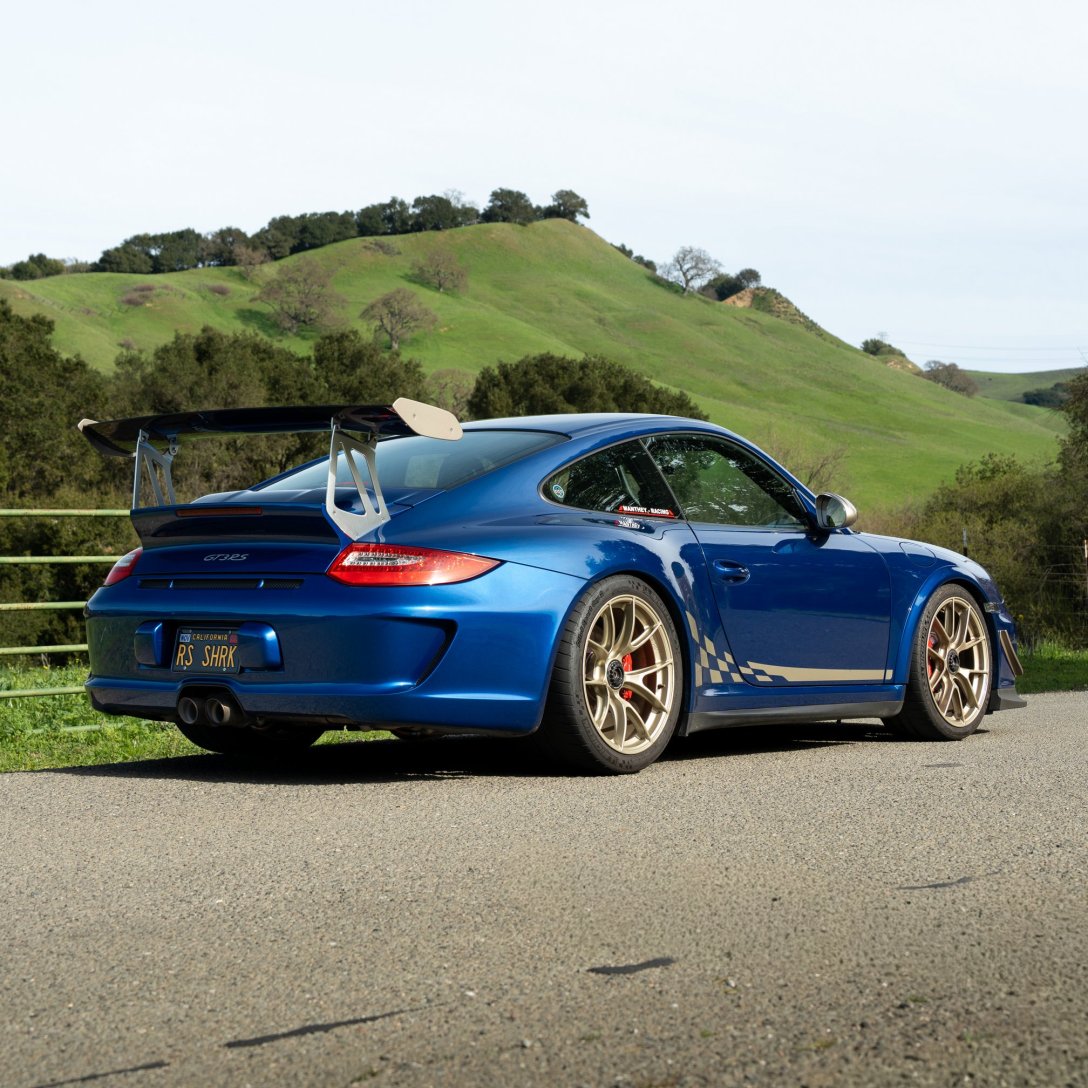
I’m lost, I’m simply lost. I’ve just driven a Porsche 911 (997.2) GT3 RS, and my life will never be the same.
Let’s back up.
It’s Monday afternoon, and I’ve snuck out from work to meet Steve and his 911 GT3 RS. I’ve been looking forward to this drive for a week, yet somehow I feel guilty, low-spirited, and lethargic. Should I have planned this drive on a weekend? Should I do some calisthenics to jump-start my mood? I’m still pondering these questions when Steve arrives. Too late.
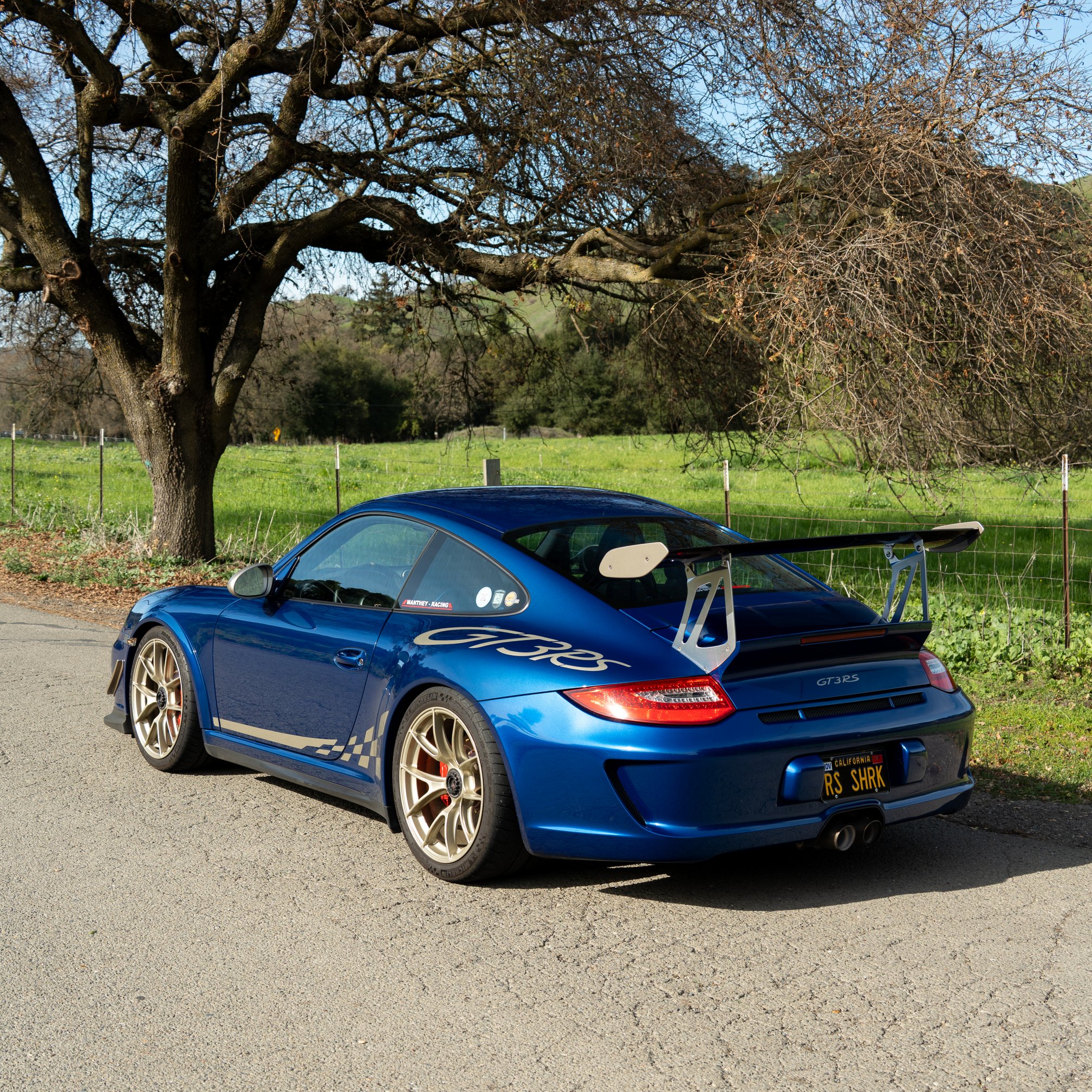
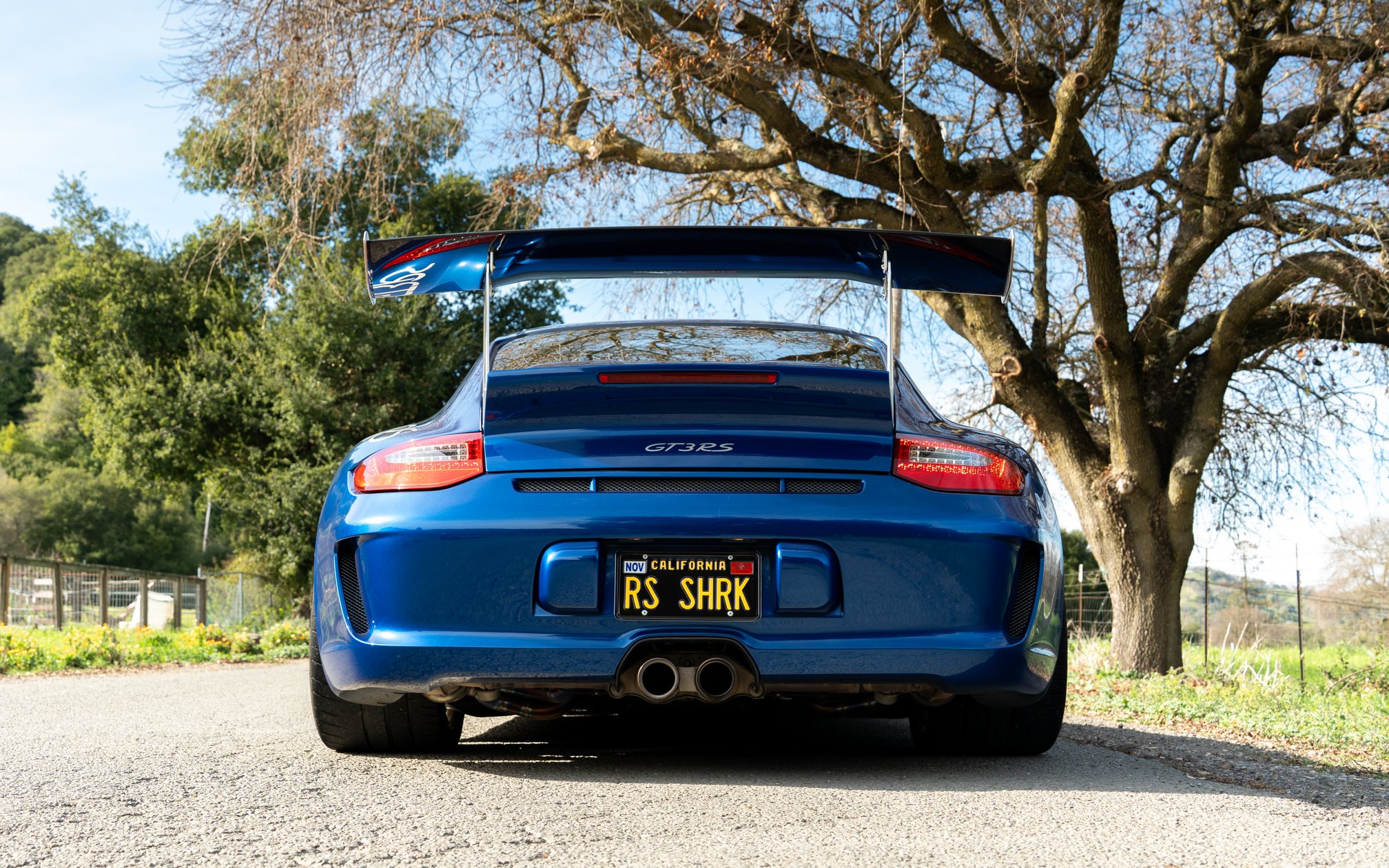
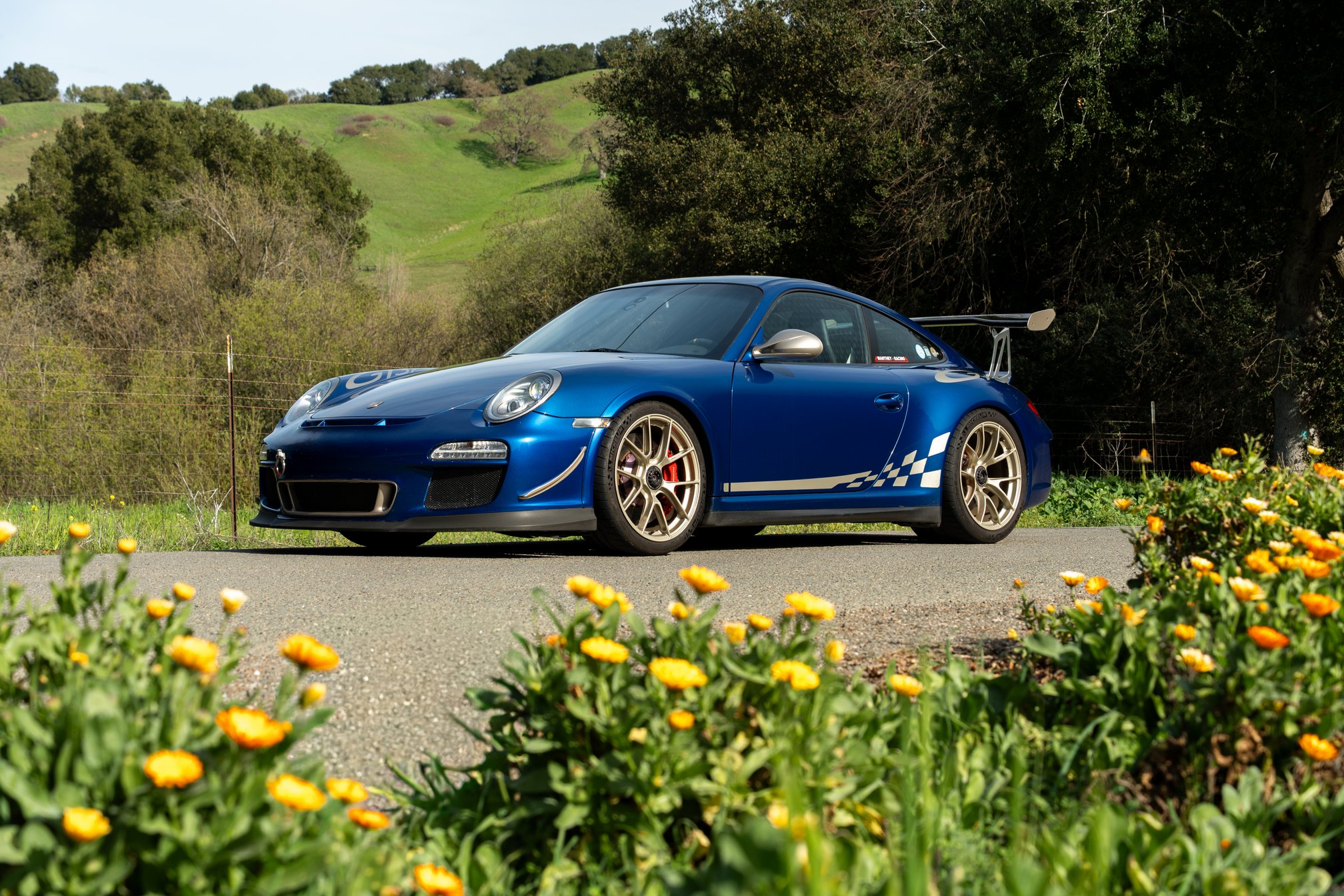
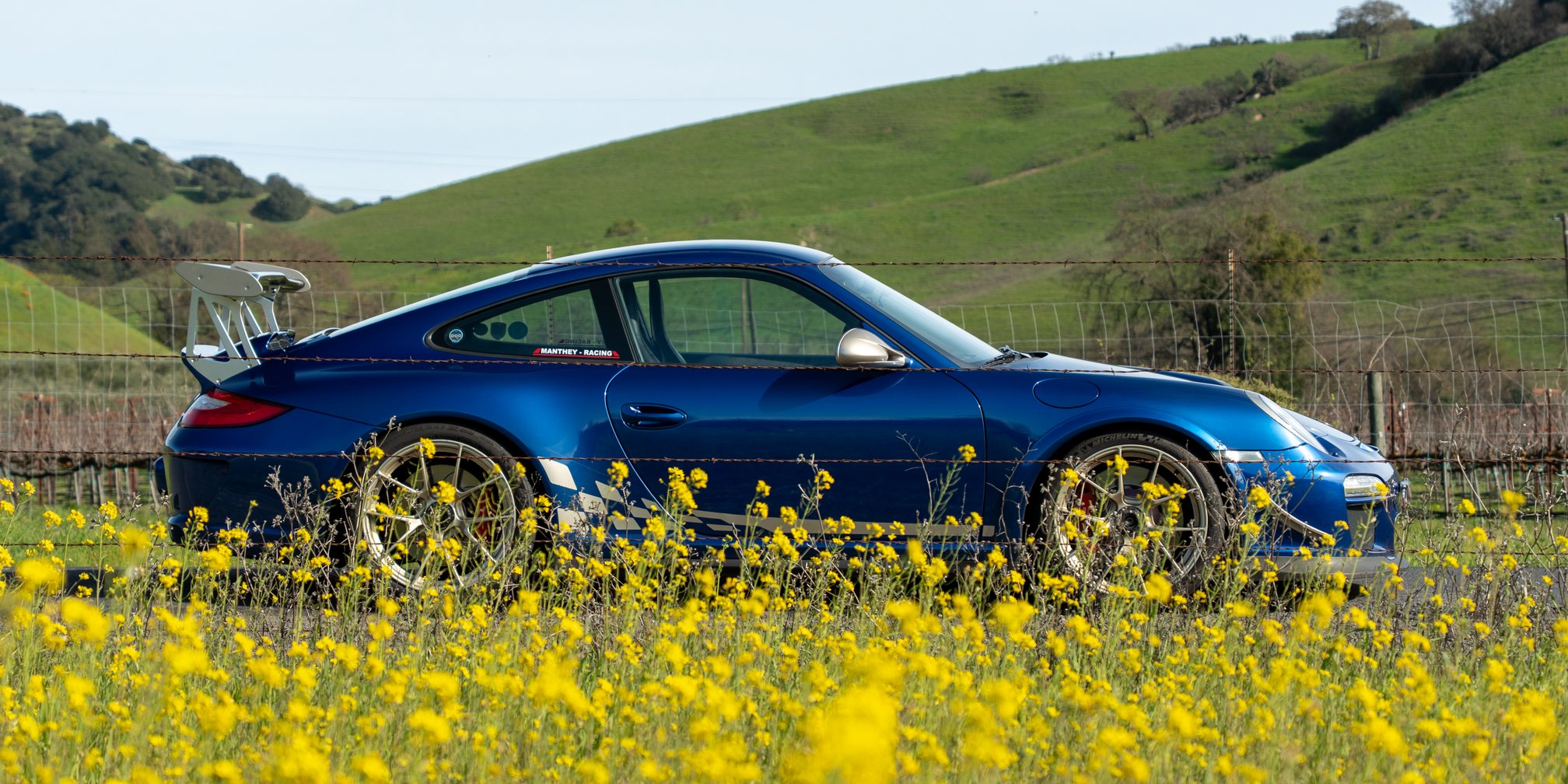
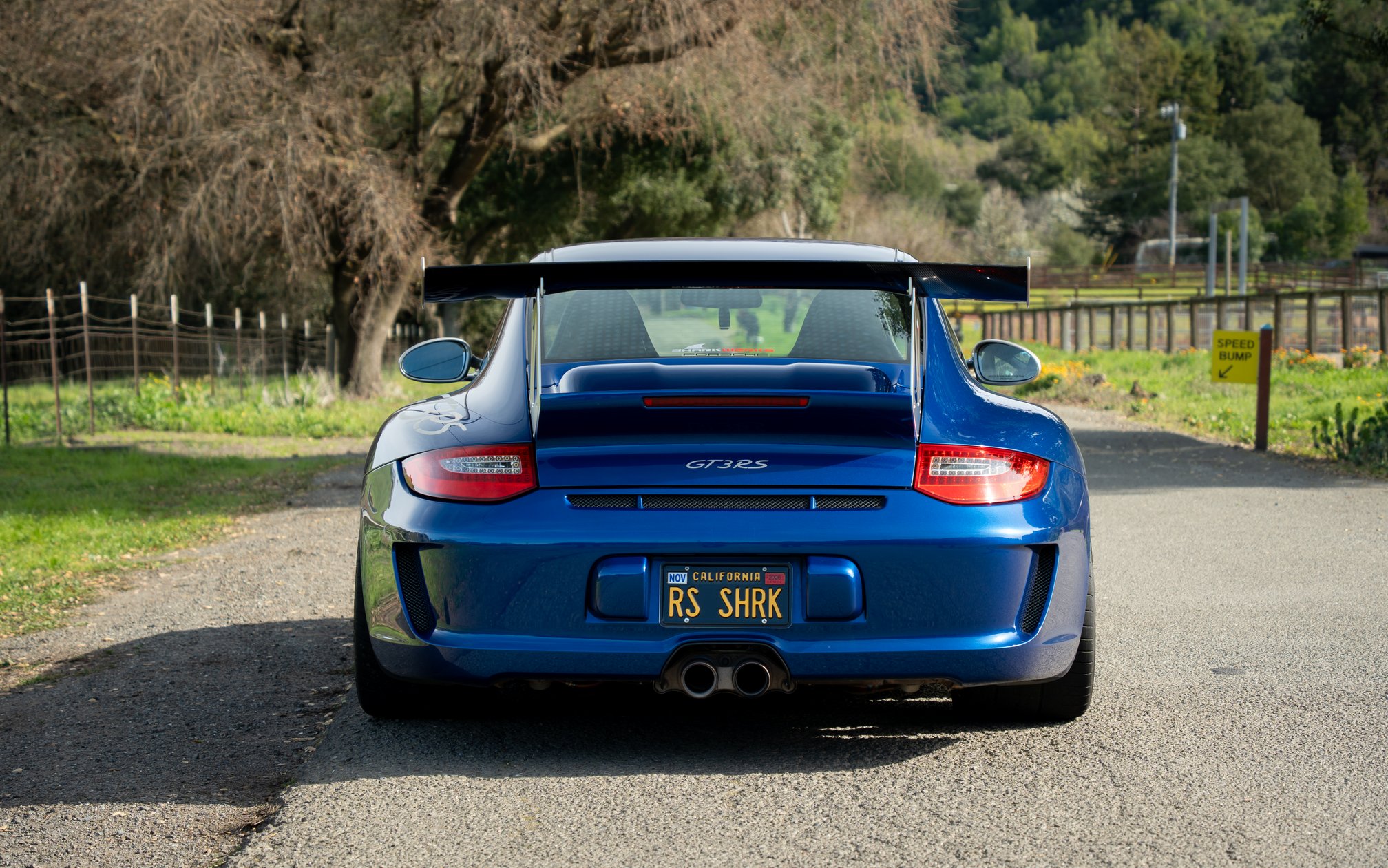
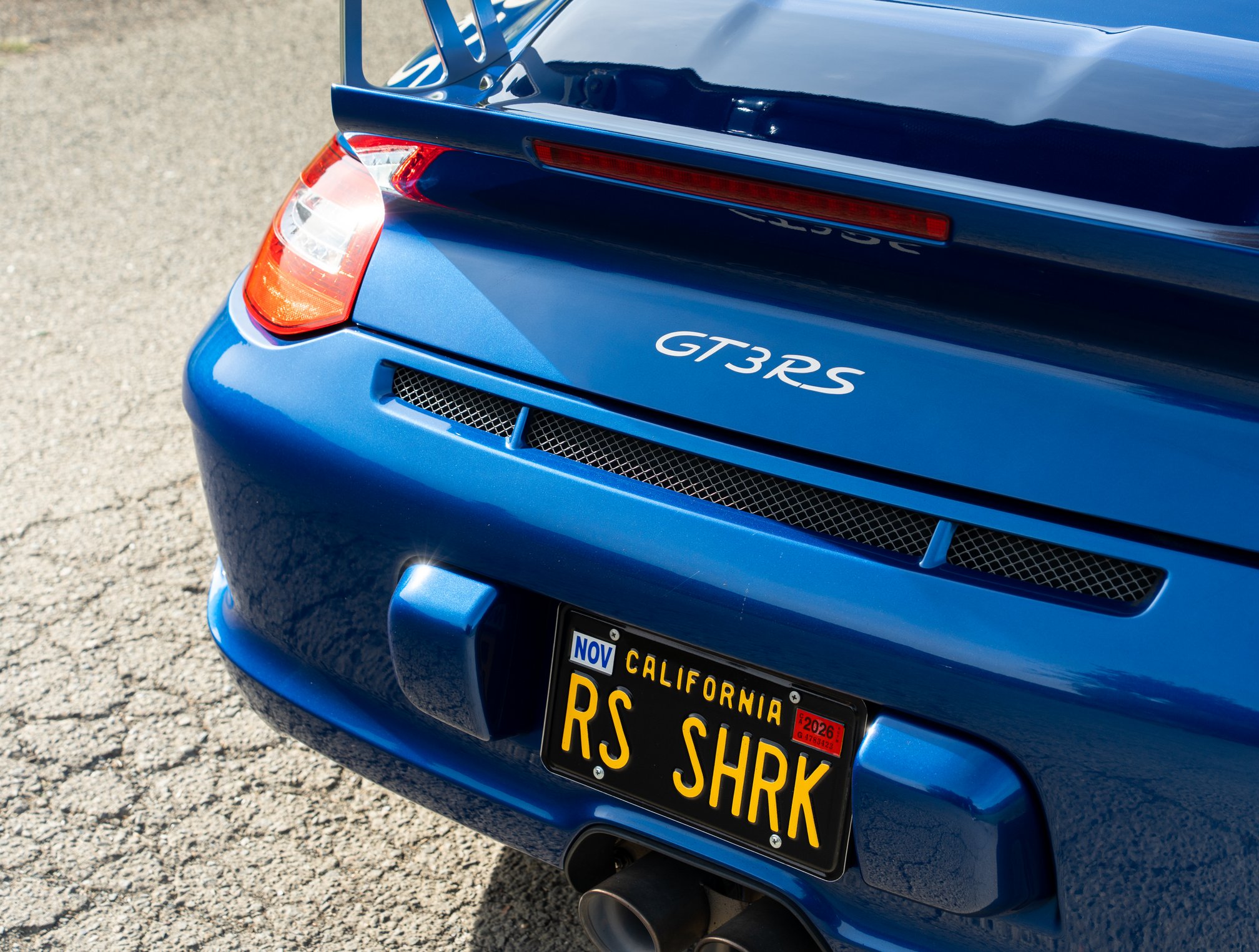
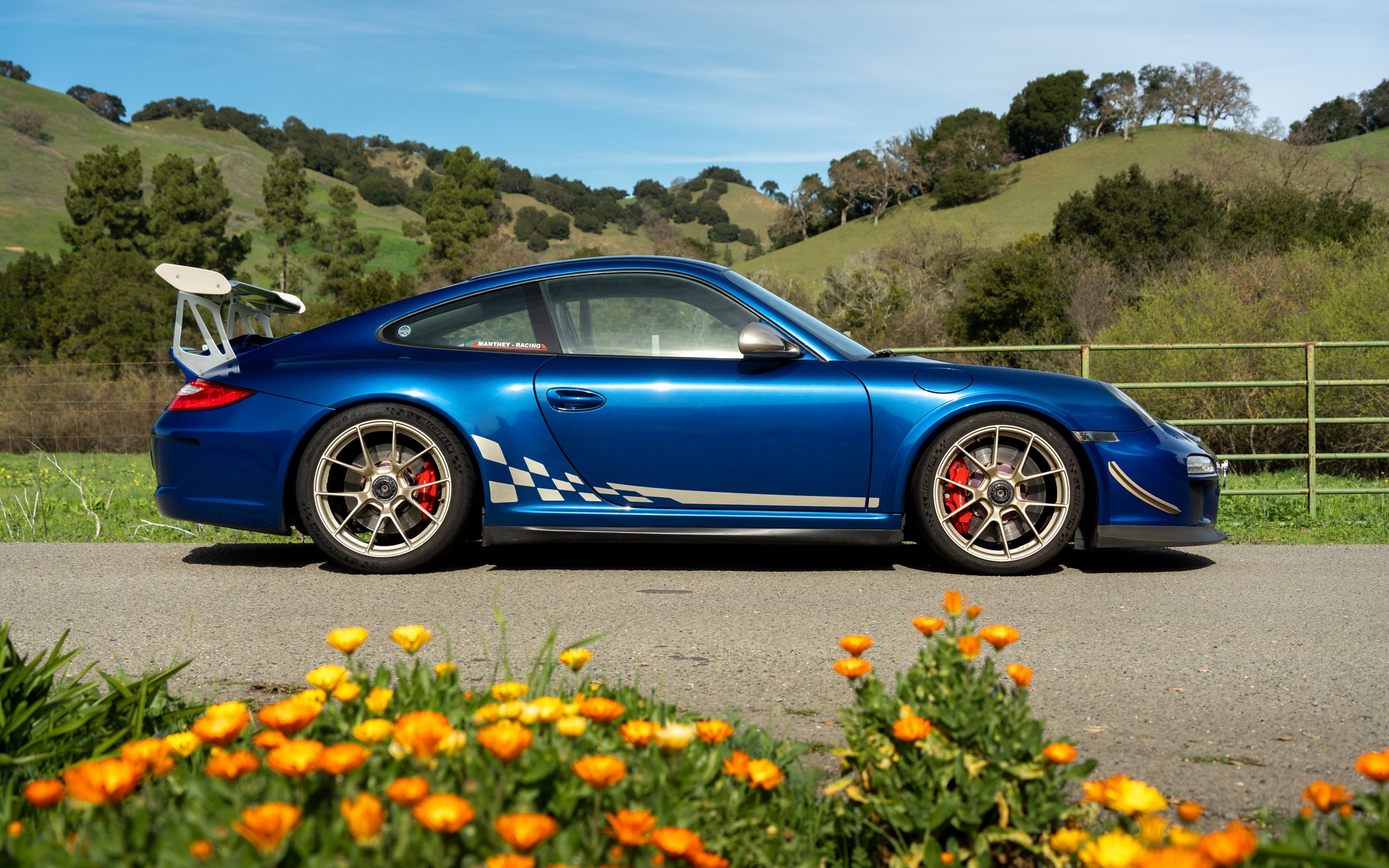
The Porsche is wearing a handsome suit of dark-blue paint, but it’s showing a tramp-stamp on its derriere: big silver letters spelling “GT3 RS” are plastered across its round rump. The car is also going hard with its super-sized rear wing, front aero flicks, and protruding tow hook. While a 911 Carrera S looks suavely refined, the GT3 RS is ’roid-rage shouty.
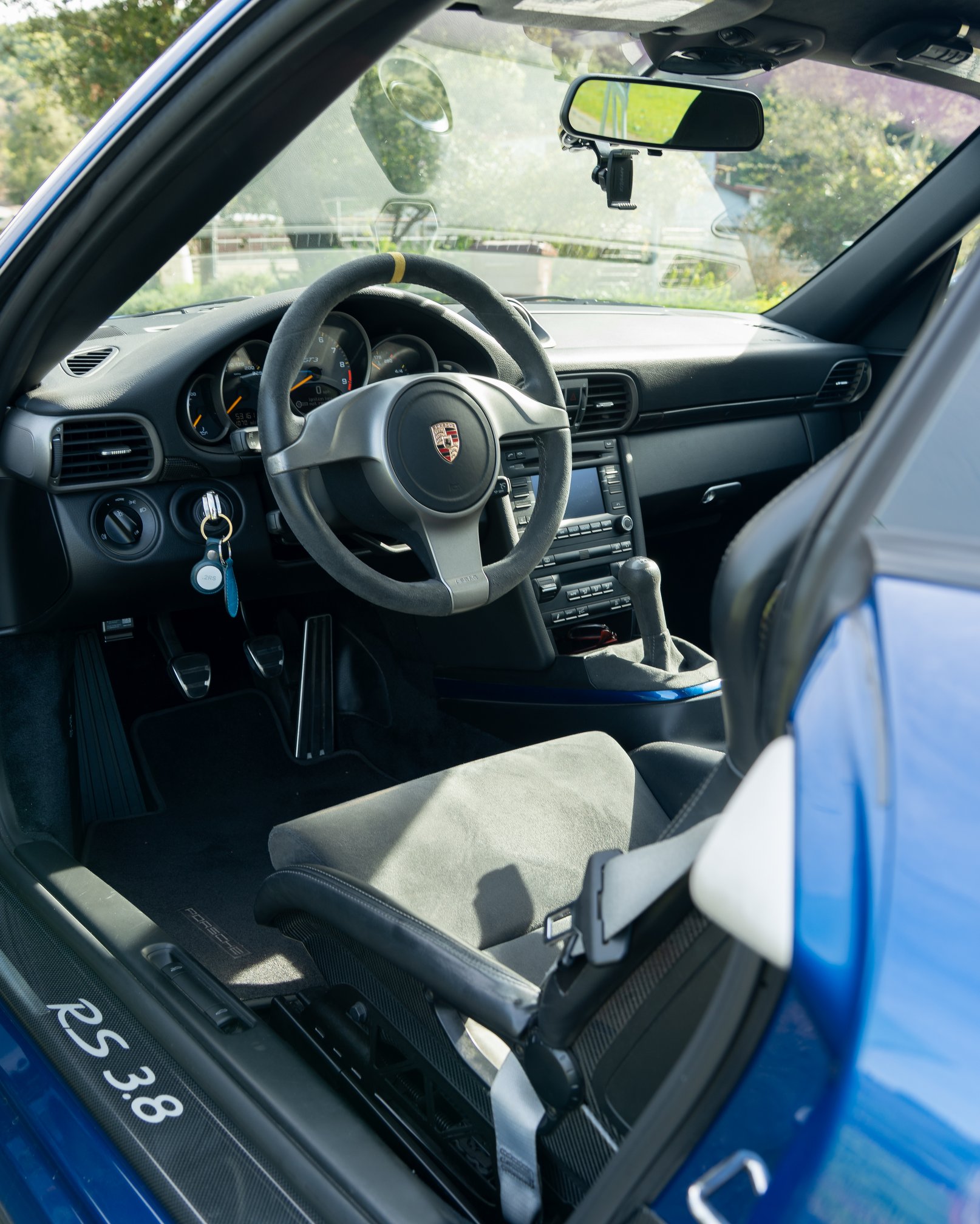
Steve hops out with a smile. I peer through the open driver’s door, looking for a place to put my camera pack. Behind the front seats is a wide swath of empty cabin, the space where the rear seats would be in a 911 Carrera. After checking if my backpack could scratch the carbon-fiber seatbacks, Steve stows my bag in the carpeted rear. Apparently, these carbon buckets are worth $20,000 used and warrant special care.
We’ve picked a road we think will suit the GT3 RS and be representative of our Northern California byways. Its open curves and long straightaways will let us exercise the race-bred GT3 RS, and its pavement blemishes—lumps, slumps, and bumps—are typical of our local backroads.
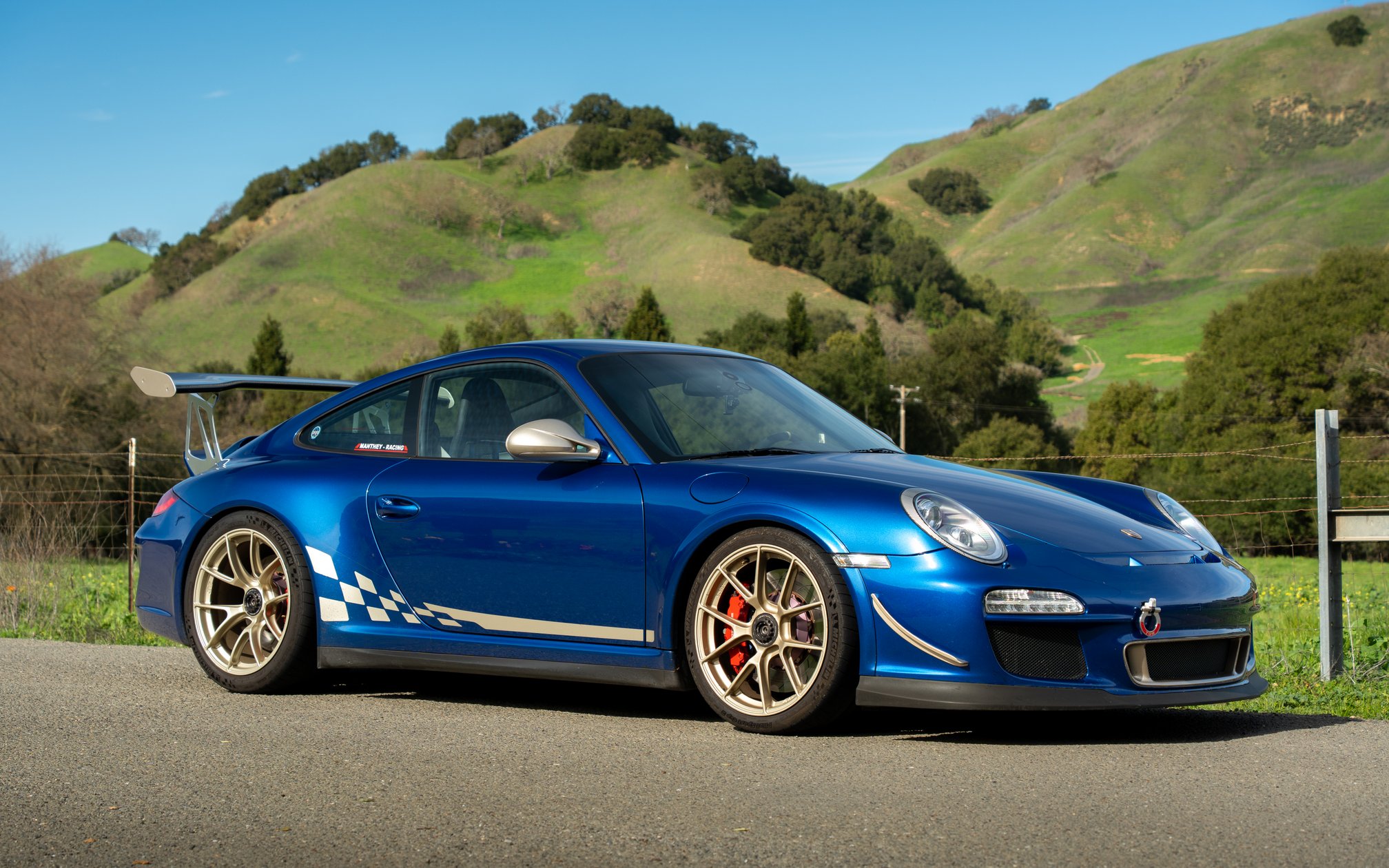
Knowing that the low-slung GT3 RS is likely to chuff its chin on the road’s larger ruffles, I ask Steve to drive first and point out the obstacles. My motive is two-fold: riding right-seat will help me avoid damaging the GT3 RS’s splitter and also reveal Steve’s comfort with speed in the canyons.
Three corners in, it’s clear that I won’t be scaring Steve today—if anything, the opposite will be true! As he drives me into the hills, Steve repeatedly wrings out the engine to its 8,500 rpm redline. As the tachometer needle flies forward, I’m thrust backwards into my seat, with my eyes going dinner-plate wide as the speeds race towards 100 mph.
The twists are equally intense. Steve scythes through the corners like they are the esses at Sonoma Raceway. His smooth inputs and high confidence suggest track experience with the GT3 RS. I ask and learn that Steve is a Porsche Club driving instructor; it shows! Though the writhing road surface is trying to shake off the GT3 RS, the Porsche has its claws out and won’t let go; hits which would send lesser cars skittering off line are supplely absorbed by the GT3 RS’s dampers.
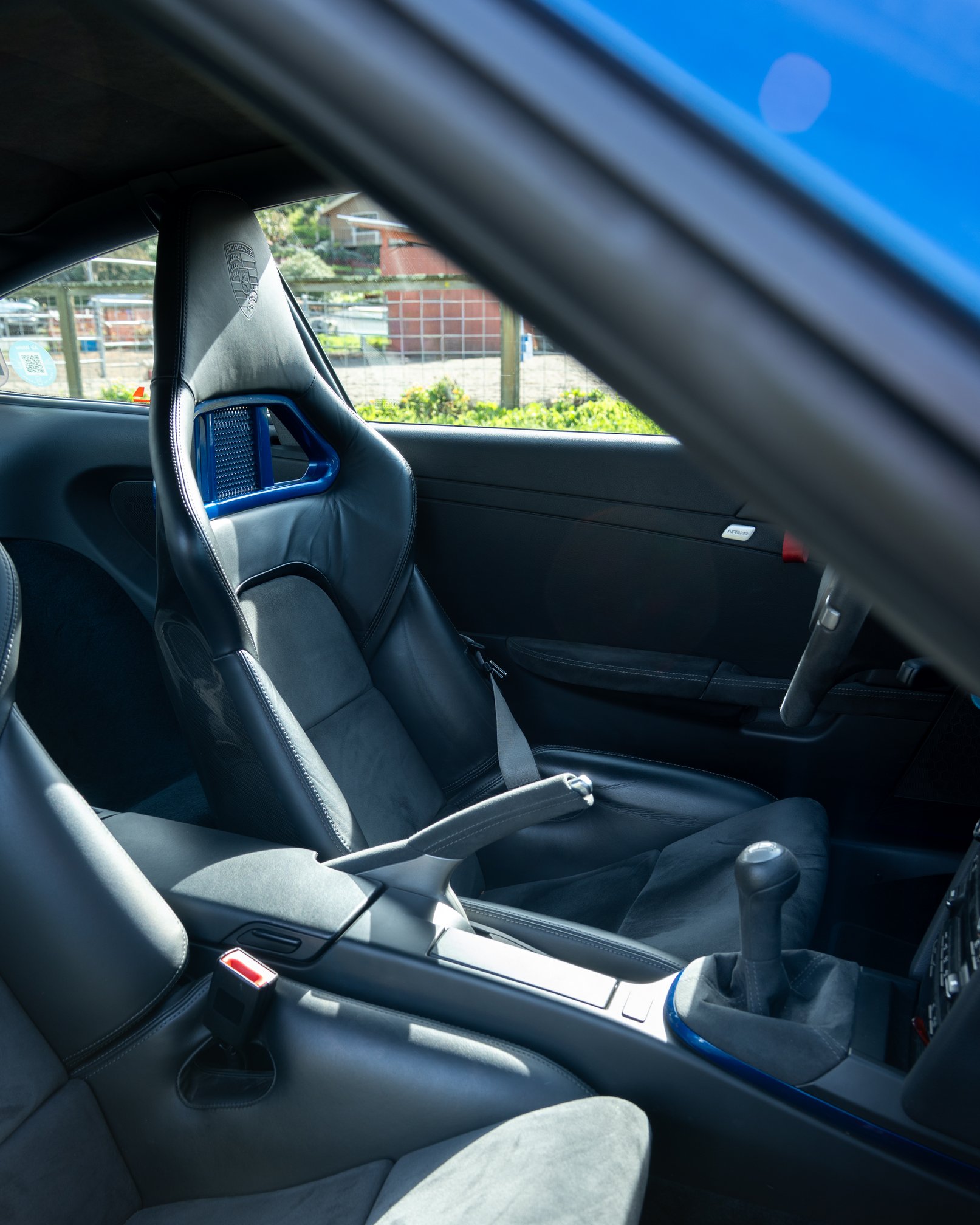
Through all this madness, I’m held gently but securely in the carbon-fiber bucket seat, coddled like an egg in an egg crate. The seat is well-padded and well-sculpted; considering this is the GT3’s track-ready seat, it seems designed for endurance racing rather than 20-minute sprints.
After ten minutes of adrenaline-pumping driving, Steve pulls over to give me a turn behind the wheel. With High Speed 101 now complete, I have a clear understanding of the GT3 RS’s pace (gobstopping), its owner’s tolerance for speed (formidable), and the road sections that require careful crossing.
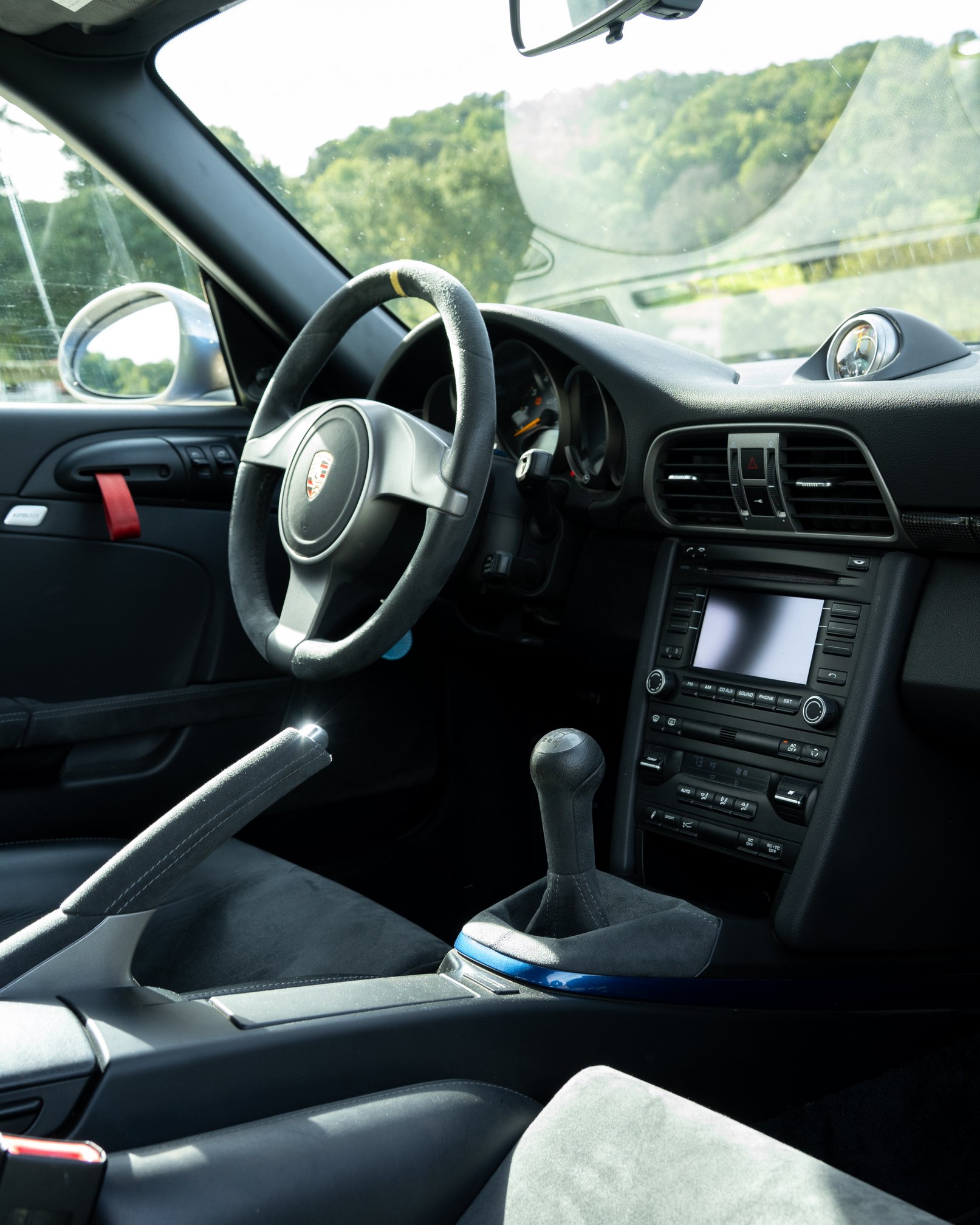
I take my time settling into the driver’s seat. In front of me is a thin-rimmed sports wheel, button-free and covered in worn, pilling alcantara. The shifter is dressed in equally tired synthetic suede, but the plastic dashboard and switch gear are surprisingly fresh.
The driver’s bucket only adjusts fore and aft, and doesn’t hug the ground as closely as I expected. (There’s no way to lower it further.) My left knee bumps the steering wheel rim, but I can adjust the steering column upwards for an excellent, unencumbered driving position.
The engine is still running, and behind me, I can hear the GT3 RS’s lightweight flywheel chattering quietly as the motor hums an idle tune. I depress the clutch—finding it heavy, but not glacially so—and stir the shifter to learn the spacing. The distance from gate to gate is slightly longer than a wrist flick, but the modestly-weighted lever needs some muscle to push through the strong snatch before each gear.
With the seat, wheel and mirrors adjusted, I pull a U-turn to repeat Steve’s route. The GT3 RS makes the 180 one go, sparing me a three-point turn on a hill in an unfamiliar car. I listen for chuffing from the rear tires that would suggest a tight LSD, but I don’t hear any.
Off I go, slow and calm, getting a feel for the gearbox, steering and brakes. Of all the inputs, gear changes are the most challenging.
My tentative upshifts—further slowed by the catch before each gear—are too timid for the lightweight flywheel and the fast-falling rpm. Frequently, the engine rpm is too low once I’m in gear and ready to release the clutch.
Downshifts present another challenge: when I have the stiff clutch pedal on the floor, my uncalibrated throttle blips send the tachometer needle flying for the redline, overshooting my target. The GT3 RS’s low-mass flywheel enables overexuberant engine responses, and the out-of-gear drivetrain puts on piles of revs at a brush of the long pedal.
The helm, however, has no learning curve and is near perfect for this steering fetishist. As the GT3 RS travels the gently rippled road, the wheel purrs with surface textures and wiggles in my hands like a happy kitty’s tail. My palms are flooded with rock-concert volumes of road feel, yet somehow the firehouse of feedback is musically organized, not a messy cacophony. The variable-ratio steering rack is moderately quick with a small dull spot on center. The dull spot gives a bit of calm to straight-line cruising, but the rack becomes appropriately reactive when I’m actively cornering. I expected an RS Porsche to have heavy steering that I’d have to muscle, but the GT3 RS’s helm is moderately weighted. I could drive for hours without arm fatigue.
Even at half pace with clumsy shifts, the GT3 RS is challenging and rewarding me. I’m swimming in mechanical Mezger music and steering feedback, and every aced shift is an analog affirmation, an automotive gold star. This is the height of driving pleasure!
After a few miles, I’m ready to dial up the pace. I’m still well off Steve’s flight—and at best at six or seven-tenths of the car’s capabilities—but I can now feel the machine flexing.
The power from the 3.8L flat-six engine is easy to exploit. I point the Porsche down the extended straightaways, wood the throttle, and silently chant “don’t lift, don’t shift, don’t lift, don’t shift…” as the GT3 RS reaches for its stratospheric redline. My urge to chicken out is real, as the car is both wickedly quick and the 8,500 rpm redline gives me time to consider my rapidly rising speed. (The car clocked 3.5s to 60 mph and 11.8s in the quarter-mile in Motor Trend’s hands.)
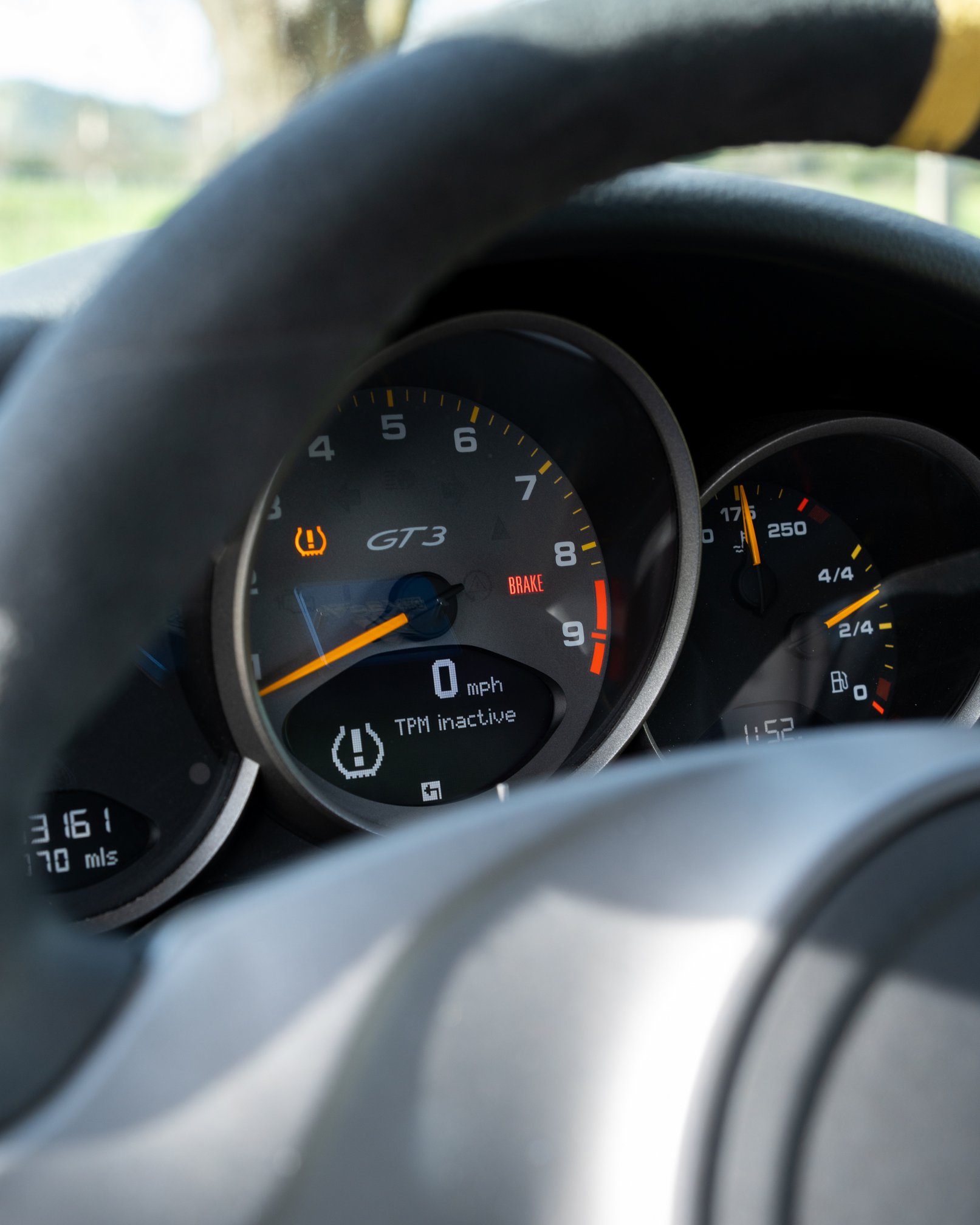
One trick Porsche employed to unlock the GT3 RS’s savage acceleration was shortening the gear ratios. Second and third gears top out at 63 mph and 87 mph—making them perfect for the canyons—and fourth allows 111 mph. I’ll be avoiding the top of fourth gear today, as I have no appetite for a felony citation!
Even though my butt-dyno is tuned to my 503 hp Mercedes AMG GT S and 556 hp Cadillac CTS-V, the 450 hp GT3 RS subjectively eclipses them both; such is the joy of a berserker engine in a 3,020-pound projectile! As the Porsche’s revs swing past 5k, there’s a subtle jolt of newfound torque as the variable valve timing adjusts for high-rpm running. The rush to redline is relentless: As the engine’s war wail rises in my ears—and floods the forest, too—the GT3 RS accelerates with ever-increasing intensity. Peak power comes a split second before redline; the race-derived Mezger 3.8L flat-six lives its best life at 8k rpm!
With the engine output shaft spinning fast enough to blend an iced frappuccino, the transmission comes into its own. The engine’s urgency is infectious, and my hand rushes to match its energy, driving the stick home in time to catch the quickly falling engine revs. The resistive snick between gears smooths with speed, and while there is still a catch gate to gate, it no longer slows my progress. My hand flies joyfully up the gears.
My clutch foot is happily dancing, too. The left pedal is intuitive to use, and the clutch progressively engages for smooth shifts. Steve tells me that the hefty pedal is onerous in traffic, but here on an unimpeded backroad, it’s a delight.
And the brakes? Simply put, they are slop-free and stout. With Endless brake pads and Girodisc rotors, they won’t wither in the canyons.
With the newfound speed brought on by my increasingly leadened right foot, the tires and suspension are starting to work. The corners apply lateral load while the wing and flicks press down with aero weight, but the suspension—which is electronically adjustable and running in normal mode—shrugs it all off. The ride is firm, but not brittle, and the GT3 RS exhibits supreme wheel control over the road’s midcorner heaves; bumps are adroitly sopped up, keeping the Michelin Pilot Sport Cup 2 tires plastered to the pavement. I’d have no fear of romping rumble strips in the GT3 RS.
There is a lot of internet chatter about how rear-engined 911s demand a different driving technique to fully exploit. I’ve never tracked a 911, so I can’t claim intimate knowledge of the platform’s peculiarities, but I am noticing that the GT3 RS’s nose is highly sensitive to throttle inputs when we’re arcing through long corners. Breathing off the throttle subtly shifts weight to the front tires, helping them claw deeper into the pavement and pivot harder towards the apex. Feeding in more gas does the opposite, lightening the front load and widening the car’s arc, forcing me to add steering angle to keep on course. These are hallmark 911 dynamics, and I could see using different lines around a racetrack to play to the car’s capabilities.
I am giddy at the end of the first road. The GT3 RS is the perfect driving enthusiast’s car! Furiously fast, musical, precise and rewarding.
I’ve driven so many cars and so many drivetrain configurations, how is it that the GT3 stands apart for its intensity? Is it psychological? Perhaps, GT3 engines feel most visceral and alive at the top of each gear, exactly when I’m feeling most vulnerable and mortal. And with the Mezger’s ravenous appetite for revs and unhinged propensity for shattering the calm of peaceful spaces, caning the GT3 RS through a forest park is the mechanical equivalent of donning an orange speedo and streaking through church, belting Bohemian Rhapsody.
All this is to say, extracting every ounce of pace from the GT3 RS is a deeply satisfying, but deeply selfish, experience.
A guilty pleasure, if you will.
But it’s a pleasure that turns into a pain, as the second road’s slumping pavement causes me to chuff the GT3 RS’s chin hard on two deep dips. My joyous high-speed hustle turns into a slow-speed sulk as I think about the material I’ve cheese-grated off the splitter. Steve tries to calm me, telling me the lower lip is disposable and surprisingly tough, but I’m thinking of the disposable income I’ll part with if I’ve cracked the $600 rubber rim. On account of its Jay Leno chin, half of my favorite rural routes would become no-nos if I owned a GT3 RS.
I pull over and shut down the car on a quiet residential lane. Camera in hand, I circle the GT3 RS, observing its flared fenders, wide tires, and stickered haunches. The car has Manthey Racing and Sharkwerks decals on the glazing, so I ask Steve about its modifications.
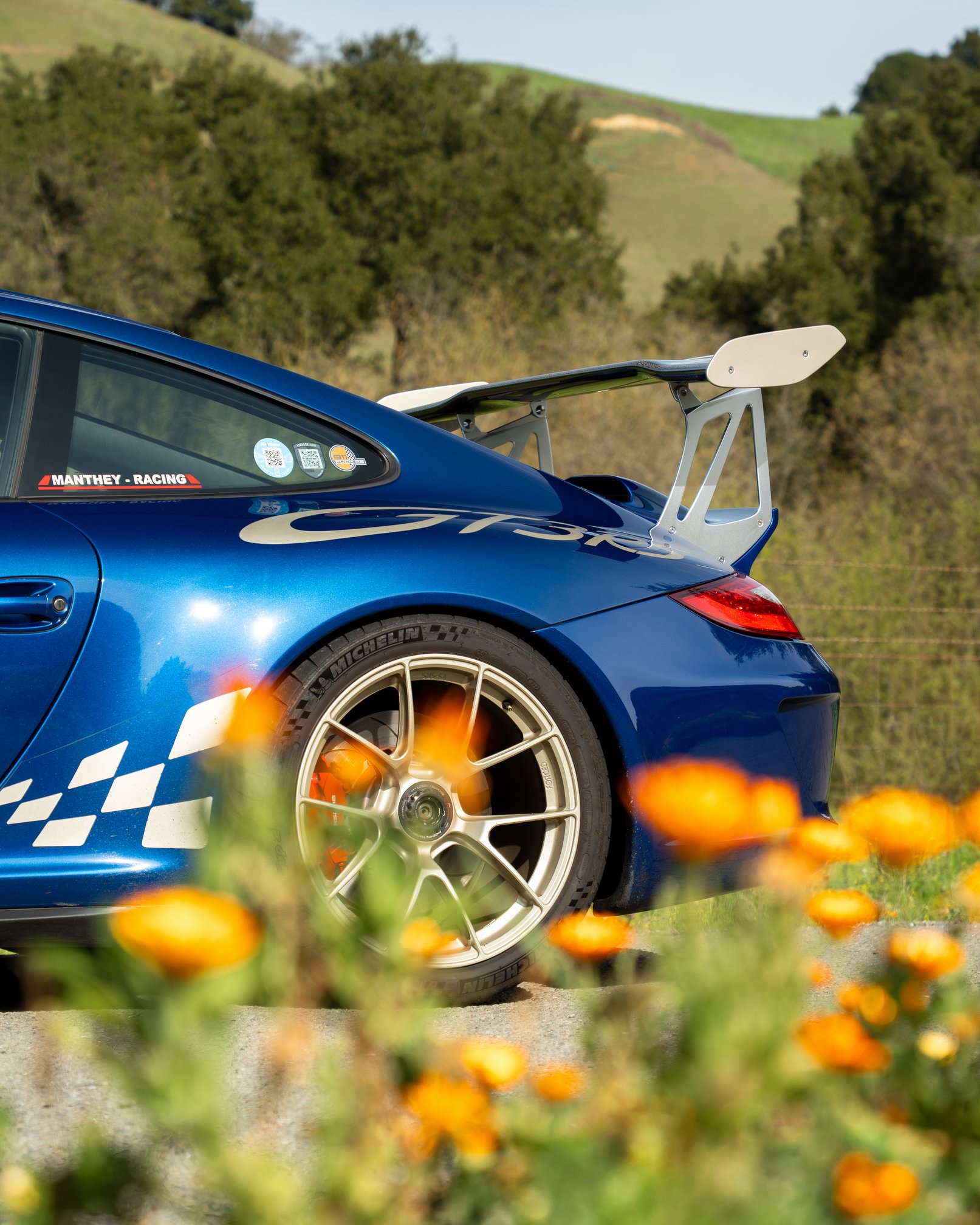
The Manthey Racing sticker is a memento from the car’s trip to the Nurburgring. The first owner shipped the GT3 RS to Germany, had Manthey Racing set up the suspension, and lapped the Nordschleife. (Perhaps this is why the car takes the bumps so well.) Beyond the Manthey alignment, the car also has RSS rear suspension links, which upgraded the rear end to monoball bushings, and forged Apex wheels.
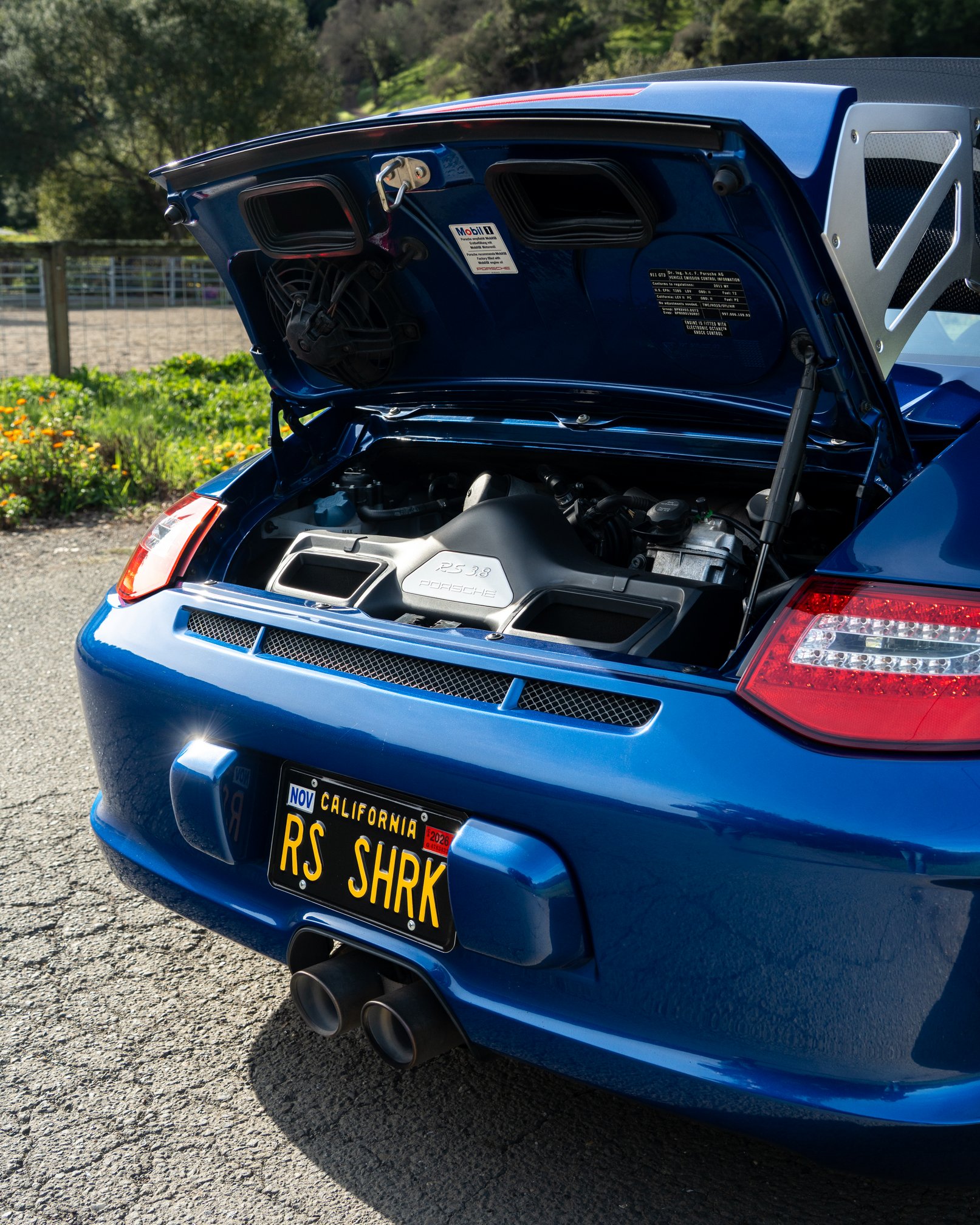
Steve does his engine maintenance at Sharkwerks, hence the second sticker. Steve is actually on his third clutch—the clutch throwout bearing overheated and failed twice on track!—and in the process, he upgraded to a GT3 RS 4.0 clutch and flywheel. A Guard LSD, a Sharkwerks crosspipe (which deletes the center titanium muffler), and Cargraphic 200-cell long-tube headers are his other drivetrain modifications.
The remaining mods are track-focused: the aforementioned Endless track pads, Girodisc two-piece rotors, and braided stainless-steel lines help the car stop as quickly as it sprints. Steve plucked the front flicks and rear wind raisers from the GT3 RS 4.0 to copy that car’s aero kit. (The wing raisers have the added benefit of lifting the wing above the rear window, so that the rear view mirror is useful again!)
I ask Steve about his future plans for the GT3 RS. He says he’s looking to preserve it, cut back on tracking, and reserve the car for the canyons. I’m not sure that’s the right choice—this Porsche is so fast that preserving the GT3 RS could cost Steve his license!
I want to feel the car on its tiptoes again, so I ask Steve to drive the final leg home. Steve is going faster than ever, flying through the corners and up the gears, and I swear I can feel the aero working. The front tires are more responsive to steering inputs than before, and the rear end is glued, duct-taped, and zip-tied to the pavement. My own Mercedes AMG GT S sways its hips like Shakira over these bumps, yet the GT3 RS’s ass is puritanically frozen—there is no chance of the rear tires breaking grip.
And then, at the apex of a corner, in the shadow of a hill, a hidden dip smacks the front lip hard into the pavement. “Didn’t see that one!” shouts Steve over the roaring engine. I wince, yet somehow feel better; a little of my guilt has just been scrubbed clean.
In a blink, we are back at my Mercedes, and the test drive is over. My low-spirited lethargy is gone, no calisthenics required. The drive—and the ride!—has my heart beating fast and a bead of sweat on my brow. My misgivings about having stolen three hours from work are completely forgotten: this afternoon has just seared a new core memory into my mind. The GT3 RS is just that good.
Regardless of the GT3 RS’s on-road drawbacks, I’m ready to make Steve an offer I can’t afford. Beating around the bush, I ask Steve if he’s ever driven any better car, a vehicle that he aspires to and might replace the GT3 RS. He is quick to say no; this is a forever car for him. There goes my dream.
The GT3 RS is perfect, and deeply flawed. Its chin is too low for many of my favorite backroads, its value is too high to risk on a racetrack, its suspension is too stiff and engine is too loud for a romantic getaway, and its cabin is too stripped down to take my kids out for ice cream. It is a single-purpose sports car: go fast, have fun, set lap times. Singularly great, logically useless. A car I can’t live with and can’t live without.
And that is why I am lost.
 Mike's Steering Column