
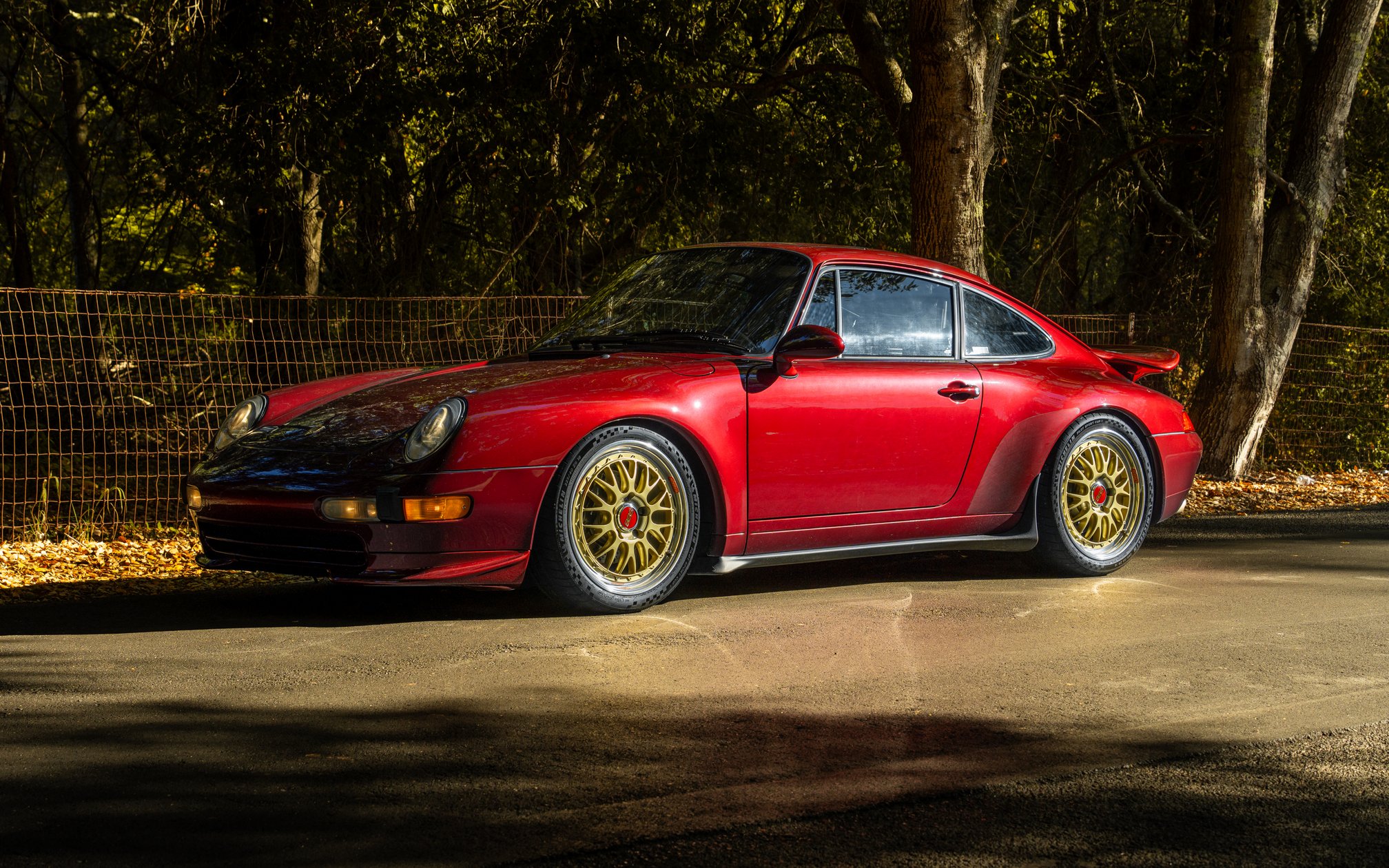
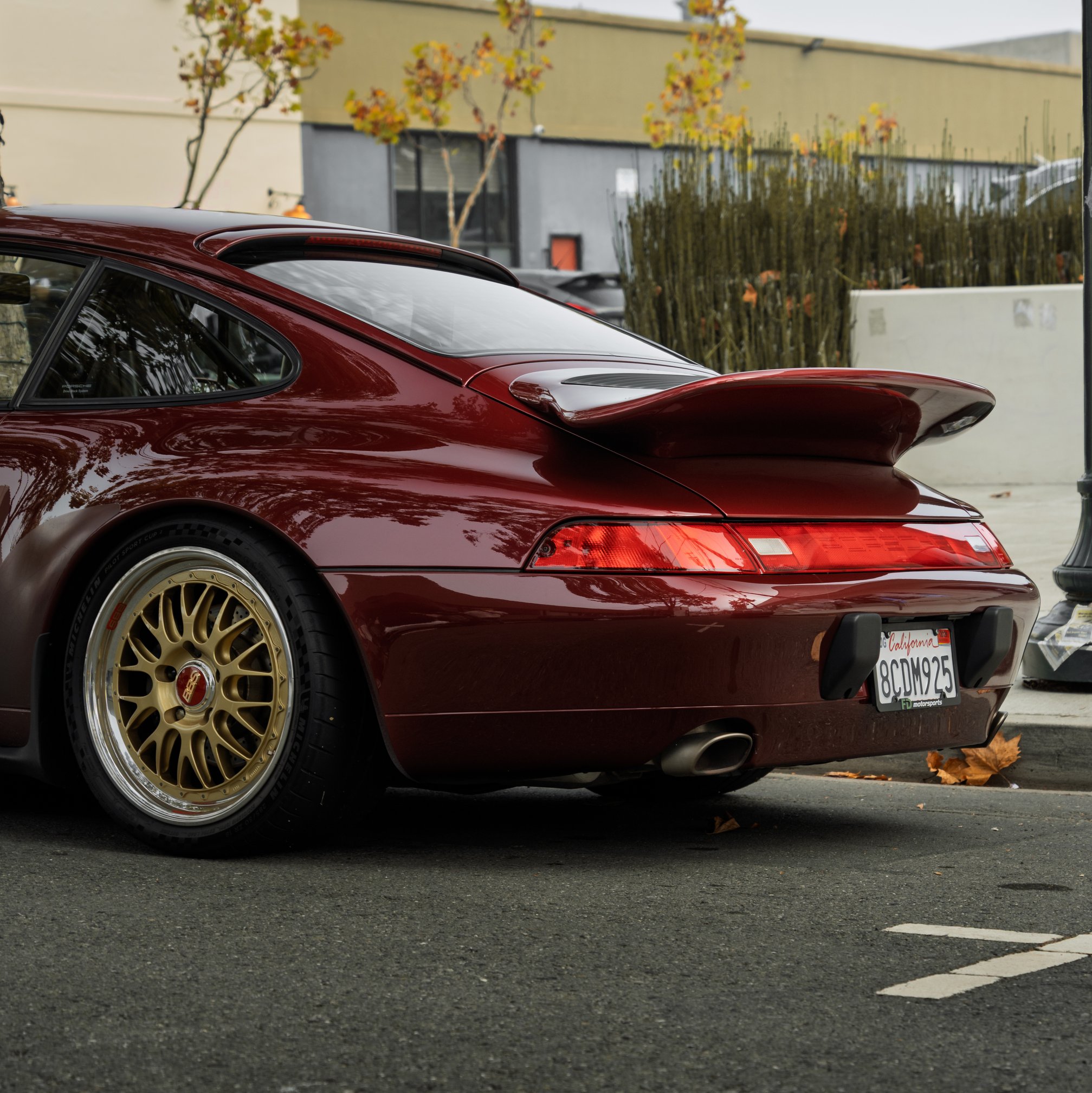
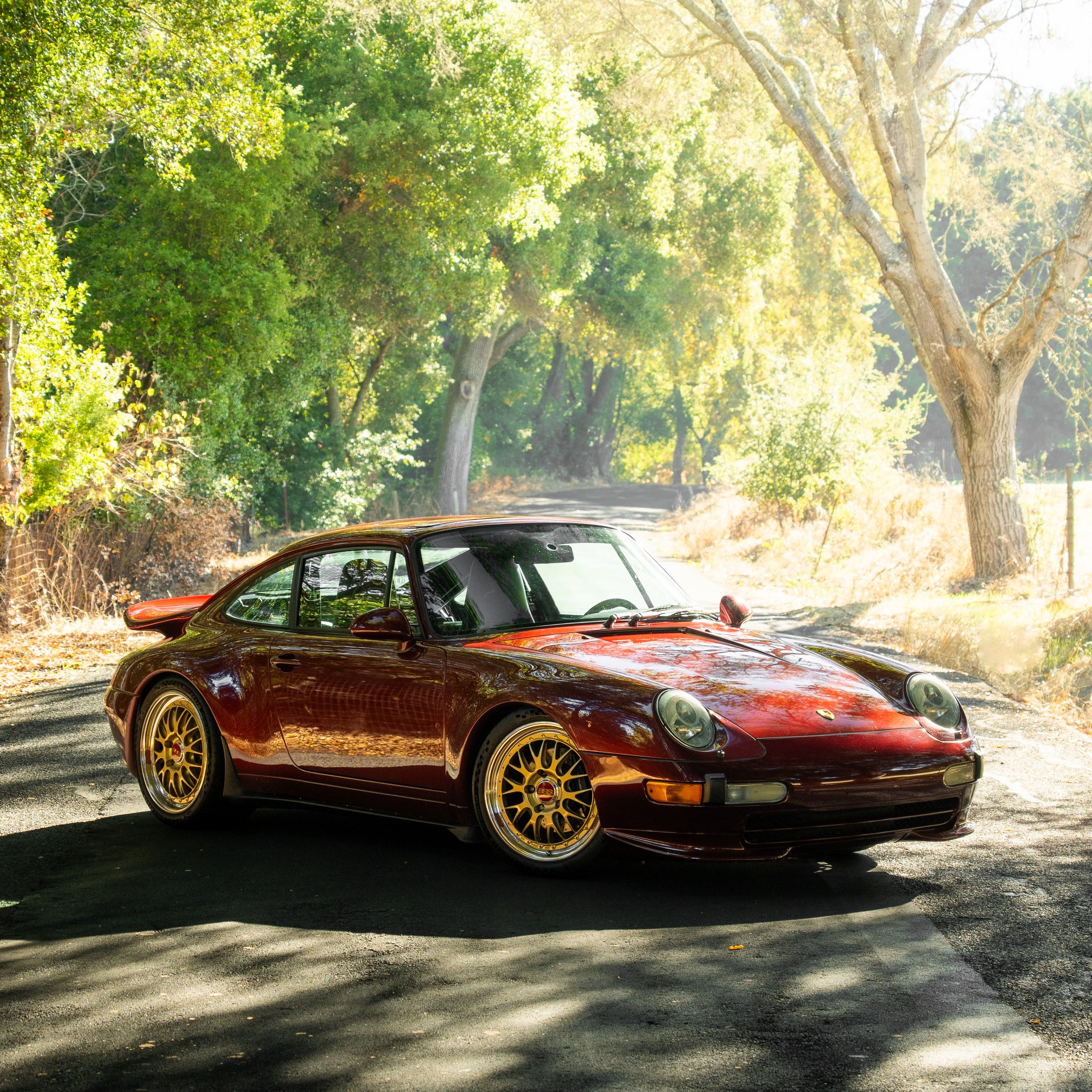
I’ve got first date jitters as I approach Ramon’s 1996 Porsche (993) 911 Carrera. The car is sitting pretty in velvet red paint and flashing golden BBS jewelry. The coupe’s flared fenders and iconic whale-tail spoiler promise speed and good vibes.
As the P Car snobs know, the 993 was the final iteration of 911s with air-cooled engines before the company switched to fluid-cooled mills. The makeover changed the 911’s sound, and, to some, left the 993 as the ultimate 911, the most polished example from the air-cooled era.
For me, air-cooled 911s are a curiosity, as they have a cult-like following that has taken over the car community. I’ve had enjoyable experiences with the air-cooled Porsche 356, but they don’t explain the fervor around the older 911s.
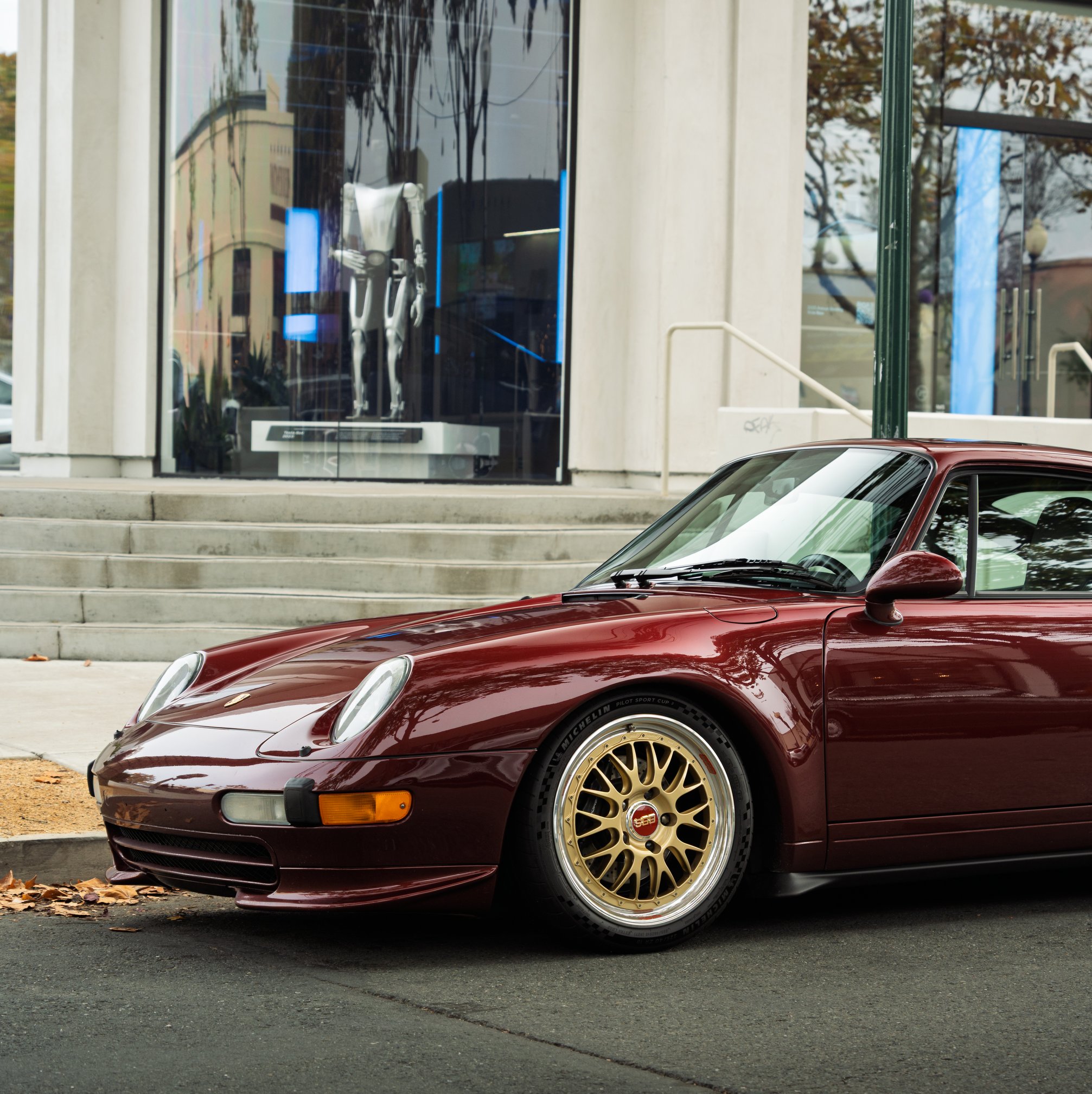
I’m starting my 993 experience with a moment of aesthetic appreciation, circling the car with my camera out, clicking away and trying to capture its curves. My focus is broken by a sinister figure in a store window. It’s a Tesla robot, staring blankly out of the dealership glass. If there ever was a contrast between the soulless future of cars (and perhaps humanity) and the warm, breathing, living past, it is the contrast between the blank grey robot and the soulful, soon-to-be-purring red 993.
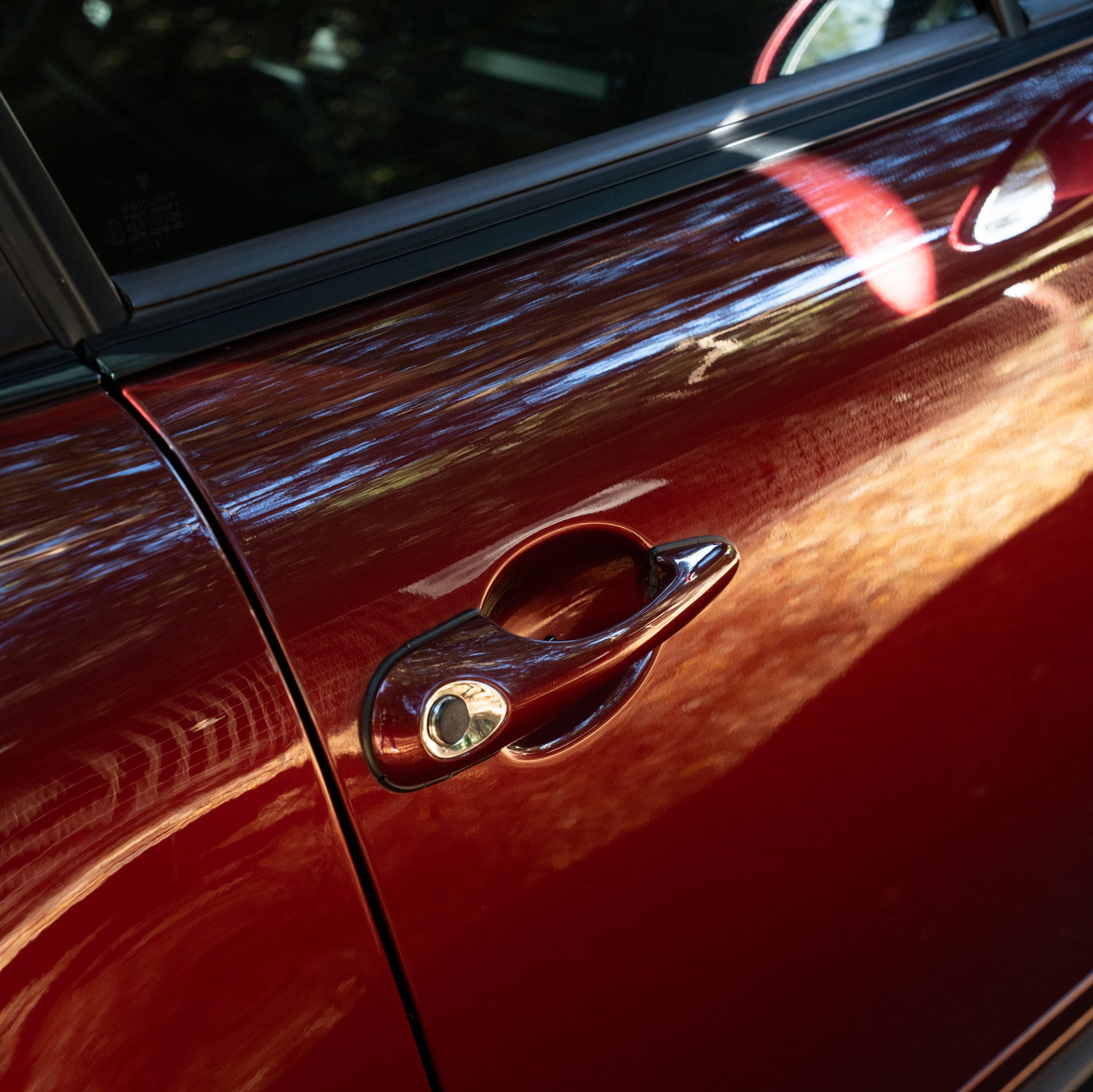
Eager to shake the robot’s empty stare, I make for the 993’s driver’s seat. The click of the door handle is thoroughly metallic, like latching my father’s steel toolbox, and its actuation has a satisfying build and release, like punching paper with a hole punch. The mechanical action reminds me that 911s have a famous door shut sound, the Porsche “ping.” I open and close the door twice, listening carefully: the door swings home with a solid, mechanical “clunk.”
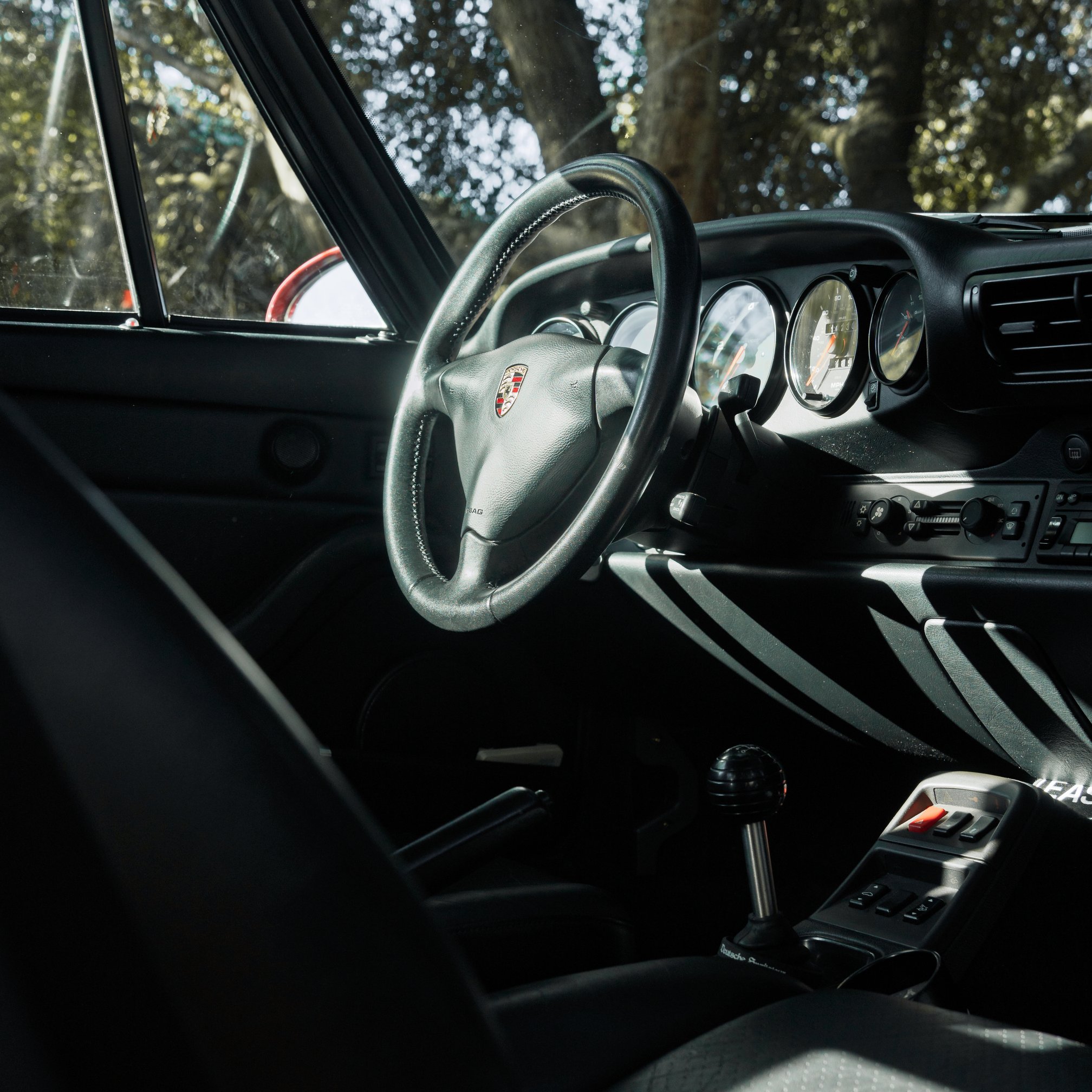
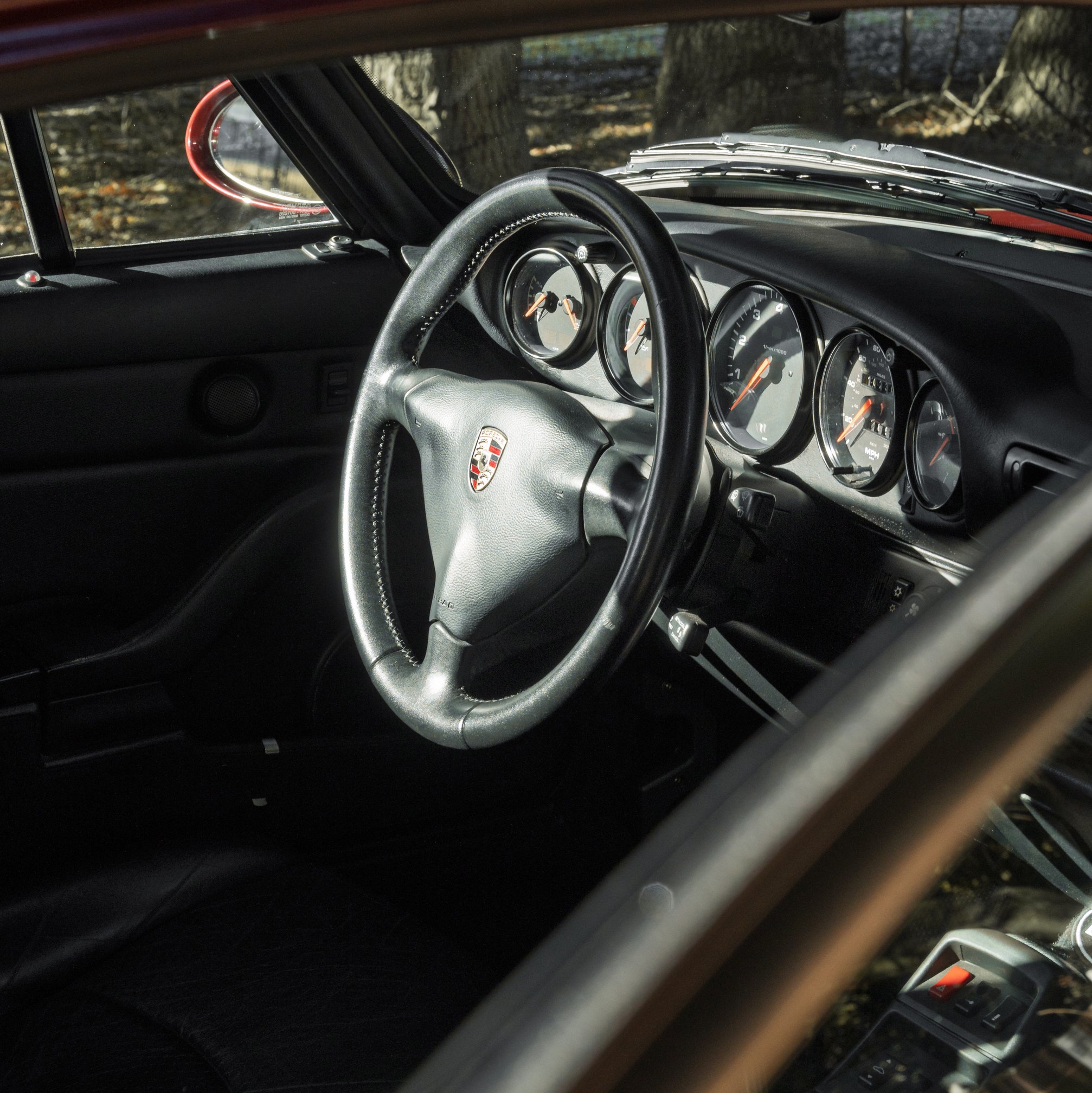
Upon dropping into the 993, I find I’m not the perfect shape for the pilot’s position. The floor-hinged clutch has a very long throw that forces me to slide the seat forward. But with the cinched-in seating position, the steering wheel now presses against my right thigh! (My left leg is in the clear: is the steering wheel offset to the right?) There is no way to tilt or telescope the steering wheel, so I’ll be driving with compromised ergonomics.
Never mind, anticipation has me grinning. The intimate cabin and the Porsche crest on the steering wheel (which has been upgraded to a 996 wheel) promise a good time. The 993 feels neat and tidy, trimmed back in the pursuit of performance, yet not spartan. I have excellent outward visibility thanks to the upright windscreen and thin A-pillars. The base of the windscreen is an easy arm’s reach from the driver’s seat, and the shifter is as close to me as it is to my passenger. (I’ll end up accidentally punching Ramon’s knee on the shift to fifth.)
Once the engine is fired up, I start rolling across town. In the city, I immediately fall in love with the steering. The wheel has a nice heft—heavy without being burdensome.
As I traverse the bumpy city roads, the wheel wiggles in my hands, relaying the front suspension’s work. As it slithers left and right, I grin; it’s as if my hands have melded with the 993 and I’m organically connected to the suspension, wheels and tires rolling down the road.
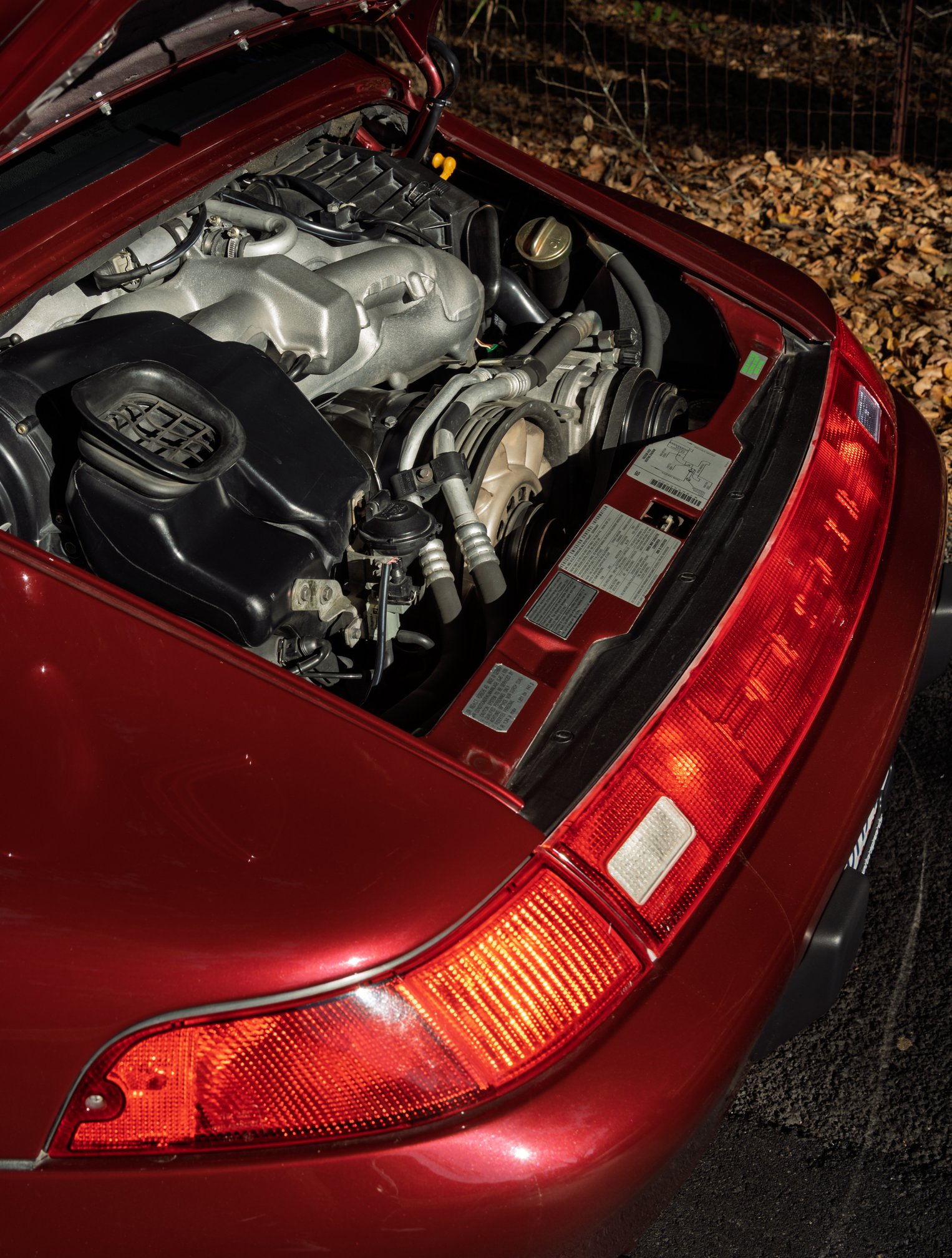
At these relaxed speeds, the waffling purr of the 3.6L flat-six engine is supremely charming. The six-cylinder’s song is surprisingly similar to that of the Porsche four-cylinder in the 356: both air-cooled boxers warble with the same Swabian accent.
However, the 356 couldn’t match the hearty torque I feel when poking the 993’s accelerator. The 3.6L engine is alert and potent, making my journey through city traffic a breeze. Assuming I could overlook the 993’s price—clean examples of the base Carrera hover around the $100k mark—daily driving a 993 would be a low-stress affair. I’ve got all the grunt, grip, and brakes that I’d want to dance with today’s three-ton SUVs.
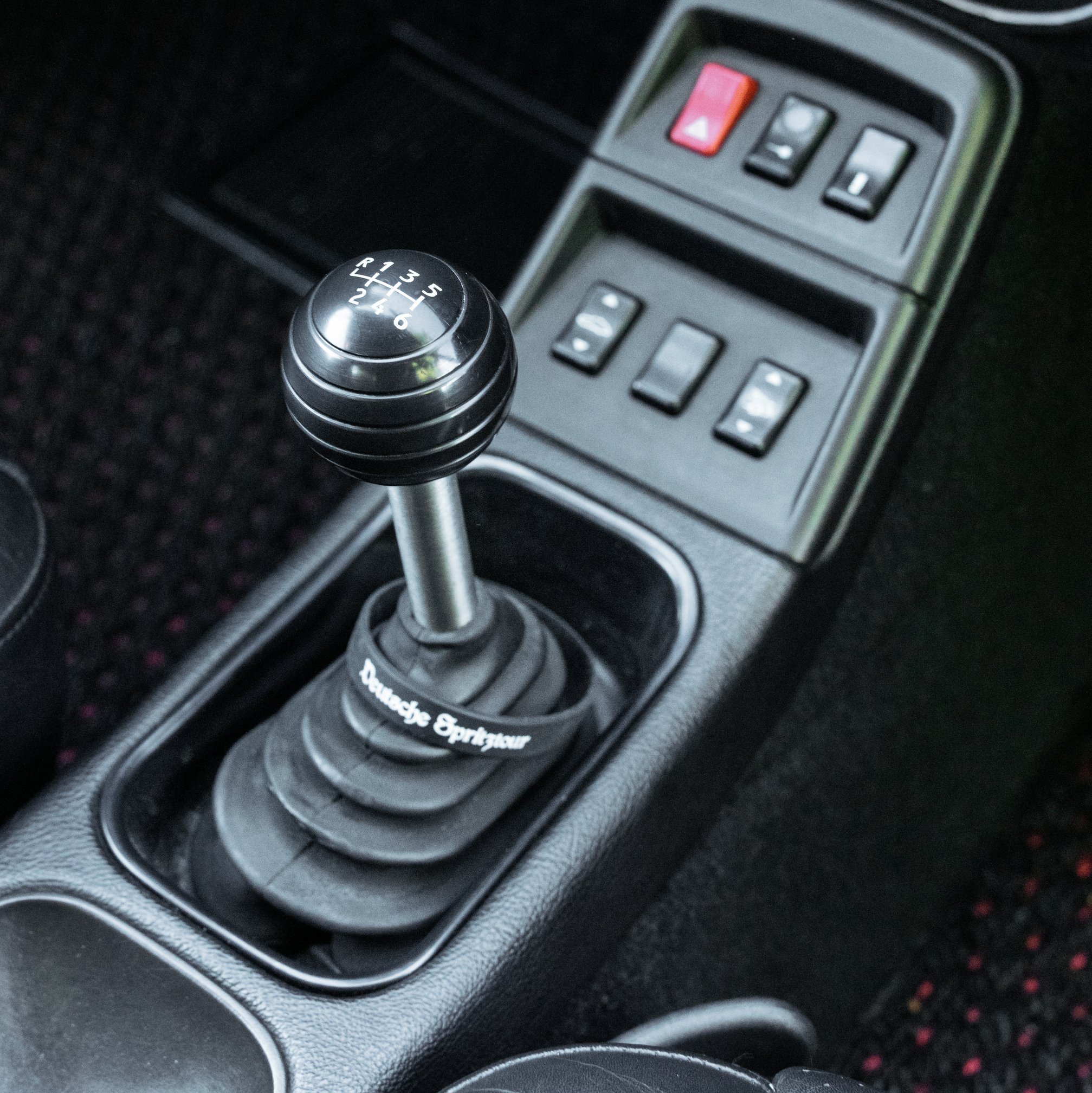
I’m enjoying the positive feel of the six-speed shifter. The stick shift has modest throws—the distance between gears feels modern, neither short nor long. (Ramon has a Fister short-shift kit in this 993.) The transmission is still cold, and the lever catches slightly when shifting up to second gear. However, once it is slotted home, the stick holds tightly in the gate without any side-to-side slop. I find that the synchros appreciate blipped downshifts. I’m all too happy to oblige, as the whirring bark of the engine is music to my ears.
The only compromises to the car’s around-town usability are aftermarket additions.
First is the Heigo half cage in the back seats. This steel jungle gym prevents passengers from using the tiny rear jump seats, and also makes it a chore to store bags in the back. Where would I store the groceries?
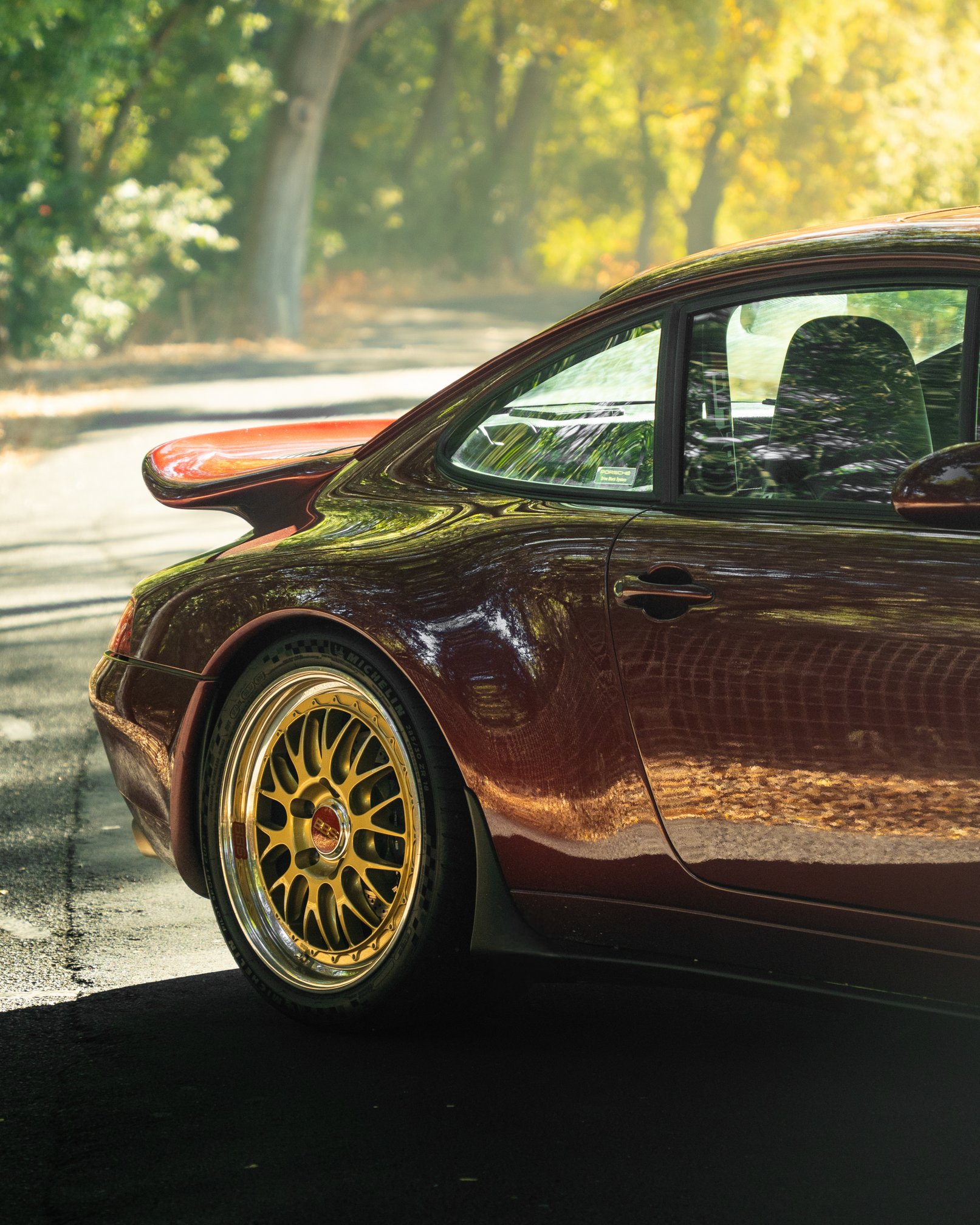
The other compromise is the suspension. This 993 is fitted with Bilstein PSS10 coilovers, which give the car a righteous stance at the expense of a jostling ride on broken pavement. If the 993 wasn’t so entertaining otherwise, I’d be complaining about the ride comfort. But in the presence of the delightful drivetrain, I accept the modest pummelling as a sports-car’s compromise.
I’m hoping to shoot more pictures of the 993 against a color-contrasting building in West Berkeley, but my backdrop of choice is blocked by trucks. Workers are unloading movie equipment into the warehouse, and a man in an LA Dodgers cap follows our slow roll down the block with a big smile on his face. The Arena red 993 elicits appreciative stares wherever it goes!
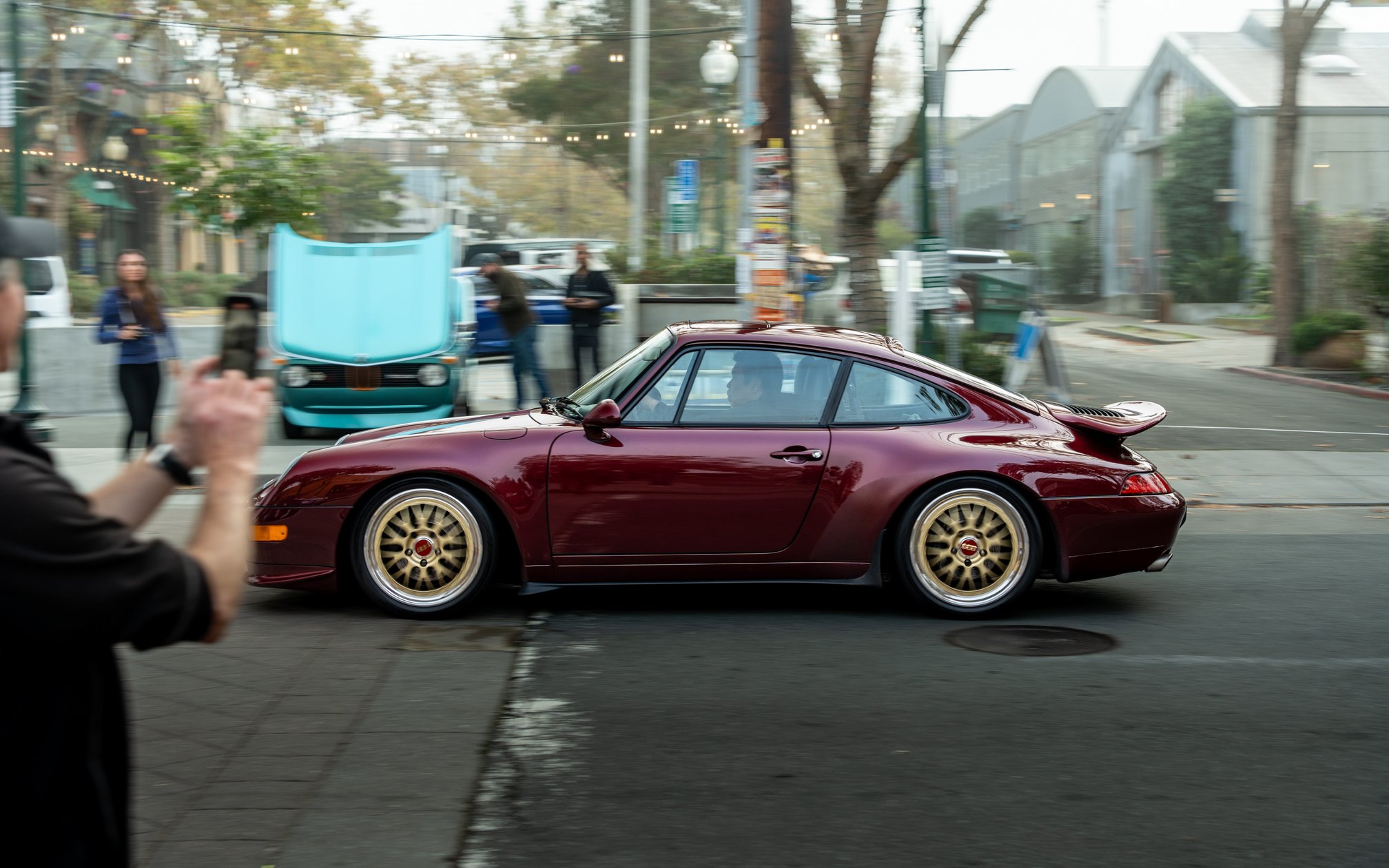
Abandoning the photo spot, we hop onto the highway. Merging into traffic, I realize I haven’t properly adjusted the wing mirrors. Using the electronic switches on the door, I correct the mirror angles as we streak away from the city.
The 993 was born at a curious point in automotive history, where electronics like CD players, powered locks, and windows had entered the scene, but stability control, satellite navigation, and parking cameras were still uncommon. As such, the 993 offers basic electronic conveniences yet drives with classic noises and vibrations.
About those noises and vibrations: On the highway, I find myself raising my voice to chat with Ramon. We aren’t shouting, but the 993 is no hushed limo, either. Loud cabins are common across all the 911s I’ve tested, and the 993 is no louder than the rest.
Now that we are at speed, the suspension stiffness feels better judged. The constant slow-speed jiggles are gone, and the 993 is gently massaging the pavement with its tires. Thanks to the plushly padded seats, I’m very comfortable at the Porsche’s helm; I suspect it would make a lovely road-trip car.
A long, arcing overpass takes us from Hwy 580 to Hwy 24. As I add steering angle, the body weight shifts. The 993 eases into the long 65-mph turn, and a hefty resistance builds in the steering wheel. This is the textbook steering feedback I hear other automotive journalists praise. It tells me how gripped-up the front tires are, and it is indeed lovely to behold.
Ramon encourages me to explore the engine’s higher registers, so I downshift to fourth and floor the gas. The 993 thrusts forward from 3k rpm, accelerating at a brisk pace. Fourth gear proves longer than my risk tolerance, as I’m cresting at 85 mph yet the red line is nowhere in sight. I trim my speed and downshift to rinse-and-repeat in third gear.
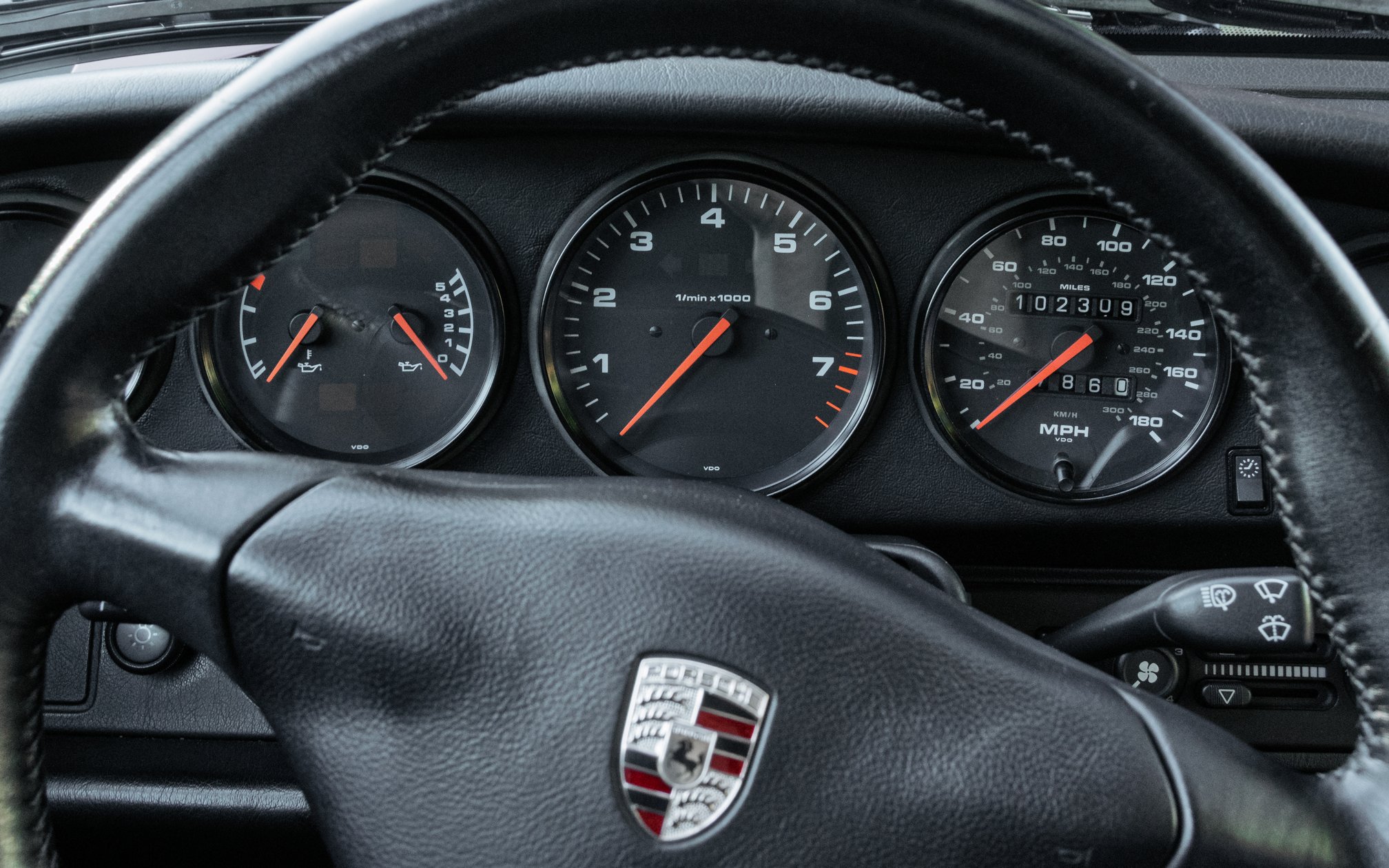
The tachometer’s orange needle is perfectly pointing up (at 4k rpm) when I stomp the gas. The needle sweeps right as we gather speed—the 993’s cabin is awash in beautiful noises of flying pistons, exploding gasoline, and whirring fans.
The dash is fast, but not furiously so. The 993 Carrera makes 282 hp and 250 lb-ft of torque from its 3.6L flat-six, numbers which are table stakes in today’s rat race. Our full-boil sprint could be easily trounced by many modern family conveyances. This Porsche isn’t faster than the Tesla Model 3s and Hyundai Ioniq 5s that swarm around us, but I can confidently proclaim that we are having more fun!
The final miles of my test drive are through Orinda’s rolling countryside. My favorite East Bay backroad starts with a few tight twists through the woods and proceeds onto miles of broad, loping sweepers.
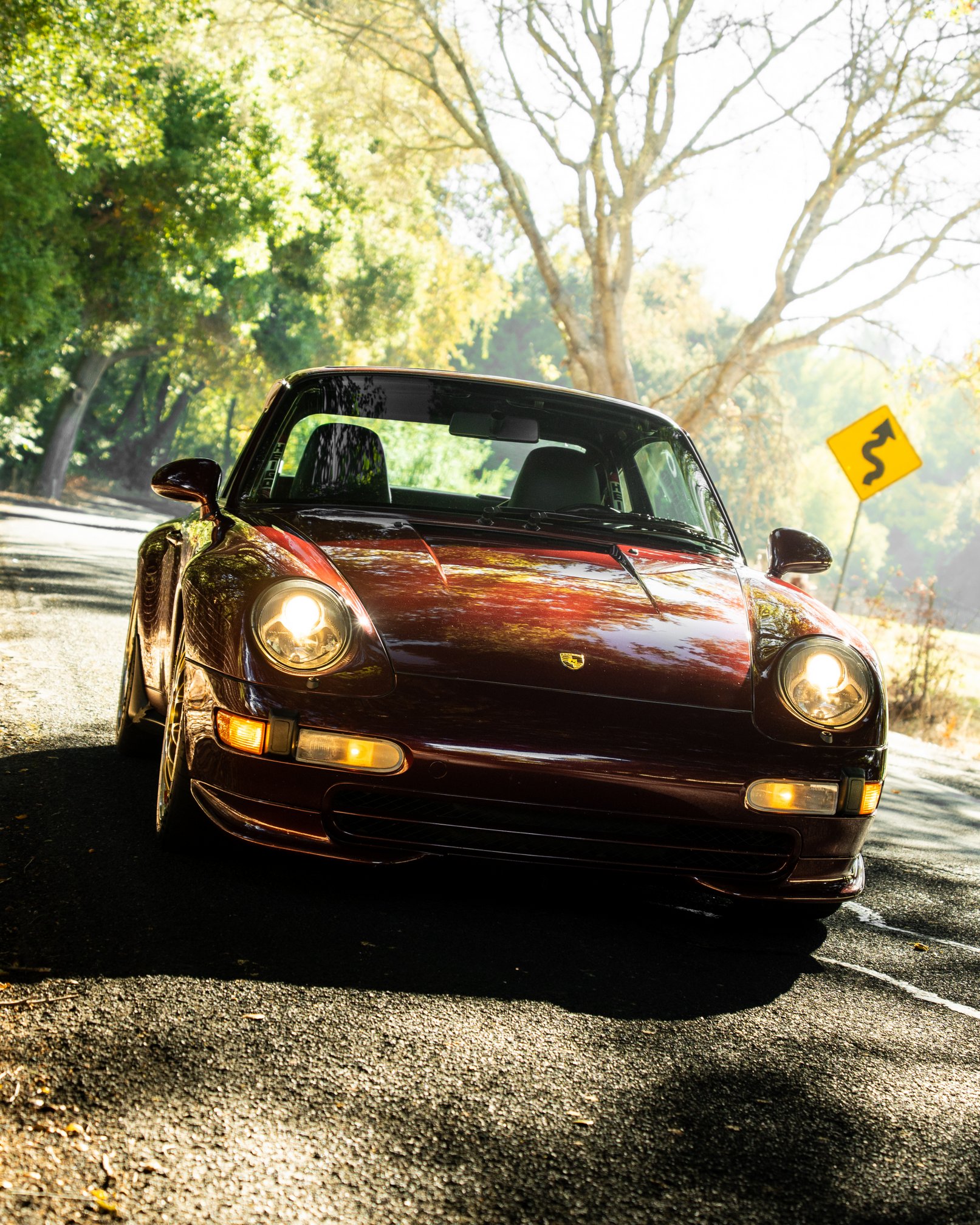
Though our pace is impeded by a Subaru, the traffic doesn’t trim my smile. I ravenously soak up the noise and sensations of the analog 993 on the trot.
Through the steering wheel, I can feel the high-frequency vibrations of the tires treading on the coarsely surfaced road. (This is the first time I take note of the road surface textures on our drive; did the 993 fail to relay them before?) The road’s uneven rises and lumps cause the wheel to wave softly in my hands, communicating the different cambers at each front Michelin Pilot Sport Cup 2 tire. I have the distinct feeling that the 993’s rear-engine layout is paying dividends to my fingertips; there is more information in the steering thanks to the car’s light nose.
The tight PSS10 coilovers come into their own when we are cornering with pace. The 993 absorbs large heaves and confidently controls its body motions through the sweepers. With inertia at our backs, the jolting, slow-speed ride is gone, and we cruise the canyon in comfort.
The brake pedal is reassuringly tight and—unlike the clutch—it doesn’t travel far when pressed. I stand on the middle pedal to test the braking performance, and the 993 confidently scrubs off its speed. I’m surprised to feel a momentary chatter of ABS—I’d forgotten that the 993 has antilock braking and airbags.
Now that the transmission is warm, the gear shifts have become smoother. I click back and forth between third and fourth gears as the road tightens and stretches. My only trouble is managing heel-toe downshifts under braking; my shoe isn’t wide enough to span the gap between the pedals. Perhaps a foot twist and heel jab can do the job, but I don’t have time to experiment today.
And the engine, oh the engine! In a long pull from 3k rpm to the 6.8k rpm redline, I find the 3.6L’s meaty torque is spread fat across the rev range. There is a steady, even shove as the orange needle swings for the red paint. The engine keeps steaming above 6k rpm, although I do miss the electrifying top-end surge of a 911 GT3 at full scream.
My test drive comes to a close with a final photo shoot. The car looks great with its modified front splitter, side skirts, and whale-tail wing, giving off 993 Turbo vibes. My first date jitters have subsided, and although it’s too soon to say “love”, the 993 is an absolute sweetheart. I’m smitten with its looks, and I appreciate how it’s both fast enough for fun and slow enough to savor. The 993 Carrera is a car that I’d love to explore at length!
Few buyers are cross-shopping 993s with 356s and 911 GT3s, but I can’t help but tie my drive back to the Porsches I know. For its sound, thigh-smashing seating position, and bottomless ability to deliver grins, the 993 absolutely feels like the grandson of the 356. Yet the 993 is so much easier to use than the 356! There’s no threat of unexpected stalling, wooden brakes, anchor-dragging acceleration, fuel-fume headaches or questionable crash survivability. (Actually, there is no question, you won’t survive a crash in the 356!) The 993 offers modern performance and ease of use, yet the 356 would have been a more enjoyable challenge at today’s conservative speeds.
And how does the 993 stack up against my all-time 911 love, the 997 GT3? The 993 Carrera offers similar aural and steering pleasures, but seems easier to drive daily due to its lighter clutch, more fluid shifter, and better ground clearance. However, I’d trade daily leg workouts for the GT3’s heady high-rpm rush. There is a ferocity to the 997 GT3’s engine that is simply absent in the 993 Carrera 3.6L.
 Mike's Steering Column