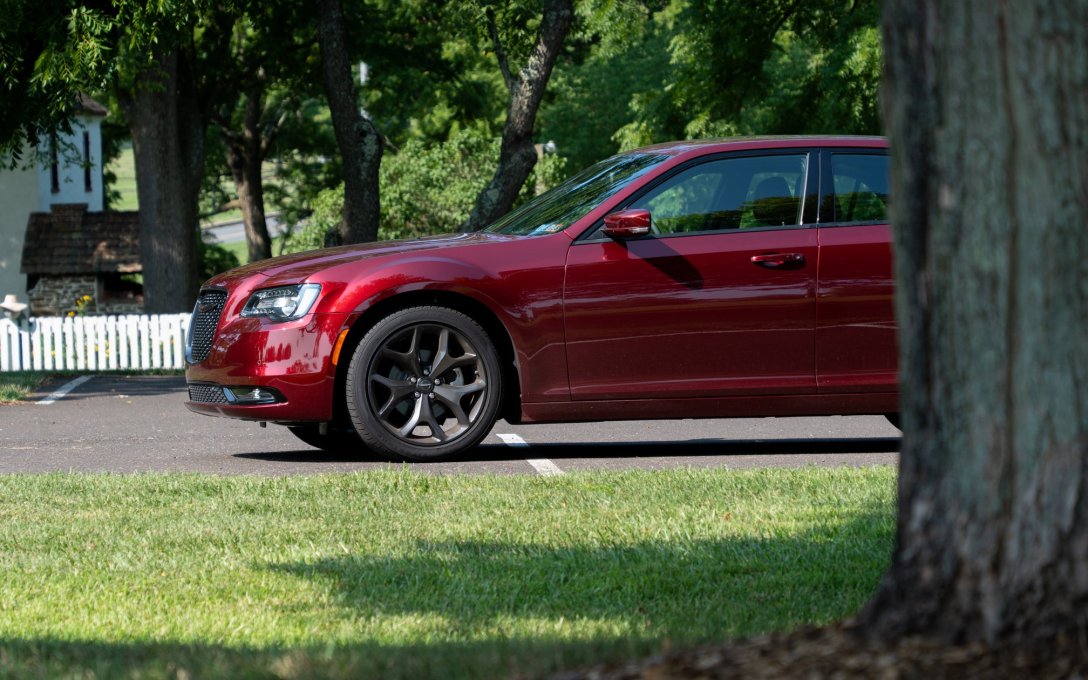
The second-generation Chrysler 300 is well past its golden years. While broadly loved at its release for its retro-handsome styling, the sedan has largely been forgotten over the last decade, and its sales numbers are 20% of their peak. So, has the public overlooked a standout American sedan?
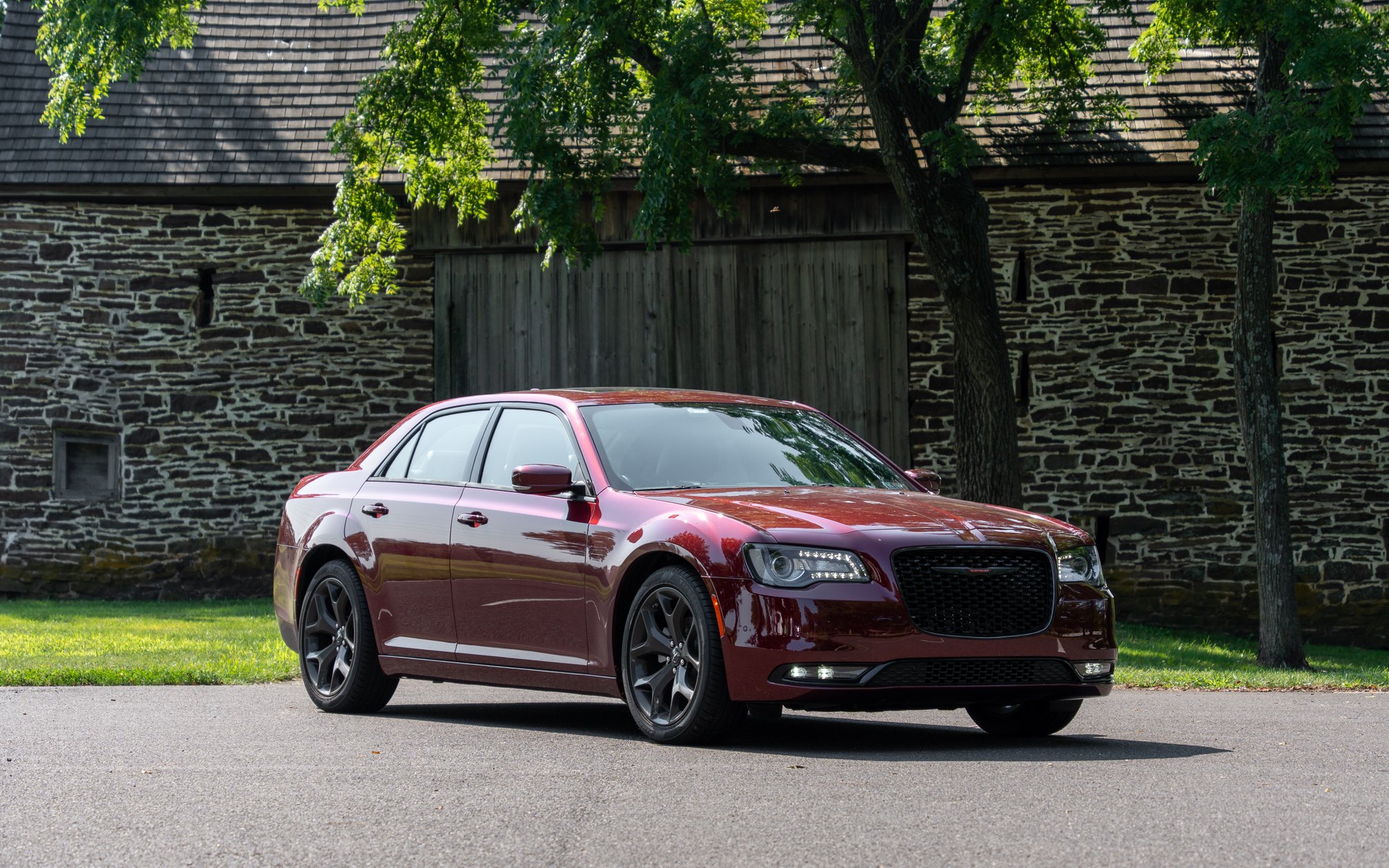
Chrysler has long played in the entry-level luxury arena, selling tarted-up versions of Dodge cars and vans. The Chrysler 300 continues that tradition, sharing its chassis, engine and transmission with the Dodge Charger. But most buyers won’t realize the close connection to the Charger, as the Chrysler 300 has unique styling that mixes Bentley presence with chopped-roof Detroit aggression.
My test car was a 2023 Chrysler 300S. The S has standard features like Alpine premium sound, heated leather seats, a soft-touch dash, and modern smartphone connectivity. Its $42,805 base price was boosted by the metallic red paint ($495) and a convenience package containing front seat ventilation, HID headlights, an auto-dimming rearview mirror and more ($2,335). An unavoidable $1,595 destination charge pushed the Monroney over $47k.
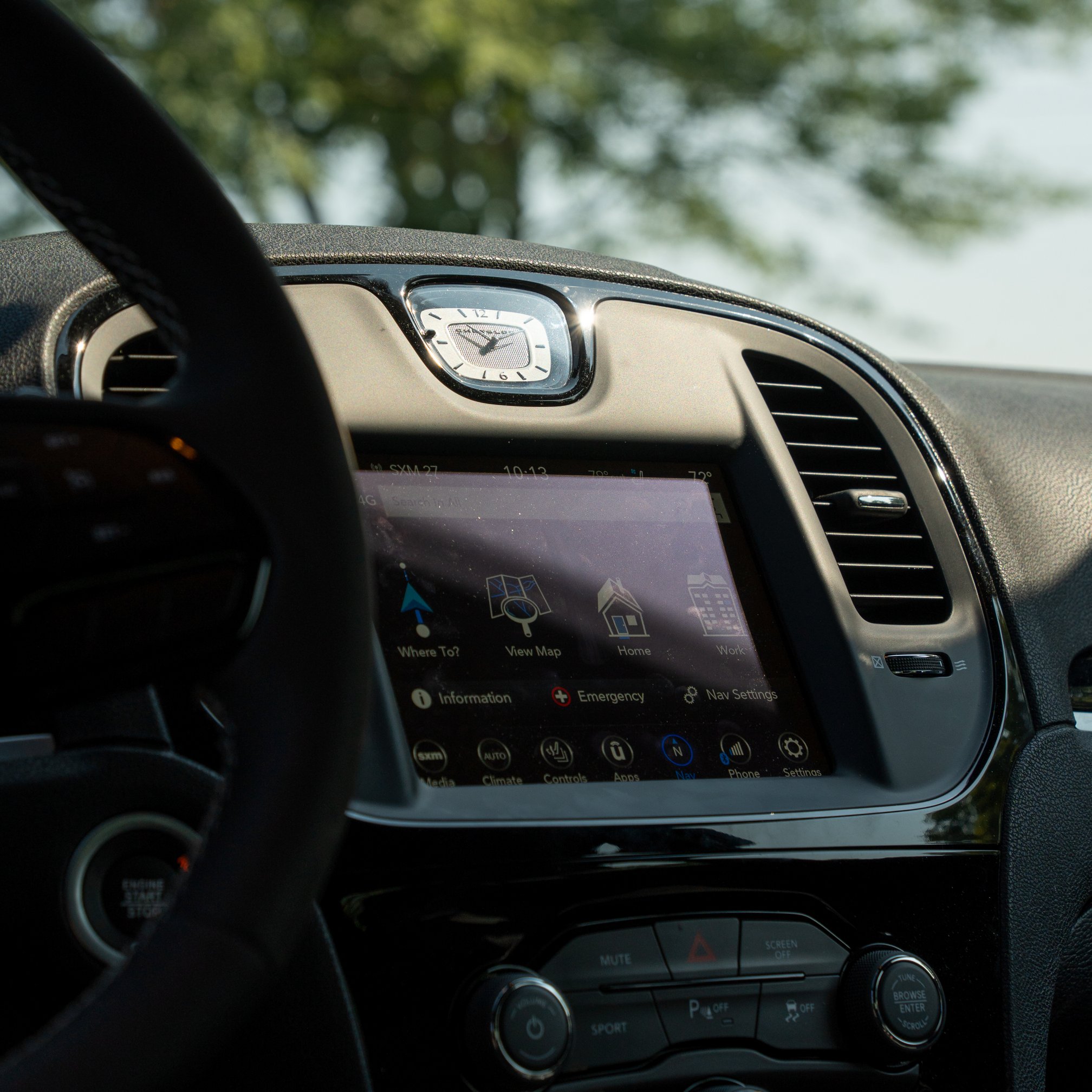
In many ways, the Chrysler 300 reminds me of Detroit luxury metal from the 2000s. (This was before Lincoln and Cadillac tried to go toe-to-toe with the Germans.) The Chrysler 300’s hefty doors slam with a solid, reassuring thunk, its driver’s seat sits well off the ground, and the dashboard is straightforward and functional instead of tech-heavy. The analog clock that crowns the dash completes the callback.
Not that the Chrysler 300 is missing modern tech. The 8.4-inch Uconnect 4 screen is the centerpiece of the cabin. It runs the navigation, stereo, HVAC and smartphone features. While it is generally easy to read and use, it is less responsive than the Uconnect 5 system I tested in the Jeep Grand Cherokee L; I encountered stutters while swiping through app pages and was flummoxed in my attempt to set up Android Auto. (Yes, I should RTFM.)
Thankfully, Uconnect 4 retains physical buttons and knobs for radio volume, channel seek, climate control temperature, fan speed and defrosters. The primary user interface miss was the lack of buttons for seat heating and ventilation; those features are buried in touchscreen menus.
The Chrysler 300’s chopped roof penalizes taller drivers (I’m 6′ 2″) by brushing their hair (or hats) against the headliner. The panoramic sunroof exacerbated my problems by thickening the roof. I ditched my baseball cap and reclined the driver’s seat to stay clear of the ceiling. Otherwise, the driver’s seat offers generous leg and love-handle room. The seat is comfortable if firmly padded—perhaps because of the built-in ventilation.
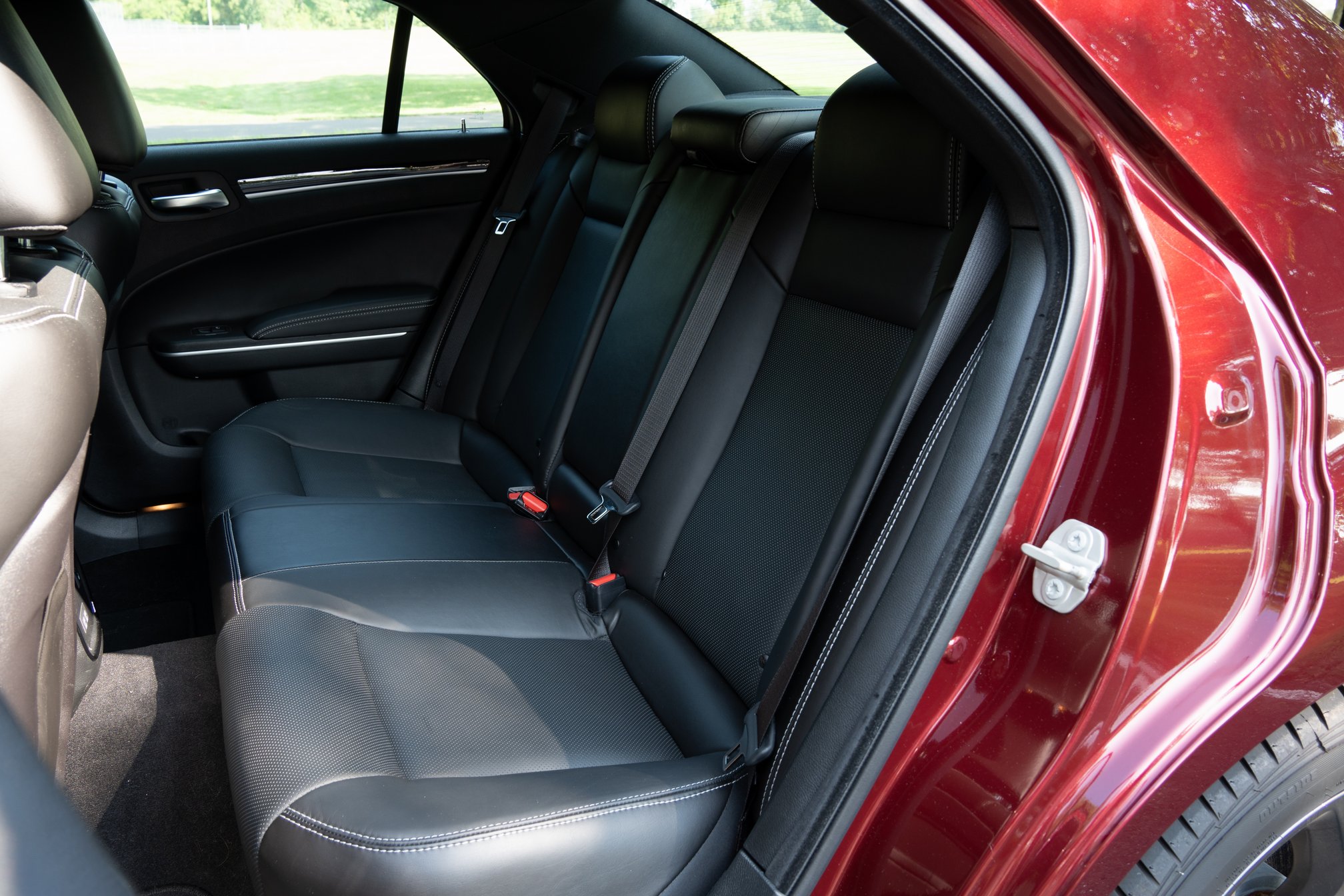
The roof clearance in the back seat was too tight for me to fit comfortably. It’s a shame because there was ample leg and shoulder room. Reserve the back bench for people under 6′ tall.
Surprisingly, there were child seat LATCH anchors for all three rear seats. (It is unusual to find lower LATCH anchors for the center position.) Oddball families with three littles and aversions to SUVs could be accommodated by the Chrysler 300. Though I suspect it will be more common for a single child seat to be center mounted while slender adults or older children take the window seats.
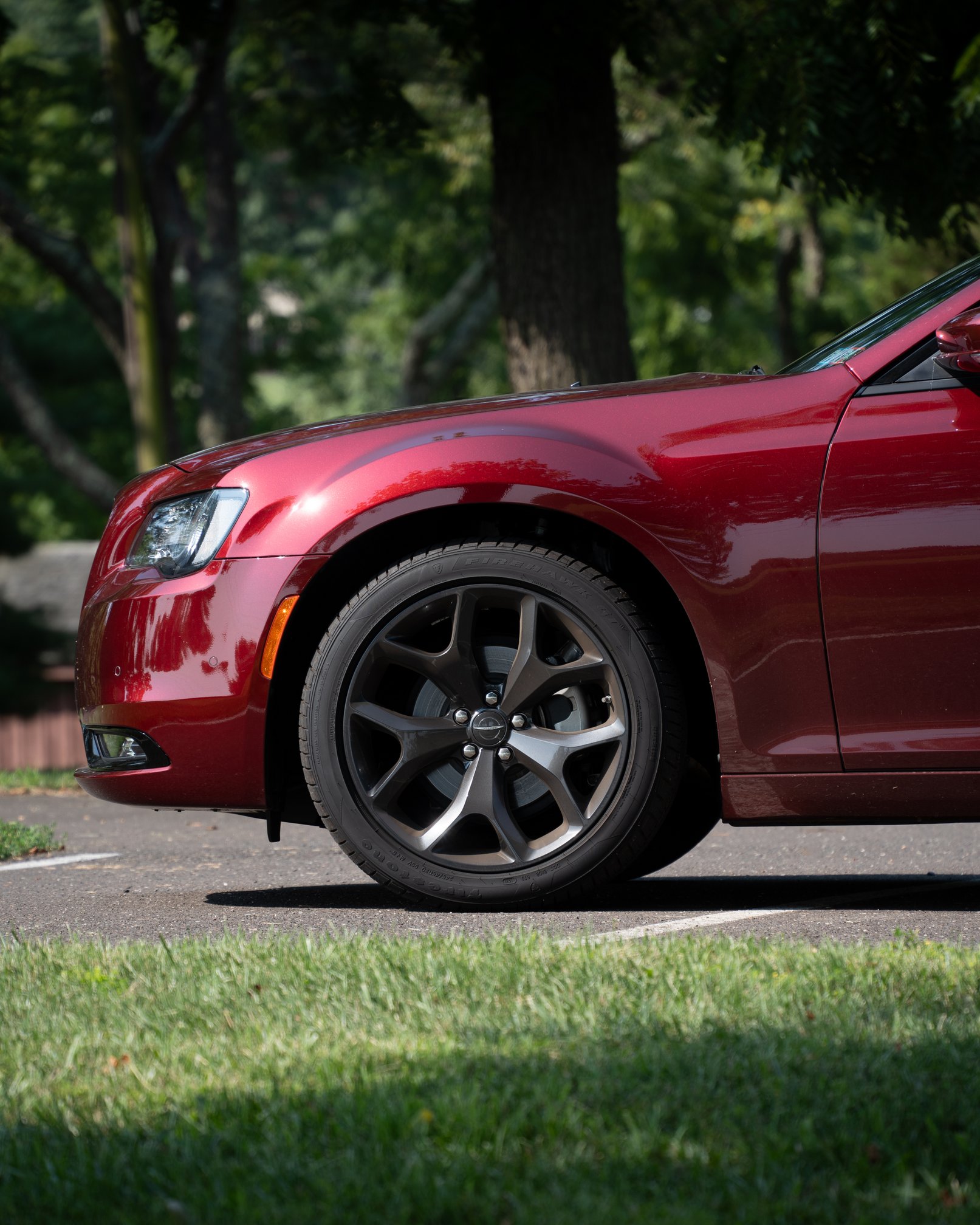
If you love to drive, then you’ll appreciate how the Chrysler 300 moves. The car has a well-judged balance of body control and ride comfort. The 300 leans a little when hustled around interstate interchanges, but its 245/45R20 Firestone Firehawk GTV tires grip well, and the RWD chassis is nicely neutral.
On the highway, the V6 Chrysler 300 easily trotted along at 80 mph. There were no rattles or wind noise to abuse my ears, but other outside noises—like the roar of heavy trucks— penetrated the cabin.
I was pleased with the Chrysler 300’s steering feel. The wheels’ whirl and the engine’s hum reached my hands, as did the impacts from cracks. There was also a soft tickle of road texture through the well-weighted steering wheel. However, I did need to watch my inputs on the highway, as the Chrysler 300 responded to even the smallest twitches.
The naturally aspirated Pentastar V6 engine was familiar to me from the Dodge Charger, Dodge Durango and Jeep Grand Cherokee L. In the Chrysler 300S, it produces 300 hp and 264 lb-ft. This was plenty of power to hustle along the 4,000-lb sedan but not enough to keep up with today’s furiously fast EVs or turbocharged I6s and V8s. Regardless, I liked the V6’s snappy throttle response and refined sound. The Chrysler 300S has a distinctive howl when flogged to the red line.
A smooth-shifting 8-speed automatic is the only gearbox for the Chrysler 300. When left in D, it flattered my heavy right foot with quick downshifts when I dipped into the gas. The car also has half-size flappy paddles for manual gear selection. The transmission was obediently responsive to my paddle pulls, but it reverted to full automatic after a few minutes without a shift. I would appreciate a dedicated manual mode!
Chrysler markets the 300’s suspension as a “performance suspension,” and I agree that it handles the curves well. However, I paid for those fleet dance steps with a pummeling over badly blemished roads. Downsizing the handsome 20-inch wheels or forgoing the firm ventilated seats might recover some of the ride comfort.
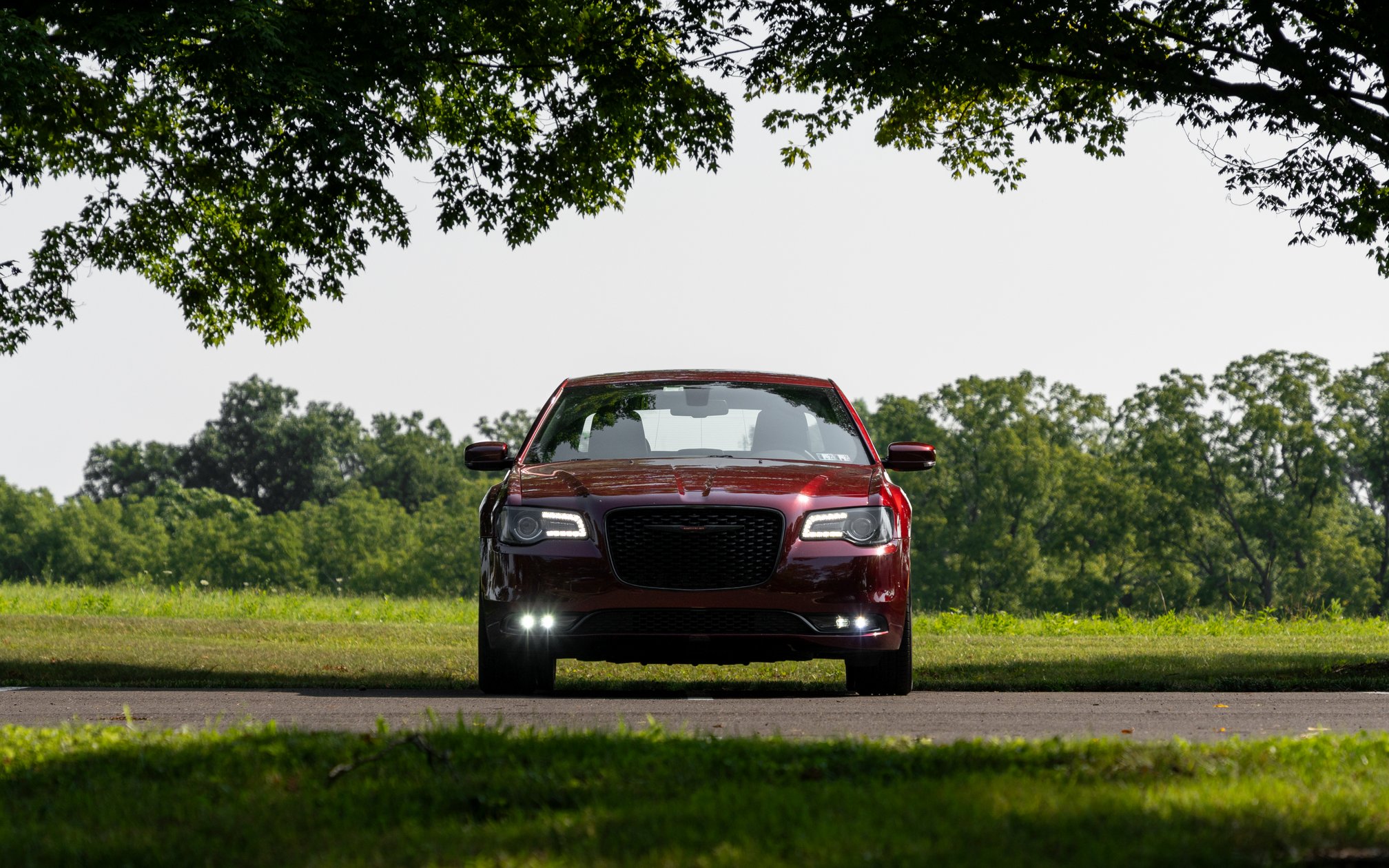
After my day with the Chrysler 300, I think it is both a satisfying drive and out-of-step with today’s buyers. The market has shifted to more spacious SUVs and faster and more efficient EVs; it’s no wonder the Chrysler 300 was difficult to sell!
But for buyers who hanker for classic American RWD sedans, the Chrysler 300 delivers those made-in-Detroit vibes in a polished package. Hurry if that’s your style because the last Chrysler 300s may still be lingering on dealership lots.
 Mike's Steering Column