
Did you know that the Malibu is the last sedan in Chevrolet’s 2024 portfolio? (Their only other car is the Corvette.) These days, Chevy is a company of SUVs and trucks. Perhaps that’s why the Malibu didn’t get the polish it deserves…
After 300 miles with the 2024 Malibu LT, I can report that the Chevy is solid basic transportation. It’s a four-star car on a ten-star scale. I like its bodywork and pricing but find its drivetrain, driving dynamics and interior quality disappointing.
The base Malibu starts at $26k (including the $1,095 destination fee). That low low price includes some niceties like keyless start, an 8-inch infotainment screen with wireless smartphone connectivity, and active safety features like forward collision and lane departure warnings. All Malibus are powered by a 1.5L turbo four-cylinder engine that sends 163 hp and 184 lb-ft of torque to the front wheels via CVT transmission.
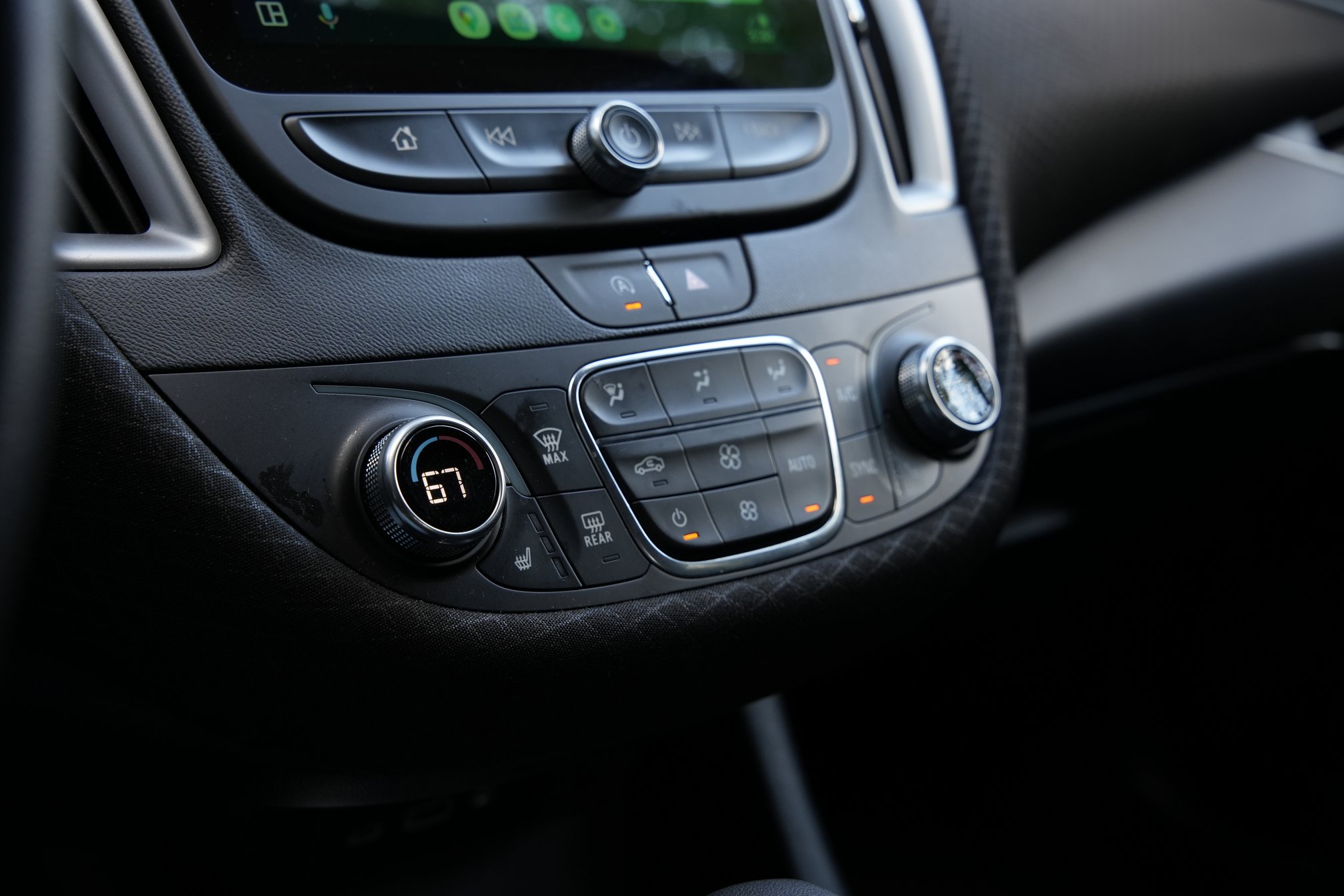
For $30k, you can get a near-top-of-the-line Malibu LT1 like my rental car. The LT1 trim adds dual-zone HVAC, heated seats and mirrors, more interior reading lights, power controls for the driver’s seat, and a one-press open and close window (again, for the driver only). Extra-cost options like upsized 18-inch wheels and a panoramic sunroof further improved my rental.
The apex Malibu is the $32,595 LT2. It has leather upholstery, active cruise control and Bose sound.
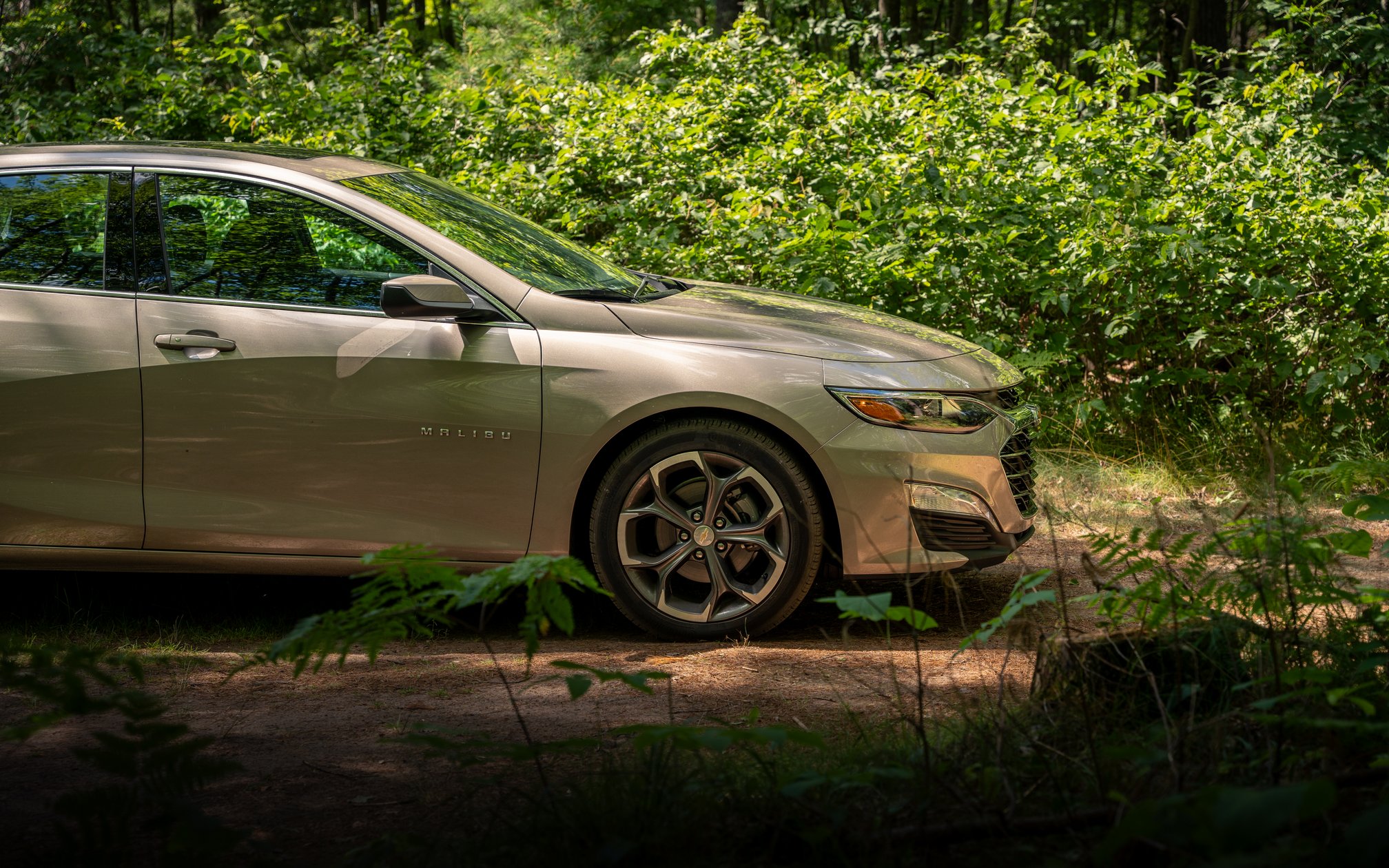
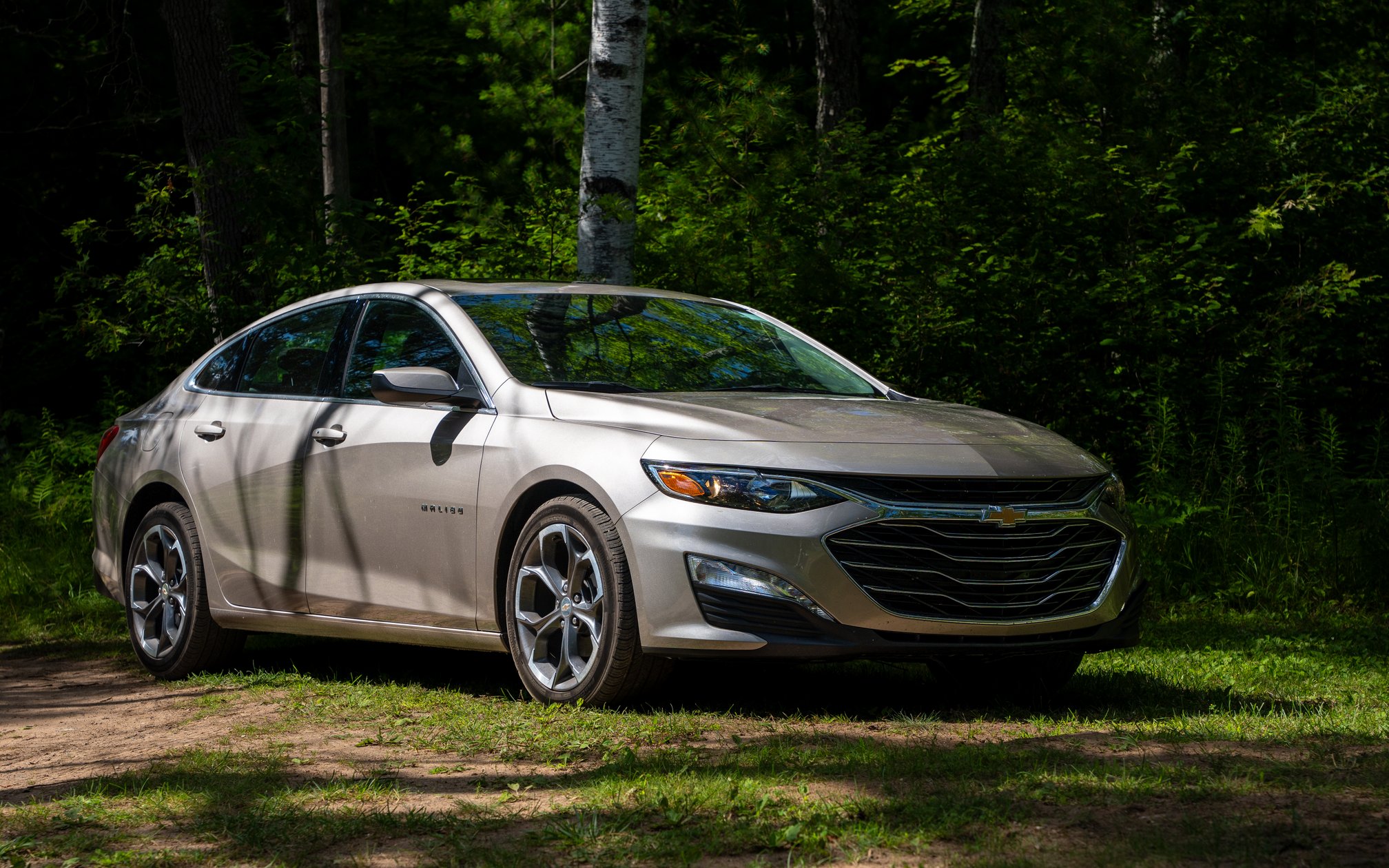
The 2024 Malibu has elegant body lines that could have come from a previous-generation Audi. I found its slippery shape and crisp details handsome and refined. (Before 2008, the Malibu’s styling was entirely forgettable, so the current design is remarkable.)
Inside, my Malibu was covered in hard black plastic and rough ebony cloth. The abyss of black hides the cabin’s nice shapes. I’d suggest buyers splurge on the LT2 to unlock the colorful leather and class up the interior. I did appreciate the easy-to-find buttons for climate control and radio and the responsive infotainment screen, which paired effortlessly with Android Auto. The stereo sounded fine, too.
We drove our rental Malibu across Wisconsin on interstates and rural byways. The car was reasonably spacious. My young kids sat happily in the back, and our luggage—a large checked suitcase, small rollaboard, compact stroller and several backpacks—didn’t challenge the large trunk. Adults of average height could be comfortably accommodated in the back seats; tall adults will want for headroom.
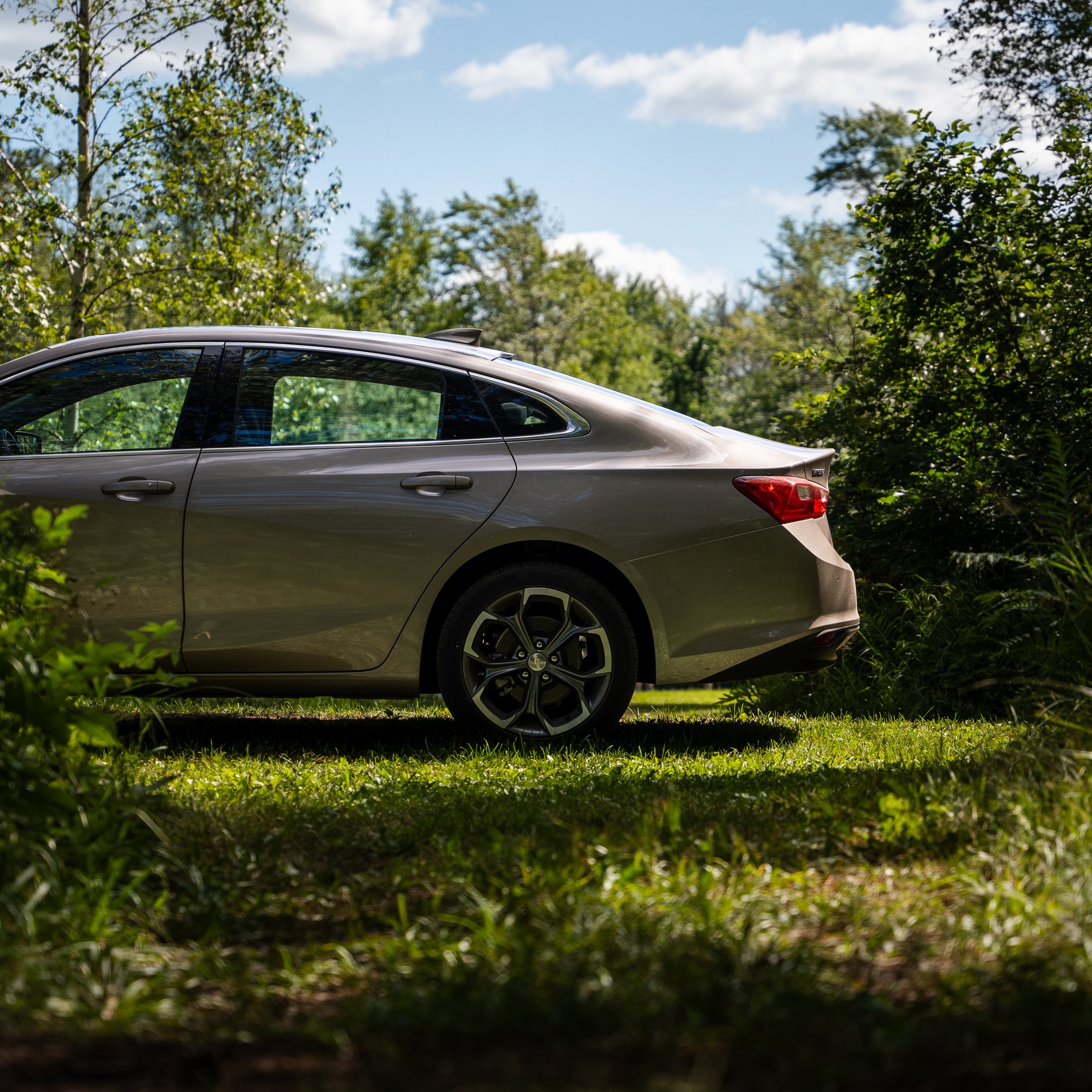
However, in the age of SUVs, the sedan’s low seating position and ride height feel downmarket. We would have been more comfortably accommodated in a compact SUV for seating posture, outward visibility, and ease of loading.
The Malibu’s drivetrain was its biggest buzz kill. (It buzzed, and I wanted to kill it.) While the turbocharged four-cylinder delivered torque quickly and evenly, it was underpowered and droned under acceleration. Its lack of song can be partially blamed on the CVT transmission, which held the engine rpm steady while continuously varying the gear ratio. While other cars sing when climbing through the gears, the Malibu moans monotonously. The payoff for this unenthusiastic powertrain was an observed economy of 30 mpg over 300 miles of mixed-use.
Like the rest of the car, the Malibu’s chassis was, well, sufficient. Its ride quality was neither luxurious nor sporty, and we felt the bumps without being unduly pummeled. Its cabin was neither loud nor quiet.
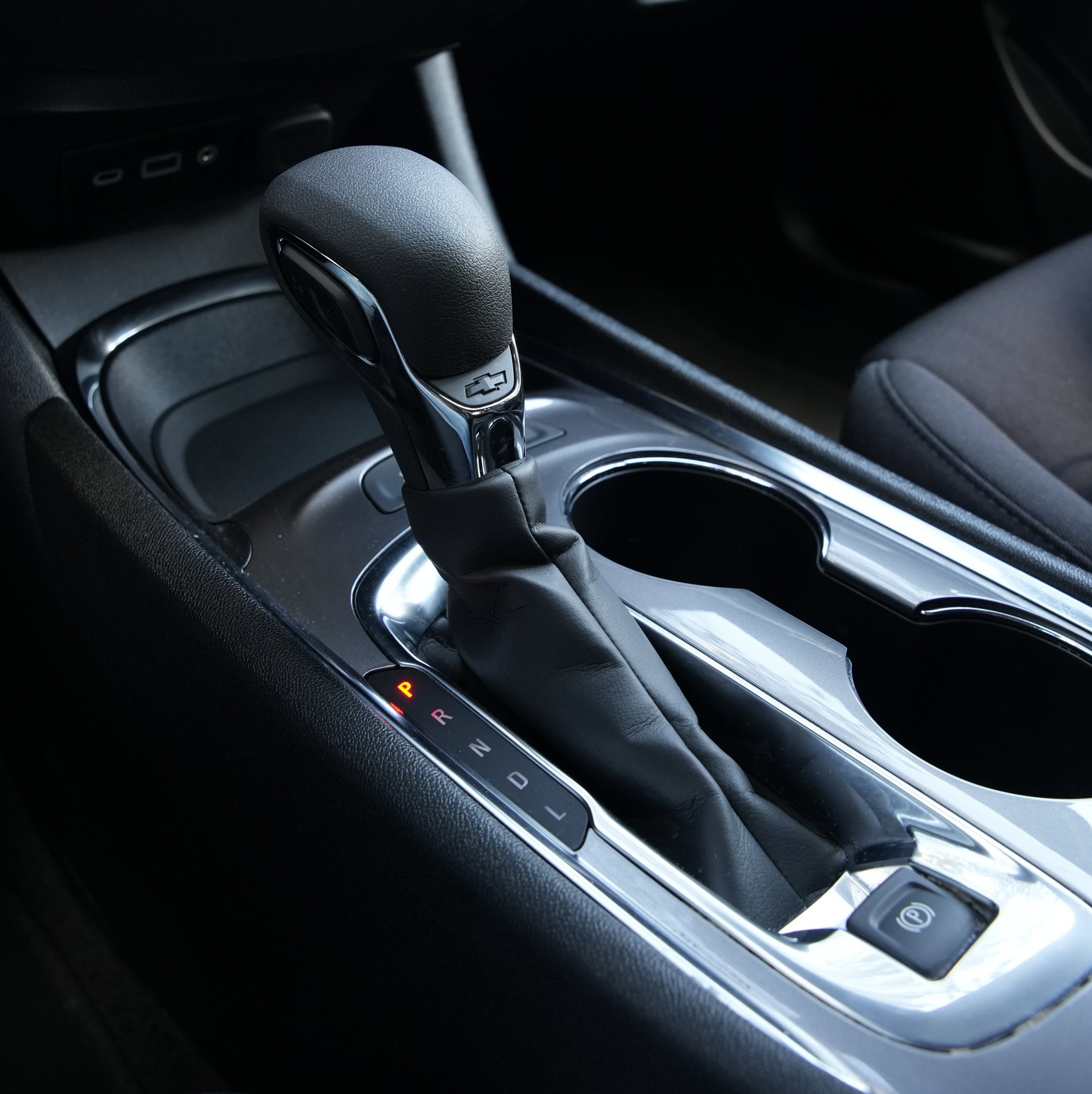
If I were to improve the car, I’d swap the CVT for an 8-speed automatic and redesign the seats. My butt felt numb after an hour, and the adjustable lumbar support was barely sufficient.
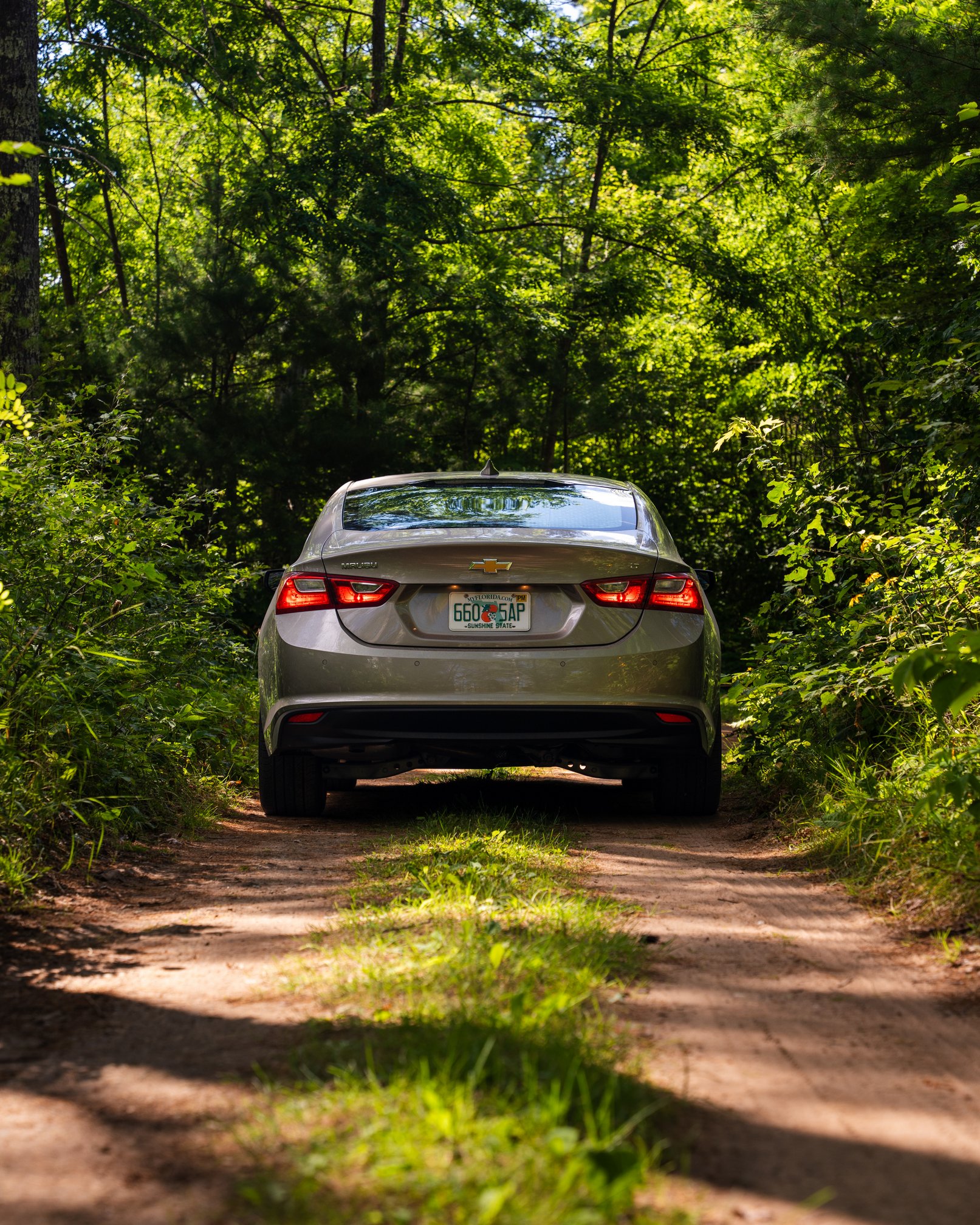
I was pleasantly surprised by the road feel and weighting of the steering. The Malibu transmitted pavement textures and bump impacts to my hands and bum. When I played with the car’s handling in Wisconsin’s North Woods, I could confidently take corners at 10 mph over the speed limit. The Malibu is no GR Corolla, but it should be able to dance around a moose.
Or stop in time to save a rodent’s life, as I did when I smashed the brakes at 50 mph and avoided a suicidal squirrel. The pedal feel and stopping power were both good.
So, the Malibu is a mixed bag. I can’t recommend it over midsize sedan stalwarts like the Toyota Camry, which is similarly priced but available with AWD and hybrid or V6 powertrains. Even the base four-cylinder Camry LE is more appealing for its better economy (28/39 mpg vs 28/36 mpg), healthier power (203 hp vs 163 hp), and superior residuals.
If you have a choice, pass on the 2024 Chevrolet Malibu. It’s a mediocre rental and isn’t worth purchasing. Maybe try a Chevy SUV, instead?
 Mike's Steering Column