
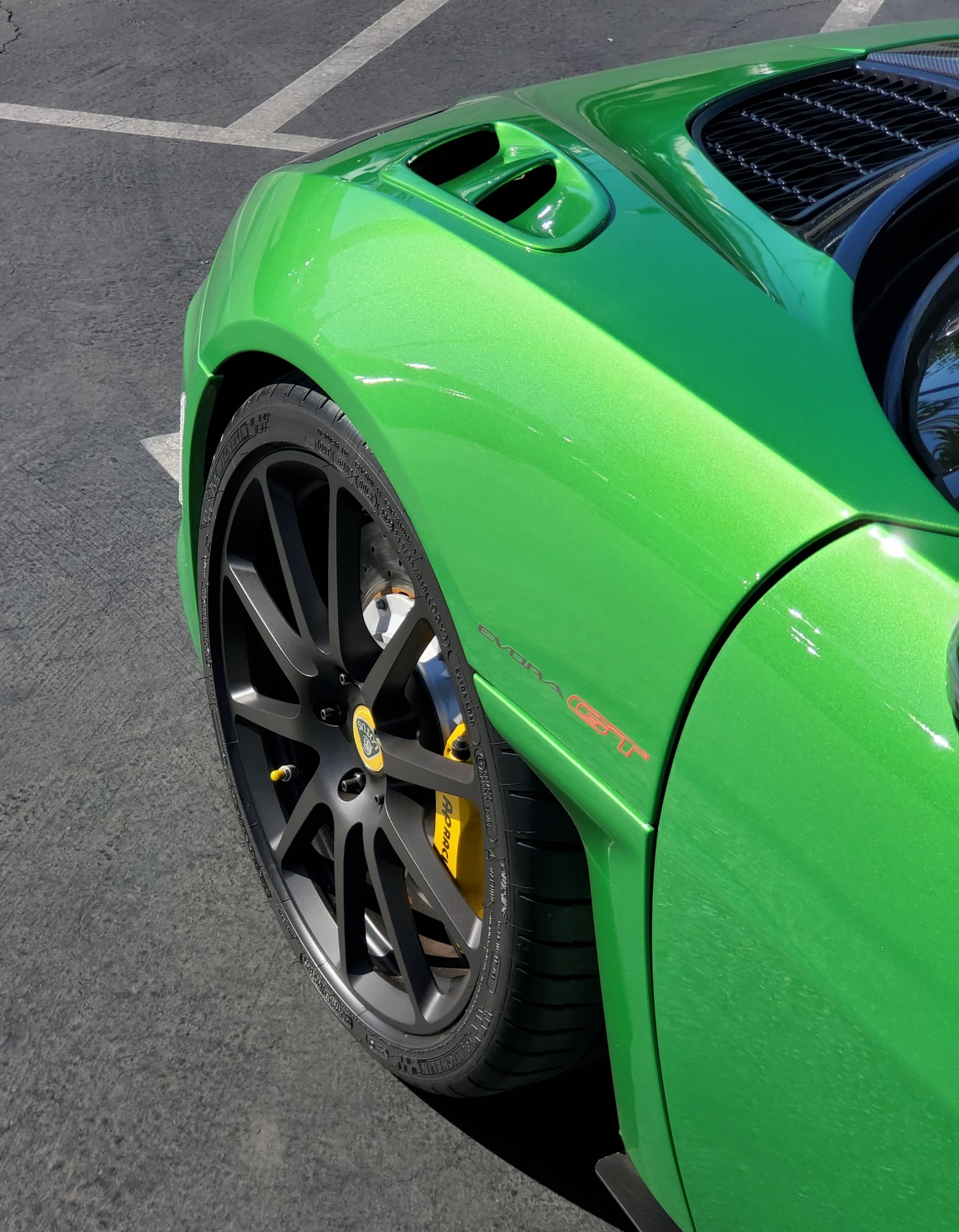
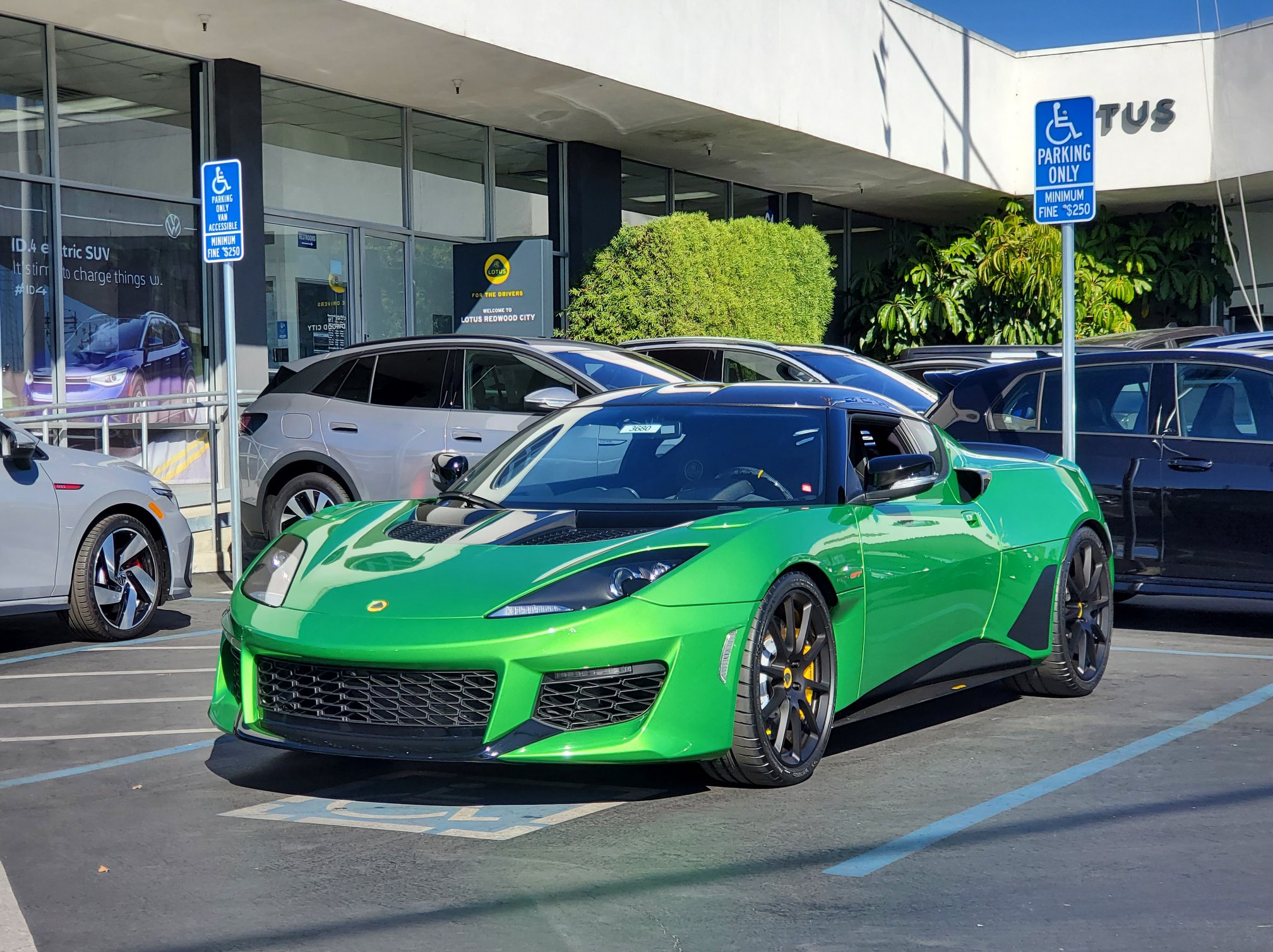
Gleaming like an emerald, the vivid green Evora GT backs out of the showroom and into the sharp morning sunshine. Its creased and sculpted lines are festooned with carbon-fiber scoops, gaping grills and vented panels. The Lotus looks angular, aggressive, and—in this bright color—made to snap necks at high speed. It’s over the top, and it works for me!
Although this feisty find is being readied for my test drive, I’m not an Evora GT buyer. That’s because my attention is on the upcoming 2024 Lotus Emira; it forgoes the 2021 Evora GT’s end-of-the-run Pep Boys garnishes for a sleeker and more sophisticated style. But there’s no Emira demonstrator available today, so I’m sampling Lotus’s supercharged V6 and six-speed manual in the Evora GT instead. Both cars use the same drivetrain, so there’s much to learn.
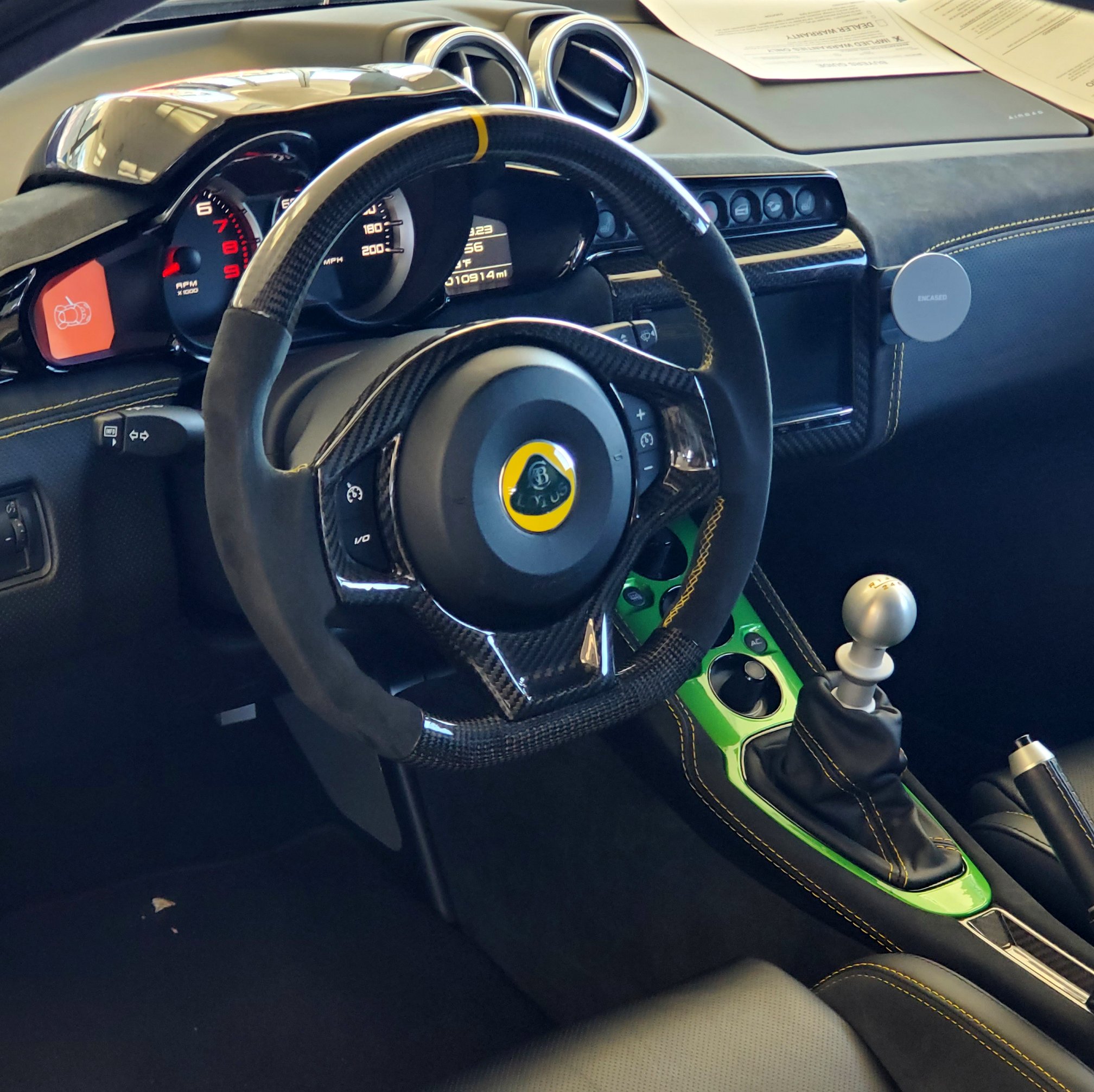
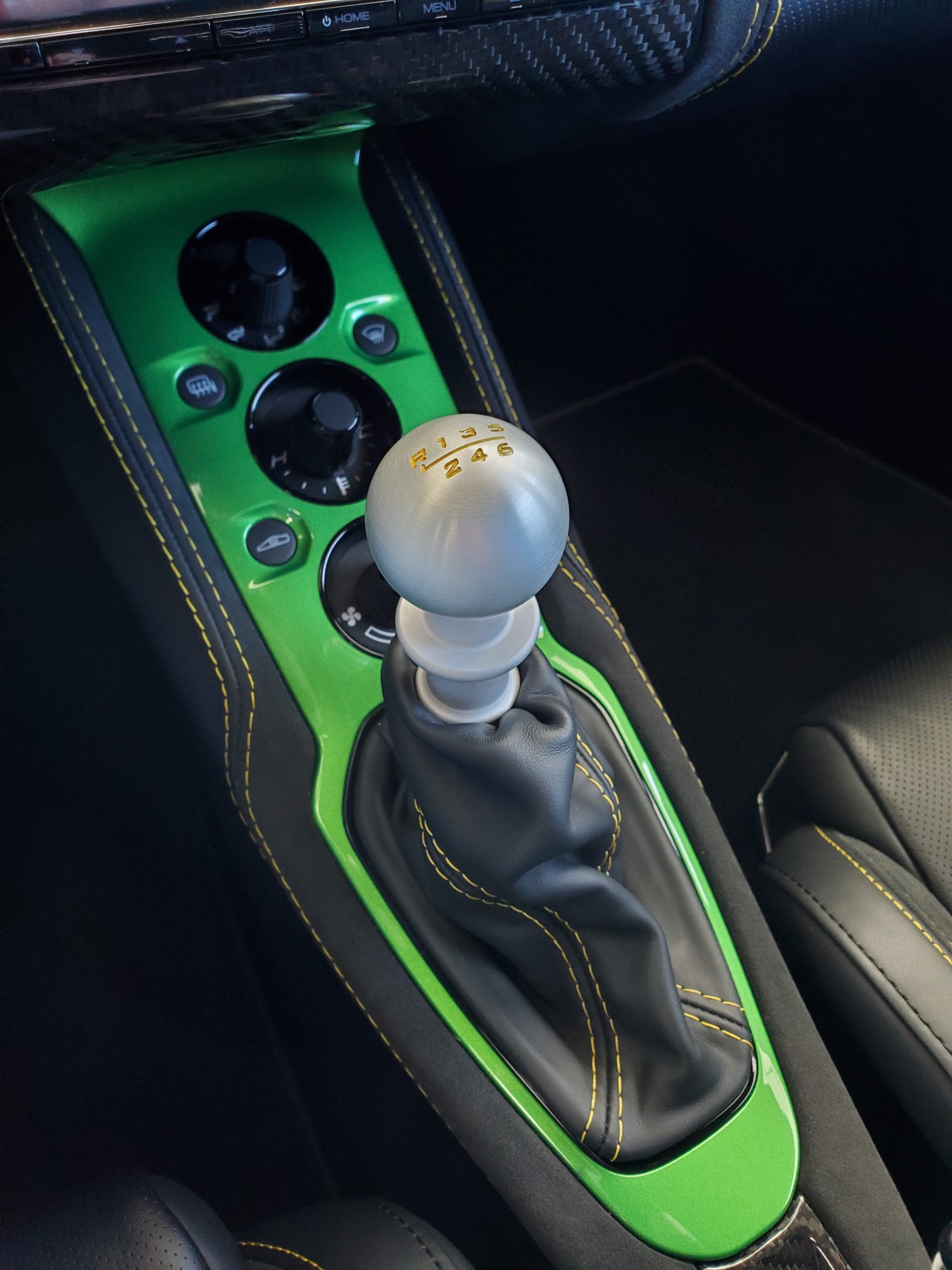
A salesman invites me to take the Evora GT’s driver’s seat. As I do, my attention is captured by the carbon fiber adornments on the steering wheel, gauge hood and seats. The bling continues with yellow-over-black upholstery stitching and a body-colored shifter surround. Someone hit the options list hard when they ordered this Evora GT!
(The 2021 MSRP for an Evora GT was $99k, but you could easily add $30k to the price with premium paint and carbon fiber goodies. Two and a half years later, with 11k miles on the clock, this Evora GT is now offered at $103k.)
Once I get over the glitz, I realize I’m sitting an inch too high in the bucket seat. The top of the windshield threatens to block my view of stoplights, and there is just enough clearance between my hair and the headliner for helmeted driving. (Yours truly is 6′ 2″.) Sadly, the seat can’t be vertically adjusted, and its manual controls only let me slide it forward or backward and change the seatback angle.
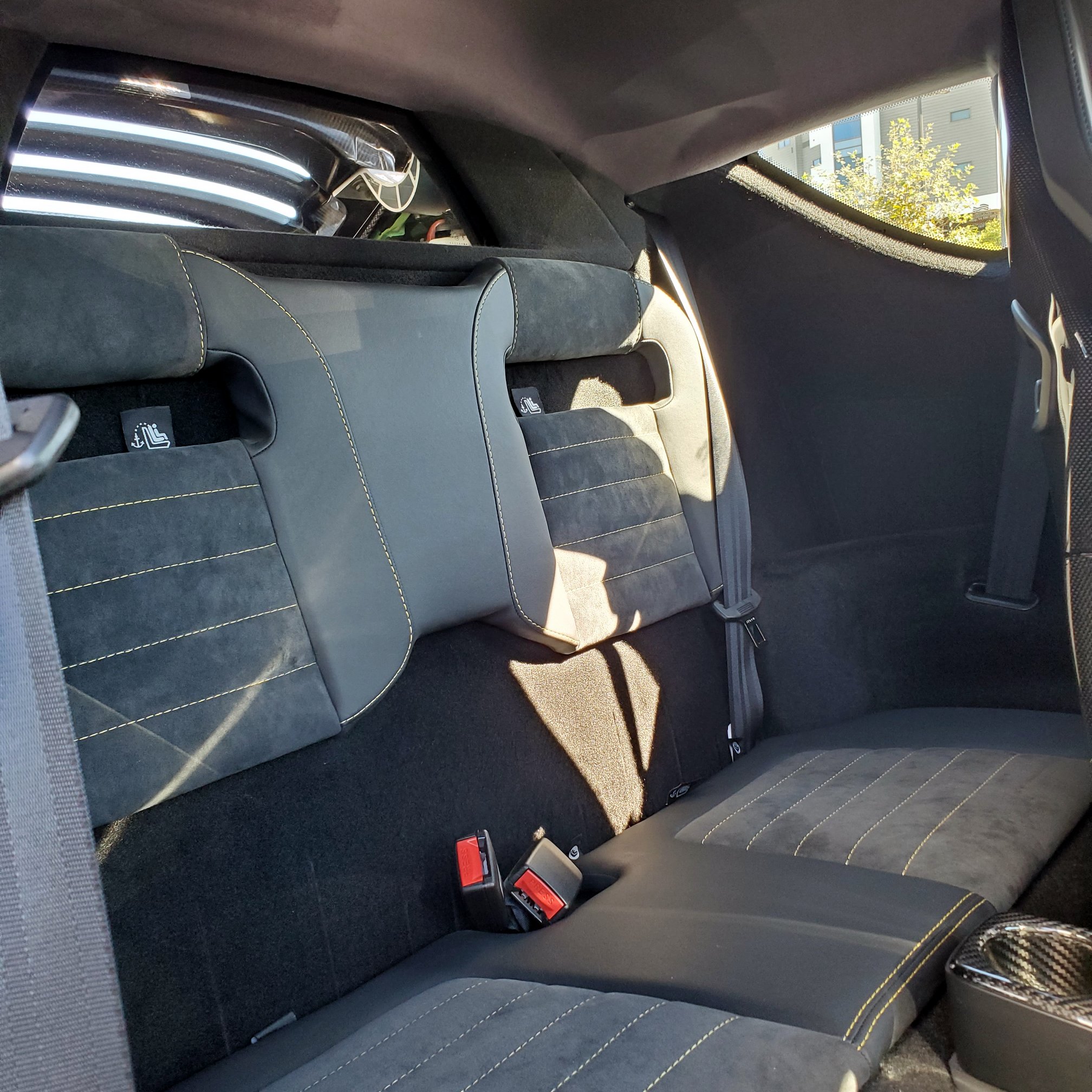
A peek over my right shoulder reminds me that this Evora GT is a 2+2; a pair of tiny rear seats with prominent LATCH-anchor labeling look back at me. (The Evora GT came as a 2+0, too.) I like taking my kids for drives, and it seems possible that slim-profile child seats could fit in the back. But it would be claustrophobic for my littles, and they might even have to sit crisscross applesauce if the adults up front were long-legged.
The Evora GT is curiously tight on interior room, considering that it is a half-inch longer and two inches wider than the Porsche 718 Cayman. Somehow, the Cayman’s cabin feels more spacious and airy, but then again, it doesn’t stuff four seats in the space for two.
The question of where the Evora GT’s extra width has gone is answered when I adjust the mirrors. Thick hips blot out the inner third of the wing mirrors. The good news is that the mirrors’ far edges are bent parabolically to ameliorate the gigantic over-the-shoulder blind spots.
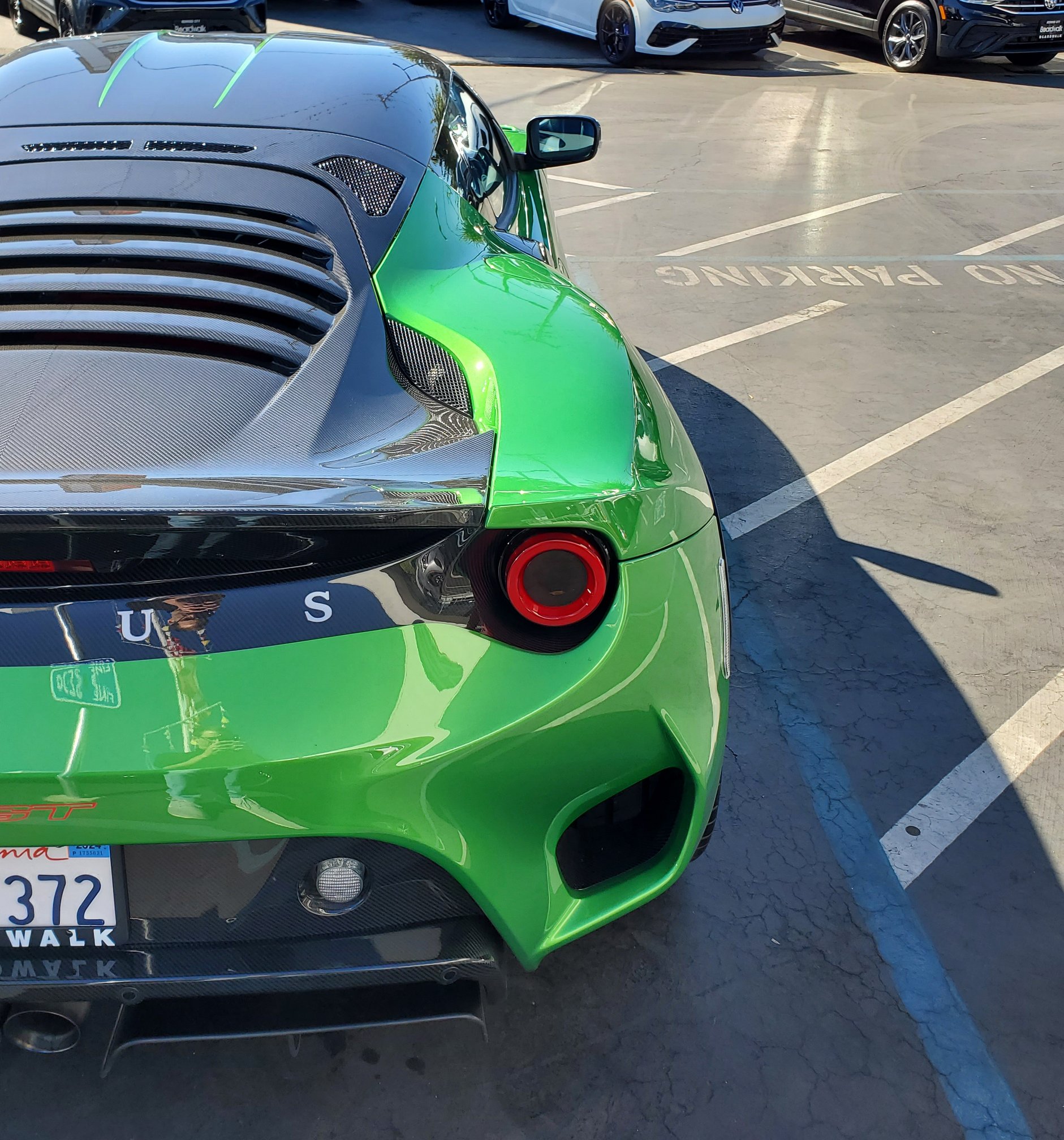
The windshield mirror is useless since the slatted carbon-fiber engine cover blocks the rearview. I’ll rely on the reversing camera if I need to back up.
A jab of the start button ignites the engine. The 3.5L V6 blasts to life with a throaty roar that is exhilarating and sure to wake the neighbors. So far, nothing is subtle about the Evora GT, but that is why it has the reputation for being a supercar for sports car money.
I grab the cold metal shifter ball and push it into first gear. Gingerly, I put the Lotus into motion and exit the parking lot. The upshifts to second and third gears are short, tight and choppy. (The gear changes will become smoother as the transmission warms.) The Evora GT’s six-speed neither feels as effortlessly fluid as a Cayman GTS’s nor as unbreakable stout as a Shelby GT350’s.
I follow a frontage road on the way to the highway. The low-speed ride is stiff, and the Evora GT surfs over undulations rather than cutting through them. I’m surprised, as other journalists praised the Evora GT’s suspension, saying it is so well-tuned that it negated the need for electronic adjustable dampers. For me, right now, the chassis bobbing and rolling with the road, so I beg to differ. But I do appreciate how hard impacts from potholes are dulled and the comfort of the soft seat.
(The seat seems amenable to all-day road rallies, as its bottom cossets and its bolsters aren’t constricting.)
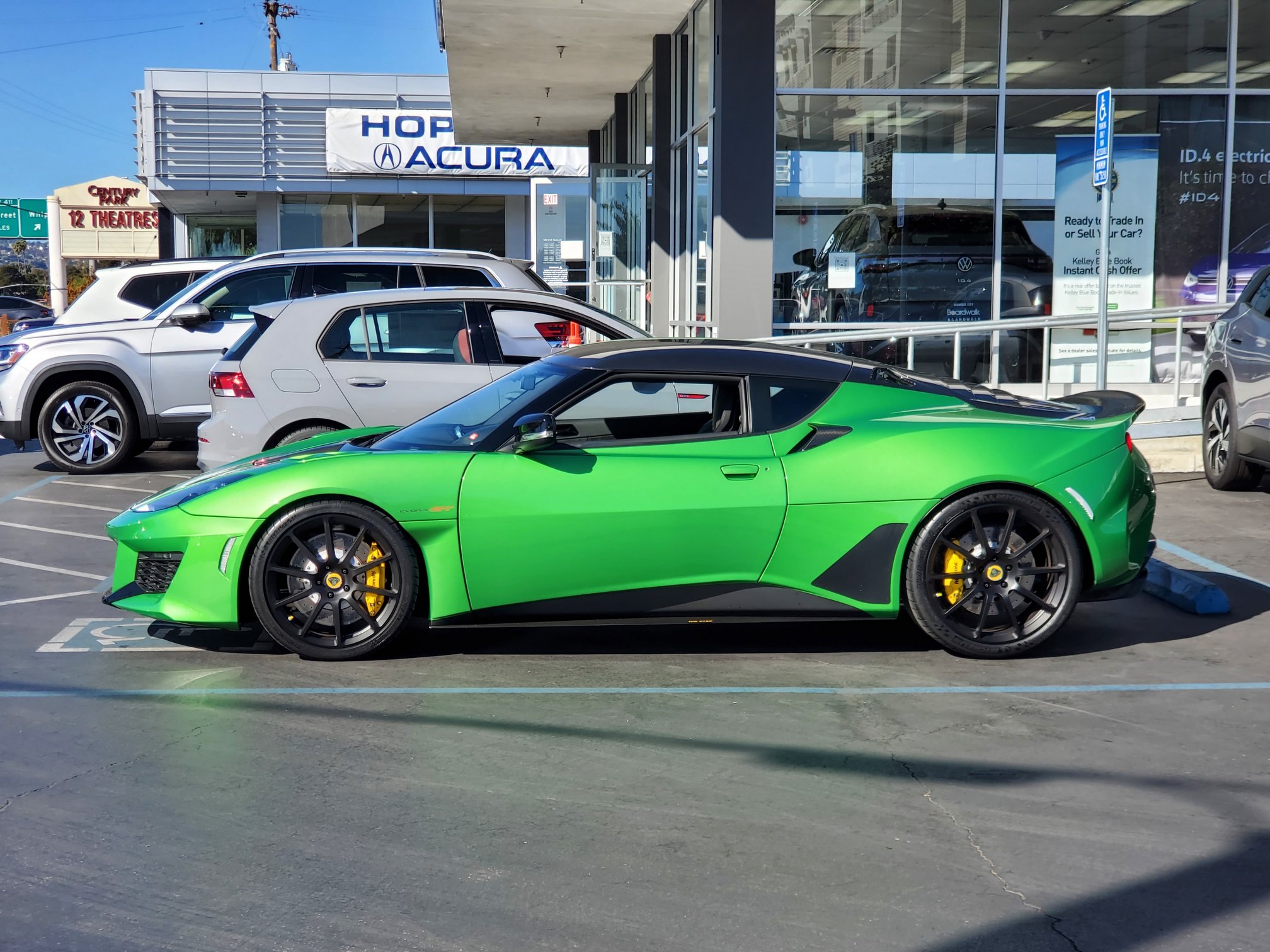
I turn my thoughts to the Evora GT’s steering. The most gloriously unfiltered, obnoxiously communicative steering I ever felt was the Lotus Elise’s. If a symphony orchestra, football marching band, and heavy metal band put on a joint performance, that cacophony would match the level of chaotic communication I remember from the Elise. It was too much of a good thing…and completely wonderful.
I had hoped the Evora GT would be just as communicative at a lesser volume, but instead, I’m finding that many of the players have left the stage. The buzz of the road texture is muted, and the tug of the rutted pavement on the steering wheel is missing. This is not a refined version of the best steering in the world, but rather, very good steering that matches some systems I love (AMG GT) without surpassing the benchmarks I hold dear (997 911 GT3).
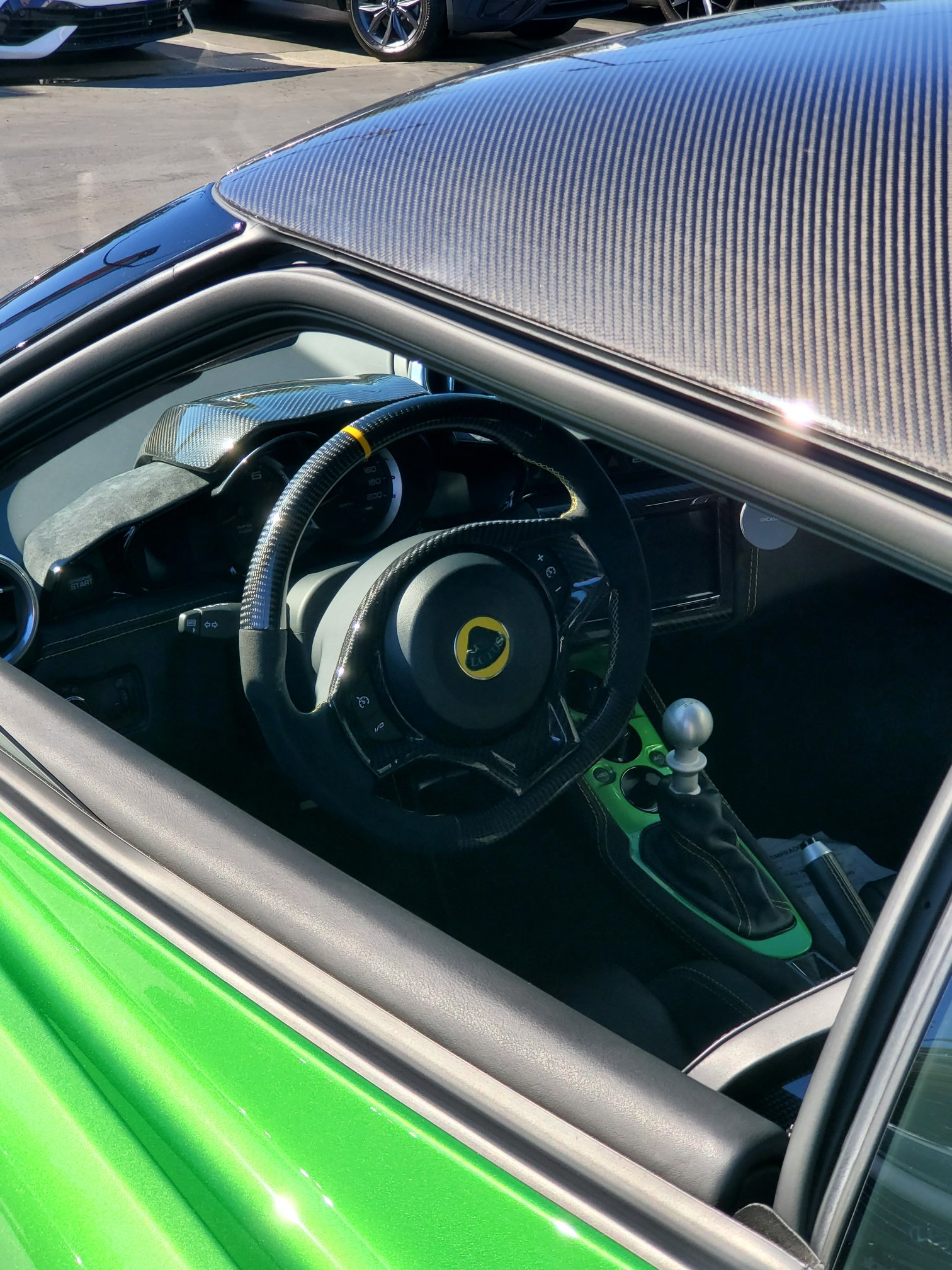
I’m distracted from my musings by a highway entrance, the perfect excuse to blast through the second and third gears. There is a tremendous swell of sound from the Evora GT as I floor the gas and the engine piles on the revs: What starts as a throaty low-rpm roar gets overlaid with a brassy mid-range bellow.
The Evora GT feels urgent as it effortlessly scoots to match (and then exceed) the flow of traffic. Its 416 hp and 317 lb-ft are modest in today’s world of turbo V8s and dual-motor EVs; frankly, the Lotus lacks the tire-wrenching torque I now take for granted. But I have inadvertently hit 85 mph, so either the speedometer is a liar, or the 3175-pound Evora GT makes good use of its might.
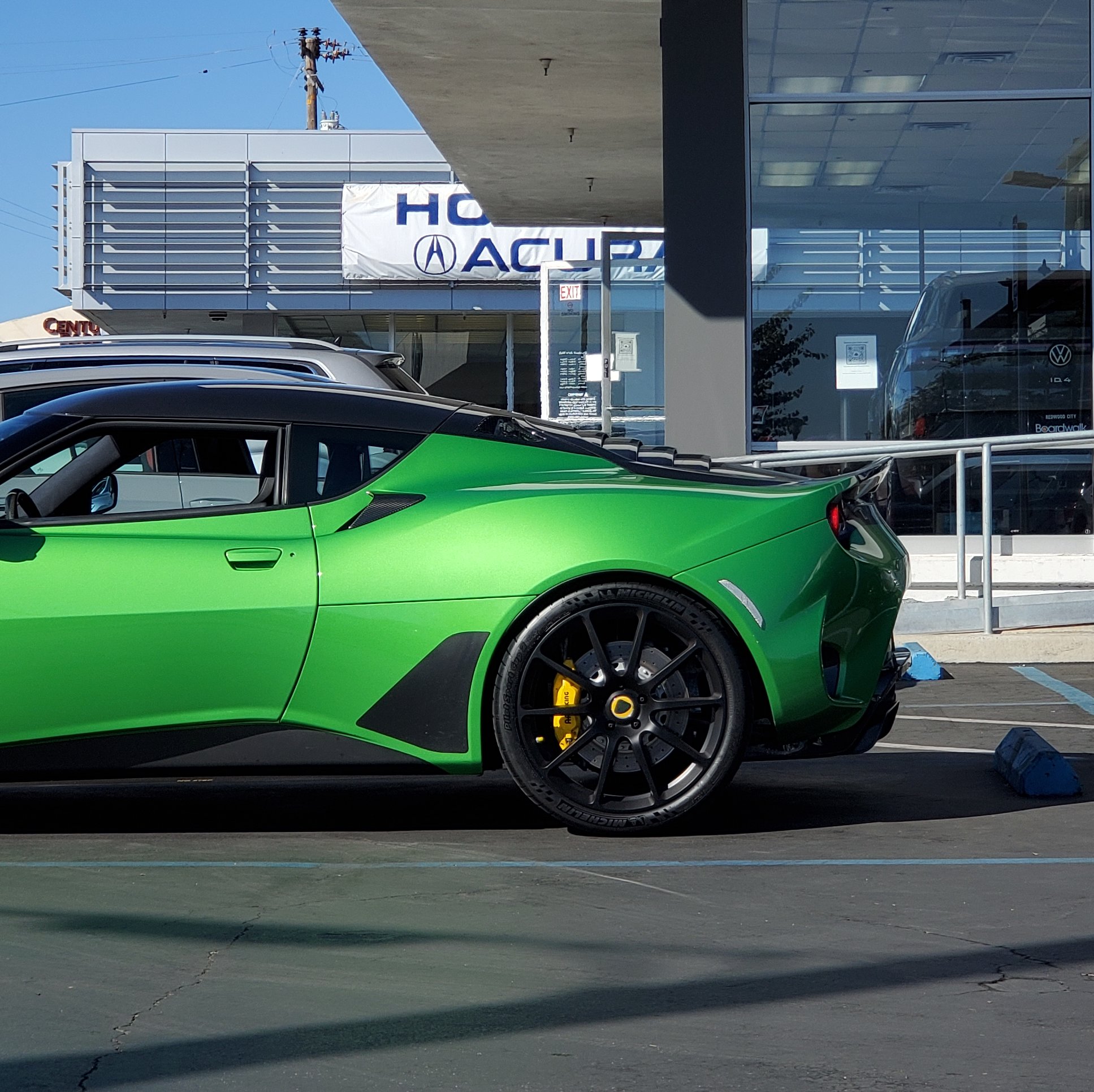
I take the first exit, set on testing the Evora GT on city streets. Going from stop sign to stop sign, I find the noise levels tolerable and the driving controls—steering, shifter and clutch—suitably weighted for in-town use. However, the poor rearward visibility, firm ride, and tight cabin would have me excusing the Evora GT from daily drudgery and saving it for special outings.
As I work through the city blocks, I acclimate to the Evora GT’s pedal placement. The brake and gas pedals are right where I expect them and well-placed for heel-toe downshifts. But to make room for the double-wishbone suspension, the clutch pedal has snuggled up with the brake, forcing my left foot to the right. I’d get used to the layout, but the tight pedal box cocks my left leg at a unique angle.
It’s boring driving in the city, so I take another highway entrance, hoping to rip to 60 mph. Sadly, southbound traffic is congested, and my opportunity to skidaddle is scuppered.
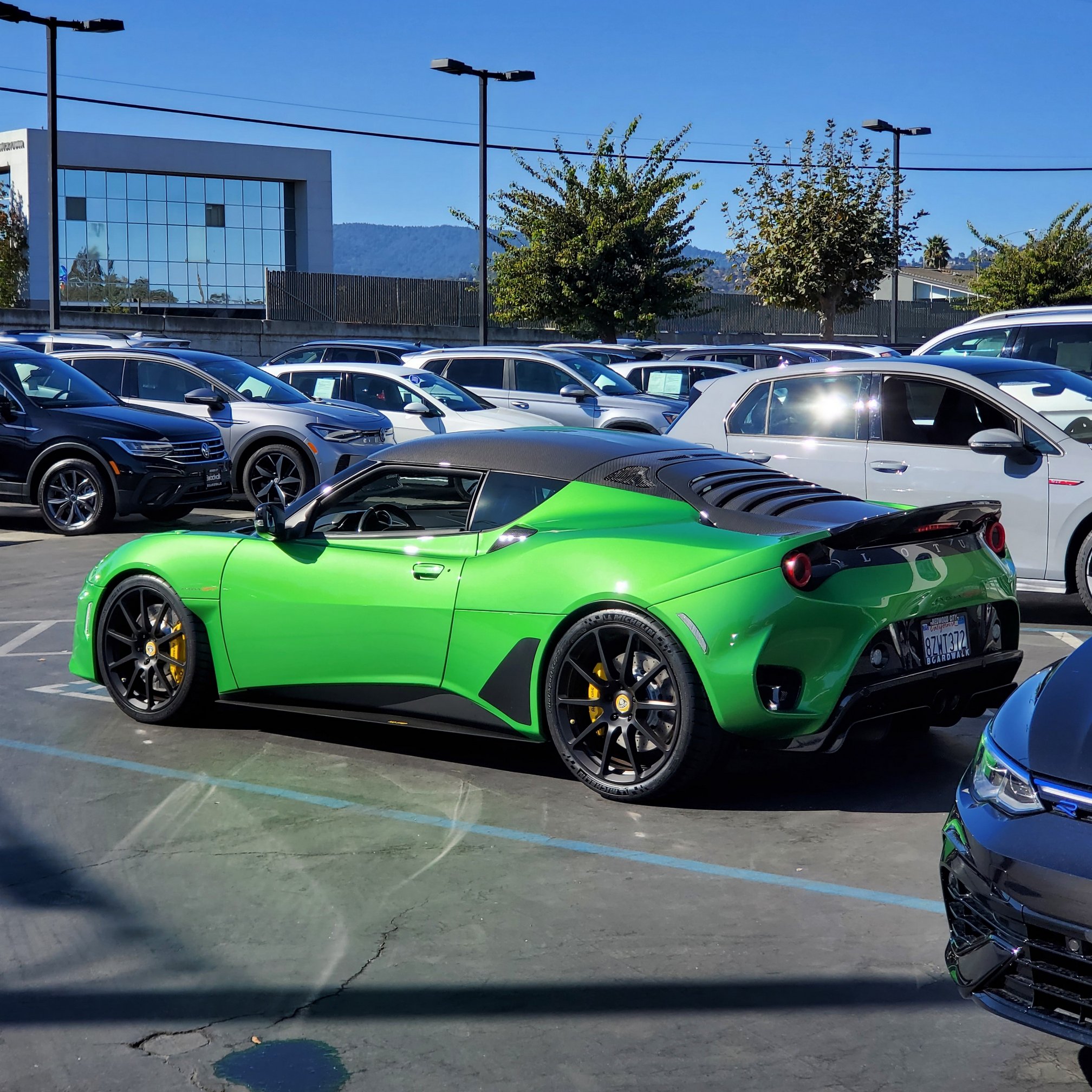
As I try to zipper into traffic, I nearly sideswipe a Mustang. The Ford appears as a puzzling yellow blob on the parabolic tip of the wing mirror, and I abort my merge before disaster strikes. These Euro mirrors are weird but useful.
The Evora GT is meant for turning and burning, not highway trundling, but the best corner I can find is a 270-degree cloverleaf. I huck the Evora GT down the exit ramp and find the car laughing back at me, “Is that all you’ve got?!!” The Lotus has the effortless turn-in rotation that is the signature of mid-engine metal, plus a neutral handling poise once it is committed to the corner.
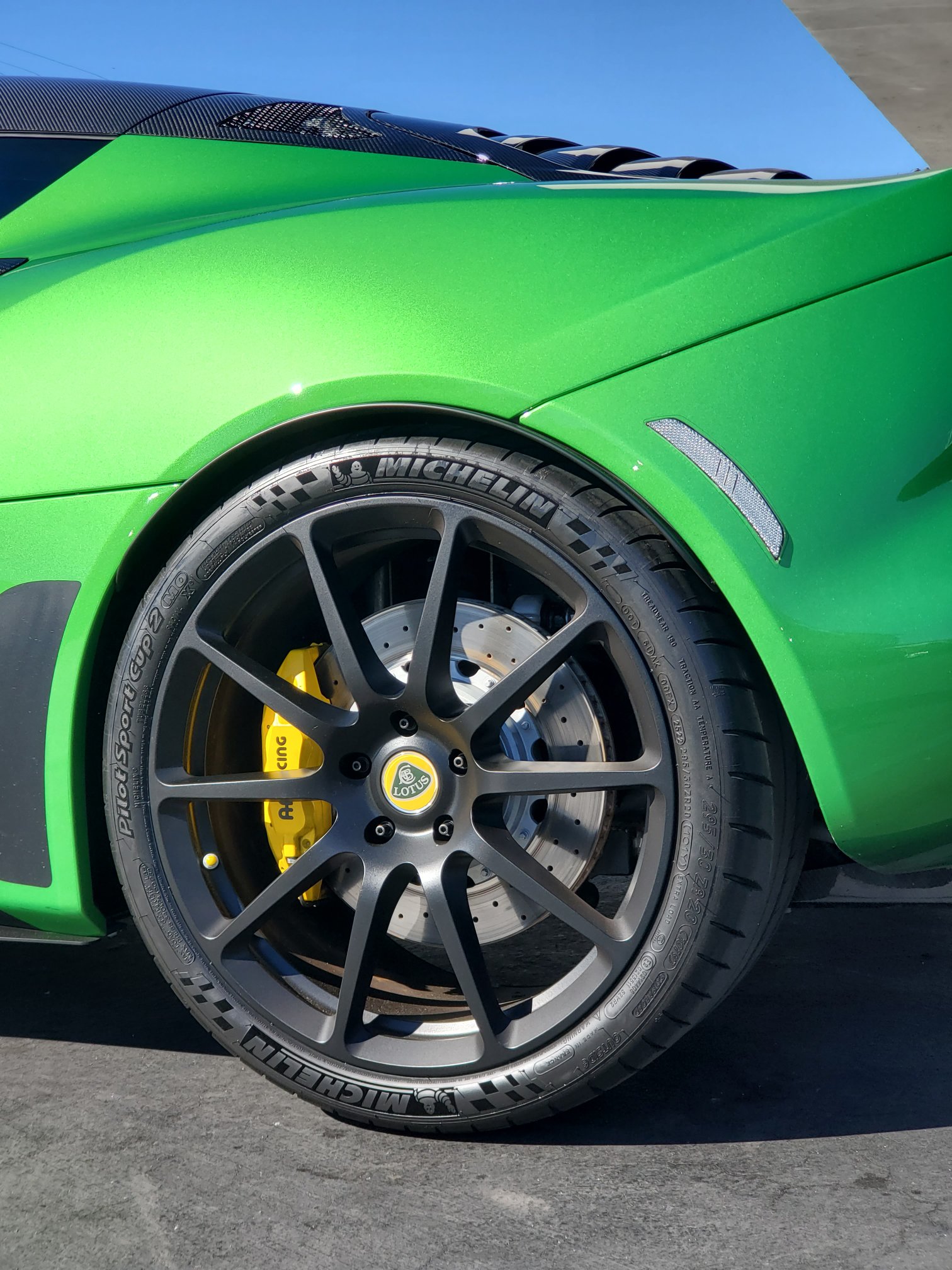
…well, it’s a stretch to say I know the Evora GT’s limit balance from this one corner. The Michelin Cup 2 tires have more grip than I have bravery, and the suspension feels nonplussed by my pace. There’s no body roll to speak of, and tires give no indication of strain. I’d like a familiar road or race track to inch up on the Evora GT’s high limits, but that is a task for another day!
I can, however, attest to the effectiveness of the AP Racing brakes. Blocking the bottom of the cloverleaf is a stopped SUV. I jam on the brakes to scrub 40 mph as quickly as possible. Thankfully, the binders are good—track ready, I hear—and the Evora’s emerald paint stays unscuffed.
Deep in an industrial park, I find one more straightaway where I can bury the throttle and click through the gears. I discover that I’ve been short-shifting the Evora GT; there’s another 1k before the redline! The reward for using all the revs is immense; the Lotus piles on speed as the tachometer needle sprints from 6k to 7k rpm.
(Also, the bellowing exhaust is even more thrilling at 7k rpm.)
I’ve enjoyed the Evora GT, but I’m having difficulty reconciling my expectations with my experience. I want the Evora GT (and Emira) to be refined sports cars with the Elise’s famously feelsome steering, but the Evora GT doesn’t come close to having Elise-levels of feedback. For better or worse, I’ve found more to love about the Evora GT’s extroverted styling and bombastic exhaust note than I have about its good—but not exemplary—steering, shifter and suspension. A longer drive on more familiar roads would let me sort through my conflicted feelings. Let’s hope that comes soon, and let’s hope the Emira is an improvement over the Evora GT.
 Mike's Steering Column