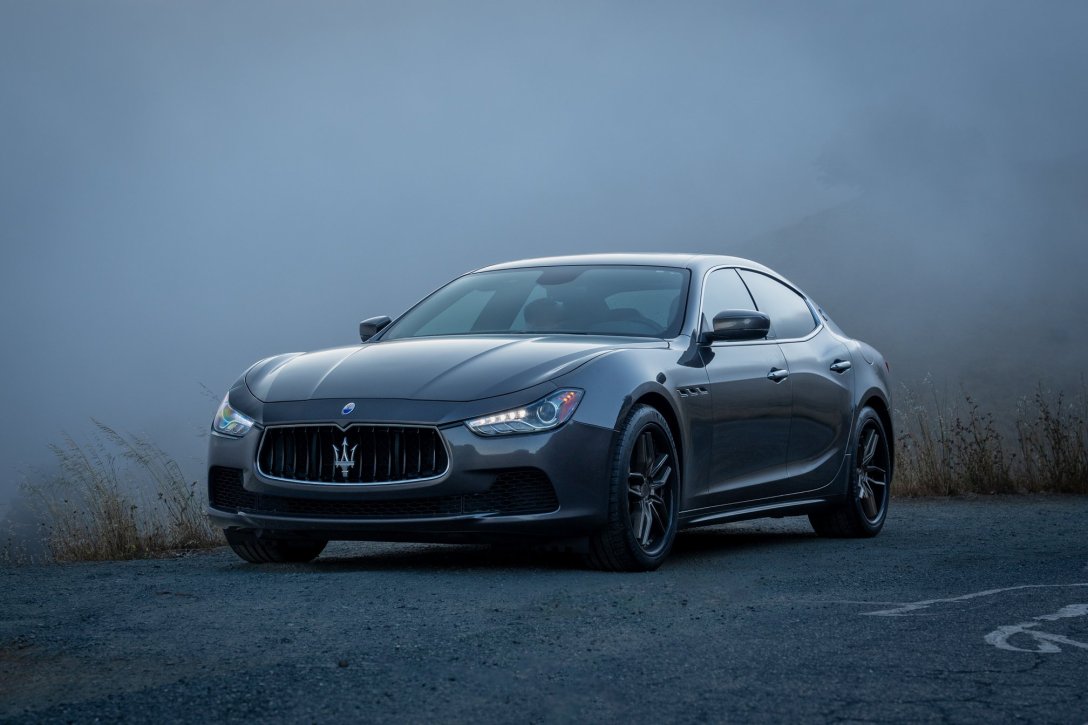
As I scrutinize the Maserati Ghibli’s spec sheet, I wonder about its competition. By its dimensions, it is a midsize sedan, the Italian equivalent of a Mercedes E-Class or BMW 5 series. But its interior space—and especially its tight rear seats—is better matched to the compact Cadillac CTS or BMW 3 series. Not that dimensions alone can place the Ghibli in the marketplace. Luxury, handling, and technology are better clues to its peers.
A well-planned drive would let me suss out the Ghibli’s place in the world. Unfortunately, today’s drive is not well planned. The route promises a spectacular ridge-top sunset, but the tight mountain twists may favor Miatas over Maseratis!
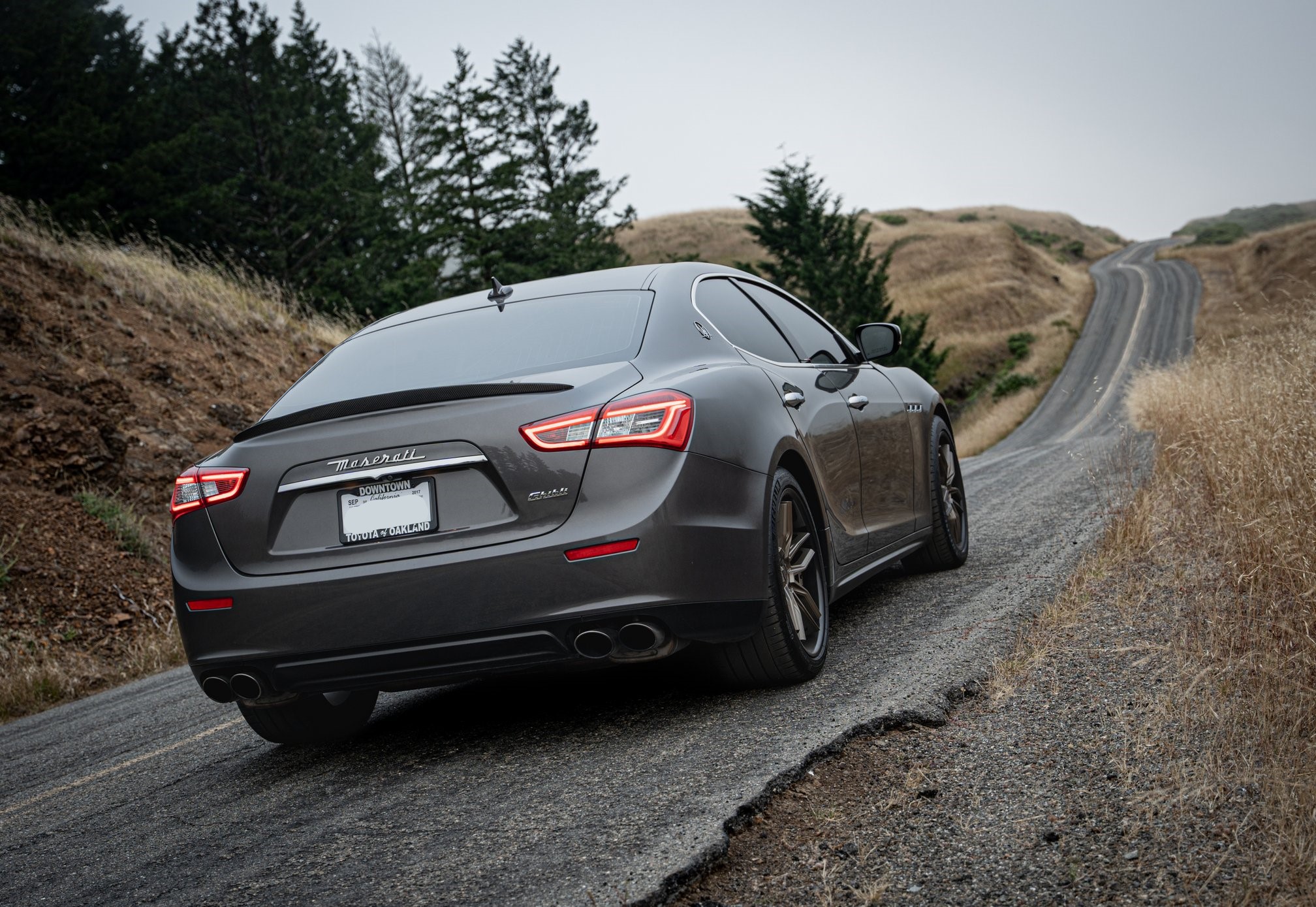
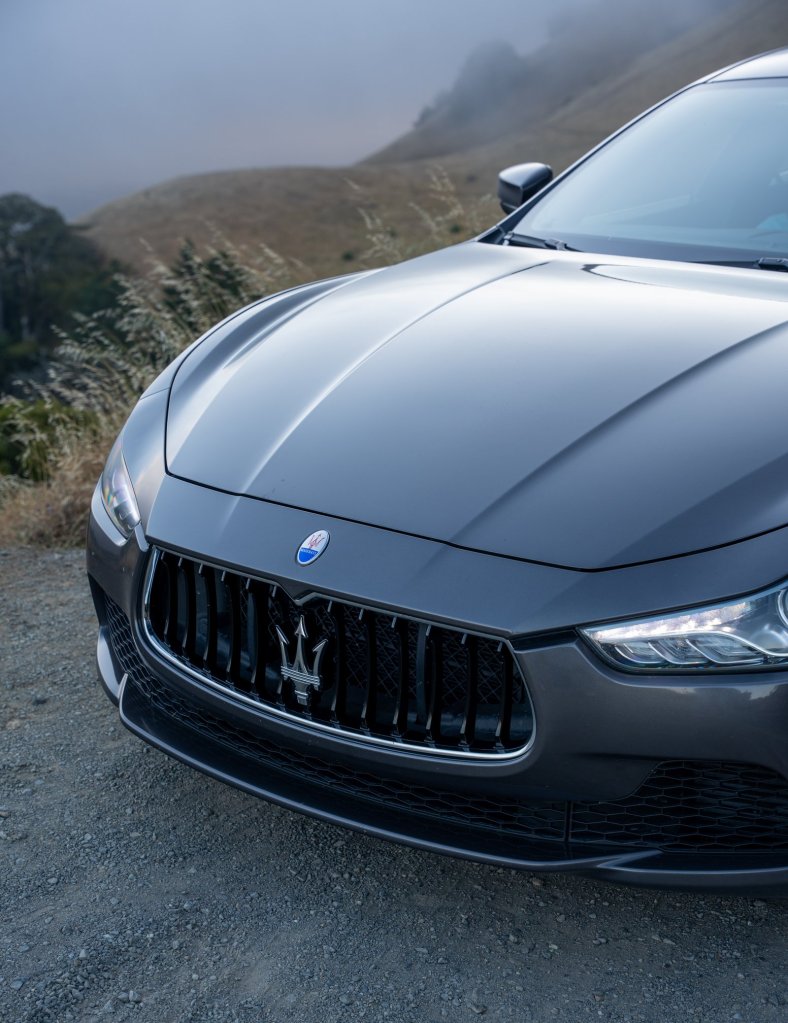
Approaching the Ghibli with the key in hand, I’m struck by its design language. Its handsome face wears a Jersey pout, its long flanks are crisply creased with forward-thrusting character lines, and its tail is well sculpted. The long hood and swooping roof remind me of the fetching two-door GranTurismo. Yes, the Ghibli is undoubtedly a Maserati.
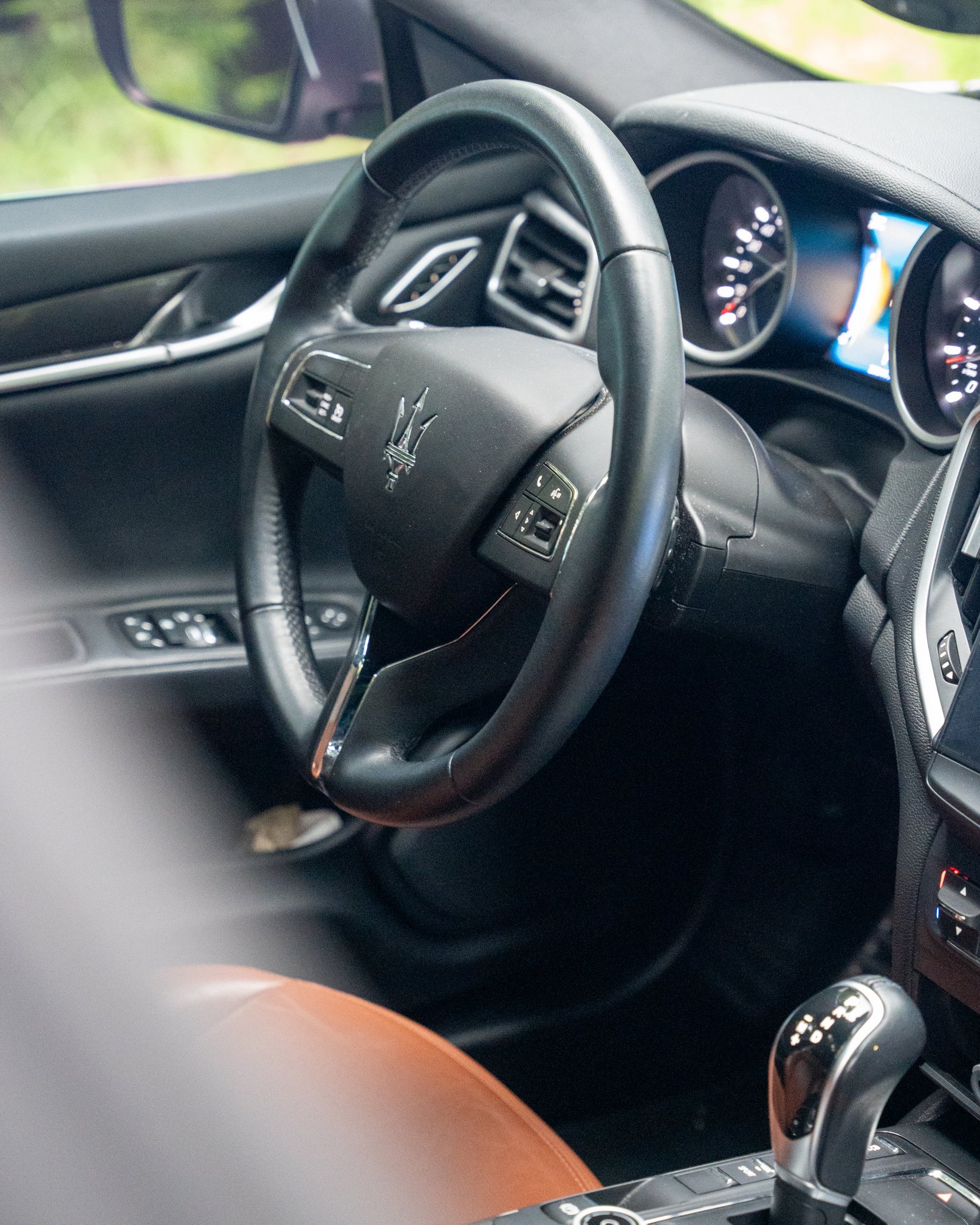
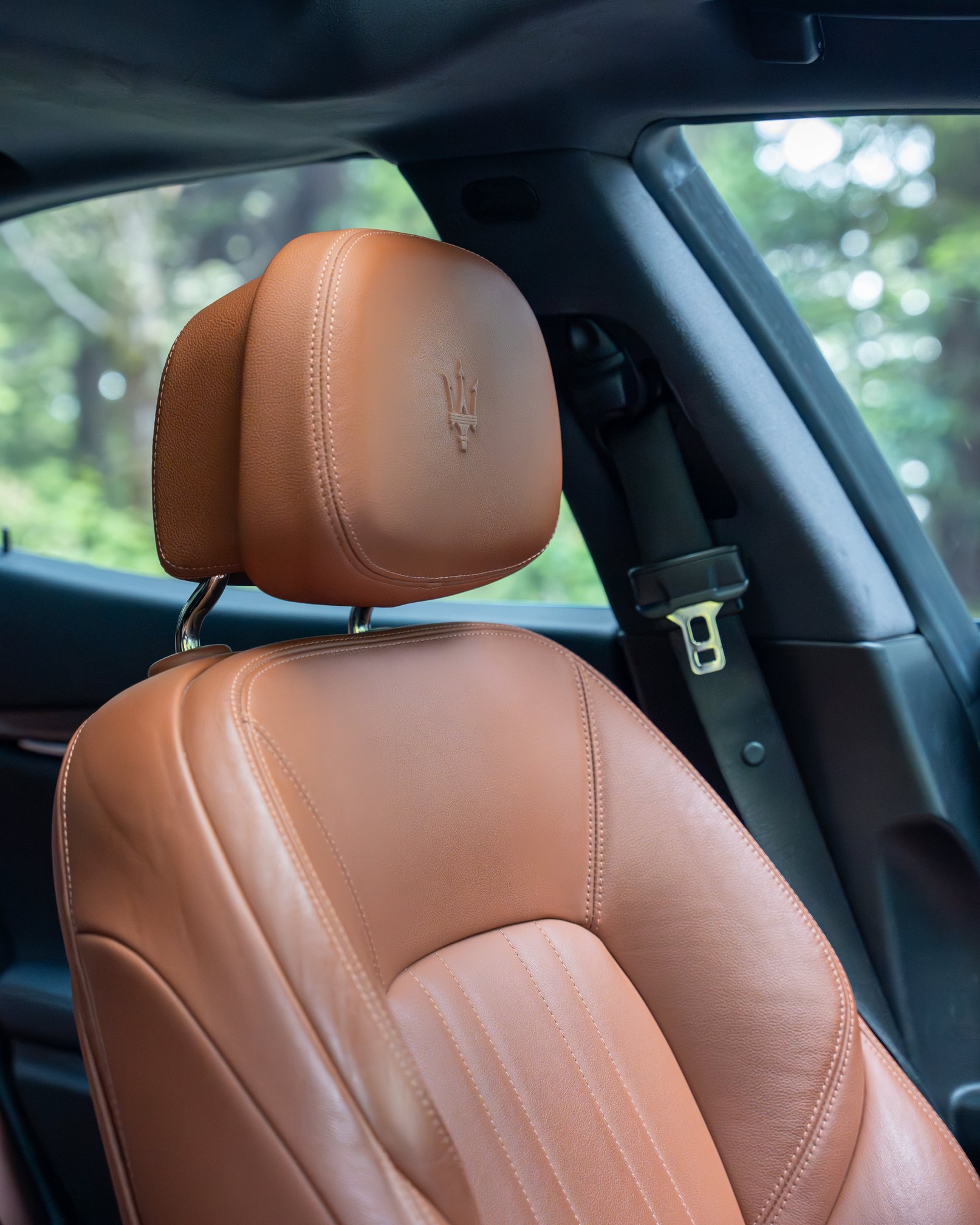
This is my first Maserati experience, so I can’t pick apart the brand’s interior calling cards from the Ghibli’s idiosyncrasies. What I do notice are the handsome steering wheel and fine leather seats, both of which are embossed with Posiden’s trident. Unfortunately, the Ghibli’s dashboard draws up memories of my Dodge Durango test: The big, bright UConnect navigation screen in the Maserati is the same easy-to-use unit found in other Stelantis brands.
Stelantis doesn’t do the perched-iPad interiors that are common among the competition. Instead, the infotainment screen is embedded in the dash. It’s a more traditional look, but one that may have raised the beltline for the Ghibli: the tall dash leaves less room for the windscreen.
Maserati’s reputation revolves around its sports cars and racecars, but the Ghibli’s ergonomics are pure sedan. The driver’s seat is elevated above the floor, and the dashboard isn’t especially driver-focused.
My right hand cruises the center console in search of the engine start button but comes up empty. Eventually, I find it hidden to the left of the steering wheel. When I fire up the engine, engage drive, and lightly depress the accelerator, the Ghibli leaps forward. (The brakes are equally eager.) Ah ha! This car wants to play!
In seconds, I’m out of the parking lot and on twisty Panoramic Highway. While the road’s name suggests epic views, the towering redwood forest has sealed the panoramas shut.
Winding through the trees, I acclimatize to the Ghibli on the move. At this slow pace, the steering is heavy and muted—only the largest bumps make it to my fingertips. The drivetrain senses my laziness and upshifts, running the engine at a measly 1500 rpm. Unhurried driving doesn’t capitalize on the Ghibli’s sporty heritage. Its tight suspension clomps over the bumps while the engine wheezes along, running below the turbos’ boost threshold.
The base Ghibli I’m driving left the factory with a 3.0L twin-turbo V6 good for 345 hp. The same engine was available with 424 hp in the Ghibli S. Even though I’m in the base car, I’m getting sporty vibrations from the V6 that would be missing Mercedes’ and BMW’s I4s. The Maserati mill has a throaty purr, and, when I work the gas, the turbos wake up and whoosh me along on a swell of torque and sound.
This V6 was engineered by Maserati and assembled by Ferrari, using design know-how from the Ferrari twin-turbo V8. Maserati and Ferrari make some of the best sounding cars on the planet, so it’s time to smash the Sport button and see what the Ghibli can do!
Now in Sport mode, the valved exhaust becomes louder. I bump the stick shift a few times—there are no paddle shifters—and soon, I’m tearing down Panoramic Highway with adrenaline pumping through my veins.
From the shift response, I guess (correctly) that the ubiquitous ZF 8-speed automatic ties the engine to the axles. Pulling the stick backward triggers a prompt and seamless upshift; pushing it forward provokes a sporty throttle blip and an impeccable down change. The clever gearbox is a willing partner to a lead-footed driver!
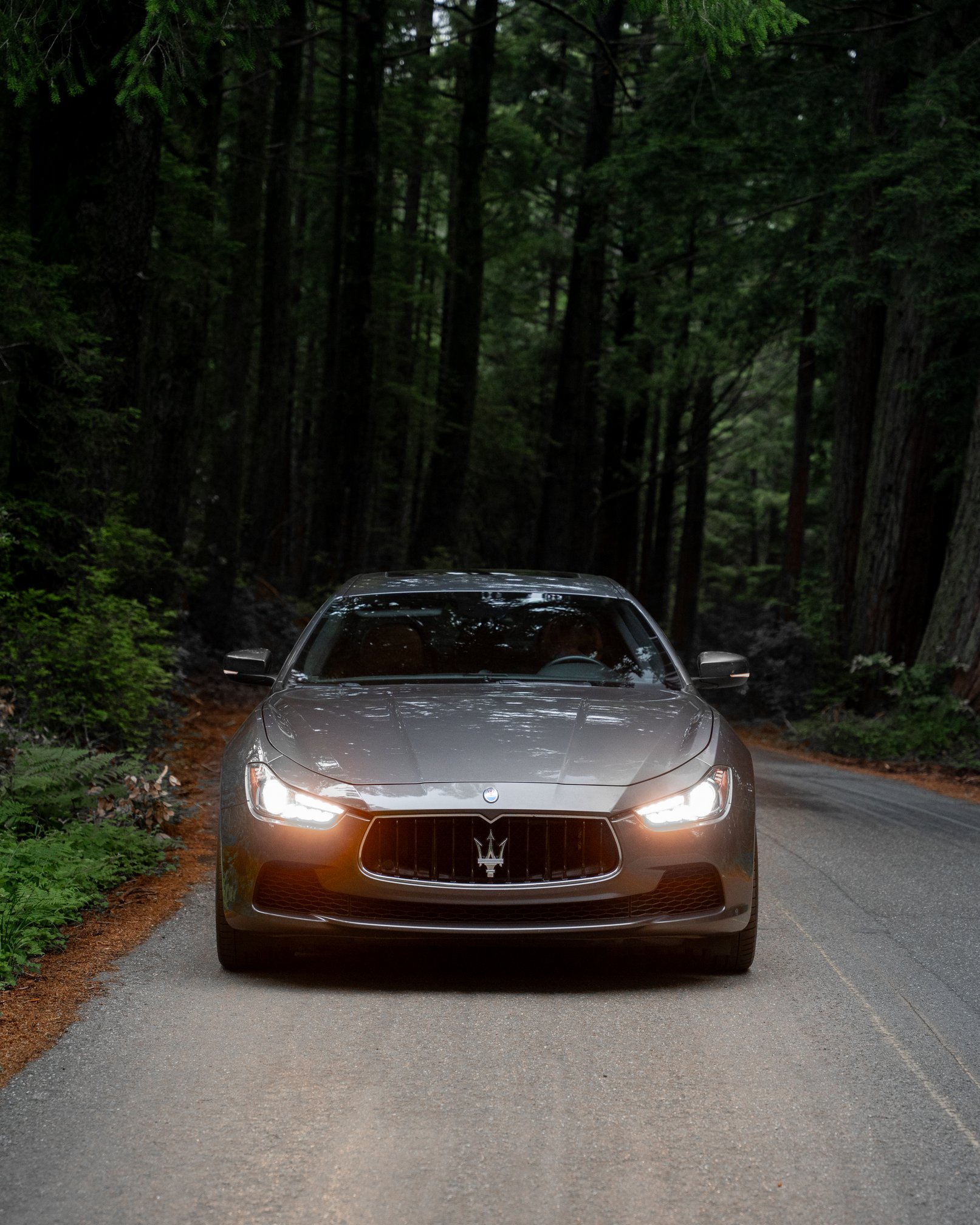
It’s been a while since I’ve driven a car that is so unabashedly turbocharged. There is little power below 2.5k rpm, but the trees start to blur when the boost piles on. The engine pulls harder and harder through its midrange and sustains its fury to the redline. And the sound—what a sound! Rising melodies blast forth from the air box and four-tipped exhaust. The Maserati twin-turbo is opera-ready with a tenor belt.
(While the base Ghibli isn’t the fastest thing on the road, its curated powerband piques my interest.)
Now that I’m driving at a decent clip, the chassis walks the fine line between comfort and sport. I feel the bumps as I cross them, but the impacts are rounded. The suspension leans as I push the car through the tight second-gear corners but doesn’t fold under the Ghibli’s substantial weight. Yes, this writhing road would be more enjoyable in a Miata (as the Ghibli can’t hide its 3990 lbs), but the Maserati is a willing dance partner.
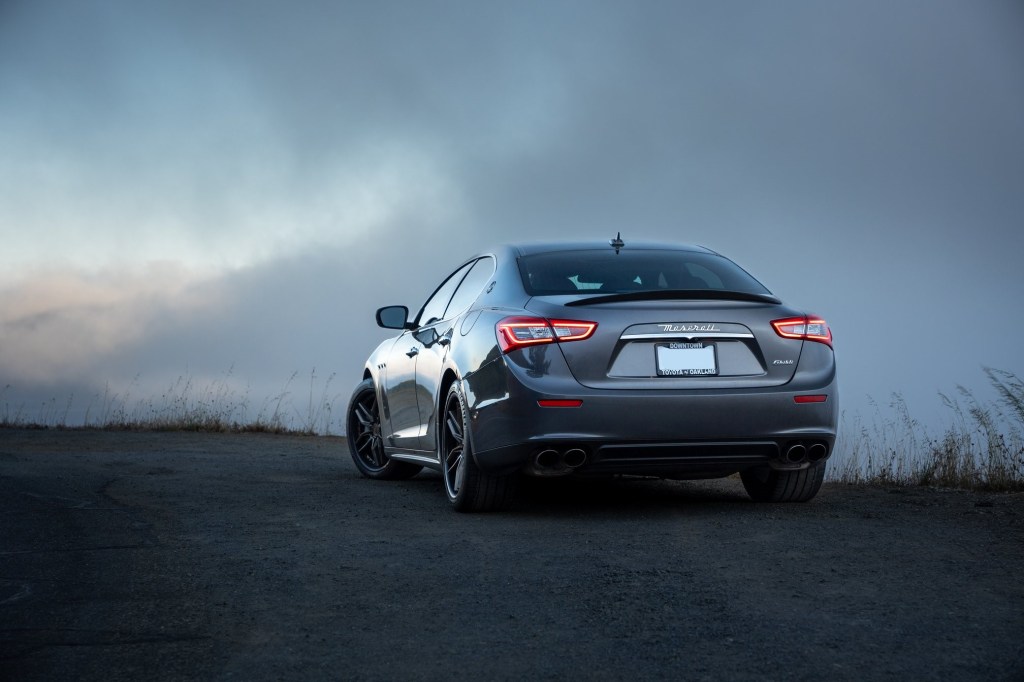
When I blast out of the trees and onto the ridge, there’s no golden sunset waiting for me. Instead, I look out on a muted gray abyss. The bristled mountaintop has caught the soft summer fog like Velcro grabbing velvet.
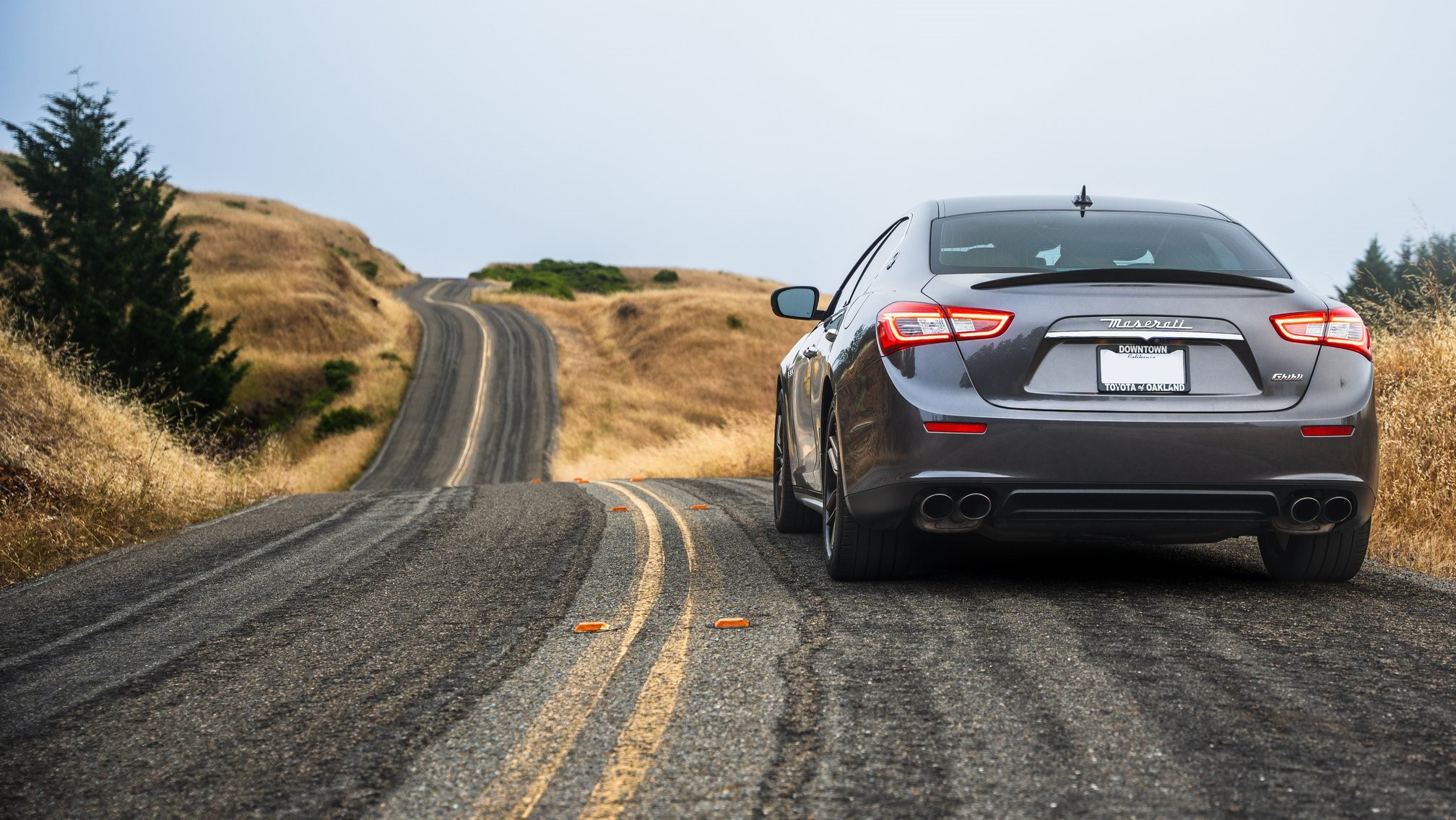
So be it… More drive time is my consolation. As the road dives deeper and deeper into the fog, a hot grin remains plastered on my face. Longer straights let me exploit the Ghibli’s party trick—throaty exclamations on redline upshifts—and I intend to use it until it’s as groan-worthy as a dad joke!
There are so many more situations in which I should drive the Ghibli before rendering a judgment. How is it in city errands, clogged commutes, and highway cruises? I won’t find out tonight because I’m deep in the hinterlands. I wager the stiff-legged Ghibli is tolerable in daily toil but most joyful on deserted highways and sweeping byways; the car needs room to steady its heavy hips and let its V6 stride!
I’ve found much to love about the Ghibli, and especially its engine. And at today’s used prices—this 35k-mile 2017 was recently purchased for $27k—it’s an exotic experience for modest money. Of course, the gamble is in the reliability and maintenance costs; this car had a $73k MSRP when new, and its parts and service bills could mirror its premium price.
Does the Ghibli stand head-to-head with the midsize Germans? I don’t think the E Class and 5 series are the Ghibli’s direct competition. The Germans have elevated luxury over sport, and Maserati reversed its priorities. So while the Ghibli is chasing the BMW and Mercedes on cabin polish and technology, it leads them in driving excitement and verve. The engine is that good!
In fact, more than anything else, I see the Ghibli as a Dodge Charger in an Italian suit. Both are big cars with in-your-face engines and dancing shoes. For the brash risk-takers among us, consider this: Do you want American swagger or Italian sex appeal? You pays your money and you takes your choice.
 Mike's Steering Column