
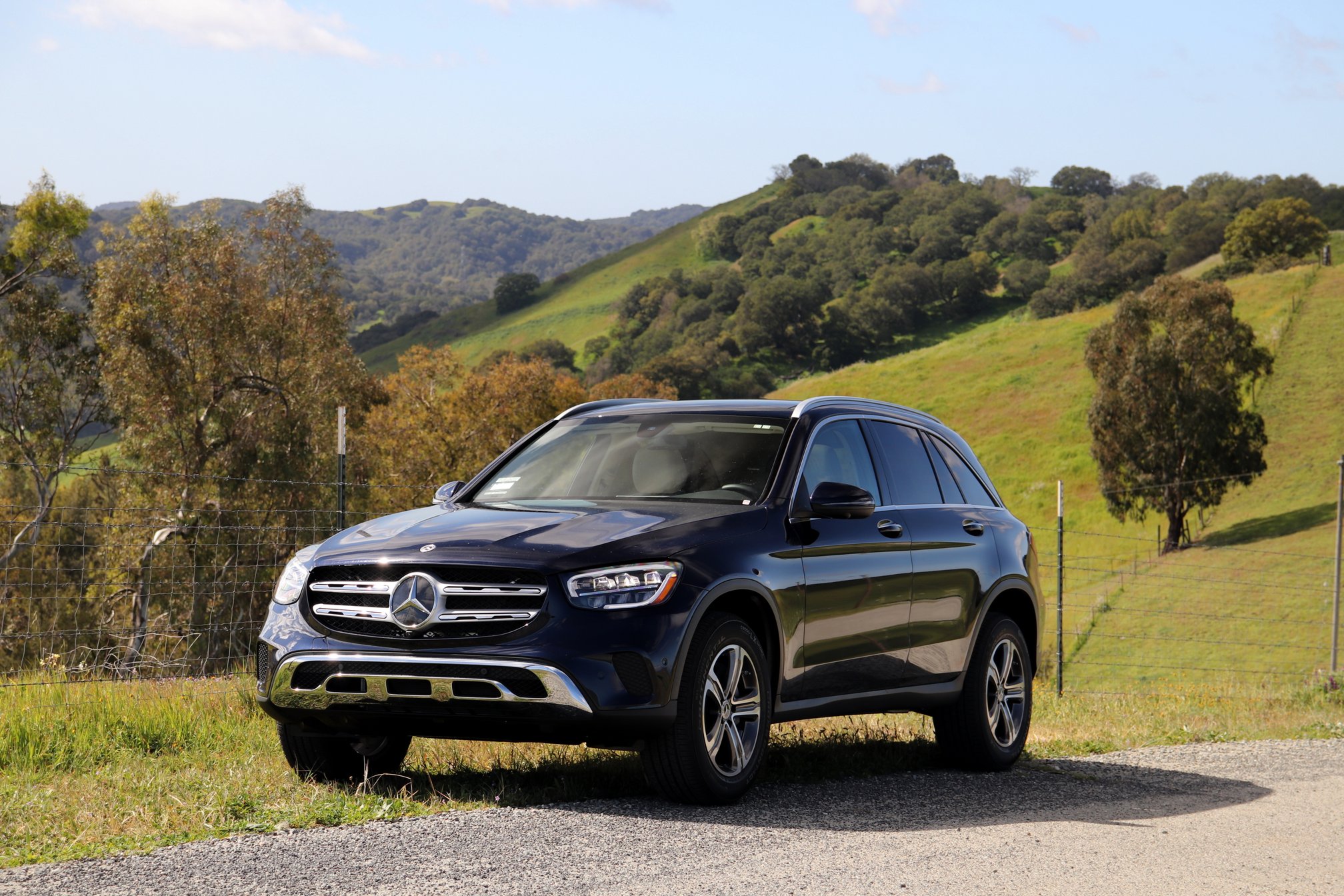
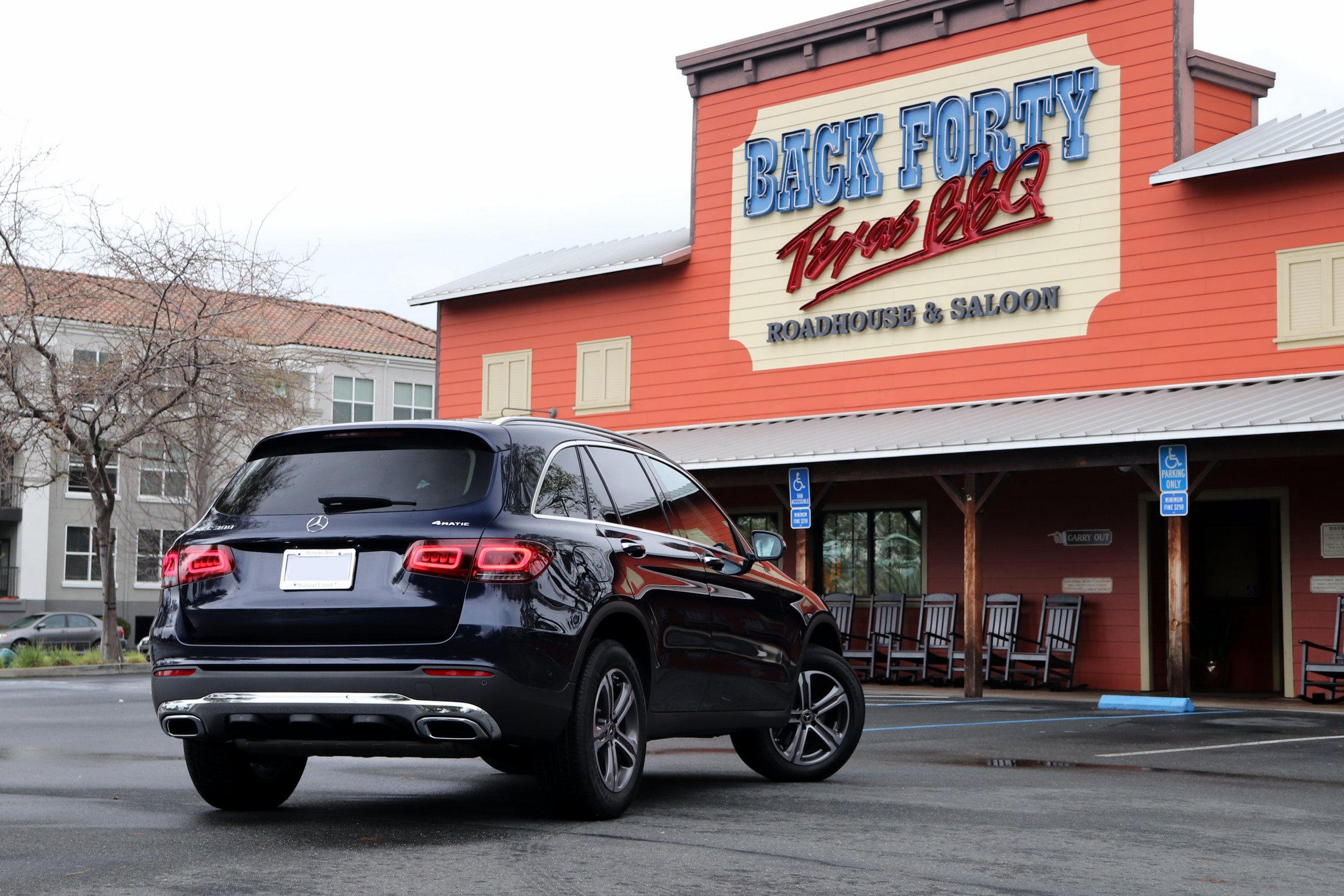
I have 24 hours with a Mercedes GLC 300 4Matic. This should be prime one-on-one time for me to explore Mercedes’ best-selling model of 2020, but I have a problem. I’m preoccupied with its little brother, the GLB 250 4Matic. When I drove it last year, I concluded that the GLB was sufficiently luxurious yet much more affordable and practical than the GLC. I decided it was the smart-money choice for a Mercedes urban runabout.
So, what should have been a simple GLC review has become an informal comparison test. Very informal… I don’t have the two SUVs side-by-side, and a year has passed since my GLB drive. So, curse me if you will—and proceed with healthy skepticism—as I present to you the GLC 300 versus GLB 250 face off!
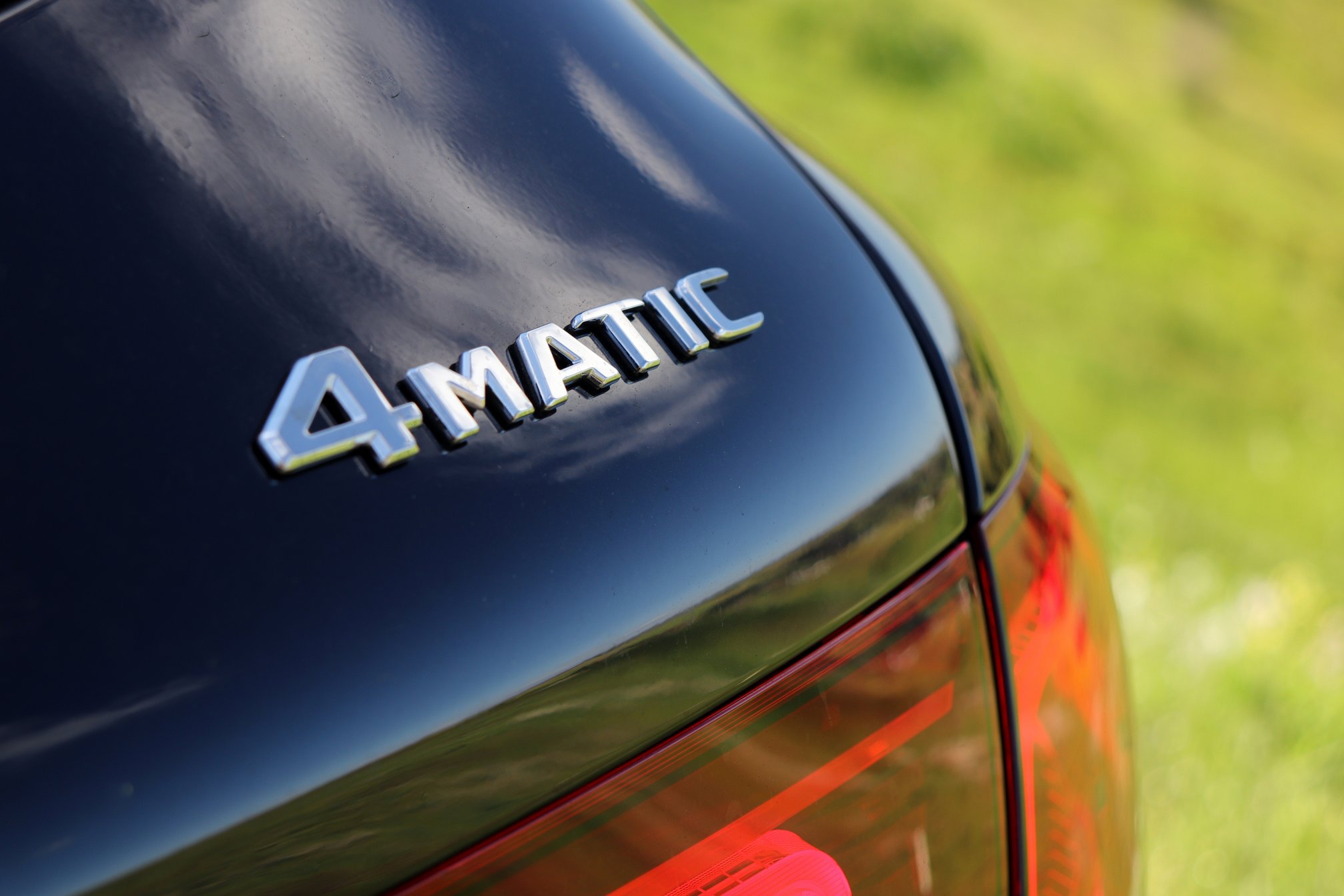
Per the spec sheets, the comparison is not too outlandish. The two Mercedes are about the same size and have similar 4-cylinder turbocharged engines, AWD and carrying capacities. (True, Mercedes will stuff seven seats into the GLB as an option.) So what’s unfair? Well, the GLC’s base price is $5k dearer (my lightly-optioned GLC has a $49,830 MSRP), its engine is +34 hp and +15 lb-ft stronger (for a total of 255 hp and 273 lb-ft), and it sits one inch longer and two inches wider. But the numbers tell half the story.
You see, the GLB impressed me not with its opulence but with its thoughtful practicality. Its boxy shape maximized its functional dimensions, letting it fit into tight parking spots and well as it accommodated passengers and paraphernalia. Even with the floor at level-load height and the rear seats positioned for maximum legroom, the GLB’s cargo bay is well-sized. (Car and Driver measured 22 cubic feet of cargo capacity for the GLB and 19.4 cubic feet for the GLC.) Lower the floor and slide the rear bench forward, and the hold becomes downright capacious!
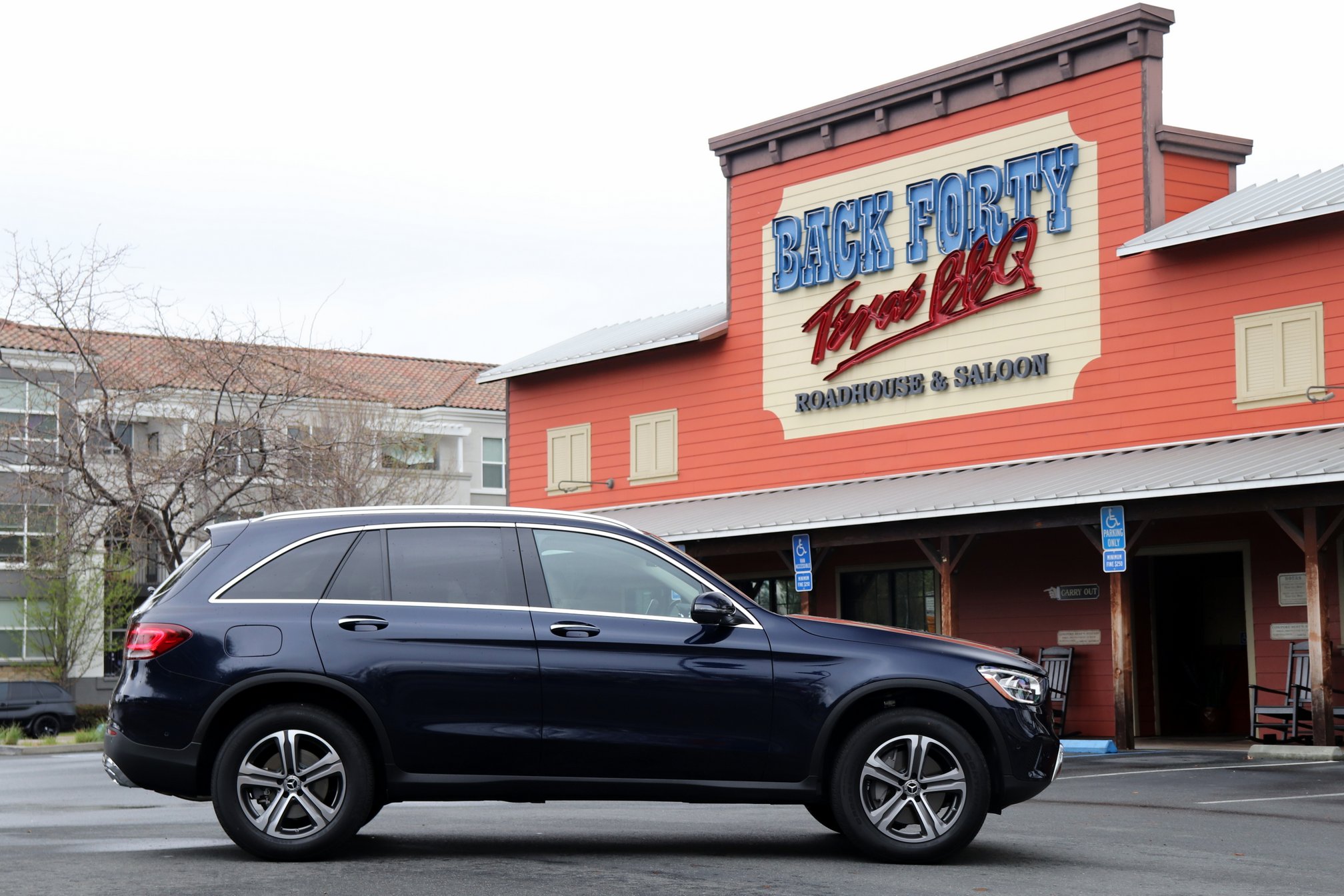
In contrast, the corpulent GLC seems to have spent too much time at the Las Vegas buffet. It looks bloated next to the GLB, and it adds 250 lbs on the scales. Sadly, the GLC has no more interior room to show for its expanded beltline!
Okay, to be fair, the impinging fat isn’t felt from the GLC’s driver’s seat. There’s plenty of room—and outward visibility—for the captain of this ship. (Though the cascading center console does eat into the knee room.) But the kids in the second row will wonder where the legroom has gone (vs. the GLB), and the whole family may curse the GLC’s slanted hatch when it curtails their Costco haul.
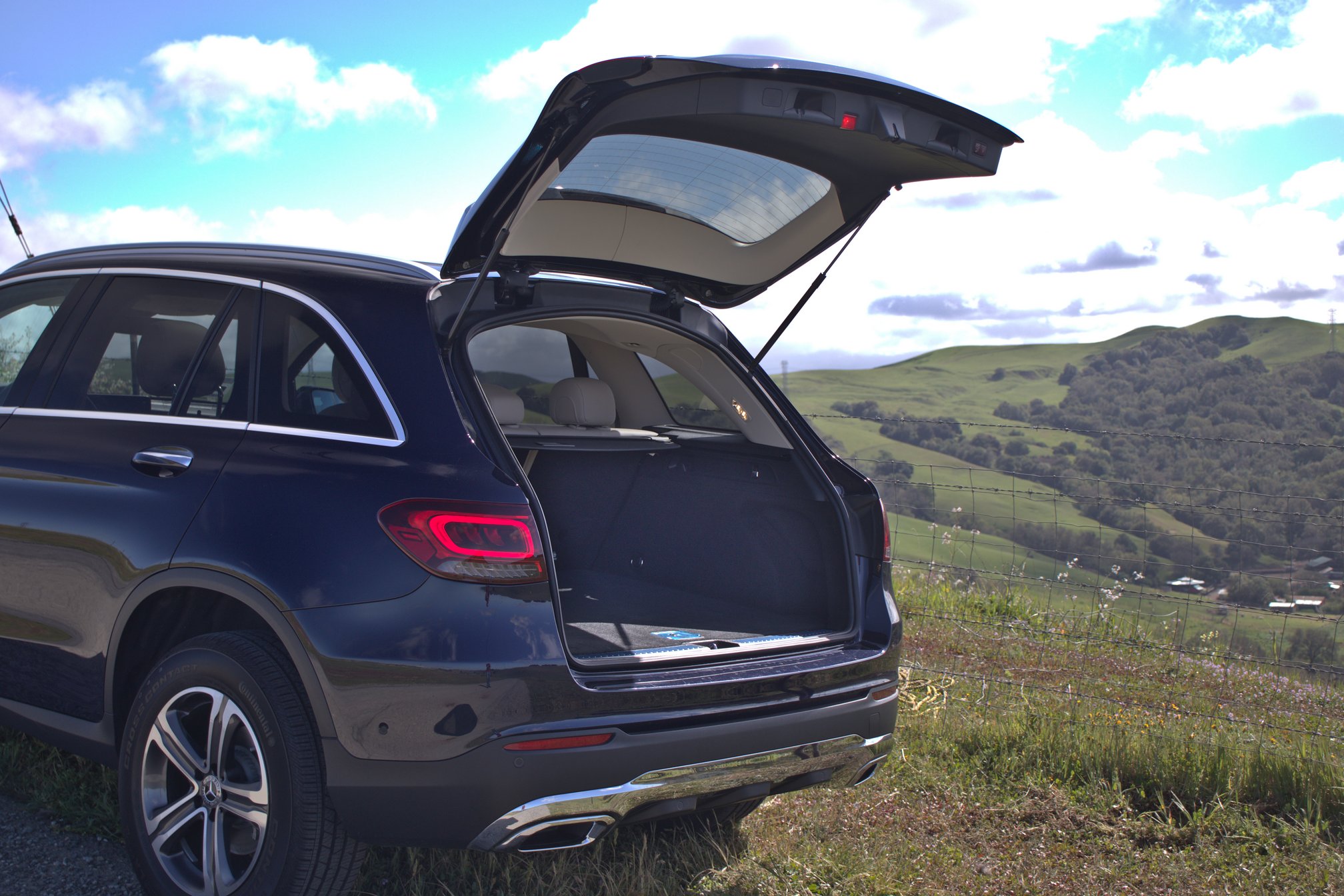
All this is to say that my thesis was correct; the GLB is the more practical of the pair. Young families, take note!
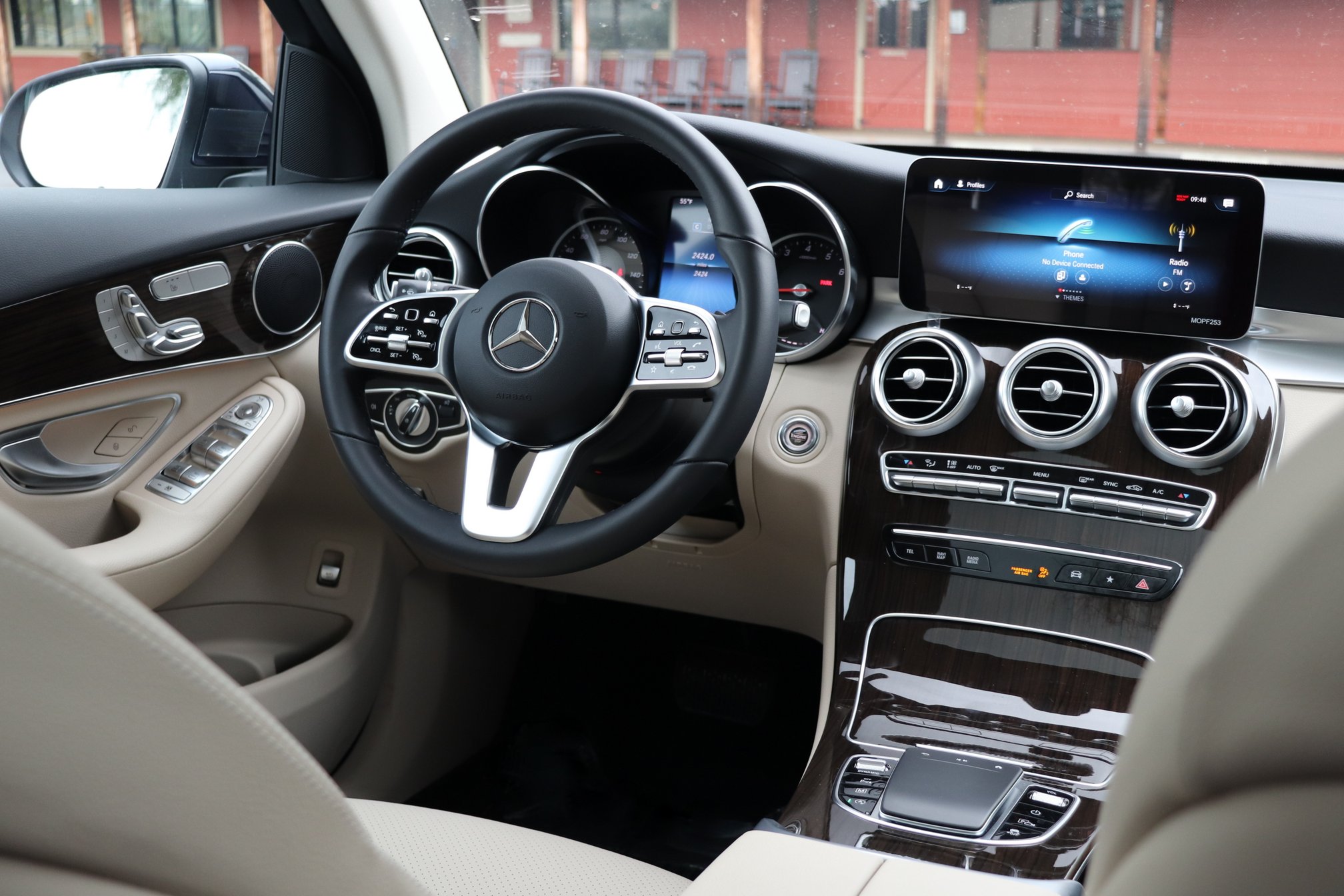
So is the GLC long in the tooth and ready to be put out to pasture? Not exactly. If the GLB is for young parents who shake bottles and play lullabies at 8pm, then the GLC is for grandparents who swirl merlot to Mozart at 9pm. Every additional dollar and pound that goes into the GLC is felt in the SUV’s luxurious presentation.
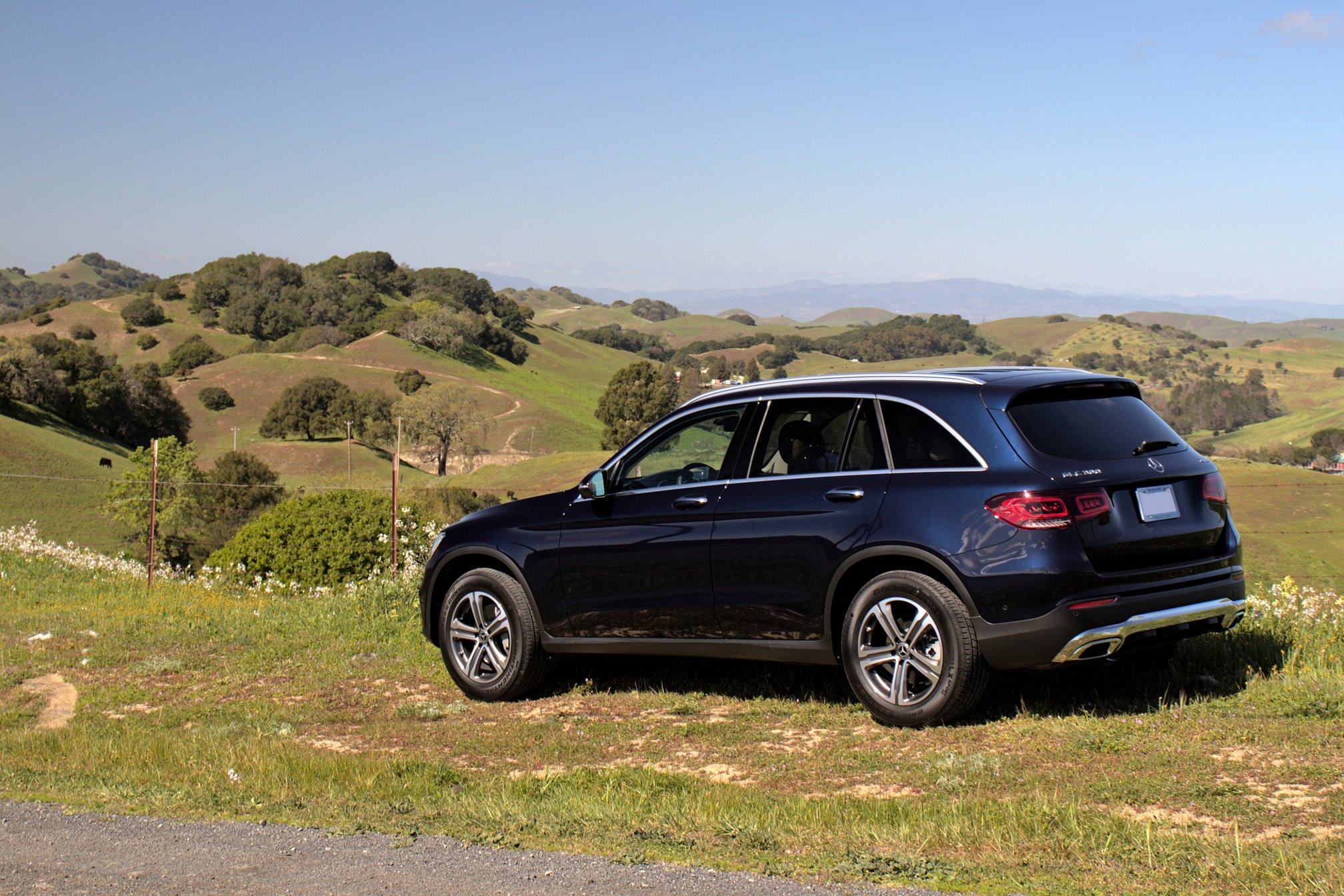
Take the doors, the first thing you encounter on any car. The GLC’s feel like they weigh 100 lbs each as they glide open, and—when pulled closed—they seal with a solid “thunk.” It seems that neither rain nor snow nor a two-ton sedan running a red light could penetrate this steel barrier.
Then, you slide into the driver’s seat. It’s one of the most comfortable in the business, with the perfect Goldilocks padding that’s not too soft and not too hard. Your bum and spine are well supported, ready for hours on the road.
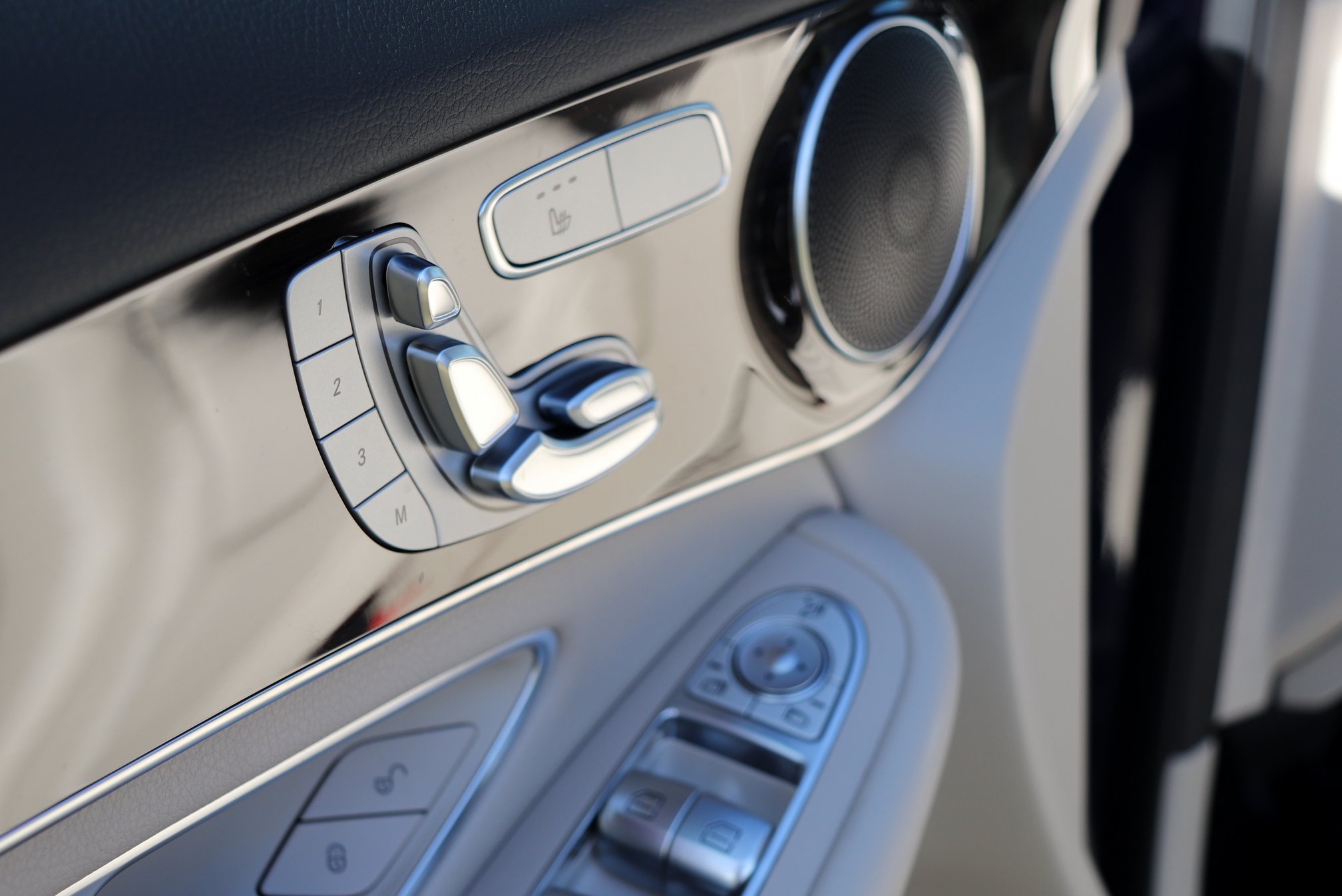
Looking at the interior touchpoints, you appreciate how a few of those 250 extra pounds went into cabin upgrades. (The GLB 250 pinched pennies with a piano black center console, patterned plastic on the dashboard, and the door switches that looked plucked from their injection molds.) Lacquered wood is slathered over the center console, and shiny metal caps the switches. There’s no piano black to mar with fingerprints or scratches (hooray!), and the tan seats and brown wood evoke the natural world. The GLC’s premium fit and finish will never go out of style.
(Mercedes uses its latest MBUX infotainment in the GLC. The system is responsive, intuitive, and comes with Android Auto and Apple CarPlay connectivity.)
The GLC’s upmarket positioning is still evident in the second row: The rear bench is incredibly cushy (and adequately sized for tall adults), and the ambient lighting is here, too. (The GLB’s rear did not have mood lighting, and its mechanical junk—like its ISOFIX anchors, seat rails, and seat-folding pull straps—were in-your-face exposed.)
Put the SUV into gear, and the GLC moves with hushed composure. The remainder of the 250 lbs must have gone into sound deadening because the outside world is silenced. There’s just the soft rustling of the wind and the tires’ light thrum to be heard. Well, until you dip into the throttle and the engine’s melodic hum sings forth.
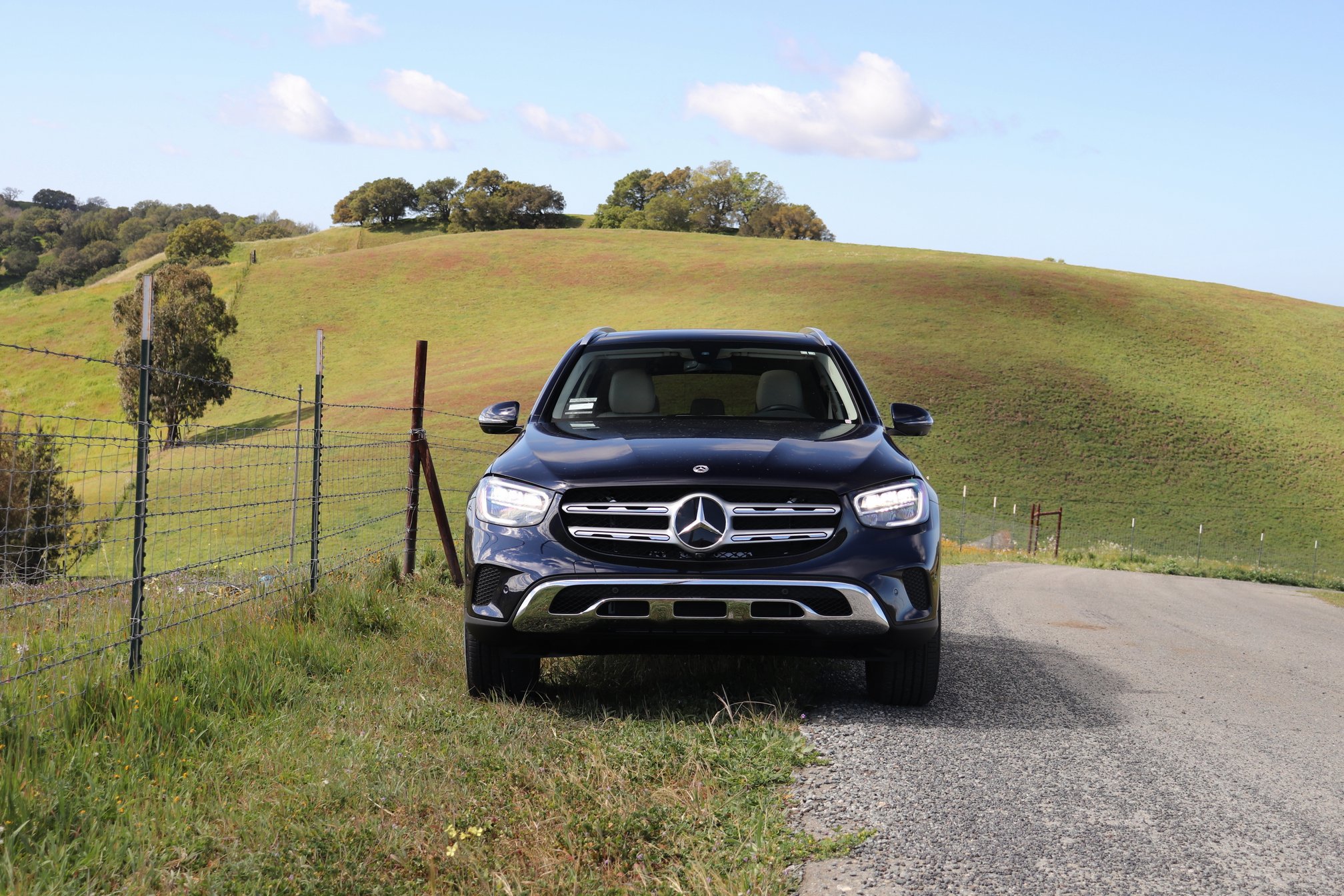
On the face of it, 255 hp doesn’t seem like much to motivate the nearly 4,000 lb GLC, but you’ll never fret and want for power. The nine-speed automatic keeps the engine at peak torque in a sprint, smoothly swapping up through the ratios as you press forward with haste. (The transmission is commendably prompt when shifted via the paddles, too.) The GLC 300 is no hotrod (see the GLC 43 and GLC 63 for that) but breezes through city and highway duties.
I can tell that care and attention were lavished on the GLC’s chassis tuning. While it lacks a multi-mode suspension, the SUV still aces the balance between roll control and bump absorption. The GLC never feels tippy or top-heavy, yet it still can swallow significant undulations without jolting the passengers. My only complaint is that it can jitter over quick impacts, like those found on concrete slab highways.
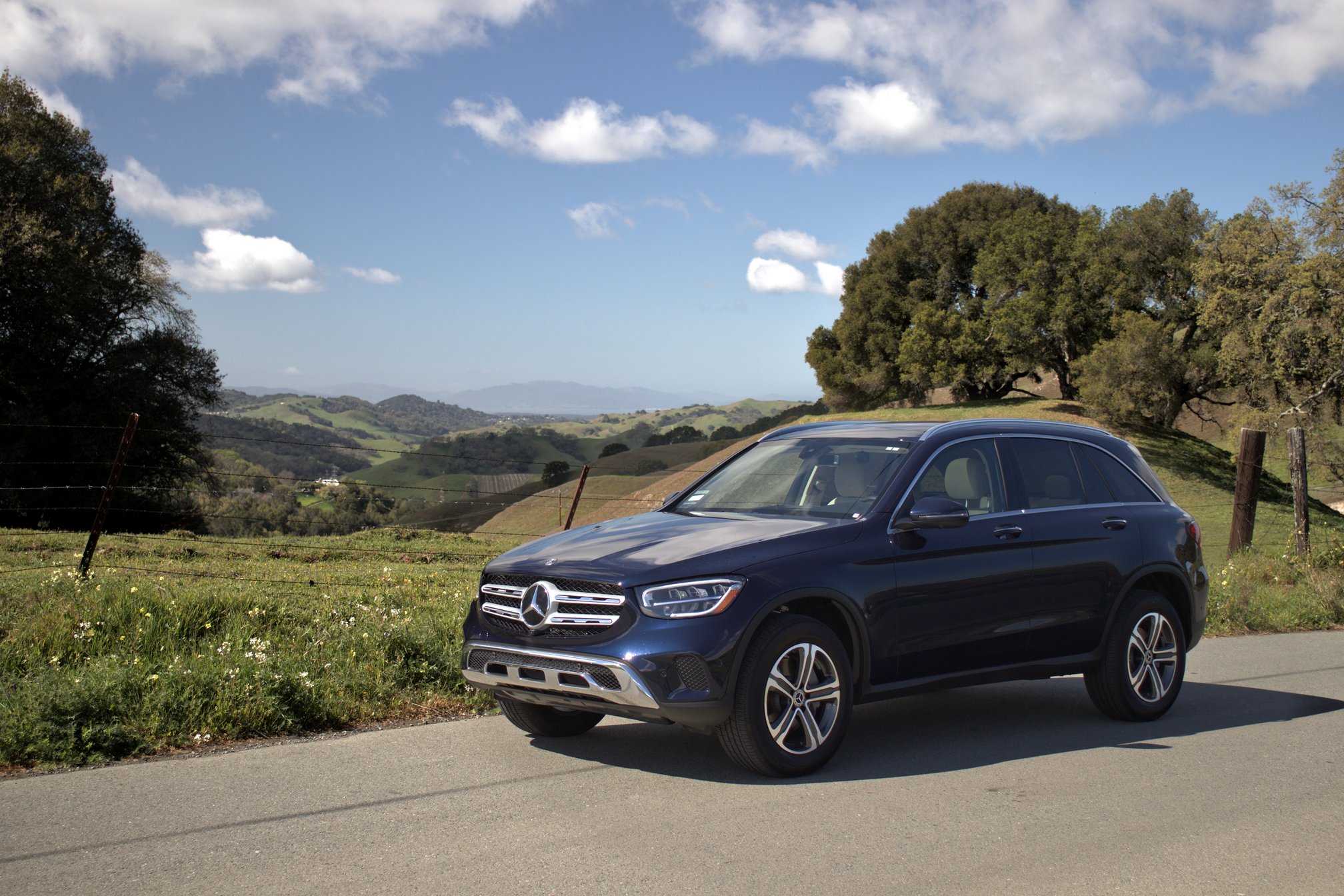
(I was surprised by how dynamically close the GLC 300 is to the E300 sedan. Both are hushed, comfortable and competent. They lower your pulse as you get on with your day and tolerate—but not condone—sporting drives.)
This brings me to my new thesis on small Mercedes SUVs. Urban families with young children (read: car seats and kid crap) are best served by the space-efficient GLB. But more mature households who want a luxury-first SUV will prefer the GLC. It’s more comfortable, more cosseting, and still ready for a garden-store haul if you drop the rear seats.
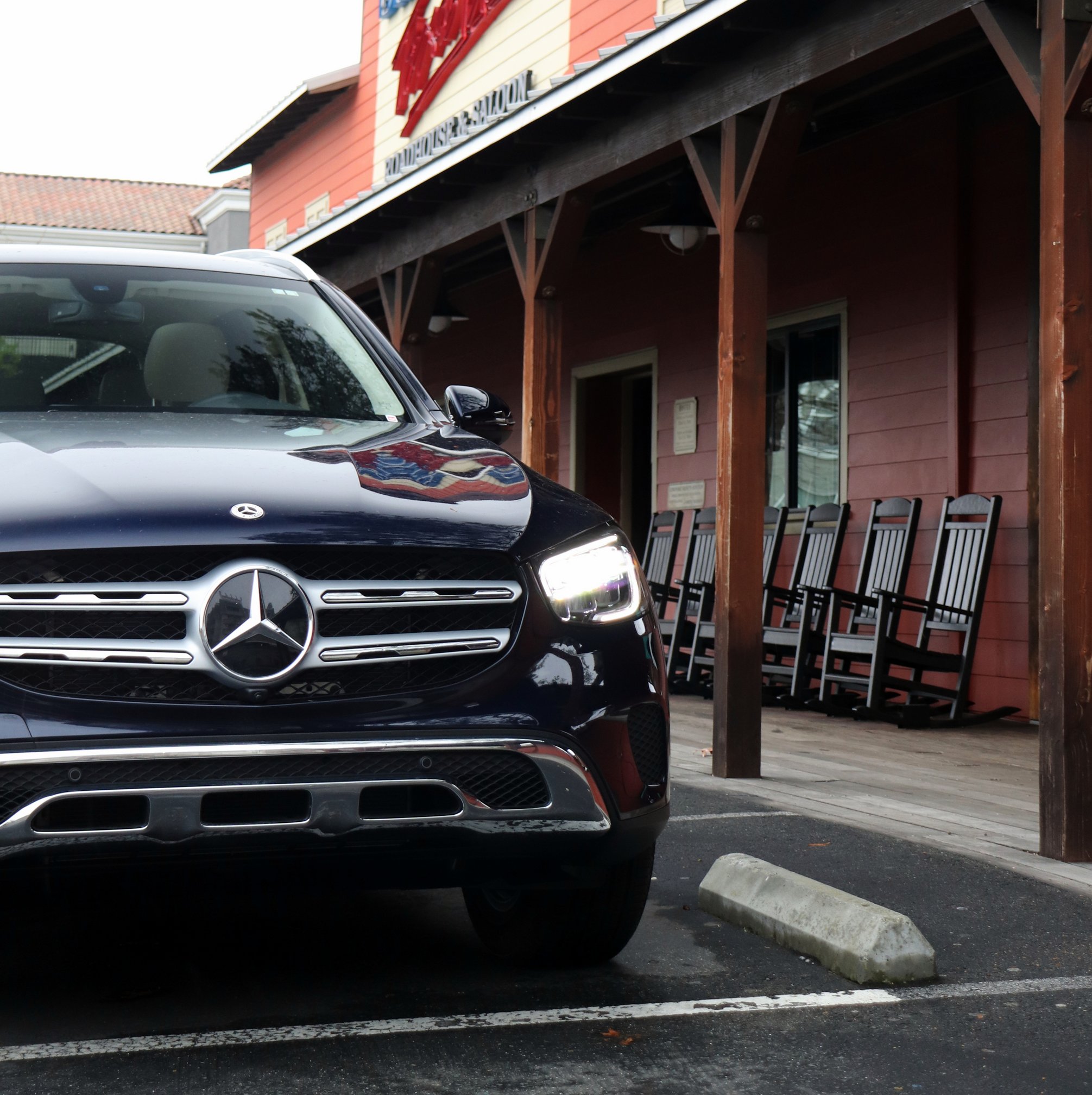
How does the GLC 300 stack up against its rivals?
Audi Q5—I haven’t tested the current Q5, but I like its interior better than the GLC’s. Audi’s interiors are more modern and space-efficient. I do have many hours in the first generation Q5 and, like the GLC, it has fatty hips and a disappointing trunk. Both SUVs have peppy drivetrains and sublimely hushed rides. The Audi’s suspension was softer—and tippier—and its steering was lifeless. It’s a matter of mood which chassis tuning I prefer: I appreciate the Q5’s cloud-like float on highways. On backroads, I respect the Mercedes’ limousine composure. (Really though, it’s the rorty SQ5 that stirs my heart!)
BMW X3—The X3’s styling is more to my tastes, as I find the pudgy GLC off-putting. The drivetrains and chassis are about equal in my mind, though I’m more comfortable navigating iDrive than MBUX. On the other hand, Mercedes’ seats are more comfortable than BMW’s, and I think the GLC has better sound insulation. Regardless, as a father of young children, I’d probably take the X3 thanks to its trunk. The square-sided X3 is a master gear hauler!
Cadillac XT4—Compared to the GLC, the XT4 delivers a softer ride with more wallowing. This works fine in the Midwest but less so in curvy California. I prefer the XT4’s steering communication, but the Cadillac 4-cylinder engine is an unpleasant groaner. Given the GLC’s drivetrain, suspension and build quality advantages, it’s the clear winner.

 Mike's Steering Column