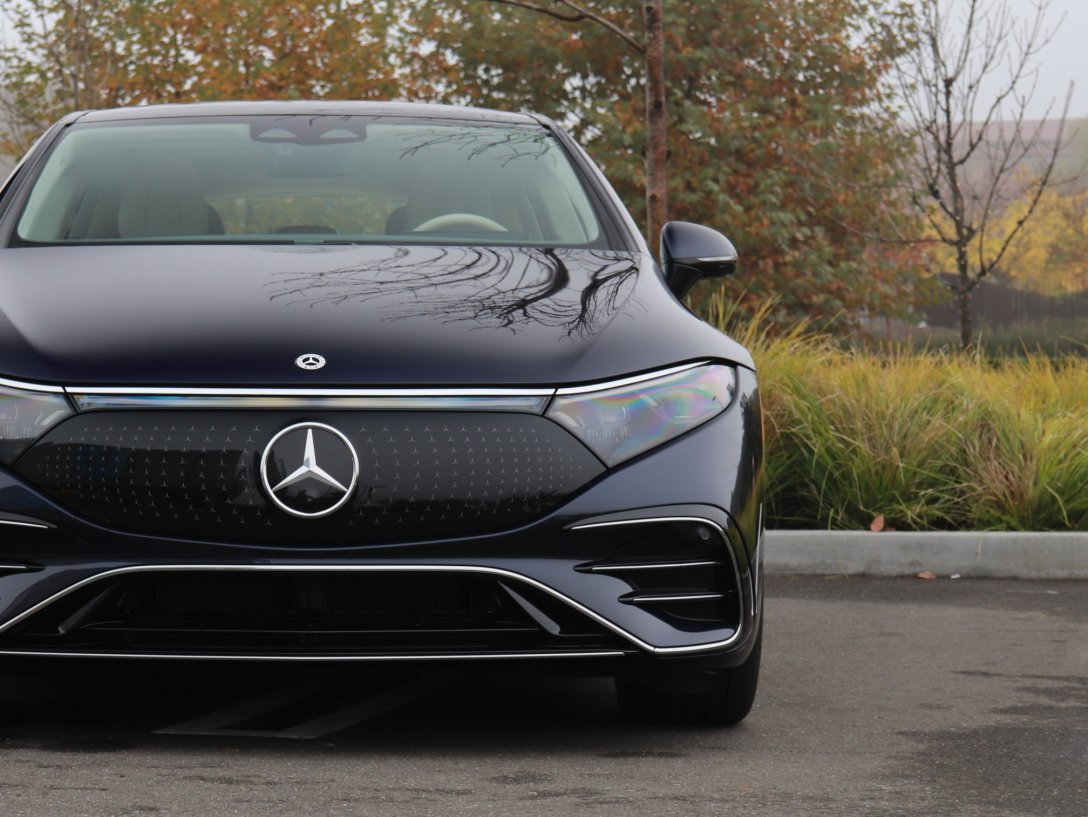
The Mercedes EQS asks me to check my testosterone at the door. “Relax,” it says, “your presentation to the board is done. Let’s mosey home, and I’ll pamper you with aromatherapy and a massage.” It would offer to pour me a drink, but Level 4 autonomy is still far away in the future…
This is a new world for Mercedes and a new world for me.
The famed automaker started from scratch when it designed the EQS, its all-new, all-electric to rival the S-class.
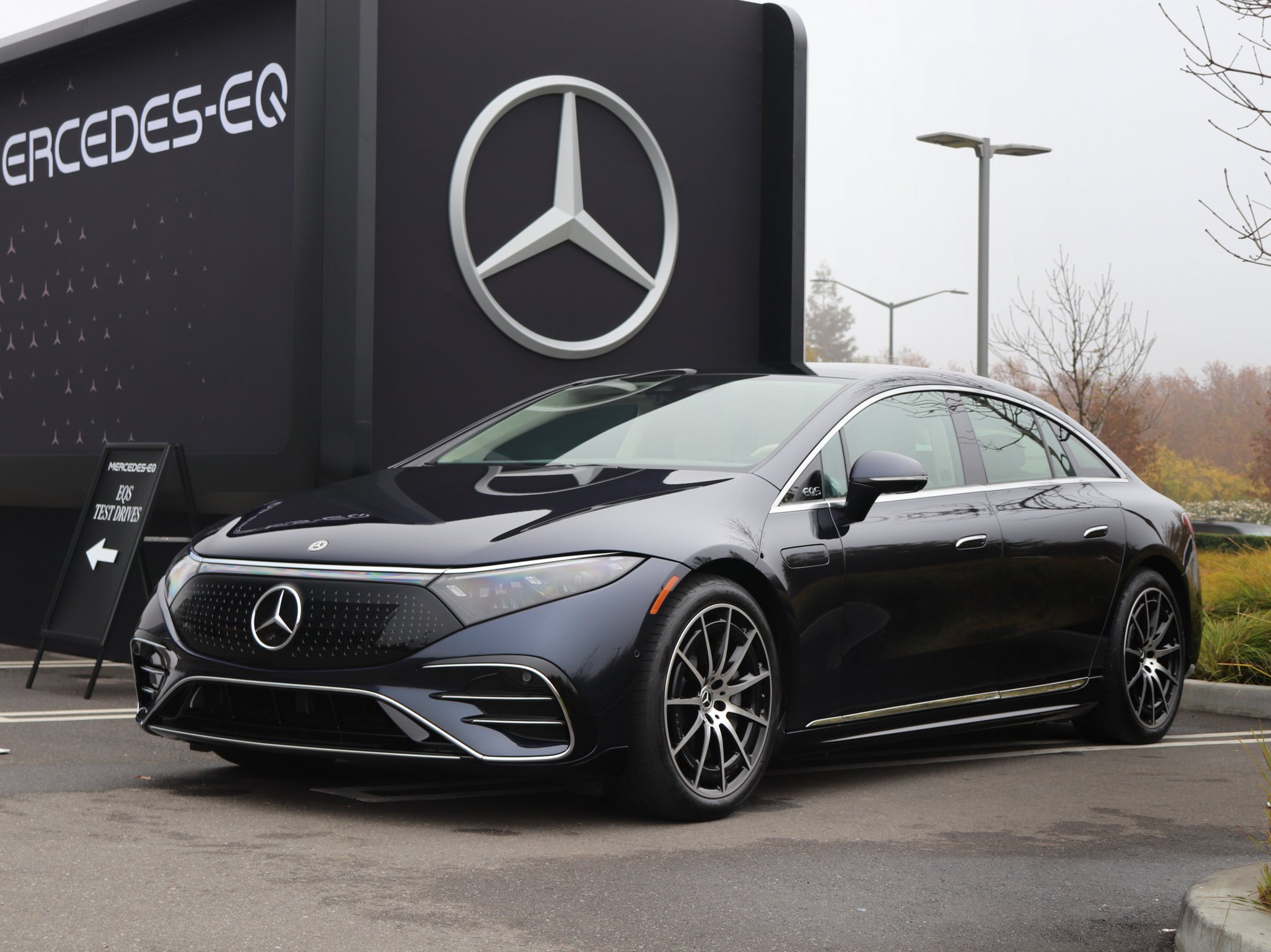
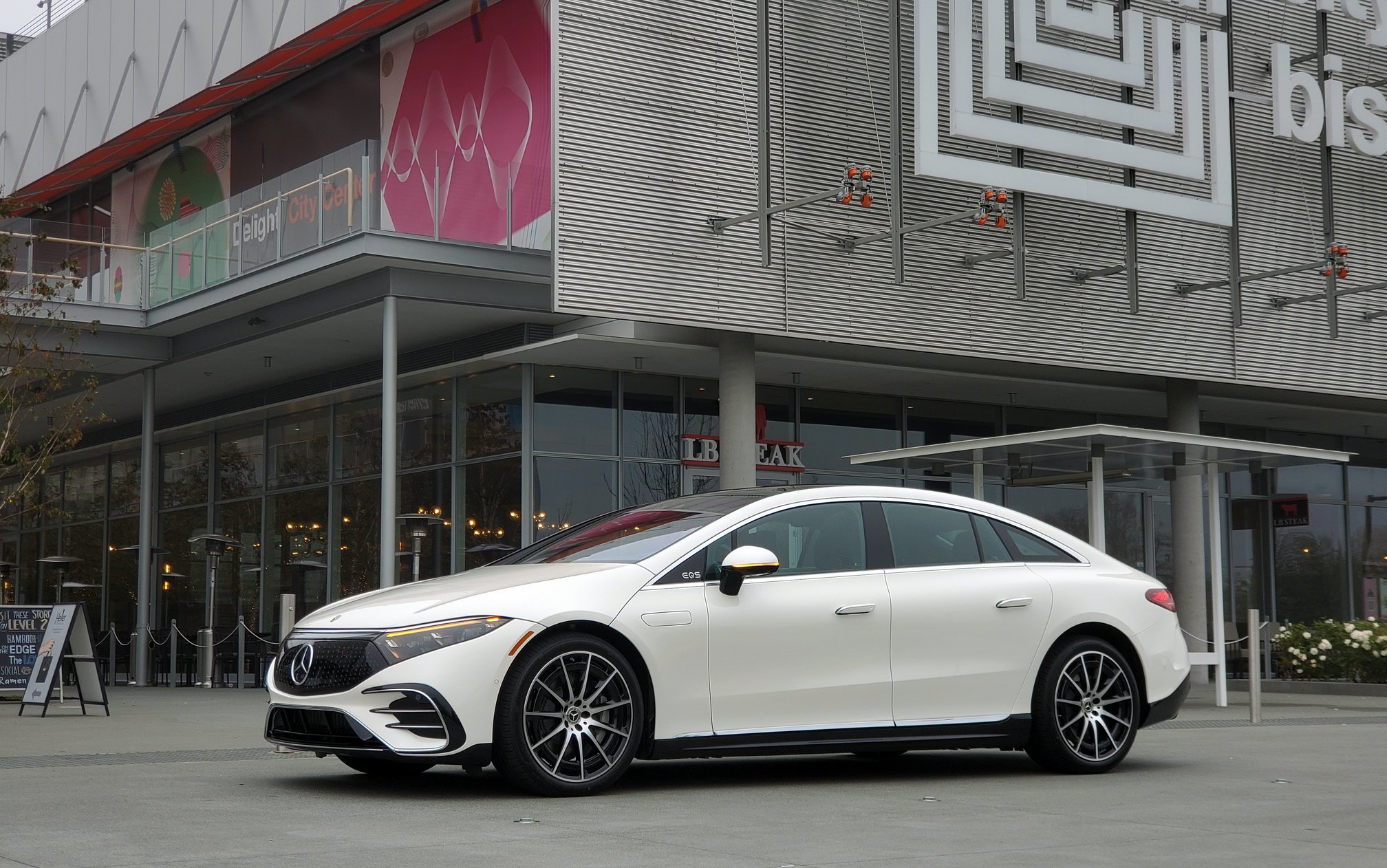
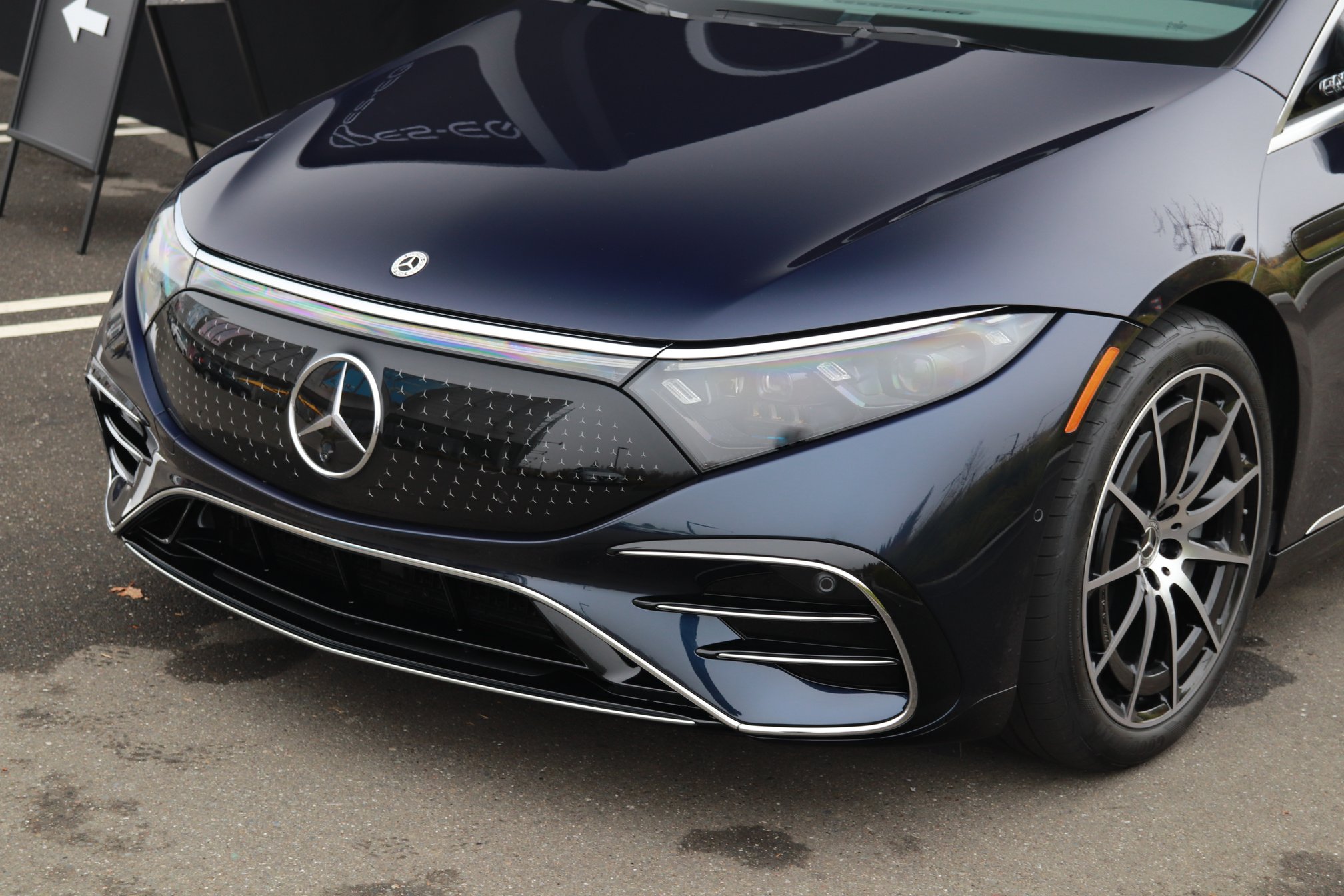
The designers say its aesthetic inspiration was an archer’s bow. A taut arc reaches from the tail lights to the front axle. (A stubby hood extends beyond.) The elegant curve is echoed in the bumpers, grill and cabin. The smooth form is efficient, with an amazing 0.20 coefficient of drag, making EQS exceptionally slippery through the air.
(The EQS’s official range is still TBD, but the gauges in the preproduction test cars reported nearly 400 miles of range.)
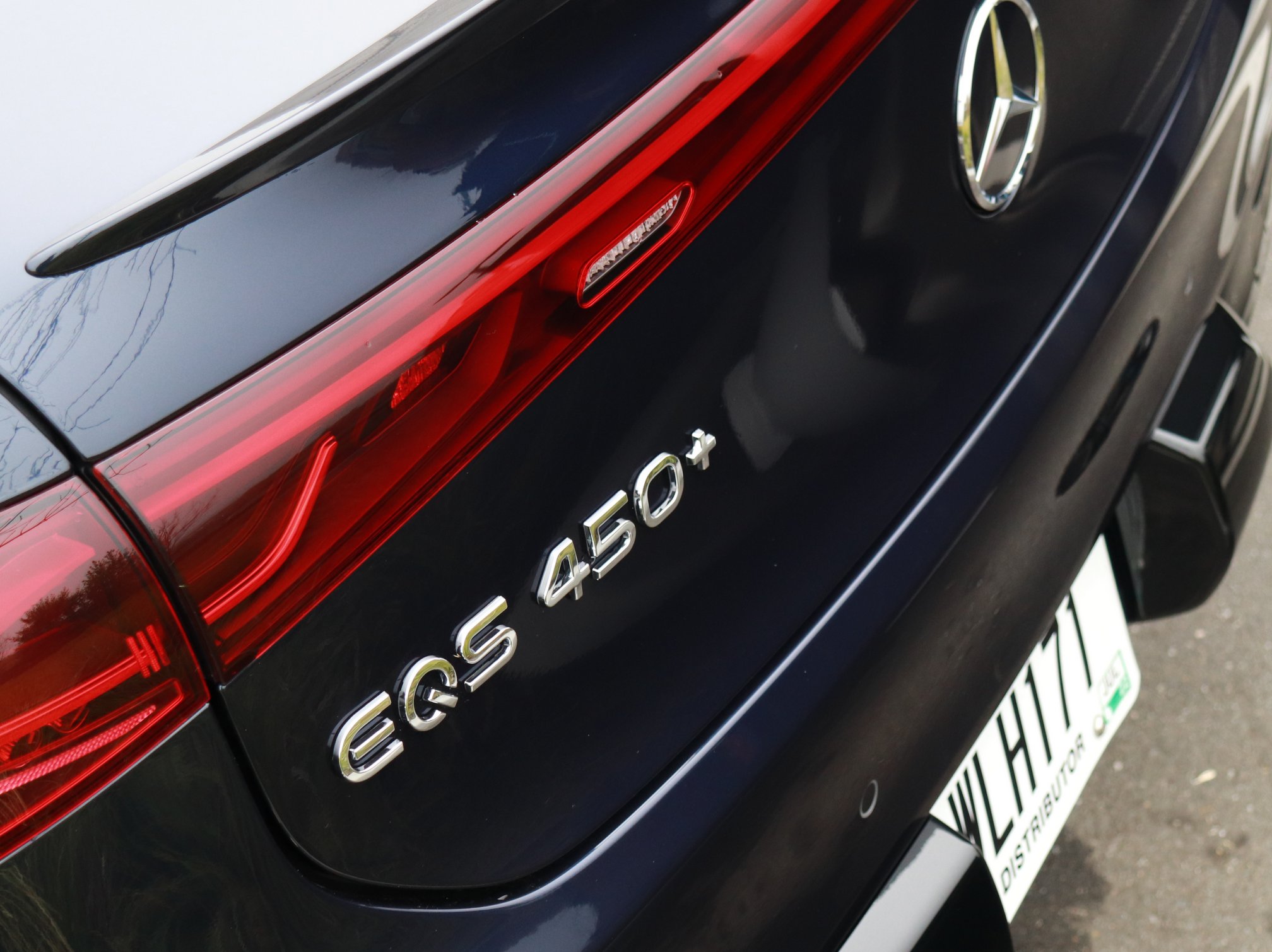
The engineers had a fresh start too. Thanks to the new skateboard-style platform, the EQS has its wheels pushed to its extreme corners. This elongates the wheelbase, making more room for passengers and under-floor batteries. In addition, the electric motors—one for the $102k RWD EQS 450+ or two for the $119k AWD EQS 580—nestle between wheels, eliminating the need for a prominent engine compartment.
Just as a flagship EV was a big rethink for Mercedes, I’m finding it a big rethink to adopt a luxury EV mindset.
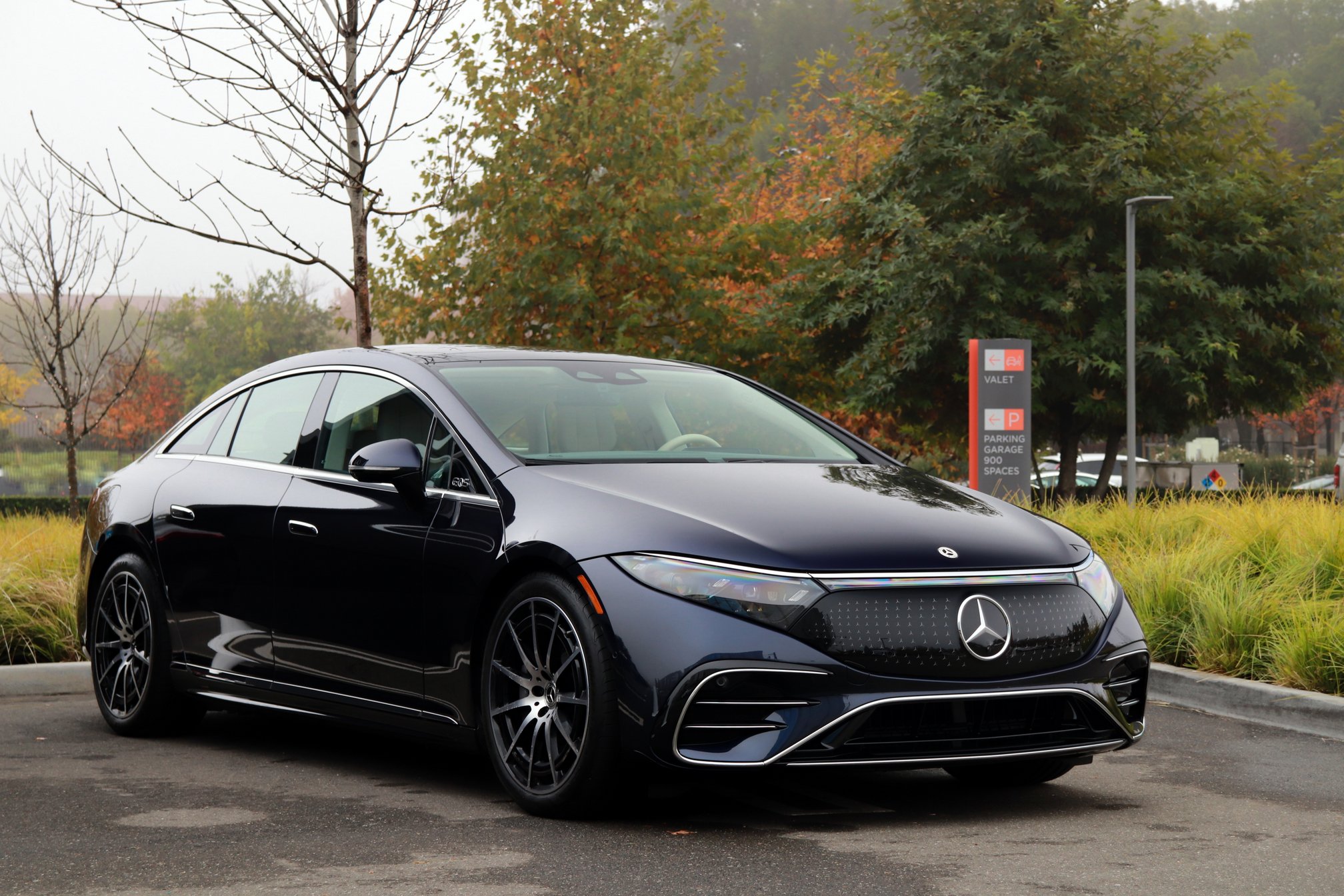
Mostly, the new design language doesn’t stir my pulse. I’ve been programmed to like long hoods and bulging haunches—signatures of performance in ICE cars—so the EQS’s cabin-to-engine ratio is foreign to my eyes. (The Tesla Model 3 already looks awkward to me, and it’s more conventional than the EQS!) I know the new ratios are enabled by the EV platform and have quantifiable benefits, but I still think the cabin looks bloated and the hood shrunken.
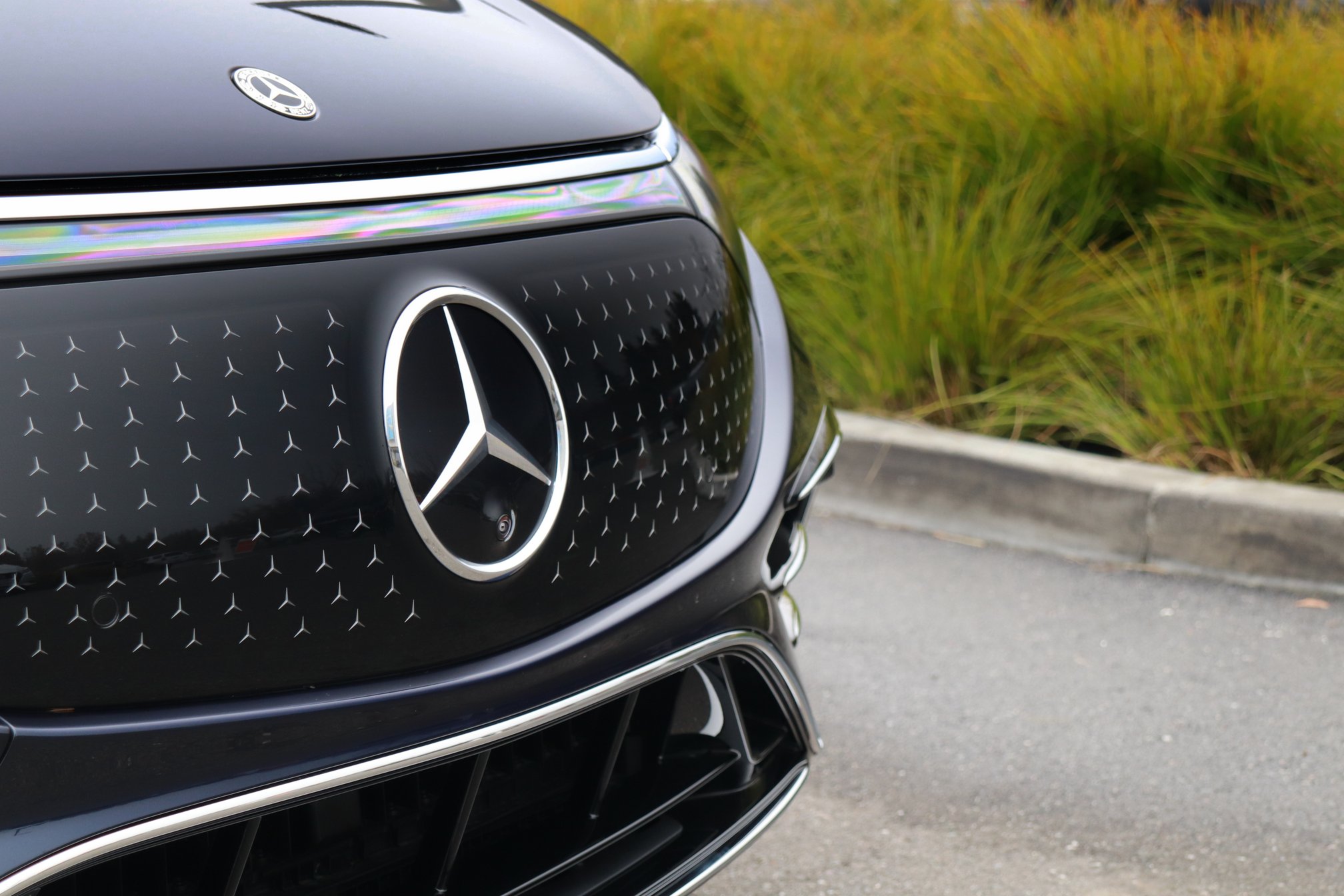
Then there are the wheels! For the standard 20-inch rolling stock, Mercedes cheesily festooned one design with blue electrical lines and another with a thousand three-pointed stars. Thank god the larger 21-inch rims are conventionally styled.

Okay, be open-minded, Mike!
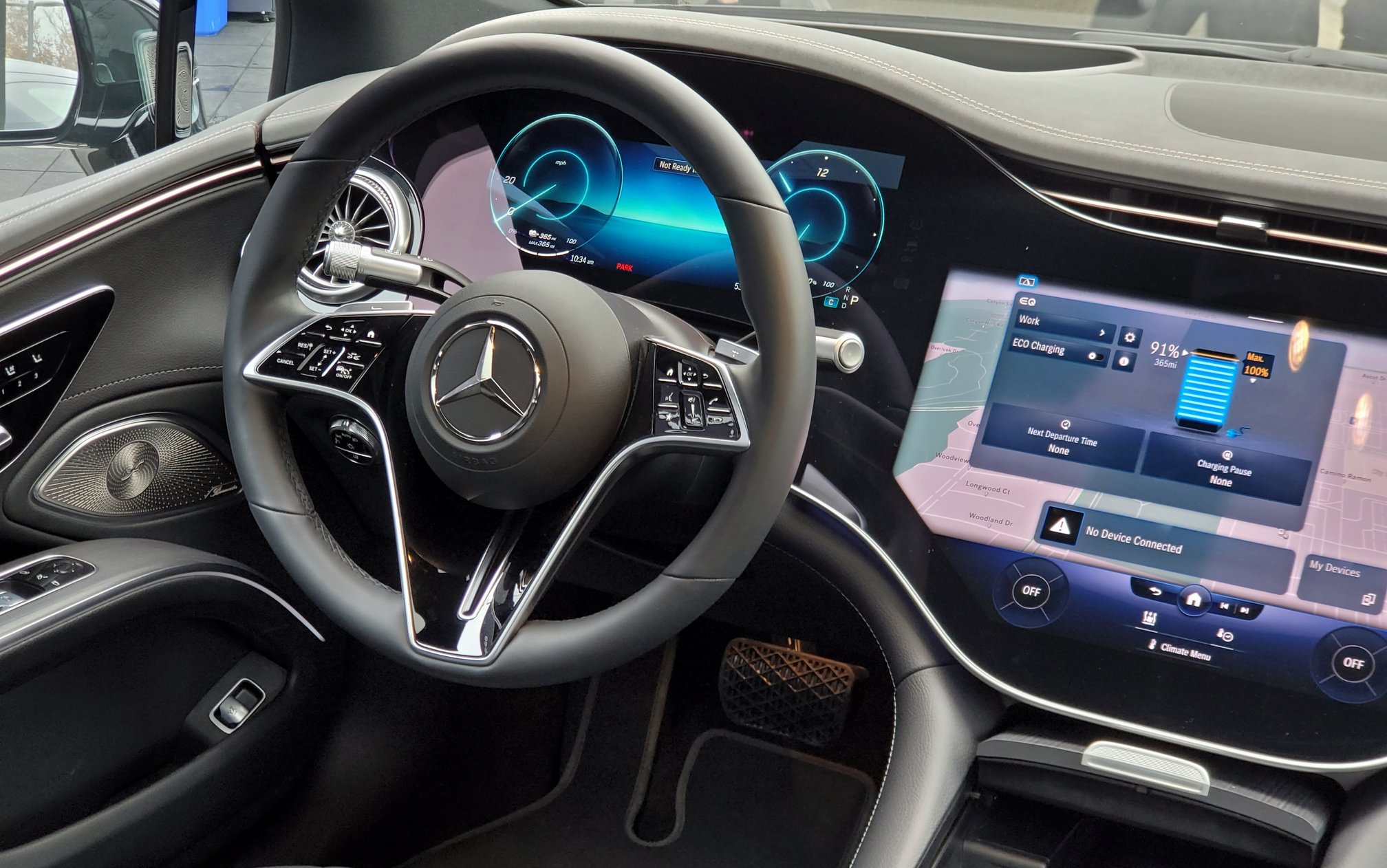
I open the doors and look around the cabin. With the car off, I’m surprised by the restraint and austerity of the EQS. Ahead of me is the—currently blank—56-inch Hyperscreen. On its flanks are twin circular air vents and near my right hand is a remote-control-sized panel with the car’s only physical buttons. (They adjust the drive mode and volume.)
Is that it? The layout is simple compared to prior Mercedes interiors.

The beloved Mercedes-AMG E63 sported an analog clock, six-turbine vents, dozens of physical buttons in knurled metal, a trackpad and a rotary infotainment controller. Framed in matte-finish aluminum and brightened by multicolor LEDs, the E63’s glistened like a tinsel-draped Christmas tree. In the EQS, where most of the physical controls have evaporated into the virtual world, I’m missing the glitz.
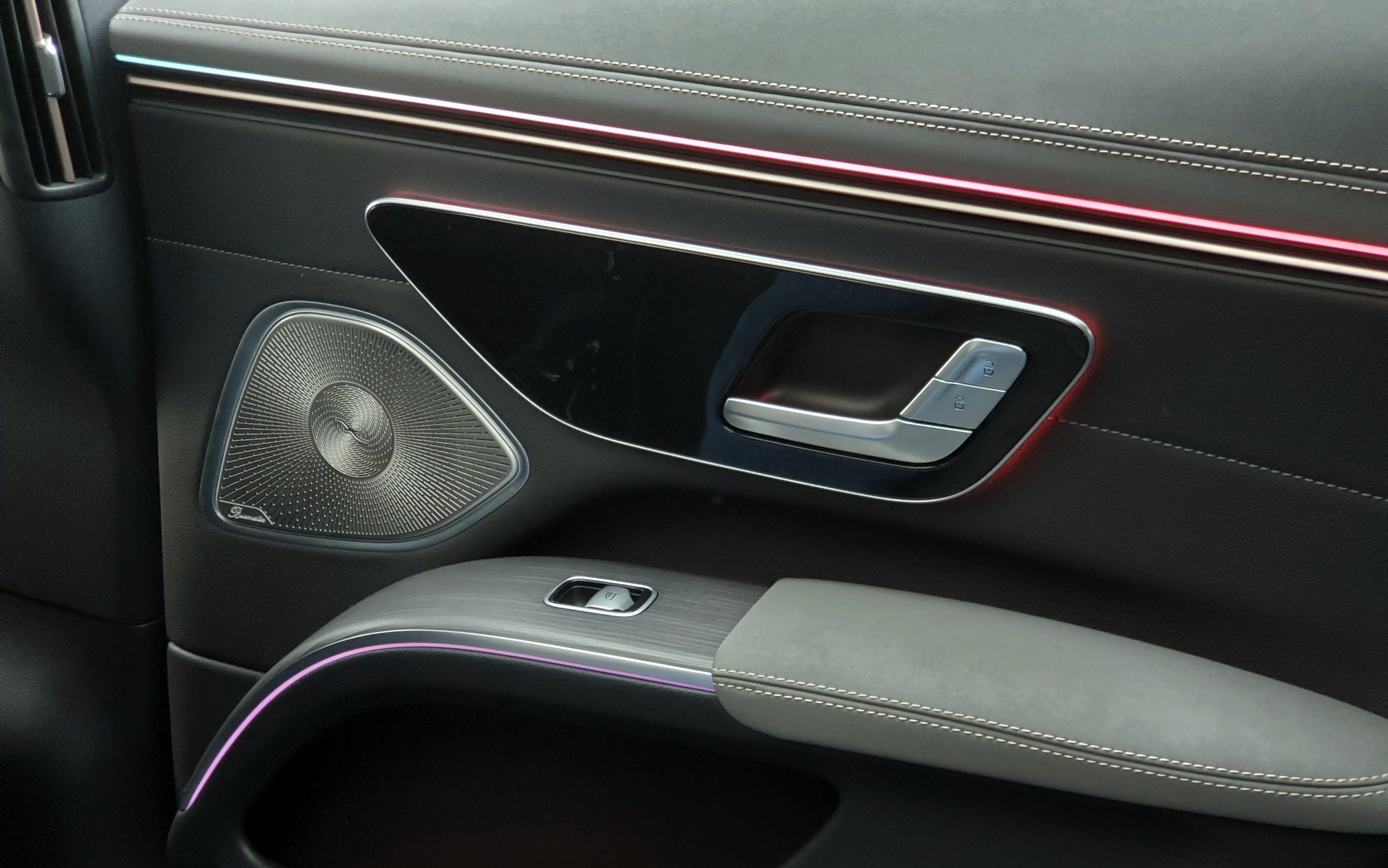
Until I power on the car, that is. Then, the three-paneled Hyperscreen bursts to life with dazzling animations: stars twinkle and flow across the screen, a precursor to the crisp gauges and bright maps. From every curve and cluster of the cabin, hidden mood lighting illuminates. The side of the seat glows with an s-curve, evoking a human spine. A light pipe traces the wooden door trim as it dives from the window switches to the footwell. (The archer’s bow is re-evoked.) The glitz is here, even if the EQS has less brightwork to reflect it.
I put the car into drive and wind out of the mall parking lot. The EQS’s 126.4” wheelbase is 6” longer than a Dodge Durango’s, yet I easily escape the lot’s tight confines thanks to the 10-degrees of rear steer that shrinks the turning radius. (The EQS would be infuriating to park without this technology.)
Pretty much all I need to know about the car’s driving dynamics are foretold in the first fifty feet. The steering is effortless to spin, and the brake and throttle are tuned for subtle engagement; let’s not trouble the driver or jostle the passengers! When I encounter speed bumps, the EQS steps over them with the gentle squish of Ugg-shod feet on shag carpeting. (An air suspension is standard in the EQS.) A subtle electric whir—which I assume is delivered via the stereo—lets me know power is flowing to the motors; this is the only aural indication that the EQS is underway.

So the EQS makes tricky driving a trifle, hides the coarseness of the world, and steps with confident serenity. It gives a nice kneading backrub.
On the city streets, the story unfolds a little more. The EQS is still smooth and hushed—and free of engine or tire vibrations—until I force the accelerator to the floor. Then the EQS leaps forward with urgency—it’s packing 516 hp and 631 lb-ft—and the ambient lighting flickers an angry red. The level of shove roughly matches that of my AMG GT S and CTS-V—cars which shock and awe—but the go is more jarring in the otherwise serene EQS.
I switch from Comfort into Sport. Smaller accelerator applications now produce larger results, though the Mercedes is still nowhere as jumpy as my Tesla. (The Model 3 feels like it is trying to prove something; the Mercedes does not.) Full-bore acceleration in Sport feels identical to that in Comfort: Perhaps full power is available in both modes, but the curve is just quicker in Sport?
Unfortunately, Sport mode also turns on a noisy sci-fi soundtrack for the regenerative braking. I cringe whenever I lift off the accelerator, and Jetson spaceship whirring fills the cabin. Hopefully, the sound can be muted in Individual mode.
(It was not clear to me if the brake pedal exclusively controls the mechanical brakes or if it blends regeneration with friction braking.)
My test route lacked curves, so the EQS’s lateral chops are unknown. The car does lean slightly during lane changes, but the body roll seems appropriate to the wafting ride.
While the leather-wrapped steering wheel is free of road texture and tire feedback, the tuning is mission-appropriate. This is a luxury cruiser, not a wired-to-your-synapses sportscar.
My only dynamic complaint is the dull brake bite in the EQS. I’d like a harder chomp from the pads; I hope Mercedes retunes the brakes (or fills in with stronger regeneration) before the EQS is sold to customers.
The test loop is maybe three miles and ten minutes long. It’s not much of a drive, and I wish it included some highway miles to test the Level 2 cruise control. Maybe next time? Mercedes tells me the hardware is Level 4 capable and may be upgraded in the future.
I take a few more minutes to explore the parked EQS.
The massive center screen rivals Tesla’s for real estate. It is the navigation map and the control center for the radio, phone, seat massagers, charging, and so much more. I’m told that Mercedes uses AI to surface the commands you are mostly to use at any moment to spare you trips through the menu structure.
The backseat passengers have generous legroom, though, curiously, the rear floor is not entirely flat. Rear-seat massage and entertainment screens are available as options.
I’m delighted that the commodious trunk is accessed by a hatchback door. This makes it a cinch to access bags from the depths of the compartment. The EQS should easily accommodate road trips with four adults.
So, am I feeling the want for the +$120k EQS 580? Well, in my 30 minutes with the car, I’ve come to appreciate its hushed serenity, fluid technology and coddling accouterments. Even the arcing design is growing on me.
But then an equally expensive Tesla Model S Plaid pulls into the parking lot. Its long hood and punched-out wheel arches scream performance. I start to feel a tingle in my loins. Sorry Mercedes, my purchase decisions are testosterone-driven! I’ll see you again when the AMG EQS is available!
 Mike's Steering Column