
V6 up front, rear wheels driven and seating for two. Sounds like the makings of a driver’s car, right? Well, the curious thing is that even though the Ford Transit 250 cargo van is nearly 20 feet long and over 8 feet tall, it did satisfy my love for driving!
The van was a means to an end. I needed to move a 6’x5′ painting. A minivan or pickup truck should work, thought I, but then the cargo van rang up at half the cost. When overkill is the cheapest option, you choose overkill.
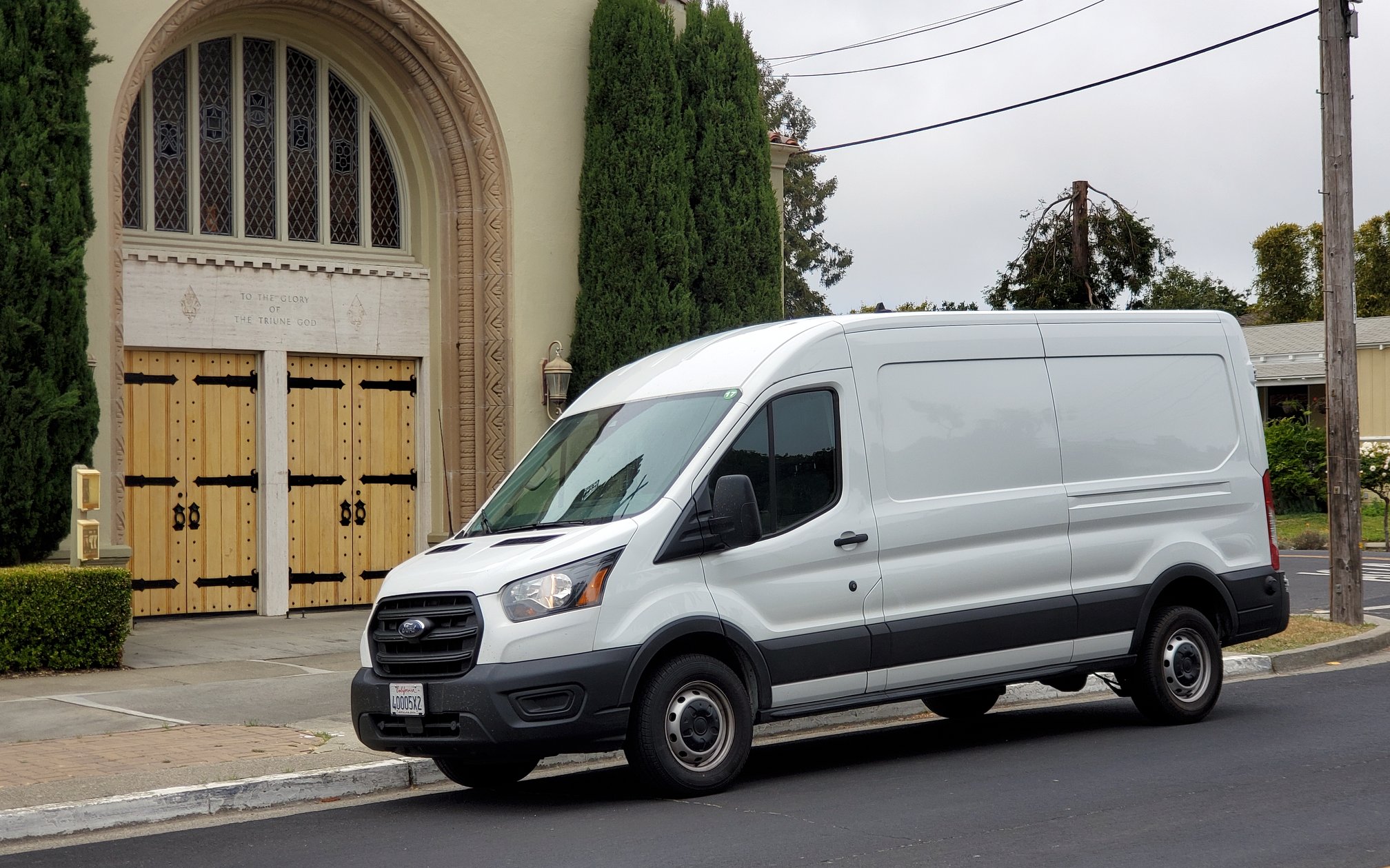
On the day of the move, a long wheelbase (235.5 inches bumper to bumper), medium roof (100.7 inches), Transit 250 was waiting for me. I know commercial trucks come much larger, but the van looked massive, and I was glad I could drive straight off the Hertz lot without reversing.

The Transit is an awkward vehicle with bug-eye windows and a pug-faced nose, but once I was underway, I quickly came to appreciate the van’s generous glass openings. The door windows dipped down towards my knees, revealing short pedestrians on street corners and making it easier to thread the truck down narrow streets. The upright windshield had minimal A-pillar blind spots, and the high seating position gave me a commanding view of the road ahead.
Obviously, as a cargo van, the visibility rearward was poor. The back doors did have windows, but it was a pinched view of the world behind. My best bet for side and rear vision was the elephant-ear wing mirrors; they revealed everything behind my shoulders, and without their convex bottom thirds, safe lane changes would have been impossible!
Tiptoeing through the city, I cursed the jerky and inconsistent 10-speed automatic and wished for more torque from the truck’s 275 hp/262 lb-ft 3.5L V6. (The optional Ecoboost V6 should remedy that.) The transmission could be slow to get into gear when I departed intersections, and it hunted for the right ratio when I climbed grades.

As I acclimated to the Transit, the biggest surprise was its terrific steering feel. A constant whir, waver and jiggle resonated through the disgustingly tacky rim of the plastic wheel. (Hertz, wipe down your interiors!) I could absolutely feel the work of the suspension, 16″ wheels, and Nexen tires and the changing texture of the road surface. This feedback was something I loved from the Ford U-Haul truck that moved me to the SF Bay Area; I hadn’t driven a Ford truck lately, so I was happy to refind the good vibes behind the wheel. Does Ford still use hydraulic steering in the Transit? Either they do, or this is the best EPAS ever. (It turns out it is EPAS!)
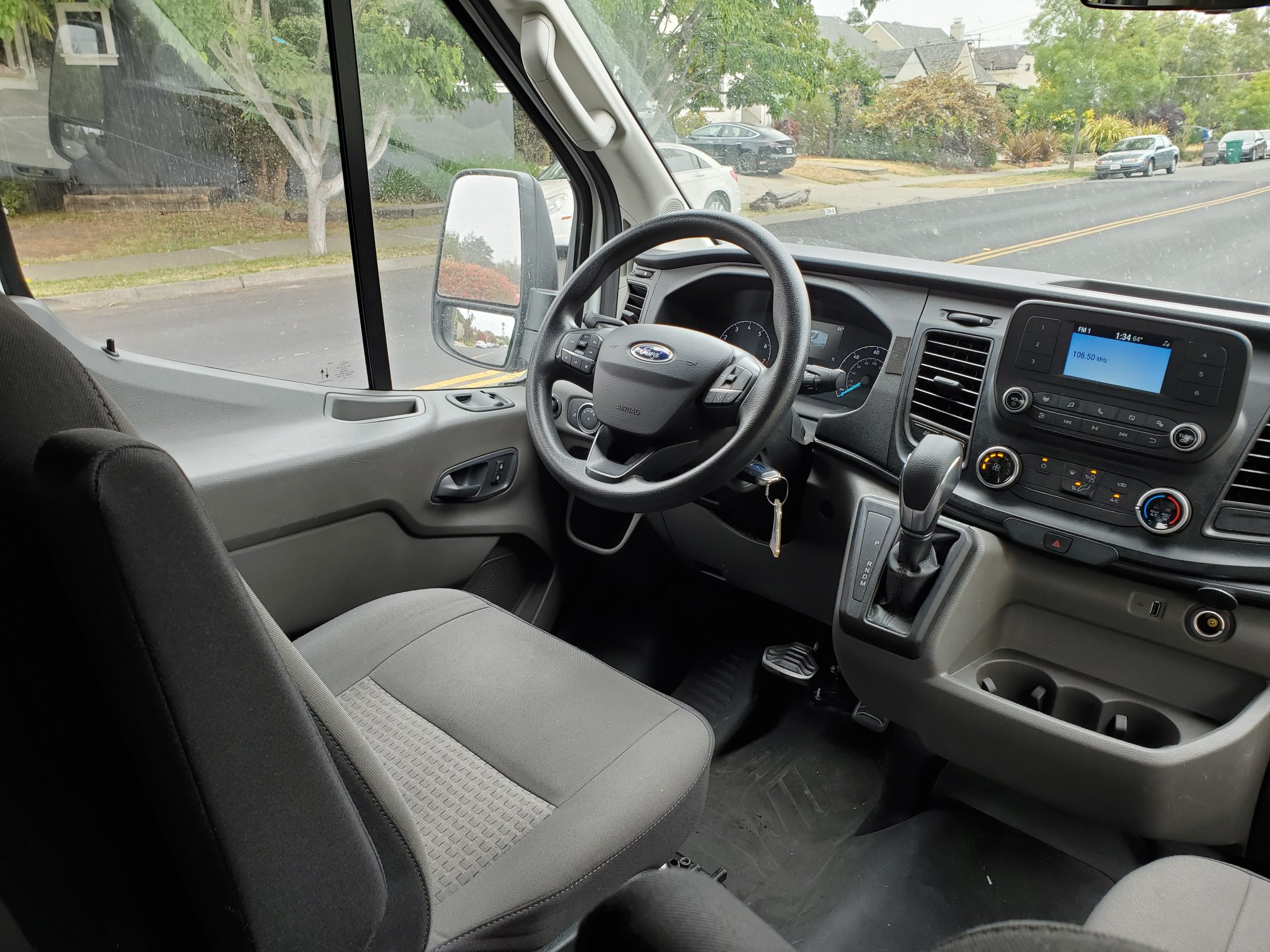
So there I was, thrumming down the highway and relishing the wash of feedback. From the high perch of the driver’s chair, I admired the durable simplicity of this workhorse. All controls were rendered in cheap hard—but robust—plastic. The basic amenities present were the A/C, radio, Bluetooth, and backup camera. (The latter being a federally mandated godsend should I ever need to reverse this whale-sized truck.) The steering wheel seemed small for such a large vehicle—better shaped for a compact car. Was it installed here for cost-sharing purposes? Whatever the answer, the Transit 250 was equipped with the bare minimum for moving goods and devoid of any luxury bloat that would inflate the price and threaten future maintenance. As a basic, full of feedback, fix-it-with-a-rock sort of vehicle, I reckoned the Transit was the Miata of trucks. (Priced from $37,500 in this trim, the Transit cargo van just about overlaps the Mazda MX-5 Miata on price too.)
And then I hit Hwy 17, the torturous squiggle that links San Jose to Santa Cruz, and boy did I wish I was in an actual Miata. The empty truck had the power to climb the redwood-shaded grade—albeit with extra downshifts at every throttle dip—but the puny tires 235/65R16 Nexen Roadian CT8hl tires had no appetite for enthusiastic cornering. Through the chatty steering, I could feel the tires flex and fold as the 50 mph corners pushed the van’s weight from side to side. Under braking, the steering would gain weight as the little rubber donuts tried to revector the speeding van. I was simultaneously nervous about the handling, enjoying the driving challenge, and gobsmacked that Sabine Schmidt lapped a Transit around the Nordschleife in 10m12s.
In Santa Cruz, I collected my 6’x5′ painting. The medium-height Transit was tall enough for me to stand in, so I could have fastened the artwork to the wall, but I didn’t bring a rope. No problem; the painting lay on the floor between the passenger seats and the wheel well humps.

Ford has fashioned a beautifully functional cargo area for the Transit. The floor is flat, the walls are perfectly vertical and smooth, and the passenger cab is pushed way far forward to maximize loading space. The only irregularities are the two small protruding wheel well humps. Packing this van to the gills—or customizing it to your business’s needs—would be easily done.
On the way back to Berkeley, I drove the mountain curves more gingerly, then tried to make time on the urban highways. Three hours into my journey, I was now comfortable with the size and performance of the Transit and happy to run in the fast lane. But the van capped my speed at 75 mph. Any quicker and a loud hum would appear from the truck’s rear! I dared not risk drivetrain failure.
Back at home, the Transit’s wide sliding door and tall rear double doors made extracting the painting a cinch. The package had been delivered. Mission accomplished!
The Transit 250 was complete overkill for my art move—I could have moved 100 paintings in this van—but it was the cheapest and easiest way to get the job done. And along the way, I got reacquainted with my guilty pleasure: no-nonsense work trucks. The Transit’s simple architecture and chatty steering seduced me, but I was most impressed with the pragmatic design of this cargo van.
 Mike's Steering Column