
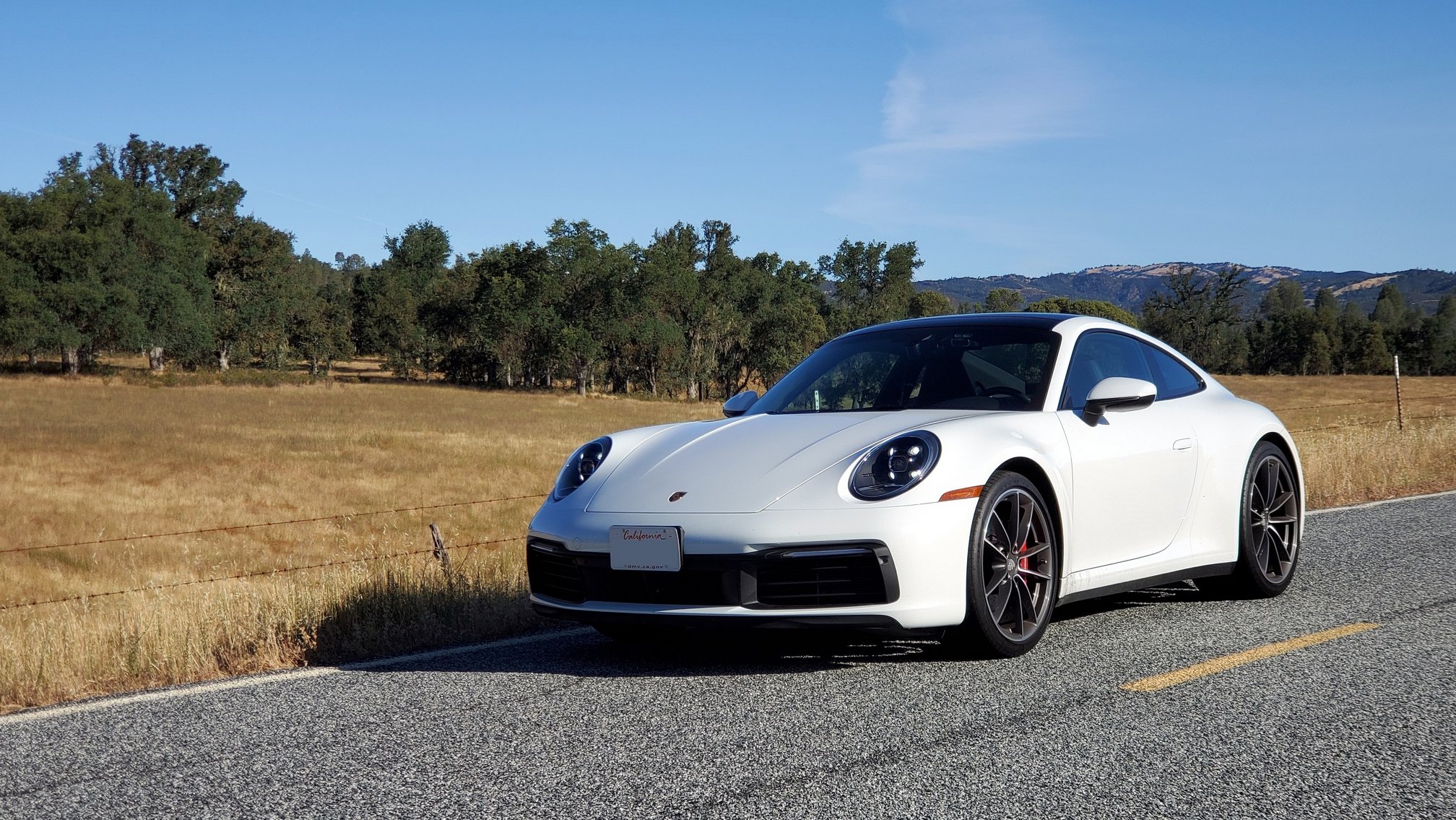
When I reserved my airport rental, the tiny GIF showed a Porsche 911 Carrera of the 991.2 generation. While not the latest-and-greatest, seat time in the base 991.2 Carrera sounded fun. I’d get my first taste of the 911’s electric steering and turbocharged engine, try to fit my 4-year-old’s car seat in the 991’s enlarged rear quarters, and enjoy a stress-relieving drive on my favorite backroads.
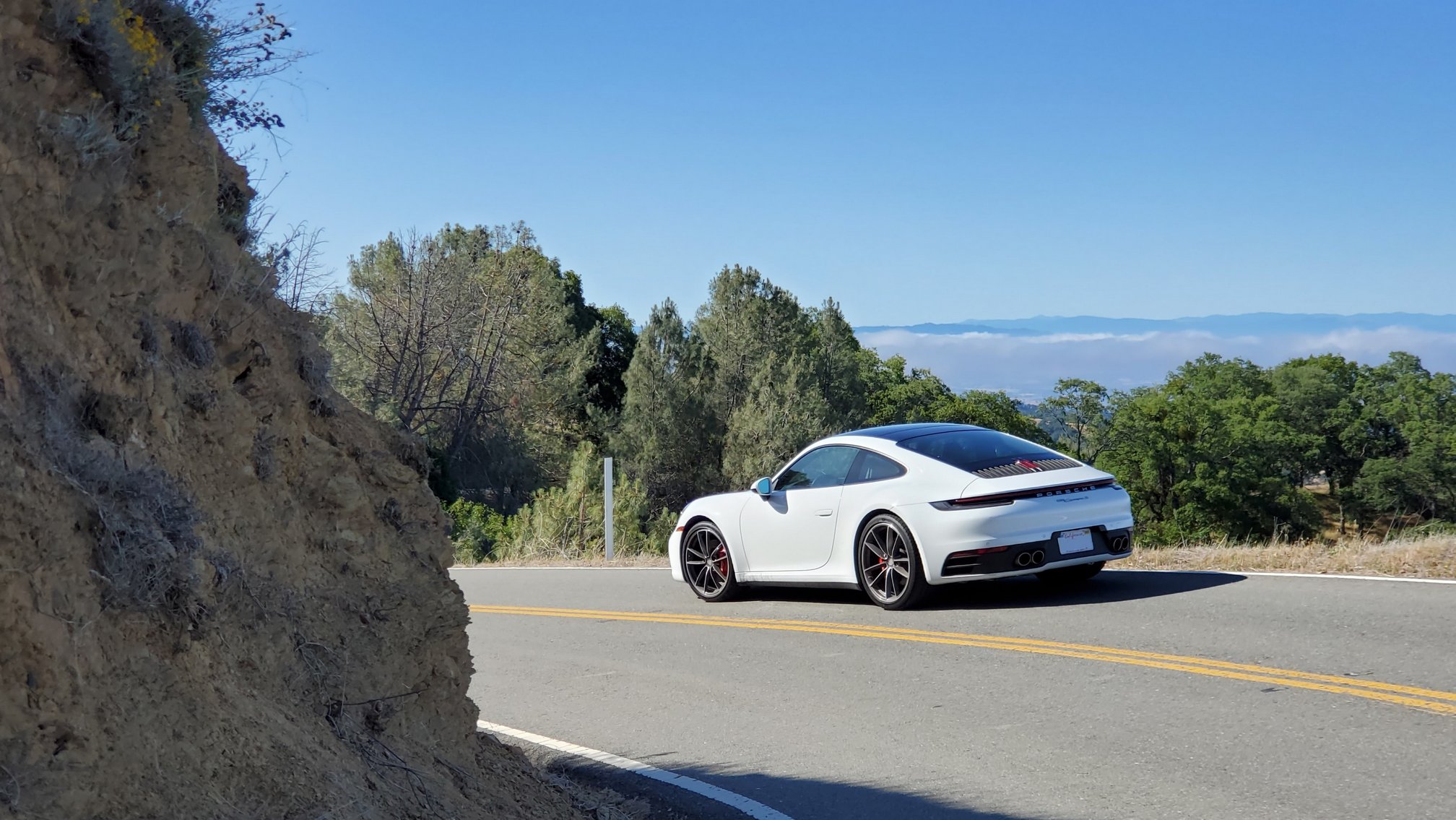
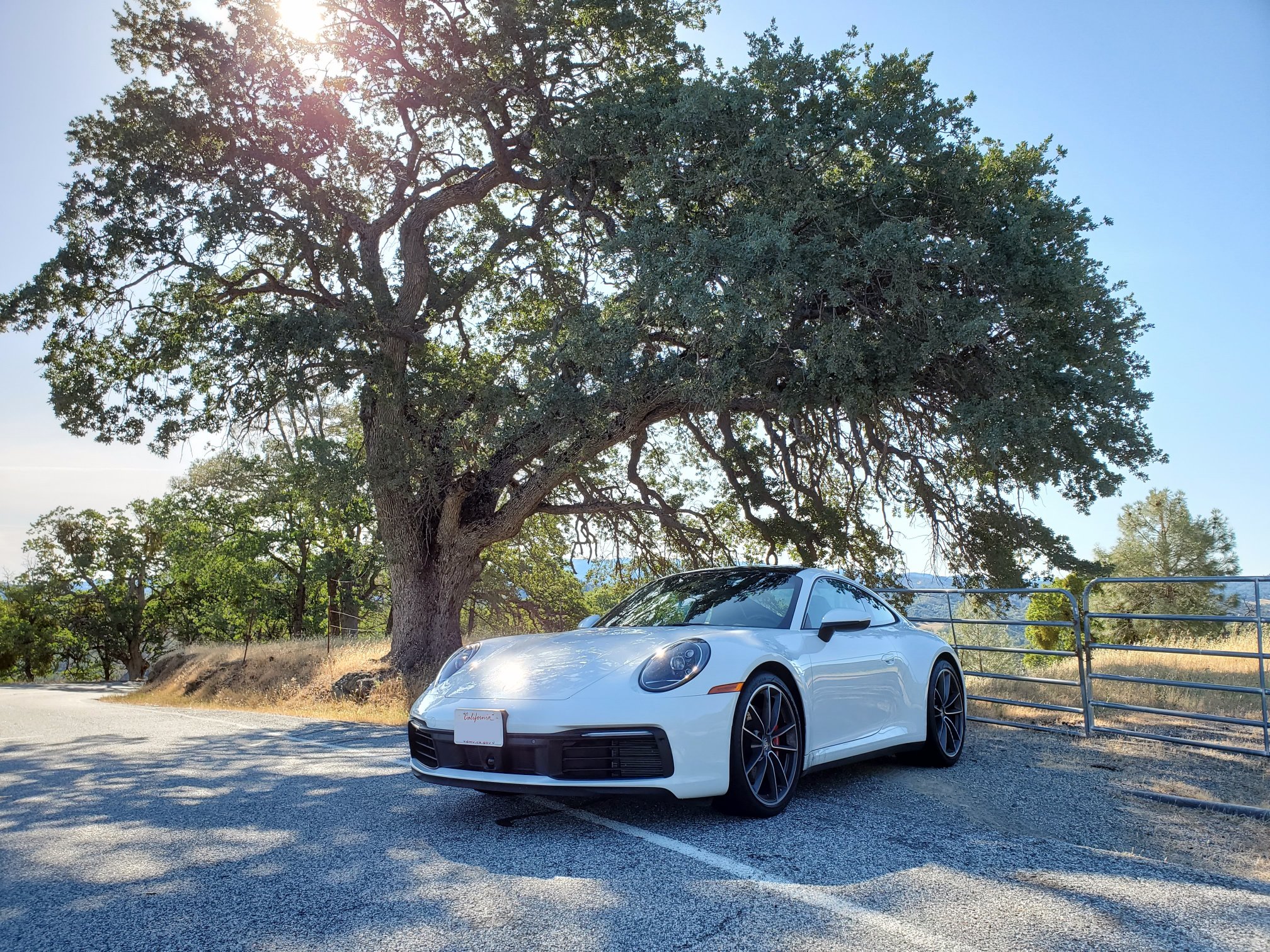
What I did not expect was to receive the keys to a hotcakes-fresh (992-generation) 2020 911 Carrera S, pound the pavement so hard that I’d rip road stone out of bitumen, and have a mind-bending Sunday drive that would leave me benchmarking the 911 Carrera S against the best cars I’ve ever driven. But that is exactly what happened.
The Daily Driver
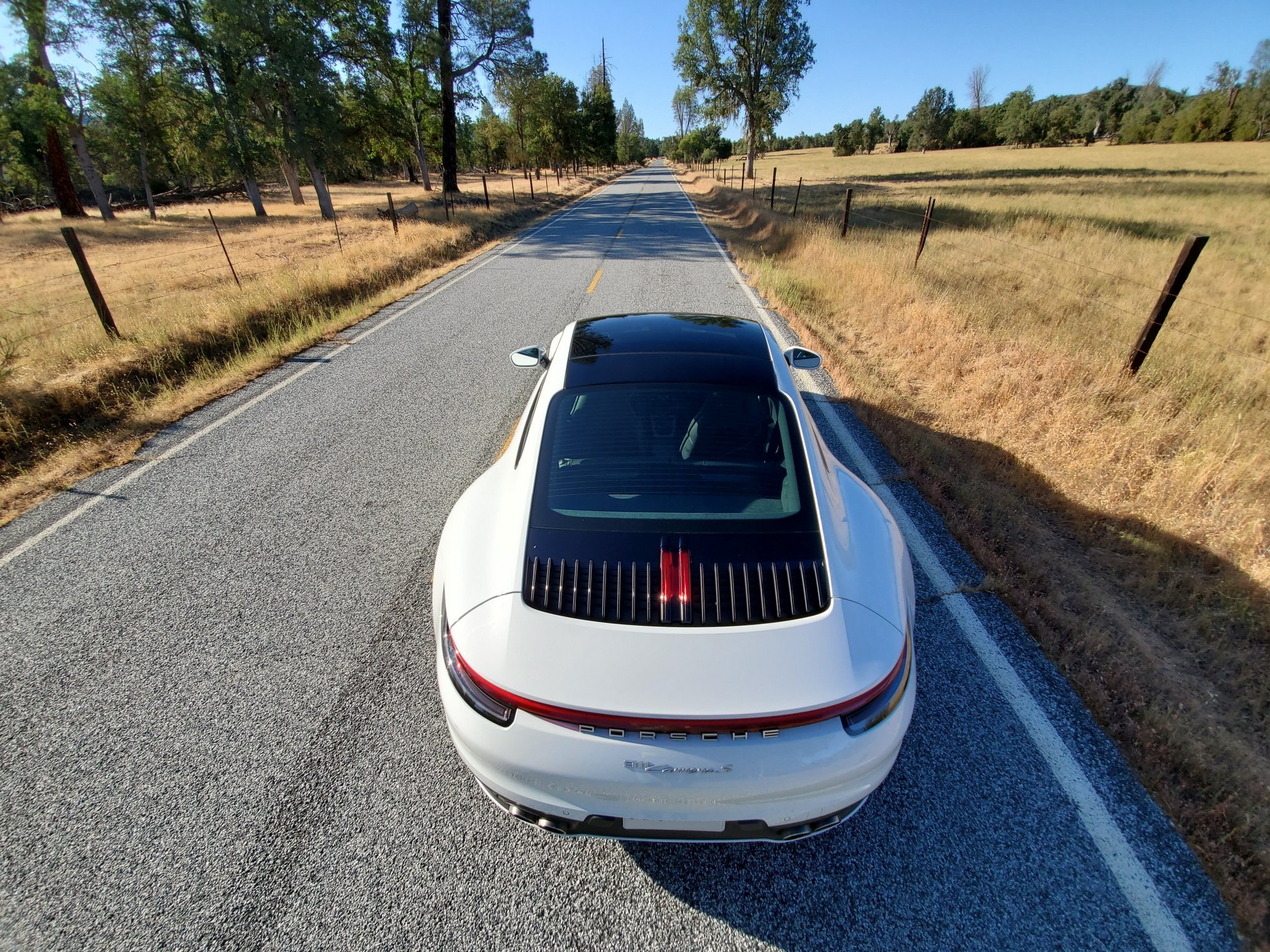
It starts with me in an eerily empty airport rental car lot. With a mask on my face and cleaning wipes in my hands, I busily disinfect every touch surface of a brand new 2020 911 Carrera S. As I spread the alcohol-based cleaner over every touch surface, I drink in the details of the new 992-generation 911’s cabin. A familiar sports steering wheel points straight at my chest, and behind it is Porsche’s new hybrid instrument cluster. Flanking the center-mounted analog tachometer are twin digital screens that present the speedometer, fuel gauge, trip data, navigation directions, G-force meter and more.
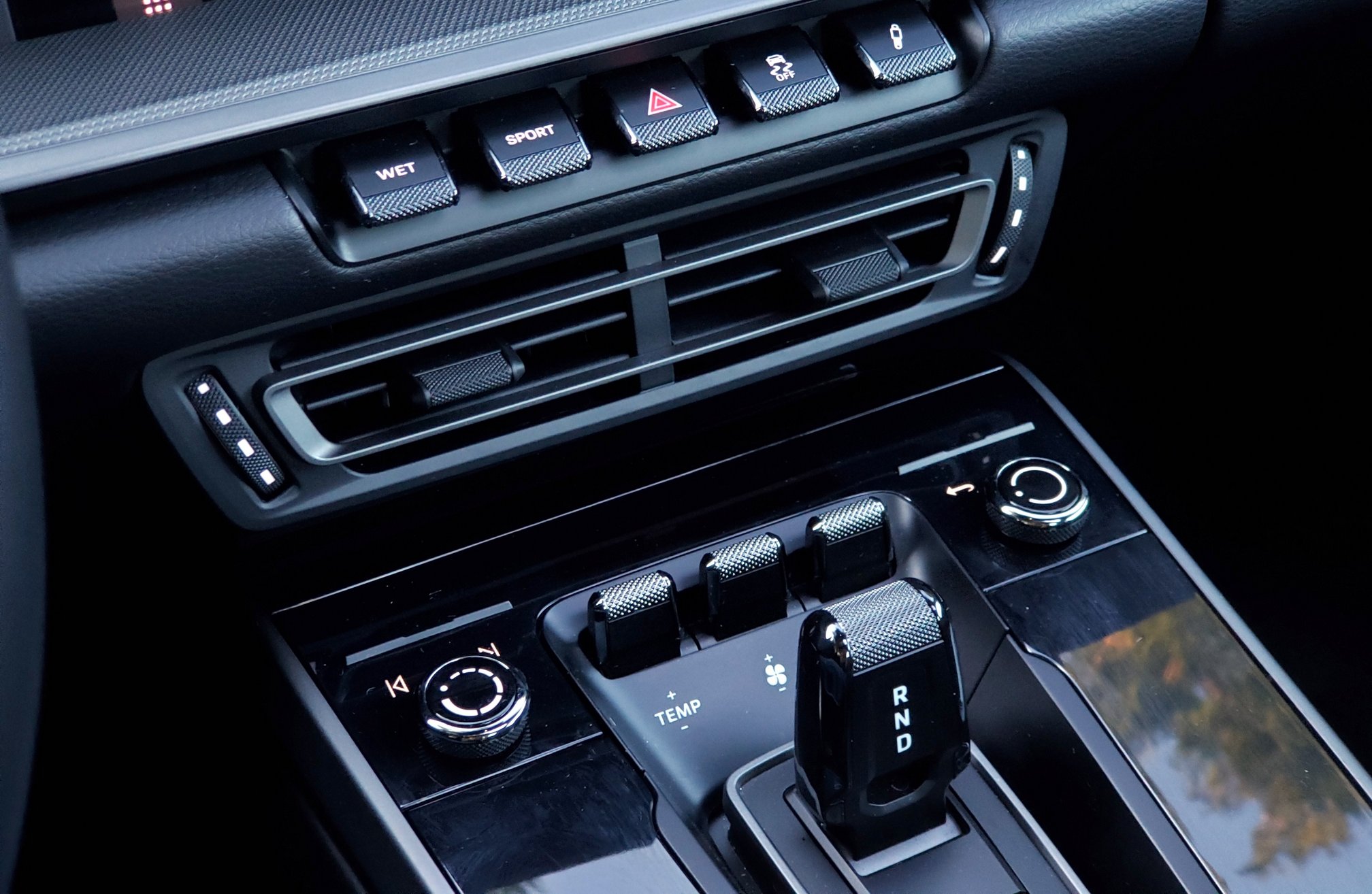
My cleaning attention moves to the center console. The new, controversial “beard-trimmer” shifter looks puny, but I like its feel and action. Its knurled, metal surface is easy to grip with my soapy fingers, and its movement is precise and affirmative. I find matching knurling on the eight toggle switches that control the most frequently-used HVAC, drive mode and infotainment settings. There’s a good balance of physical and virtual controls Porsche has found in the 992.
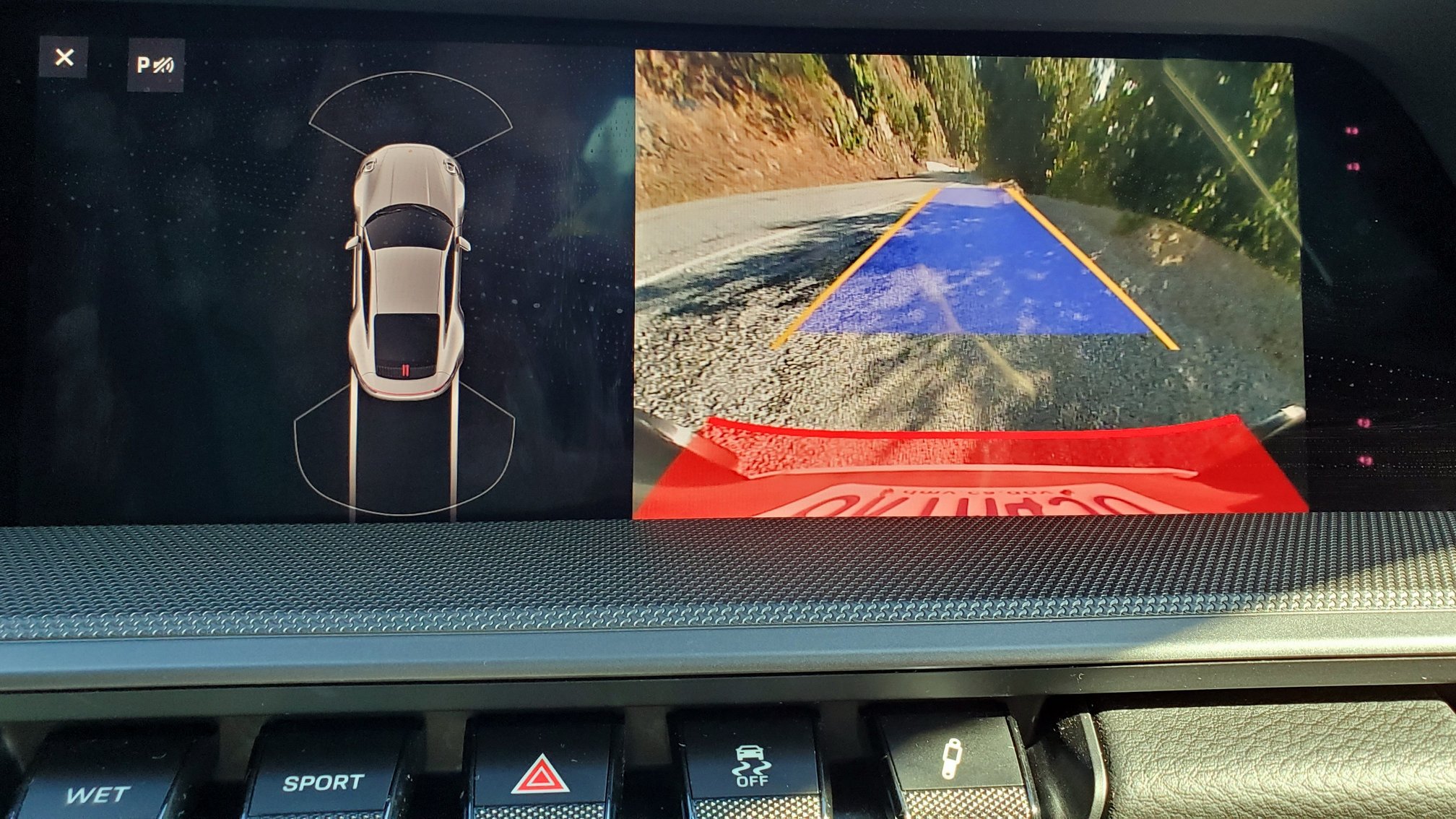
Above these toggles is the new panoramic infotainment screen. It’s nicely integrated into the dash without the use of a passé double-bubble hump or affixed-iPad mounting. The screen is bright and crisp, with a matte finish that avoids distracting reflections. It displays maps and menus in high-resolution clarity and reacts responsively to my touches. Unfortunately, it also tattletales on the disappointingly low-res backup camera. I expect a better quality camera on a $120k car!
The lengthy interior cleaning is complete. I fumble around for the ignition before remembering that, per tradition, Porsche puts it to the left of the steering column. Amusingly, Porsche has nodded to tradition again by using a dummy key instead of a start button for the ignition. Once I twist the dummy key, the 3.0L turbo engine fills the previously silent parking garage with a hearty flat-6 rumble. I pull the shaver—err, shifter—into drive and ease out of the lot.
My relaxed drive home reacquaints me with the many reasons why the 911 is the thinking man’s everyday sports car. The 911 is remarkably undemanding to drive: the ergonomics are near perfect, the outward visibility is excellent, and the PDK’s shifts are smooth as river pebbles. The 911’s radar cruise control even handles stop-and-go traffic for me!
I do have a few wishes, though. I want more lumbar support than the base sport seats provide. This shortcoming could be fixed by upgrading to the full power seats. Next, Porsche, please rename the Normal drivetrain mode to Eco and the Sport mode to Normal; Normal dulls the throttle too much and engages the engine start-stop too soon to be “normal” for a 911. Finally, can you please add a comfort mode to the adaptable suspension? There are times when I don’t want to feel every bump on the road! Also, the streets around my house suck.
The only other concession the 911 asks of me is an acceptance of elevated road noise. This is a 911 hallmark, and I’ll let it pass. That said, grumpy Hollywood executives that don’t want to end their long days with the thrum of tire noise and the thump of expansion joints should pick a Range Rover over a 911 for a more coddling commute!
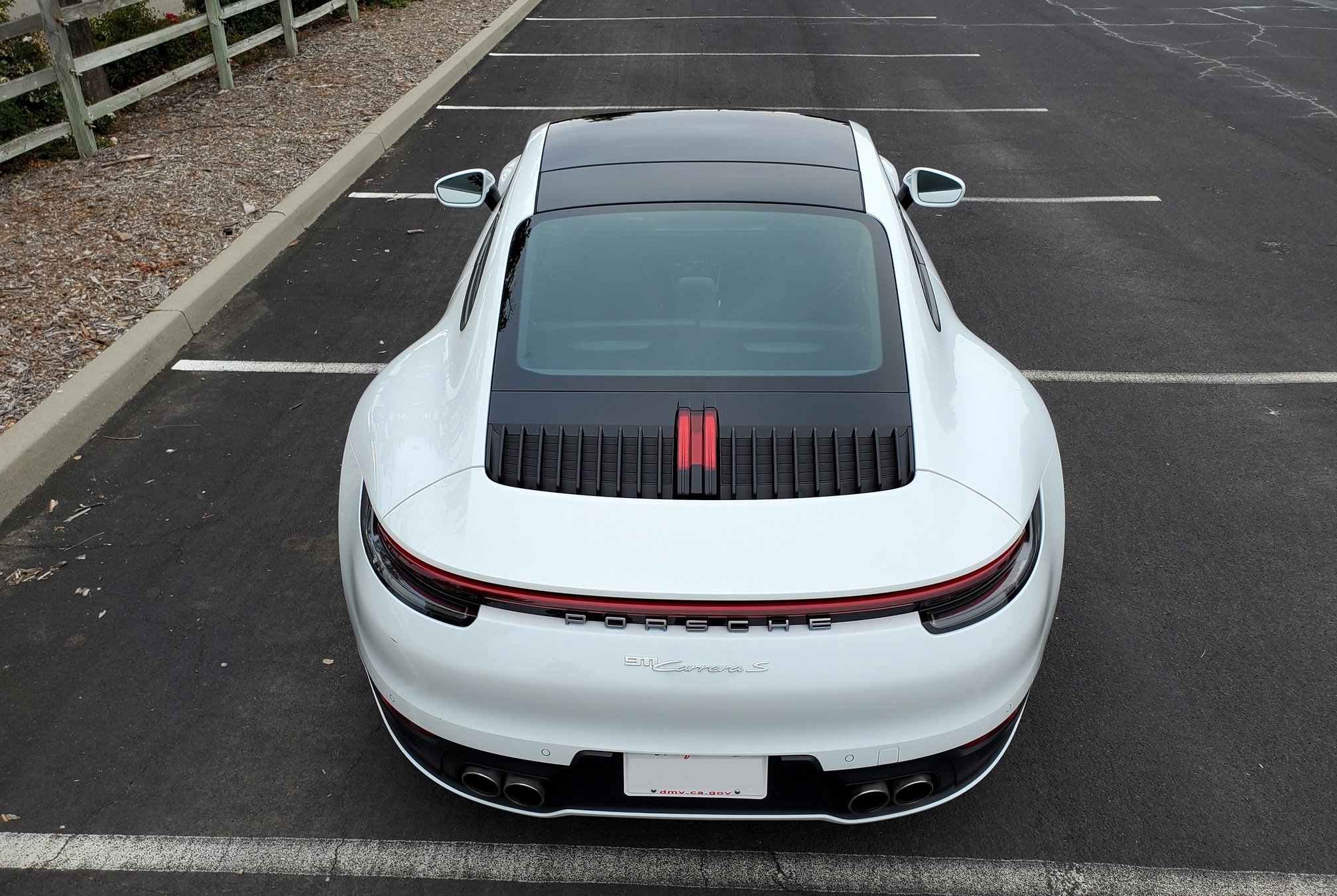
After a quick dinner with my family, I race out to the 911 to mount a child seat in the back. My first attempt is a failure. Our Graco Tranzitions high-backed booster is too wide to fit into the narrow rear bucket seats. So I grab our travel car seat, a Cosco Finale DX, and breathe a sigh of relief as it just fits into the bucket. After a few minutes of tugging on straps, the Finale DX is snuggly installed, and I collect my family for a sunset drive.
My 4-year-old climbs easily into her seat, I strap her in without undue twisting or straining, and then I split the available legroom between my daughter and wife. Both ladies have legroom to spare as we depart for the mountain overlook. (I am 6’ 2” tall, and I can sit in front of my daughter too.) After four years of nagging my wife about my need for a coupe, I am feeling mighty smug about fitting our little family into the 911.
Seven minutes later, my ear-to-ear “I told you so honey” smile is wiped off my face when my daughter starts moaning with motion sickness. Maybe the Porsche 911 isn’t a good fit for my family after all!
The Weekend Whip
I rise early. As the rosy-fingered dawn is pulling back the veil of night, I fire up the 911 and embark on a solo odyssey to Mt Hamilton.
Creeping out of my neighborhood, I appreciate the 911’s purposeful character. The steering’s firm resistance, the engine’s low growl, and the suspension’s hunkered-down stance leave me with no doubt that I am driving a top-shelf sports car. Modernized, refined and electronically processed as the 911 may be, there is pleasure to be found in driving the Porsche at slow speeds. (The involvement would only be heightened with the fitment of Porsche’s manual transmission.)
My freeway entrance appears. I gun it down the on-ramp and merge onto the empty expressway.
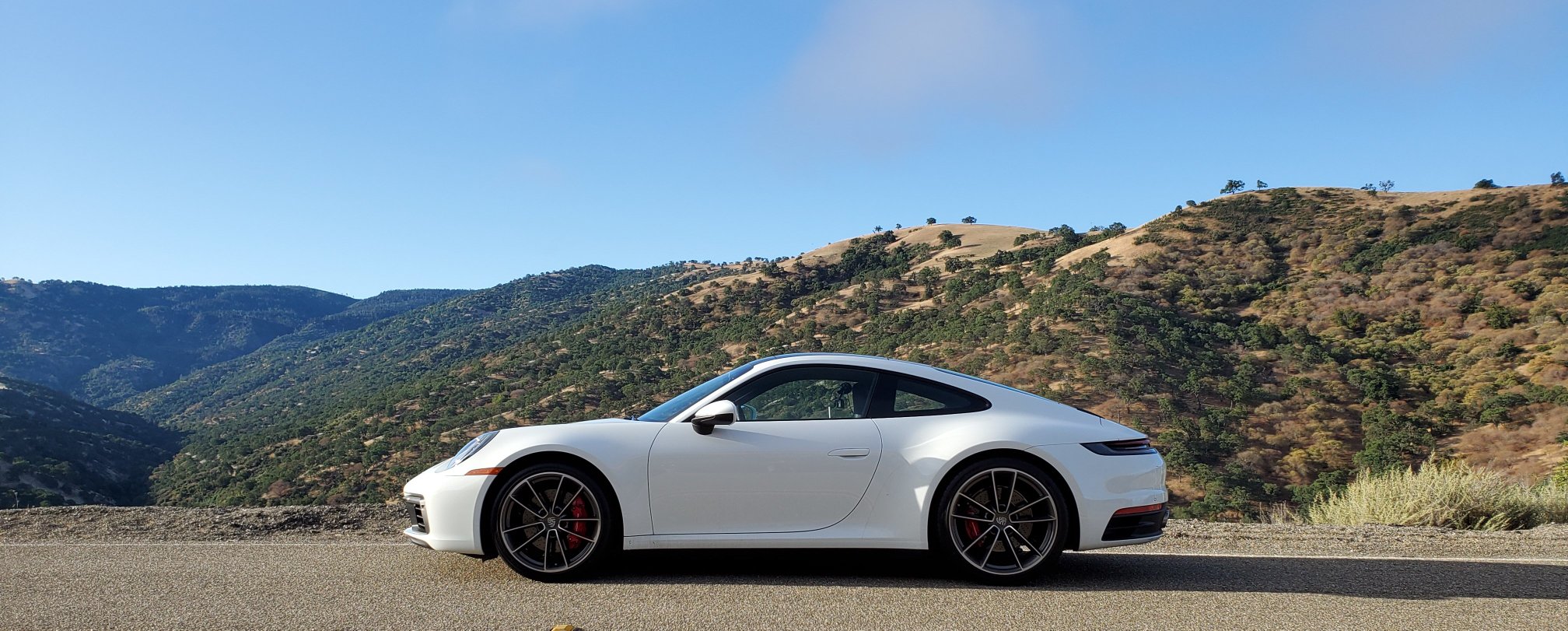
Cruising at 80 mph, I consider the recent history of power steering in the 911. Up until 2012, Porsche used hydraulic power steering in its 911s. When I sampled it in a 2005 (997) 911 Carrera S, the incredibly communicative hydraulic steering brought unfiltered joy to my fingers and catalyzed an unhealthy obsession with 911s. Then in the 2012 (991) 911, Porsche binned the beloved hydraulic steering and replaced it with electric power-assisted steering (EPAS). Critics panned it as numb.
How is the EPAS in the 2020 (992) 911? It is the most talkative EPAS I’ve ever felt, and it elevates my driving enjoyment. Pavement textures, jolts from seams and cracks, and changing tire loads are communicated clear as day.
(But the old hydraulic steering from the 997 was still better. Through it, I could feel the intimate details of the suspension working to keep the tires in contact with an ever-changing road surface. The sensations from the 997’s battle with physics are lost in the 992.)
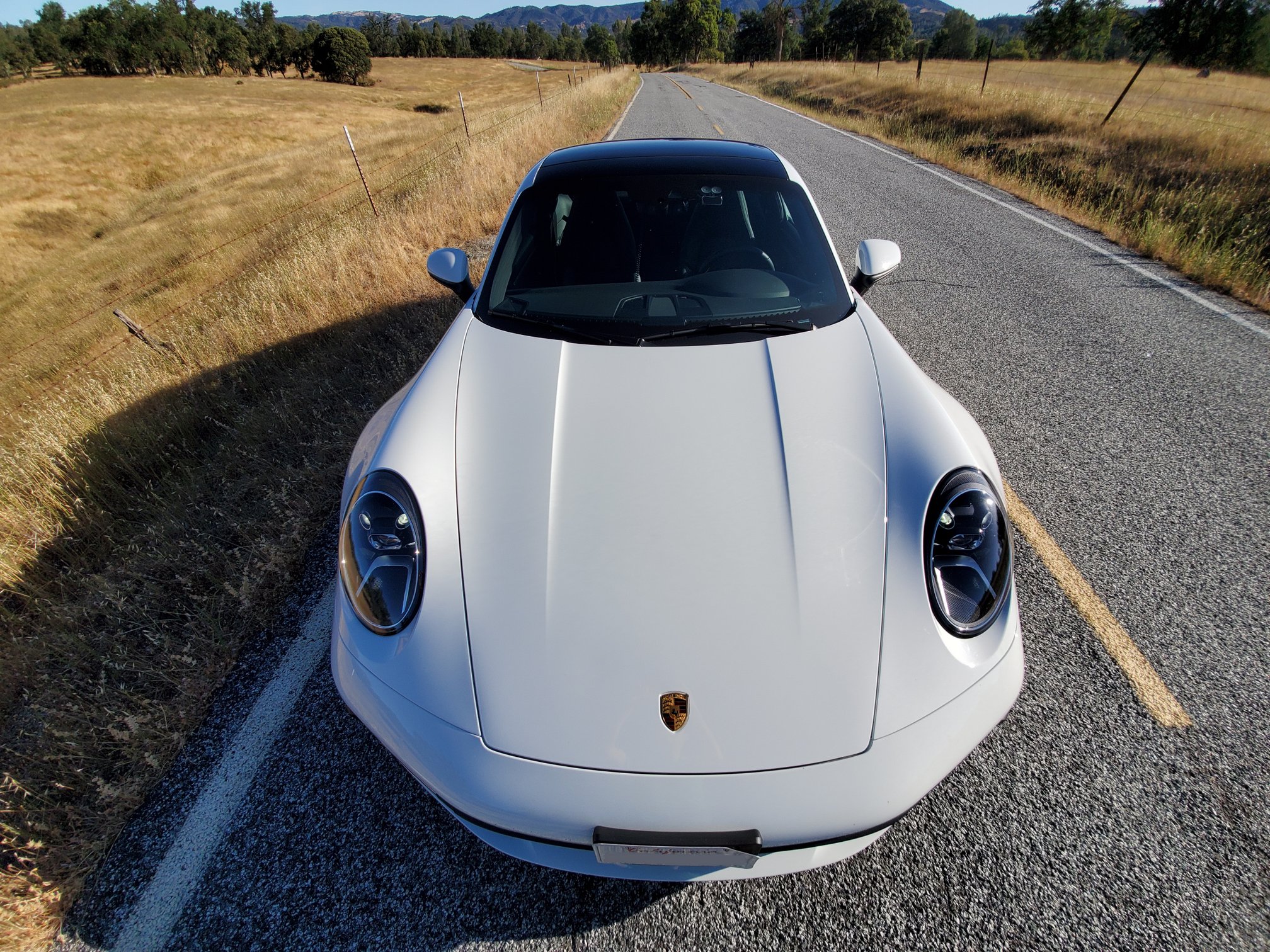
On the highway, the 911 is entirely bored by American cruising speeds. The car cajoles me to mat the throttle, and when I oblige, the 911 transforms into a 91-octane powered rocketship. The engine’s low growl builds into a flat-6 howl, and the sports suspension bear-hugs the road that’s flying under the tires. This is the car I should have rented in Germany for autobahn strafing! It has the stability of a long-wheelbase M car and the thrust of a Nissan GT-R. I can easily imagine marking 180 mph or more in the 911 Carrera S.
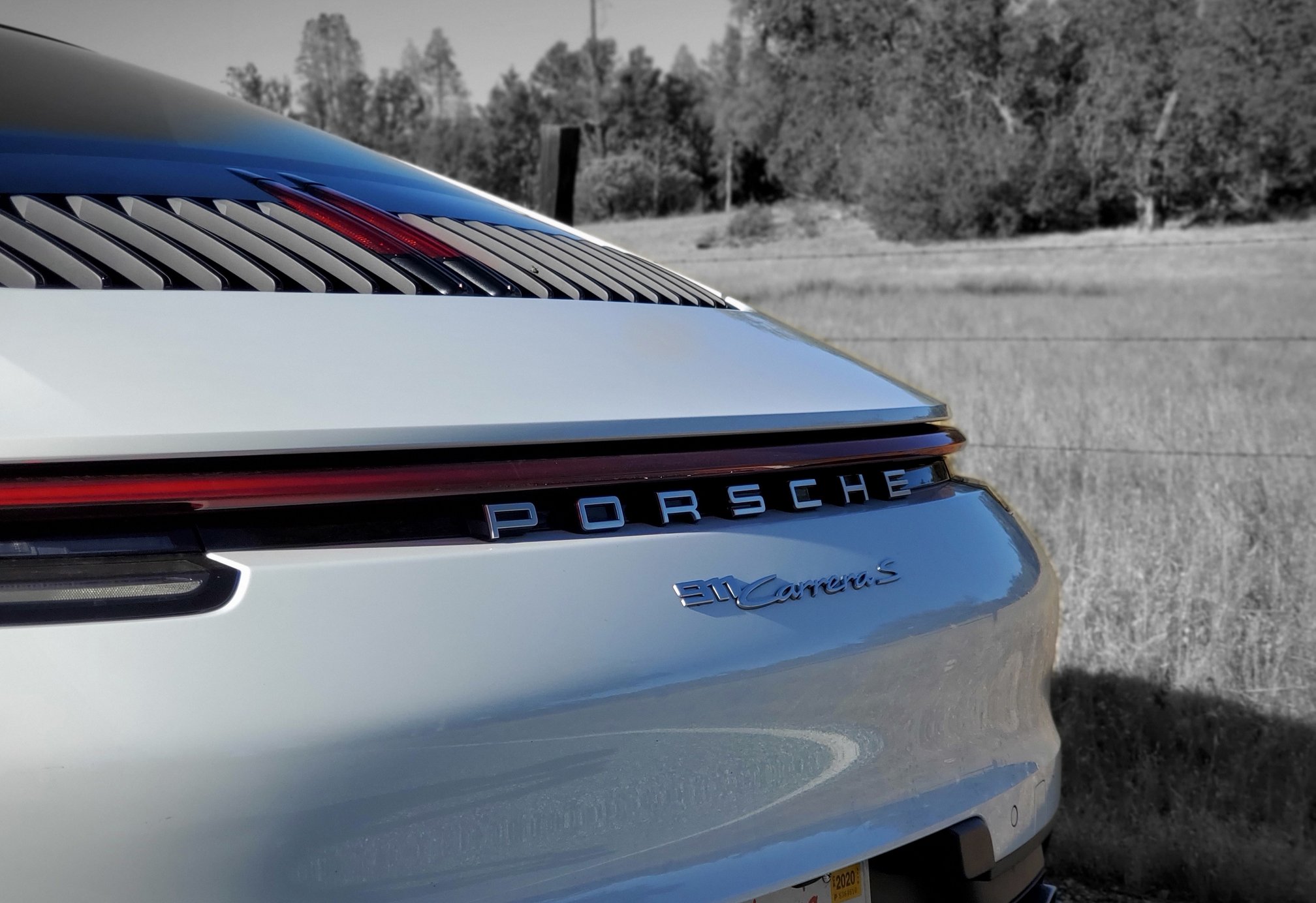
Powering the 911 is a sweetheart engine codenamed the 9A2 Evo. In Carrera S trim, the 9A2 Evo is rated at 443 hp and 390 ft-lb of torque. From the driver’s seat, the engine seems to produce more power than advertised. Wonderfully, the 9A2 Evo is not just grunty, it’s also engaging. The motor pulls harder and sounds better the higher I rev it.
The 9A2 Evo uses twin turbos, and the turbocharging is not wholly hidden from the driver. When I apply moderate throttle below 3k rpm, I find a half-second delay before the turbos spin-up, a faint whistling noise is heard, and the car surges forward with authority. The lag only exists at low rpm; above 4k rpm, the 911 bolts like a rabbit.
I exit the highway in Livermore and head off into the hills. My first piece of twisted pavement is rough and dusty Mines Road. It clings to the north canyon wall of Arroyo Mocho creek and is prone to collecting the rocks from the hillside above.
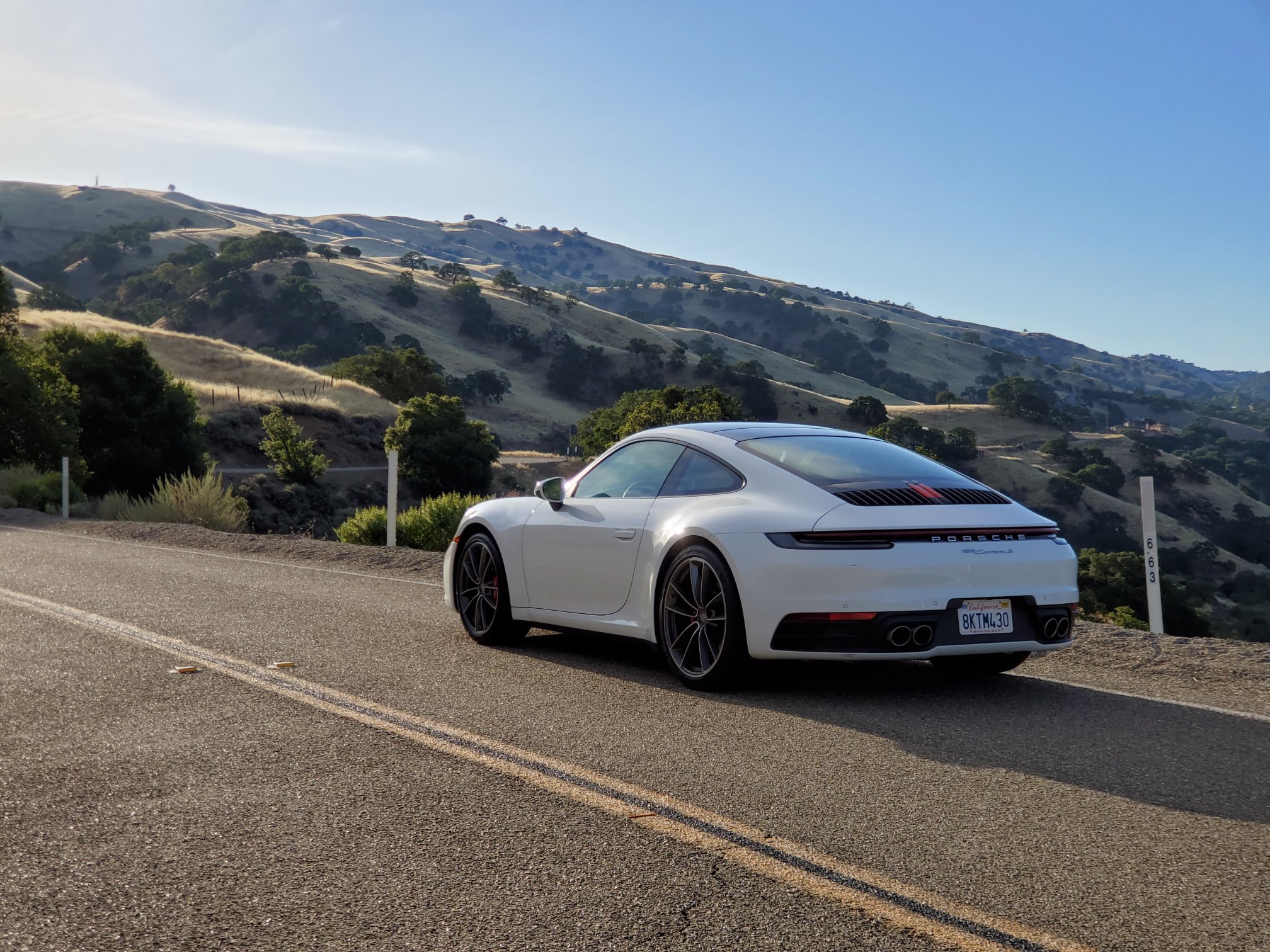
I enter Mines Road’s blind corners with trepidation, waiting for a clear view onto the next straightaway before pegging the throttle with race-pace commitment. My timid corner entries have the PDK transmission holding higher than optimal gears, but when I gas it at the corner exit, the transmission is caught in the wrong gear and must execute a hasty downshift. I was expecting perfection from the PDK, but my driving style is confusing its algorithm. I switch into manual mode and start picking the gears myself. (Would the shift programming from the Sport Chrono Plus package always hold the most aggressive gear?)
The unique challenge of driving a car with its engine in the trunk appeals to me. 911s of yore required patience with their light-feather front ends and respect for their pendulum-ladened rears. On Mines Road’s tight twists, I am not feeling any of these compromises in the 992 911. The 992 has every ounce of turn-in immediacy and front-end grip that I expect from a sublime front-engined sports car, and it has the stellar ability to put power-to-pavement that comes with a heavily-weighted rear axle. When the corner unwinds, I rip open the throttle, the 911 squats, wiggles its tail (as the turbos deliver a jolt of torque to the rear tires), and then teleports onto the straightaway posthaste. The only rear-engined trait I’m finding is that the rear grip occasionally outshines the front, provoking mild power-on understeer as I power out of a corner. (I must learn to unwind the steering as I get on the power.)
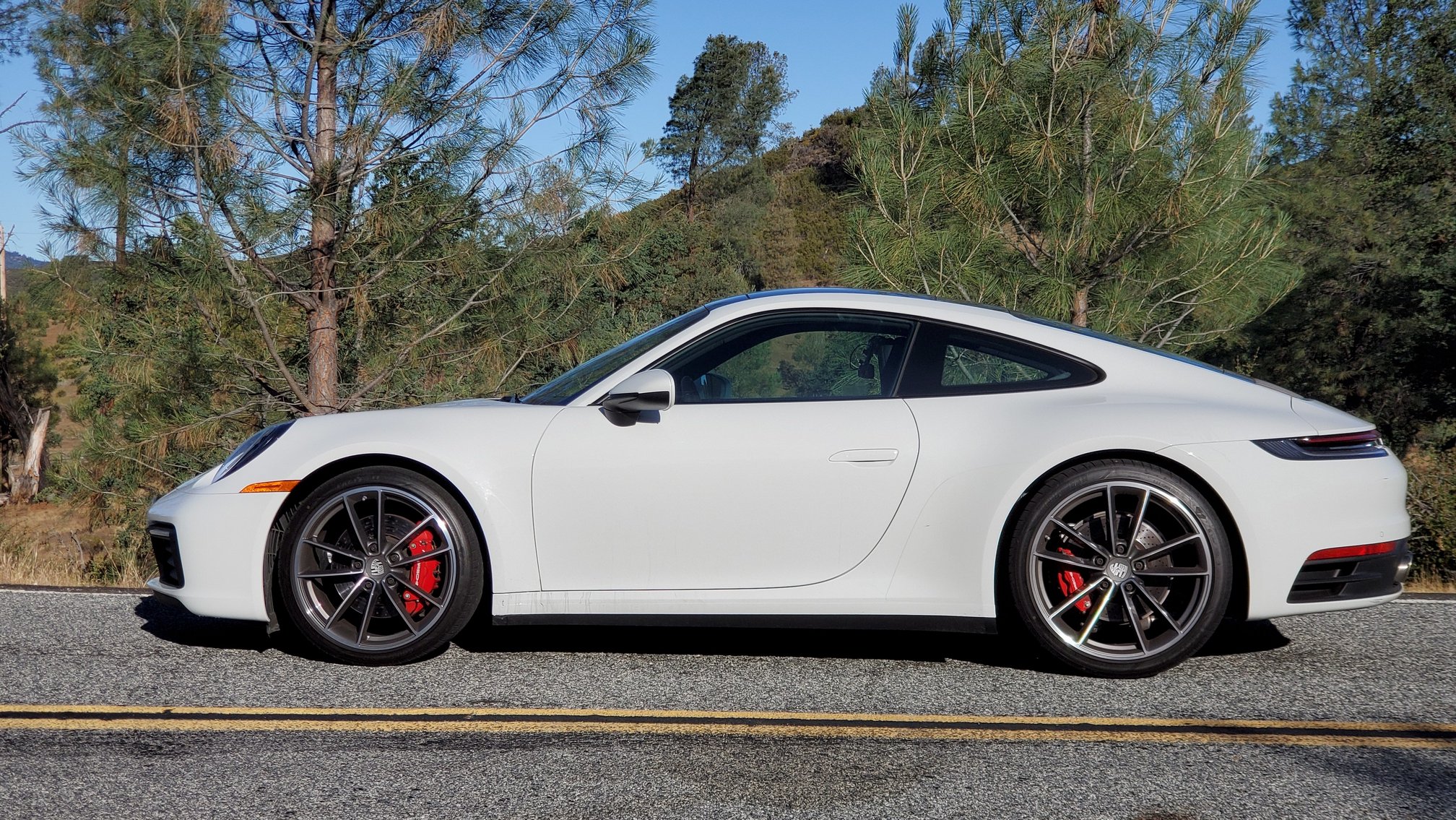
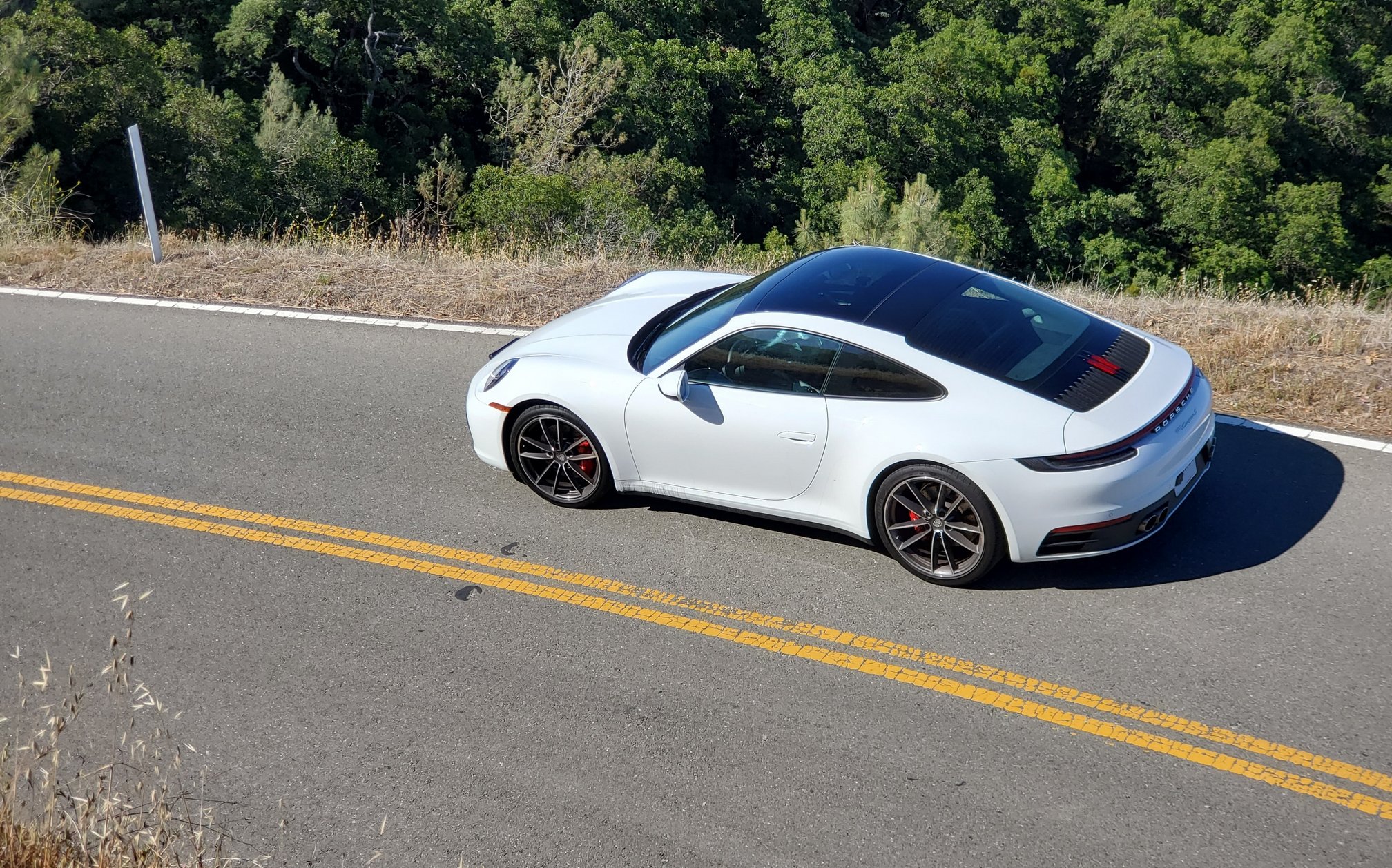
Mines Road starts to uncoil, presenting me with longer and longer straightaways. My peak speeds climb higher, but that speed is erased with utmost authority by the pretty red brakes. The most wonderful thing about these brakes is that I never think about them unless it’s to praise them for being some of the most consistent, easy to modulate, and indefatigable brakes I’ve ever driven. The brake pedal gets firmer the harder I stand on it, encouraging me to brake later and harder. Yet when I drive slowly and work the brakes with a light touch, the response is mild and smooth. These steel brakes are perfect in the canyons and in town, and I struggle to see the point of upgrading to the costly carbon-ceramic brakes.
It’s in one particularly heavy braking zone that I notice an unusual sound, a cacophony of pebbles clattering in wheel wells. Is the 911 ripping the roadstone out of the asphalt? I experiment and, yes, under hard braking, the top surface of the road is picked up and flung against the 911’s underbody. I’ve never driven a car before that literally tears up the tarmac!
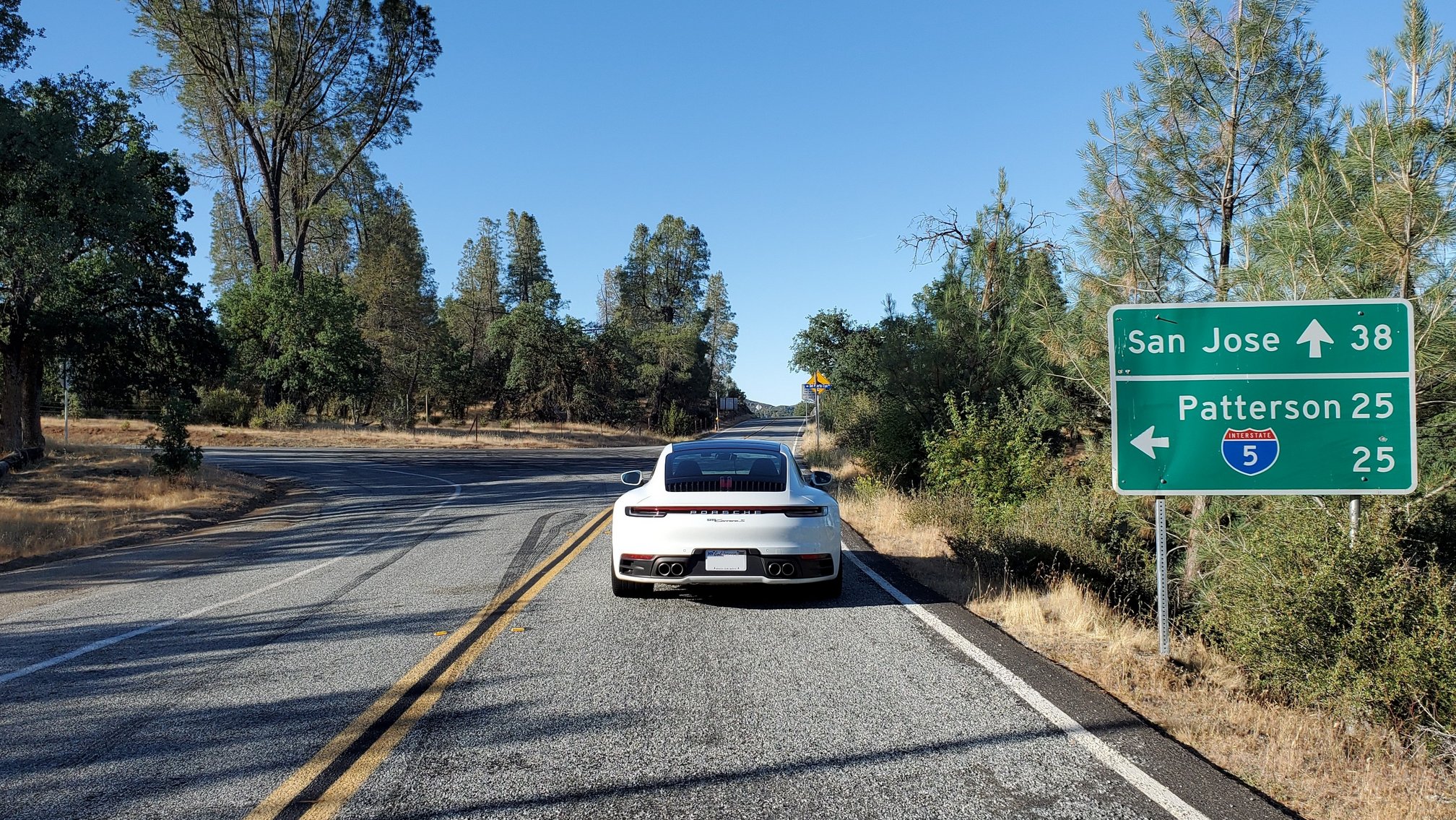
I pull up to The Junction, the appropriately, if unimaginatively, named restaurant at the intersection of Mines Road and Hwy 130. The restaurant isn’t open at this early hour, but I can see that some drivers have been baking their own donuts in the broad T-junction. Who doesn’t love a chocolate-glazed old-fashioned!
Beyond the junction lies the San Antonio Valley, a narrow plain of golden grazing land hemmed in by dark oak forests. Freed from its canyon confines, Hwy 130 stretches out into a series of long straights. It’s a perfect place to try the 911’s launch control!
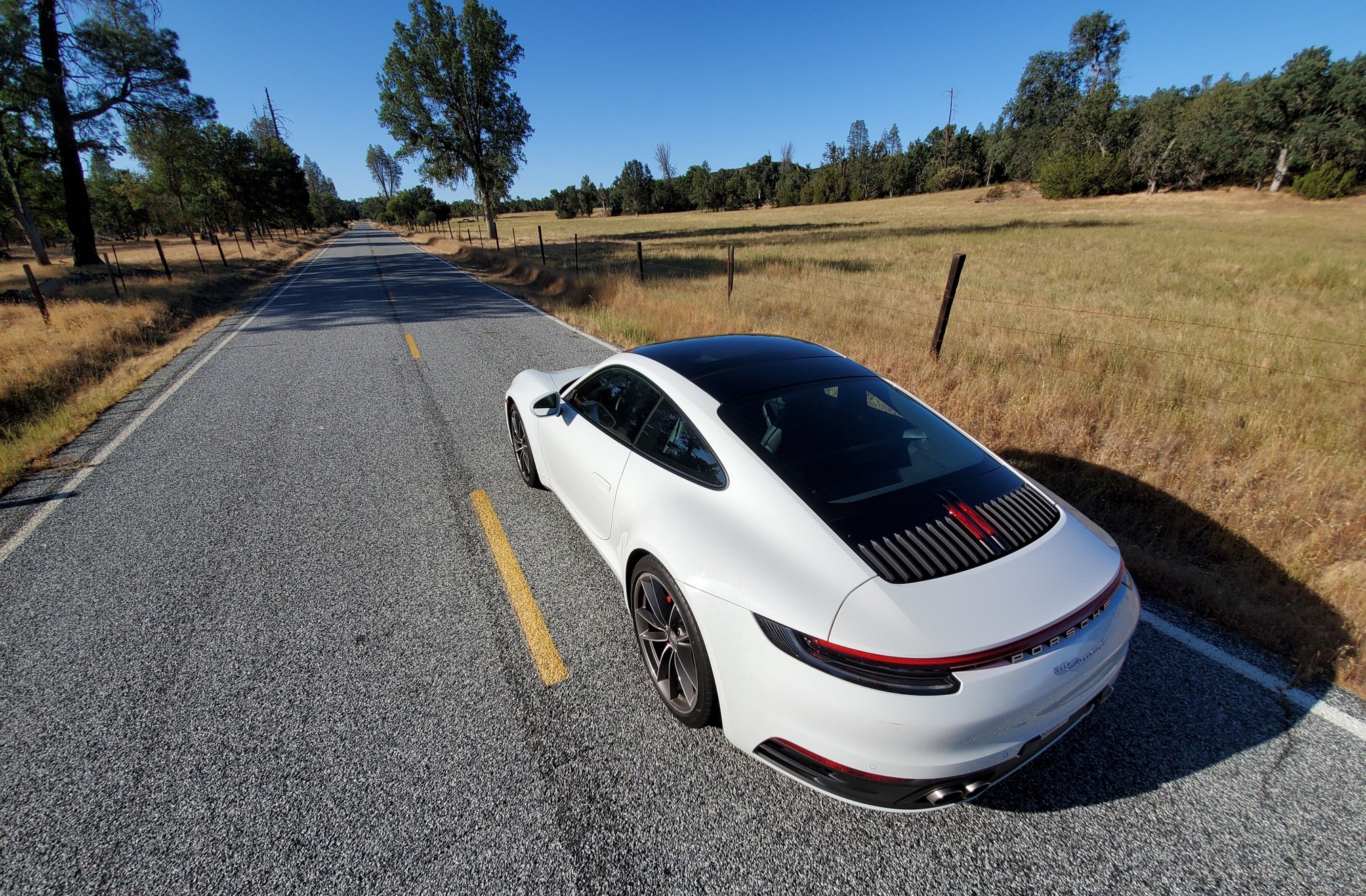
The process is simple: left foot on the brake, right foot on the throttle, the computer opens the clutch, and the revs rise… Curious cattle chewing cud along the side of the road turn their heads and stare as the 911 snarls against its 4k rpm launch limiter. I side-step the brake, the 911 launches hard, and the bewildered bovines bolt into the fields. The rush smushes me back into the seat, my heart rises in my chest, my eyes widen, and giggles erupt from my mouth. Wow! Porsche launch control is effective!
The vigorous acceleration is sustained through the quarter-mile and beyond: I run out of guts before the engine does. The sensations in the pit of my stomach draw up memories of launching the 2010 Nissan GT-R. The Carrera S jumps away from the start with similar violence, and then the German rocket maintains full burn as the PDK seamlessly rips through the gears. Porsche reports 0-60 mph in 3.5s for the 2020 Carrera S. I don’t have a stopwatch to verify my result, but the advertised number feels credible, if not conservative.
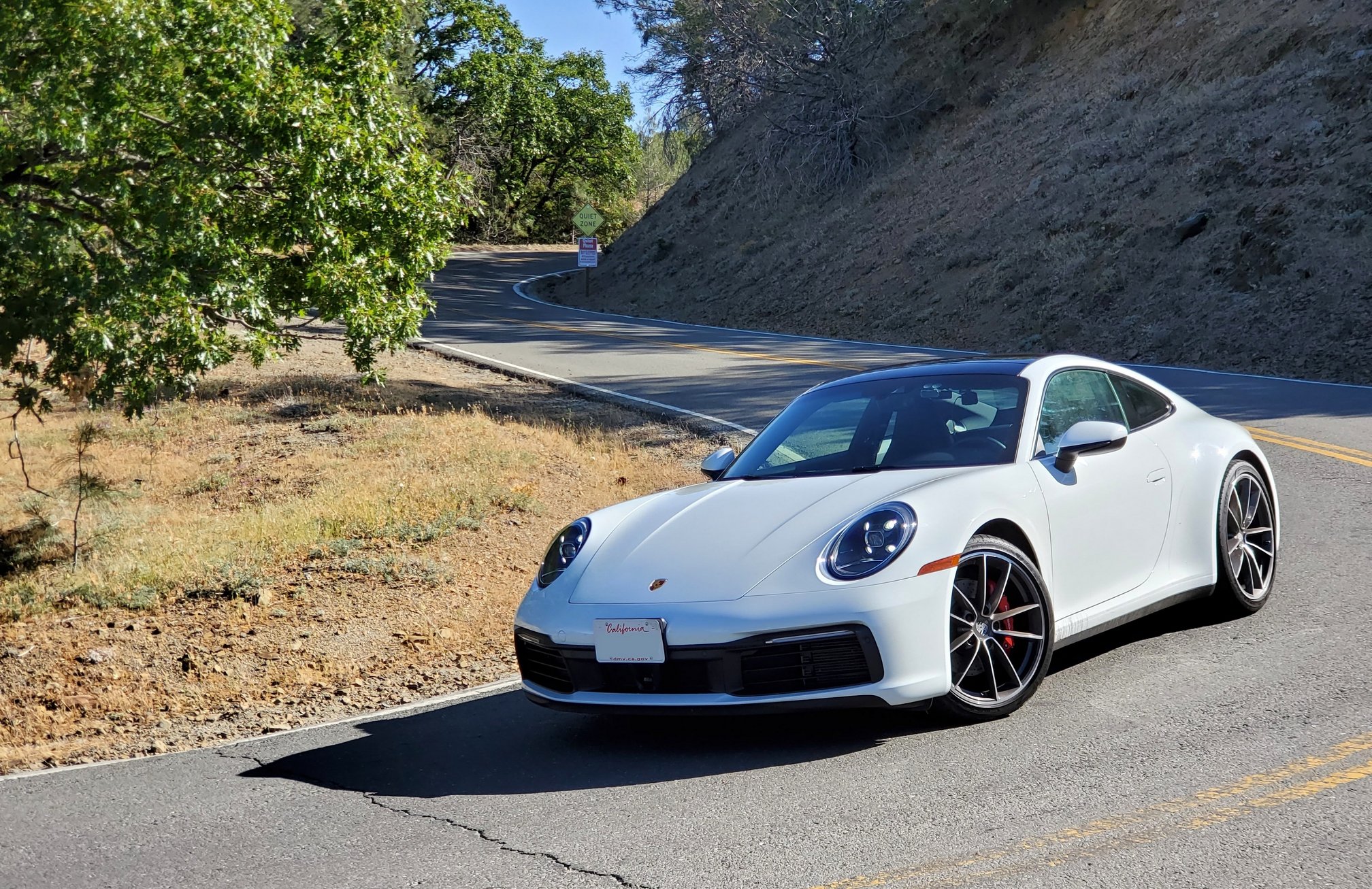
I try a launch without traction control. Surprisingly, the rear-wheel-drive Carrera S doesn’t devolve into a smoke show. The rear end squirms as the power peaks in second gear, but the tires never lose grip. Is this the magic of a rear-engined sports car? Or is launch control managing wheel spin regardless of the traction control mode? I do a half-dozen launches and quarter-mile runs before I tire of the game.
The road turns west and begins its ascent of Mt Hamilton. Hwy 130 is drizzled and draped across the mountain’s flanks, with all the sweepers and hairpins I could ever want. This is the grand finale of my journey!
I have the suspension in Normal, its softest setting, to accommodate the lumpy pavement. Even in Normal, the body control is exemplary; I see no reason to ever use the firmer Sport. Neither heaves nor mid-corner bumps can shake the 911’s formidable grip on the road. The suspension occasionally runs out of travel and crashes through the deepest ruts, but even then, the 911 holds its course.
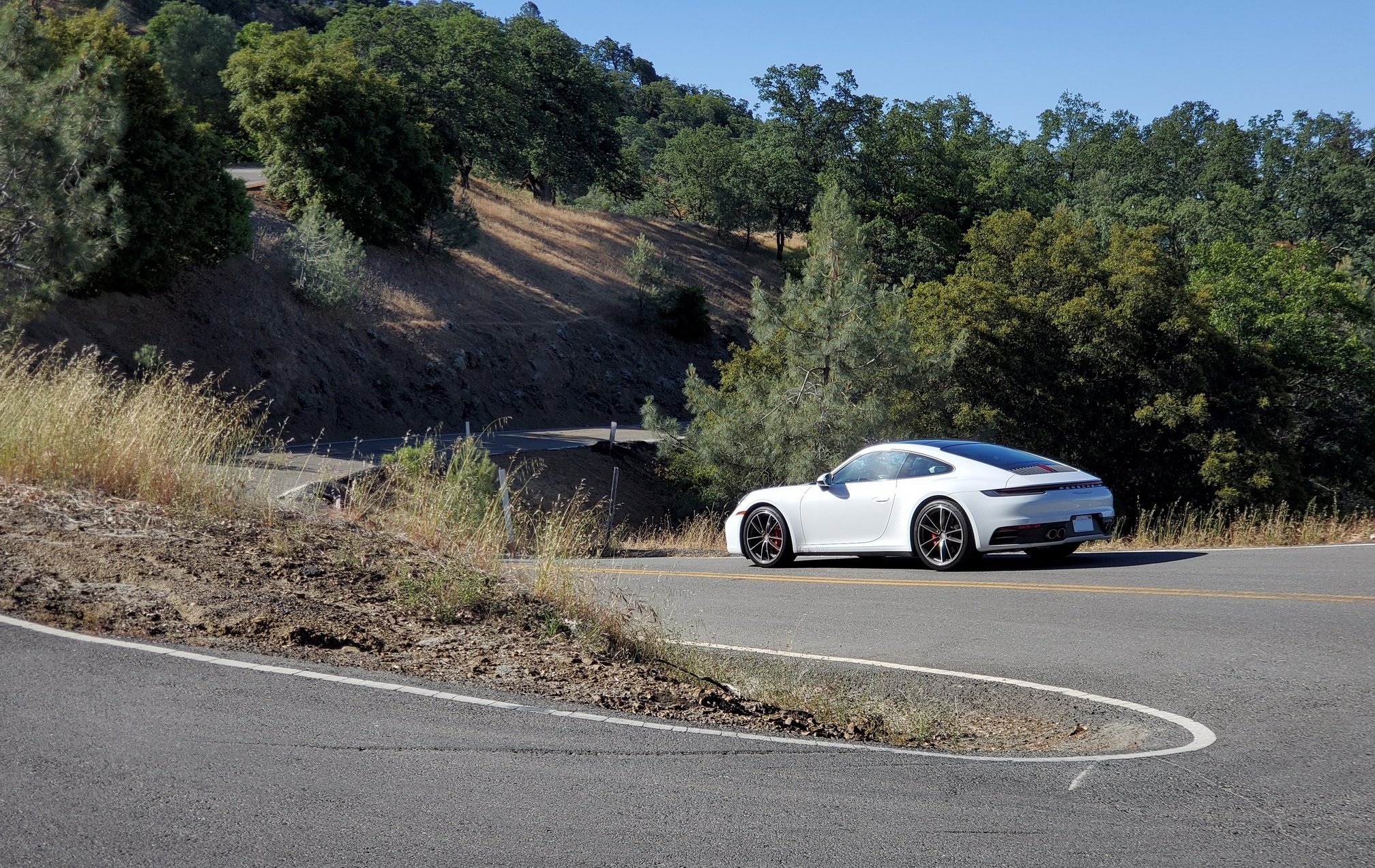
I’m running the drivetrain in Sport for the best sound and response. As I charge down the straights and modulate the throttle through the corners, the 911 belts out a spine-tingling opera. The flat-6’s iconic howl sings high above the turbos’ windy whooshes and chuffles. (The turbos’ sounds seem to be pulled from a Pagani Huayra!) A modest drumroll of pops and gurgles plays when I lift my foot off the gas. Somehow, Porsche has managed the trick of making this turbocharged engine sound as thrilling as its naturally-aspirated forbearers.
Turbocharging has not diminished the 911’s throttle response. The throttle is still minutely adjustable, and with the copious torque, I now have even more options for steering the 911 via the gas. Lift throttle tuck-in, on throttle rotation, and on throttle over-rotation, it’s all available! I take equal joy in using the throttle to make fine corrections in the sweepers and booting the gas to swing 911 through the hairpins. The incredible chassis takes it all in stride. Porsche has turned the backward 911 into a benign track or drift car!
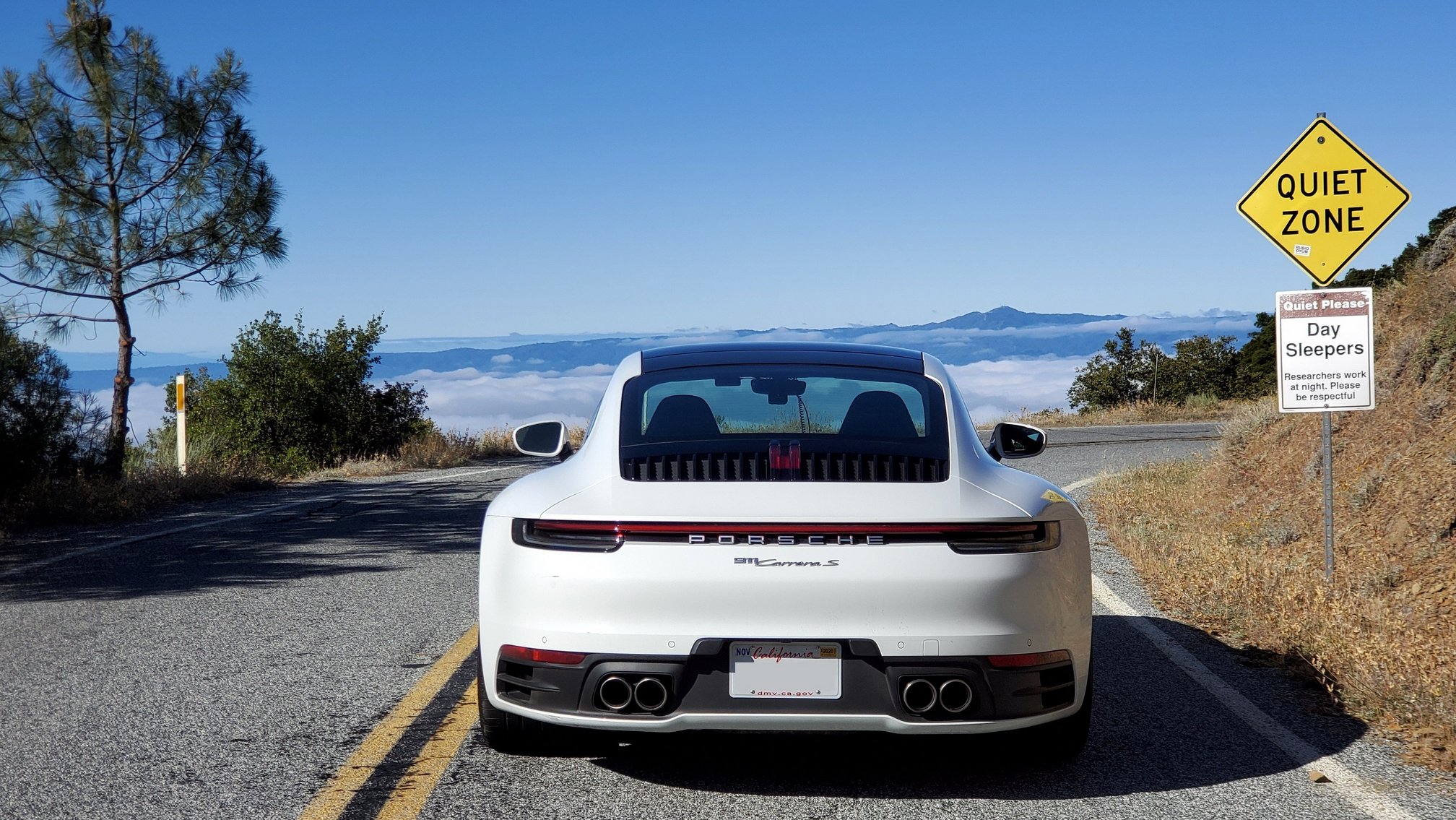
What a magnificent engine! What a magnificent car! The 2020 911 Carrera S is lightning fast, unerringly poised, and surprisingly multifaceted. It would be equally enjoyed by road-racer Randy Pobst, drag-master John Force, or drift-king Ken Block!
The Dream Car
As I summit Mt Hamilton, Lick’s gleaming white telescopes come into view. Out of respect for the day-sleeping astronomers, I quiet the exhaust and slow my roll. My pounding heart slowly returns to a normal cadence.
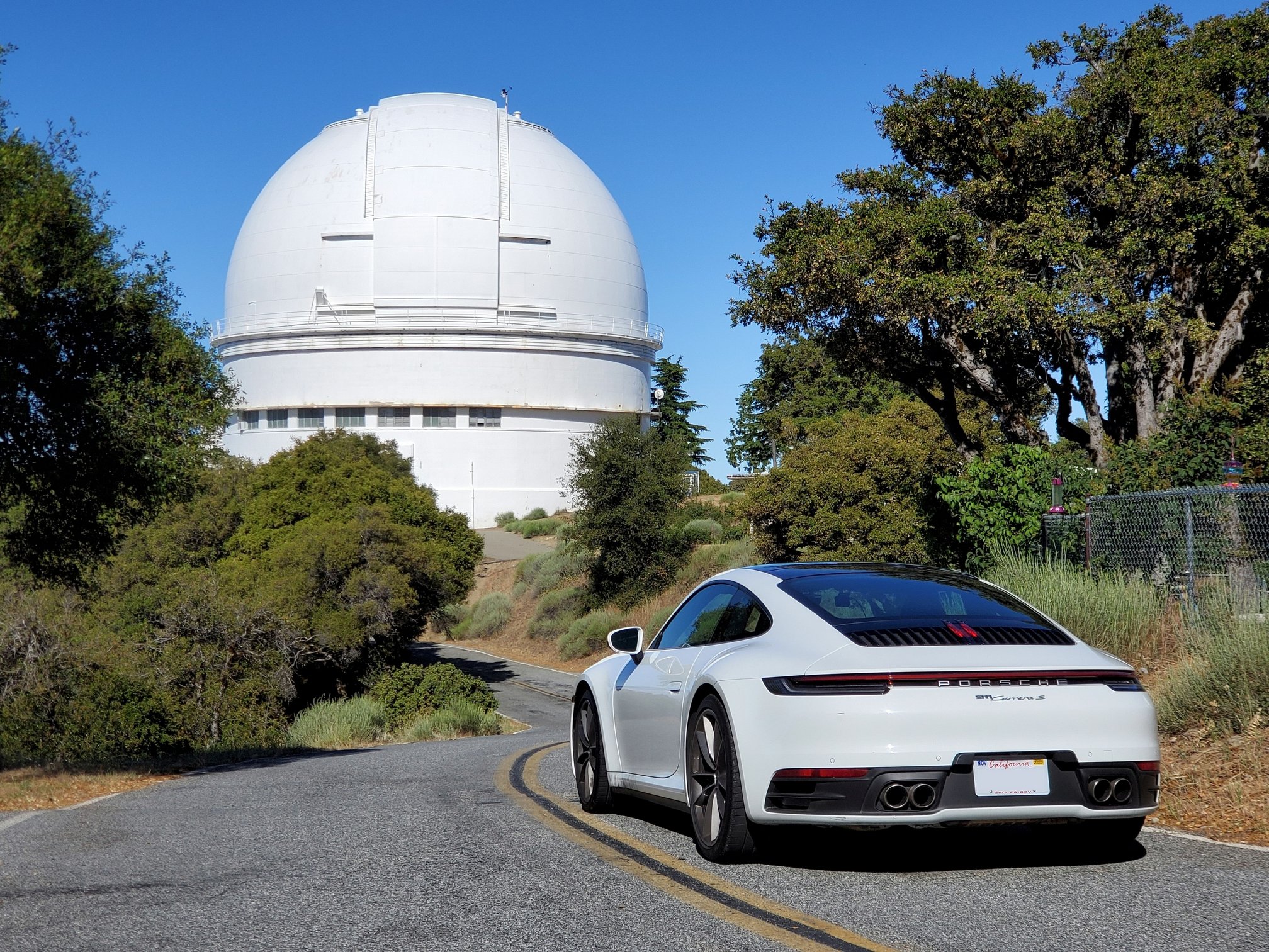
Without a doubt, this 911 is one of the best cars I’ve ever driven. I feel an uncontrollable urge to compare the 2020 911 Carrera S to every other magnificent automobile I’ve ever driven. (See the sidebar below.) Through the canyons, it runs with the supercars. Its song stands toe-to-toe with the exotics’. It’s sharp enough and tough enough to race with the track day specials. Why would I ever need anything more? Yes, the 2020 911 Carrera S is a benchmark car for the industry. And now it’s a dream car for me.
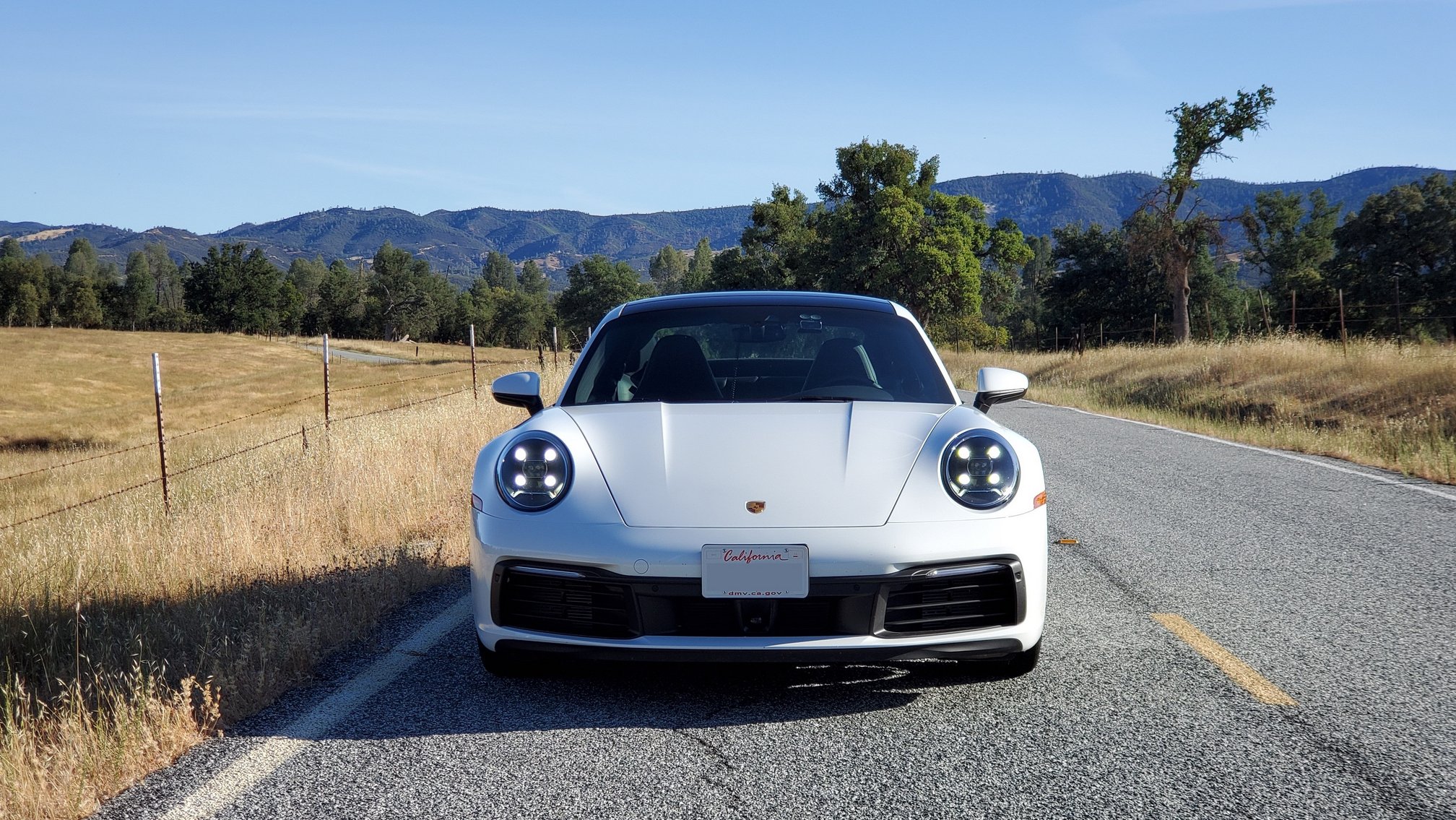
Sidebar: 2020 Porsche 911 Carrera S Versus the World
2005 Porsche (997.1) 911 Carrera S—The 2005 Carrera S has a much stronger sense of being rear-engined. You need to accommodate the light front-end and heavy rear-end. The hydraulic steering tells you everything that is happening at the wheels. Its normal suspension mode is truly comfortable around town. But the 2005 Carrera S’s 355 hp feels meager by modern standards, and it’s not enough to give you power oversteer on a whim. In contrast, the 2020 Carrera S feels twice as powerful, lets you hoon through hairpins, sounds equally incredible, and feels ready to pound the race track for hours.
2015 Porsche (991) 911 GT3—Driving the GT3 on the road is an act of frustration: Chances to explore the top of the power band or edge of adhesion seldom appear. Conversely, the 2020 Carrera S is brilliant fun on the road: Its turbo engine has a marvelous midrange, its street tires make exploring the limits of the chassis accessible, and its sound insulation keeps the valve-train clatter and ping of stones in the wheels wells to a minimum. And yet, on the street, the Carrera S feels just as fast as the GT3, and it has the precision and endurance to shine on the track too.
2018 Mercedes-AMG GT C—This is the closest competition I’ve driven to the 2020 911 Carrera S. Both cars have fantastic drivetrains that sound amazing and produce oodles of power. (The AMG hams it up more the pops and crackles, the 911 is more serious.) Both are comfortable in daily use and perfectly buttoned-down in the canyons. Both relish neat-and-tidy or loose-and-wild driving styles. I remember the GT C’s hydraulic steering being more natural than the 911’s EPAS, but it’s too close to call without a head-to-head test. I think the GT C’s exterior design is more fetching than the 911’s, but the GT C’s interior is also overwrought and cramped. I love that my daughter can ride in the 911’s back seat, while the GT C has no back seats at all. That alone may give the 911 the win for me.
2010 Nissan GT-R—Both the GT-R and 911 launch with a kick to the derriere, have incredible chassis, and hook-up and rocket out of corners with a smidge of oversteer. The 911 sounds better, weighs less, and Porsche won’t void your warranty if you launch it. Too bad the 2020 911 costs twice as much!
2018 McLaren 570GT—McLaren has a more vivid steering feel and is freer to rotate into corners, thanks to its mid-engine layout. 911 has better engine sound, feels nearly as quick, has more natural brake pedal travel and feel. (The 570GT’s carbon-ceramic brakes had almost no pedal travel.) The 570GT looks and feels more exotic. I’d be more excited to own the 570GT, but I’d be worried about its depreciation and warranty support when the car is tracked.
2019 Aston Martin Vantage—The Aston Martin Vantage has an always-on-fire personality that makes it an event to drive at all times. But being on fire can be tiring, and the 911 knows how to calm down when you want it to. The Vantage transmits more engine and road noise into its cabin, and it indulges in overrun exhaust theatrics. The Vantage impressed me as being more eager to roast tires. I find the Vantage’s exterior looks more striking, but my view is controversial. As an occasional fling, I think the Vantage is more exciting, but I’d rather own the 911.
2016 and 2019 Porsche Cayman GTS—The mid-engined Caymans are free-flowing, changing direction without any resistance. The 911 requires more deliberate effort transition from side to side, but the 911 thrills with brutish muscle that the Cayman never inherited. Both cars are beautiful machines: I’d pick the Cayman for autocross and the 911 for a canyon.
2017 Ford Mustang GT350—Both the GT350 and 911 have fantastic brakes, track-ready chassis, and terrific engine notes. (Though I personally prefer the Porsche’s sound.) The GT350’s shifter is much more fun to play with than the 911’s PDK, but Porsche does offer a manual transmission too. On rough roads, I favor the 911, as it absorbs the bumps with aplomb, whereas the GT350 is a tram lining mess over rutted pavement.
2014 Cadillac CTS-V—This is not really a competitor to the 911, but I own a CTS-V, so I’ll compare it here. The 556 hp CTS-V has the same ability to make my eyes go wide at the end of a straightaway. However, the 911 is dynamically superior in all regards. (And the 911 can take a beating without overheating its rear differential.) That said, I find the CTS-V more fun to drive in town. Its mag-ride shocks absorb more bumps, its hydraulic steering is more loquacious, and its big, loafing LSA engine makes short work of the rear tire grip. In summary, the CTS-V is easier going and more of a giggle.
2017 Chevy Camaro SS—The Camaro SS has great chassis control and, like the 911, can nail apexes or link drifts. Its LT1 V8 has excellent torque and vicious throttle response, though I do prefer the 911’s sounds and high rpm surge. The 911’s steering and automatic transmission are vastly superior to the Camaro’s. For canyon carving, both cars are extremely fun. In town, I prefer the 911’s superior outward visibility and upmarket creature comforts. But the Camaro SS’s mag ride is smoother, and its backbench fits a wider range of child seats. My budget would dictate which car I take.
6//20/20 10:43AM
 Mike's Steering Column