No one buys a sports car because they need one. Such purchases are emotional. Equally true is that no one needs a V8 sedan or a Baja-ready truck for the commute and daily errands. Yet, so many people buy extreme vehicles for mundane duties. Case in point: My brother-in-law uses his 2019 Ford F-150 Raptor for his commute to work. Is he crazy? Yes! But has he compromised his daily comfort and convenience by using an extreme weapon for a mundane task? Let’s find out!
(Regular readers will know your dear author is predisposed to using absurdly sporty vehicles as daily drivers. His 556 hp CTS-V was bought for the daycare run. Other than the pain he feels at the gas pump, he finds his magnetic-ride super wagon to be very agreeable—even rewarding—in town.)

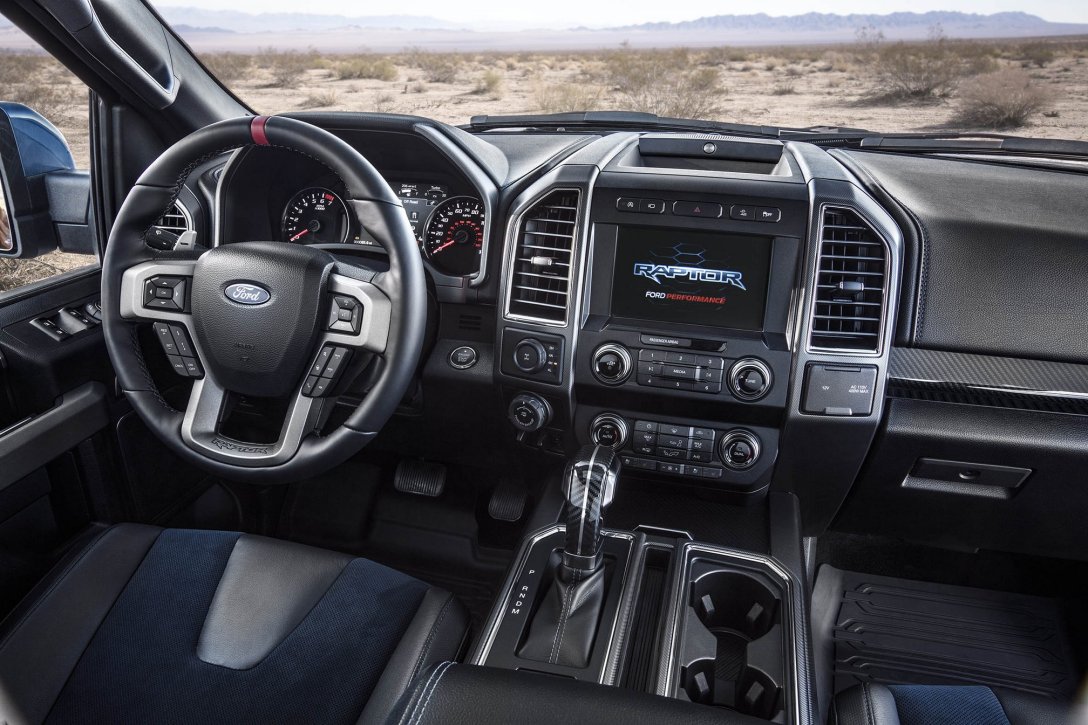
Welcome aboard! Climb inside the 2019 F-150 Raptor, and you’ll find an incredibly comfortable cabin. When equipped in the four-door SuperCrew specification, the Raptor has copious room for five passengers. Those in the back can spread out on the broad and cushy bench. (It’s heated too!) This is business class—not economy—and backseat Raptor passengers have more head and legroom here than they’d find in full-size SUVs like the BMW X5 or Dodge Durango. The only drawback is the lack of airflow. The two HVAC vents deliver a weak flow of cool air.
(It can be difficult to install a high-backed child seat on the Raptor’s backbench. The tether for our Cosco Finale high-backed child seat was too close to the Raptor’s behind-the-seat LATCH anchor to cinch down firmly. I expect this drawback is particular to high-backed child seats, or maybe just the Cosco Finale itself; other styles of car seats should install fine.)
The two up-front passengers get even better accommodations. They have more elbow room, and from their cushy heated-and-cooled leather seats, they also have a commanding view of the road ahead.

Infotainment in the Raptor will be familiar to anyone who—ahem—has driven a Ford lately. Sync 3 runs the infotainment system, and it provides seamless access to Android Auto and Apple Carplay. (And thus to all of the navigation and streaming audio goodies with which they come.) Adaptive cruise control eases the burden of commuting in traffic. Pro Trailer Backup Assist helps novices reverse their trailers into tight spots. 360-degree parking cameras take the edge off navigating the Publix parking lot. (More on that later.)
Ford Performance took the normal F-150 platform and built it into the Raptor, an extreme performance vehicle. The premium you pay for this performance makeover is ~$20k, the difference between the Raptor and the similarly-sized F-150 XL SuperCrew. For my brother’s Raptor, we add another $11k, as it is equipped with the 802A Luxury package.
Carefully inspecting the inside of the Raptor, I can tell you that most of the $31k premium goes into performance hardware rather than luxury accouterment. While the aluminum shift paddles are Ford GT appropriate and the leather seats and stitched dash coverings are nice, it’s very easy to find the hard plastics and rough edges that are befitting of an F-150 work truck. To put it another way, this Raptor is a $70k luxury truck but has none of the interior polish of a $70k luxury SUV. On the positive side, the Raptor was made to get dirty and should wash out easily!

So the roomy cabin is a fine place for lounging, but how comfortable is the Raptor on the go?
In my six days of running around Orlando, I found the truck’s ride to be cushy and friendly to those with abused and aching bodies. The FOX shocks and all-terrain tires are dialed-in for Baja bashing, but the long-travel and fat sidewalls swallow the paved world’s lumps and bumps and render them smooth. The ride comfort is just a few nit-picks away from luxury-car good.
Those nits? When the Raptor’s bed is unloaded, its firm rear springs send a constant stream of mild tremors into the cabin. When set in their softest mode, the shocks are underdamped and can take more than one cycle to quell a large bump. These nits may be squashed by loading the bed with weight and firming the damping via the drive-mode selector.
While the suspension actually does a phenomenal job of dispatching cloverleaves too. Hustle the Raptor around a highway interchange, and the truck stays astonishingly flat. It is a bit of a mystery how the truck stays so level and yet so compliant.
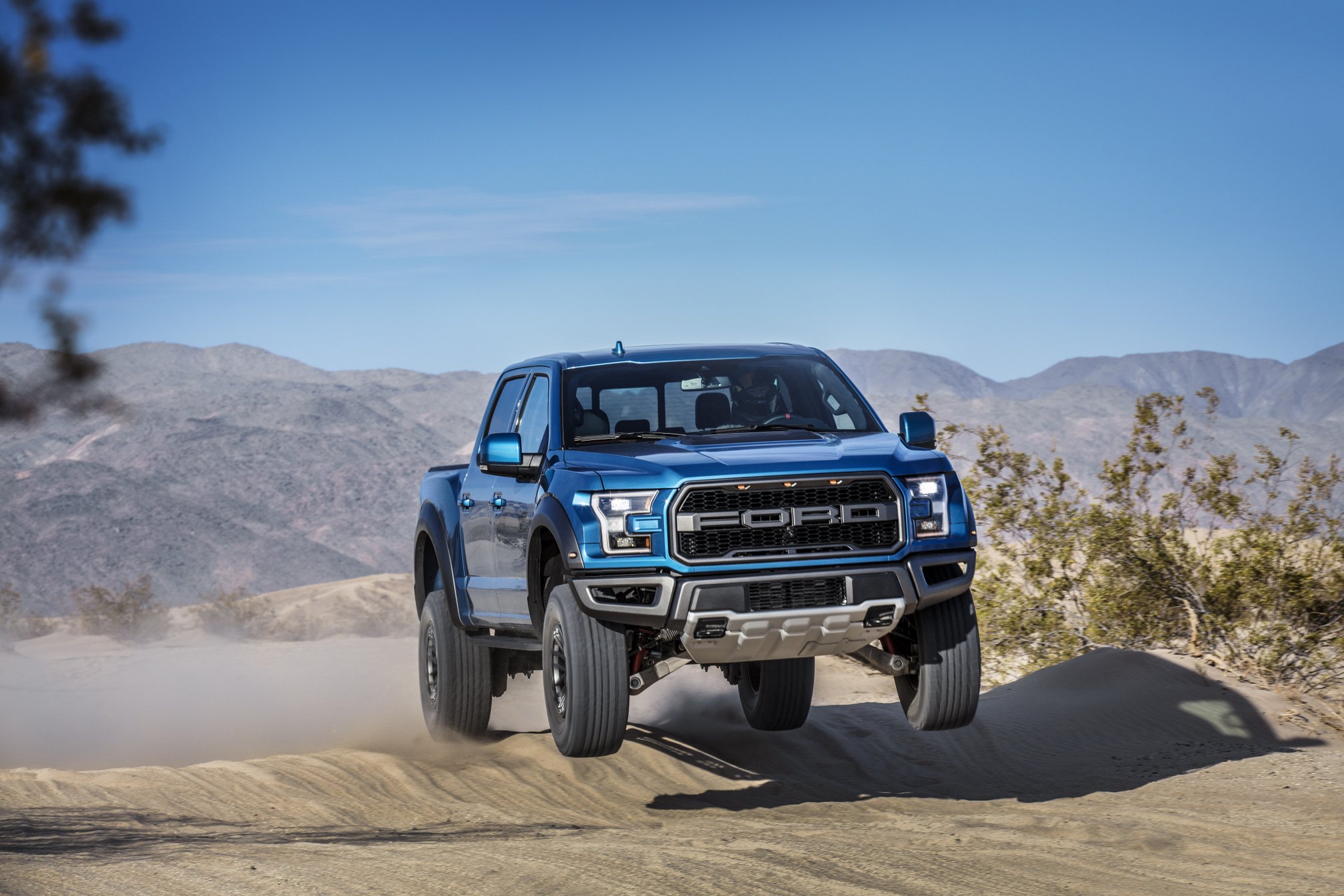
While the Raptor is heavy and huge, it keeps pace with the urban hustle. Thanks to its gutsy 3.5L EcoBoost V6, it’s got plenty of torque and no appreciable turbo lag: The 5,600 lb truck sprints easily across traffic and pounds down on-ramps. The V6 doesn’t sound as good as the V8 it replaces, but the V6’s voice is distinct and sporting. Performance drives vehicular evolution, and the turbo V6 is both faster and thriftier than the old V8. The V6’s 16 mpg (combined) rating is an improvement of 3 mpg over the V8’s.
Also improving with time is Ford’s 10-speed automatic transmission. I first sampled this transmission in the Mustang GT, where it constantly—and annoyingly—hunted for gears. In the Raptor, the transmission programming is reformed and well-behaved. The truck holds gears under modest acceleration and doesn’t ceaselessly remind you of its ten cogs.
So the Raptor is commodious, comfortable and quick. Other than the pain it inflicts at the pump, the Raptor’s only impediment to daily driving comfort and convenience is its width and girth. The Raptor is so wide that it is federally mandated to have amber marker lights at all four corners. These lights are normally seen on box trucks and big rigs!
In tighter urban environments—say Boston, Philadelphia or San Francisco—it would be a white-knuckle experience to thread the plus-sized Raptor through narrow city streets. Even in suburban Central Florida, the Raptor is so wide and so long that it’s rarely parked in one fell swoop. A retry or two is often needed before the Raptor is centered in the stall’s white lines. De-parking can be a chore, too; some parking lot aisles aren’t wide enough for the Raptor to back out and go, and an occasional four-point turn is needed before you can drive away.

I didn’t expect to use the Raptor’s off-road capacity on the way to the supermarket, but its width forces it to put wheels onto the grassy shoulder when slipping past turning traffic on two-lane roads. Good thing the Raptor is off-road rated!??
The most frustrating thing about five days in Orlando with the 2019 Raptor was that there was no place to play with the Raptor as Ford intended. No sand dunes, no desert tracks, no dry lakes, no rocky scrambles. I get the sense that this is a completely awesome off-roader, but I couldn’t even tickle the truck’s capabilities.
After my stint with the Raptor, I’ve come to the completely obvious observation that the Raptor is the M5 of the truck world. It’s comfortable, fast and practical, and works perfectly well as a daily driver. Its only inconvenience is its size. (And you’d face that with any large truck.) While both the M5 and Raptor are complete overkill for the commute, they don’t punish you for your excess. So if you have the means, why not indulge? (But if you do, please find the time to explore your vehicle’s sporting potential on the weekends!)
 Mike's Steering Column