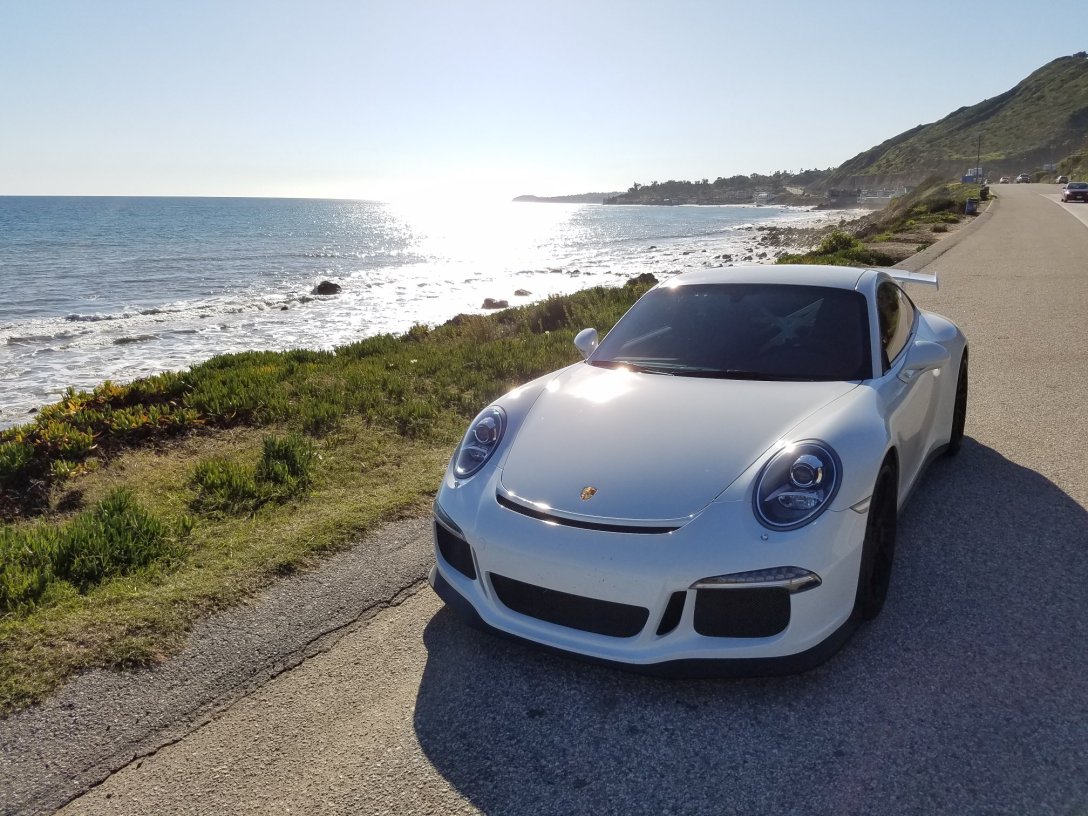
Renting from Turo is one of my favorite pastimes because Turo gives me access to the cars and SUVs that I’ve been dreaming about but otherwise couldn’t find at the mainstream rental agencies like Hertz and Enterprise. Through Turo, I’ve experienced some of my favorite cars, including the Porsche 911 (997) Carrera S, Porsche 911 (991) GT3, and Chevy Camaro SS. Trips with Turo have also helped identify cars that I thought I’d love but ultimately did not find chemistry with, like Ford’s Fiesta ST and Mustang Shelby GT 350.
While Turo is an amazing resource for a car enthusiast with a penchant for exploring the field, it is also fraught with risk. A Turo car is usually someone’s personal car, and its condition, mechanical and cosmetic, won’t be known until you arrived to take the keys. Usually, the first hour with any Turo car is spent circling the rental with my phone out, carefully taking photos of every scratch, ding and rock chip—and pictures of the tire tread—so that I can avoid being blamed for any pre-existing damage.
But the biggest risk with Turo comes in the case of an accident. Most automotive insurance companies and credit cards will NOT cover you if you have an accident in a Turo rental car. This means that you really need to call your personal automotive insurance company and check your policy terms before you decline Turo’s supplemental insurance offerings. I checked the private auto policy terms from 20 insurance companies and found that only Allstate, Liberty Mutual, Mercury Insurance, PURE, and State Farm would extend their private auto policy coverages to a Turo rental car. GEICO said it covers Turo for policyholders in some states, but California policyholders are not yet covered.
(When you call your insurance, make sure it is crystal clear that Turo is unlike the traditional rental car companies they are familiar with. Hertz owns and maintains a fleet of rental cars; Turo does not. Turo is a peer-to-peer car sharing marketplace for private individuals to rent out their personal cars to the public. Turo rental cars are someone else’s personal cars.)
Turo offers supplemental insurance to renters. The protection plans give you a way to increase your liability, comprehensive and collision coverage for your rental. It is important to understand the details of the offerings because they have wildly different coverage. This page describes them the best: https://support.turo.com/hc/en-us/articles/203990600-Simple-description-of-insurance-coverage-in-the-US
Here is the cheat sheet:
Decline Coverage—Secondary to your personal auto insurance (if that is Turo-friendly). Decline coverage still offers state-minimum liability coverage. No comprehensive or collision coverage at all. (All damage to the car is on you.)
Minimum Coverage—Secondary to your personal auto insurance (if that is Turo-friendly). State-minimum liability coverage, Comprehensive and collision coverage for the full value of the rental car with a $3,000 deductible.
Standard Coverage—Secondary to your personal auto insurance (if that is Turo-friendly). $1,000,000 in liability coverage. Comprehensive and collision coverage for the full value of the rental car with a $500 deductible.
Premiere Coverage—Primary insurance, used before your personal auto insurance (if that is Turo-friendly). $1,000,000 in liability coverage. Comprehensive and collision coverage for the full value of the rental car without a deductible.
If your personal auto insurance is not Turo-friendly or if you don’t have personal auto insurance, what should you do? At a minimum, I’d recommend you buy Turo’s Minimum Protection Plan so that your out-of-pocket exposure for damage to the rental car is limited to $3,000. But, if you have personal assets that you’d hate to lose in a personal liability lawsuit, the Minimum protection plan will not protect you much with its state-minimum coverage. To protect your personal assets, I’d recommend stepping up to the Standard Coverage plan with its $1,000,000 in liability coverage.
If your personal auto insurance does extend to Turo rentals, then my recommendation depends on your personal plan’s liability and comprehensive/collision limits. For liability, if you are not happy with the liability coverage of your personal auto policy, then adding Turo’s Standard coverage to get its $1,000,000 liability coverage makes sense. (Actually, you should increase your personal auto insurance limits if you feel this way!) If you don’t carry comprehensive or collision on your personal auto policy or your policy would not cover the full value of the rental car, then adding Minimum or Standard coverage makes sense.
Who should buy Turo’s Premiere coverage? Only people with Turo-friendly personal auto insurance who don’t want their personal policy used. The Premiere plan is primary coverage and therefore is used before your personal auto policy.
Will you have more than one driver on your rental? It is important to understand that in all cases, regardless of who was driving, Turo holds the primary driver/renter liable in the case of damage. Keep that in mind when you are considering sharing your rental with your reckless brother! The details can be found here: https://support.turo.com/hc/en-us/articles/203990610-Detailed-explanation-of-Turo-Protection-Plans-including-insurance-in-the-US-for-guests
While sorting out insurance for your Turo rental is a bit onerous, it won’t keep me away from the service. There are too many tasty cars on Turo, and the ability to get behind the wheel of the exact car I’ve been dreaming about is just plain wonderful!
 Mike's Steering Column