
The Civic Type R is my second rental car for my Nürburgring vacation. Like yesterday’s Renault Clio RS 200, I picked the Civic because it is FWD, so it should be stable and safe even in the wet. (It rains a lot at the Nürburgring.) As the Type R has 50% more power than the Clio RS, I thought it would be a good second-day car, letting me build speed after I’d learned the line.
When I was debating my rental choices with RSR Nürburg, the staff spoke highly of the Civic Type R and called it out as one of the models that plays very well with its stability control. In the end, I chose the Type R over the Focus RS because the Civic Type R is the new hot thing, and I want to see what all the fuss is about. The Focus RS would have been an equally good choice for today.
My main reservation about the Civic Type R is that it is a street car and does not have the race cage, seats, harnesses or brakes of yesterday’s race-prepped Clio RS. Hopefully, the airbags offer some compensation.
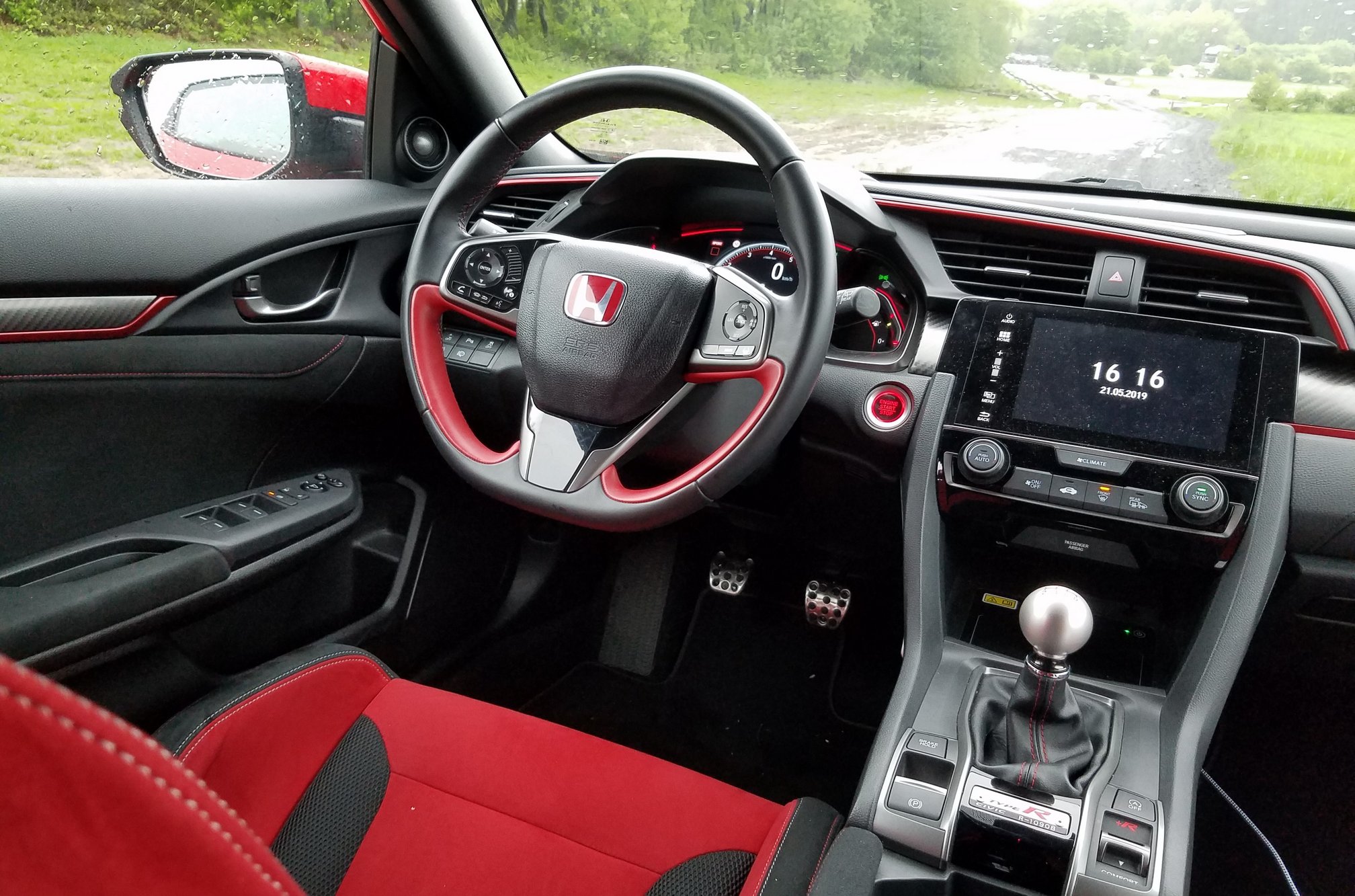
After the RSR safety briefing, I was shown my car. My Civic looked a little ragged, with small cracks on the rotors and engine and TPMS warning lights illuminated on the dash. The mechanics assured me everything was in order. “We made some modifications,” they said as they sent me on my way.
At first, I was concerned the Civic was going to feel heavy and slow to brake, as the brakes were very dull on the public roads. I had loved the bitey brakes in the Clio and the reassurance they gave me on track. (The Civic’s heaviness is accentuated by heavy steering.) Thankfully the Civic Type R brakes found their bite once I got on track and heated them up. I learned that RSR worked with the Japanese brand Winmax to make a custom endurance pad compound for their cars.
(I asked an RSR mechanic what brake upgrades they did to their BMW E92 M3, my personal track car. For the E92, they replaced the front single-piston sliding calipers with Brembos.)
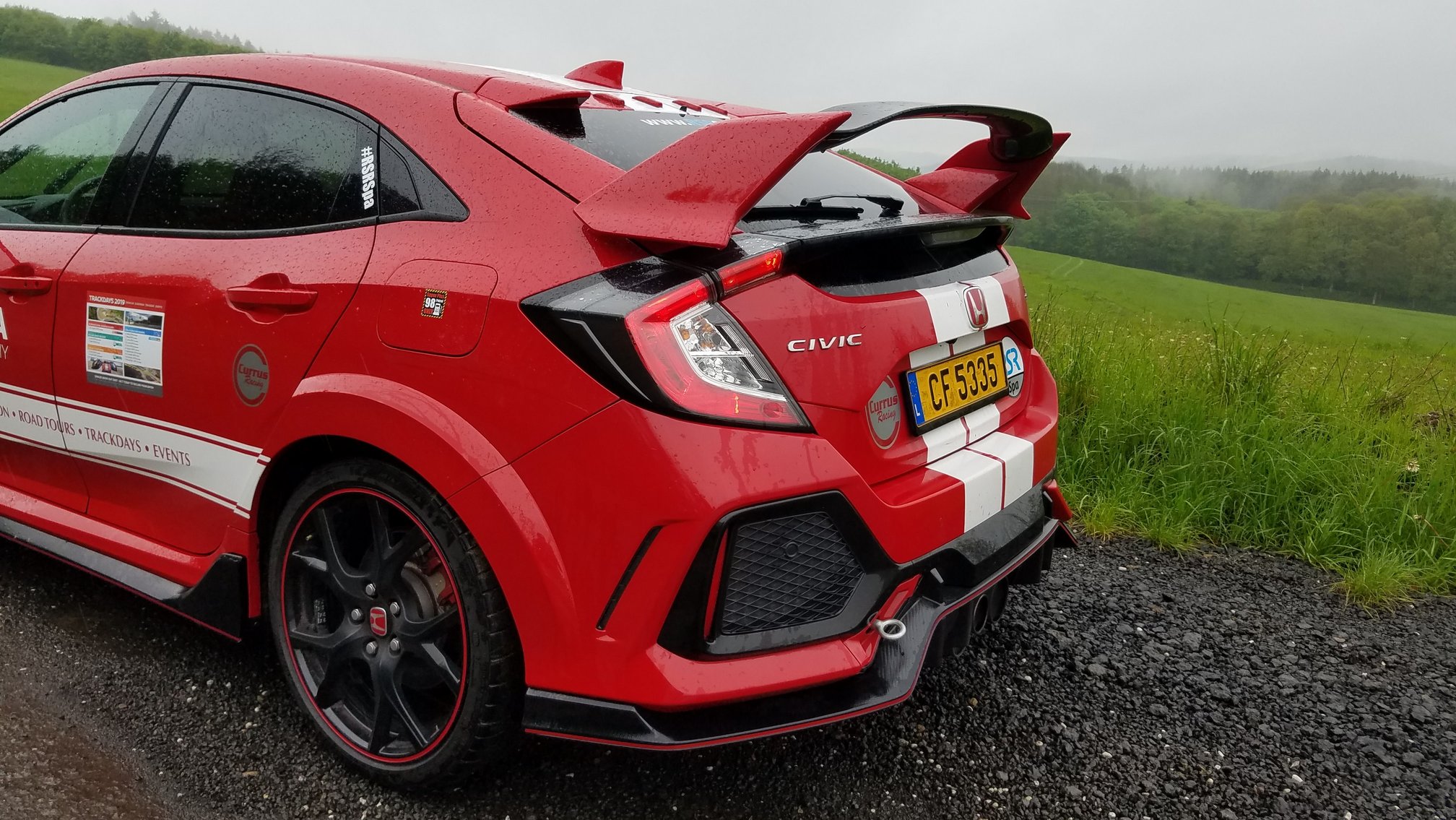
The Civic Type R’s 245/35 R19 Michelin Pilot Super Sport tires were masters of the wet and gave me much more grip than yesterday’s Yokohama Advans on the Clio RS. (RSR fitted 19” wheels to their car in place of the OEM 20” wheels.) The Michelins deserve lots of credit for making the Civic easy to drive and fast in the wet. Thanks to them, I was one of the faster cars on the track. Cars with poor rain tires—like the many 911 GT3s on slippy Cup 2s—were left in my spray. In fact, the Civic was so fast on the wet Ring that I was doing most of the passing today.
The difference in philosophy between the Civic Type R and Clio RS was most stark when climbing the Ring’s many hills. The Civic’s engine is incredibly strong, and I felt like I had electric-motor levels of torque available to my right foot. The steep climbs that challenged the little Clio were mincemeat in the Civic, where the Honda turbo engine was potent from mid-range all the way to redline. I was reminded of my old Focus RS and how it would charge down straightaways with everlasting chuff.
The Civic hit 245 kph (152 mph) on the Ring’s main straight. It would not accelerate past 245 kph as I climbed the hill to the bridge, and I did not have the guts to keep on the throttle as I passed under the bridge and dove back down the hill.

The Civic had more than enough power to break the front tires loose at slower speeds, but the throttle was progressive enough that I could threshold accelerate out of corners. Or if I was feeling lead-footed, the traction control would help me out, restraining the tire slip and putting down the power.
The Civic’s traction control was very nicely tuned. It managed the tire slip reactively when I was accelerating hard and avoided killing my charge. I appreciated how the stability control stayed out of the way in the corners. (Or was very mild with its corrections.) As RSR promised, the electronic safety net never bothered me as I charged around the wet Ring.
The Civic was very stable in the wet. Even if the Civic’s steering was not as well-spoken as the Clio’s, I still had a good conversation with the front tires. I could feel the torque tugging at the front wheels when I was accelerating. (I did not get significant torque steer.) I could tell when the front tires were starting to slip over the slick, polished pavement of the dry racing line, and it was obvious when the tires were bouncing and spinning when I accelerated too hard.

The Civic would rotate nicely when I lifted my foot off the gas. This trait surprised me in Adenauer-Forst, as the car started to spin in the super-slow corner. I countersteered and caught the spin while the stability control offered a helping hand.
I drove the whole day in Sport mode, as the more aggressive R+ mode made the adjustable shocks too stiff and the ride too bumpy for the Ring. In the wet, I didn’t need R+ mode’s amped-up throttle response either. Sport mode was just perfect for today.
I was concerned that as a street car, the Civic Type R’s seats might not hold me snuggly. It turned out to be no problem: I locked the seat belt retraction mechanism before buckling in, and the grippy Alcantara cloth and generous side bolstering kept me in place.
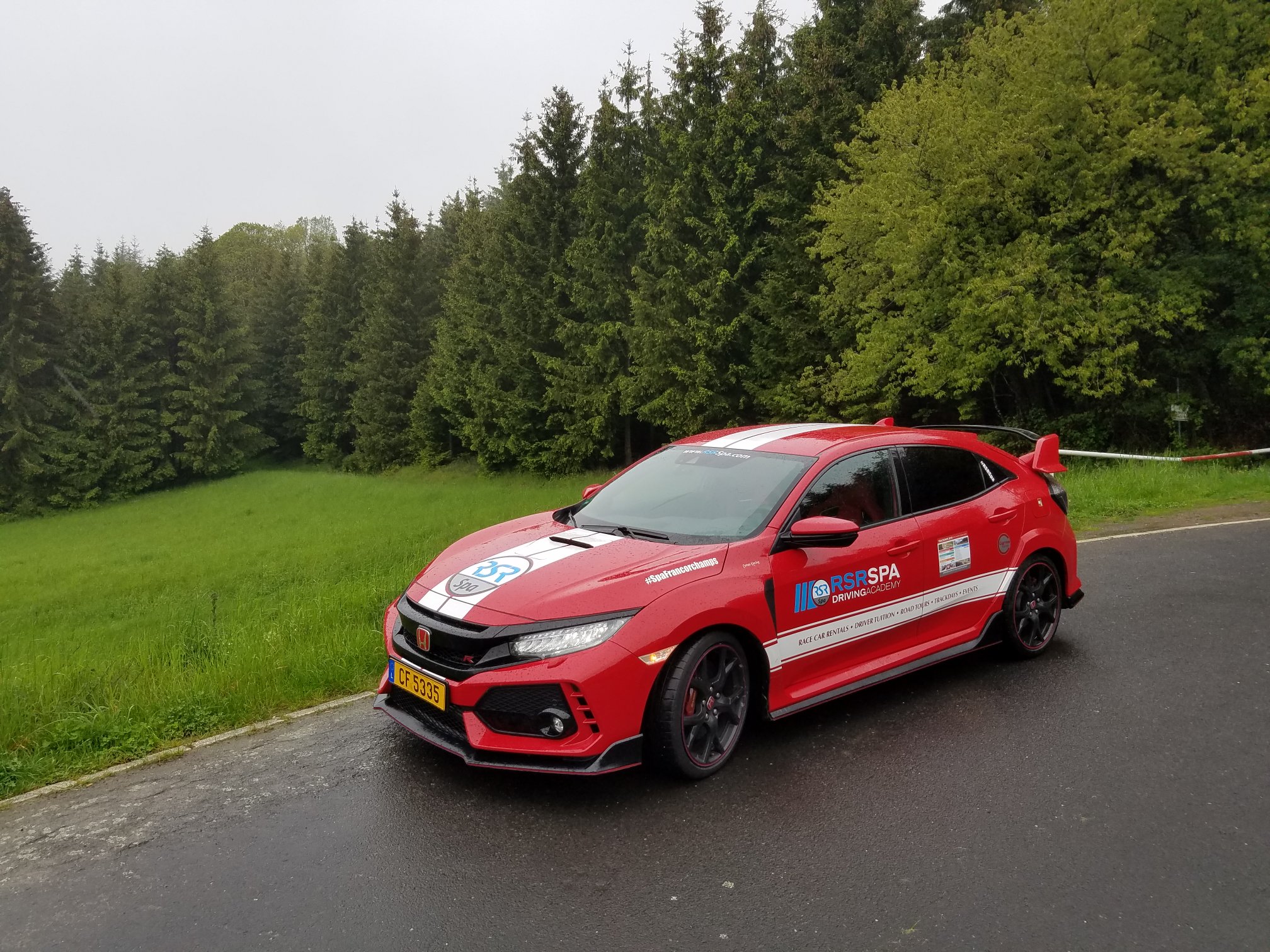
Overall the Civic Type R felt like the perfect weapon for my second day at the Nürburgring. Given the conditions, the AWD Focus RS would have been a tad quicker but not nearly as comfortable. The Civic is great for any situation where you want a sharp and predictable sports car and need to avoid the tail-happy shenanigans of the RWD competition. I would rent it again, but I might upgrade to a RWD car if I knew the weather would be dry.
 Mike's Steering Column