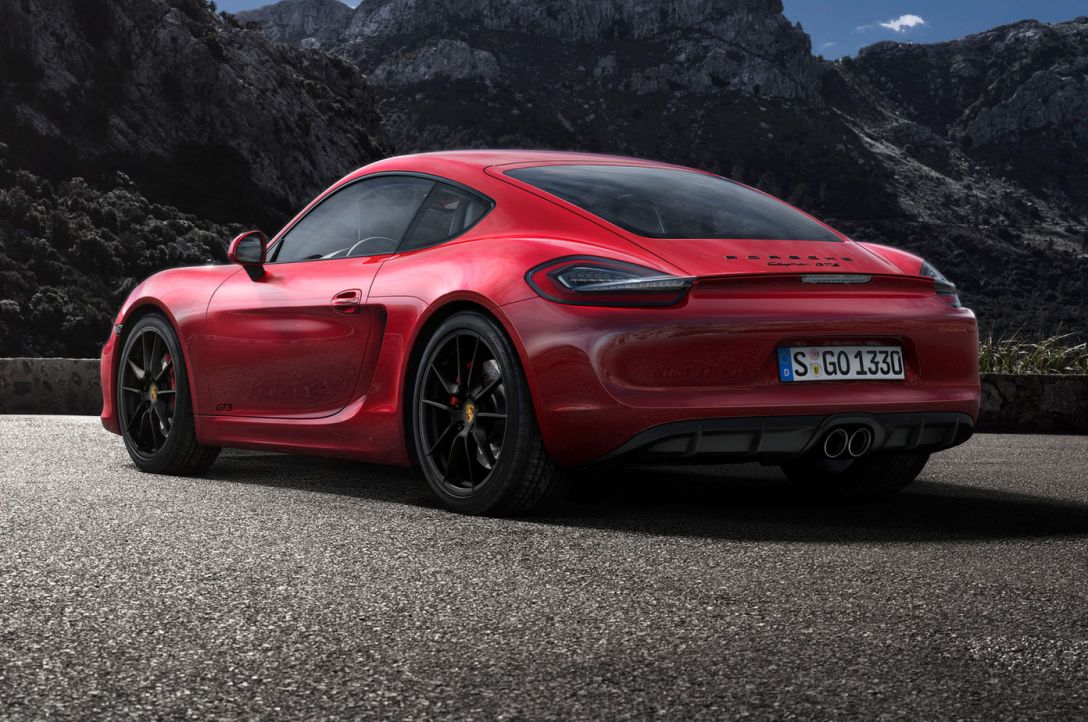
At the PCA Festival of Speed 2015, I had the chance to quickly autocross the 2015 911 Carrera 4S, 911 Carrera S, Cayman GTS and Boxster GTS. Here was my experience.
911 Carrera 4S
I was most excited about trying out this blue 911, as it had the S badge on the back, so I knew it was packing 400 hp under the tail hood. Like all the cars available for test driving at this event, the C4S was wearing Pirelli P Zero tires and optioned with the PDK automatic gearbox. I sat low and snug in the dark cabin of the 4S and asked the instructor in the right seat if I could try launch control. Answer: no. I inquired which driving mode the suspension, gearbox and stability control were in. Everything was in its softest, least sporting setting. Oh well. Clearly, the preservation of this six-figure automobile was on my instructor’s mind.
The course started with a short blast of acceleration. The C4S felt quick off the line, not in the least underpowered, yet at the same time not blisteringly fast. I’d put it roughly in the league as my E90 M3.
Next, I entered a quick right-left-right-left slalom. It was easy to dart the car back and forth through the slalom, but I was very aware of the car’s width, and it felt oversized for the tight slalom. From magazine tests, I had expected the 911 to take corners with hardly any body roll at all, yet there was a definite sense of roll in the slalom. This was not the table-top flat cornering I was expecting.
After a short acceleration and brake, the course served up a sweeping U-turn. Through this steady-state right-hander, I was able to feel the balance of the 911 in sustained lateral G. Lifting during the entry phase of the corner would cause the rear to slide, transitioning the car into oversteer which, after a half-second, would be recognized and recovered by the ESP. The oversteer behavior was not alarming, unpredictable, or quick. It felt like it could be anticipated and corrected by the driver. (This may be the first car I’ve driven that oversteers at corner entry.) On the long sweeper’s exit phase, getting on the throttle without unwinding the wheel would cause the front-end to push wide. This was not the corner exit behavior I expected or desired. The M3 does not understeer at corner exit, and I did not expect the 911 4S to do so either.
The final segment of the course was a set of esses (right-left-right-left) of varying radii. I could again play with the car’s balance in these corners via the throttle and brake, and provoke little rotating slides at the entry phase of the corner. The stability control was a bit delayed in recovering the slides but always shut them down completely.
I did a second lap of the track and played more with the handling dynamics, especially the power-induced understeer when exiting a corner. Then my stint in the blue 911 was over. Honestly, I was expecting more out of the 911, especially in handling and grip. At this point, I had the misconception that the tires on the cars were Hankook V12’s, not Pirelli P Zeros, and the level of grip was completely believable for V12’s. The 4S was speedy but not a nimble and flat cornering as I expected. I was giddy with speed but not feeling like I must buy a 4S immediately.
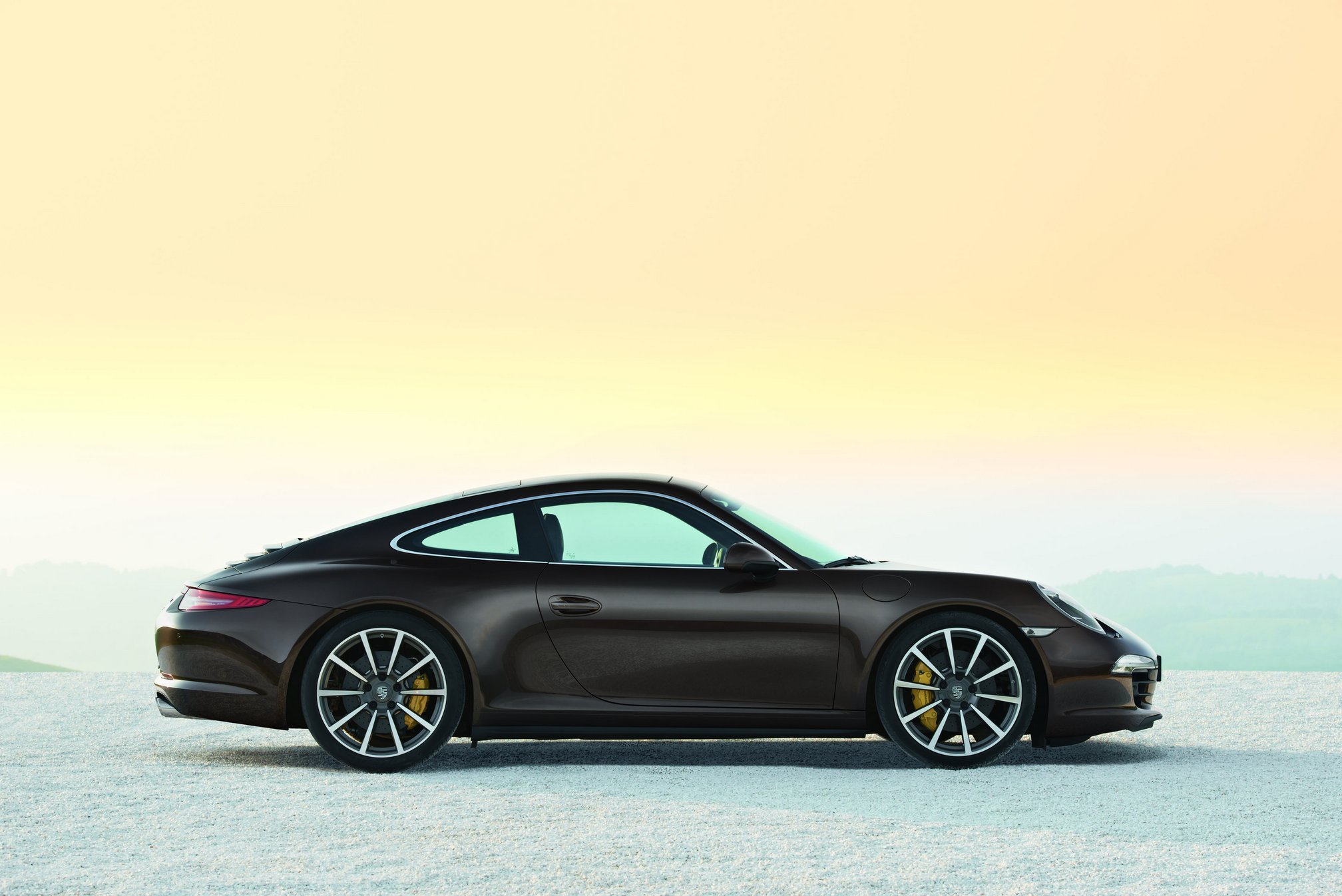
911 Carrera S
I switched into the white 911 Carrera S and lapped the course two more times. The Carrera S turned out to be the better-balanced car of the two 911s. It could be provoked into lift-off slides on the entry of the sweeping 180-degree U-turn and would exit the same corner without the power-on understeer from the AWD 4S. On my last lap, I had fun playing with slides in the back 180 sweeper. For me, the S proved to be the sweeter driving car than the 4S, yet the moderate body roll, less-than-tenacious grip, and sizable width did not make me feel like the 991 was a motoring revelation. (At least not in a tight autocross.)
The other much-discussed area of the 991 is its steering. I must admit to not having given it much thought during the lapping sessions. The steering was to my expectations of a sports car regarding its quickness, heaviness (not so heavy, not too light), and precision. However, it was without Lancer Evolution levels of feedback. I would say the feedback probably is nearly on par with that of the E90 M3—everything you need to know about to keep the car under control is communicated; everything else is not.
Cayman GTS
After lunch, I circled back to the autocross track and test-drove the mid-engine offerings. I was a bit concerned about the Cayman GTS as I had a rocky relationship with the 2009 base Cayman which I rented a few months back. The base Cayman had way more suspension grip than power, and in this way, it felt unbalanced. It was a brilliant corner carver, but it lacked the dynamic possibilities that come with a well-matched engine. Some say that the Cayman S and GTS have been limited in power so that they do not eclipse the base 911, and for this reason, I was concerned that the GTS might be hamstringed too.
I am happy to report my worries unfounded. The Cayman GTS felt as well balanced as the 911 S in how its power matched its handling. In fact, the GTS was an absolute hoot around the handling course. First, it must have had the sports exhaust because it was considerably louder than the other vehicles, and it crackled and popped on overrun. The noise excitement contributed greatly to the driving pleasure. The Cayman GTS subjectively was just as quick off the line in the sprint leading to the slalom. The narrower GTS felt easier to slot through the tightly spaced cones of the slalom, and I was aware that my aggressive side-to-side transitions had the potential to throw the car into oversteer if I was not careful. This was not a demerit but rather a reminder that a finely balanced mid-engined car needs skill when piloted quickly.

Into the sweeping 180 U-turn, I again found lift-off oversteer, just like I did in the 911. On later laps, I kept playing with this oversteer (and being shut down by the ESP); it seems to be benign controllable oversteer that could be held and used as a tool. It was quite exciting to play with. Unlike in the 911 4S, I never felt understeer on any corner in the GTS. It felt very precise and nimble, and adjustable through both the addition and subtraction of throttle.
Like in the 911, the steering in the Cayman was pin-point precise and unobtrusive, though again, I feel like it had that modern, muted style of communication where you know everything you need to know and nothing else.
(Aside: the main cabin difference I noticed when getting into the GTS was that the push-pull PDK buttons from the 911 wheel were gone, and normal (“sport”) paddles were mounted on the wheel. Yay!)
After my laps, I exited the Cayman GTS in ecstasy, repeatedly voicing the word “Wow” over and over again. In my three laps, I was able to immediately drive the Cayman to its limits and then play with the car on those limits. The power and handling balance was phenomenal, and the sounds intoxicating. The fact that the car was so tossable and catchable really gave it life. (I learned that my right-seat instructor had put the car in sport mode at some point in the lapping session, but I had not noticed the difference.) I also like the red paint with gray wheels on this GTS; to me, it was the prettiest car of the event.
Boxster GTS
I did get to drive the final car as well, a Boxster GTS. The experience was similar to the Cayman GTS, but dialed back 15%. The Boxster was still very nimble, but not as edgy, and I wasn’t able to slide it as much as the Cayman. Its cornering personality was more glued to the road; its exhaust note not as loud. Interestingly I did not sense any body flex or any other giveaway that this was a convertible. The Boxster came across as a good car, but my bright memories of the Cayman have overshadowed the Boxster’s details, and now they are lost to me.
As I have already made clear, the one Porsche of the set which won my heart was the Cayman GTS. So viscerally loud and eminently chuckable, rotatable via lift-off throttle or power-on oversteer, the Cayman GTS dances—and sings—around the autocross. It’s fast, it fits like a glove, and makes me feel like a hero; it’s my pick of the litter. The Cayman GTS matches my expectations of a sports car, with handling and power prioritized over cruising comfort. My guess is that the 911 is better for highway work.
PS: I wonder how the GTS compares to the Cayman R of the past. I expect the R had better steering feel—and I am a steering feel snob—but I worry that the R would not have the same power to chassis balance as the GTS. Assuming my suppositions are right, I am not sure I would want to give up the driftability of the GTS for the road feel of the R.
 Mike's Steering Column